I think Guillermo Del Toro’s upcoming giant robots vs giant monsters summer film will either fail to live up to the hype it’s been gathering since the very first teasers and images were released or the film will blow people’s minds away. This looks to be a film that will not brook any middle-of-the-road reaction. Some will either love it and some will absolutely hate it. Already there’s people who have been dismissing it as nothing but a jumped-up-Michael Bay rip (like that’s even possible) or dismissing it just because it’s a summer blockbuster, special-effects heavy film and not a barely-funded, arthouse, indie foreign film about the meaning of life, existence and the ennui that befalls all.
I, for one, am hyping this film up to beyond what’s safe to hype a film up for (yeah that doesn’t make sense but still deal with it). I’ve been a fan of Del Toro since I first caught his imaginative and inventive take on the vampire myth with Cronos. While he’s earned geek cred for his genre projects he is also once of the few filmmakers who have also gained the respect of the arthouse indie crowd with such films as The Devil’s Backbone and Pan’s Labyrinth.
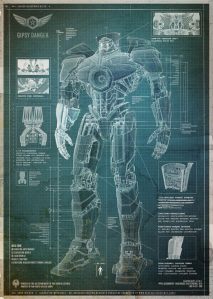
Enough gushing over the man. It’s all about the new trailer which premiered at this year’s CES over in Las Vegas. One wouldn’t think of CES as a place to premiere new footage about a summe rblockbuster, but as one can spy in this newest trailer it looks like Qualcomm paid some cash to get itself named in the film even if it’s just in the background. Also, just to show just how awesome this film will be there are also the design blueprints of five of the giant Jaegers that we’ve caught glimpses of in the trailer.
I must admit that in 2012 I didn’t get to listen in full many new albums outside of soundtracks. My Fave five of 2012 Songs will reflect this fact, but still with the lack of variety in my past year’s listening habit I thought the songs I came up with for the list I still would’ve put on a much bigger favorite 2012 list if I had need to come up with one. Without further ado he are the Fave Five (though it’s more Fave Six but I decided to combine the first entry’s two as a tie).
The Fave Five starts off with a tie that comes from the same film. Both songs come from the soundtrack to The Hobbit: An Unexpected Journey. While the film may not have been up to some audiences’ high expectations the soundtrack itself by Howard Shore (and for “Song of the Lonely Mountain” as sung by Neill Finn) continued the high-quality of the Tolkien soundtracks which began with the original Lord of the Rings trilogy. “Song of the Lonely Mountain” is a much more folk rock addition to the soundtrack while the “Misty Mountains” was actually part of the film itself when the character of Thorin Oakenshield sings it with his band of dwarfs while at Bilbo Baggin’s hobbit hole in the beginning. Both songs so a great job of telling the story of the quest that begins with this first film in the new trilogy.
The theme song 2012’s Skyfall was a throwback to the classic James Bond theme song’s of the Sean Connery and Roger Moore Bond eras. In fact, I thought it’s one of the best theme songs the long-running spy thriller franchise has had these past 25 years. It helps that you have Adele singing the theme who seems to be able to hit the right proper emotional notes during the song. It’s really hard to think of Skyfall the film being as good as it is without making sure one mentions Adele’s theme for it. I’d take the leap and say that the song itself may even be better than the film itself.
Mass Effect 3 was the epic conclusion to what was this gaming generation’s version of the original Star Wars space opera. It was a story that spanned the galaxy with memorable characters, thrilling action and some very good writing. There will always be the vocal minority who seem to think the ending to the trilogy was bungled by the writers over ta BioWare. That’s a whole different debate altogether. One thing that doesn’t seem to bring out the pitchforks was Clint Mansell’s score work for the game and it all culminates with the song simply titled “An End, Once and For All” which in it’s extended version more than makes up for whatever deficiencies the ending it orchestrally-scored may have had.
Another game’s music makes itself to my Fave Five list and this time it’s my second favorite song for the year of 2012. It’s from Halo 4 and it’s a song that brought new life to the venerable franchise. It didn’t just make the end credits more than just memorable, but also surprised many fans of the franchise’s music since the song wasn’t composed by the franchise’s original music composer, Martin O’Donnell, but by Kazuma Jinnouchi. It’s the one song in 2012 that I must’ve listened to on repeat for hours on end and probably in the high hundreds by now. It’s a song that brings back memories of the scifi soundtracks of the 80’s. It’s a work that I easily can compare to the best that’s ever been composed by luminaries in the genre like John Williams, Alan Silvestri, Michael Giacchino and others.
What can I say. The song speaks for itself. How can one not say this was the best song for 2012.
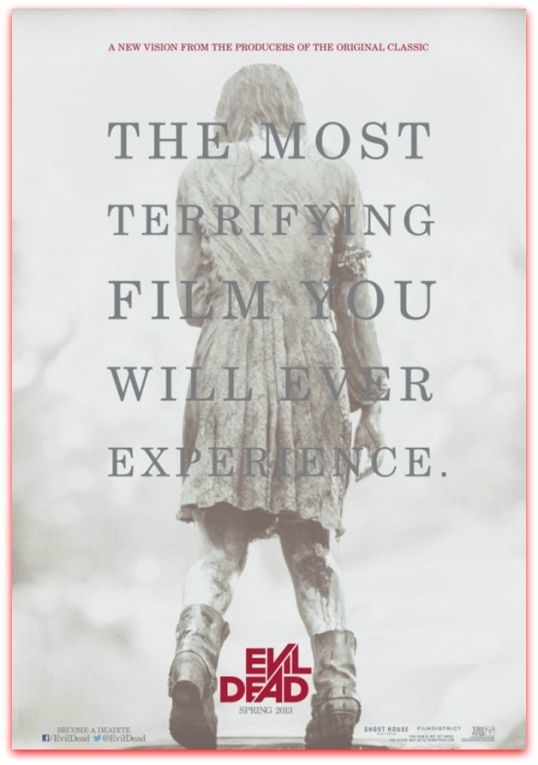
I can hear the howls now. Not another horror remake and one of a classic in the genre that many fans consider one of the holy grails of horror cinema. Guess what I say to those people. SHUT THE FUCK UP!
With the complete blessing from both Sam Raimi and Bruce “Who is God when he wants to walk amongst his creations” Campbell and them back but in the role of producers and mentor to the remake’s director, Fede Alvarez, and the young ensemble cast I have much more faith with this particular horror remake than others of its kind.
The trailer itself looks to go on the far extreme on the horror side of the original. I didn’t get a sense of much of the black humor of the original film (and it’s subsequent semi-remake), but I think that’s a good thing. Why remake a classic beat for beat when one can go their own way and explore something even the original never did.
One thing I can say about this full red band trailer that has me jumping up and down like a horror fan on bath salts…
VIOLENTLY AMOROUS TREE: Check!
LOTS AND LOTS AND LOTS OF BLOOD: Check!
GRAPHIC DISMEMBERMENT: Check!
CHAINSAW: Check!
DEADITE POSSESSIONS: Check!
FACE-EATING (or Extreme GIRL-ON-GIRL MAKE-OUT SESSION: Check and Check!
Evil Dead lands it’s bloody, possessed corpse on everyone this April 12, 2013. Until then….
Horror is still my first true genre love when things get boiled down to their most basic. 2013 looks to be full of horror films to more than satisfy my appetite for them. One such film that I’d be itching to check out is the Chilean horror-thriller titled Aftershock.
The film was co-produced by horror filmmaker Eli Roth who also had a hand in co-writing the script with Guillermo Amoedo and the film’s director, Nicolás López. The film is a fictional account of the aftermath of the 2010 8.8 earthquake in Chile and how a group of young partygoers try to escape the chaos of the city after the quake. Part of the film’s story uses the real-life prison breakout of prisoners after the quake and the resulting chaos in the damaged areas of the city.
Aftershock looks to be in the same extreme horror that the French have been helpful in making one of the newest trends in horror cinema. The trailer is not the glorious red band variety everyone has been waiting for but there seems to be enough hints throughout to show that Aftershock will not be a bloodless affair.
The film premiered during last year’s Toronto International Film Festival and the buzz surrounding the film has been quite positive. Unfortunately, there’s still no word on a release date in the US or anywhere for that matter, but it definitely joins Franck Khalfoun’s Maniac as one of my must-see horror films for 2013.
So, over the weekend I was finally able to catch the latest from Quentin Tarantino. To say that I enjoyed Django Unchained would be an understatement. Review of the film will be coming forthwith. One thing I really loved about this film was how Tarantino continues to pay homage to the very films he has used to inspire the ones he himself makes. This is clearly evident when one hears the original title song from the original Django play out in the beginning of Django Unchained.
Simply titled “Django” this song was composed by Luis Bacalov with lyrics by Franco Migliacci and sung by Roberto Fia. For fans of the spaghetti western this song is just as iconic as those composed by Ennio Morricone for Sergio Leone’s “The Man With No Name” trilogy of spaghetti westerns. Where Ennio’s compositions were more in line with Leone’s more serious take on the Italian view of the western, Bacalov’s “Django” definitely has a much more grindhouse feel to it. It sounds like something that would be heard in a western, but also has that 60’s era folk rock sound.
For those who have been loving Tarantino’s spaghetti western should really go search out Sergio Corbucci’s original Django and also Bacalov’s score work.
Django
Chorus: django!
Django, have you always been alone?
Chorus: django!
Django, have you never loved again? Love will live on, oh oh oh… Life must go on, oh oh oh… For you cannot spend your life regreatting.
Chorus: django!
Django, you must face another day.
Chorus: django!
Django, now your love has gone away. Once you loved her, whoa-oh… Now you’ve lost her, whoa-oh-oh-oh… But you’ve lost her for-ever, django.
When there are clouds in the skies, and they are grey. You may be sad but remember that love will pass away.
Oh django! After the showers is the sun. Will be shining…
[instrumental solo]
Once you loved her, whoa-oh… Now you’ve lost her, whoa-oh-oh-oh… But you’ve lost her for-ever, django.
When there are clouds in the skies, and they are grey. You may be sad but remember that love will pass away. Oh django! After the showers is the sun. Will be shining… Django! Oh oh oh django! You must go on, Oh oh oh django…
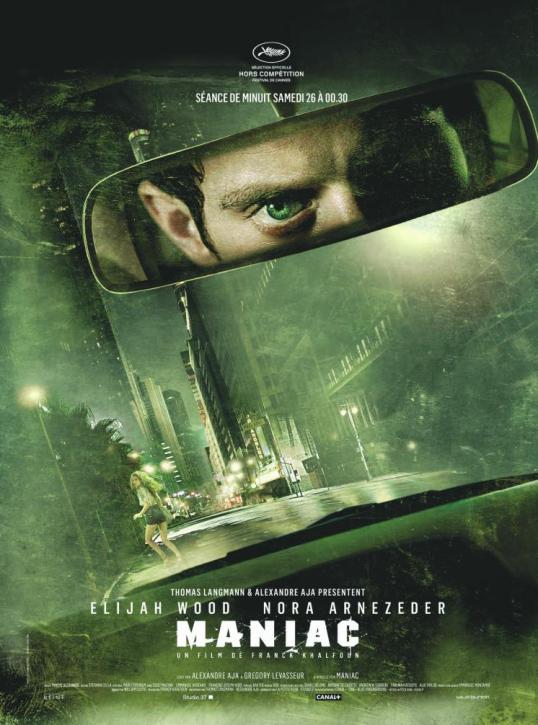
There was one film that had caught my interest once the project was announced in late 2011. The film was going to be the horror remake of the classic, grindhouse slasher flick from 1980 called Maniac. This film is considered by many fan of the grindhouse and exploitation scene as a classic in the slasher genre. It was also hailed by many moral groups as a prime example of how horror cinema was beginning to reach “pornographic levels of violence” especially towards female victims.
So, it was quite an interesting bit of news when the remake was announced and Frodo Baggins himself would take on the role of the film’s serial killer in Frank. It was an inspired bit of casting that gave the film’s early production a much needed boost in interest. It’s now been over a year and the film has made the genre film festival circuits and the buzz surrounding the Franck Khalfoun-directed film is that it more than lives up to the grindhouse and exploitation aesthetics of the original while bringing in a fresh new stylistic take on the slasher genre.
We have below is the first 6 minutes of the Maniac remake and one can see how creepy the POV-style the filmmakers are going to take for the film has turned out.
There’s still no release date announced for Maniac.
As the December 24 inches towards it’s end I would like to say thank you to everyone who have been a part of helping Through the Shattered GRow from a small idea where people can write things about entertainment without fear of being censored. It’s been a labor of love for myself and Lisa Marie Bowman who I call my partner-in-crime since this site’s humble beginnings. While Through the Shattered Lens could never come up to the level of the bigger and better-known entertainment blog sites I do appreciate the loyal followers who have decided to make this site a destination place for all and everything entertainment.
The past year has been one reaching new goals and records that I never thought possible. It has also been a trying one which has tested my own idea of keeping the site free from trolling and abuse. While this has made for some less than civilized back and forth between writers and commentators (I, for one, find myself guilty of it as well) in the end I’ve stuck to keeping the place free from unnecessary policing.
So, a third year of Through the Shattered Lens has arrived and we boldly move to making a 4th Year Anniversary become a possibility a year from now. What better way to celebrate this latest anniversary than approval from the Trinity of Geek Gods above.
It’s hard to believe that’s it’s been 11 years since Peter Jackson released The Lord of the Rings: The Fellowship of the Ring on the masses in 2001. There were much trepidation from Tolkien fans that Jackson (who had been known mostly for low-budget splatter horror-comedies) wouldn’t be able to handle the monumental task of adapting what many consider the greatest novel ever written in the 20th century. Tolkien’s epic fantasy became the standard by which fnatasy epics would be compared to for decades to come and still do. To say that Jackson succeeded in this epic task would be an understatement. TheLord of the Rings trilogy would hoard awards from 2001 to 2003 and also box-office receipts to make any dwarf-lord green with envy.
It’s now 2012 and we finally have the release of Jackson’s next trip into Middle-Earth as he adapts another of Tolkien’s beloved novels. This time he tackles The Hobbit which for some Tolkien fans remains their favorite of the author’s works. It’s a novel that might not have the epic scope and breadth of The Lord of the Rings, but what it lacks in that department it more than makes up in being a fun, adventure tale of a curious hobbit named Bilbo Baggins, a wizard named Gandalf the Grey and a fellowship of twelve dwarfs led by one Thorin Oakenshield of Erebor.
The Hobbit was originally written as a children’s book, but in later years Tolkien would retcon some parts of the novel to better fit with his magnum opus in The Lord of the Rings.It’s this revised version of that children’s story that Peter Jackson, Fran Walsh, Philippa Boyens and Guillermo Del Toro would adapt for the big-screen. Initially a two-film set that would tell the story of Bilbo and his merry band of adventurers, but it has since been expanded to become a trilogy as Jackson and his writers take a page out of Tolkien’s bag of tricks and try to tie-in this latest trilogy to the Lord of the Rings which precedes it by a over a decade.
The first film in this new trilogy is called The Hobbit: An Unexpected Journey and we begin by returning to sometime before the beginning of the first trilogy’s first film. We see the aged Bilbo reminiscing of his adventures 60 years hence and deciding to put it to pen and paper as a sort of memoir of that adventure to reclaim the lost dwarf-hold of Erebor. It’s in this opening that we get to see Frodo once more (played once again by Elijah Wood who doesn’t seem to have aged) prior to him taking up the One Ring.
Bilbo recounts to Frodo the realm of Erebor deep inside the Lonely Mountain east of the Shire to Frodo and how it’s wealth in silver, mithril, gold and precious gems became well-known throughout Middle-Earth. Yet, as Bilbo warns, it’s the very sickness of avarice by Erebor’s Thror the King which seals the dwarf-hold’s doom. We learn that hoards of wealth does more than light up the dwarf king’s eyes with greed but also brings the attention of one of the very last dragon’s in Middle-Earth. The arrival of Smaug to Erebor signals the death of not just that dwarf realm, but the surrounding human town of Dale. The surviving dwarfs of Erebor flee in a massive diaspora towards any safe haven willing to take them in. What was once a proud and powerful realm has now been sundered and it’s afterwards that we get to the meat of the film’s story.
Martin Freeman as a younger Bilbo Baggins was more than just great casting but one which the film needed if one was to believe that this young Bilbo would grow old to be the Ian Holm one fans of the first trilogy have come to know well. His performance as Bilbo Baggins of Bag End becomes the anchor from which the rest of the company would revolve around. When we first meet Freeman as Bilbo he’s not the adventurer that he would become, but a hobbit that’s respectable and one not for doing anything foolish like going on adventures. Yet, his lot in life changes as Gandalf maneuvers the situation so that he becomes embroiled in the quest by Thorin Oakenshield (played by Richard Armitage) to retake his ancestral lands of Erebor and it’s massive wealth from Smaug who has taken it for his lair.
While many would think that a film called The Hobbit would focus on Bilbo I thought the way the film unfolded that this story was all about the dwarfs with extra focus on the single-minded Thorin who comes off initially as both condescending, superior and dismissive of poor old Bilbo. The film never fails to show how much Thorin thinks so less of Bilbo yet throughout the film’s two and a half and more running time we see cracks in Thorin’s ice-cold demeanor towards the young hobbit. By film’s end we see just how wrong Thorin has been of Bilbo’s worth and it makes for one of the film’s more emotional scenes when Thorin realizes this as well.
The Hobbit: An Unexpected Journey is not just about a brooding dwarf prince and his motley band of dwarfs getting into one trouble after the next once they’ve left the Shire with Bilbo. The film also brings on a parallel storyline which tries to lay down the foundation that would tie this new trilogy with the first one. It’s the storyline of the Great Necromancer that Gandalf and a fellow wizard, Radagast the Brown, suspect might be the Great Enemy returned. We learn soon enough during the White Council in Rivendell (attended by Gandalf, Galadriel, Elrond and Saruman the White) that this so-called Necromancer might be Sauron looking to regain his former strength and gather an army to him.
It’s this second storyline that get’s sandwiched within the Thorin Oakenshield Fellowship quest that comes off a bit awkward in the film’s overall narrative flow. Where the film is all about fun adventuring and camaraderie when the dwarfs and Bilbo are on the screen, when they’re not and the film tries to tell us about Sauron’s eventual return the film slows down. These scenes are not uninteresting. On it’s own these sequences bring back the epic tone of the original trilogy and brings it into this film, but it’s that very grandiose theme that seems out of place in what is simply a “men on a mission” story.
Fortunately, we don’t spend too much time dwelling on this side-story. The final third of the film is all about Thorin and company needing to escape from one goblin lair and orc ambush to another. The last 45 minutes or so flies back swiftly after a very uneven first two hours that would make more than a few theater-goers look at their watch. The wait is worth it as we see that Jackson hasn’t forgotten how to choreograph and stage fantasy action scenes. While the use of CGI might be more evident this time around than the previous three films they’re still small compared to other blockbuster films of it’s type. It’s still all about WETA practical effects, make-up and costumes that combine to create a world that’s become familiar yet still have a sense of newness to them as we see new areas of Middle-Earth only mentioned in brief passing in the original trilogy.
The Hobbit: An Unexpected Journey is a wonderful return to the world of Middle-Earth. It is not without it’s missteps and flaws, but it also gets saved by some great performances from the ensemble cast which makes up the dwarfs. The aerial shots of the New Zealand’s eclectic geography shows just how much cinematographer Andrew Lesnie has become such a major component of making Middle-Earth come alive. Even the return of Howard Shore as the film’s composer was a welcome that brought more than a few smiles.
There’s no way of talking about The Hobbit without bringing up the stylistic gamble Peter Jackson has taken in filming this film and the rest of the trilogy in 48fps instead of the traditional 24fps (frames per second) that filmmakers have been using for almost a hundred years now. It’s an aesthetic choice that gives the film a overly realistic look akin to watching a stage production live. Everything looks too perfect and the High-Frame Rate (HFR) takes away some of the cinematic look which many have grown up seeing every time they watch a film. This new filming style works in certain areas like wide shots of the outdoor scenes. Whether it’s the emerald green rolling hills of the Shire to the snowcapped Alpine peaks of the Misty Mountains, these scenes in HFR came out beautiful. It’s when the film switches over to a much more enclosed and personal space within rooms and halls that we get the unusual “soap opera” look some have complained about. It takes a bit of getting used to, but some make the adjustment quickly enough while others may never make the adjustment.
Yet, it is when the film shows a CGI-created sequence that the HFR fails. While the doubling of the frame rate during filming has made the 3D in the film come off smoothly it did make some of the CG-effects come off as too video game-like. A sequence earlier in the film where we see a flashback of Thorin and the dwarfs of Erebor trying to retake another fallen dwarf hold in Moria (Khazadum in dwarfish) looks like a cinematic cutscene as a dwarf army charges and battles it out with an orc and goblin force which had taken Moria as it’s own.
All the scenes where HFR fails to come off as believable turn out better when The Hobbit was seen in traditional 24fps. I actually think that downscaling the film from it’s original HFR to a more traditional film frame speed of 24fps gave the film an even more magical look than the original trilogy. Jackson and his team of filmmakers have two more films to release and hopefully take some of the criticism this first film has received about HFR that they tweak and work on making the new style much more believable instead of taking the audience out of the film’s narrative.
The Hobbit: An Unexpected Journey doesn’t come off as grandiose as the original trilogy and for some that might come as a disappointment. Yet, as an adventure film it more than does it’s job to fully entertain it’s audience while, at the same, time reminding it’s audience how much this film and this trilogy will lead into The Lord of the Rings. I recommend that people just see the film and decide on their own whether it’s a worthy addition to the Middle-Earth saga as seen through the eyes of Peter Jackson. I, for one, think it is and with two more films left we shall see whether Jackson’s return to Middle-Earth has been a triumphant one or not.
The Hobbit: An Unexpected Journey doesn’t seem to be resonating with as many people like the previous The Lord of the Rings trilogy. Not to say that the film is a bad one. For those disappointed in the film seems to want a repeat of the first trilogy. My review of the film will and shall be up later today to help celebrate the site’s 3rd year anniversary. For now let me share the ending song to the first part of Peter Jackson’s latest Tolkien trilogy.
“Song of the Lonely Mountain” is sung by Neil Finn of Crowded House and it follows on the tradition of past Tolkien adaptations by Jackson by turning to musicians who Jackson and Shore enjoy listening to. The song has a Celtic, folksy rock sound to it. I particularly enjoyed the addition of hammers ringing on anvils to help listeners visualize the exiled dwarfs of Erebor toiling in front of their foundry in preparation for the day they retake their homeland from the dragon Smaug.
I didn’t like the song when it was first premiered a couple weeks in advance of the film, but it has since grew on me and has joined the other three end credits songs from the original trilogy as favorite original film songs.
Song of the Lonely Mountain
Far over the Misty Mountains rise Leave us standing upon the heights What was before, we see once more Our kingdom a distant light
Fiery mountain beneath the moon The words unspoken, we’ll be there soon For home a song that echoes on And all who find us will know the tune
Some folk we never forget Some kind we never forgive Haven’t seen the back of us yet We’ll fight as long as we live All eyes on the hidden door To the Lonely Mountain borne We’ll ride in the gathering storm Until we get our long-forgotten gold
We lay under the Misty Mountains cold In slumbers deep and dreams of gold We must awake, our lives to make And in the darkness a torch we hold
From long ago when lanterns burned Till this day our hearts have yearned Her fate unknown the Arkenstone What was stolen must be returned
We must awake and make the day To find a song for heart and soul
Some folk we never forget Some kind we never forgive Haven’t seen the end of it yet We’ll fight as long as we live All eyes on the hidden door To the Lonely Mountain borne We’ll ride in the gathering storm Until we get our long-forgotten gold Far away from Misty Mountains cold
Over ten days ago we saw the release of the teaser trailer for Star Trek Into Darkness. This sequel by J.J. Abrams for the reboot of the storied scifi franchise looks to be one of the most-anticipated films of 2013 (if the world doesn’t end in a couple days of this posting that is). Today we get the release of the official trailer which adds in a couple of new scenes and images not included in the teaser.
Again there’s some debate as to which villain Benedict Cumberbatch is really portraying despite being listed in the cast as the character of John Harrison. The even money bet is that he plays a version of Kirk’s archenemy Khan Noonien Singh which is a strong possibility since the early draft for the Khan character was suppose to be a Nordic superhuman by the name of John Ericssen. Even Abrams himself has never said outright that he would never use the Khan character as the villain in this rebooted franchise. Whether he uses the classic Trek villain in this sequel or the next should get an answer as we get closer to the film’s release date.
Star Trek Into Darkess has a release date of May 17, 2013.





 Through the Shattered Lens