 The year is 1989 and the Cold War is coming to an end. Colonel Jack Knowles (Roy Scheider) was a hero in Vietnam but now, years later, his eagerness to fight has made him an outsider in the U.S. Army. Most people would rather that Knowles simply retire but, as long as there are wars to be fought, Knowles will be there. His only friend, General Hackworth (Harry Dean Stanton), arranges for Knowles to be assigned to an outpost on the West German-Czechoslovakia border. As soon as he arrives, Knowles starts to annoy his superior officer, Lt. Col. Clark (Tim Reid). When Knowles sees a Czech refugee gunned down by the Soviets while making a run for the border, he unleashes his frustration by throwing a snowball at his Russian counterpart. Like Knowles, Col. Valachev (Jurgen Prochnow) is a decorated veteran who feels lost without a war to fight. Knowles and Valachev are soon fighting their own personal war, even at the risk of starting a full-scale conflict between their two nations.
The Fourth War was one of the handful of films that John Frankenheimer directed for Cannon Films. Much as he did with The Manchurian Candidate, Frankenheimer mixes serious thrills with dark satire in The Fourth War. Frankenheimer gets good performances from the entire cast, especially Scheider and Prochnow. The real star of the movie is the snow-covered landscape, which Frankenheimer turns into a metaphor for the entire Cold War. When Knowles and Valachev end up throwing punches on a frozen lake that’s breaking apart underneath their feet, it is not hard to see what Frankenheimer’s going for with this film. Released shortly after the fall of the Berlin Wall, The Fourth War is an underrated thriller that deserves to be rediscovered.
 The year is 1962. Lights flash over California and the news on the radio is bad. What everyone feared has happened. Atomic war has broken out and the world is about to end. Refugees clog the highways as a mushroom cloud sprouts over Los Angeles. This is year zero, the year that humanity will either cease to exist or try to begin again.
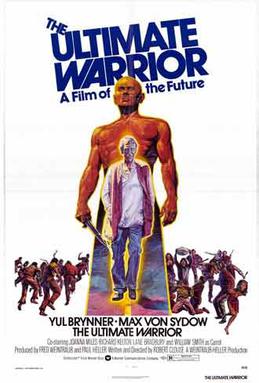 The year is 2012 and New York City, like the rest of the world, has been devastated by energy shortages, wars, and a great plague. The few survivors now live in isolated communes and are easily victimized by roving gangs of marauders. (On the plus side, this version of New York City has been spared Bill de Blasio.) The Baron (Max von Sydow) has managed to keep his people safe by ruling with an iron hand but he knows that it will only be a matter of time until his commune is overrun by the psychotic Carrot (William Smith) and his men. When a mysterious warrior known only as Carson (Yul Brynner) comes to the commune, the Baron tasks him with a very important mission: help his pregnant daughter (Joanna Miles) escape from New York City and transport both her and some genetically modified seeds to an island in North Carolina.
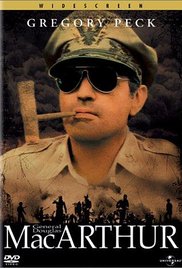 The year is 1962 and Douglas MacArthur (Gregory Peck), the legendary general, visits West Point for one last time. While he meets the graduates and gives his final speech, flashbacks show highlights from MacArthur’s long military career. He leaves and then returns to Philippines. He accepts the Japanese surrender and then helps Japan rebuild and recover from the devastation of the war. He half-heartedly pursues the Presidency and, during the Korean War, gets fired by Harry Truman (Ed Flanders).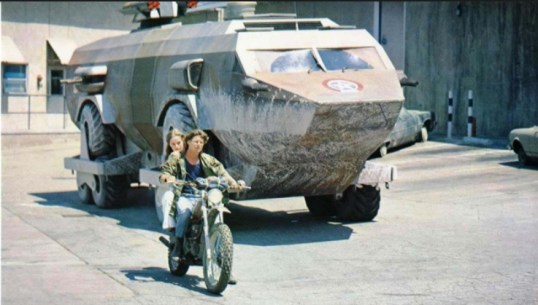

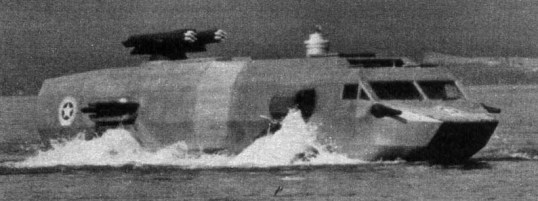

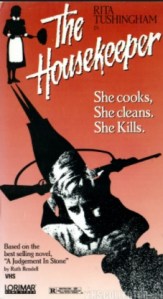 Eunice Parchman (Rita Tushingham) has always had a secret. She is dyslexic. When she was in school, the kids made fun of her for saying, “god” instead of “dog.” When she grew up, her cruel father threatened to send her to a special school so that she could learn how to read. Eunice suffocated him with a pillow and then moved to America, where she was hired as a housekeeper. Eunice is a good housekeeper except she can not read any of the directions that her obnoxious employers leave for her. When she befriends a religious fanatic (Jackie Burroughs) and accidentally overwaters her employer’s prized orchids in the same week, it can only lead to one thing, a shotgun rampage.
 Strange movie, Ted & Venus.
 Based on the campy 70s cop show that will live on forever in syndication, CHiPs is about two unlikely partners who, after a rough beginning, work together to catch a cop’s killer and capture a gang of armed robbers.
 Naked women are turning up murdered in Los Angeles. The only clue that the crimes are connected: the baby doll that is left beside each body. Can detectives Louis (Jeff Kober) and Larry (Bobby Di Cicco) solve the case while also dealing with issues in their own private life? Louis’s girlfriend (Melanie Smith) is worried that Louis is becoming obsessed with is work and that he is not willing to commit to their relationship. Larry is upset because he suspects his wife is keeping a secret from him. Their chief (John Saxon) wishes they would just solve the case, especially when the killer targets his own daughter. The problem is that Louis is so driven and prone to violence that he has managed to get himself suspended from the force. Why does that always happen to good cops?
 Vista Verde, an exclusive suburban high school in California, has a problem. Some of the students have a bad attitude. Some of them are experimenting with drugs. Graffiti is showing up all over the school. What better way to return peace to Vista Verde than for a bunch of WASPy rich kids and other jocks to organize into a secret vigilante force? The headmaster thinks that it’s a great idea and soon “The Sentinels” are holding mock trials and shooting the other students with paintball guns. One bad kid even turns up dead. Graffiti is no joke.
 Through the Shattered Lens