 You can’t always tell a book by its cover and that is the case with the Spirits, the nicest motorcycle gang to ever roll across America’s highways. When they come across an old couple on the side of the road with a flat tire, they don’t rob the couple. Instead, they change the tire. When they come across a young man named Chris (David Hyrly, who is overdubbed by a young Nick Nolte), they invite him to join them on their journey. When they are arrested, they sit in jail and roll a joint. The Spirits are solid dudes. But because they are rebels who live outside of straight society, they will always be picked on by the Man. After a redneck deputy rapes the Chris’s girlfriend, the deputy blames the Spirits. Soon, the Spirits find themselves under attack and are violently picked off one by one. In self-defense, the Spirits start to arm themselves. It all comes to a head in a violent confrontation in Northville Cemetery.
Made for a miniscule budget. featuring a largely amateur cast, and graphically violent, Northville Cemetery Massacre is an overlooked masterpiece, the type of movie that Sam Peckinpah would have made if he had worked on AIP biker movies instead of westerns. The Spirits are innocent and, as long as no one hassles them, peaceful but the rest of the world only sees their motorcycles and their leather jackets. The rapist deputy is one of the most evil lawmen in film history but because he wears a uniform and know the right people, he knows that he will never have to face justice. The ambiguous ending proves that the filmmaker’s had more on their mind than just cashing in one the tail end of the biker genre’s popularity. Adding to the film’s strength is a country-rock score from former Monkee Mike Nesmith and the casting of members of a real-life motorcycle club, the Scorpions. What the Scorpions may have lacked in acting ability, they made up for in authenticity.
Northville Cemetery Massacre was made in the early 70s but it wasn’t released by Cannon Films until 1976, at which point the biker genre was close to dead. Northville Cemetery Massacre provided audiences with one last chance to get their motor running, head out on the highway, and look for adventure with smoke and lightning and heavy metal thunder.
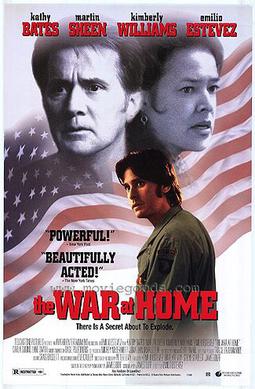 The year is 1972 and it is Thanksgiving week in small town America. The Colliers are getting ready for the holidays. Maurine (Kathy Bates) is intent on preparing the perfect Thanksgiving meal. Bob (Martin Sheen) is keeping an eye on his car dealership and wondering why kids today are not as respectful as they once were. The two Collier children are coming home from school. The youngest, Karen (Kimberly Williams), is hoping she can keep the peace because she knows that her older brother, Jeremy (Emilio Estevez), has returned from Vietnam a changed man. Suffering from severe PTSD, Jeremy is haunted by flashbacks and angry at everything, especially his father. The only reason he even attended college was so he could be near his girlfriend (Carla Gugino) and even she has told him that she no longer feels comfortable around him. When Jeremy returns home, his family first tries to ignore the problems that he’s having adjusting to civilian life but Jeremy is determined not to be ignored.
 November 22, 1963. While the rest of the world deals with the aftermath of the assassination of John F. Kennedy in Dallas, a man named Michael Curtis drives a jeep across the South Texas desert, heading for the border. In the jeep, he has a $800,000 and a high-powered rifle. When the jeep crashes, the man, the rifle, and the money are left undiscovered in the desert for 21 years.
 Harry Mitchell (Roy Scheider) is a businessman who has money, a beautiful wife named Barbara (Ann-Margaret), a sexy mistress named Cini (Kelly Preston), and a shitload of trouble. He is approached by Alan Raimey (John Glover) and informed that there is a sex tape of him and his mistress. Alan demands $105,000 to destroy the tape. When Harry refuses to pay, Alan and his partners (Clarence Williams III and Robert Trebor) show up with a new tape, this one framing Harry for the murder of Cini. They also make a new demand: $105,000 a year or else they will release the tape. Can Harry beat Alan at his own game without harming his wife’s political ambitions?
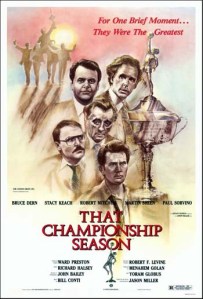 Four former high school basketball players and their coach gather for a reunion in Pennsylvania. Twenty-five years ago, they were state champions. Now, they are all still struggling with the legacy of that championship season. George (Bruce Dern) is the mayor of Scranton and is in a fierce race for reelection. Phil (Paul Sorvino) is a wealthy and corrupt businessman who is having an affair with George’s wife. James (Stacy Keach) is a high school principal who is still struggling to come to terms with his abusive father. James’s younger brother, Tom (Martin Sheen), is an alcoholic who can not hold down a steady job. The Coach (Robert Mitchum) remains the Coach. All four of the men still want his approval, even though they know that he is actually an old bigot who pushed them to cut too many corners on their way to the championship.
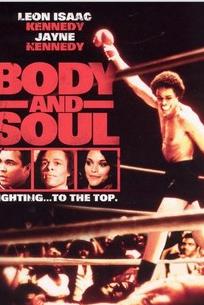 When his little sister falls ill with sickle-cell anemia, Leon Johnson (Leon Isaac Kennedy) has to make a decision. He can either finish his education, graduate from medical school, and treat her as a doctor or he can drop out of school, reinvent himself as “Leon the Lover,” and make a fortune as a professional boxer! At first, Leon’s career goes perfectly. He is winning fights. He is making money. He has a foxy new girlfriend (played Leon Isaac Kennedy’s then-wife, Jayne Kennedy.) But then the fame starts to go to Leon’s head. He forgets where he came from. He’s no longer fighting just to help his sister. Now, he’s fighting for his own personal glory. When Leon finally gets a title shot, a crooked boxing promoter known as Big Man (former JFK in-law Peter Lawford, looking coked up) orders Leon to take a dive. Will Leon intentionally lose the biggest fight of his life or will he stay in the ring and battle Ricardo (Al Denava), a boxer so evil that he literally throws children to the ground? More importantly, will he make his trainer (Muhammad Ali, playing himself!) proud?
 Chuck Norris is J.J. McQuade, Texas Ranger!
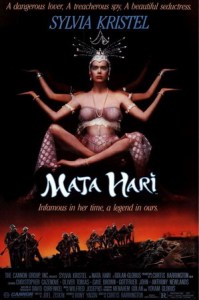 Europe, during World War I. The beautiful dancer, Mata Hari (Sylvia Kristel), is in love with two different soldiers, one German and one French. (The soldiers, played by Olivier Tobias and Christopher Cazenove, are also friends though they are now on opposite sides of the Great War.) Forced into the world of decadent, high class espionage by Frau Doktor (Gaye Brown), Mata Hari sleeps with everyone, shares information with both the Germans and the French, and tries to prevent more people from dying. Just as in history, Mata Hari ultimately has to face a firing squad but not before taking part in threesomes, voyeurism, and a topless sword fight.
 “The family is like a drug and we’re all junkies.” So says Charley Warner (Vincent D’Onofrio), one of the many pissed off people at the center of Crooked Hearts.
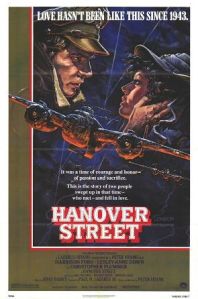 The time is World War II and, for the British, the American army is “overpaid, oversexed, and over here.” David Halloran (Harrison Ford) is a pilot who has been stationed in England. With no loved ones to worry about, David has no fear of flying over occupied France and dropping bombs on the Nazis below. But then David meets an English nurse, Margaret (Lesley-Anne Down). As David falls in love, he loses his enthusiasm for the war because he now has “a reason to live.” The only problem is that Margaret is already married to Paul (Christopher Plummer), an officer in British Intelligence. When David accepts an assignment to fly a British agent into France, he is shocked when the agent turns out to be Paul. When David’s plane crashes, he and Paul have to work together to complete Paul’s mission and escape back to Britain.
 Through the Shattered Lens