Music Video of the Day: Bother by Stone Sour (2002, directed by Gregory Dark)


The Spider-Man ring that is visible in this video is due to leader singer Corey Taylor being both a fan of the character and this song appearing on the soundtrack of the first Tobey Maguire Spider-Man film.  Just as Peter Parker and Spider-Man are the same but different, the same can be said of Corey Taylor, who is introspective and thoughtful as Stone Sour’s lead singer and something somewhat different when he’s performing as Number 8 with Slipknot.

This video, which features Taylor singing to rapidly aging and dying version of himself, was directed by Gregory Dark.  Dark, previously known as “the Steven Spielberg of the soft-score set” and “the Martin Scorsese of the erotic thriller,” was making the transition for directing films for adults to directing music videos.  It wasn’t always a smooth transition.  There was some controversy when he directed a video for Britney Spears, for instance.  I think this is one of Dark’s better videos.

Enjoy!

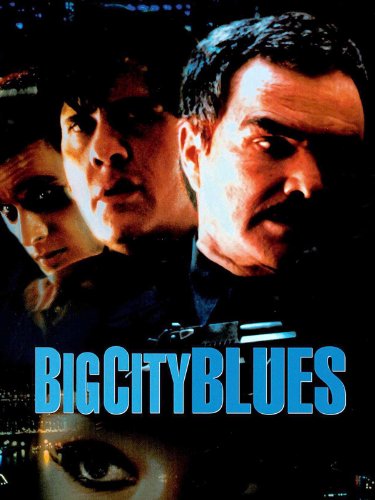
Big City Blues (1997, directed by Clive Fleury)


If you have ever wonder why Burt Reynolds, despite receiving an Oscar nomination for Boogie Nights and being a favorite of so many of the up-and-coming directors of the 90s and early 2000s, never made a real comeback, you only have to watch Big City Blues.

In Big City Blues, Burt plays a hitman who loves to watch and talk about old movies.  Over the course of one very long night, Burt and his partner (played by William Forsythe) drive through the city.  In between doing violent jobs for their boss, they talk.  Burt talks about movies.  Forsythe talks about how he doesn’t understand Burt’s love of the movies.  They talk nonstop and if this is making you think of Pulp Fiction, it’s probably intentional.  Today, I think people forget just how many Pulp Fiction rip-offs were released throughout the 90s, all featuring talkative criminals who were obsessed with pop culture.  Burt Reynolds and William Forsythe have got the equivalent of the roles played by John Travolta and Samuel L. Jackson.  Unfortunately, Reynolds and Forsythe don’t have the same chemistry as Travolta and Jackson.  You believed that Travolta and Jackson had been working together for years and, when they talked, that they were having an actual conversation.  Despite both of them being credited as executive producers on the film, Reynolds and Forsythe come across as being two talented actors who are phoning it in for a paycheck.

When the film isn’t focused on Reynolds and Forsythe, it follows two trans women (played by Giancarlo Esposito and Ayre Gross) as they walk around the city and debate whether or not Esposito should get sex reassignment surgery.  When it’s not following Esposito and Gross, it’s focusing on a sex worker (Georgina Cates) who wants to be a movie star and who keeps seeing evidence that she has a doppelganger who is living the respectable life that she craves.  Cates searches for her doppelganger while also servicing her clients, who are all typical middle-aged pervs.  (One gets off from listening to Cates sing Ol’ McDonald Had a Farm.)  Eventually, the paths of all the characters cross and Reynolds talks about how life is just celestial roulette.

Big City Blues doesn’t add up to much.  Like many 90s indie films, the characters are all talkative to the point of feeling like parodies.  (When the movie isn’t trying to rip-off Quentin Tarantino, it feels like a half-baked imitation of Richard Linklater.)  Even the likable performances of Cates, Esposito, and Gross can’t overcome how overwritten and derivative the script feels.  Beyond the script, the film just looks bad.  All of the scenes take place at night and the lighting is often so dark that it’s impossible to see what’s actually happening from scene to scene.  It feels amateurish.

So why was Burt Reynolds in this?  This was the first film that Reynolds made after the filming of Boogie Nights.  Probably thinking that Boogie Nights would flop, Reynolds signed up to appear in this Pulp Fiction knock-off, which is something that many former stars did in the 90s.  Instead of flopping, Boogie Nights turned out to be the film that reminded everyone that Reynolds could be a very good actor with the right material.  Unfortunately, Reynolds himself didn’t think much of the film and, perhaps even worse as far as Hollywood was concerned, he was open about not thinking much of the film.  As a result, even with that Oscar nomination, Reynolds didn’t get the type of career resurrection that John Travolta got from Pulp Fiction and Robert Forster and Pam Grier got from Jackie Brown.  That’s too bad.  Burt  Reynolds deserved better.

Great Moments In Television History #21: The Origin of Spider-Man


The first Spider-Man television series was the famous cartoon series that premiered in 1967.  This was the one the featured the theme song about how Spider-Man could do everything that a spider can.  The first season of Spider-Man was produced by Grantray-Lawrence Animation and it started in medias res, with Peter Parker already fighting crime as Spider-Man and also with Spider-Man already knowing most of his villains.

Grantray-Lawrence went bankrupt halfway through the first season of Spider-Man and, as a result, the second season was produced by Krantz Animation, Inc.  Krantz made the important decision to bring in Ralph Bakshi, to executive produce and direct the series.  Bakshi wanted to move the show away from just being a mindless kid’s cartoon.  Instead of emphasizing action, he emphasized character.  The 2nd season premiered on September 14th, 1968 and was rebooted the series, taking it in Baskshi’s new direction.  It started with The Origin of Spider-Man, which told the story of the death of Ben Parker in Bakshi’s trademark style.

In the scene below, Peter learns of his uncle’s death and suits up as Spider-Man to get justice.

We all know how the story ended.  Spider-Man continued to fight crime in New York and Ralph Bakshi continued to challenge the conventional assumptions about what animation had to be.

Previous Moments In Television History:

  1. Planet of the Apes The TV Series
  2. Lonely Water
  3. Ghostwatch Traumatizes The UK
  4. Frasier Meets The Candidate
  5. The Autons Terrify The UK
  6. Freedom’s Last Stand
  7. Bing Crosby and David Bowie Share A Duet
  8. Apaches Traumatizes the UK
  9. Doctor Who Begins Its 100th Serial
  10. First Night 2013 With Jamie Kennedy
  11. Elvis Sings With Sinatra
  12. NBC Airs Their First Football Game
  13. The A-Team Premieres
  14. The Birth of Dr. Johnny Fever
  15. The Second NFL Pro Bowl Is Broadcast
  16. Maude Flanders Gets Hit By A T-Shirt Cannon
  17. Charles Rocket Nearly Ends SNL
  18. Frank Sinatra Wins An Oscar
  19. CHiPs Skates With The Stars
  20. Eisenhower In Color


Great Moments In Comic Book History #25: Spider-Man Meets The Fantastic Four


August 1st is celebrated as Spider-Man Day because Spider-Man made his debut in Amazing Fantasy #15, which was given an August, 1962 cover date despite hitting newstands in June.  Though Amazing Fantasy ceased publication after the 15th issue, Spider-Man was a hit as a character and was on his way to becoming one of the iconic figures of the Marvel universe.

Spider-Man himself would not get his comic book until March, 1963 with the first issue of The Amazing Spider-Man.  The majority of that issue featured Marvel’s newest hero battling the Chameleon, a Russian criminal who was committing crimes while disguised as Spider-Man!  Of course, Spider-Man’s bad reputation didn’t start with the Chameleon.  Especially in the early days of his career, people often assumed that Spider-Man was up to no good.  (Having J. Jonah Jameson as an enemy didn’t help.)  While all the other heroes were celebrated by the public, Spider-Man was always misunderstood.  That’s one reason why readers identified with him.

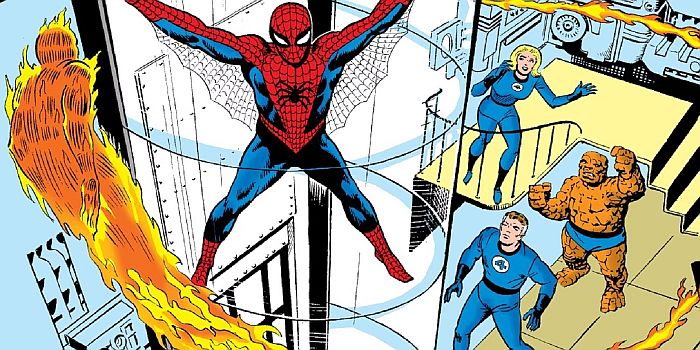
Before battling the Chameleon, the continually cash-strapped Spider-Man tried to improve his situation by getting a job with the Fantastic Four.

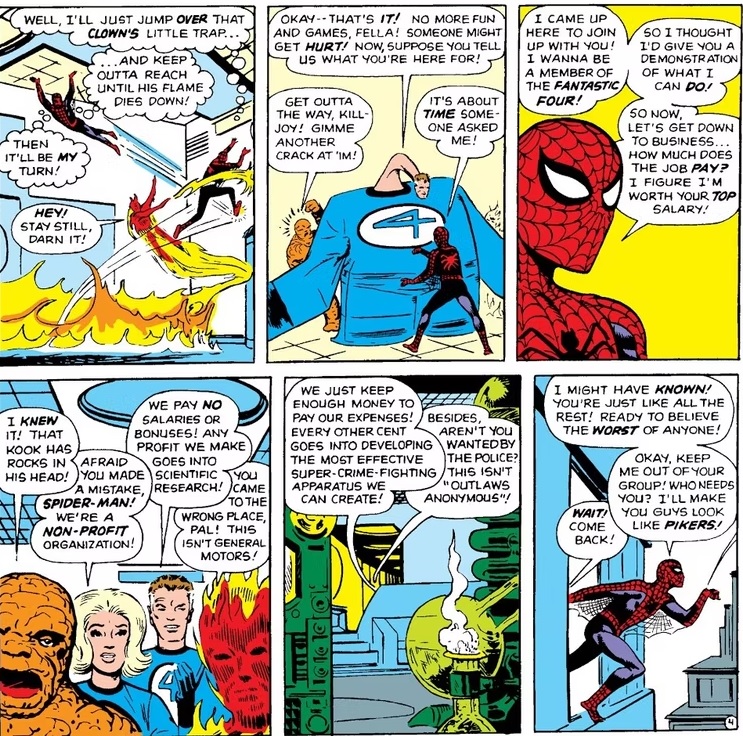
It didn’t go well.  Spider-Man’s idea of a job interview was breaking into the Baxter Building and proving that he could hold his own in battle with each member of the group.  Spider-Man proved that he could fight but Mr. Fantastic was not impressed, telling Spider-Man that the Fantastic Four were a non-profit organization and that picking a fight was not the way to get a job.  Offended, Spider-Man announced that he didn’t need the Fantastic Four and left.  Because Mr. Fantastic and the rest of the Fantastic Four always came across as being full of themselves, I am sure many readers agreed with Spider-Man.  By swinging out of there, Spider-Man let his readers know that he didn’t need anyone’s approval.

Not only did this moment establish who Spider-Man was as a character but it also started a long Marvel cross-over tradition.  Heroes would frequently meet each other, crossing over from book to book.  They would often team up but, before they could do that, they always had to fight over a misunderstanding and trade insults.  The moment that Spider-Man told off Mr. Fantastic was also the moment that the Marvel Universe first truly came to life.

Later, of course, Spider-Man and the Fantastic Four made up.  Spider-Man and the Human Torch co-starred in several issues of Marvel Team-Up.  But most readers will always prefer to remember Spider-Man telling Mr. Fantastic to get bent.

Previous Great Moments In Comic Book History:

  1. Winchester Before Winchester: Swamp Thing Vol. 2 #45 “Ghost Dance” 
  2. The Avengers Appear on David Letterman
  3. Crisis on Campus
  4. “Even in Death”
  5. The Debut of Man-Wolf in Amazing Spider-Man
  6. Spider-Man Meets The Monster Maker
  7. Conan The Barbarian Visits Times Square
  8. Dracula Joins The Marvel Universe
  9. The Death of Dr. Druid
  10. To All A Good Night
  11. Zombie!
  12. The First Appearance of Ghost Rider
  13. The First Appearance of Werewolf By Night
  14. Captain America Punches Hitler
  15. Spider-Man No More!
  16. Alex Ross Captures Galactus
  17. Spider-Man And The Dallas Cowboys Battle The Circus of Crime
  18. Goliath Towers Over New York
  19. NFL SuperPro is Here!
  20. Kickers Inc. Comes To The World Outside Your Window
  21. Captain America For President
  22. Alex Ross Captures Spider-Man
  23. J. Jonah Jameson Is Elected Mayor of New York City
  24. Captain America Quits

Every Generation Gets The Spider-Man It Deserves


August 1st is Spider-Man Day.  Despite this being the day that observes Spider-Man’s first appearance in the 15th issue of Marvel’s Amazing Fantasy, the trash is still being collected and the mail is still being delivered.  Spider-Man Day is a holiday when no one gets any time off.  I’m sure that the web slinger himself would appreciate the irony.

The appeal of Spider-Man has always been that he’s the hero who never feels that he’s done enough.  He’s also the hero who is almost always unappreciated by the rest of the world.  He’s the hero who often resents having to do his job but who still feels a responsibility to try to make the world a better place.  Spider-Man is the superhero that almost everyone can relate to.

As far as television and movies go, every generation has gotten the Spider-Man that they deserved.

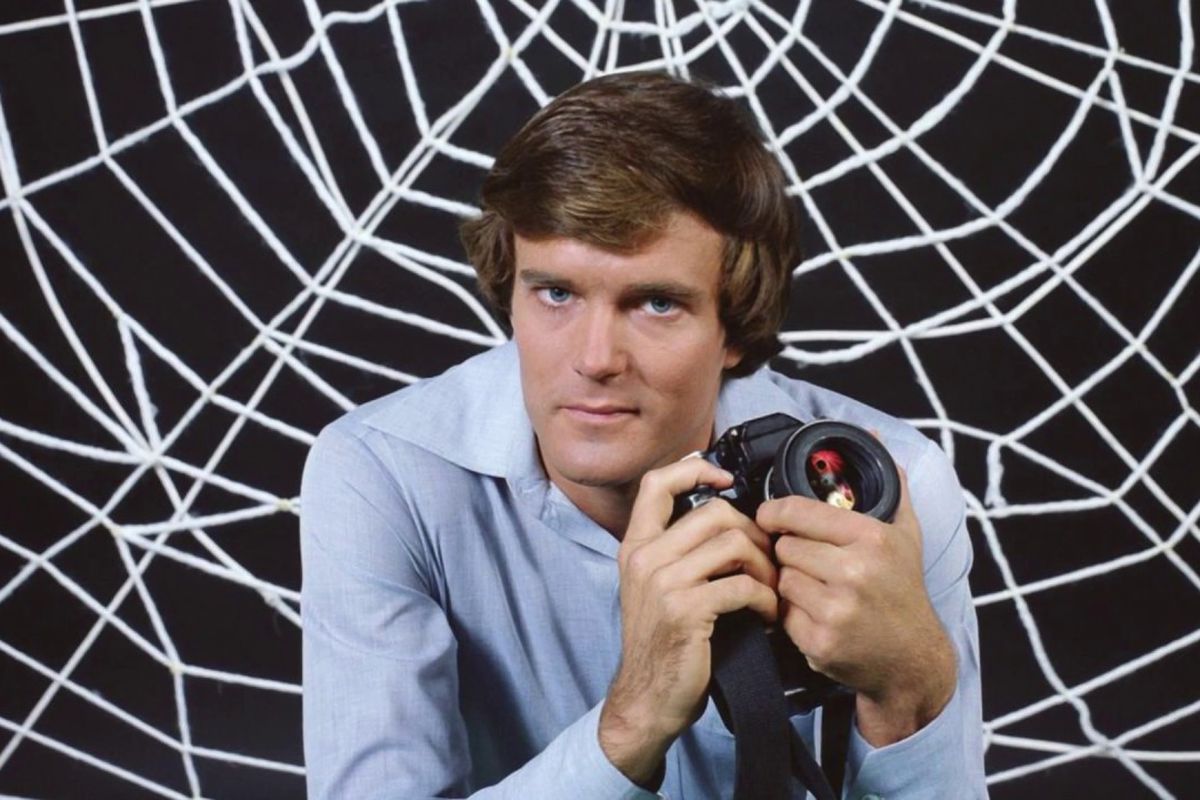
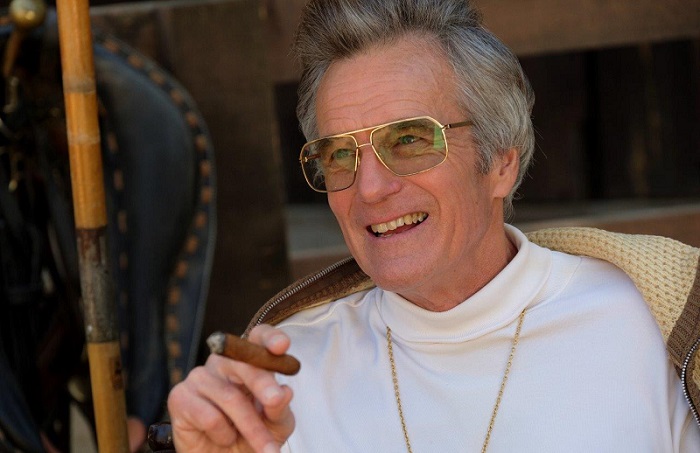
The boomers got Nicholas Hammond’s Spider-Man.  Hammond played Spider-Man for two seasons in the 70s.  He was a little boring but, from what I’ve seen, his show has a reputation for being worse than it was.  Like the best of the boomers, Hammond’s Spider-Man could be stuffy but he got the job done.

Generation X got Tobey Maguire, who played Spider-Man in three films that Sam Raimi directed in the aughts.  Like Generation X, Maguire’s Spider-Man was quiet but clever.  Despite his quick wit, he was frequently neurotic and more than a little introverted but he always came through in the end.

Then, Andrew Garfield played the millennial version of Spider-Man.  Angsty and awkward, Garfield’s Spider-Man was aware that society would never fully accept him, both as Peter and as Spider-Man.  At times, it seemed like his every attempt at making things better somehow only made them worse.

And finally, the Zoomers have got Tom Holland’s Spider-Man, an earnest idealist who struggles with the fact that the world is more complicated than it seems.  You can criticize him for being naïve but never doubt the sincerity of his beliefs.

All of the actors who played Spider-Man have done a good job and they all deserve praise.  My favorite is Tobey Maguire but that’s largely because, having been born in ’82, I’m on the dividing line between Generation X and Millennial and I’ve always leaned more towards the Generation X side of things.  Plus, I can relate to this:

Maguire, Garfield, and Holland all came together to appear in the previous Spider-Man film, which I thought was a nice touch.  I just wish Nicholas Hammond had been invited to join them.
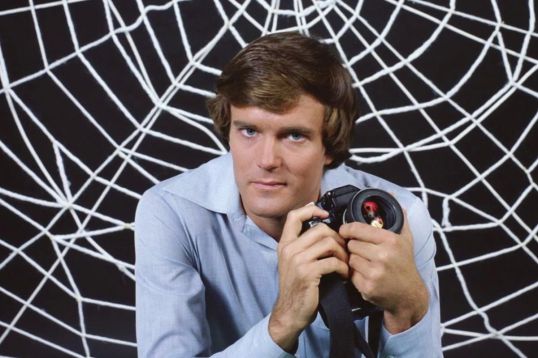
Nicholas Hammond, as Peter Parker
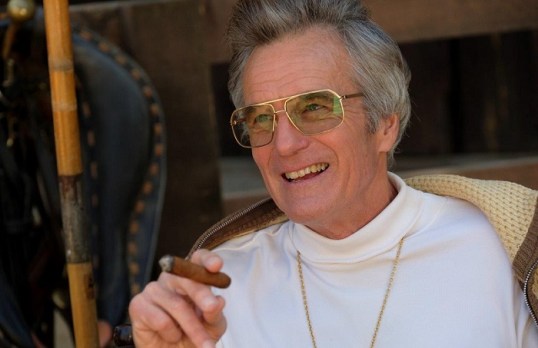
Nicholas Hammond, Today

Having an older, perhaps retired Spider-Man joining forces with the Maguire, Garfield, and Holland versions of the character would have provided an extra-dimension to the movie, much as used to happen on Doctor Who whenever any of the previous incarnations of the Time Lord would meet the newest version.

Regardless of who plays him or whether he’s Peter Parker or Miles Morales, Spider-Man remains the hero to whom we can all relate.  Spider-Man is all of us.

Happy Spider-Man Day to all!

Music Video of the Day: It’s On Again by Alicia Keys, featuring Kendrick Lamar, Pharrell Williams, Hans Zimmer (2014, directed by Rich Lee)


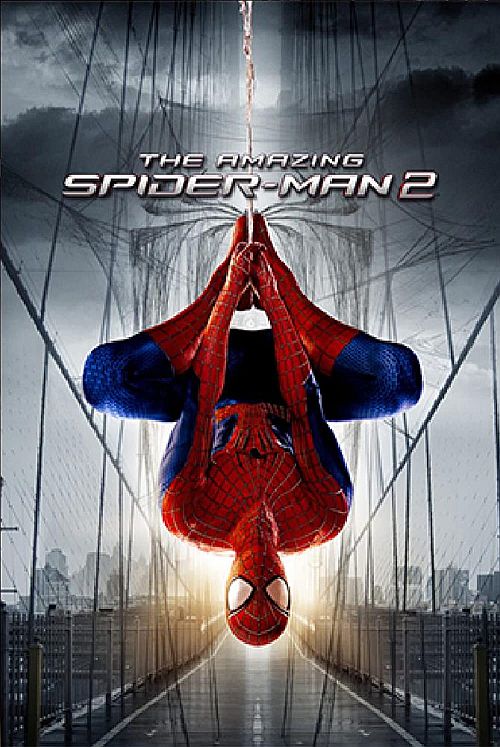
The Amazing Spider-Man 2.  It’s not my favorite Spider-Man movie, though that’s not the fault of Andrew Garfield or Emma Stone.  As a movie, it was clearly trying too hard to match the MCU without actually being a part of the MCU.  (Later, we found out that both the Garfield and the Maguire Spider-Men were a part of the Multiverse but, when they were first released, both sets of Spider-Man films were trapped in limbo.)  The script turned Electro into just another boring villain and Gwen Stacy was no Mary Jane Watson.

I can’t deny, though, that the soundtrack was awesome.  Alice Keys and Kendrick Lamar performed It’s On Again for the film and the music video, along with being a throwback to the type of music videos that used to regularly be made to promote the movies, also hints at what we were all hoping The Amazing Spider-Man 2 would actually be.

The video was directed by Rich Lee, who has also done videos for Eminem, Lana Del Rey, Billie Eilish, Maroon 5, The Black Eyed Peas, Norah Jones, Slash Michael Bublé, The Pussycat Dolls, and The All-American Rejects.

Enjoy!

Poison (2001, directed by Jim Wynorksi)


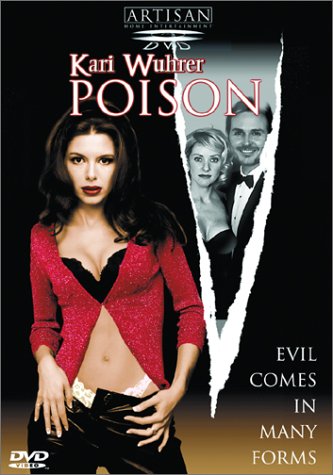
After her husband commits suicide, Ann Stewart (Kari Wuhrer) seeks revenge on the CEO who fired him and Nicole Garrett (Barbara Crampton), the woman who get the promotion that he was counting on.  Ann has good reason for being upset, seeing as how she slept with the CEO specifically so he wouldn’t fire her husband.  When she finds out that the her husband was never even being seriously considered for the promotion and all of that extramarital sex was for nothing, Ann snaps.  Somehow, Ann not only knows how to blow up the CEO and his family but also how to get away with.  However, her plot against Nicole is more complicated.  After murdering Nicole’s housekeeper, Ann takes her place.  Soon, Ann is trying to seduce both Nicole’s husband (Jeff Trachta) and her son (Seth Jones) while encouraging Nicole’s teenage daughter (Melissa Stone) to be even more slutty than before.  Ann discovers that Nicole can be a demanding boss and that she and her husband are on the verge of splitting up.  Ann also learns that Nicole is diabetic and has to be careful what she eats.  That’s good information to have, now that Ann is the one preparing all of her meals!  Ann sets her plan in motion.  To quote the song of old, that girl is poison.

Poison is typical of the films that used to show up on Cinemax late at night.  It’s also a Jim Wynorski film and you always know what you’re getting into with Wynorski.  Poison has all of the gratuitous shower scenes and naked midnight swims that you would expect from a film like this.  It also has the same basic plot as Scorned, with Kari Wuhrer taking on the Shannon Tweed role of the vengeance-obsessed widow.  It’s hard to say who did the role better.  Tweed was more calculated in the way she destroyed the family while Wuhrer is more obviously unhinged and impulsive in her actions.  Perhaps because Jim Wynorski directed Poison while Andrew Stevens was responsible for Scorned, Poison is a little more self-aware that Scorned and has more of a sense of humor about itself than Scorned did.  Ann is eventually as angry about Nicole being a demanding employer as she was about her husband committing suicide.  Fans of these movies will want to see Poison for the chance to watch Barbara Crampton and Kari Wuhrer face off against each other.  Both of them bring their best.

It’s Wynorski.  You know what you’re getting.

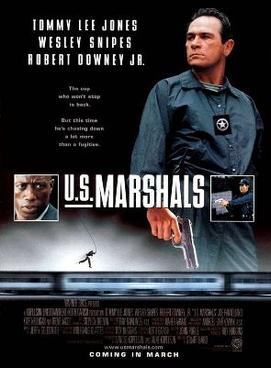
U.S. Marshals (1998, directed by Stuart Baird)


Mark Roberts (Wesley Snipes), formerly of the Diplomatic Security Service and wanted for murder, escapes when his prison transport aircraft crashes into an Illinois swamp.  U.S. Marshal Sam Gerard (Tommy Lee Jones) was on the same flight and quickly assembles his team so that they can track down and capture the fugitive.  That’s what Sam Gerard does.  He’s the best fugitive hunter around.  Complicating matters is that an inexperienced DSS agent named John Royce (Robert Downey, Jr.) has been assigned to the team.  Royce says that the men that Mark killed were friends of his and this hunt is personal for him.  However, Sam suspects that Mark might not be as guilty as he seems.  Considering that the last high-profile fugitive that Sam chased was also innocent, I have to wonder why Sam has any faith in the system at all.

Based on the classic televisions how, The Fugitive was one of the biggest film hits of 1993 and it also became one of the few action films to receive an Oscar nomination for Best Picture of the Year.  Even though the film starred Harrison Ford as a doctor wrongly convicted of murdering his wife, it was Tommy Lee Jones who got all the best lines and all the critical attention.  Tommy Lee Jones was also the one who received an Oscar for his work on the film.  The Fugitive was such a hit that it was pretty much guaranteed that there would be a sequel.  Since there were only so many times that Richard Kimble could reasonably be wrongly convicted of murder, it also made sense that future films were focus on Sam Gerard and his team.

U.S. Marshals was the first Fugitive sequel and, as a result of terrible reviews and a lackluster box office performance, it was also the only sequel.  I saw U.S. Marshals when it was first released in 1998.  I enjoyed it but I was also a teenage boy.  Back then, I liked everything as long as it featured a car chase, a gunfight, and a leggy female lead.  Last night, I rewatched the film for the first time since it was originally released and I still enjoyed it but I could also understand why U.S. Marshals didn’t lead to a Sam Gerard franchise.  

The plane crash was as cool as I remembered.  So was the scene where Wesley Snipes escaped from Sam by jumping onto a train.  (That scene was featured in all of the commercials.)  The scenes of Tommy Lee Jones getting frustrated with incompetent local law enforcement were still entertaining, as were the scenes of him interacting with his team.  I even liked the much-criticized cemetery stakeout.  There was much about the film to like but the main problem was that Sam Gerard works better as a supporting player than as a leading character.

Harrison Ford really doesn’t get enough credit for the success of The Fugitive.  One the main reasons why that film works is because Ford is so likable and sympathetic as Richard Kimble.  It’s entertaining to check in on Sam and his team but it’s Ford who makes us care about the story.  In U.S. Marshals, Wesley Snipes’s character is never as clearly defined as Kimble.  We learn very little about him, other than he tries not to actually hurt anyone while escaping.  There’s no emotional stakes to whether Mark is innocent or guilty and no real suspense as Sam goes through the motions of hunting him.  Sam may still have a way with words but, in U.S. Marshals, he’s just doing his job.  Things do get personal when Sam and his team are betrayed by one of their allies and a member of the team is killed but even then, it doesn’t make sense that the bad guy, who had been pretty careful up until that point, would mess up his plans by impulsively killing someone who hadn’t really witnessed anything that incriminating.

I think U.S. Marshals missed its calling.  Sam and his team were entertaining enough that, if they had starred in a weekly television show called U.S. Marshals, it probably would have run for ten seasons.  As a movie, though, it can’t escape the long shadow of The Fugitive.


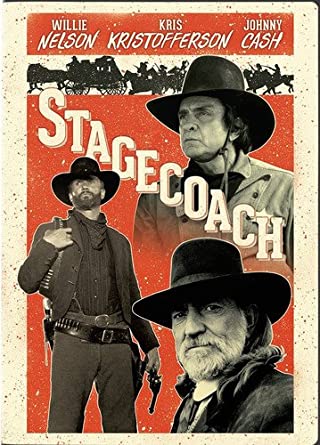
Stagecoach (1986, directed by Ted Post)


The year is 1880 and Geronimo and his Apaches are on a warpath against the people who have taken their land.  Despite the warnings of the local Calvary officers, one stagecoach tries to make the long journey from Arizona to New Mexico.  The seven passengers may start out as strangers but they’re going to have to work together to survive the journey.  The most famous passenger is dentist-turned-gunslinger Doc Holliday (Willie Nelson).  The most infamous is the Ringo Kid (Kris Kristofferson), an outlaw who has recently escaped from prison and who is looking for revenge against the men who framed him for a crime that he didn’t commit.  Henry Gatewood (Anthony Fraciosa) is a banker who has embezzled money and is looking to make a quick escape.  Foppish Trevor Peacock (Anthony Newley) sells liquor.  Dallas (Elizabeth Ashley) is a former prostitute looking to start a new life.  Mrs. Mallory (Mary Crosby) is nine months pregnant and traveling to reunite with her husband, an officer in the Calvary.  Finally, Hatfield (Waylon Jennings) is a chivalrous gambler.  Riding atop the stagecoach is Buck (John Schneider), who gets paid 8 dollars a month to risk his life taking people through Apache country, and Curly (Johnny Cash), the tough-but-fair town marshal who plans to arrest the Ringo Kid as soon as they reach civilization.

Made for television, Stagecoch is an adequate remake of the John Ford classic.  The story remains basically the same, with the main difference being that the majority of the characters are now played by country-western singers who are a few years too old for their roles.  Doc Holliday, who died of “consumption” when he was in his 30s, is played by Willie Nelson, who doesn’t look a day under 70.  The Ringo Kid is played by Kris Kristofferson, who, despite having literally played Billy the Kid a decade earlier, still doesn’t look like he’s ever been called a “kid” at any point in his life.  Compared to their original counterparts, the remake’s characters have been slightly tweaked so that they fit with the outlaw country images of the singers playing them.  Doc Holliday sympathizes with Geronimo and says that his use of whiskey is “medicinal.”  Kristofferson’s Ringo Kid is more openly contemptuous of authority than John Wayne’s.  Waylon Jennings is less of a cynic in the role of Hatfield than John Carradine was and Johnny Cash sits atop the stagecoach like a man on a holy mission.

The cast is the main reason to watch this version of Stagecoach.  The film can’t match the original but Nelson, Kristofferson, Jennings, and Cash obviously enjoyed playing opposite each other and, even if Nelson and Kristofferson are miscast, all of them bring some needed country-western authenticity to their roles.  As for the non-singers, Mary Crosby, Elizabeth Ashley, and John Schneider all make the best impressions while both Franciosa and Newley seem too 20th Century for their western roles.  Director Ted Post does a good job with the action scenes and keeps the story moving, even if the remake’s status as a TV production keeps him from capturing visual grandeur of Ford’s original.  Stagecoach is a respectful remake of a classic, one that can be appreciated when western fans on its own merits.

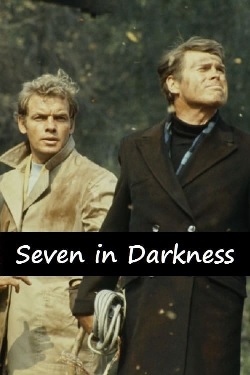
Seven in Darkness (1969, directed by Michael Caffey)


A group of blind people, led by teacher Alex Swain (Barry Nelson), are flying to a convention for the blind in Seattle.  When their flight is knocked off-course by an unexpected storm, the plane crashes into a remote forest.  The plane’s crew and the one sighted passenger are all killed in the crash, leaving the eight blind passengers to fend for themselves.  The plane is perched on the edge of a mountain, there are wolves all around, and no one can see the surrounding terrain.  And one of the passengers is pregnant and could give birth at any minute!  To Alex’s resentment, the group turns to Mark (Sean Garrison) to help them survive in the wilderness.  Mark was blinded while serving in Viet Nam and he’s still haunted by what happened during the war.  At first, he resists being thrust into a leadership role but finally, it becomes clear that he has no choice.  Under Mark’s leadership and despite Alex’s protestations, the eight survivors try to find their way back to civilization.

Filmed for television and based on a novel by Leonard Bishop, Seven in Darkness is a tense and well-acted movie.  It’s not easy to watch the survivors feeling around in the darkness, trying to find their way to safety.  That we can see what they don’t makes things all the more suspenseful.  Even more importantly, the film does a good job of presenting the survivors of being individuals.  Even though they all share a disability, they still have their own personality quirks, strengths, and flaws.  Surprisingly the stand-out amongst the cast is none other than Milton Berle, cast in a dramatic role and giving a nuanced performance as the angriest of the survivors.  Watching Seven in Darkness, you come to care about all of the survivors and you get very wrapped up in whether or not they’re going to be able to make it to safety.

Seven in Darkness was the first film to be shown as a part of ABC Movie of the Week.  It can be found on YouTube.