Today’s music video of the day comes to us from Hrdza, a band from Slovakia. It’s an adaptation of an old folk song and it’s a nicely energetic and fun little video. I have to admit that as I was watching it, I saw a lot that reminded me of my own family. It’s kind of nice that I can relate a song and a music video from Slovakia to my own big American-Italian-Spanish-Irish family. Some things are universal!
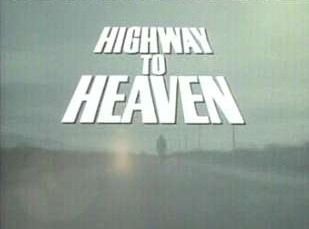
Welcome to Late Night Retro Television Reviews, a feature where we review some of our favorite and least favorite shows of the past! On Thursdays, I will be reviewing Highway to Heaven, which aired on NBC from 1984 to 1989. The entire show is currently streaming on Tubi and several other services!
This week’s episode is a strange one.
Episode 5.12 “It’s A Dog’s Life”
(Dir by Michael Landon, originally aired on July 28th, 1989)
One night, after Jonathan foils a mugging by using “the stuff” to turn the mugger’s gun into a water pistol, Mark sits down on a curb, lies down in the grass, and bemoans that he never gets to do anything on his own. He never gets “the stuff.” He has to worry about his health while Jonathan, already being dead, cannot be hurt again. Why, he wonders aloud, does he always have to be “Jonathan’s dog?”
When Mark opens his eyes, Jonathan is gone. However, there is a dog sitting next to him. Convinced that the Boss has 1) turned Jonathan into a dog and 2) given Mark “the stuff,” Mark proceeds to reunite a runaway with his family and he also thwarts a convenience store robbery. When the dog indicates that it wants to live with the runaway and his family, Mark sadly returns to the shabby hotel where he and Jonathan were staying. He sees a man standing out on a ledge, threatening to jump.
“My first solo assignment!” Mark says.
Mark runs upstairs and climbs out onto the ledge. He tells the suicidal man that he has no fear of falling because he has the stuff. Suddenly, Jonathan appears and tells Mark to get back inside before he falls. Jonathan reveals that Mark never had the stuff and that Jonathan was never a dog. Instead, Jonathan was just off on another assignment.
Mark falls off the ledge.
Oh no, Mark’s dead!
No, actually Mark is dreaming. Mark wakes up in his hotel room and realizes that Jonathan is gone. But the dog is taking a bath….
And the episode ends!
The second-to-last episode of Highway to Heaven is an odd one. With Jonathan gone for the majority of the episode, Victor French gets the opportunity to carry a story on his own. Sadly, French himself would die before this episode aired. Unfortunately, while French is fine in this episode, the story itself is presented in the rather cartoonish style that Highway to Heaven always used whenever it featured a comedic episode. The runaway’s mother is portrayed as being such a loon that’s hard not to think that the kid would be better off on his own. As well — is Jonathan a dog or not!? The episode’s refusal to answer this question is a bit annoying.
Next week, we will finish up Highway to Heaven with the show’s final episode.
“This is some Lord of the Rings bullshit!” — Grace
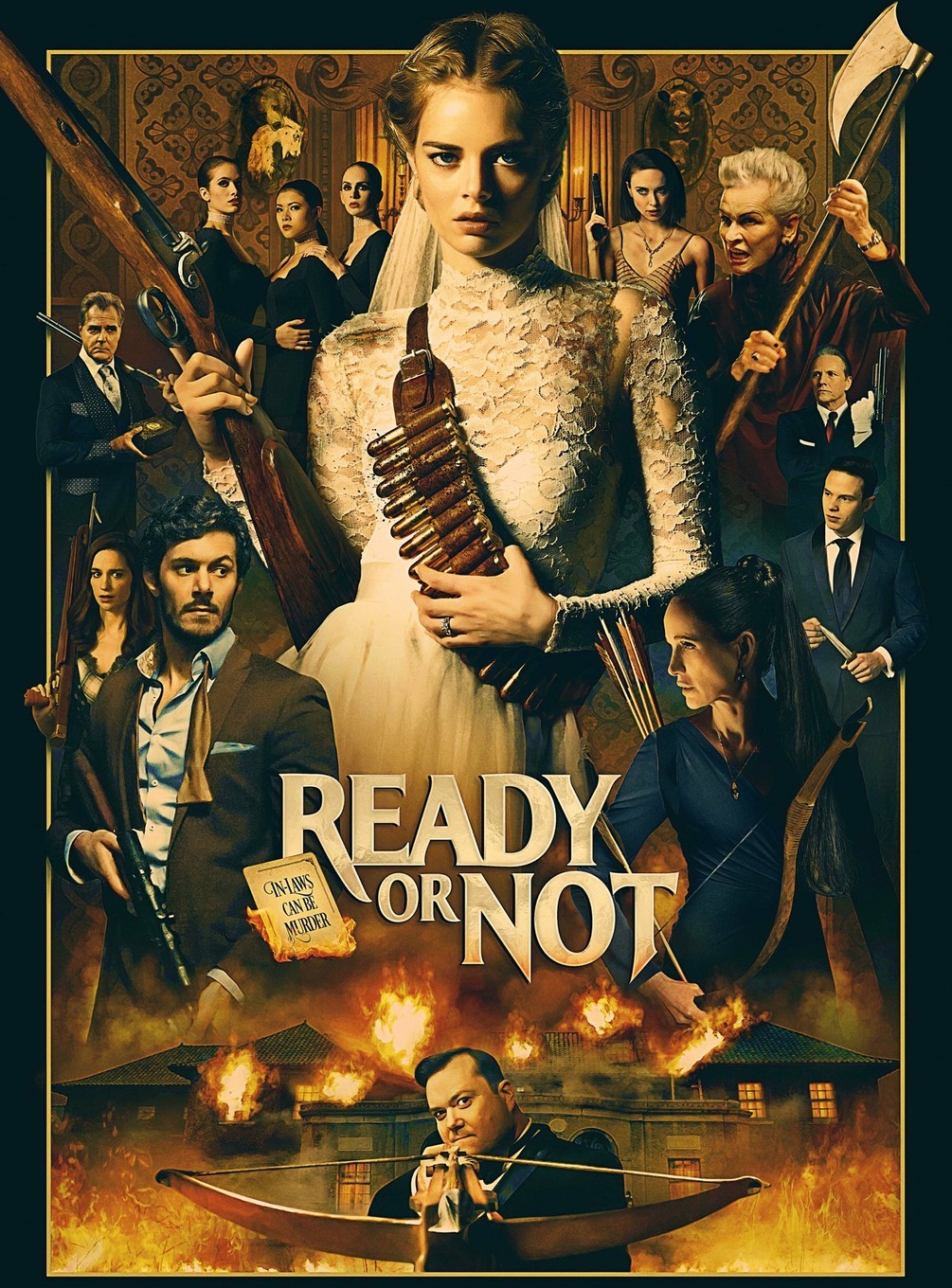
Ready or Not is a sharp, nasty, and often very funny horror-comedy that turns a nightmare wedding into a vicious class satire. It works best when it embraces its wild premise with full confidence, even if some of its deeper ideas are only lightly explored.
Directed by Tyler Gillett and Matt Bettinelli-Olpin, the film follows Grace, played by Samara Weaving, on what should be the happiest night of her life, only for her new in-laws to force her into a lethal game of hide-and-seek. That setup is simple, but it gives the movie a strong engine: one part survival thriller, one part dark comedy, and one part social commentary about money, power, and inherited privilege. The elegance of the concept is that it does not need much explanation to be effective, because the rules are clear, the stakes are immediate, and the movie wastes little time before letting the chaos begin.
The biggest strength of Ready or Not is Samara Weaving’s performance. Grace is written as someone who feels believable under pressure, which matters because the film asks her to go through absurd, increasingly brutal scenarios while still retaining her humanity. Weaving handles the tonal balancing act extremely well, moving between fear, frustration, disbelief, and darkly comic determination without losing the character’s core. She gives the film an emotional anchor, and without that, the movie would risk becoming just another splatter-heavy genre exercise.
The supporting cast also deserves credit because the Le Domas family is not just rich, but memorably awful in different ways. Adam Brody, Andie MacDowell, Henry Czerny, and the rest of the ensemble help create a household that feels polished on the surface and rotten underneath. Their performances are broadly heightened, but that fits the movie’s tone. The family’s panic, incompetence, and stubborn devotion to tradition become part of the joke, and the film gets a lot of mileage out of watching these people unravel while trying to appear dignified.
Tonally, the movie is strongest when it leans into the tension between horror and comedy. The violence is graphic, but the film rarely treats gore as the whole point; instead, it uses bloodshed as part of a larger joke about entitlement and ritual. That gives the movie a mischievous energy. It wants you to laugh at the absurdity of the situation while still feeling the danger, and for the most part it succeeds. The pacing is also a real asset, since the film avoids spending too long on setup and gets to the conflict quickly. Once the game begins, it keeps finding new ways to escalate the mayhem.
Thematically, Ready or Not is clearly aiming at class resentment and inherited wealth, and that angle gives the film bite. The Le Domas family represent old money, secrecy, and self-preserving tradition, and the movie uses their ridiculous customs to expose how fragile that world really is. There is a satirical edge to how the film portrays privilege as both absurd and dangerous, especially when the family’s traditions are treated with near-religious seriousness. At the same time, the movie is not especially subtle about this, and that can be either a strength or a limitation depending on what you want from it.
That lack of subtlety is one of the film’s few weaknesses. The “eat the rich” angle is easy to understand, but it is not always developed with much nuance, and some viewers may wish the script pushed its social ideas further. The mythology behind the family’s tradition is also deliberately loose, which helps the movie stay nimble but can make the lore feel less important than the film suggests it should be. In addition, the third act gets increasingly outrageous, and while that is part of the fun, not every twist lands with the same force. A few viewers may find the ending more satisfying than the logic that gets it there.
Even so, the film’s swagger largely carries it through those rough spots. Ready or Not understands that tone is everything in a movie like this, and it keeps its balance surprisingly well for something so gleefully chaotic. It is gory without becoming tedious, funny without undercutting the danger, and mean-spirited without losing sympathy for its lead. That is not an easy combination to pull off, and the filmmakers deserve credit for making the material feel brisk and controlled rather than sloppy or overextended.
What makes Ready or Not memorable is that it knows exactly what kind of movie it is. It is not trying to be profound in the heavy, prestige-drama sense, but it is smarter than a simple bloodbath and more disciplined than a pure shock machine. Its pleasures come from its energy, its attitude, and its willingness to let a ridiculous premise keep escalating without apology. The result is a horror-comedy with enough style, bite, and performance power to remain entertaining even when its thematic ambitions are a little broader than deep.
In the end, Ready or Not is a highly watchable genre piece with a terrific lead performance, a savage sense of humor, and a premise that stays potent from beginning to end. It is not perfect, and its satire can feel a little blunt, but it delivers exactly what it promises: a tense, bloody, darkly funny ride through a family dinner from hell.
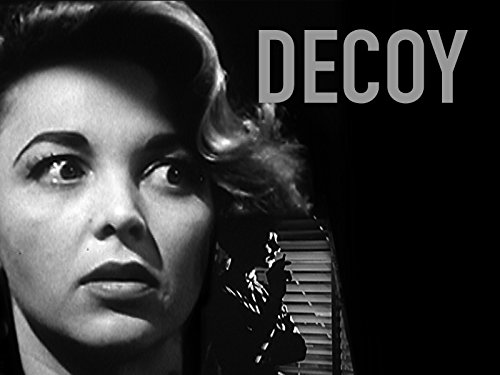
Welcome to Retro Television Reviews, a feature where we review some of our favorite and least favorite shows of the past! On Thursdays, I will be reviewing Decoy, which aired in Syndication in 1957 and 1958. The show can be viewed on Tubi!
This week, Casey investigates an elderly crime lord.
Episode 1.25 “High Swing”
(Dir by David Alexander, originally aired on March 31st, 1958)
Casey rides to the hospital with a young woman named Anne (Zohra Lampert). Anne has overdosed on heroin. Before she dies, Anne tells that Casey that she was poisoned by an old man named Otto Flagler (Albert Dekker). After learning that Anne was a pickpocket, Casey goes undercover as a thief until Otto Flagler approaches her and invites her to come live and work with him and his wife, Lily (Edith Atwater).
Casey is shocked to discover that Lily is in a wheelchair, the result of an accident that occurred when Lily was a trapeze artist. Otto is a mugger because he needs the money to take care of his wife. Casey even starts to feel sorry for Oto and Lily. That said, Casey is still a cop and she has a job to do. When Otto realizes that he and his wife are about to be arrested, he slips heroin into their coffee. By the time the police arrive, both Otto and Lily are dead.
Casey is upset. One of the other cops offers to buy her a cup of coffee. Casey says that she won’t be drinking coffee for a while.
This was a sad episode. Casey didn’t really have to do much to solve the mystery. The whole point of the episode was that Otto and Lily were not master criminals. They were two people who loved each other and found themselves in a desperate situation. That said, Otto did murder Anne so let’s not feel too sorry for him.
Albert Dekker and Edith Atwater both gave good performances and, as always, Beverly Garland was excellent in the role of Casey. This was a good episode.
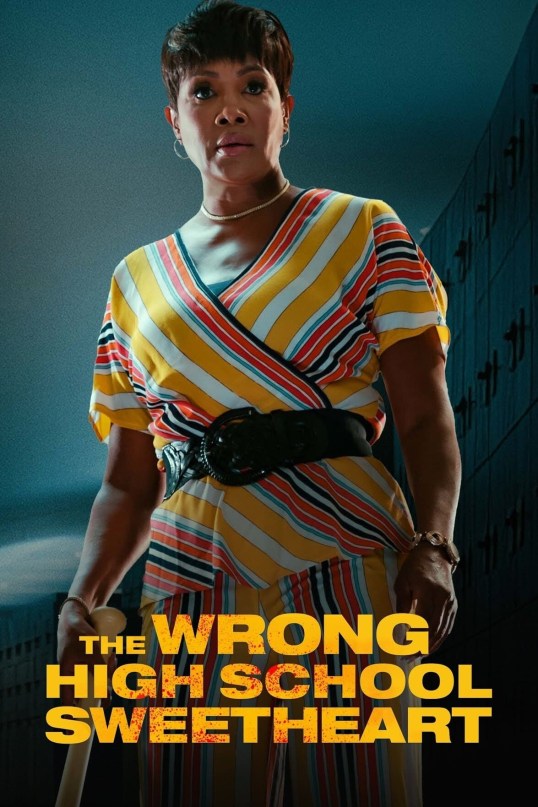
In 2022’s The Wrong High School Sweetheart, Mea Wilkerson plays Danielle, a real estate agent who dated Danny (Alex Trumble) in high school. (Dani and Danny! How cute!) Danielle and Danny broke up when Danny went off to college on a baseball scholarship. Now, Danny has returned home and he’s eager to start things up again with Danielle. Danielle’s wimpy fiancé, Tod (Doug Rogers), isn’t happy about that.
“You just had the wrong high school sweetheart,” Vivica A. Fox says once it’s become obvious that Danny is psychotic. Vivica plays the high school principal. For some reason, she is best friends with her former student, Danielle. Vivica A. Fox appears in all of the “Wrong” films and she’s usually cast as an authority figure. It almost always falls on her to say the film’s title. Sometimes, she’s a bit judgmental. If she says you “picked,” the wrong person, you know everything is your fault. In this once, she makes it clear that Danielle is not to blame because she “just had” the wrong person in her life. It’s always a fun to see Vivica in these films.
The “Wrong” films are almost always entertaining. The Wrong High School Sweetheart certainly is. David DeCoteau’s campy sensibility is uniquely suited to these films. The Wrong High School Sweetheart features Danny chanting, “Stronger than steel/Hotter than the sun/Danny Brooks won’t stop/Til he gets the job done!” while exercising in his underwear. Alex Trumble throws himself into the role of Danny and good for him.
As always with the “Wrong” films, some familiar faces show up in small roles. Tracy Nelson plays a therapist. And, of course, Eric Roberts shows up as a detective. Hopefully, we’ll get a sequel called The Wrong Detective.
Previous Eric Roberts Films That We Have Reviewed:
Cecil B. DeMille is often unfairly dismissed as a director, just as Charlton Heston is often underrated as an actor. To me, this is one of the most powerful scenes in DeMille’s filmography. The sound of the screams is haunting. However, one must remember that, as with all the plagues that afflicted Egypt, the Pharoah was given fair warning.
4 Shots from 4 Films is just what it says it is, 4 shots from 4 of our favorite films. As opposed to the reviews and recaps that we usually post, 4 Shots from 4 Films lets the visuals do the talking!
4 Shots From 4 Biblical Epics
Samson and Delilah (1949, dir by Cecil B. DeMille, DP: George Barnes)
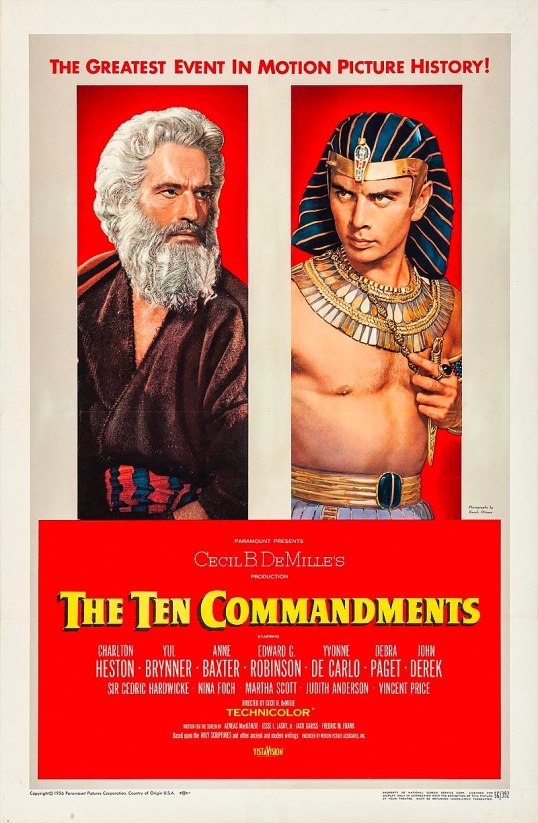
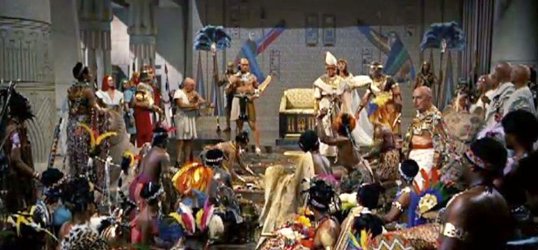
The Ten Commandments (1956, dir by Cecil B. DeMille, DP: Lloyd Griggs)
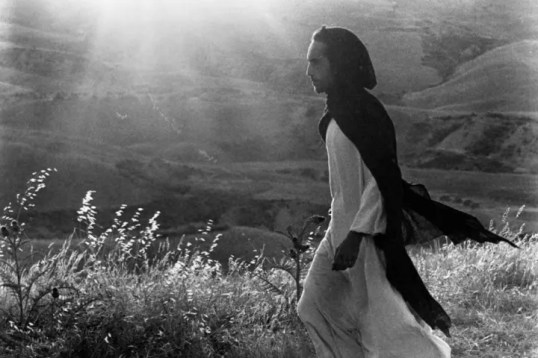
The Gospel According To St. Matthew (1964, dir by Pier Paolo Pasolini, DP: Tonino Delli Colli)
Jesus Christ Superstar (1973, dir by Norman Jewison, DP; Douglas Slocombe)



 Through the Shattered Lens