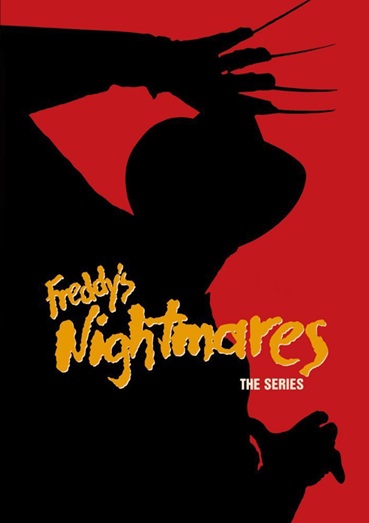
Welcome to Late Night Retro Television Reviews, a feature where we review some of our favorite and least favorite shows of the past! On Fridays, I will be reviewing Freddy’s Nightmares, a horror anthology show which ran in syndication from 1988 to 1990. The entire series can be found on Tubi!
Mimes are evil!
Episode 2.7 “Silence Is Golden”
(Dir by Charles Braverman, originally aired on November 19th, 1989)
“Here’s what on my mind tonight!” Freddy Krueger tells us as this episode starts.
Our first story is about radio DJ Rick Rake (Jeff Yagher), who has a mullet, a leather jacket, and a bad attitude. “I say what I think and I think what I say,” Rick says. When he’s visiting the park with his wife, Sheila (Sherry Hursey), a listener attempts to pick a fight with Rick. Rick throws a punch and accidentally hits a mime (Abie Selznick).
Eh, who cares? We all hate mimes, right?
Unfortunately, The mime carries a silent grudge and soon, Rick is haunted by visions of the mime everywhere. When Sheila is sucked into the ground and buried alive, the police say it was a sinkhole but Rick knows that it was the mime. Rick goes on the radio and announces that all mimes should be hunted down and killed. Rick sees the mime in the studio and, going after him, ends up taking a literal rake to the throat. Rick survives but he can no longer speak …. JUST LIKE A MIME!
In the second story, we discover that the mime is named Kip and he’s also a professional burglar. He steals to keep his girlfriend (Kim Morgan Greene) happy but he’s haunted by nightmares involving mistakes and death. When he learns that the last two people he robbed have turned up dead, Kip worries that he’s being set up. And, of course, he is.
At the end of the episode, Freddy reminds us that he’s dead so he can never be a mime or a DJ. Sorry, Freddy. You kind of brought it on yourself, though.
The first story actually worked fairly well, just because mimes are creepy. The second story was basically a noir with nightmares. I think it might have worked a bit better if Kip had just been an ordinary guy as opposed to a mime. The show never really explained if he was the same mime who killed Sheila and silenced Rick or was he just another mime in Springwood.
How many mimes are there in that town? No wonder Freddy went crazy.
Welcome to Retro Television Reviews, a feature where we review some of our favorite and least favorite shows of the past! On Fridays, I will be reviewing St. Elsewhere, a medical show which ran on NBC from 1982 to 1988. The show can be found on Daily Motion.
This week, we learn why almost all of Morrison’s patients seem to die.
Episode 3.14 “Whistle, Wyler Works”
(Dir by David Anspaugh, originally aired on January 2nd, 1985)
It’s another busy day at St. Eligius.
Having finally found a kidney donor, Dr. Westphall performs the transplant. Tshalla (Larry B. Scott) gets a new kidney but Dr. Wyler is shaken to discover that, while he’s been working in Africa, surgical techniques in America have progressed to the point that Wyler now feels undertrained.
Having managed to alienate even the super patient Dr. Morrison, Mrs. Hufnagle is now working her “charm” on Bobby Caldwell. Caldwell tells Hufnagle that she doesn’t really need plastic surgery but Hufnagle seems to really want it.
Victor freaks out when he’s not included to assist in Dr. Craig’s latest big surgery. A chance meeting with Ellen Craig leads to Victor confessing that his father died when he was young and that he’s always been looking for a new father figure.
Ellen snaps at Mark for not understand how much Victor looks up at him. Yay! I always like it when Ellen stands up to Mark. That Bonnie Bartlett and William Daniels were (and are) married in real life always adds an extra snap to these scenes.
Elliott appears to have a crush on one of Nurse Rosenthal’s daughters. There’s no way that’s going to end well.
Dr. Chandler returns from vacation (in reality, Denzel Washington was probably busy filming a movie) and deals with a patient (Jay Tarses) who is also a bigamist.
When the representative of a fly-by night medical school approaches Luther and tries to get him to enroll, Auschlander kicks the smarmy representative out of the hospital. Before the rep leaves, he mentions that St. Eligius already has at least one of his school’s graduates on staff.
Yep, it’s Jack Morrison.
It’s already been established that Jack got his medical degree from a Mexican medical school. In this episode, it’s further established that, whereas most doctors spends years in medical school, Jack graduated after six months. Jack explains that he still passed all of the tests that he was required to take but that he was also given credit for his life experience of working as a pharmaceutical rep.
Dr. Westphall is not amused. If someone could learn how to be a doctor that quickly, Westphall says, wouldn’t we all being doing it? Westphall points out that he put his reputation on the line to keep Jack around as a second-year resident. Westphall also says that this explains why Jack always seems to be misdiagnosing his patients and …. well, I think Westphall has a point!
This was not a bad episode, though I’m a bit weary of this Dr. Wyler storyline. Wyler doesn’t do much other than feel sorry for himself. I’m far more interested to see where things will be going with both Victor and Jack.
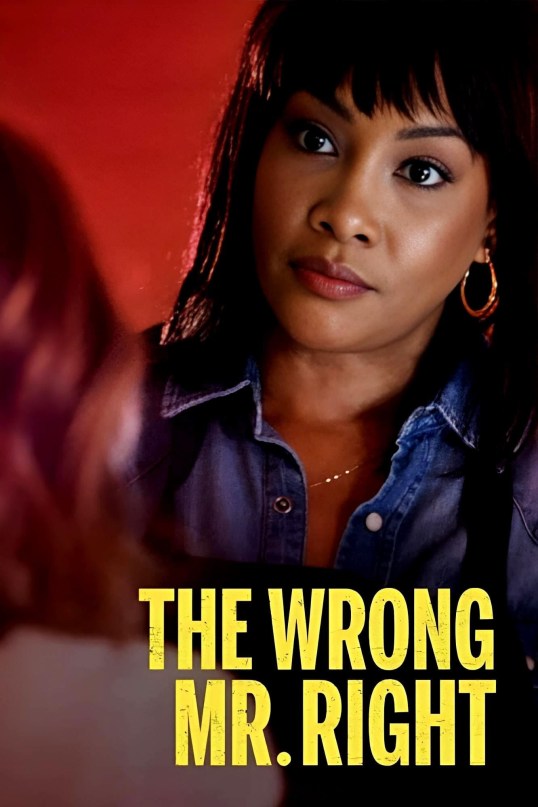
“Girl, you picked the wrong Mr, Right,” Sandra (Vivica A. Fox) says towards the end of 2021’s The Wrong Mr. Right and she’s absolutely correct.
Sandra’s best friend is Tracy (Krista Allen), whose new boyfriend Paul (Rob Hillis) has recently moved into her huge home. (The house should be familiar to anyone who has seen a David DeCoteau film.) Tracy’s daughter, Jessica (Anna Marie Dobbins), is suspicious of Paul and she has every right to be. Paul is not only a con artist and a murderer but he’s also so dumb that he leaves a box full of all the evidence of his wrong doings sitting in his office, where anyone could easily find it and go through it.
In general, I enjoy the “Wrong” films but I have to admit that even I couldn’t suspend my disbelief long enough to buy that Tracy would not only trust Paul but also continue to trust him even after it was revealed that his name was actually Michael O’Neill. I shared Jessica’s frustrations and, to her credit, Anna Marie Dobbins went through the film with a “What the heck!?” expression on her face that made Jessica very relatable.
The usual DeCoteau suspects all make appearances in this film. Dominique Swain, Meredith Thomas, Kirstine DeBell, and Michael Gaglio all have small roles. Best of all is Eric Roberts, who plays a jaunty private detective. He doesn’t get much screentime but this is still one of Roberts’s better cameo appearances. I’m going to guess that he must have been in a good mood on the day he shot his scenes. His character is definitely one of the highlights of the film.
In closing, I should mention that this film takes place in Texas. While I’m pretty sure that the house was located in Canada, there were at least a few scenes that were apparently shot in Austin. That was nice to see. The Wrong films are branching out!
Previous Eric Roberts Films That We Have Reviewed:
“You call it tradition. I call it rich people practicing murder.” — Grace
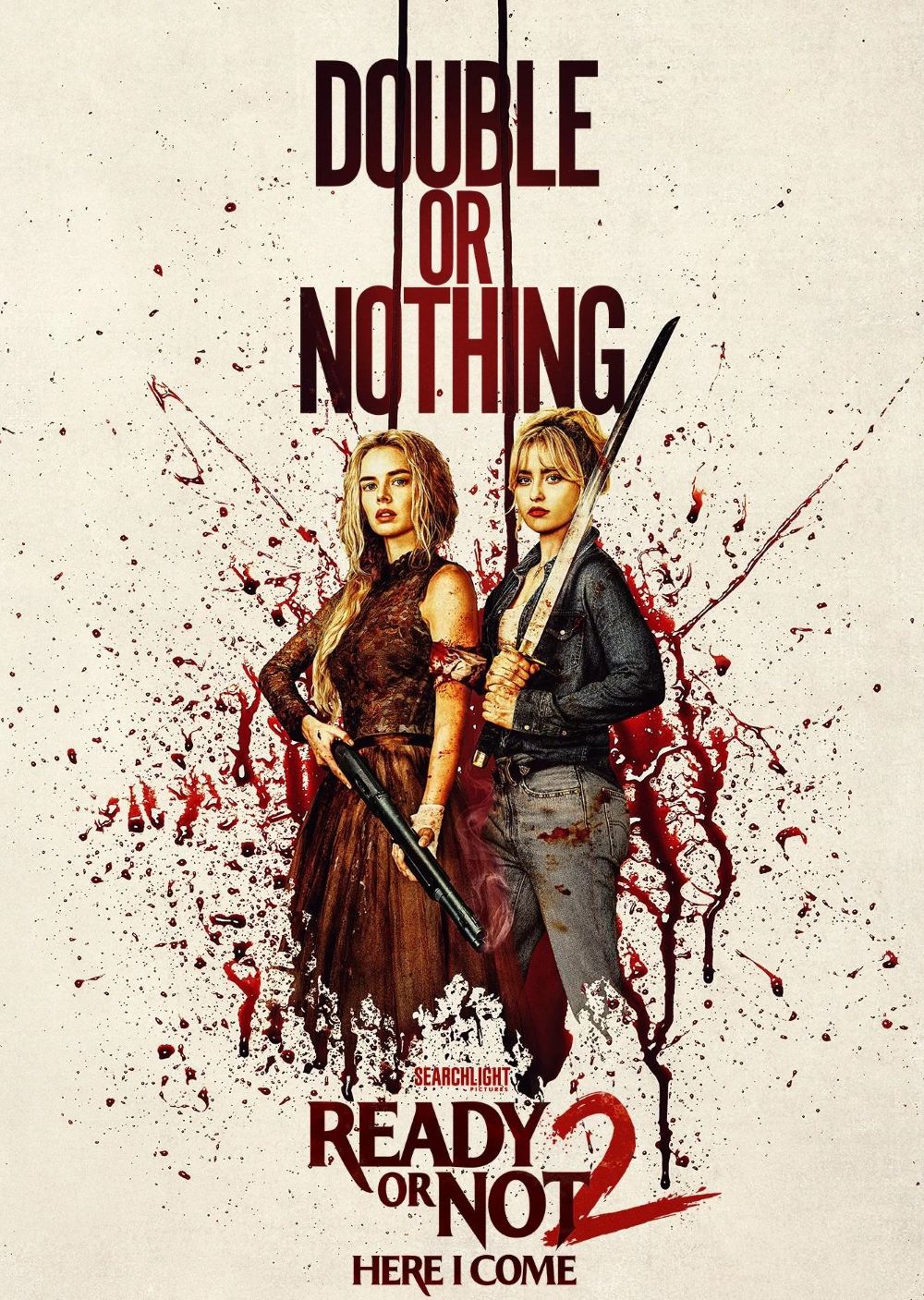
Ready or Not 2: Here I Come returns to the savage, high‑class dystopia of the Le Domas bloodline with a more manic, more crowded, and far bloodier version of the original’s “game‑night‑from‑hell” premise. Picking up years after the events of Ready or Not (2019), the film keeps Samara Weaving’s Grace at the center but expands the stakes beyond one family’s cursed estate into a loose oligarchy of ultra‑rich cultists, each with their own warped sense of tradition and entitlement. The result is a horror‑comedy that feels less like a slow‑burn ambush and more like a running, blood‑slicked marathon, where the line between satire and spectacle blurs but rarely collapses.
What distinguishes Ready or Not 2: Here I Come from many sequels is how deliberately it both leans into and pushes past the formula that made the first film such a cult hit. Rather than replay a single night of hide‑and‑seek in a shuttered mansion, this chapter sends Grace and her newly introduced estranged sister Faith (played by a suitably frazzled and sardonic Kathryn Newton) hurtling through multiple estates, country clubs, and private compounds, each governed by its own set of sadistic rules. The “game” is no longer a one‑family ritual but a broader network of wealthy families that have weaponized occult tradition as a way to justify their casual cruelty. This widening of the universe gives the film a more sprawling, almost procedural feel, as if the audience is being dragged through a gauntlet of different flavors of rich‑person depravity.
The script’s decision to pair Grace with another female lead is one of the film’s stronger creative choices. The strained sibling dynamic between Grace and Faith mirrors the original’s examination of family, but through a more grown‑up, emotionally messy lens. Their bickering and reluctant cooperation prevents Grace from simply repeating the same resilient‑final‑girl schtick; instead, she becomes a kind of worn‑out mentor forced to drag someone else into the nightmare she barely survived. The sisters’ chemistry—equal parts snark, vulnerability, and grudging solidarity—stops the film from devolving into pure nihilism and keeps the audience invested in their survival, even when the body count around them threatens to overwhelm the narrative.
Visually, Ready or Not 2 leans harder into its gore‑buff aesthetic than the first film did. The kills are more elaborate, more inventive, and frankly more grotesque, with set‑pieces involving everything from industrial kitchen equipment to ritualized animal sacrifice and spiked pits. Director Matt Bettinelli‑Olpin and Tyler Gillett, collectively known as Radio Silence, understand that the franchise’s appeal lies as much in its darkly comic carnage as in its social commentary, and they lean into that balance with gusto. The camera lingers on the absurdity of seeing millionaires in bespoke suits and designer gowns being dismantled in grotesque, almost slapstick fashion, which heightens the film’s “eat‑the‑rich” subtext without feeling like a lecture. The horror is still visceral, but it’s also frequently absurd, which fits the tone they’ve established since the original.
The escalation of violence, however, is also the film’s most obvious point of tension. Some of the more extreme set‑pieces verge on the gratuitous, and the pacing occasionally stumbles when the movie pauses between massacres to re‑establish lore or introduce new cult families. Not every supporting antagonist lands with the same impact as the original Le Domas clan; a few of the new patriarchs and matriarchs feel more like walking punchlines than genuinely threatening presences. The film compensates by front‑loading its energy with early, high‑impact kills and goofy one‑liners, but there are stretches where the plot feels like it is waiting for the next big set‑piece rather than organically building toward it.
One of the more interesting additions to the cast is Sarah Michelle Gellar, who pops up in a mid‑film role that taps into genre‑fan nostalgia while also deepening the film’s exploration of complicity and corruption. Gellar’s character is not the altruistic hero she personified in earlier horror‑adjacent roles; instead, she embodies a kind of jaded, self‑interested survivor who has learned to weaponize the same systems of privilege that the Le Domas exploited. Her presence calls attention to the cyclical nature of abuse and privilege in the film’s world: evil tendencies don’t disappear with one family’s downfall; they simply migrate to the next generation of the wealthy and powerful. This commentary on systemic rot is not subtle, but it also doesn’t feel out of place in a franchise that has always mixed political anger with slapstick brutality.
Where Ready or Not 2 arguably falters is in its structural confidence. The original film’s strength lay in its tight runtime and single‑location claustrophobia; the sequel’s sprawling geography and ensemble of killers make it feel looser and more episodic. The middle section in particular risks feeling like a series of vignettes tied together more by tone than by forward momentum. Some of the attempted twists and revelations toward the end rush past the audience before they can fully land, and there is at least one late‑stage development that feels less like a surprise and more like a contractual obligation to franchise‑building. The film clearly wants to set up a possible trilogy, but in doing so it occasionally sacrifices the emotional and narrative payoff that would make its closing sequences truly memorable.
Even with these flaws, the core appeal of Ready or Not 2: Here I Come remains intact. Samara Weaving continues to command the screen with a mix of physical toughness and wounded intelligence, and she’s paired here with a credible foil in Kathryn Newton who pushes her character into new emotional territory. The film also maintains the sharply satirical DNA of its predecessor, using its murderous rituals as a funhouse‑mirror reflection of real‑world conversations about wealth, inheritance, and generational trauma. The kills are over‑the‑top, the politics are broad, and the pacing is uneven, but the movie never loses sight of what it wants to be: a darkly comic splatterfest that lets audiences cheer for the underdog while watching the decadent one percent spectacularly implode.
As some of our regular readers undoubtedly know, I am involved in a few weekly watch parties. On Twitter, I host #FridayNightFlix every Friday and I co-host #ScarySocial on Saturday. On Mastodon, I am one of the five hosts of #MondayActionMovie! Every week, we get together. We watch a movie. We tweet our way through it.
Tonight, at 10 pm et, I will be hosting #FridayNightFlix! The movie? 1973’s Jesus Christ Superstar!
If you want to join us this Friday, just hop onto twitter, find Jesus Christ Superstar on Prime, start the movie at 10 pm et, and use the #FridayNightFlix hashtag! I’ll be there happily tweeting. It’s a friendly group and welcoming of newcomers so don’t be shy.
There’s several reasons I love this scene but mostly it just comes down to the fact that it captures the explosive energy that comes from watching a live performance. Larry Marshall (who plays Simon Zealotes) has one of the most fascinating faces that I’ve ever seen in film and when he sings, he sings as if the fate of the entire world depends on it. That said, I’ve never been sold on Ted Neely’s performance as Jesus but Carl Anderson burns with charisma in the role of Judas.
Mostly, however, I just love the choreography and watching the dancers. I guess that’s not that surprising considering just how important dance was (and still is, even if I’m now just dancing for fun) in my life but, to be honest, I’m probably one of the most hyper critical people out there when it comes to dance in film, regarding both the the way that it’s often choreographed and usually filmed. But this scene is probably about as close to perfect in both regards as I’ve ever seen. It goes beyond the fact that the dancers obviously have a lot of energy and enthusiasm and that they all look good while dancing. The great thing about the choreography in this scene is that it all feels so spontaneous. There’s less emphasis on technical perfection and more emphasis on capturing emotion and thought through movement. What I love is that the number is choreographed to make it appear as if not all of the dancers in this scene are on the exact same beat. Some of them appear to come in a second or two late, which is something that would have made a lot of my former teachers and choreographers scream and curse because, far too often, people become so obsessed with technical perfection that they forget that passion is just as important as perfect technique. (I’m biased, of course, because I’ve always been more passionate than perfect.) The dancers in this scene have a lot of passion and it’s thrilling to watch.
4 Or More Shots From 4 Or More Films is just what it says it is, 4 shots from 4 of our favorite films. As opposed to the reviews and recaps that we usually post, 4 Shots From 4 Films lets the visuals do the talking!
102 years ago, on this date, Marlon Brando was born in Omaha, Nebraska. One of the greatest of American actors and one of the main reasons why so many young actors became enamored with the Method, Marlon Brando played many roles in our culture. When he was young, he was a Broadway bad boy. When he went out to Hollywood, he became a legitimate movie star. In the 60s, he was a cautionary tale as his career suffered a series of notorious flops. In the 70s, he made a comeback and, in during the final years of his career, he was as known for his eccentricities as for his talent. It’s a shame that those eccentricities overshadowed Brando as an actor. When he wanted to be, he was one of the best to ever appear on stage or in the movies.
In honor of the wonderful, tragic, and talented Marlon Brando, it’s time for….
4 Shots From 4 Marlon Brando Films
A Streetcar Named Desire (1951, dir by Elia Kazan, DP: Harry Stradling)
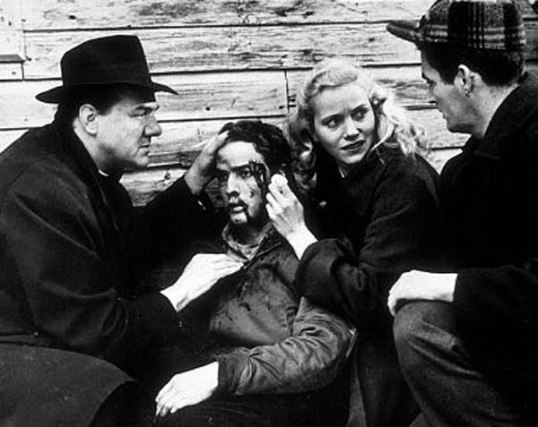
On The Waterfront (1954, dir by Elia Kazan, DP: Boris Kaufman)
The Godfather (1972, dir by Francis Ford Coppola, DP: Gordon Willis)
Apocalypse Now (1979, dir by Francis Ford Coppola, DP: Vittorio Storaro)
Today’s music video of the day comes to us from Hrdza, a band from Slovakia. It’s an adaptation of an old folk song and it’s a nicely energetic and fun little video. I have to admit that as I was watching it, I saw a lot that reminded me of my own family. It’s kind of nice that I can relate a song and a music video from Slovakia to my own big American-Italian-Spanish-Irish family. Some things are universal!




 Through the Shattered Lens