Let’s take a moment to appreciate Frank Drebin (Leslie Nielsen), a true American hero.
Even though Frank is just a Los Angeles cop, he still goes to the Middle East and disrupts a conference of America’s greatest enemies. He beats up Fidel Castro. He knocks out Gadafi and Yasser Arafat. He cleans Gorbachev’s head. (“I knew it!” he says as the birthmark disappears.) He takes out Idi Amin and he sends the Ayatollah Khomeini through a window. Thirty-seven years ago, this scene opened The Naked Gun and, after all that time, it is still funny because Leslie Nielsen plays it all with a straight face, delivering his silly lines without flinching. It’s also interesting that none of the leaders taken down by Frank Drebin are around anymore. Khomeini died just a few months after this film came out. Gorbachev was the last to go, in 2022, by which time he was no longer an enemy. Consider it the Frank Drebin Effect. He’s making the world safe for democracy.
When Drebin returns to Los Angeles, he’s informed by Captain Ed Hocken (George Kennedy) that Police Squad has been put in charge of security for a visit from Queen Elizabeth (Jeanette Charles) and that Officer Nordberg (O.J. Simpson) is in the hospital and suspected of being a dirty cop. The Mayor (Nancy Marchand) doesn’t want Los Angeles to be embarrassed by a police scandal before the Queen arrives so Drebin has 24 hours to exonerate Nordberg. Drebin’s attempt to clear Nordberg’s name leads him to a shipping magnate (Ricardo Montalban) who has come up with a diabolical scheme to assassinate the Queen at a baseball game. It also leads to love between Drebin and Jane Spencer (Priscilla Presley).
Though Liam Neeson did a fine job in the recent reboot, there really is only one Frank Drebin and his name is Leslie Nielsen. The original Naked Gun is nearly 40 years old and, even if some of the jokes are dated, it’s still laugh out loud funny. Most of the credit has to go to Leslie Nielsen and ability to deliver even the most bizarre bits of dialogue with natural authority, gravitas and a straight face. Whether he’s mumbling his way through the National Anthem, paying an informer for information, or hamming it up as an umpire, Nielsen is never less than hilarious. By the end of the movie, it’s impossible to look at Nielsen without laughing. Kennedy, Presely, and Montalban also generate their share of laughs. John Houseman has a great cameo as an unflappable driving instructor. (“Now, extend your middle finger.”) As for OJ Simpson, he doesn’t seem to be in on the joke like the rest of the cast but he does frequently get injured and re-injured throughout the movie and there’s definitely some pleasure to be found in that.
(When Simpson died, director David Zucker said, “His acting was a lot like his murdering: He got away with it, but no one believed him.” That sounds about right.)
Liam Neeson made for a fine Frank Drebin, Jr. I hope he has many more adventures. But the greatest Frank Drebin will always be Leslie Nielsen and the original Naked Gun will always be one of my favorite comedies. Sometimes, it’s good just to laugh.
In the old west, the Apache Kid (Jack Perrin) has decided to go straight because his own mother refuses to accept the stolen money that he sends home. Unfortunately, other outlaws, like Buck Harris (Bud Osborne), continue to break the law while wearing the Apache Kid’s trademark checkered scarf so the Apache Kid still has a posse after him.
Using the alias Jim, the Kid gets a job working at a local ranch. Ranch hand Ted Conway (Fred Church) is looking forward to marrying Jane Wilson (Josephine Hill), the daughter of the ranch’s owner. Ted’s father, Frank (Henry Roquemore), wants Jane for himself so he reveals that Ted is actually adopted and no one knows who his real parents are. Jane’s father (Horace B. Carpenter) announces that the wedding is canceled. So, Ted decides to take on the identity of the Apache Kid and rob a stagecoach. After Ted is arrested, Jim has to return to his old ways to help Ted get out of jail.
The Apache Kid’s Escape is a 47-minute poverty row western that is remembered for being one of the first westerns to feature recorded sound. Unfortunately, the movie sounds terrible, with a steady hum in the background and all of the actors speaking slowly, loudly, and very precisely while awkwardly trying not to look straight at the camera. Everyone noticeably hesitates before speaking, as if waiting for the director to give them the signal to go. With all of the humans struggling to speak, the film’s best performance comes from Starlight the Horse, who is a natural star. Jack Perrin went on to have an active career in B-westerns so maybe he learned how to handle acting with sound.
This was the only film to feature Perrin as the Apache Kid and it’s easy to see why. The plot doesn’t even try to make sense. If Jim wants to escape being the Apache Kid, he should be happy that so many other people are willing to take over the role for him. Perrin is also stuck wearing a really big hat, which makes him look more like a Blazing Saddles extra than a cowboy star.
There were a lot of bad westerns made during the early days of the sound era. The Apache Kid’s Escape might be the worst.
I have to admit that I groaned when Marvel’s The Fantastic Four: First Steps opened with a title card informing me that it was taking place on “Earth-828.”
You have to understand that all of the multiverse nonsense is the one of the main things that led to me losing interest in both the Marvel and the DC films. The idea that there are multiple Earths out there and they’ve all got different versions of the same heroes and villains just feels incredibly lazy to me. It’s like a get out of jail free card. If you make a bad movie, you can just claim that it was took place on another Earth. If a character dies on one Earth, it doesn’t really matter because there’s another version out there. What are the actual stakes when there’s a million different Earths to choose from? For that matter, if I’m presumably living on Earth-1, why should I care about Earth-828? Earth-828 has nothing to do with me.
Imagine my surprise, then, when one of the best things about the film was that it turned out to be that it was taking place on an alternate Earth, one that mixes the culture of the 1960s with advanced technology and a retro-futuristic style. This is a rare Marvel film that is enjoyable just to look at. The production design is top-notch, mixing the past with the future in a very playful way. As much as I dislike the whole multiverse thing, Earth-828 does seem like it would be a fun place to visit.
Earth-828 has advanced technology because of its only team of super heroes, the Fantastic Four. Fortunately, Marvel seems to understand that 1) origin stories tend to be bland in general and 2) viewers have already had to sit through two disappointing and presumably unrelated Fantastic Four films that centered around them getting their powers. So, First Steps opens with the team having already taken their trip into space, the one that led to them returning with altered DNA. Reed Richards (Pedro Pascal) can stretch himself. His wife, Susan Storm Richards (Vanessa Kirby), can turn invisible and knock things around with …. invisibility rays, I guess. Susan’s brother, Johnny (Joseph Quinn), can burst into flame and fly. (Wow, DNA is amazing!) And their friend, Ben Grimm (Ebon Moss-Bachrach), has skin that has been transformed into a layer of orange rock. Ben can knock holes in walls but he can’t seem to get the world to understand that there is an intelligent and kind-hearted soul underneath the fearsome exterior. The citizens of Earth-828 are worshipful of the Fantastic Four and the team has ushered in an era of peace.
When a naked silver woman on a surfboard (Julia Garner) appears in Times Square, she announces that Earth has been selected as the latest feast for Galactus (Ralph Ineson), a giant creature who is so powerful that he must consume planets in order to satisfy his appetite. Galactus offers to spare Earth but only if he is given Reed and Susan’s baby, Franklin. Galactus says that Franklin possesses the “power cosmic,” which is something that I assume we’re going to be hearing a lot about over the next few MCU films.
As far as later phase Marvel productions are concerned, The Fantastic Four: First Steps is an entertaining-enough film. Vanessa Kirby is a bit on the dull side as Sue but it should be noted that, in all of the various film versions of The Fantastic Four, Sue has always been the least interesting member of the group. Pascal is likable as Reed, even if his stretchy superpower feels a bit silly. Ebon Moss-Bachrach and Joseph Quinn both give strong performances, with Quinn especially bringing some depth to a character who, in lesser hands, could come across as being shallow. Ralph Ineson is a properly intimidating villain and Julia Garner has just the right amount of sad-eyed intensity for the role of the morally ambiguous Silver Surfer. The film looks great, the retro style holds the viewer’s attention, and there are a few moments of genuine wit that harken back to the best moments of the 1st phase of the MCU. That said, it’s hard to ignore that this is yet another Marvel movie where the whole thing ends with a fairly predictable battle and a healthy dose of Dues Ex Machina. The film is entertaining but it definitely sticks to the established MCU formula.
The film ends with a mid-credits scene and a promise that the story will continue in Avengers: Doomsday. I wonder what Earth that one will take place on.
1977’s Record City opens with a montage of rear-focused close-ups of women wearing short shorts and that pretty much tells you all that you really need to know about the film. It’s crass, shameless, and very much a product of its time.
The film takes place over the course of one day at a California vinyl record shop. It’s tempting to compare the film to something like Empire Records but, unlike Empire Records, Record City suggests that working in a record store is perhaps the worst thing that could ever happen to anyone. The store is dirty and grimy. The customers are rude and played by vaguely familiar comedy actors, all of whom seem to have been bitten by the overacting bug before stepping in front of the camera. The employees all seem to hate each other. Marty (Tim Thomerson) keeps getting slapped and kicked by Vivian (Deborah White). Vivian keeps getting groped by almost every customer and employee who walks by her. The only thing that Vivian hates more than men is other women. The store’s owner (Jack Carter) is in trouble with the mob. The store’s manager (Michael Callan) is lech who wears gold chains, keeps his shirt unbuttoned, and who expects the new cashier, Lorraine (Wendy Schaal), to sleep with him because, after all, he did hire her. Danny (Dennis Bowen) is the shy guy with a crush on Lorraine. Rupert (Stuart Goetz) is the nerdy virgin who goes from wearing a bowtie to dressing like a swinger but he still can’t get laid. Both the customers and the employees are paranoid about “fairies” coming into Record City. Pokey (Ed Begley, Jr.) wants to hold the place up and who can blame him? Really, the only likable employee is a black man known only as The Wiz and that’s just because he’s played by Ted Lange. (Yes, Isaac the Bartender from The Love Boat.) Lange gets to perform a song at the end of the film.
When the film isn’t focused on the antics inside Record City, it’s all about the talent show that’s taking place in a nearby parking lot. The talent show is hosted by radio DJ Gordon Kong (Rick Dees) and it gives the film an excuse to trot out a bunch of cameos, some of whom are more recognizable than others. For instance, Gallagher — the comedian with the sledgehammer — shows up. Kinky Friedman also shows up, playing himself and looking for records at Record City. When he spots a woman with a blonde bowl cut and glasses, he accuses her of being John Denver and then grabs her breasts. And to think — less than 30 years later, Kinky Friedman would run for governor of my homestate.
Anyway, this is a terrible and rather boring movie but I did find it interesting for one reason. It’s the reason why I find so many grindhouse films to be interesting. Shot on location and for no other reason than to make money, Record City is a true product of its time. There’s no attempt to try to make the 70s look nicer than they were. There’s no attempt to try to make the record store look like anything more than a tacky establishment. There’s an honesty to how low-rent the whole thing is. Watching the movie is like stepping into a time machine and getting a chance to experience the past firsthand. I was born long after the 70s but, after watching this film, I now feel like I’ve been there.
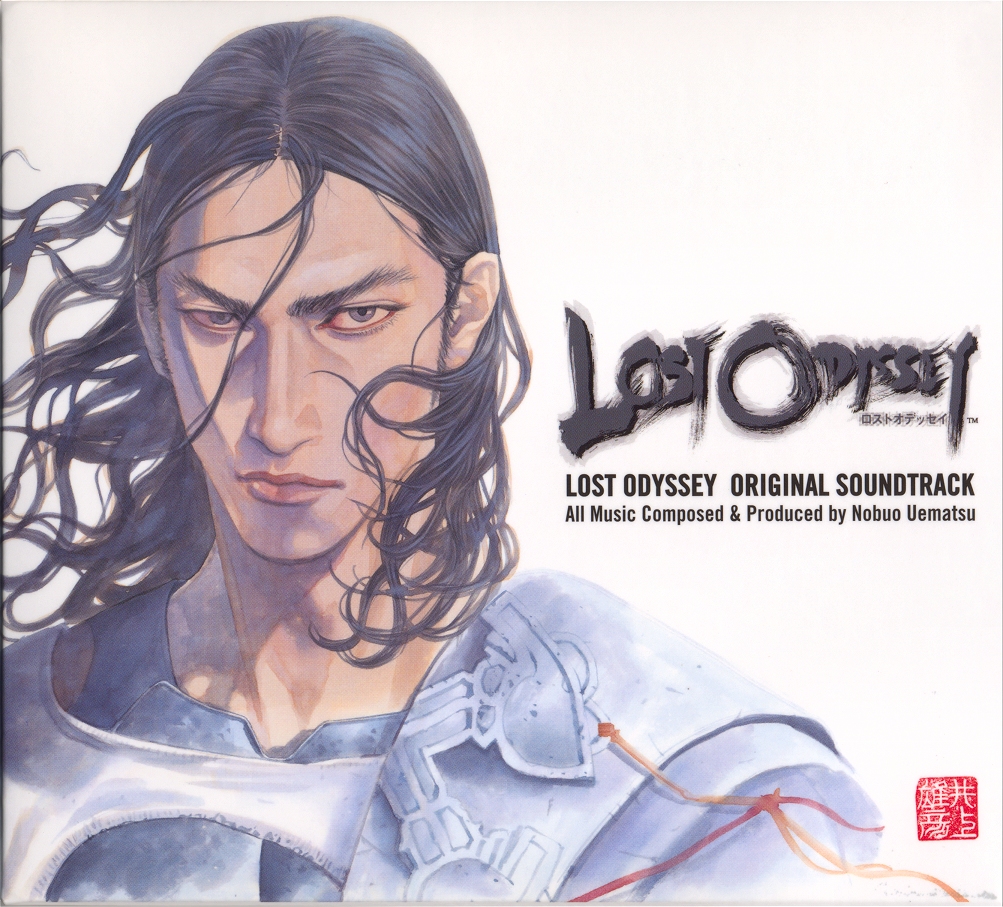
“Neverending Journey” by Nobuo Uematsu from Lost Odyssey is one of those tracks that just pulls you right into the game’s vibe without trying too hard. It kicks off super chill with soft strings and light woodwinds, creating this mellow, reflective mood like you’re wandering through old memories that won’t fade. The orchestral start feels patient and open, giving every note space to settle in before things pick up.
Then comes that smooth shift where the electric guitar riffs crash in — bold, distorted, and full of grit, but it flows naturally from the gentle opening. It’s like Uematsu’s flipping the switch from quiet nostalgia to raw determination, blending classical swells with rock edge in a way that screams the game’s themes of endless struggle. The guitar doesn’t steal the show; it amps up the emotion, turning introspection into something with real forward drive.
That mix is why the track sticks with you — Uematsu nails the immortal wanderer’s paradox, weary but unbreakable. From serene strings to guitar-fueled resolve, it captures Kaim’s story perfectly, making you feel the weight and hope of a journey with no end. It’s a standout that proves game music can hit as deep as any epic soundtrack.
1980’s The Final Countdown opens with a series of stunning overhead shots of Pearl Harbor. Warren Lasky (Martin Sheen), a systems analyst for Tideman Industries, is sent by his mysterious employer to observe operations on the USS Nimitz. Captain Yelland (Kirk Douglas), the commanding officer of the Nimitz, is polite to Lasky, even if he doesn’t quite understand why he’s been sent. For that matter, Lasky’s not sure what he’s supposed to do either. When the Nimitz is surrounded by a sudden storm and programs from 1941 start playing over the radio, Yelland suspects that it’s some sort of test and that Lasky has been sent to see how they react. However, when two Japanese airplanes are spotted overhead, it becomes clear that the Nimitz has somehow traveled through time. The date is December 6th, 1941 and, in just 24 hours, the Japanese are going to attack Pearl Harbor.
Commander Dick Owens (James Farentino) argues that it would be dangerous to try to change history by attacking the approaching Japanese fleet. However, it appears that the Nimitz has already changed history by saving the life of U.S. Senator Samuel Chapman (Charles Durning), who Owens believes would have been Roosevelt’s running mate in 1944 if he hadn’t been killed the day before Pearl Harbor. With Chapman demanding that Pearl Harbor be warned and Lasky arguing that the Nimitz should try to change history by preventing the attack, Captain Yelland has a decision to make.
The Final Countdown was made with the full support of the U.S. Navy. The production was allowed to film on the Nimitz and, outside of the main stars, the crew of the Nimitz played themselves. As a result, there’s a lot of awkward line deliveries amongst the minor characters but there’s also an authenticity to the film that elevates the story. Even when it becomes obvious that the Nimitz has traveled back to 1941, the crew handles things in a professional manner. One comes into the film expecting a good deal of panic and freaking out and instead, the movie offers up a ship of people who play it cool and who get the job done and it’s kind of nice to see. As for the professional actors, they all play their parts well enough. Charles Durning gets to bluster a bit as the senator and Katharine Ross (playing the senator’s secretary) looks like she’d rather be anywhere but on a aircraft carrier but Kirk Douglas, Martin Sheen, James Farentino, and Ron O’Neal all give solid, if not particularly memorable, performances.
The film asks an interesting question. Would you change history? For that matter, can history actually be changed? If the Nimitz prevented the attack on Pearl Harbor, would it have changed history for the better (as Lasky suggests) or would it have just kept America out of the war for a longer period of time? Would Japan have given up its plans to attack America or would its leaders have tried again? On a personal note, I’ve been to Pearl Harbor and it’s a moving experience. It’s hard not to look down at the remains of the USS Arizona and not feel something. I remember that, when I looked down at the Arizona, the first thing that I felt was anger that a ship that was sunk in an unprovoked attack also served as the tomb so many men who served their country. But then I felt a certain pride in the fact that, in the 1940s, America didn’t take that attack lying down. America didn’t make excuses or surrender. America stood for itself and kicked some ass and the world was and is better for it.
As for The Final Countdown, Don Taylor’s direction is fairly stolid (Taylor was no visual stylist) and there’s never really any explanation as to why the Nimitz went into the past in the first place. That said, I enjoyed the film. The premise is an intriguing one and the final twist works far better than one might expect. The Final Countdown is a good film that gets the job done.
1976’s The Cassandra Crossing opens with a shot of the headquarters of the World Health Organization in Geneva, Switzerland. Though the film (and the shot) may be from the 70s, one look at the ugly brutalism of the WHO’s headquarters is all it takes to understand the mentality that, nearly 50 years later, would lead to the organization serving as China’s mouthpiece during the COVID pandemic.
Three Swedish terrorists attack the American mission at the WHO. One of them is killed by a guard. Another immediately falls victims to an unidentified disease that is apparently a new form of the Bubonic plague. The third (Lou Castel) escapes and boards a train that is heading for Sweden. Two Americans, Col. MacKenzie (Burt Lancaster) and Major Stack (John Phillip Law), and Swedish doctor Elena Stadner (Ingrid Thulin), try to figure out how to stop the spread of the infection.
While the infected terrorist lurches around the train, the passengers go through their own personal dramas. Renowned neurologist Jonathan Chamberlain (Richard Harris) flirts with his ex-wife, writer Jennifer Rispoli (Sophia Loren). Wealthy Nicole Dressler (Ava Gardner, whose voice sounds like a cigarette ad) boards the train with her heroin-addicted younger boyfriend, Robby Navarro (a long-haired, dark glasses-wearing Martin Sheen, acting up a storm and apparently having a lot of fun for once). Herman Kaplan (Lee Strasberg) is a regular on the train, a Holocaust survivor who enjoys a good chess game with the conductor, Max (Lionel Stander). Haley (OJ Simpson) is a narcotics agent who is disguised as a priest. Susan (Ann Turkel) is the hippie who just wants to have sex with her boyfriend (Ray Lovelock) but who keeps getting interrupted by other passengers. When she complains about already having had to already deal with one “sweaty pervert” during the day, Chamberlain replies, “Which sweaty pervert?” By this point, Chamberlain knows about the infected man and is trying to track him down before he can infect anyone else on the train.
The Cassandra Crossing is several films in one. It’s an all-star disaster film. It’s medical thriller. Once Col. MacKenzie decides that the best way to deal with the train (and to cover-up the fact that America was researching germ warfare) would be to send the train over the infamous Cassandra Crossing, an unstable bridge that is on the verge of collapse, it becomes a conspiracy thriller. It’s all a bit ludicrous, though in this post-pandemic age, there is definitely a renewed power to the images of Hazmat suit-wearing soldiers carrying submachine guns and threatening to kill anyone who resists going into quarantine. When it comes to films that make Hazmat suits look menacing, The Cassandra Crossing can proudly stand with George Romero’s The Crazies and Zombi 3.
Of course, with any disaster film, the real purpose of the movie is to gather together a collection of familiar faces and then allow the viewer to spend two hours trying to guess who will survive and who will not. The cast is full of actors who all probably deserved a better script. Richard Harris, Burt Lancaster, and Ingrid Thulin all look somewhat embarrassed. Ava Gardner and Martin Sheen fully embrace the melodrama. In fact, it’s hard for me to think of any other movie where Sheen actually seemed to be having as much fun as he does while playing the drug-addicted, prone-to-histrionics mountain climber in The Cassandra Crossing. As was typical of his film career, O.J. Simpson gives a very earnest performance. He’s not exactly good but it’s obvious that he’s trying really hard and it would make him likable if not for the fact that he’s O.J. Simpson, just 20 years away from getting away with murder. Out of the ensemble cast, Lionel Stander, Lee Strasberg, and Sophia Loren are the one who probably come the closest to actually giving good performances. Loren’s husband, Carlo Ponti, produced the film with Sir Lew Grade and Loren gives a performance that is blessed with the confidence of knowing her career had survived far worse than The Cassandra Crossing.
The Cassandra Crossing is the epitome of a film that’s not necessarily good but which is definitely entertaining. Between the drama-stuffed plot and the overwritten dialogue and the performances of Gardner and Sheen, it’s campy in the way that only an overproduced 70s disaster film can be. For certain viewers, there’s undoubtedly a lot of joy to be found in the scenes in which the passengers finally start to stand up to the authoritarians trying to force them into quarantine. That said, this is one of those films where we’re not meant to get particularly upset about hundreds of innocent people dying just because the main characters managed to come through unscathed. The film’s ending is right up there with Man of Steel as far as needless destruction is concerned. Fortunately, the ending also features some terrible miniature shots, all of which remind us not to take it all too seriously.
To paraphrase another 70s film: “Forget it, Jake. It’s The Cassandra Crossing.“
It’s the start of a new year and it seems like all things are possible! Here are some Fantastic covers to help spark your imagination and get you in the mood for the future!
“When people die, they just… go away. If there’s any place a soul would go… It’s in your memories. People you remember are with you forever.” – Kaim Argonar
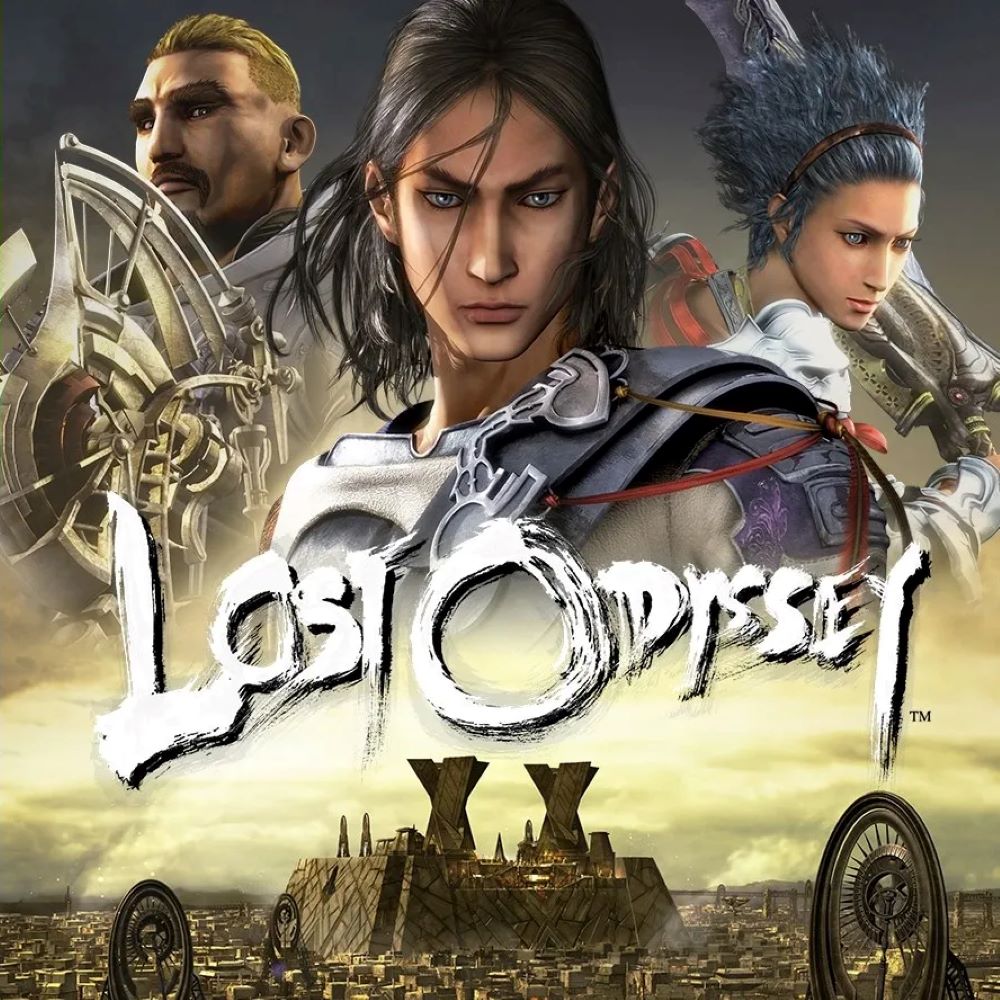
Lost Odyssey stands out as one of those RPGs from the late Xbox 360 era that doesn’t scream for attention with flashy mechanics or boundary-pushing innovations, but instead draws you in through its deeply introspective storytelling and a commitment to emotional depth that feels almost defiant in its restraint. Developed by Mistwalker’s Hironobu Sakaguchi—the mastermind behind the original Final Fantasy games—this title arrived in 2007 as a love letter to classic JRPG traditions, complete with turn-based combat, sprawling world exploration, and a narrative centered on immortality’s quiet horrors. It’s a game that rewards patience, asking players to linger in moments of melancholy rather than rushing toward bombastic climaxes, and in today’s landscape of hybrid action-RPGs like Clair Obscur: Expedition 33, it feels both timeless and a touch nostalgic.
The protagonist, Kaim Argonar, is an immortal wanderer who’s lived for over a thousand years, his memories eroded by time like sand slipping through fingers. This setup immediately sets Lost Odyssey apart, turning what could have been a rote hero’s journey into something far more personal and haunting. Kaim isn’t driven by prophecy or destiny in the typical sense; he’s haunted by fragments of lives long lost, piecing together his past while grappling with the present. Accompanied by a party of fellow immortals and mortals who bring their own baggage—Seth, a fierce queen-turned-revolutionary; Jansen, the wisecracking raconteur and black magic user; Mack, Cooke’s adventurous brother and a spirit magic specialist; Cooke, the earnest white mage sister; and others who evolve from archetypes into fully fleshed-out companions—the story unfolds across a world on the brink of magical and technological upheaval. Wars rage between nations like the Republic of Uhra and the Kingdom of Goht experimenting with dangerous “aether” energy, ancient gaia cults stir forgotten powers from the earth’s core, and a comically over-the-top villain named Gongora pulls strings from the shadows with his dream-manipulating sorcery. But it’s the immortals’ shared curse—living forever while everyone else fades—that grounds everything in raw, relatable humanity, forcing reflections on attachment, regret, and the passage of time.
What truly elevates the narrative are the “Thousand Years of Dreams,” a collection of over thirty short story interludes scattered throughout the game like hidden treasures, all penned by acclaimed Japanese author Kiyoshi Shigematsu. These vignettes replay key moments from Kaim’s (and later other immortals’) pasts: a father’s quiet desperation as his family starves during a harsh winter, a lover’s betrayal amid wartime chaos that shatters trust forever, a child’s innocent wonder abruptly ended by sudden violence in a peaceful village. They’re presented as dream sequences with minimal interactivity—just reading the poignant prose accompanied by subtle animations and ambient sounds—but their impact is profound, blending poetic introspection with raw emotional punches that make loss feel visceral and immediate. Shigematsu, known for his family-centered novels like Naifu and Bitamin F, infuses these tales with his signature themes of everyday struggles, parental love, and quiet resilience, drawing from his own life experiences such as overcoming a childhood stammering disorder. These aren’t mere filler; they mirror and deepen the main plot’s themes of memory, fleeting bonds, and the futility of outliving joy, often landing harder than the epic set pieces like airship chases or gaia temple collapses. In a fair assessment, though, not every dream hits the mark equally—some lean repetitive in their focus on tragedy and separation, and the heavy reliance on text-heavy exposition can test players who prefer more visual or interactive storytelling over contemplative reading.
Comparatively, the core plot treads more familiar JRPG ground, with globe-trotting quests to collect six magic seeds capable of restoring the world’s fading magic, infiltrate enemy strongholds like the White Citadel, and unravel a conspiracy involving dreamless immortals, experimental magic tech, and an impending apocalypse. It’s competently paced for its 40-60 hour runtime (longer for completionists), building to satisfying reveals about Kaim’s origins, the party’s interconnected fates, and the true nature of immortality in a world where magic is dying. Yet it lacks the moral ambiguity that makes contemporaries like Clair Obscur: Expedition 33 so gripping—that game thrives on tough choices where apparent triumphs often sow seeds of future doom, forcing players to question if their “expedition” against the Paintress is true heroism or just delayed hubris. Lost Odyssey flirts with similar existentialism—Kaim repeatedly forms bonds only to anticipate their inevitable fraying—but ultimately resolves in a more optimistic, collective salvation arc centered on hope and reunion. This makes it comforting for fans of straightforward fantasy epics with clear good-vs-evil lines, yet somewhat safe for a tale about eternal life, where deeper philosophical dives into immortality’s ethics, like the morality of intervening in mortal affairs, could have pushed boundaries further without alienating its audience.
The supporting cast shines as a counterbalance, with banter during airship travels and camp rests that humanizes even the most ancient immortals. Take Gongora, the flamboyant antagonist whose Shakespearean monologues, reality-warping sorcery, and personal grudge against his immortal brethren make him a delightfully theatrical foe worth rooting against. Or the mortal siblings Cooke and Mack, whose dynamic starts as lighthearted comic relief—pranks, inventions gone wrong, sibling squabbles—with Mack’s adventurous spirit driving bold escapades while Cooke provides steady white magic support, maturing into poignant growth arcs as they confront loss and responsibility together. Jansen brings levity as the wisecracking raconteur, spinning tales and unleashing black magic with reluctant flair that often steals scenes during downtime. Party chemistry fosters organic moments, like shared reflections on recent dreams or lighthearted ribbing during skill training, that deepen player investment over the long haul. Not all characters resonate equally; some, like the naive inventor Littleton or the initially whiny prince Tolten, lean into tropes without much subversion, leading to occasional eye-rolls amid the stronger portrayals from Seth’s fiery leadership. Still, the innovative “Immortal” skill-sharing system, where immortals permanently absorb abilities from fallen mortals via “Skill Link” beads, ingeniously reinforces the core theme: eternity doesn’t preclude learning, growth, or change through relationships with the temporary.
Combat embodies Lost Odyssey‘s old-school soul, sticking faithfully to turn-based roots with thoughtful layers that demand strategy over button-mashing reflexes. Battles unfold on a grid-like interface where positioning is crucial—front-row tanks like Kaim absorb hits for backline healers like Cooke and her white magic or mages like Jansen with his black magic arsenal, while the signature “Ring” system adds tension to every basic attack or spell: time your button presses precisely to hit colored rings for boosted damage, critical hits, or multi-hit combos. Condition management becomes key, as poison, sleep, paralysis, and weakness can derail even well-planned fights, encouraging thorough prep with items, protective spells, and the flexible “Skill Link” beads that let any character equip enemy-learned abilities like fire immunity or poison breath. Boss encounters ramp up dramatically with multi-phase patterns, status ailment spam, massive HP pools, and environmental hazards, rewarding exploitation of elemental weaknesses (fire vs. ice foes, etc.), party swaps, and layered buffs/debuffs for tense, chess-like victories.
Yet fairness demands noting the system’s notable flaws, which haven’t aged gracefully. Random encounters populate every screen with alarming density, leading to grindy slogs in weaker areas before you unlock enemy visibility via skills or items, and early-game pacing suffers from these constant interruptions amid tutorial-heavy chapters. Load times between battles and zone transitions feel archaic by modern standards—often 10-20 seconds on original hardware—and the lack of auto-battle, speed-up toggles, or robust fast travel exacerbates repetition for completionists chasing ultimate weapons, all 33 dreams, or optional gaia quests. Contrast this with Clair Obscur‘s slick hybrid combat, which fuses turn-based planning with real-time dodges, parries, and QTEs in a fluid “expedition” rhythm inspired partly by Lost Odyssey itself—every fight, from trash mobs to epic bosses, pulses with immediacy and the “dial of fate” mechanic that turns timing into life-or-death dance steps. Lost Odyssey prioritizes cerebral, menu-driven setups—buff-stacking, weakness chains, formation tweaks—over kinetic flair, appealing deeply to tacticians who savor the deliberate pace but alienating those craving Clair-style adrenaline and fluidity. It’s a classic strategic depth versus modern dynamic polish tradeoff, and your mileage will vary sharply based on tolerance for 2007-era JRPG rhythms.
Exploration weaves together standard JRPG fare with moments of quiet wonder—roaming a vast overworld via massive airship (the Nautilus), delving into multi-floor dungeons with hidden chests and switch puzzles, solving environmental riddles involving weight balances, light beams, or wind currents—but injects personality through diverse biomes: mist-shrouded ancient ruins teeming with spectral foes, frozen tundras where blizzards obscure paths, volcanic badlands with lava flows and ash-choked air. Sidequests expand the lore meaningfully, like aiding immortal Seth’s rebel faction in underground networks, delving into sacred gaia shrines for permanent power-ups, or hunting elusive immortal encounters for rare skills, though many lesser ones boil down to repetitive fetch tasks or escort missions. The world map’s sheer scale impresses, hiding optional superbosses like the immortal-hunting Black Knights, treasure troves in hard-to-reach ledges, and secret dream triggers, but frequent backtracking without comprehensive fast travel can drag, especially post-game. Presentation captures the Xbox 360’s graphical peak for its time: cinematic FMV cutscenes rival Hollywood trailers in scope and polish, character models boast fluid animations, expressive facial captures (rare for 2007), and detailed costumes, while environments blend stunning pre-rendered backgrounds with real-time lighting and particle effects for moody, immersive atmospheres. Draw distance limitations, occasional texture pop-in, and lower-res models show their age on HD displays, but the art direction—shadowy, desaturated palettes evoking faded memories and encroaching oblivion—holds up remarkably well.
Nobuo Uematsu’s soundtrack remains the undisputed MVP, a masterclass in emotional orchestration blending sweeping orchestral swells with intimate piano solos and ethnic instrumentation. Battle themes like the pulse-pounding “Battle with Immortal” or tense “Boss Battle” drive adrenaline without overpowering, dream sequences float on delicate harpsichord, strings, and solo vocals for heartbreaking intimacy, and overworld motifs evoke vast, lonely skies over crumbling civilizations. It’s Uematsu post-Final Fantasy at his most evocative and personal, rivaling series highs and clearly influencing modern scores—direct echoes resonate in Clair Obscur‘s painterly OST, where swelling choirs and haunting flutes underscore expedition perils with a similar blend of grandeur, sorrow, and fragile hope. Voice acting offers a mixed bag: highs like Kaim’s gravelly, world-weary delivery from Jeff Kramer or Seth’s commanding fire from Sarah Tancer contrast with occasional stiff accents and wooden line reads in lesser roles. The English localization shines brightest in Shigematsu’s dreams—preserving nuanced melancholy and cultural subtlety—but occasionally clunks in casual banter or expository dumps.
Pacing represents Lost Odyssey‘s biggest double-edged sword, perfectly suiting its themes of slow erosion and reflection but testing modern attention spans. The game’s deliberate rhythm manifests in long linear chapters (Disc 1’s tutorial stretch, Disc 3’s sidequest marathon), mandatory backtracks to missed dreams or seeds, and optional hunts that balloon playtime to 70+ hours without always advancing the central plot. Mid-game lulls, particularly after major reveals like the immortals’ gathering or Gongora’s betrayal, lean heavily on grinding and collection, demanding commitment from players not fully hooked by the dreams. Technical quirks persist too: occasional frame drops in massive battles, finicky ring input timing on controllers, and long save/load cycles remind players of its 2007 origins, though Xbox One/Series backward compatibility smooths some edges with Auto HDR and FPS boosts. The game earned widespread praise for its story depth, Uematsu’s music, and emotional resonance, tempered by critiques of its dated combat pacing, grind, and conservative design in an era shifting toward action hybrids.
Against Clair Obscur: Expedition 33, Lost Odyssey feels like the contemplative grandfather to a bold, innovative successor—Clair‘s tighter 20-30 hour sprint packs nonlinear branching choices, grotesque evolutions of its turn-based system, and a fractured, painterly world where expeditions literally rewrite reality through “painted” fates, with its combat’s “dial of fate” parries making every decision feel consequential and irreversible. Lost Odyssey sprawls longer and commits to strict linearity to pace out Shigematsu’s dreams methodically, trading reactive choice systems for patient, interior reflection on grief. Both excel at probing mortality’s sting—Clair through visceral, grotesque horrors and ambiguous victories, Lost Odyssey via intimate, lived-through tragedies—but Mistwalker’s effort prioritizes small-scale, personal grief over systemic reinvention or high-stakes moral quandaries.
Ultimately, Lost Odyssey endures as a balanced, heartfelt gem for JRPG purists and story enthusiasts: stellar writing from Kiyoshi Shigematsu anchors a solid but unflashy package, with Uematsu’s music, immortal hooks, and dream vignettes lingering longest in the mind. It’s not flawless—grindy encounters, safe plotting, and archaic pacing hold it from undisputed masterpiece status—but its emotional core crafts a rare resonance, blending melancholy fantasy with subtle wisdom about time’s toll. In an era dominated by Clair-like hybrids blending action and choice, it reminds why pure turn-based tales still captivate, offering a somber, patient journey for those willing to dream along with Kaim’s thousand years.
In 1979’s The Concorde …. Airport ’79, Joe Patroni (George Kennedy) finally gets to fly the plane.
The plane is question is a Concorde, a supersonic airliner that can travel faster than the speed of sound. When we first see the Concorde, it’s narrowly avoiding a bunch of dumbass hippies in a hot air balloon as it lands in Washington, D.C. The recently widowed Joe Patroni joins a flight crew that includes neurotic Peter O’Neill (David Warner), who says that he has dreams in which he’s eaten by a banana, and suave co-pilot Paul Metrand (Alain Delon). Because this is an Airport film, Mertrand is dating the head flight attendant, Isabelle (Syliva Kristel). “You pilots are such men,” Isabelle says. “It ain’t called a cockpit for nothing, honey,” Patroni replies.
(One thing that is not explained is just how exactly Joe Patroni has gone from being a chief technician in the first film to an airline executive in the second to a “liaison” in the third and finally to a pilot in the fourth.)
The Concorde is flying to Moscow with a stop-over in Paris. There’s the usual collection of passengers, all of whom have their own barely-explored dramas. Cicely Tyson plays a woman who is transporting a heart for a transplant. She gets maybe four or five lines. Eddie Albert is the owner of the airline and he’s traveling with his fourth wife. (Of course, he’s old friends with Patroni.) John Davidson is an American reporter who is in love with a Russian gymnast (Andrea Marcovicci). Avery Schrieber is traveling with his deaf daughter. Monica Lewis plays a former jazz great who will be performing at the Moscow Jazz Festival. Jimmie Walker is her weed-smoking saxophonist. Charo shows up as herself and gets kicked off the plane before it takes off.
The most important of the passengers is Maggie Whelan (Susan Blakely), a journalist who has evidence that her boyfriend, Kevin Harrison (Robert Wagner), is an arms trafficker. Harrison is determined to prevent that evidence from being released so he programs a surface-to-air missile to chase the Concorde. Patroni is able to do some swift maneuvers in order to avoid the missile, which means that we get multiple shots of passengers being tossed forward, backwards, and occasionally hanging upside down as Patroni flips over the plane. Oddly no one really gets upset at Patroni about any of this and no one seems to be terribly worried about the fact that someone is obviously trying blow up their plane. Even after the stop-over in Paris, everyone gets back on the Concorde! That includes Maggie, who could have saved everyone a lot of trouble by just holding a press conference as soon as the plane landed in Paris.
A year after The Concorde came out, Airplane! pretty much ended the disaster genre. However, even if Airplane! had never been released, I imagine The Concorde would have still been the final Airport film. Everything about the film feels like the end of the line, from the terrible special effects to the nonsensical script to the Charo cameo and Martha Raye’s performance as a passenger with a weak bladder. The first Airport film was an old-fashioned studio film standing defiant against the “New Hollywood.” The second Airport film was a camp spectacular. The third Airport film was an example of changing times. The fourth Airport film is just silly.
And, really, that’s the main pleasure to be found in The Concorde. It’s such an overwhelmingly silly film that it’s hard to look away from it. For all of its weaknesses, The Concorde will always be remembered as the film that featured George Kennedy opening the cockpit window — while in flight — and shooting a flare gun at another plane. As crazy as that scene is, just wait for the follow-up where Kennedy accidentally fires a second flare in the cockpit. “Put that out,” Alain Delon says while David Warner grabs a fire extinguisher. It’s a silly moment that it also, in its way, a great moment.
The Concorde brings the Airport franchise to a close. At least George Kennedy finally got to fly a plane.
 Let’s take a moment to appreciate Frank Drebin (Leslie Nielsen), a true American hero.


 Through the Shattered Lens