Late Night Retro Television Review: Monsters 3.5 “Outpost”


Welcome to Late Night Retro Television Reviews, a feature where we review some of our favorite and least favorite shows of the past! On Wednesdays, I will be reviewing Monsters, which aired in syndication from 1988 to 1991. The entire series is streaming on YouTube.
I have a cold and a slight fever so tonight’s review is going to be a short one.

Episode 3.5 “Outpost”

(Dir by T.K. Hudson, originally aired on October 28th. 1990)

In the far future, a space mining company is transforming terminally ill people into cyborg mutants and sending them to work on inhospitable planets in return for keeping them alive.  Cara (Juliet Mills), a representative of the company, is sent to one of the outposts to discover why the horribly disfigured Sebastian (Tony Fields) is no longer doing his job.

Separated by a layer of glass, Sebastian and Cara have a 19-minute conversation.  Cara is rude and condescending and makes it clear that she has zero concern for the well-being of Sebastian.  This is perhaps as bitchy as the world will ever see a Mills sister act, which is really saying something when you consider some of the Saved By The Bell episodes in which Hayley Mills played Miss Bliss.  Sebastian has been hearing voices and is tempted to just wander across the alien landscape until he dies.  Why should he spent the rest of eternity miserable and alone.

Cara gets annoyed.  She says that work is important.  Why, when her husband was ill and dying, she didn’t even bother to take off from her job to visit him.  He died while she was away or, at least, that’s what the company told her….

Can you see where this is going?

This episode benefitted from the performances of Juliet Mills and Tony Fields but the story was extremely predictable.  The dialogue was definitely a bit more intelligent than we’ve seen in previous episodes of Monsters and I respected the episode’s ambition but, in the end, the story dragged a bit and the big twist was easily guessed.  This was not a terrible episode but it wasn’t particularly memorable either.

Lisa Marie Reviews An Oscar Nominee: Mississippi Burning (dir by Alan Parker)


1988’s Mississippi Burning opens on a lonely Mississippi backroad in 1964.  A car is pulled over by the police.  Inside the car are three young men, one black and two white.  Judging from their nervous expressions and the sound of the people who stopped them and the fact that they’re in Mississippi during the 60s, we can guess what is about to happen to the people in the car.

With the three men, who were civil rights activists who were involved in voter registration efforts, officially considered to be missing, the FBI sends down two agents to find out what happened.  The two agents are Alan Ward (Willem DaFoe) and Rupert Anderson (Gene Hackman).  Ward is a Northerner who does things by the book and who resents having to deal with lax Southern law enforcement.  He is serious-minded and, just in case we need a reminder of how serious he is, he wears bar-rimmed glasses that make him look like the world’s most fearsome IRS agent.  Anderson is from Mississippi.  He’s a talkative good ol’ boy who was a sheriff before he joined the FBI.  “You know what has four eyes but can’t see?” Anderson asks, “Mississippi.”  It’s a tense partnership, as Ward sometimes disapproves of Anderson’s methods and Anderson thinks that Ward doesn’t understand how things work in Mississippi.

From the first minute we meet local law enforcement, we know that they’re the killers.  Just the fact that one of them are played by Brad Dourif is evidence enough.  However, no one in town is willing to say a word against the police or their cronies.  The white citizens are either too intimidated or they agree with what happened to the three civil rights workers.  (The three men are often referred to as being “outside agitators.”)  The black townspeople live in fear of the Klan and have no reason to trust the word of white FBI agents like Ward and Anderson.

Ward and Anderson investigate the case, hoping that they can find some bit of evidence that will prove the guilt of Sheriff Stuckey (Gailard Sartain), Deputy Pell (Brad Dourif), KKK leader Clayton Townley (Stephen Tobolowsky), and maybe even the town’s mayor (R. Lee Ermey).  One advantage that the FBI has is that the murderers are incredibly stupid.  Another is that Deputy Pell’s abused wife (Frances McDormand, giving the film’s best performance) might be persuaded to testify against her husband.

Mississippi Burning is an example of both powerful filmmaking and problematic history.  Like Ridley Scott, director Alan Parker got his start making commercials and he brought the same sensibility to his movies.  He knew what audiences wanted to see and he made sure to give it to them.  Mississippi Burning looks fantastic and is full of memorable performances.  (Both McDormand and Hackman received Oscar nominations).  The action moves quickly and the villains are so hateful that watching them end up getting humiliated really does bring about a sort of emotional release.

At the same time, this is a film about the Civil Rights era that presents the FBI as being the heroes.  And while it’s true that the FBI did investigate the real-life murders that inspired this film, Mississippi Burning leaves out the fact that the FBI was just a rigorous in harassing and wire tapping Martin Luther King as they were in keeping an eye on the leaders of the Klan.  It’s a film about racism in which the heroes are as white as the villains.  Gene Hackman gives a good performance as Rupert Anderson but the film never really delves all that deeply into Anderson’s feelings about racism in the South.  We’re told that he was a sheriff in Mississippi but we never learn much about what type of sheriff Anderson was.  He’s opposed to the Klan but, historically, the same can be said of many segregationists in the 60s, many of whom felt the Klan’s activities brought unwanted federal attention to what was happening in their home states.  By not delving into Anderson’s own history as a member of Mississippi law enforcement or the FBI’s own more problematic history when it comes to the civil rights movement, the film provides viewers with the escape of viewing the bad guys as being aberrations as opposed to being the norm in 1964.  In the end, Mississippi Burning is an effective thriller with strong heroes and hateful villains.  Just don’t watch it for historical accuracy.

Mississippi Burning was nominated for Best Picture but it lost to Rain Man.

Trading Places (1983, directed by John Landis)


It all starts with a bet.

As Christmas approaches, Mortimer (Don Ameche) and Randolph Duke (Ralph Bellamy) make a bet to determine whether it’s nature or nurture that shapes someone’s future.  The fabulously wealthy owners of Duke & Duke Commodity Brokers, the brothers casually frame their director, Louis Winthrope III (Dan Aykroyd), for everything from dealing drugs to sealing money to cheating on his girlfriend (Kirstin Holby).  After Louis is kicked out of both his job and his mansion, the Dukes hire a street hustler named Billy Ray Valentine (Eddie Murphy) to take his place.  Earlier Winthrope tried to get Valentine arrested for approaching him in the street.  Now, Valentine is living in Winthrope’s mansion, with Winthrope’s butler and Winthrope’s job.

While Winthrope tries to survive on the streets with the help of a outwardly cynical but secretly kind-hearted prostitute named Ophelia (Jamie Lee Curtis, in her first non-horror starring role), Billy Ray surprises everyone by using his street smarts to become a successful, suit-wearing businessman.  The Dukes, of course, have no intention of keep Billy Ray Valentine on as their director.  Not only are the Dukes snobs but they’re racists as well.  Once their one dollar bet has been settled, they start planning to put Billy Ray back out on the streets with Winthrope.

Trading Places was Eddie Murphy’s follow-up to 48 Hrs and he again showed himself to be a natural star while playing the type of role that could have been played by Dan Ayrkroyd’s partner, John Belushi, if not for Belushi’s early death.  (Jim Belushi has a cameo as a party guest.)  Murphy gets to show off a talent for physical comedy and Trading Places is one of the few films to really take advantage of Dan Aykryod’s talents as both a comedian and actor.  Winthrope goes from being a coddled executive to being as streetwise as Valentine.  This is probably Aykroyd’s best performance and he and Eddie Murphy make for a good team.

But the real stars of the film are four actors who weren’t really thought of as being comedic actors, Denholm Elliott, Don Ameche, Ralph Bellamy, and especially Jamie Lee Curtis.  Ophelia is a much edgier character than the “final girls” that Curtis was playing in horror films and Curtis steals almost every scene that she’s in.  Ameche and Bellamy are great villains and it’s fun to watch them get their comeuppance.  What screwball comedy would be complete without a sarcastic butler?  Denholm Elliot fills the role of Coleman perfectly.

Trading Places was a box office success when it was released and it’s now seen as being one of the new Christmas classics, a film for the adults to enjoy while the kids watch Rudolph and Frosty.  I think the movie ends up going overboard towards the end with the gorilla and Dan Aykroyd wearing blackface but, for the most part part, it’s still a very funny and clever movie.

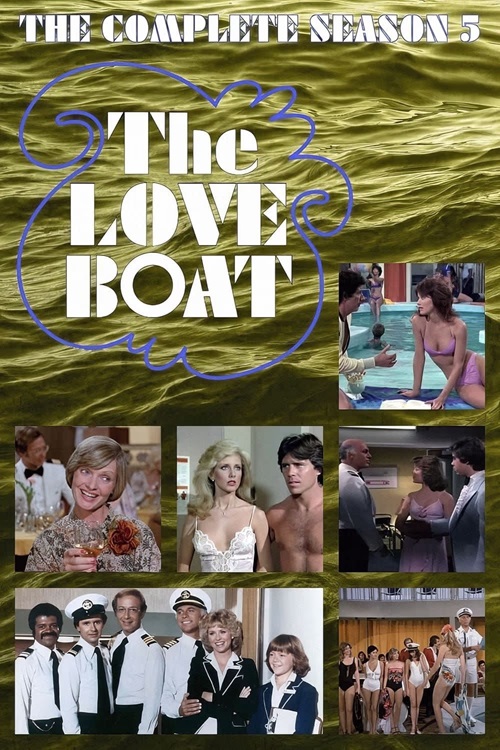
Retro Television Review: The Love Boat 5.13 “Doc Take the Fifth/Safety Last/A Business Affair”


Welcome to Retro Television Reviews, a feature where we review some of our favorite and least favorite shows of the past!  On Wednesdays, I will be reviewing the original Love Boat, which aired on ABC from 1977 to 1986!  The series can be streamed on Paramount Plus!

Love, exciting and new….

Episode 5.13 “Doc Take the Fifth/Safety Last/A Business Affair”

(Dir by Bruce Bilson, originally aired on Jan. 2nd, 1982)

Returning from his vacation, Doc boards the boat with a young Russian blonde woman named Tania (Irena Ferris).  Oh, the crew says, Doc has a new girlfriend.

No, Doc has a new wife!  Doc and Tania met after Doc saw her performing as a member of a communist symphony during his vacation.  They struck up a conversation and, according to Doc, it was love at first sight,  After a whirlwind courtship, Doc and Tania got married, mere hours before heading to the boat.  It’s going to be a working honeymoon for Doc and he can’t wait to consummate the marriage.  The crew can’t wait for him to do it either.  (Seriously, they are oddly obsessed with Doc Bricker’s sex life.)  This is Doc’s fifth marriage and it’s going to last!

Except …. Tania doesn’t seem to want to consummate the marriage.  In fact, once the boat sets sail, Tania seems to be avoiding Doc.  Doc wonders if maybe Tania is just shy but seriously — refusing to have sex with your new husband on a luxury cruise ship?  No one’s that shy!  Then Doc spies Tania kissing another passenger.

“Adam,” the captain says, “you don’t know Tania that well.”

Indeed, Adam does not.  Eventually, Tania tells Doc Bricker the truth.  She married Adam so she could stay in the country with the true love of her life, political dissident Mikhail (Kai Wulff).  Tania says that she really, really likes Doc but she is not in love with him.  Both Tania and Mikhail apologize to Doc and tell him that Tania will get the marriage annulled and return to Russia.

Personally, I think Doc would have been justified in tossing them both overboard.  Instead, Doc asks Captain Stubing to call a friend at the State Department and arrange for Tania to get permanent refugee status in the United States.  Awwww, that was nice of Doc!

This storyline was depressing but, as I’ve said before, I always appreciate it when The Love Boat allows Doc Bricker to be something other than just a lech.  Bernie Kopell was so likable in the role that it was always nice when he got to play Doc as being a nice guy as opposed to a manipulative sex addict.  Kopell did an especially good job in this episode, especially at the end where he appears to be on the verge of tears as he watches Tania and Mikhail leave the boat.

As for the other two stories, neither one was particularly interesting.  A safety inspector (Don Adams) is so obsessed with safety that he nearly misses a chance for romance with Alice (Britt Ekland).  Luckily, Isaac is there to set him straight.  A business executive (Robert Fuller) is upset that everyone thinks he’s sleeping with his Vice President (Judy Norton).  But then he falls in love with her and sleeps with her for real so I guess the rumors were true!

Those stories were boring but Doc’s story redeemed this week’s cruise.  Poor Doc!  Maybe the sixth time will be the charm.

4 Shots From 4 Films: Special 1963 Edition


4 Shots From 4 Films is just what it says it is, 4 shots from 4 of our favorite films. As opposed to the reviews and recaps that we usually post, 4 Shots From 4 Films is all about letting the visuals do the talking.

Since I reviewed a film that takes place in 1963 this morning, I’m going to use today’s edition of 4 Shots From 4 Films to pay further homage to that pivotal year.  It’s time for….

4 Shots From 4 1963 Films

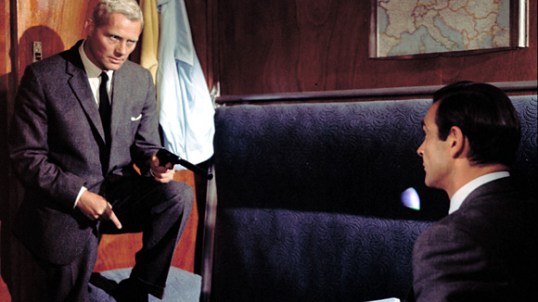
From Russia With Love (1963, dir by Terence Young, DP: Ted Moore)

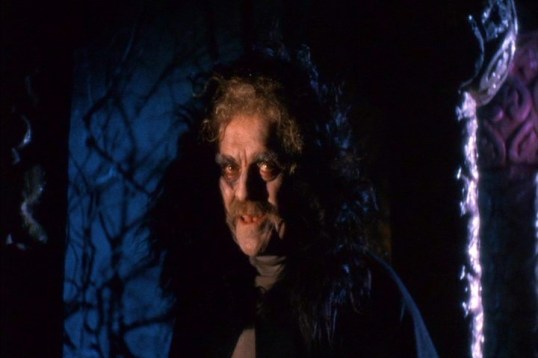
Black Sabbath (1963, dir by Mario Bava, DP: Ubaldo Terzano)

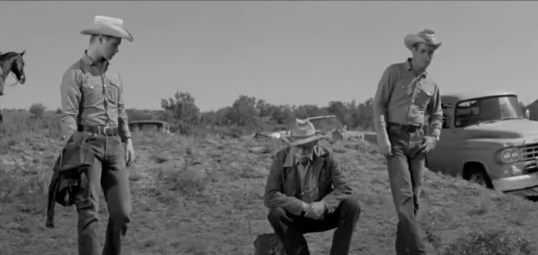
Hud (1963, dir by Martin Ritt, DP: James Wong Howe)

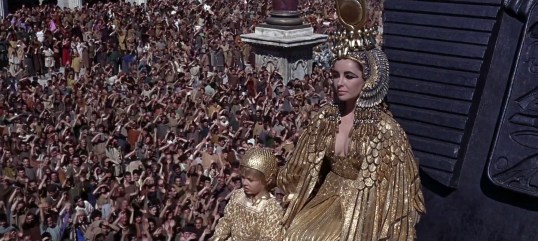
Cleopatra (1963, dir by Joseph L. Mankiewicz, DP: Leon Shamroy)

The True Covers Of Real Men


Real Men Magazine ran from 1956 to 1975.  It was a magazine full of pin-ups and stories about war, crime, and adventure.  You can probably guess what the magazine was about just by looking at the covers below.  If you think some of the covers below are racy, you should see the ones that I couldn’t include in this post!

by Clarence Doore

by Clarence Doore

by John Leone

by Mel Crair

by Milton Luros

by Roger Kastel

by Roger Kastel

by Sydney Shores

by Victor Prezio

by Victor Prezio

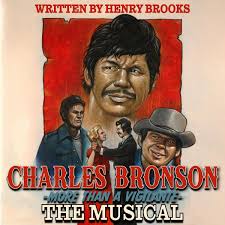
CHARLES BRONSON – More than a Vigilante – The Musical!


A young man named Henry Brooks has written a musical about the life of Charles Bronson. I’m sharing this post to make sure you are aware of it. It’s a memorable take on certain key moments and movies in Bronson’s life and career. The album is produced by Stephen Glickman (Big Time Rush), with Steven Weber (Wings) and Lisa Loeb (Stay: I Missed You) contributing their immense talent to this interesting project as Charles Bronson and Jill Ireland. As a lifelong fan of Bronson’s, I love seeing a younger generation embrace his unique talent. I think my personal favorite song on the album is called “Toshiro and I,” which is Henry’s amusing take on Bronson’s film with iconic Japanese actor Toshiro Mifune, RED SUN. There are many other good songs as well, with “You Oughta be an Actor,” “There’s Never Been So Few,” “Death Wish,” and “Couldn’t Beat the Cancer” all sticking out to me. There are a total of 16 songs on the album, and the songs take Bronson from a boy working in the coal mines all the way to a man mourning the loss of his beloved wife.

I’ve linked to YouTube versions of the songs below! Take a moment to subscribe if you get the chance. You can also find the album on Spotify and Apple Music. In the next couple of months, it should be available to purchase for your collection. I for one will be buying the album on vinyl as soon as I can!

I’m including a link to the episode of the “This Week in Charles Bronson” podcast where we discuss the project with Henry Brooks. We’re so happy to help spread the word on this exciting project!

Scenes I Love: Mr Inbetween


There’s something to say about an individual who follows a code of behavior and has a moral compass that may seem archaic for today’s sensibilities, but when one really thinks about it…well, they’re not wrong.

We may hate that such people may be correct in their way of thinking and that it may offend certain sensibilities but that doesn’t necessarily means its wrong.

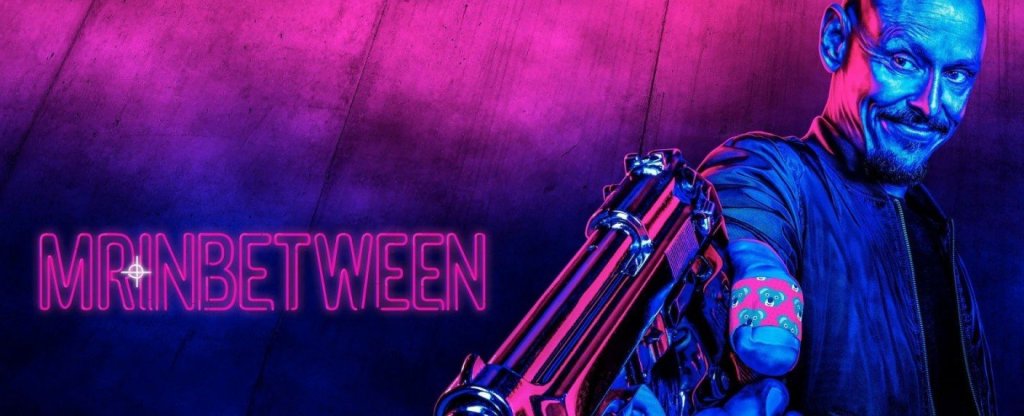
And on that note let me introduce you to Ray Shoesmith aka Mr Inbetween. This scene of him attending an anger management class best describes not just who Ray is but sets the tone for what this series is all about.

Song of the Day: Wolf Totem (by The HU)


I woke up this morning and chose the beauty of combat.

Well, that would be the beauty and majesty of traditional Mongolian throat-singing and instrumentation combined with the modern styling of metal and you get The Hu.

The Hu is the popular, at least with metal and folk music fans, Mongolian folk metal band created in 2016 by members Gala, Jaya, Enkush and Temka. In addition to the requisite electric guitars and drums we find with rock and metal bands, The HU also incorporates traditional Mongolion instruments such as the Morin khuur (a two-stringed, horsehead fiddle with strings made from horsehair), Tovshuur (a three-stringed Mongolian guitar), Tsuur (Mongolian flute) and the Tumur khuur (a jaw harp) just to name a few.

Throat-singing is at the forefront of most of The HU’s songs. While The Hu is not the first Mongolian band to find success with music fans (I was first introdcued to Mongolian rock scene with the Mongolian folk rock band Altan Urag), they have been the most successful in crossing over to a somewhat mainstream success in the West.

There are other songs that are probably better musically structured, but I always go back to the song that introduced me to the band: Wolf Totem.

The Films of 2025: Laws of Man (dir by Phil Blattenberger)


Laws of Man opens with two U.S. marshals driving through the desert of Utah.  Tommy Morton (Jackson Rathbone) is young and impulsive, a Korean war vet who is quick to open fire.  Frank Fenton (Jacob Keohane) is older and more cautious.  He also served in the military, though his service was during World War II.  Frank is haunted by flashbacks to a particularly gruesome battle.  Tommy and Frank may spend most of their time wearing black suits in the desert but neither one breaks a sweat.

The year is 1963.  Kennedy is in the White House.  The communists are on the move.  And Tommy and Frank are busy executing arrest warrants in the most desolate part of the country.  An attempt to arrest Mormon cult leader Crash Mooncalf (Ricard Brake) leads to a bloody shootout that leaves Mooncalf and his followers dead.  Their next assignment leads them to a small town in Nevada, where Bill Bonney (Dermot Mulroney) and his violent family is suspected of killing local ranchers and stealing their land.

From the minute that Tommy and Frank arrive in Nevada, something feels off.  They stay at a cheap motel, where Tommy picks up a woman named Dinah (Ashley Gallegos) and Frank spends his time talking to a bartender named Callie (Kelly Lynn Reiter).  An old rancher named Don Burgess (Forrie J. Smith) shows off his gun and says that he would rather suffer a violent death than give up his land.  A traveling preacher named Cassidy Whitaker (Harvey Keitel) approaches Frank in the parking lot and starts talking about sin and redemption.  Meanwhile, FBI agent Galen Armstong (Keith Carradine) appears to be curiously unconcerned with the Bonneys and their reign of violence.  As for the sheriff (Graham Greene), he spending his time sitting outside a burned-out ranch house.  The charred bodies of the owners are still inside, seated around the dinner table.

An attempt to arrest Bill Bonney at his home leads to a violent shootout, one in which no one is killed but Bill is still not happy about having a bunch of bullet holes in his roof.  Tommy and Frank attempt to serve the arrest warrant, just to discover that it’s not going to be as easy as they thought.  Frank, whose World War II flashbacks are getting more and more intense, wants to leave town.  Tommy, however, is obsessed with discovering what exactly everyone is hiding.

And, through it all, people who know their history will notice that the film is taking place in November of 1963 and the 22nd is rapidly approaching….

Laws of Man gets off to a strong start but begins to meander about halfway through.  Luckily, the film’s final third features a wonderfully insane twist that recaptures the viewer’s attention.  No matter what you may think is going on in the film, it can’t prepare you for just how weird things eventually get.  Laws of Man is an entertaining film, one that is occasionally a bit too self-consciously quirky for its own good but which ultimately works.  Jackson Rathbone and Jacob Keohane both give strong performances in the lead roles and the familiar faces in the film’s supporting cast all do their best to bring the film’s often surreal world to life.  Dermot Mulroney and Keith Carradine give especially strong performance while Harvey Keitel appears to be having fun as the offbeat preacher.

Laws of Man managed to truly take me by surprise.  For fans of paranoid cinema, it’s definitely worth making time for.