International Film Review: Purple Noon (dir by Rene Clement)


Early on in the 1960 French film, Purple Noon, there’s a scene in which a young American con artist named Tom Ripley (Alain Delon) looks at his reflection in a mirror, leans forward, and kisses it.

What are we to make of this scene?  The easiest assumption would be to say that Ripley is a narcissist and certainly, there is some truth to that.  Delon was 25 when he appeared in Purple Noon and the famously handsome actor was probably never better-looking than he was at that time.  As well, Delon was an actor who brought, at the very least, a hint of narcissism to every role that he played.  That was a part of his appeal.  He looked like an angel but he moved like the devil and, when the camera focused on his face, it was easy to see that there were less than pure thoughts brewing underneath the beautiful surface.

However, in Purple Noon, there’s more to that mirror kiss than just Tom Ripley (or, for that matter, Alain Delon) admiring his own reflection.  Instead, Tom has dressed up in the clothes of Philippe Greenleaf (Maurice Ronet) and, when he speaks to his reflection, he speaks in an imitation of Philippe’s voice.  He addresses his words not to his reflection but to Philippe’s girlfriend, Marge Duval (Marie Lefort).  When he kisses the mirror, is he kissing himself, Marg, Philippe, or himself as Philippe?  Perhaps every answer is correct.

Tom Ripley is a young man who doesn’t appear to have much going on inside of him but who has definitely learned how to fake it enough to get by.  He went to school with Philippe, a wealthy and casually cruel heir to a fortune. Because Philippe is currently living a rather decadent life in Europe, Tom has been hired by Philippe’s father to bring his son back to San Francisco.  Tom, who were told grew up without money and who Philippe’s father used to dislike because he felt that Tom’s manners were too “common,” is happy to finally be a part of Philippe’s world and, when we first see them together, it appears as if Philippe is happy to have Tom as a part of his life as well.  We watch as they give money to a blind man and then buy his cane.  Though Philippe is the one who proceeds to walk around with the cane while pretending to be blind, it’s hard not to notice that Tom is the one who suggested the idea to him.  For Philippe, deception is a game whereas, for Tom, it’s a way of life.

As the opening scene of the film suggests, things are not always how they seem.  It quickly becomes apparent that Philippe’s charm and money hides a cruel and sadistic streak and, when he grows bored with Tom’s sycophantic ways and Tom’s constant requests for money, Philippe decides to send him away.  Unfortunately, for Philippe, Tom is not ready to leave and he’s certainly not ready to abandon Marge, though it’s left to the viewer to decide if Tom is truly attracted to Marge or if he’s just attracted to the fact that she’s a part of Philippe’s world.  Because Tom has no identity, it is disarmingly easy for him to slip into a new one, whether it means becoming a friend, a criminal, a loyal employee, or even Philippe himself.  During one eventful afternoon, Tom and Philippe’s relationship comes to a violent conclusion while the two of them are on a yacht that’s floating in almost indescribably beautiful sea of water.

If this all sounds a bit familiar, it may be because, while Purple Noon may have been the first adaptation of Patricia Highsmith’s classic novel The Talented Mr. Ripley, it was not the last.  In 1999, Matt Damon starred in The Talented Mr. Ripley, another adaptation of Highsmith’s classic thriller.  Directed by Anthony Minghella, The Talented Mr. Ripley is a bit more faithful to its source material than Purple Noon and yet I have to say that, even with all of the liberties that it takes to Highsmith’s original story, I actually prefer Purple Noon.  They’re both good films but Purple Noon is the one that sticks in the viewer’s mind.

While Matt Damon may be the better actor of the two, Alain Delon was the better Mr. Ripley.  Delon’s natural lack of expressiveness may have often made him seem stiff and remote as a performer but it is ideal for a character like Tom Ripley, one who only exists on the surface.  Whereas Damon’s Ripley is obviously unstable from the minute he makes his first appearance, Delon’s Ripley has perfected a sort of likable blandess.  The viewer can believe that Philippe and Marge would want to spend time with Delon’s Ripley while also understanding why Philippe would quickly grow bored with him and his superficial ways.  Damon’s Ripley realizes that his crimes have determined his future whereas Delon lives day-to-day as an existential con artist, improvising his way from one crime to another.  Whereas the second adaptation was a big and glamorous production, Purple Noon takes a far grittier approach.  Director Rene Clement emphasizes the shadows and the ominous atmosphere that dominates Ripley’s world.

Purple Noon does slightly alter Patricia Highsmith’s original ending, something that Highsmith was reportedly not at all happy about.  Highsmith reportedly felt that Alain Delon masterfully captured Ripley’s character while complaining that the film’s ending was a concession to “public morality.”  (Interestingly, when Wim Wenders made his own film about Tom Ripley, The American Friend, Highsmith had the opposite reaction, appreciating that the film retained her downbeat ending while complaining that Dennis Hopper’s performance as Ripley was not true to the character she had created.)  One can understand and even agree with Highsmith’s objections while also appreciating that the Purple Noon‘s ending does actually work quite well for the story that’s been told.  For all of his cleverness, not even Tom Ripley can escape the randomness of fate.

Film Review: All The King’s Men (dir by Steven Zaillian)


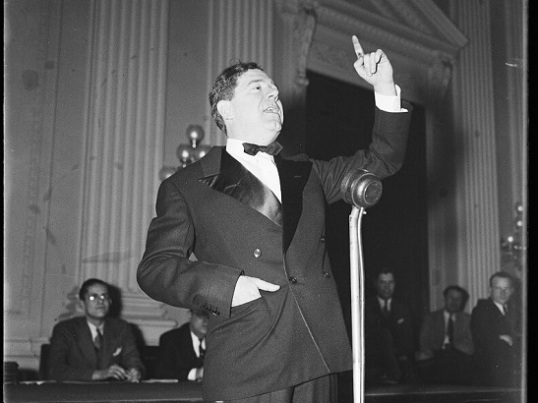
On September 10th, 1935, a Senator named Huey Long was shot and killed at the Louisiana State Capitol in Baton Rogue.

While it’s generally agreed that Carl Weiss, the son-in-law of a political opponent, approached Long, there’s still some debate as to whether or not Weiss was the one who shot Long. Did Weiss fire one shot at Long or was Long himself accidentally shot by his many bodyguards, all of whom opened fire on Weiss? (Weiss died at the scene, having been wounded at least 60 times.) There’s even some who argue that Weiss didn’t even have a gun on him when he approached Long and that Long’s bodyguards misinterpreted Weiss’s intentions. Or, as some more conspiracy-minded historians have suggested, perhaps Long’s bodyguards were themselves paid off by one of Long’s many enemies. With Huey Long, anything was possible.

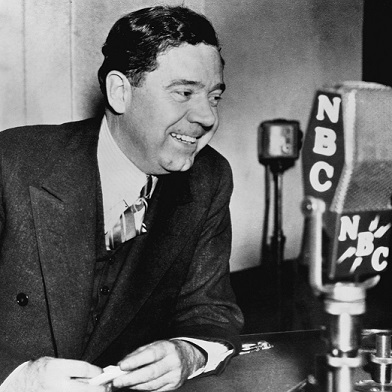
Huey Long has been described as being an American dictator, a man who ran for office as a populist and who, as governor and then senator, ruled Louisiana with an iron fist. His slogan was “Every man a king,” and he promoted a platform that mixed Socialism with redneck resentment. (In modern terms, he mixed the vapid but crowd-pleasing rhetroic of AOC with the bombastic but calculated personal style of Donald Trump.) He often played the flamboyant buffoon but he also knew how to reward his friends and punish his enemies. At the time of his death, he was planning to run for President against FDR. It’s said that, in typical Long fashion, he planned to run as a third party candidate and draw away enough votes from Roosevelt to allow Republican Alf Landon to win. Then, in 1940, Long would run for the Democratic nomination and send President Landon back to Kansas.

Huey-Long-radio-3000-3x2gty-5c2934d246e0fb00012da4a1

Whether his plan was feasible or not, they came to an end with his death. However, his legacy continued as members of the Long family dominated Louisiana politics for decades to come. Huey’s brother, Earl, served as governor of Louisiana for several contentious terms. Huey’s son, Russell, spent nearly 40 years in the Senate and, as chairman of the Finance Committee, was one of the most powerful men in the country. As late at 2020, Huey’s third cousin was serving in the Louisiana Senate. In the past few years, both Donald Trump and Bernie Sanders have been compared to Huey Long. Of course, if Huey were alive today, he’d probably be very popular online. Political Twitter has never met an authoritarian that it couldn’t make excuses for.

Among those who were fascinated by the life and death of Huey Long was a Southern poet and novelist named Robert Penn Warren. Warren used Long as the basis for Willie Stark, the man at the center of the novel All The King’s Men. In the novel, Stark is a classic and tragic American archetype, the man of the people who loses his way after coming to power. Stark starts the book as an idealist who wants to make life better for the poor but who, as he works his way up the political ladder, loses sight of why he first entered politics in the first place. He goes from fighting for the people to fighting only for himself. The book was controversial but popular and won the 1947 Pulitzer Prize. In later interviews, Warren often said that All The King’s Men was never meant to be a book about politics but instead a book about two men, Willie Stark and reporter Jack Burden, losing their way during the tumult of the Great Depression.  Regardless of Warren’s intentions, most readers and critics have focused on the book as a cynical look at American politics and the authoritarian impulse.

All-the-Kings-Men-1949

Considering the book’s popularity, it’s not surprising that All The King’s Men was turned into a movie just three years after it was published.  Directed by Robert Rossen and starring a perfectly cast Broderick Crawford as Willie Stark, the film won the Oscar for Best Picture of 1949.  Just as with the book, the film was considered to be controversial.  Many claimed that the film’s cynical portrayal of American politics was the equivalent of supporting communism, despite the fact that both the novel and the original film present Stark as being the epitome of the hypocritical Marxist dictator.  Indeed, if any character would have inspired audiences in 1949 to distrust socialism, it would have been a faux populist like Willie Stark.  Still, John Wayne was so offended by the book and the script that he very publicly turned down the role of Willie Stark.  That was all the better for Broderick Crawford, who won an Oscar playing the role.  When seen today, the original All The King’s Men holds up surprisingly well, as does Crawford’s lead performance.  Filmed in harsh black-and-white and featuring a cast of cynical, tough-talking characters, it’s a political noir.

Those who found the 1949 version of All The King’s Men to be dangerously subversive obviously had no idea what was in store for them and the country over the next couple of decades.  There’s a reason why the best-known book about the downfall of Richard Nixon was called All The President’s Men.  By the start of the current century, with all of the political corruption that was happening in the real world, the flaws and crimes of Willie Stark seemed almost quaint by comparison.  In 2006, with George W. Bush serving his second term, America embroiled in two unpopular wars, and the economy looking shaky, it was decided that it was time for a new version of the story of Willie Stark.

This version was directed by Steven Zaillian, the screenwriter whose credits included Schindler’s List, Gangs of New York, Hannibal, and American Gangster.  The role of Willie Stark was played by Sean Penn, who was both an Academy Award winner and an outspoken critic of George Bush.  (And, make no mistake about it, the new version of Willie Stark would be as much based on Bush as he was on Huey Long.)  Jude Law played Jack Burden, the reporter who narrated the story of Stark’s rise and fall.  Kate Winslet, Anthony Hopkins, James Gandolfini, Patricia Clarkson, Mark Ruffalo, Jackie Earle Haley, and Kathy Baker all had supporting roles.  This was a cast full of Oscar nominees and, indeed, the film’s trailer had that portentous, “the movie is very important and award-worthy” feeling to it that studios go with whenever they’re trying to convince audiences that they have an obligation to see a film, regardless of how boring or annoying it may look.  Entertainment Weekly predicted that All The King’s Men would be an Academy Award contender. For nearly two months, one could not see a movie at the Dallas Angelika without also seeing thee trailer for All The King’s Men.  It was a movie that was due to arrive at any minute and it was coming with an awful lot of hype.

And then, the strangest thing happened.  The film itself kind of disappeared.  It arrived and then it promptly got lost.  The reviews were overwhelmingly negative.  Audiences did not turn out to see the film.  It was a box office bomb, one that pretty much ended Steven Zaillian’s career as a director.  The film played for a week in Dallas and then left the city’s movie screens.  Even if I had been planning on seeing the film when it was originally released, I wouldn’t have had the opportunity.  The Gods of cinema, politics, and Southern accents were conspiring to protect me from suffering through a bad movie and I guess I should be thankful.  There’s nothing that makes me cringe more than hearing a bad Southern accent in a movie and the trailer for All The King’s Men was full of them.

Way back in November of last year, I noticed that the 2006 version of All The King’s Men was available on Encore On Demand.  At the time, I had politics on my mind.  The Virginia and New Jersey gubernatorial elections had bee held earlier that week.  Biden’s huge infrastructure bill had passed the House on the very same night that I came across the film.  Hell, I figured, could watching Sean Penn as Willie Stark be any worse than watching Joe Biden try to give a speech from the Oval Office?  So, I decided to give the movie a chance and I quickly discovered that watching Sean Penn’s Willie Stark was a lot worse.

In All The King’s Men, Sean Penn gives the type of bad performance that can only be given by a good actor.  Penn yells and grimaces and barks out order like the villain in a badly dubbed Bollywood movie.  When he watches a dancer, he doesn’t just look at her.  Instead, he stares with all the intensity of a cartoon wolf who has just spotted Little Red Riding Hood.  There’s nothing subtle about Penn’s performance, least of all his overbaked accent.  The only thing wilder than Penn’s accent is his hair, which often seems to be standing up straight as if he’s just removed his fingers from an electrical socket.  It’s a performance that is heavy on technique but empty on substance.  In both the book and the original film, Willie Stark is flamboyant in public but cool and calculating in private.  In the remake, Penn yells and sweats and jumps around and comes across as being so desperate that it’s hard to buy into the idea that anyone would believe a word that he said.  Broderick Crawford’s Willie Stark was believable because Crawford, with his bulky build and his plain-spoken manner, came across as being a real human being.  One could imagine voters looking at Crawford and believing that he was just like them.  Sean Penn, on the other hand, comes across like a rich man’s version of a poor man.  Penn is too obviously condescending to be an effective populist.  Voters will forgive a lot but they’ll never forgive a politician who openly talks down to them.

As for the rest of the cast, they’re a very talented group but not one of them is convincingly cast.  In fact, many of them give career-worst performances.  Anthony Hopkins does his usual eccentric routine but it doesn’t add up too much because the audience never sees him as being anything other than Anthony Hopkins using a rather spotty Southern accent.  When Hopkins’s character dies, it’s not a tragedy because the character himself never feels real.  Instead, you’re juts happy that Hopkins collected a paycheck.  Kate Winslet seems to be bored with the role of Stark’s mistress.  Mark Ruffalo is dazed in the role of Winslet’s brother.  As Jack Burden, Jude Law seems as lost as anyone, which wouldn’t be problem if not for the fact that Jack is the one narrating the film.  When your narrator is lost, you’re in trouble.

There’s really only two members of the cast who escape the film unscathed.  Jackie Earle Haley is properly intimidating as Stark’s devoted bodyguard.  Haley doesn’t get many lines but one look at his disturbed eyes tells you all you need to know about how far he’ll go to protect his boss.  On the other hand, James Gandolfini gets several lines and he does such a good job of delivering them and he plays the role of a corrupt political boss with such a perfect combination of good humor and cold pragmatism that you have to wonder just how much All The King’s Men would have been improved if Gandolfini had played Willie Stark instead of Sean Penn.

Steve Zaillian’s direction involves a lot of soft-focused flashbacks and several visual references to the Nuremberg rallies.  Just as with Penn’s performance, there’s nothing subtle about Zaillian’s direction, despite the fact that the story itself is so melodramatic that it calls for the opposite of a heavy-handed approach.  One wonders what exactly Zaillian was trying to say with his version of All The King’s Men, which presents Willie Stark as being a monster but still as the audacity to end with a clip of him giving a rousing campaign speech.  Again, the problem is that we never buy into the idea that Willie Stark was ever sincere in his desire to help the common man.  Everything about both Penn’s performance and Zaillian’s direction serves to suggest that, from the start, Stark viewed them as just being a means to an end.  Ending the film with a flashback of Willie giving a campaign speech is about as moving as a friend from high school contacting you on Facebook and then trying to get you to take part in a pyramid scheme.  There’s no sincerity to be found in any of it.

In the end, it’s a film of overheated performances and meticulously shot scenes that all add up to very little.  There are a few moments where Sean Penn’s body language and his vocal inflections suggest that he’s trying to channel George W. Bush but there’s nothing particularly shocking or subversive about that.  In 2006, every movie and TV show had to find a way to take a swipe at Bush and Penn’s never been particularly reticent when it comes to broadcasting his politics.  Though All The King’s Men was executive produced by political consultant James Carville, there’s very few moment in the film that feel authentic.  It’s like a high school senior’s view of politics.

All The King’s Men came and went quickly.  Fortunately, everyone was able to move on.  Steven Zaillian has not directed another film but remains an in-demand scriptwriter.  Sean Penn, Anthony Hopkins, and Kate Winslet all won Oscars after appearing in this film (though, it should be noted, none of them won for this film).  Mark Ruffalo and Jude Law went on to join the Marvel Universe.  Jackie Earle Haley continues to be a much-respected character actor.  Tragically, James Gandolfini is no longer with us but his performance as Tony Soprano will never be forgotten.  The second version of All The King’s Men wasted a lot of talent but, fortunately, talent always finds a way to survive.

4 Shots From 4 Oscar Micheaux Films


4 Or More Shots From 4 Or More Films is just what it says it is, 4 shots from 4 of our favorite films. As opposed to the reviews and recaps that we usually post, 4 Shots From 4 Films lets the visuals do the talking!

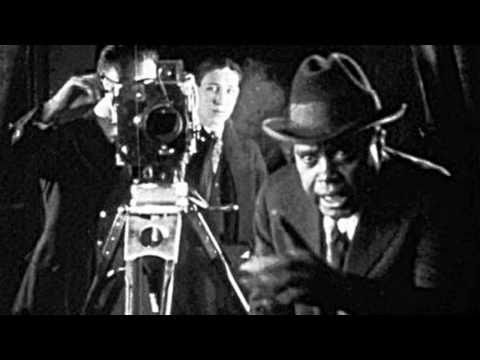
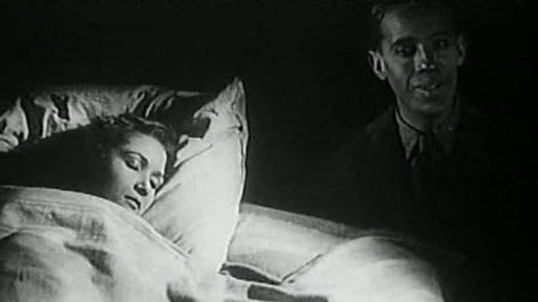
One hundred and thirty-eight years ago, on this date in 1884, Oscar Micheaux was born in Metropolis, Illinois.  Starting his career as a writer and an investor, Oscar Micheaux eventually moved into the film industry.  At a time when theaters were still segregated and black characters were regularly portrayed by white actors in blackface, the African-American Micheaux founded his own studio, financed his own movies, and distributed them himself.  Micheaux’s films dealt directly with themes of systemic racism and the struggle of blacks to get ahead in American society.  Many of Micheaux’s early films were designed as an “answer” to D.W. Griffith’s Birth of a Nation  while his later films deal with themes of inequality and corruption among both the police and the clergy.

Micheaux gave roles to talented black performers like Paul Robeson, actors who faced limited prospects in Hollywood during the silent and early sound eras.  (Even the white characters in Micheaux’s films were played by light-skinned blacks, a reverse of Hollywood’s unofficial policy of using white actors in dark makeup to play black characters.)  Unfortunately, many of Micheaux’s films are now lost but the few films that remain present a look at black life in America during the early decades of the 20th century.

In honor of the man and his legacy, Through the Shattered Lens presents….

4 Shots From 4 Oscar Micheaux Films

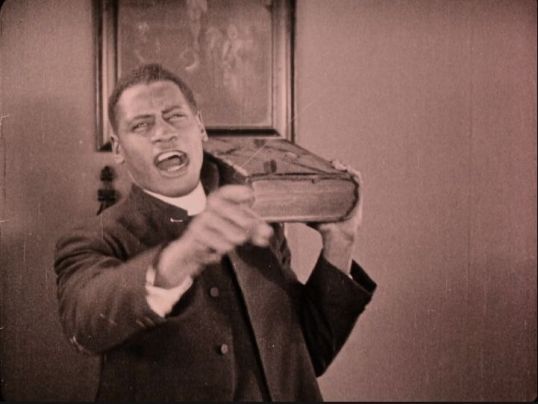
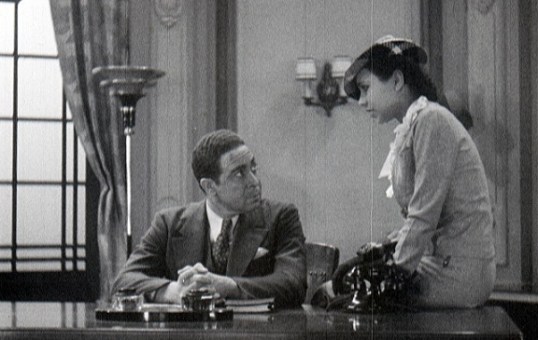
WIthin Our Gates (1920, dir by Oscar Micheaux)

The Symbol of the Unconquered (1920, dir by Oscar Micheaux)

Body and Soul (1925, dir by Oscar Micheaux)

Murder in Harlem (1935, dir by Oscar Micheaux)

Artwork of the Day: The Education of Lydia (Artist Unknown)


Unknown Artist

This is from 1966.  Stories about “what really happened” at college were popular during the pulp era, because they both scared and titalated parents while giving the future college students of America something to look forward to.  The author’s name, Charles X. Wolffe, looks like an obvious pseudonym or a house name that many writers shared.  But Beacon Signal only published four books by “Charles X. Wolffe” so he might have been a real person.  Unfortunately ,the identity of the artist responsible for this cover is not known.

Music Video of the Day: If I Can’t Have You by Yvonne Elliman (1977, dir by ????)


To be honest, this is the second video that I’ve shared for this song.  Back in 2020, I shared a clip of Yvonne Elliman performed If I Can’t Have You on the UK’s Top of the Pops.  This, however, is apparently the official video.

(Sidenote: If you’re looking for good music videos that came out before the era of MTV, Top of the Pops is always a good place to look.)

This is one of my favorite songs of all time.  It is certainly my favorite song from the Saturday Night Fever soundtrack.  (Yes, even more than Stayin’ Alive.)  The song was originally written by the Bee Gees and the plan was for them to perform it on the soundtrack while Yvonne Elliman would perform How Deep Is Your Love, which was actually written to be more of a pop ballad than a disco song.  However, Robert Stigwood decided to switch things up by having the Bee Gees perform How Deep Is Your Love while If I Can’t Have You was given to Elliman.  The result was that the Bee Gees gave a disco twist to a ballad while Elliman gave a ballad twist to a disco song.  In other words, it was a pretty good idea.  If I Can’t Have You may be my favorite song on the Saturday Night Fever soundtrack but How Deep Is Your Love is a close second.

Incidentally, Yvonne Elliman also played Mary Magdalene in the film version of Jesus Christ Superstar and gave one of the best musical performances ever captured on film.

Enjoy!

Don’t know why
I’m survivin’ ev’ry lonely day
When there’s got to be no chance for me
My life would end
And it doesn’t matter how I cry
My tears, so far, are a waste of time
If I turn away
Am I strong enough to see it through
Go crazy is what I will do
If I can’t have you
I don’t want nobody baby
If I can’t have you, uh-huh, oh
If I can’t have you
I don’t want nobody baby
If I can’t have you, uh-ho, oh oh oh
Can’t let go and it doesn’t matter how I try
I gave it up
So easily
To you my love
To dreams that never will come true
Am I strong enough to see it through
Go crazy is what I will do
If I can’t have you
I don’t want nobody baby
If I can’t have you, uh-huh, oh
If I can’t have you
I don’t want nobody baby
If I can’t have you, uh-ho, oh
If I can’t have you
I don’t want nobody baby
If I can’t have you, uh-huh, oh
If I can’t have you
I don’t want nobody baby
If I can’t have you, uh-ho oh
If I can’t have you
I don’t want nobody baby
If I can’t have you, uh-huh, oh
If I can’t have you
I don’t want nobody baby
If I can’t have you, uh-ho oh
If I can’t have you

Resolution Help From Monty Python’s Flying Circus


As the first day of 2022 comes to a close, now is a good time to stop, take a look back over the past 24 hours, and determine how many of your resolutions have already been broken.  Have you broken one or two of them?  How about all of them?  Or did you forget to make a resolution all together?

Well, don’t worry!  Seriously, New Year’s resolutions are the worst!  Every new year, people resolve to make changes and it rarely happens.  Instead, people almost immediately break their resolutions and then they spend the next 12 months feeling like a failure.  The amount of pressure that people put on themselves to try to change their lives for the better, it’s not fair, to be honest.  If you’ve already broken your resolution, don’t feel bad about it.  As long as your resolution wasn’t to stop doing something terrible and illegal, I forgive you if you’ve already totally failed to keep your promise to yourself.  Take some comfort in that.

(My own resolution for 2022 was to be nicer to my friends and stop putting so much pressure on myself.  I think that was last year’s resolution as well and we all know how well that went.  I think my most successful resolution was from 2004.  That was when I resolved to survive any serious car accidents that I got involved with and to go to college and I managed to keep both of those resolutions.  BOOM!)

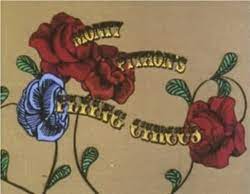
We always hear that change is good but sometimes it isn’t.  And here to illustrate that point are John Cleese and Michael Palin from Monty Python’s Flying Circus!  Below is one of my favorite sketches from that famous show.  Palin is a chartered accountant who wants to be a lion tamer.  He has no experience but he does have his own hat!  Cleese shows him the error of his ways, including revealing that Palin has long been mistaking anteaters for lions.  Who hasn’t made the same mistake?

(I have to admit that my favorite Monty Python moments often involved Palin somehow getting on Cleese’s nerves.  Palin’s eagerness to please and his way with a deceptively passive statement was always the perfect foil for Cleese’s slightly more aggressive style of comedy.  Perhaps not coincidentally, I’ve read on numerous occasions that Cleese’s main motivation for getting involved with what would become Monty Python was so he could work with Michael Palin.)

My favorite line from this particular vignette: “Yes, yes, yes, I do follow, Mr Anchovy, but you see the snag is… if I now call Mr Chipperfield and say to him, ‘look here, I’ve got a forty-five-year-old chartered accountant with me who wants to become a lion tamer’, his first question is not going to be ‘does he have his own hat?'”

Think of this whenever you fear that you’re not living up to your resolutions!  After all, sometimes there’s more to changing one’s life than merely having the right hat (though, I imagine it does help).

Lisa Marie’s Week In Television — 12/26/21 — 1/1/22


Happy 2022!  I spent most of this holiday week visiting my sister Megan and her family.  That’s been a bit of a Bowman holiday tradition since 2008.  We watched a lot of TV.  We both love Saved By The Bell and California Dreams so that shouldn’t be too much of surprise.  Anyway, there’s much to share this week so let’s get right into what I watched during the final week of 2021!
The Bold and the Beautiful (Weekday afternoons, CBS)

This used to be my show!  Of course, it’s been a while since I’ve regularly watched The Bold and the Beautiful but, on Wednesday, I decided to tune in just to see what was happening.  People were discussing their relationships and talking about fashion while getting ready for New Year’s.  Brooke is still on the show.  I might start setting the DVR in 2022.
The Brady Bunch (Sunday Morning, MeTV)

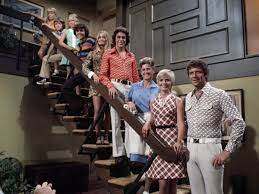
I watched two episodes.  First, Greg wanted to drop out of high school to pursue a career as a major league pitcher.  He was talked out of it.  Is there nothing that the Brady kids weren’t good at?  What an annoying family!  This was followed by an episode in which Marcia promised she could get Davy Jones to play her high school dance and somehow, she pulled it off because everything always worked out for Marcia.  Jan, on the other hand….
California Dreams (DVD)

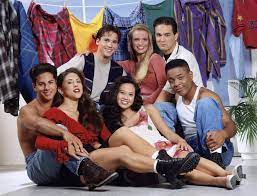
Megan and I watched a few episodes of this classic 90s NBC sitcom on Friday morning.  It’s kind of our New Year’s tradition.  We both agreed that Lorena and I have a lot in common.  We also watched Tony perform that “Next big thing” song of his.  He’s so funky!
Dance Moms (Wednesday, LRW)

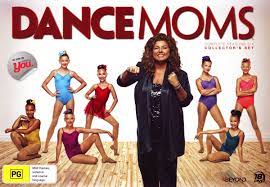
LRW did a Dance Moms marathon on Wednesday.  I watched a few episodes that morning and it made me realize how much I miss this show.  It also brought back a lot of memories for me personally, though my mom was never as crazy as the moms on this show.  I wonder if Maddie ever returns Abby’s calls.

Since the show aired on LRW, I got to see all those old “real women” commercials that Lifetime used to air, like the one with the woman talking about the time she scolded her mom for saying she needed a man to explain something to her.  “You know, that was her generation, ha ha ha.”  All I know is that you just made fun of your mother on national television.

Days of Our Lives (Weekday Afternoons, NBC)

It’s been a while since I’ve watched any of the daytime dramas but my sister Megan informed me that a character on Days of Our Lives had been possessed by the devil since September so, on Tuesday, I decided to watch to see what that was like.  From what I saw of it, it looked like a lot of fun.  With Marlena tied to her bed and speaking in a gravelly demon voice, everyone was getting ready for the exorcism.  “We’re not dealing with your mom,” one character explain, “We’re dealing with …. it.”  “You shut your mouth or you’re going to get a face full of holy water!” someone else declared.  A priest entered the bedroom and Marlena’s daughter said, “You’re a priest again?”  Meanwhile, Patch dressed up as Santa Claus, which was charming in its own weird way.  Fortunately, everything worked out in the end.  These are indeed the days of our lives.
Dexter: New Blood (Showtime, Sunday Night)

I wrote about the latest episode of Dexter here!

Football Game: Bills vs. Patriots (Sunday Afternoon, CBS)

I watched this on Sunday morning with my sisters.  I have to admit that I didn’t pay much attention but I do remember that everyone wanted the Bills to win so I felt obligated to cheer for the Patriots.  I don’t remember who actually won, though.  Football games are really, really long.

Football Game: Cowboys vs. Football Team (Sunday Night, NBC)

I watched this game with my sister Megan and her husband, John.  They got really excited whenever the Cowboys scored.  I felt bad for Football Team.  I figure that it has to suck to be a member of Football Team because everyone they meet is probably like, “Who do you play for?” and when the player says, “Football team,” everyone probably replies, “I know, but which one?”  What I’m saying here is that these guys need a real name if they’re going to succeed.  For example, the Cowboys pretty much destroyed Football Team on Sunday.  I thought the Cowboys were seriously going to score a 100 points before the game ended.  Poor generic Football Team.
General Hospital (Weekday Afternoons, ABC)

I watched an episode on Wednesday.  Too much talk, not enough hospital.
Hang Time (YouTube)

Hang Time was basically Saved By The Bell except it centered around a high school basketball team in Indiana.  It aired from 1995 to 2000 on NBC and it was never that good but it lives on because every episode has been uploaded to YouTube.  NBC is pretty aggressive about taking down unauthorized SBTB uploads but they don’t seem to care much about Hang Time.

Anyway, early Wednesday morning, I forced Megan to watch an episode because I wanted her to hear one line that always amused me.  The episode opened, as they often did, with a basketball game.  However, for this game, the main characters (including a very young Anthony Anderson) were forced to spend the entire game on the bench while the backup players hit the court and …. uhm, lost.  In fact, they lost bad.  It turned out the main characters were being punished for getting fake IDs and driving drunk.

About 15 minutes into the episode, one of the backup players is injured but when he limps over to the baseline or the sideline or whatever they call it in basketball, he yells at the coach that he wants to keep playing because, unlike some people, “I CARE ABOUT THE TEAM!”  And then coach sends him back into the game despite the fact that the he can barely walk!  For some reason, that’s always made me laugh.  The coach taught his players a lesson by forcing someone who did nothing wrong to play injured.  What a guy!

The Love Boat (Sunday Afternoon, MeTV)

The Love Boat and another ship traveled to Alaska, where the captains competed to see who was the best.  Apparently, it was a promotional gimmick but the competition turned personal when the son of the rival captain decided that he would rather work on the super mellow Love Boat as opposed to his father’s boat.  Anyway, it was silly but Alaska looked lovely.  Plus, Sonny Bono was on the episode as some sort of hyper corporate guy.

The Office (Weekdays, Comedy Central)

Comedy Central did an Office marathon this week.  On Monday, I watched a few episodes from season 2.  They kept me happy as I wrote 2,300 words on Monster, one of the most depressing movies ever made.  (Look for that review on Monday!)  Then, on Tuesday, I watched a few episodes from season 3 while I was writing another 2,000 words about the making of The Godfather Part III.  (Look for that post on Monday as well!)

By the time Wednesday rolled around, Comedy Central had started on season 5, which is when the show started to get uneven and, not coincidentally, Ed Helms’s role started to get larger.  However, there were still some classic episodes during season 5, like the Golden Ticket episode and The Michael Scott Paper Company arc.  Those also just happened to be the episodes that I watched.

By Thursday, we were into season six and …. eh.  Season six is when Jim and Pam started to get a bit insufferable in their smugness and there was that whole weird thing where Jim was briefly co-manager.  Megan and I watched the Gossip episode and The Meeting episode and we both agreed it was actually kind of rude of Jim to go behind Michael’s back with his whole co-manager idea.  We then did a little shopping.  When we came back, we caught my two favorite episodes of that season — Scott’s Tots and The Shareholder’s Meeting. 

Hey there, Mr. Scott, whatcha going to do?  Whatcha going to do?  Make our dreams come true!

Parking Wars (Weekday Mornings, A&E)

On Thursday morning, I forced Megan to watch an episode of Parking Wars with me, just so she could understand what I’m always complaining about.  For 30 minutes, as we watched the action in Detroit and Philadelphia, I said, “See?  This is totally how fascism comes to be accepted!”  Megan said she agreed with me, though I think she may have just been saying that …. which is fine!  Just as long everyone agrees.
Sabrina, The Teenage Witch (Fuse, Monday Morning)

Sabrina felt that all of her academic accomplishments were being taken for granted so she cast a spell which caused everyone to go crazy over every little thing she did.  Needless to say, an important lesson about humility was learned.

As far as I’m concerned, this is the only show about Sabrina, The Teenage Witch that matters.  Talking Salem for the win!

Saved By The Bell: The Junior High Years (a.k.a. Good Morning Miss Bliss) (Netflix)

At December 26th, at midnight, my sister Megan and I sat down and watched six episodes of Saved By The Bell.  Well, we didn’t actually just spend 2 and a half hours watching them.  We were talking and cleaning and laughing and doing other things.  But still, we had the show on and we did occasionally pause long enough in all of our other activities to see what was going on.

The episodes that we watched were from the infamous Junior High years.  That was when the show aired on the Disney Channel and it was set in Indiana and Slater, Kelly, and Jessie were not on the show.  Instead, the show centered around Miss Bliss (Hayley Mills), a British widow who somehow ended up teaching social studies at a junior high in Indiana.  At the time, the show was called Good Morning, Miss Bliss.  Good Morning, Miss Bliss was canceled after 13 episodes but was then relaunched on NBC, with Zack, Screech, Lisa, and Mr. Belding all somehow relocating to California.  The Miss Bliss episodes could probably be written off as non-canon, if not for the fact that many of them were re-aired as episodes of Saved By The Bell, with special introductions in which Zack would say, “This is from when we were in junior high.”  It didn’t make any sense but Saved By The Bell just didn’t care.

Anyway, the first episode of Good Morning, Miss Bliss featured Zack lying to a girl about the fact that he was only in the 8th Grade.  The girl was played by a very young Carla Gugino, who went on to do much better things with her career.  Anyway, Zack learned an important lesson about lying but apparently not important enough to inspire Zack to actually be honest in any future episodes.

The 2nd episode that we watched featured a love letter that kept getting read by the wrong people.  Mr. Belding thought Miss Bliss was in love with him.  Miss Bliss thought Belding loved her.  Lisa thought …. ugh, I’m getting a headache just thinking about it.  The most interesting thing about this episode is that the whole stupid plot was later reused in one of the Tori episodes of regular Saved By The Bell.

The third episode that we watched was one of my favorites of the Miss Bliss episodes.  Miss Bliss teaches her students about the stock market by investing some of her own money in a stock of their choosing.  However, Zack desperately needs money so he invests the money in potatoes.  Miss Bliss is furious when she finds out and yells at everyone, which was fun because Miss Bliss was always a bit too perfect to be believed so it was nice to see that, deep down, she was a neurotic mess.  Fortunately, she forgave everyone by the end of the episode.

Episode #4 features Zack’s friend Nikki refusing to dissect a frog.  Miss Bliss took Nikki’s side but was still upset when Nikki stole all of the frogs.  Meanwhile, Mr. Belding was panicking because he thought another school was trying to recruit Miss Bliss so he let Miss Bliss have anything that she wanted.  However, Mr. Belding soon realized he was mistaken and promptly took everything back.  TAKE THAT, MISS BLISS!

Episode #5 left Megan and I totally confused.  Zack was upset because Miss Bliss was dating his father.  The divorce of the Morrises had been hard on Zack and, as a result, Zack was totally acting out.  What’s weird is that Zack’s parents were NOT divorced in the high school episodes of Saved By The Bell.  It’s almost as if the writers just didn’t care.

Finally, Episode #6 featured Screech getting targeted by the school bully.  However, it turned out that the bully was just upset because he was illiterate.  That would have upset me too.  Having learned a valuable lesson about bullying, Megan and I decided we had watched enough Saved By The Bell for that morning.

On Monday morning, we watched the remaining 7 Miss Bliss episodes.  Again, we didn’t just watch.  We talked and laughed and made plans while the show played in the background.  To be honest, we probably paid even less attention on Monday than we did on Sunday.  By this point, we’ve both got every episode of this stupid show memorized so it’s not like we really had to focus to know what was going on.

Episode #7 was a school dance episode.  I guess, technically, it was the first ever SBTB dance episode.  Mr. Belding was worried about a fight breaking out at the dance.  A first actually did break out at the dance between Zack and his loser friend, Mickey.  Mickey liked a girl but she liked Zack.  Fortunately, Miss Bliss was there to save the day.

In Episode #8, Zack got out of taking a midterm by releasing Screech’s pet rats in the school.  Megan and I found the idea of a school closing down because of rats to be hilarious.  Seriously, I’ve seen rodents running around college campuses, ducking from classroom to classroom.  Anyway, due to Zack’s selfishness, it appeared that Miss Bliss would miss out on her chance to be named Teacher of the Year.  Fortunately, everyone teamed up to help her because, of course, the entire school revolved around keeping her happy.

In Episode #9, Zack and his other other loser friend, Nikki, teamed up for a class project but Zack expected her to do all the work.  (Boooo!)  It led to a rift in their friendship but Zack fixed it all by apologizing in front of the entire class.  Megan and I both agreed that was probably an awkward experience for all the other students who were forced to sit through it.

Episode #10 found the junior high in the midst of a prank war.  Who pranked Miss Bliss and ruined her ugly sweater!?  Everyone thought it was Screech and the class held a mock trial as opposed to just burning him at the stake.  Screech was acquitted and it turned out that he was actually framed by Miss Bliss, who wanted to teach the class about the jury system.  Neither Megan nor I cared much for this episode and we agreed that it was proof that Miss Bliss was a terrible teacher who didn’t really consider what being forced through a mock trial could do to a young student’s psyche.

Episode #11 was the silliest episode of all.  It turned out that Miss Bliss’s former student, Colleen Morton, was now a pop star named …. STEVIE!  Zack made a bet with everyone that he could get a kiss from Stevie.  He did get a kiss, but it was from Colleen.  It was only later that Zack figured out that Colleen and Stevie were one in the same!  Zack lost the bet, even though he was being honest about having been kissed by her.  So, I guess the lesson here is that Saved By The Bell took place in a post-truth world.

Episode #12 featured Zack pledging to some sort of weird ninth grade fraternity.  The frat demanded that Zack mistreat all of his friends and then, after Zack had lost everyone’s friendship, they revealed they were just playing a joke on him.  For some weird reason, Miss Bliss was the principal while Mr. Belding taught home room.  At first, everyone thought that Miss Bliss was both the perfect principal and the perfect teacher but then it turned out that Miss Bliss didn’t actually bother to get permission from the school board for any of the “good” things that she did and all of her solutions backfired.  TAKE THAT, MISS BLISS!

Finally, we ended things with the 13th and final episode of the Miss Bliss years.  Miss Bliss’s mentor showed up at the school and helped to teach her class.  His unorthodox methods were frowned upon by Mr. Belding.  Personally, I think Belding had a point but whatever.  The important thing is that Megan and I survived all 13 episodes.
Silk Stalkings (Tubi)

I decided to binge all 8 seasons of the stylish 90s crime show, Silk Stalkings.  This show also airs on one of the retro channels, ZLiving.  It was a stylish show about rich people doing bad things, often while undressed.  The first few seasons starred Rob Estes and Mitzi Kapture as Chris and Rita, two detectives who worked together to solve crimes and who generated endless amounts of sexual tension.

My sister Megan and I watched the pilot on Monday.  Chris and Rita investigated the murder of a model. Not surprisingly, the pilot was mostly about introducing Chris and Rita and establishing that they were attractive people who would be worth watching.  The pilot did a good job of just that.  Estes and Kapture had obvious chemistry from the start.  Even overly cutesy things — like calling each other “Sam” — were charming when they did it.  A good deal of time was devoted to Rita recovering from an aneurism, with gave the audiences a chance to see just how much Chris cared about his partner.  It was sweet, even if I have to agree with Rita that Chris was being a bit overprotective.  After the pilot, Megan and I watched two more episodes.  Chris and Rita investigate an old rich man who was shooting snuff films in his private sex dungeon and Rita came to terms with the tragic details of her father’s death.  And then, a rich car salesman was found floating in the ocean.  Fortunately, Chris and Rita were able to bring his very attractive killers to justice!

On Tuesday, we watched an episode in which Chris and Rita solved the murder of a wealthy (naturally) man who was killed on a golf course by an assailant who wielding a meat hook!  AGCK!  It was a grisly case but the important thing is that everyone involved was attractive.  Rita got shot towards the end of the episode.  She survived but Megan and I were still like, “Awwwwww!” when Chris got all worried about it.  This was followed by a fun episode in which Chris and Rita investigated the murder of a Congressman.  You might be surprised to learn that investigating the death of a politician involves talking to a lot of half-naked people. Chris and Rita (especially Chris) were up for the job!  This episode also featured a cute little subplot where Chris tried to help Rita deal with her insomnia.  Rita had a big poster that simply read, “ART!” in her bedroom.

The first episode that we watched on Wednesday featured Chris and Rita investigating the murder of a half-naked,rich woman.  This led to a scene in which they arrested a naked man who, standing in his hot tub, announced that “I heard you would need a semen sample.  I was just getting warmed up for you.”  Meanwhile, Chris reconnected with an ex-girlfriend who was now working as a stripper.  Reconnecting, in this case, meant spending a lot of time at the beach.  It was a fun episode.  The second episode found Chris and Rita investigating the murder of a sleazy tabloid publisher.  Of course, if this show had been made today, he would have just owned a clickbait factory and his death would have been live-streamed.  Chis was also upset that Rita had a date with a guy that she barely knew.  The date, of course, led to wild limo sex because seriously, what else are you going to do in a limo?

We got things started on Thursday with an episode about a decadent socialite who was drowned in her own pool.  Chris and Rita eventually discovered that the killer was a psycho named James who, ironically enough, also ended up dying in a pool.  Of course, James killed himself by jumping into the water while holding a sander.  We then watched an episode featuring Chris and Rita investigating a murder that had been committed by a bunch of frat boys.  Megan and I both agreed that frat boys were the worst!
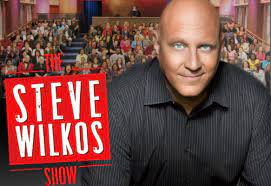
The Steve Wilkos Show (Weekday Morning, Channel 33)

Hey, Steve Wilkos!  Giving lie detector tests and changing lives!  Good for you, Steve!  I watched your show on Wednesday morning because I was waking up and getting ready for my day and I was basically too busy to change the channel!  Get the Hell off my stage!
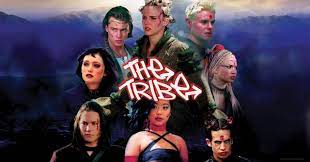
The Tribe (Pluto TV)

The Tribe is a British/New Zealand co-production that ran for five seasons in the last 90s and the early aughts.  It takes place in a future in which all of the adults have been killed by a mysterious virus, leaving behind only children and teenagers who have all formed “tribes,” and who are having to grow up in a world ruled by fear and anarchy.  A friend of mine has been recommending this show to me for a while.  One of my New Year’s resolutions was to finally check it out!

And that’s what I did.  On Saturday morning, around 2 a.m., I watched the first episode on Pluto.  It was pretty good.  It quickly set up the premise and introduced the characters.  Actually, it did quite a bit in just 25 minutes.  After meeting in an abandoned city, the main tribe took refuge in a mall.  Meanwhile, on the outside, a group of teenagers drove around in a cop car, the siren wailing ominously.  It was was an intriguing opening and, after watching the first episode, I decided that The Tribe would be one of the shows that I would binge over the course of 2022.
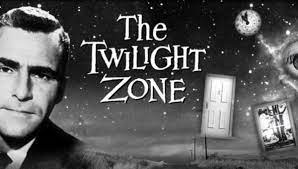
The Twilight Zone (Saturday and Sunday, SyFy)

I got a few episodes of SyFy’s annual Twilight Zone marathon.  On Saturday, I saw Burgess Meredith break his glasses.  I saw the one with the hitch-hiker who kept saying, “Going my way?”  And I saw one of my absolute favorite episodes, The Monsters Are Due On Maple Street.  On Sunday, the highlight included Twenty-Two (“Room for one more!”), Peter Falk playing Castro in The Mirror, The Hunt (in which a man realizes that only Hell would refuse to allow dogs), The Bard (in which Shakespeare met Burt Reynolds), and The Changing of the Guard with the great Donald Pleasence!
The Young and the Restless (Weekday mornings, CBS)

Because I had so much fun with Days of Our Lives on Tuesday, I decided to watch The Young and The Restless on Wednesday.  Unfortunately, the episode of Y&R that I saw was a bit dry, with a lot of scenes of people standing around and talking about a lawsuit.  It was kind of boring but at least everyone looked good!

AMV of the Day: 3 (Winx Club)


A new year calls for a new AMV of the Day.  To make it even better, the music is from Britney!

Anime: Winx Club

Song: 3 (Britney Spears)

Creator: Jessie Disturbia

(As always, please consider subscribing to this creator’s YouTube channel!)

Past AMVs of the Day

A Blast From The Past: Better Use Of Leisure Time


Well, it’s a new year.

That means that it’s time to start thinking about what you want to make of yourself this year.  What are you going to do?  What are you going to accomplish?  How are you going to make yourself proud of who you’ve become?

There’s a lot of movies coming out.  Maybe you’ll go to them.  Or maybe you’ll be the person who spends all of their time on twitter, tweeting about how scared you are of going back to the theaters.  Both options come with their risks and their rewards.

There’s a celebrity edition of Big Brother airing in February.  Maybe you’ll watch it.  Maybe you’ll blog about it, because you like getting paid more than your dislike the show.  Or maybe you’ll spend all of your time on twitter, talking about how much you hate reality TV.

2022 is an election year.  Maybe you’ll run for office.  Maybe you’ll volunteer to work for a campaign.  Maybe you’ll spend all of your time on twitter, tweeting about how people need to vote for your candidate.  Maybe you’ll come up with the hashtag that changes the course of the election!  Maybe you’ll hang out in the paring lot of Whataburger, waiting for Beto to toll by.

Or maybe….

Eh.

You’re not going to do anything.

Let’s be honest, most of us are very lazy and we have absolutely no idea how lucky we are compared to people who lived just a few decades ago.  We take a lot of things for granted and we waste a lot of time doing nothing, precisely because we can do just about anything that we want.

(Of course, in my case, I’m have ADHD.  I spend a lot of time doing things but usually, I end up trying to do them all at once.  Reading a book and watching a TV at the same time is not difficult but when you also try to vacuum the living room while doing those other two things, it starts to get a little bit more difficult.  Still, my super power is ADHD and I’m thankful.)

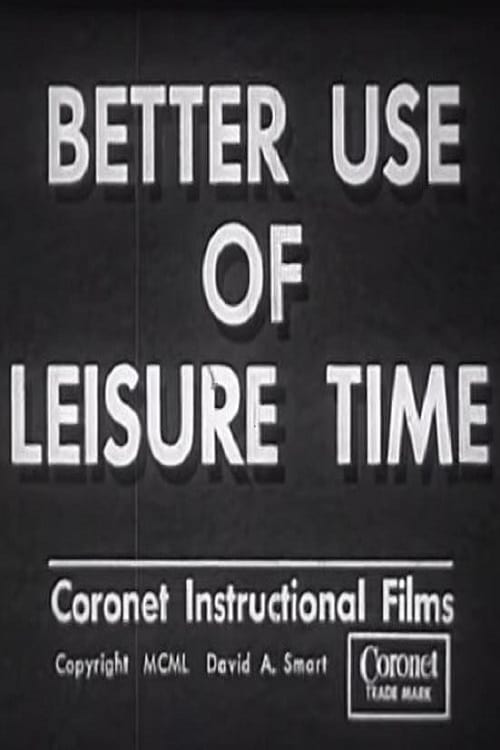
Well, fear not!  A short film from Coronet Films has traveled all the way from 1950 to encourage you to make better use of your leisure time!  Why …. that’s even the name of the film!  Better Use of Your Leisure Time follows a good-for-nothing, spoiled teenager named Ken as he learns why spending all of your time moping is perhaps the worst thing that you can do.  With the help of a judgmental narrator and the ability to see alternative universes, Ken learns an important lesson.  There’s no hope with mope!  Ken discovers that some people actually have hobbies and spend their free time creating and learning and being a decent citizen.  It’s an important lesson and hopefully, it’s one that Ken will remember the next time that someone tells him that moping is no big deal.

Anyway, as far as Coronet Educational Films go, this one isn’t bad.  Ken is a bit of a loser but that’s to be expected of these type of films.  It’s very much a product of its era and, if nothing else, it stands as evidence that people wasted time even before the internet existed.  TAKE THAT, LUDDITES!

Watch, enjoy, and learn.  LEARN, GOSH DARN IT!

Lisa Reviews An Oscar Nominee: The Irishman (dir by Martin Scorsese)


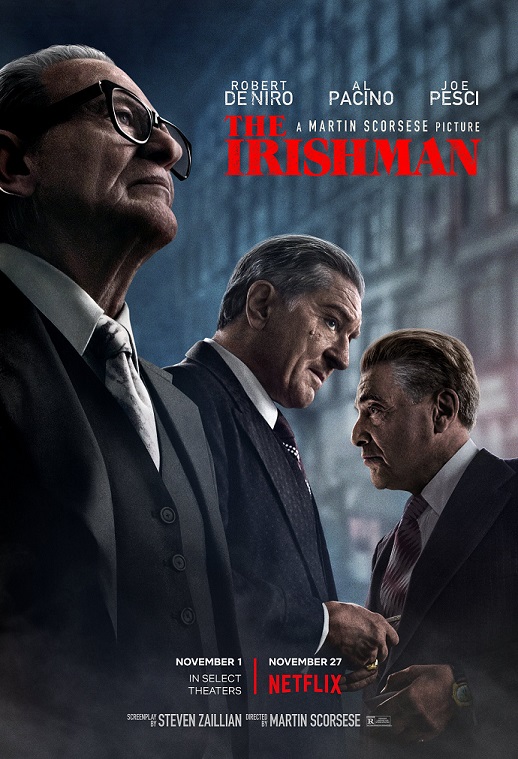
Released by Netflix in 2019 and clocking in at close to 4 hours, the Martin Scorsese-directed Best Picture nominee, The Irishman, is a film about many different things.

At its simplest, it’s a film about a very old man named Frank Shearan (played by Robert De Niro).  Frank is an Irish-American from Philadelphia.  Frank is a veteran of World War II and a former truck driver who was briefly a fairly important figure in the Teamsters union.  He did a few years in prison.  At the start of the film, though, he’s just another elderly man living in a retirement community.  All of his friends are dead.  His wife passed away years ago.  His children never comes to visit.  In fact, the only people interested in talking to Frank are the FBI but Frank doesn’t have much to say to them.  That’s not to say that Frank isn’t talkative.  For the first time in his life, he wants to talk to people but there’s no one left to talk to.  The only people who listen are those who are required to do so.  A nurse politely nods along as as he tells her about his old friend Jimmy Hoffa.  (She’s never heard of him.)  A priest listens to the story of Frank’s life and offers him absolution.  At times, Frank looks straight at Scorsese’s camera and appears to be talking straight to the audience.  Frank has a lot of interesting stories but who knows how truthful he’s being or if his memory can be trusted.

The Irishman, though, is not just the story of Frank.  It is also a secret history of America during the latter half of the 20th Century.  Frank may look old and harmless in that nursing home but, to hear him tell it, he was once acquainted with some of the most powerful men in America.  He went from executing Italian POWs during World War II to executing hits for the Mafia in post-war America.  Along the way, he became close to crime bosses like Skinny Razor (Bobby Cannavale), Angelo Bruno (Harvey Keitel) and Russell Bufalino (Joe Pesci), men who may not have been household names but who still wielded a lot of power.  These are men who, Frank flatly states, fixed the presidential election of 1960 and who later quite possibly killed the man they had elected president.  Frank also became a close associate of Jimmy Hoffa (Al Pacino), the labor leader who was reputed to have mob connections and who disappeared in 1975.

The Irishman is also a tribute to the modern gangster film, featuring role for nearly every living actor associated with the genre.  De Niro, Pacino, Pesci, Keitel, Bobby Cannavale, Domenick Lombardozzi, Gary Basaraba, they’ve all played their share of gangsters in films and television show that were both good and bad.  Having them all appear in one film together serves to remind the viewer of just how much of America’s popular entertainment has revolved around stories of organized crime.  Even as the old school Mafia has declined as a real-world power, it’s become a permanent part of pop culture.  Everyone loves a gangster, except for the people who actually have to deal with them on a daily basis.

Not surprisingly, considering the stars and the director, it’s a film full of smart, detailed performances.  When the film was originally released, Pacino and Pesci got the lion’s share of the praise and they certainly deserved it.  Pacino gets the best lines and brings some unexpected wit to his performance as Jimmy Hoffa.  Pesci, meanwhile, finally gets to play a gangster who is not psychotic and shows that he can be just as compelling when he’s not raising his voice as when he is.  Still, some of my favorite performances came from actors who one wouldn’t necessarily associate with a Scorsese gangster film.  I liked the nervous humor that Ray Romano brought to the role of a corrupt union lawyer.  I liked the seething resentment that Stephen Graham brought to the role of Jimmy Hoffa’s main rival in the union.  (The scene where Graham and Pacino argue over who is more owed an apology for all of their past disagreements is both funny and, due to the people involved, somewhat frightening.)  Jesse Plemons is poignantly dumb in his brief role as Hoffa’s stepson.  Louis Cancelmi doesn’t get a lot of screen time but he steals every scene in which he appears as a paranoid hitman.  (Cancelmi plays a character named Sally Bugs, proving that not everyone in the Mafia gets a cool nickname.)

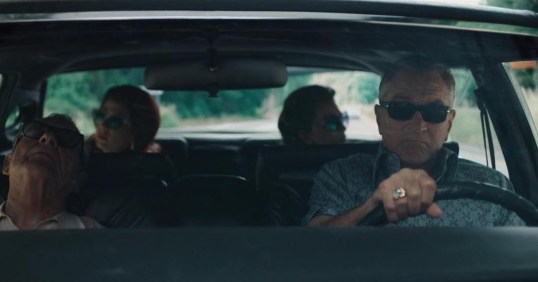
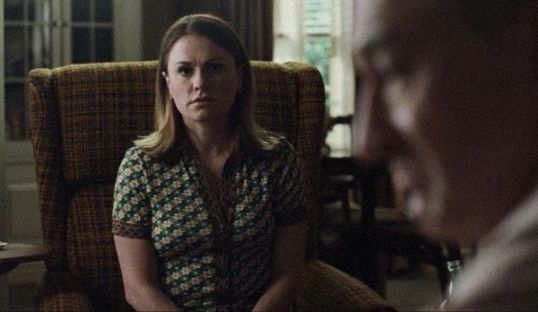
And then there’s Anna Paquin, who provides the film with its moral center.  When the film was first released, many Twitter critics complained that Paquin, who played Frank’s daughter Peggy, only a had a handful of lines.  It was one of the stupidest controversies of 2019, which is saying something when you consider how much time Film Twitter devotes to generating stupid controversies.  Peggy doesn’t say much because she’s decided that she doesn’t want to be a part of her father’s life.  From the moment that she first sees Frank beating up a store owner, Peggy knows that her father and his associates are violent men.  She not only fears them but she resents the damage that Frank does to not only her family but to the families as other as well.  The only one of her father’s associates who she likes is Jimmy Hoffa, because Hoffa cares about helping others.  When Hoffa disappears, Peggy makes a decision to disappear from Frank’s life and Paquin’s withering stare says more than any lengthy monologue could.  Peggy doesn’t say much because she knows that her words would be wasted on a man who she knows is a liar.  The scene where she silently walks away from her now elderly father tells us everything we need to know about the emotional consequences of the life that Frank has chosen to live.  Regardless of how many lines she did or didn’t have, Paquin gave one of the best performances of 2019.

Famously (or, depending on which critics you read, infamously), de-aging technology was used so that De Niro, Pacino, Pesci, and Keitel could play both the younger and the older version of their characters.  At first, it can be a bit jarring.  The de-aging works fine with Pesci and Keitel, both of whom are already supposed to be middle-aged when they first meet Frank.  (Admittedly, Keitel only has a few minutes of screen time.)  With De Niro and Pacino, it’s a bit less successful.  Even when they’re playing younger versions of themselves, De Niro and Pacino still move and stand like old men.  Fortunately, in the case of Pacino, his natural movie star charisma wins out over his obvious age.  In the end, we believe that he’s Hoffa because we want to believe that all of our important historical figures were as interesting and entertaining as Al Pacino is in The Irishman.

And yet, ultimately, even the awkward de-aging works to the film’s advantage because it reminds us that we’re not necessarily seeing what happened.  Instead, we’re seeing what Frank says happened.  We’re seeing his memories, or at least what he claims to remember.  It makes sense that, when Frank thinks about himself as a young truck driver in 1956, he would picture himself not as he was but instead as just a slightly less weathered version of who he would eventually become.  Throughout the film, there are hints that Frank’s memory should not be trusted.  Some of his stories are incredibly detailed while others — like when he transports weapons for the failed invasion of the Bay of Pigs — are a bit more vaguely presented.  Is Frank lying or is he misremembering or are we just expecting too much detail from a man who is now essentially waiting to die?  The film leaves that up for us to determine.

The Irishman is Scorsese at his most reflective.  Compared to Goodfellas and Casino, The Irishman is certainly one of Scorsese’s less “flashy” films.  But, on repeat viewings, it becomes cleat that The Irishman is the perfect conclusion to the gangster trilogy that began with Goodfellas and continued with Casino.  All three of these films deal with someone who rises up the ranks in the mob while remaining, as a result of their ethnicity, an outsider.  (Henry Hill and Frank Shearan are both Irish.  Ace Rothstein was Jewish.)  All three of them are briefly on top of the world and all three of them are left wondering how they’re going to continue their lives after their days at the top are over.  In Goodfellas, Henry Hill makes no secret of his disgust at having to live in the bland anonymity of the suburbs.  In Casino, Ace Rothstein ends the film with a mournful acceptance the fact that he will never return to his beloved Vegas.  (“And that’s that.”)  In The Irishman, Frank finally realizes that he has comes to the end of it all, alone and with nothing but death in his future.  All three of them made their decisions and, in the end, all three of them are left to deal with the consequences.  The trilogy goes from Henry’s anger to Ace’s depression to Frank’s acceptance.

It may seem strange to describe a film like The Irishman as being underrated, seeing as how it was nominated for 10 Oscars and got a Criterion release in record time.  And yet, when the film first came out, there was a vague sense of disappointment to found in even some of the positive reviews.  It was a Scorsese film that was so eagerly awaited and arrived with so much hype that there was no way it could live up to some of the expectations that had been set for it.  (And, of course, there’s also a whole set of people who were predestined to dislike the film precisely because it was a Scorsese film and it was so anticipated.)  It’s a long film and, while Netflix should be praised for allowing Scorsese the freedom to make his epic, it’s also not a film that should be viewed in bits and pieces on a tiny screen.  The Irishman is a film that should be watched in one sitting and it’s definitely a film that most viewers should watch more than once.  It takes more than one viewing to truly grasp the the world that Scorsese has recreated.

The Irishman was nominated for Best Picture.  It lost to a worthy competitor, Parasite.  Still, regardless of who took him the Oscars, The Irishman is a film that will live forever.