On Saturday night, I needed some cheering up so I watched Mingle All The Way on the Hallmark Channel.
Mingle All The Way is a Hallmark Christmas movie, which means that everyone in the movie goes from Grinch to angel in just two hours. Molly (Jen Lilley) has created an app that pairs professionals together so that they can attend events together without having to worry about it turning into a romance. Jeff (Brant Daugherty) works in public relations and is a single father. When Molly allows her co-worker to set up her profile and Jeff lets his sister to do the same thing for him, the end result is that they end up getting paired together. At first, they don’t like each other, because Molly thinks that Jeff is rude and Jeff thinks that Molly is to wrapped up in her work. Then, Molly meets Jeff’s daughter and Jeff meets Molly’s family and they all come to loe each other. It’s a Christmas miracle!
There was nothing surprising about Mingle All The Way but that’s not a problem. It’s a Christmas Hallmark film so it’s not like I was expecting it to reinvent the wheel or anything like that. I just wanted it to be a sweet and cute movie about people falling in love during the holidays and that’s what the movie delivered. Hallmark movies have become as much a part of Christmas as the tree, the stockings, and old St. Nick coming down the chimney. The holidays can be a difficult time for a lot of people and Hallmark movies like Mingle All The Way are there to provide an escape. On Hallmark, every gift is perfect, every season is merry and bright, and we all get to experience our ideal Christmas.
As for why I needed to cheered up, it all has to do with baseball. Ever since Adrian Beltre announced he was retiring, I’ve been feeling down. If my Rangers couldn’t make it to the World Series with Adrian batting for them, how are they going to do it without him? All I want for Christmas is a home run hitter who can play third base. Until that happens, at least I know I can turn over to Hallmark and watch movies like Mingle All The Way.
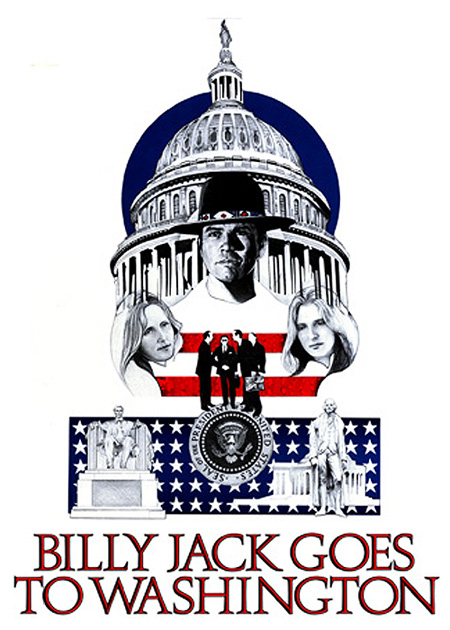
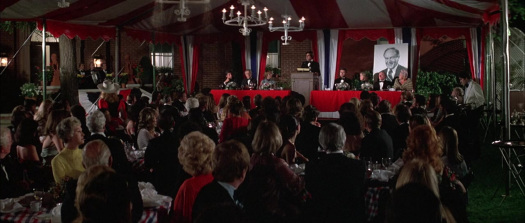
Billy Jack, hero of the oppressed, goes up against an enemy he can’t wrap his head around – the politicians of Washington, D.C. in BILLY JACK GOES TO WASHINGTON, the final chapter in the Billy Jack saga. I know I harped on the fact that the last film, THE TRIAL OF BILLY JACK , didn’t contain enough action, and this one has even less, but I liked this film better. It’s a remake of Frank Capra’s 1939 classic MR. SMITH GOES TO WASHINGTON (Capra’s son is the producer), retooled for the modern era and casting Tom Laughlin’s Billy Jack character in the Jimmy Stewart role. You’d think a forty-plus year old political film would be dated, but truth to tell, not a lot has changed since then… if anything, it’s gotten worse.
When Senator Foley has a heart attack and croaks, the powers-that-be look for a patsy to replace him…
With the advent (ha! Get it?) of December, the time has come, once again, for our annual look back at some of the finest comics the year had to offer. We’ll be skipping the usual offerings for the next week or two around here, including the Weekly Reading Round-Up column, since re-reading is your humble emcee’s top priority for the next little while. A run-down, then, of the six different categories I’ve broken things down into is in order, and please keep in mind that I’m deliberately eschewing calling any of these lists a “best-of” simply because I haven’t read everything that’s out there — and who could? Think of these, then, as lists of the ten best entries in each category that I’ve read. Or my own personal favorites. Or something. Anyway, “brackets” are as follows:
Top Ten Single Issues – Pretty self-explanatory, I should think…
Inspired by the collapse of Soviet-style communism in the late 80s and the early 90s (in particular, the fall of the Berlin Wall and the overthrow of Nicolae Ceaușescu in Romania), Right Here, Right Now not only sold over 1 million copies but it was also the most played song on college radio in 1991.
The video, which mixes performance footage with news footage from Eastern Europe, was the first music video to be directed by Matthew Amos. Amos went on to direct videos for Stereo MCs, Manic Street Preachers, Slipknot, and the Charlatans.
“No, you must not miss the newsreels. They make a point this week no man can miss: The war has strewn the world with corpses, none of them very nice to look at. The thought of death is never pretty but the newsreels testify to the fact of quite another sort of death, quite another level of decay. This is a putrefaction of the soul, a perfect spiritual garbage. For some years now we have been calling it Fascism. The stench is unendurable.”
Those words were written in 1945 by director Orson Welles. He was writing about the footage that had been filmed at the Nazi concentration camps during the final days of World War II. These films not only revealed the crimes of the Third Reich but they also proved the existence of evil. With World War II finally ended and Hitler dead, many people were eager to move on and forget about the conflict. Many even claimed (and some continue to do to this very day) that the reports of the Nazi death camps were exaggerated. Writing in his syndicated column for the New York Post, Welles told those doubters that the reports of the Nazi death camps were not exaggerated and that, unless people confronted the horrors of the Nazi regime by watching the newsreels and seeing for themselves, history would repeat itself.
A year later, Welles would use that documentary footage in a key scene of his 1946 film, The Stranger. A government agent named Mr. Wilson (Edward G. Robinson) shows the footage to Mary Longstreet Rankin (Loretta Young), the daughter of a Supreme Court justice. Wilson is hoping that, by showing her the footage, he’ll be able to convince her to help him bring a Nazi war criminal to justice. Complicating things is that Wilson believe that the Nazi war criminal is Mary’s new husband, Professor Charles Rankin (played by Orson Welles, himself).
In this shot, the horrors of the Holocaust are literally projected onto Edward G. Robinson’s face, a reminder that is on us to prevent it from ever happening again.
Rankin’s real name is Franz Kindler. One of the architects of the Holocaust, he escaped from Germany at the end of World War II and, after making his way through Latin America, he ended up in a small town in Connecticut. He got a job at the local prep school, where he instructs impressionable young minds. He also found the time to work on the town’s 300 year-old clock.
When we first see Kindler/Rankin, he’s walking out of the school and it’s obvious that all of his students love him. Rankin has a quick smile, which he uses whenever he has to talk to Mary or any of the other townspeople. However, that smile disappears as soon as he’s approached by another Nazi fugitive, Konrad Meinike (Konstantin Shayne). Rankin assures Meinike that he’s merely biding his time until he can establish a Fourth Reich. Meinike, meanwhile, announces that he’s found God and he suggests that Rankin should turn himself in. Correctly deducing the Meinike is being followed by Wilson, Rankin promptly strangles his former collaborator and spends the rest of the movie trying to cover up his crimes.
Welles was best known for playing characters who had the potential for greatness in them but who were ultimately brought down by their own flaws. Think about Charles Foster Kane or Harry Lime or the detective in Touch of Evil or even Falstaff in Chimes at Midnight. The Stranger is unique as one of the few instances in which Welles played an outright villain. Unlike Kane or Falstaff, there’s no greatness to be found in Rankin/Kindler. He’s fooled the town into thinking that he’s a good man but, instead, he’s a soulless sociopath who is even willing to murder his wife if that’s what he has to do to protect his secret. Franz Kindler is the Third Reich and, by having him thrive under a new name in America, Welles argues that the Nazi threat didn’t end just because Hitler killed himself in Berlin.
The Stranger was Welles’s third completed film as a director. It was a film that he reportedly agreed to direct in order to prove that he was capable of bring in a film on budget and ahead-of-schedule. Because Welles was largely acting as a director-for-hire on this film, there’s a tendency to overlook The Stranger when discussing Welles’s films. While that’s understandable, The Stranger is clearly a Welles film. From the use of shadow to the skewed camera angles, the film has all of Welles’s visual trademarks. Thematically, this is another one of Welles’s films about a man who is hiding a secret underneath his ordinary facade.
It’s a good film, with Welles giving an appropriately evil performance as Kindler and Loretta Young providing strong support as Mary. That said, the film’s soul is to be found in Edward G. Robinson’s performance. Robinson was born Emmanuel Goldenberg in Romania. In 1904, his family fled to America after one of his brothers was attacked by an anti-Semitic mob. As someone who had experienced anti-Semitism firsthand, Robinson brought a righteous fury to the role of Mr. Wilson. Wilson isn’t just pursuing a fugitive in The Stranger. Instead, he’s seeking justice for the six million Jews who were murdered by men like Franz Kindler.
The Stranger is an important film and it seems like the right film with which to end my 30 Days of Noir. Noirvember is ending and so ends our 30-day walk through the shadowy streets of noir cinema.
The Detroit Film Critics Society announced their nominees for the best of 2018 today and what can I say other than I absolutely love them?
Seriously, Josh Hamilton and Jesse Plemons for Best Supporting Actor? How can you not love that? That said, the DFCS is not one of the more influential critical groups so I wouldn’t put down any money on either Plemons or Hamilton picking up an Oscar nomination just yet. Still, both of them deserve the consideration and I love the fact that the DFCS is willing to go against the conventional wisdom when it comes to who they nominate. I mean, really, this is what the critics need to be doing during awards season. I mean, we all know that A Star is Born and Green Book are going to pick up nominations regardless. We need the critics to remind the Academy that “hey, some of these guys were pretty good too!”
In fact, if there is a theme that can be found this early in the precursor season, it appears to be that the critics would like to make sure that the Academy doesn’t forget about First Reformed and Eighth Grade.
Here are the DFCS nominees. Winners will be announced on Monday!
I was a Larry Cohen fan before I even knew there was a Larry Cohen! Before IT’S ALIVE! , before BLACK CAESAR , I was watching the following Cohen Creations on my parents big, bulky TV console:
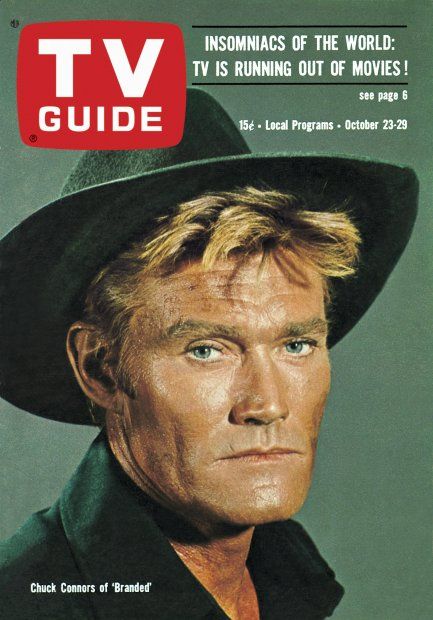
BRANDED (ABC 1965) – Cohen’s first series as creator debuted as a midseason replacement for Bill Dana’s failed sitcom. THE RIFLEMAN’s Chuck Connors returned to TV as Jason McCord, a disgraced Cavalry officer court martialed and drummed out of the service after being falsely accused of cowardice. McCord then wanders the West getting involved in a new adventure every week while trying to clear his name. Viewers welcomed Connors back to the small screen, and the half-hour black and white Western was renewed for a full season – this time “in living color”! The show featured a memorable opening theme song by Dominic Frontiere and Alan Arch…








 The Detroit Film Critics Society announced their nominees for the best of 2018 today and what can I say other than I absolutely love them?
 Through the Shattered Lens