Back to School Part II #5: A Clockwork Orange (dir by Stanley Kubrick)


It may seem strange, at first, that I am including the 1971 best picture nominee, A Clockwork Orange, in a series of Back to School reviews.  Certainly, Stanley Kubrick’s iconic adaptation of Anthony Burgess’s novel is not usually described as being a film about juvenile delinquency but that’s exactly what it is.

Many viewers tend to forget that Alex (played by Malcolm McDowell, who was nearly 30 at the time) and his three droogs are all meant to be teenagers.  (Only Michael Tarn, who played Pete, was actually a teenager at the time the film was shot.  Warren “Dim” Clarke and James “Georgie” Marcus were both in their late 20s.)  There’s even a lengthy scene in which Alex is interrogated by a social worker, P.R. Deltoid (Aubrey Morris).  Viewers are usually so surprised when Deltoid suddenly grabs Alex’s crotch that they forget that the whole reason Deltoid even came to the flat was to find out why Alex had been skipping school.  (“Pain in my gulliver,” was Alex’s oft-quoted excuse.)

So, make no mistake about it.  Among other things, A Clockwork Orange is a film about both the problem of juvenile delinquency and the continuing debate concerning what the authorities should do about it.  Stylistic and philosophical differences aside, A Clockwork Orange comes from the same cinematic family tree that’s given us everything from Rebel Without A Cause to Bully to Spring Breakers.

Of course, that’s not all that A Clockwork Orange is about.  It’s a Kubrick film, which means that there’s several different layers to work through and multiple interpretations for what we see on-screen.  For those who may not be familiar with the film, it takes place in a recognizable but futuristic England.  (One of my favorite theories is that A Clockwork Orange was about what was happening on Earth while David Bowman was becoming the starchild in 2001: A Space Odyssey.)  It’s a violent world, one where there appears to be significantly fewer people around than in the past.  The streets are deserted and bombed out.  Occasionally, when Alex returns to his home, he passes a mural of idealized working men creating a new world.  This rather banal work of Socialist realism has been defaced by obscene drawings and mocking graffiti.

Teenage Alex spends his nights hanging out with his friends (or, as he calls them, droogs), Pete, Georgie, and Dim.  They drink at the Korova Milk Bar and wear obscenely oversized codpieces, signifying this society’s obsession with outsized masculinity. When they speak (and when Alex narrates the film), they do so in a rhyming slang called Nadsat.  Under Alex’s sociopathic leadership, they spend their nights raping women, beating the homeless, and fighting with other gangs.  When Alex is not with his droogs, he enjoys lying around the house and listening to Beethoven (or “Ludwig Van” as he calls him).

After being betrayed by his droogs (who have tired of Alex’s cockiness), Alex ends up imprisoned for murder.  However, Alex is offered an early release if he’s willing to take part in the Ludovico Treatment.  For two weeks, Alex is drugged and forced to watch violent and sexual films while the music of Beethoven plays in the background.  As a result of the treatment, Alex grows physically ill at the thought of both violence and sex but he can also no longer listen to Beethoven.  Arguably, as a result of being cursed of his anti-social tendencies, he has lost the only non-destructive thing that he enjoyed.

Over the objections of the prison chaplain (who argues that robbing Alex of his free will is not the same as rehabilitating him), Alex is sent back into the real world and he quickly discovers that he now has no place in it.  His parents have rented his room out to a boarder who is now more of a son to them than Alex ever was.  The streets are full of men who were previously tormented by Alex and who now wants revenge.  In perhaps the film’s most brilliant moment, Alex discovers that his former droogs are now members of the police force.  Though they may now be wearing uniforms, Dim and Georgie are still as destructive and dangerous as Alex once was.  The difference is that Alex was caught and cured whereas Dim and Georgie discovered they could do just as much damage as authority figures as they did as juvenile delinquents.

In fact, the only people who now care about Alex are the political dissidents who hope to use Alex to discredit the government.  However, the dissidents aren’t particularly worried about Alex’s well-being either.  He’s just a prop to be used for their own ambitions.  Even worse, for Alex, is the fact that one of the dissidents is Mr. Alexander (Patrick Magee), a writer who lost both his ability to walk and his wife to an earlier assault committed by Alex…

(Interestingly enough, Mr. Alexander’s boyguard is played by David Prowse, who later become the ultimate symbol of government oppression when he was cast as Darth Vader in Star Wars.)

A Clockwork Orange is a brilliant film but it’s one about which I have very mixed feelings.  On the one hand, you can’t deny the power of the film’s imagery.  How many times has just the opening shot — of McDowell staring at us while wearing one fake eyelash — been imitated on TV and in other movies?  How much of the film’s dialogue — from “pain in my gulliver” to “the old in-out” — has lived on long past the movie?  Regardless of how many times I’ve seen A Clockwork Orange, the film’s electronic score (from Wendy Carlos) never ceases to amaze me.  Finally, it’s a film that argues that free will is so important that even a sociopath like Alex must be allowed to have it and that, as the chaplain argues, true goodness comes from within and cannot be manufactured or regulated by a government agency.  (It’s also a film that suggests that the government would be just as quick to use the Ludovico Treatment not just on the evil Alexes on the world but on anyone who dared to dissent from the party line.)  As I’m something of a “Freedom of Choice” absolutist, that’s a message to which I responded.

(At the same time, A Clockwork Orange does not argue that Alex’s actions should be free of consequences.  If anything, the film’s message seems to be that things would have been better for literally everyone if the government had just left Alex in jail, as opposed to trying to “fix” what was wrong with him.)

And yet, I have mixed feelings about A Clockwork Orange.  I guess my main issue is that the film doesn’t always play fair.  Malcolm McDowell is allowed to give a charismatic and well-rounded performance as Alex but nearly everyone else in the film is directed and written as a one-dimensional caricature.  Whereas Anthony Burgess’s novel emphasized the very real damage that Alex did to his victims, the film tends to surround Alex with comedic grotesqueries.  By both making Alex the only fully developed character in the entire film and then casting the energetic and charismatic Malcolm McDowell in the role, the film seems, at times, to come dangerously close to letting Alex off the hook for his worst crimes.  It also leaves the film open to the oft-repeated charge of glamorizing sex and violence.  (According to Roger Lewis’s biography of the author, that was Anthony Burgess’s opinion of the film.)  For the record, I don’t think A Clockwork Orange is an immoral film but I understand why some people disagree.

For that reason, A Clockwork Orange remains a controversial film.  In fact, I’m somewhat surprised that this subversive and deliberately confrontational film was nominated for best picture.  It was only the 2nd (and last) X-rated film to receive a best picture nomination.  Though it lost to The French Connection, A Clockwork Orange continues to be a powerful and controversial film to this day.  Perhaps the biggest indication of A Clockwork Orange‘s success is that it’s still being debated 45 years after it was first released.

Clockwork_orangeA

Tall (Tales) in the Saddle: THE LAW WEST OF TOMBSTONE (RKO 1938)


gary loggins's avatarcracked rear viewer

lawwest1

Cowboy star Harry Carey had been around since motion pictures were knee-high to a cactus. He made his first film in 1908, working with pioneer director D.W. Griffith. He was already one of silent film’s biggest sagebrush stars by the time he made 1918’s STRAIGHT SHOOTER, the directorial debut of John Ford. When the  talkies rolled around, Carey was over fifty and his leading man days were behind him. He transitioned into a fine character actor, and his talents are given a good showcase in the low-budget Western THE LAW WEST OF TOMBSTONE.

lawwest2

Carey is champion liar Bill Barker, a charming rascal who spins tall tales of his bravery fighting bloodthirsty Indians. The old windbag gets himself thrown out of New York circa 1881 when he tries to run a con on Wall Street tycoon Sam Kent. Not even his ex, a former saloon girl now passing herself off as continental singing…

View original post 531 more words

In Memory of Steven Hill


Steven-Hill-As-Adam-Schiff-570x428

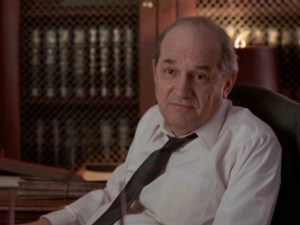
When I was younger, I was really proud of my Adam Schiff imitation.  I would sigh with resignation and then say, in my best weary, old man voice, “This case has got loser written all over it.  Take the deal, Jack.  Take the deal.”

Of course, I later discovered that every fan of Law & Order could do a perfect Adam Schiff impersonation.  Even in the 1990s, Law & Order was known for its high cast turnover but, for the first ten seasons, Steven Hill’s Adam Schiff would always be the show’s constant.  It didn’t matter if the main prosecutor was played by Michael Moriarty or Sam Waterston or if the senior detective was Jerry Orbach or (God help us) George Dzundza.  We always knew that the Adam Schiff would be the district attorney and that, 40 minutes into the show, he would order either Stone or McCoy to “take the deal.”

steven-hill1

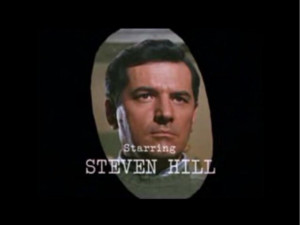
Steven Hill played many roles before he was cast as Adam Schiff.  He was even the original lead on Mission Impossible, until he left the role because the show’s producers were not prepared to accommodate his adherence to the Sabbath.  After leaving Mission Impossible, he did not act for ten years and when he returned, he made a career out of playing no-nonsense authority figures.

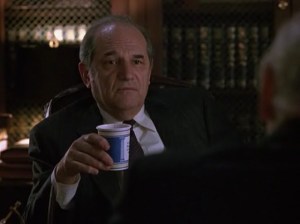
But, for people my age, Steven Hill will always be Adam Schiff.  Hill brought gravitas to every line he spoke and, as New York’s veteran district attorney, Hill came to represent the type of unimpeachable integrity that we all wished we could see in real-life public officials.  For many of us, Steven Hill was Law & Order and the show never recovered after he retired from the role.

Steven Hill died earlier today, at the age of 94.  Thanks for the memories, Mr. Hill.  Thank you for bringing Adam Schiff and so many other characters to life.

enhanced-buzz-25474-1367268219-12

Music Video of the Day: Pressure by Billy Joel (1982, dir. Russell Mulcahy)


I’m really not sure what to say about this other than to watch it. It is one of the best music videos I have spotlighted so far. That shouldn’t be a big surprise since it is Russell Mulcahy directing a Billy Joel music video. For whatever reason, Billy Joel’s music videos are some of the best I have seen. Russell Mulcahy is an excellent director of music videos. It’s a winning combination.

I guess there are two things I want to make particular note of in the music video. First, is that it uses a modified version of the training montage from The Parallax View (1974) at the beginning. The second thing is that I love how Mulcahy used water and liquids in general as something that not only builds up pressure when attempts to contain it are made, but also as something that can consume you if you cannot handle pressure as the song says. It is much like the television that winds up capturing the kid within it since it is also a source of pressure along with magazines and other mass media.

This is another one of those music videos where we know more than just the director.

Andrew Dintefass was the cinematographer on Pressure. He shot a few other music videos with Russell Mulcahy, some other music videos, and did a few other things as well.

Doug Dowdle edited Pressure. He also edited, directed, and wrote a few music videos.

Keith Williams wrote Pressure. He wrote over 60 music videos, which includes a bunch of Russell Mulcahy ones. I found an IMDb entry that I am pretty sure is him and includes numerous producer credits.

Jackie Adams was the producer of Pressure. She seems to have exclusively produced music videos directed by Russell Mulcahy.

I love when I come across a music video that has this much documentation available.

Enjoy!

“Briggs Land” Is Made-For-TV Comics At Its Best


Ryan C. (fourcolorapocalypse)'s avatarTrash Film Guru

briggsland

For as long as I can remember, Brian Wood has been one of those writers who has — to his credit — shared copyright ownership on all of his various projects with the artists involved and, in the case of the just-concluded Image series Starve, even the colorist. So if you’re an indicia-reader like myself, the “Copyright 2016 Brian Wood” in the fine print of the first issue of his new Dark Horse-published title, Briggs Land, is something of a surprise. We’re used to the artists being cut out of the action over at Aftershock, but why was Mack Chater — who does a bang-up job on this book, as you’ll see in the art reproduced below — not given co-creator credit here?

Well, the answer to that is simple : this comic has already been optioned for television and is, in fact, being developed simultaneously on the…

View original post 918 more words

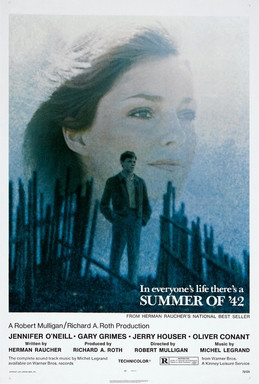
Back to School Part II #4: Summer of ’42 (dir by Robert Mulligan)


Summer_of_'42_POSTER

Originally, I was going to finish up the first day of my back to school reviews by talking about A Clockwork Orange.  I figured that, since the second film I reviewed was Andy Warhol’s Vinyl, it would just make sense that the fourth film would A Clockwork Orange.

But, I don’t know.  As I sat down and started to work on my fourth review, I realized that I’m not quite ready to write about A Clockwork Orange.  Instead, I’d rather hold off on that until tomorrow.  So, instead, I’m going to talk about Summer of ’42, another coming-of-age film that came out the same year.

That’s right — A Clockwork Orange and Summer of ’42 both came out in 1971 but — in content and sensibility — they might as well exist in different universes.  In fact, the only thing that they have in common is that they both tend to show up on TCM fairly frequently and that they’ve both influenced countless other films.

Speaking of TCM, that’s where I first saw Summer of ’42.  I have to admit that I’m writing this review from memory and that may not be the best way to review a film.  I saw Summer of ’42 about four months ago and, at the time, I thought it was a well-done but predictable little movie.  I even took notes for a future review but I didn’t get around to writing that review because … well, at the time, it just seemed like there wasn’t a lot to say about it.  Summer of ’42 is a sweet film but almost everything about it is right on the surface.  What you see is what you get.  I’m not surprised to discover that it was the 6th highest grossing film of 1971.  In a year that saw not only A Clockwork Orange but The Last Picture Show, The French Connection, Brother John, Billy Jack, Carnal Knowledge, Dirty Harry, Harold and Maude, Let’s Scare Jessica To Death, Klute, Straw Dogs, Pretty Maids All In A Row, and The Zodiac Killer, audiences were probably relieved to see a film that was neither violent, morally ambiguous, nor apocalyptic.

Instead, Summer of ’42 is a coming-of-age story that was specifically crafted to appeal to a world-weary audience’s nostalgia for the simple and carefree days of World War II.  This is one of those films where an older narrator continually reassures us that we’re seeing the most defining moment of his youth and all of the pretty images are in soft focus.  Hermie (Gary Grimes), Oscy (Jerry Houser), and Benjie (Oliver Conant) are three fifteen year-olds, all of whom are spending their summer on Nantucket Island.  Benjie is obsessed with sex but he’s nerdy.  Oscy is obsessed with sex but he’s a jerk.  Hermie is obsessed with sex but he’s the narrator so we already know that he’s too sensitive to lose his virginity to any girl his own age.

Luckily, there’s a woman in her 20s who is living in a nearby beach house.  Dorothy (Jennifer O’Neill) is beautiful but she’s married.  However, her husband’s a soldier and it is 1942 so, pretty soon, he’s out of the picture.  Hermie develops a mad crush on her and then, luckily for him, her husband dies and she spends a night teaching him the ways of love.  The next morning, she vanishes but leaves Hermie a note, telling him that she will never forget him and that it’s up to him to decide what their night together meant.

(Hermie never gets around to telling us what their night together meant so I guess it’s up to us to decide.  Personally, I just hope Hermie was careful who he told because, nowadays, a 23 year-old can get in a lot of legal trouble if she’s caught having sex with a 15 year-old.  Maybe things were different in 1942…)

As I said before, my initial response was that Summer of ’42 was sweet but predictable.  And that’s the way I still feel about it.  It was well-acted, well-filmed, and Jennifer O’Neill was amazingly beautiful but there was still something about Summer of ’42 that kind of bothered me.  We never really got to know who Dorothy was.  Her entire character was defined by her one night with Hermie.  Yes, I do understand that was kind of the point because the story was being told exclusively from Hermie’s point of view.  But it still bothered me.  Beyond being beautiful, tragic, and ultimately available, who was Dorothy?

But really, it wasn’t just something about the Summer of ’42 that was bothering me.  Instead, it was something about the coming-of-age genre in general.  I have lost track of how many nostalgic films and TV shows that I have seen that feature a narrator talking about the summer that he “became a man.”  It’s amazing how many awkward teenage boys apparently lost their virginity to a beautiful older woman who promptly vanished afterwards.  If, as has been recently suggested, I spent next summer in a rented beach house, am I going to be obligated to be the first lover of every 15 year-old, aspiring writer who happens to come wandering down the beach?  That could be time consuming, depending on how popular the beach is.

I guess what I’m saying is that perhaps somebody needs to remake Summer of ’42 and tell it from Dorothy’s point of view.

Just a thought.


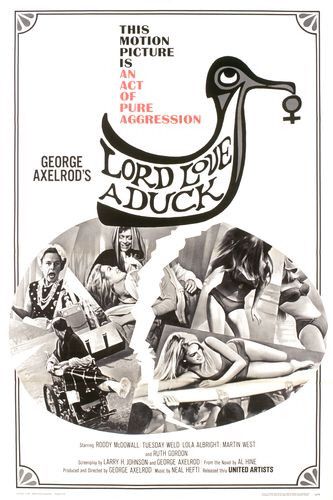
Back To School Part II #3: Lord Love A Duck (dir by George Axelrod)


Lordloveaduck

For my third Back to School review, I watched the 1966 satire, Lord Love A Duck!

Hey hey hey!

I have to admit that, because I’m writing this review in a hurry and because the D and the F key are located right next to each other, I keep accidentally calling this film Lord Love A Fuck.  Somehow, that seems appropriate because Lord Love A Duck is a very odd and subversive little movie that deals with people who are largely motivated by lust and I’m pretty sure that, at one point, Roddy McDowall is seen saying, “Fuck off!” but, of course, we don’t actually hear him say it.  But seriously, Lord Love A Duck is a weird movie.

Hey hey hey!

Roddy McDowall plays Alan Musgrave, a student at a “progressive” high school in California.  Roddy was about 37 years old when he played a high school senior and he doesn’t look like a teenager at all but somehow, it’s appropriate.  After all, Alan is no ordinary teenager!  He’s smarter than everyone else.  He’s wittier than everyone else.  He’s more clever than everyone else.  He’s also totally obsessive and willing to do just about anything to get what he wants.  And you can be sure of one thing: whenever Alan does something borderline insane, you’ll hear a group of singers harmonizing, “Hey hey hey!” in the background.

Hey hey hey!

See, it’s happening already.  It doesn’t matter what Alan’s doing.  He could be kicking a skateboard in the way of a romantic rival.  He could be interrupting the graduation ceremony with a tractor.  He could be going to prison for life.  No matter what it is, it will always be accompanied by:

Hey hey hey!

Anyway, Alan is in love with the innocent, sweet, and constantly flirtatious Barbara Anne Greene (Tuesday Weld).  In fact, almost everyone in the film is in love with (or, at the very least, turned on by) Barbara.  The only person who doesn’t seem to be in love with Barbara is her mother (Lola Albright), a former-beauty-turned-cocktail-waitress whose world-weary cynicism seems to offer a depressing hint of what’s in store for Barbara once she gets older.

Hey hey hey!

But everyone else loves Barbara.  Especially Alan!  In fact, Alan is so in love with her that he swears that he’s going to make sure that she gets everything that she wants.  When she needs 12 cashmere sweaters so that she can join an exclusive girl’s club, Alan helps her to convince her father (Max Showalter) to pay for them.  When Barbara needs a job after dropping out of school, Alan helps her get one as a secretary for the high school’s progressive principal (Harvey Korman).  When Barbara decides she wants to marry the boring but respectable Christian youth leader, Bob (Martin West), Alan keeps Bob’s mother (Ruth Gordon) so drunk that she doesn’t get a chance to reprimand her son for falling in love with a girl from a divorced family.  (As Bob’s mother explains it, she doesn’t believe in divorce.  “We don’t leave our husbands.  We bury them.”)  Eventually, a movie producer decides that he wants Barbara to star in his beach films but Bob says no.  No wife of his is going to be a movie star!  So, of course, Alan decides to murder Bob so that Barbara can again have what she wants…

Hey hey hey!

Lord Love A Duck is a manic comedy that satirizes everything that mainstream audiences in 1966 would have held sacred.  Teenagers, conservatives, liberals, love, hate, murder, justice, marriage, divorce, morality, sex, religion, television, movies — it’s all thoroughly ridiculed in this film.  (It’s not surprising that the film’s director also wrote the script for The Manchurian Candidate, a satire disguised as a thriller.)  To be honest, it’s probably a little bit too manic for its own good.  At times, the film run the risk of becoming exhausting.  But then there’s even more times when the film is absolutely brilliant.

Hey hey hey!

Speaking of absolutely brilliant, Lord Love A Duck makes brilliant use of Roddy McDowall’s eccentric screen presence but, even better, it features one of Tuesday Weld’s best performances.  Weld was a talented actress whose performances often revealed that a fragile soul is often the price that is payed for great beauty.  (There’s no greater insecurity than wondering whether people are responding to who you are or to how you look.  Would you still care if I was ugly is not a question we’re supposed to ask but it’s one that we’ve all wondered.)  It would have been far too easy to make Barbara either totally innocent or totally manipulative.  Wisely, the film does neither.  Barbara may occasionally be manipulative but she always means well.  It’s not her fault that everyone around her is either idiotic or insane.

Hey hey hey!

Though Lord Love A Duck is obviously a time capsule of the culture of mid-60s, it’s also a film that remains relevant even today.  Culturally, we’re still obsessed with fame, youth, and beauty.  In many ways, the satire of Lord Love A Duck still feels more extreme that anything that any contemporary filmmaker would dare to attempt.  I can only imagine what audiences in 1966 thought as they watched this subversive teen film.

Hey hey hey!

Back To School Part II #2: Vinyl (dir by Andy Warhol)


vinyl1

For my next back to school film, I watched the 1965 underground film, Vinyl!

Now, admittedly, Vinyl does not appear to take place in a high school.  Then again, maybe it does.  All of the action takes place in a cramped corner of a room and we’re never really told, for sure, where the room is located.  All we know is that various characters keep wandering in and out of the static frame while the film’s action unfolds.

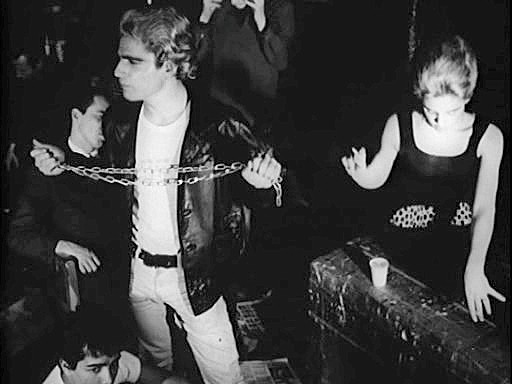
The center of the film is Victor (Gerald Malanga) who appears to be in his late 20s but who insists to us that he’s a “J.D,” which stands for juvenile delinquent.  He does what he wants, whether that means lifting weights or enthusiastically dancing.  Victor may be a murderous teenager with a bad attitude but he truly loves rock music.

While Victor dances and occasionally stumbles his way through a monologue about being a J.D, there’s an ever-present audience in the background of the scene.  Occasionally, they seem to be interested in what Victor is saying but, just as often, they seem to be bored with the whole thing.  Sitting off to Victor’s right and smoking through nearly the entire film is the iconic and tragic Edie Sedgwick.  Occasionally, she dances but, for the most part, she’s just observes with an enigmatic half-smile on her face.

Eventually, some men who we assume are the police get tired of Victor dancing and boasting about being a delinquent so they grab him, tie him to a chair, and force him to wear bondage gear while they beat him.  It’s a new, government-sanctioned rehabilitation technique and it’s guaranteed to turn Victor is a responsible member of society.  While they torture him, they play vinyl records in the background and Victor, possibly to his horror though, due to Malanga’s out-of-it performance, it’s often difficult to surmise what’s going on in Victor’s head, realizes that his beloved rock music is now being used to torture him.

All the while, Edie watches from the corner of the screen.  She smokes a cigarette.  She dances.  Sometimes, someone will refill her drink.  She holds a candle for a while.  As a viewer who is more than a little obsessed with the tragically short life of Edie Sedgwick and who relates to her on a personal level, it was occasionally difficult for me to watch because, even in a non-speaking role, Edie’s star power was obvious.

Edie!

Edie!

Of course, Edie isn’t the only person watching as Victor is tortured.  Many people wander in and out of the frame.  (Vinyl lasts 70 minutes and features exactly three shots.)  For the most part, the majority of them regard the torture happening in from with a studied detachment.  In fact, they’re very detachment and they’re very refusal to act in any sort of expected way becomes rather fascinating.  Vinyl goes so far out of it’s way to defy our expectations of what a movie should be that it becomes one of the most watchable unwatchable movies ever made.

Vinyl was directed by Andy Warhol.  Reportedly, it was filmed without any rehearsal and without multiple takes.  Hence, when Malanga stumbles over his lines or occasionally turns his back to camera, the moment is preserved.  When Edie Sedgwick breaks character and laughs, the film keeps on rolling.  When another actor accidentally drops his papers and has to spend half a minute picking them up and trying to get them back in order, it’s saved on camera.  And, because it’s in the final cut, Gerald Malanga forgetting his lines becomes as much a cinematic moment as Humphrey Bogart telling Ingrid Bergman to get on that plane or Clark Gable saying that he didn’t give a damn.   There is no editing and, as a result, there is no protection.  Instead, we just get a group of eccentric outsiders in their amateur glory.  Yes, it’s self-indulgent and deliberately alienating but it’s also undeniably fascinating.  (It helps that, while he may not have been a good actor, Gerald Malanga had an absolutely fascinating face.)  When one watches one of Warhol’s underground films, the question always arises as to whether he was a genius or a con artist.  Vinyl would seem to suggest that he was both.

(“What’s the point of all this?” some viewers may ask.  The point is that it was filmed and now you’re watching and, because he’s at the center of a static frame, Gerald Malanga is now a movie star.)

Though you might have a hard time realizing it from just watching the film, Vinyl was also the first cinematic adaptation of Anthony Burgess’s A Clockwork Orange.  Victor was a stand-in for Alex and Alex’s love of Beethoven is replaced by Victor’s love for Motown.  Six years later, Stanley Kubrick would release his better known adaptation of Burgess’s novel but Andy Warhol, Gerald Malange, and Edie Sedgwick all got there first.

ANDY-WARHOL-VINYL-3

Back to School Part II #1: Teenage Devil Dolls (dir by B. Lawrence Price, Jr.)


(a.k.a. Teenage Devil Doll)

(a.k.a. Teenage Devil Dolls)

Hi, everyone!

Well, down here in Richardson, Texas, today was the first day of school!  That’s right, all the kids are going to be back to school and movie theaters are about to become a lot more pleasant.  Now, you may remember that, two years ago, I observed the first day of school by launching a series of Back To School reviews!  I reviewed 80 films about being a teenager and high school life.  I had a lot of fun doing it and our readers seemed to enjoy it!

So, I figured — why not do it again!?

Now, as much as I’d like to, I’m not going to do 80 films this time.  Instead, I have decided to limit myself to reviewing 56 films over the next 14 days.  If I maintain a schedule of reviewing 4 Back to School films a day, it shouldn’t be a problem.

Can I do it?

Well, we’re about to find out!

I decided to start things off by reviewing a melodrama from 1955!  I have to admit that, when I decided to review Teenage Devil Dolls, I didn’t know anything about the film.  I just saw the title and I assumed that the whole film would basically be tight sweaters and juvenile delinquents.  I figured it would be good and campy fun, something along the lines of Ed Wood’s The Violent Years.

Well, it turned out that Teenage Devil Dolls does feature some juvenile delinquents and a few tight sweaters but otherwise, it really wasn’t what I was expecting.  For one thing, it turned out that the film didn’t have much to do with high school.  And though the main character was described as being 19, she was played by an actress who appeared to be in her 30s so it really didn’t matter.

It also turned out that Teenage Devil Dolls featured absolutely zero dialogue!  This is one of those films that was specifically made to be the second part of a double feature and, apparently, it was made without much of a budget.  On-set sound recording was apparently a luxury that could not be afforded and, as such, the entire movie is narrated by a hard-boiled cop.

The cop tells us the story of Cassandra Leigh (Barbara Marks), who was an innocent 17 year-old until she started hanging out with the wrong crowd.  We know that her new friends are the wrong crowd because they ride motorcycles and some of them wear leather jackets.  They also smoke weed (or “reefer cigarettes,” as the cop calls them).  At first, Cassandra turns down their persistent offers of marijuana but eventually, the peer pressure get to be too much.  Cassandra doesn’t want to be a big ol’ four-sided square so she starts smoking the weed and her life quickly falls apart.

Not only do her grades suffer to such an extent that she barely graduates high school and loses any chance she ever had to attend college but Cassandra also ends up frequently running away from home and getting hooked on heroin.  (If all this seems a little bit extreme, it should be remembered that Cassandra was previously seen smoking one of the biggest joints to ever appear in a movie.  Though, in all honesty, she didn’t appear to be inhaling.)  Cassandra marries a boring guy but the boring life is not for her!  Not when she can make so much more money by becoming a drug dealer…

You know, it’s easy to be dismissive of a film like Teenage Devil Dolls, what with the low-budget, the hard-boiled narration, and the alarmist portrayal of marijuana as literally being the root of all evil.  But honestly — whether intentional or not — there’s an intensity to Teenage Devil Dolls that makes it oddly hypnotic.  Perhaps because they were filmed without sound, almost all of the actors give the type of over-expressive performances that one would typical expect to see in a silent movie.  The contrast between the laconic narration and the theatrics on-screen creates a surrealistic and dream-like atmosphere.

Along with the narration, there’s also a few sound effects on the soundtrack but none of the effects really seem to sync up with the action on screen.  A dog shows up and opens its mouth but the barking sounds like it’s coming from somewhere else.  When a police car drives, the jarring siren doesn’t seem to fit the image.  Most hauntingly of all, a chilling ringing sound is heard whenever a junkie starts to go through withdraw.  At times, the film almost feels like a fever dream.

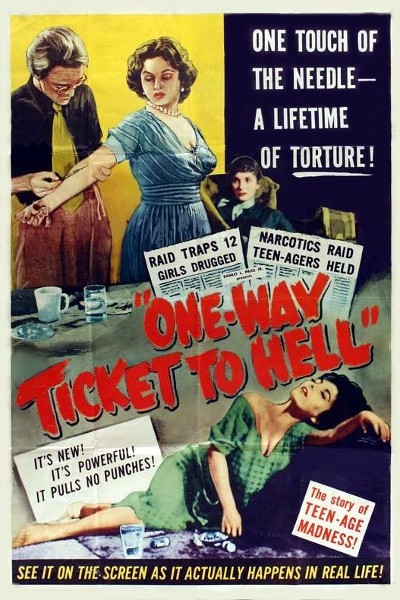
Teenage Devil Dolls (or One Way Ticket To Hell as it is also known) is an unexpectedly odd film.  And you watch it below!