Shattered Politics #91: Abraham Lincoln vs. Zombies (dir by Richard Schenkman)


Abraham_Lincoln_vs._Zombies_(movie_poster)

Well, here we are!  Last month, I started the process of watching and reviewing 94 movies about politics and politicians.  I started Shattered Politics with D.W. Griffith’s 1930 film Abraham Lincoln and now, three weeks later, we’ve reached the final day of Shattered Politics.  We have four more films to review and what better way to start things off than by taking a look at yet another films about Abraham Lincoln.

Now, I’ve previously reviewed three films about Abraham Lincoln.  I’ve reviewed D.W. Griffith’s creaky 1930 version.  I’ve reviewed Henry Fonda as Young Mr. Lincoln.  And, of course, I’ve reviewed Daniel Day-Lewis in Steven Spielberg’s Lincoln.  And, on the very site, reviews of Abraham Lincoln: Vampire Hunter have been posted by both Arleigh and Ryan The Trash Film Guru.  (For the record, I’ve also reviewed The Lincoln Lawyer and The Conspirator. So there.)  That’s a lot of films about Abraham Lincoln and why not?  He’s our greatest President.  He freed the slaves, he won the Civil War, and, ultimately, he was the first President to be martyred by assassination.

However, when one considers all of those films about Abraham Lincoln, it’s hard not to notice that none of them featured zombies.  And, considering how much we love zombies here at the Shattered Lens, that has always struck me as being a major oversight.

So, thank God that, in 2012, the Asylum released a film called Abraham Lincoln vs. Zombies.

For that matter, thank God for the Asylum.  Mainstream critics and snarky blogger types love to criticize Asylum-produced films but you know what?  Nobody makes films quite like the Asylum.  Quite frankly, people who attack an Asylum film for having a low-budget or for being over the top are missing the point.  Asylum films are supposed to be fun.  They’re the type of films that are meant to be watched with a group of your closest and funniest friends.  At their best, Asylum films are movies that you laugh with as opposed to laughing at.

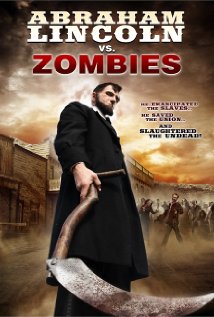
As far Abraham Lincoln vs. Zombies is concerned, everything you need to know about the film is right there in the title.  The film opens with young Abe Lincoln decapitating his zombified mother and then jumps forward several decades.  Abe Lincoln (played, with a lot of gravity and melancholy by the excellent Bill Oberst, Jr.) is now President.  When he discovers that a zombie outbreak has occurred at Fort Pulaski, Lincoln takes a break from writing the Gettysburg Address and leads a group of secret service men down to the fort.  With the help of Gen. Stonewall Jackson (Don McGraw), young Teddy Roosevelt (Canon Kuipers), future lawman Pat Garrett (Christopher Marrone), and a handsome, alcoholic Southern actor who is using the name John Wilkinson (Jason Vail), Lincoln kills a lot of zombies and even reunites with a former lover (Rhianna Van Helton).

And, seriously, you have to love a film that features Abraham Lincoln using a scythe to chop off the heads of the undead.  If you’re watching a film like this and you’re worrying about narrative logic or historical accuracy, then you may be taking life a little bit too seriously.  The title promises Abraham Lincoln and zombies.  And the film totally delivers.

And how can you not appreciate that?
Shattered Politics #90: FDR: American Badass! (dir by Garrett Brawith)


FDR-American-Badass-movie-poster

So, as I was thinking about Hyde Park On Hudson, I started to ask myself: what would have made that movie better?  Obviously, the script could have been improved.  Bill Murray could have had some better lines.  Laura Linney could have been a bit less bland.  The direction could have been a bit more dynamic…

And of course, the film could have used a few more werewolves.  Maybe not a huge amount of werewolves because, after all, you do want to keep things plausible.  But, at the same time, a werewolf or two would have livened things up.

And then I thought about Sunrise at Campobello and I realized that film was also missing something.  Once again, the film could have used some werewolves.

“My God,” I thought, “aren’t there any filmmakers out there willing to combine Franklin Roosevelt with werewolves!?”

And then, I realized that there was!

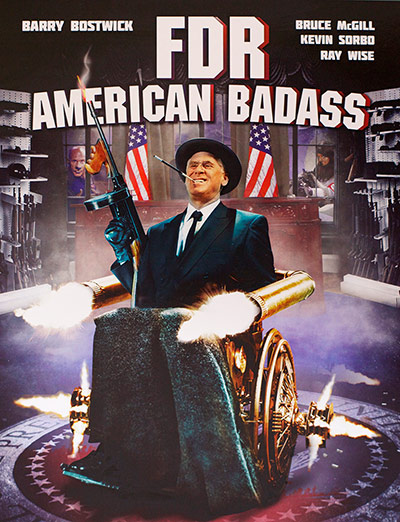
The 2012 film FDR: American Badass! features Barry Bostwick in the role of Franklin D. Roosevelt.  At the start of the film, Roosevelt is the dynamic and athletic governor of New York.  However, while out jogging one day, Frank is attacked by a werewolf and ends up contracting polio as a result.  Recovering in the hospital, Roosevelt decides to run for President and kill werewolves.

Over the course of the film, he does just that.  And, when it turns out that the leaders of the Axis Powers are all werewolves as well, FDR single-handedly wins World War II.  Fortunately, with the help of Albert Einstein, FDR gets his wheelchair equipped with all the latest weaponry.

And did I mention that, as President, FDR smokes weed with Abraham Lincoln (Kevin Sorbo)?  Because he so totally does…

So, at this point, you’re probably already getting the feeling that FDR: American Badass! is kind of a weird film.  And it is.  But what makes the film better than you might think is the fact that it totally commits itself to making no sense.  FDR: American Badass! is full of scenes that are alternatively hilarious, disgusting, and offensive but it works because, unlike something like A Million Ways To Die In The West, FDR: American Badass! is at least creative in its stupidity.  Say what you will about the idea of FDR killing werewolves, the fact of the matter is that there’s only one film where you can actually see that happen.

So, should you see FDR: American Badass?

Go back and read the film’s title.

Did it make you roll your eyes and say, “Oh my God, that is so stupid?”  If so, you’ll probably have a similar reaction to the film itself.

On the other hand, did the title make you smile?  If so, you’ll probably find something to enjoy in this movie.

At the very least, FDR: American Badass! is better than Hyde Park on Hudson.

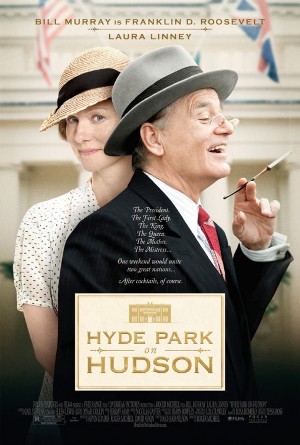
Shattered Politics #89: Hyde Park on Hudson (dir by Roger Michell)


Hyde_park_on_hudson_poster

Is there anything more frustrating than a film that should have been good but yet somehow turned out to be … well, to be rather awful?

Case in point: 2012’s Hyde Park On Hudson.  In this slow-moving and almost painfully old-fashioned film, Bill Murray plays President Franklin D. Roosevelt.  When the film opens in 1939, Roosevelt is being visited by his sixth cousin, Margaret (Laura Linney).  It’s been several years since Roosevelt and Margaret last saw each other.  Franklin’s mother (Elizabeth Wilson) thinks that Margaret’s company could cheer up her melancholy son.  So, FDR and Margaret go out for a drive and, sitting atop a nice green hill, Margaret gives him a hand job.

And it is the most stately and respectable hand job to ever be quaintly portrayed in an American film.

Anyway, the rest of the film deals with FDR’s affair with Margaret.  Eventually, Margaret discovers that FDR has many mistresses but, before she does that, she helps FDR to charm England’s King George VI (Samuel West).  In the days leading up to World War II, George and his wife (Olivia Colman) visit Roosevelt out at his Hyde Park estate.  As we all know from watching The King’s Speech, George is insecure about his stutter.  But, fortunately, FDR points out that, despite the fact that he’s in a wheelchair, people still view him as being a strong leader and therefore, people will view George in the same way, regardless of his stutter.

And, speaking as a former stutterer, I have to say that it’s amazing to witness how poorly Hyde Park On Hudson deals with subject matter that was so brilliantly handled in The King’s Speech.

When I first heard about Hyde Park On Hudson, I had high hopes for it.  After all, I love history.  I love royalty.  I love gossip and I love scandal.  And, really. FDR was one of our more gossip-worthy Presidents, a spoiled rich kid who could not reach his full potential until after he was struck down by polio and who regularly cheated on his wife while battling both the Great Depression and the Nazis.  FDR was a dynamic and controversial figure and none of that comes through in Hyde Park on Hudson.

(Seriously, Bill Murray is totally wasted in this film.  If you’re going to cast an iconic actor in an iconic role, at least give him some good dialogue.)

In the end, Hyde Park on Hudson fails because it’s just too respectful.  It’s a slow, visually unimaginative film that manages to make an exciting time feel dull.  FDR deserves better and so does Bill Murray.

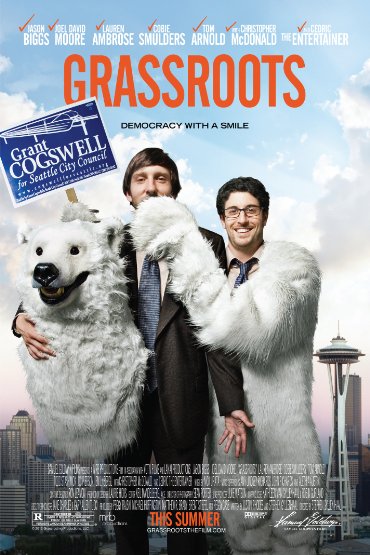
Shattered Politics #88: Grassroots (dir by Stephen Gyllenhaal)


Grassroots_2012Well, it’s nearly over.

For the past three weeks, I’ve been watching and reviewing 94 films about politics and politicians.  We started Shattered Politics by reviewing the 1930 film Abraham Lincoln and, 86 reviews later, we have finally reached 2012!  It’s hard to believe that, over just three weeks, I have reviewed that many films.  Some of those films have been good.  Some of them have been bad.  And, quite a few of them, have been somewhere in between.

The 2012 film Grassroots in one of those in between sort of films.  It’s based on a true story.  Phil Campbell (Jason Biggs) is a Seattle-based journalist who has just lost his job.  Unsure what to do with himself, Phil finds himself reluctantly dragged into the city council campaign of his friend, a music critic named Grant Cogswell (Joel David Moore).

Grant is running because he feels that the city council is not making proper use of the Seattle monorail.  Grant also appears to be a bit crazy, the type of guy who will spontaneously start to shout about everything that he views as being wrong with the world.  However, Grant is also very sincere in his desire to do the best for the people of Seattle and Phil agrees to manage his campaign.

And, as Grant continues to campaign and as the city’s political establishment goes out of its way to make it difficult for Grant or any other insurgent to run a legitimate campaign, he starts to pick up support and suddenly, it starts to look like he very well could win.

And then, the World Trade Center is attacked on September 11th and suddenly, the voters are a little bit less enthusiastic about handing the keys to the asylum over to one of the inmates…

Grassroots is a minor film but it’s definitely likable.  It took me a while to adjust to the film, largely because almost all of the characters are the type of stereotypical Seattle hipsters who would probably be used for violent comic relief in most other films.  (Don’t misunderstand, though — some of my best friends are hipsters … though they’ll never admit it.)  As well, the film trots out the familiar trope of having the campaign cause friction in Phil’s marriage and seriously, is there a more tired plot point than sudden marital friction?

But, ultimately, the film won me over because, much like Grant, it’s just so sincere in its love for Seattle and in its belief in grassroots politics.  It won’t challenge Milk for the title of being the most inspiring recent film about a city council election.  But, taken on its own terms, Grassroots is a likable movie that should inspire even more hipsters to run for public office.

Shattered Politics #87: The Ghost Writer (dir by Roman Polanski)


GhostwriterlargeIn the 2010 film The Ghost Writer, Ewan McGregor plays a character known as the Ghost. We never actually learn the name of his character and that’s perhaps appropriate.  The Ghost has made his living by being anonymous.  He’s a ghost writer.  He’s the guy who is hired to help inarticulate and occasionally illiterate celebrities write best-selling biographies.

The Ghost has been given a new assignment.  He is to ghost write the memoirs of former British Prime Minister Adam Lang (Pierce Brosnan).  Despite the fact that Adam is one of the most famous men in the world, the Ghost is not initially enthusiastic about working with him.

First off, there’s the fact that Adam and his wife, Ruth (Olivia Williams), are currently hiding out in America because America is one of the few countries that will not extradite him to be prosecuted for war crimes at the International Criminal Court.  It seems that Adam (much like Tony Blair) is a controversial figure because of some of the actions he may have authorized as a part of the war on terror.  Not only does the Ghost have political objections to working with Adam but he has to leave his London home and go to Massachusetts in order to do so.

Secondly, there’s the fact that, once the Ghost arrives in America, he discovers that — for such a controversial figure — Adam is actually rather boring and seems to have very little knowledge about anything that he did while he was prime minister.  Instead, he seems to be more interested in spending time with his mistress (Kim Cattrall, giving the film’s one bad performance).  Ruth seems to be the political (and smart) one in the marriage.

And finally, there’s the fact that the Ghost is actually the second writer to have worked with Adam.  The previous writer mysteriously drowned.  While that death was ruled to be an accident, the Ghost comes to suspect that it was murder and that the motive is hidden in the first writer’s manuscript…

The Ghost Writer is a favorite of mine, a smart and witty political thriller that features great performances from Ewan McGregor, Olivia Williams, and Pierce Brosnan.  Brosnan especially seems to be having a lot of fun sending up his dashing, James Bond image.  Roman Polanski directs at a fast pace and maintains a perfect atmosphere of growing paranoia throughout the entire film. In the end, The Ghost Writer proudly continues the tradition of such superior paranoia films as The Conversation, Three Days of the Condor, and the Parallax View.

Incidentally, I have a theory that Adam Lang was also the unseen Prime Minister who was featured in Into the Loop.  Watching The Ghost Writer, it’s hard not to feel that Adam really feel apart without Malcolm around to help him out.


It’s Love!


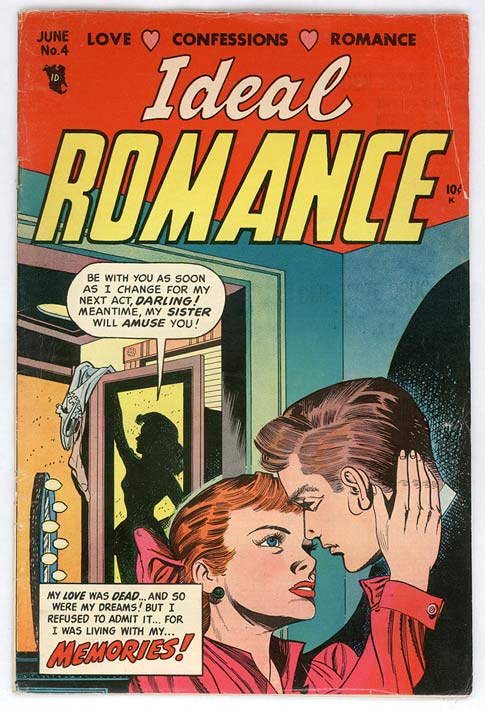
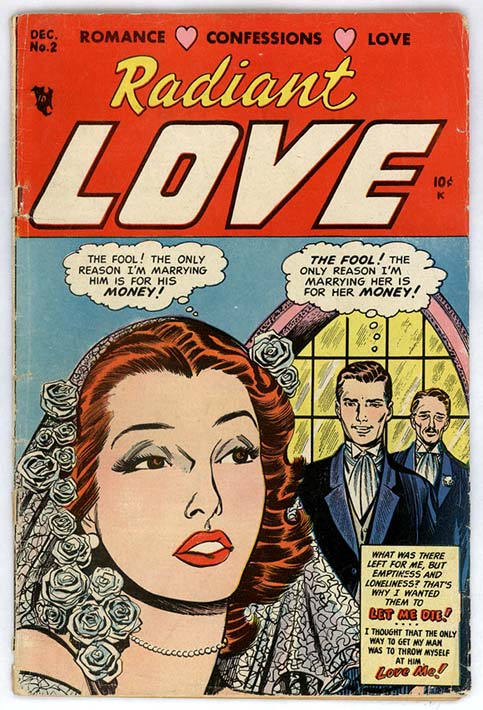
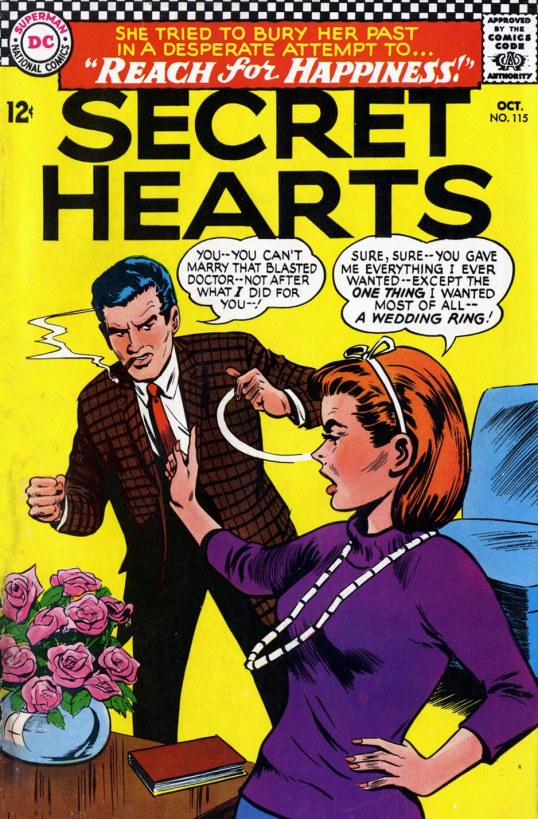
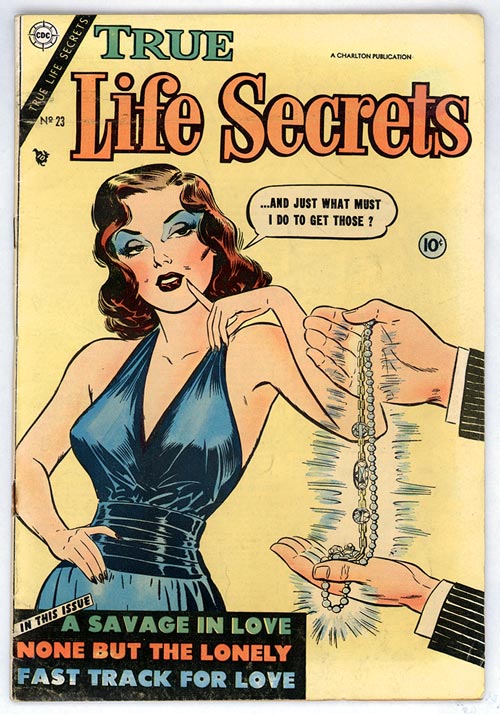
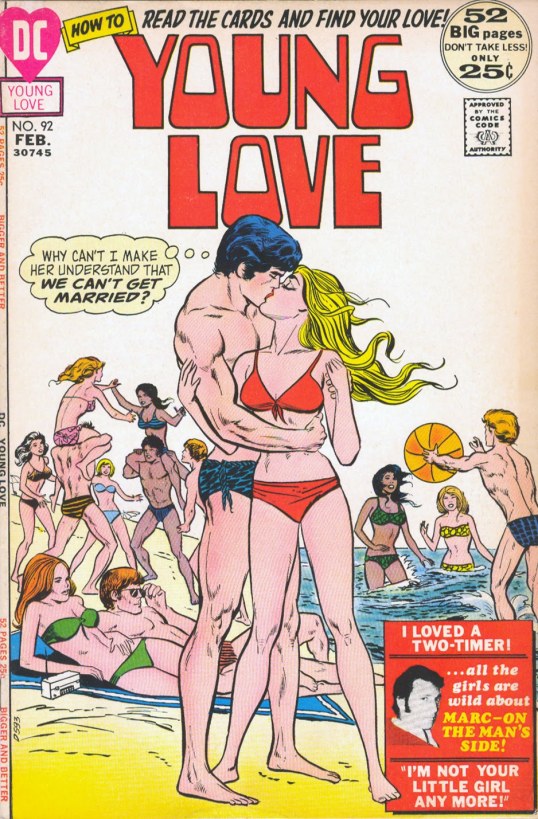
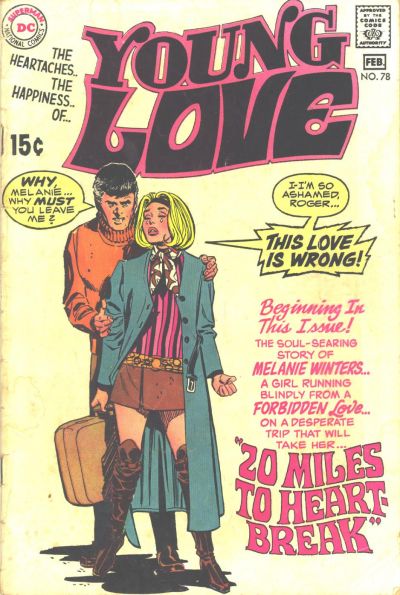
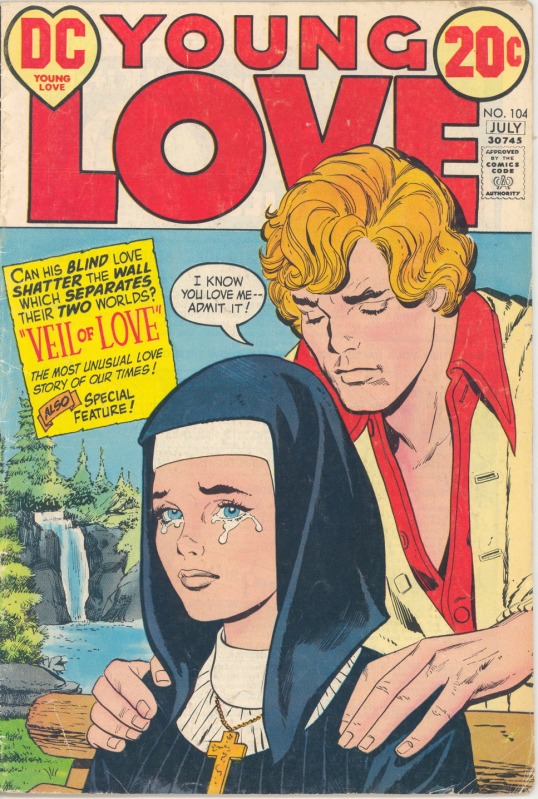
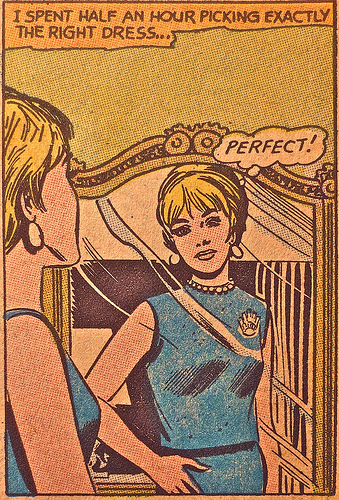
0Starting in the late 1940s, many comic book companies tried to broaden their audience by publishing romance comic books.  These comics told dramatic love stories in which young women had to deal with issues of cheating, divorce, jealousy, heartache, and the search for the one.  With Valentine’s Day approaching, here are some classic romance comic book covers.

Ideal RomanceDespite with that cover says, this romance doesn’t seem to be ideal.

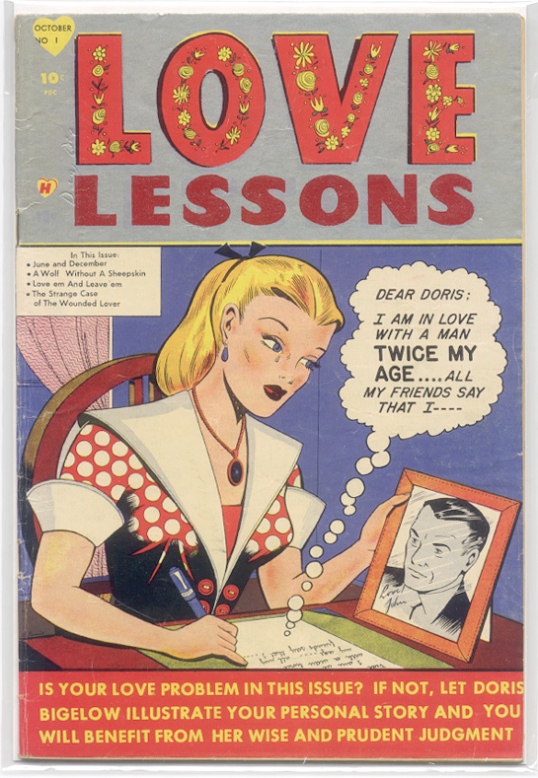
Love Lessons

John certainly looks serious.  I hope Doris Bigelow gave her some good advice.

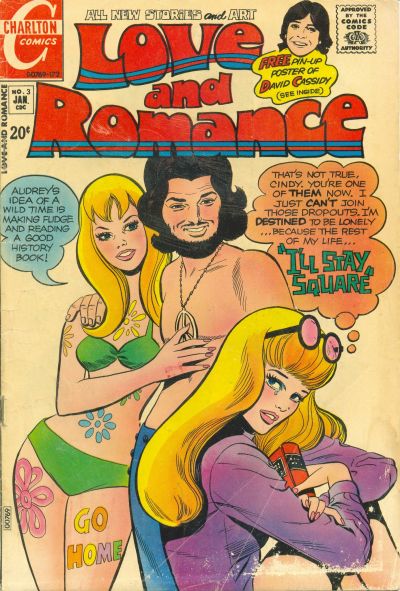
Love nd RomanceI don’t know how anyone could stay square after seeing that facial hair.

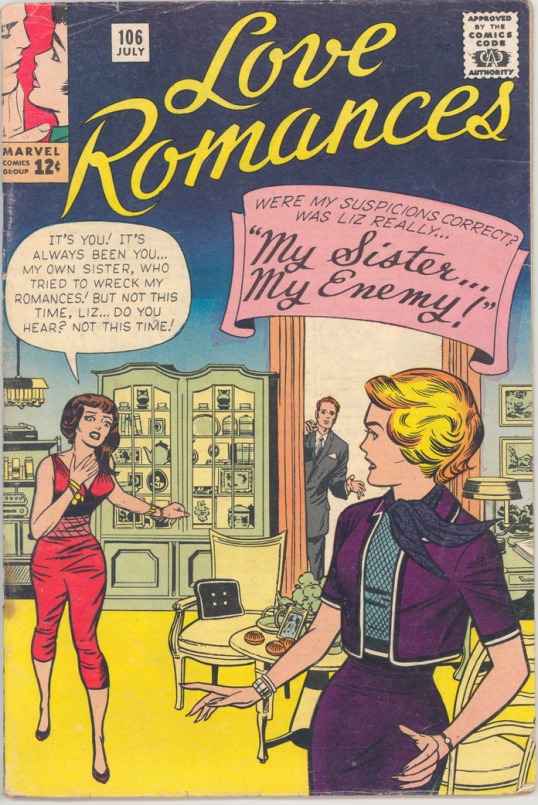
Love RomancesDidn’t anyone in these comics get along with their sister?

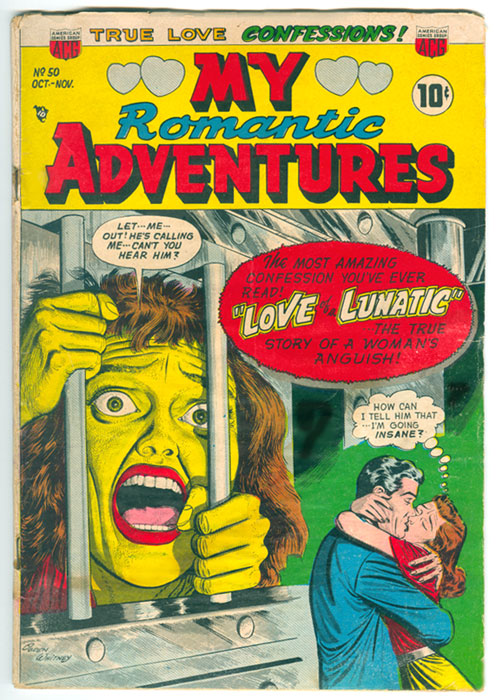
My Romantic AdventuresLove can drive you crazy.

Radiant LoveAt least they have something in common.

Secret HeartsLike Beyoncé says, put a ring on it…

True Life SecretsI love the blue eyeshadow.

Young Love 2Love, fun, and commitment issues on the beach.

Young Love 3I hear Heart Break is lovely this time of year.

Young LoveI don’t think this is going to work out.

1

Shattered Politics #86: Casino Jack (dir by George Hickenlooper)


Casino_JackI had two reactions to the 2010 film Casino Jack.

My first reaction was to think, “Wow, Kevin Spacey really can act!”  I mean, don’t get me wrong.  I knew that, especially when working with a director who is strong enough to curb his natural tendency to go overboard, Kevin Spacey was capable of giving a great performance.  However, Spacey is one of those actors who has such a unique look and style about him that I think sometimes we forget that he’s capable of doing more than just playing variations on Kevin Spacey.*

And it is true that, in the role of real-life Washington D.C. lobbyist Jack Abramoff, Kevin Spacey gave a performance that was full of the usual Spacey tricks.  By that, I mean we got the Spacey voice going from a purr to a roar in just a manner of seconds.  We got the Spacey glare, where he narrows his eyes and stares at whoever has offended him with an intensity that lets you know that something bad is about to happen.  We got that somewhat strained Kevin Spacey smile, the way facial expression that lets us know that we don’t want to know what’s going on behind that friendly facade.

But, even though Spacey was up to his usual tricks, all of those tricks still came together to create a unique character.  As I watched the film, I forgot that I was watching Kevin Spacey.  Instead, I really felt that I was watching and listening to one of the most powerful lobbyists in American history.

And, when Abramoff was eventually arrested and prosecuted for defrauding his clients, I couldn’t help but feel a little bit of sympathy for him.  Spacey plays the character with such a combination of hyperactive charm and righteous fury that you can’t help but be a little bit enthralled by him.  That’s not to say that Kevin Spacey turns Jack Abramoff into a sympathetic character.  (Indeed, as good as Spacey is, there are a few moments when his contempt for Abramoff comes through and his performance suddenly turns into a one-dimensional caricature.)  But what Spacey does do is show that Jack Abramoff was less an inhuman monster and more the logical product of Washington culture.  The only difference between Abramoff and everyone else in Washington is that Abramoff got caught.

But, at the same time, the move itself is never quite as interesting as Spacey’s lead performance. The movie’s main theme appears to be that Washington is corrupt and we’d do better if we curtailed the power of lobbyists but … well, do you really need a movie to tell you this?  I mean I’m pretty much apolitical and I knew that long before I saw Casino Jack!

Casino Jack: Good performance.  Boring message.  Bleh movie.

* This is better known as the Christopher Walken syndrome.

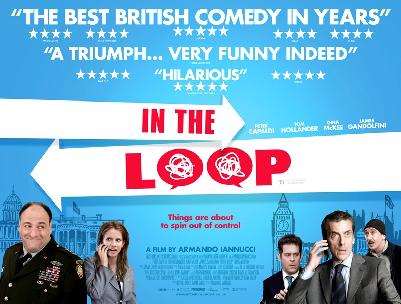
Shattered Politics #85: In the Loop (dir by Armando Iannucci)


In_the_Loop_poster

First released in 2009, In The Loop is one of the most brilliant political satires ever made.

The film opens in London, as a slightly ridiculous man named Toby (Chris Addison) starts his first day as the special assistant to the Secretary of State for International Development, Simon Foster (Tom Hollander).  And what a day to start!  Both the President of the United States and the British Prime Minister are eager to invade the Middle East and, during an interview the previous night, Simon accidentally announced that war was “unforseeable.”  This has led to people accidentally assuming that Simon is anti-war (Simon really doesn’t seem to have an opinion one way or the other) but it also means that the Prime Minister’s compulsively profane assistant, Malcolm Tucker (Peter Capaldi), is now running around the office and threatening people.

(I doubt that there’s any way that I can do justice to Capaldi’s performance here.  You simply have to see him.  He is a force of nature, a tornado of nonstop profanity and aggression.)

Not every government official in the U.S. is enthusiastic about going to war.  Both Assistant Secretary of State for Diplomacy Karen Clarke (Mimi Kennedy) and her former lover, Gen. George Miller (James Gandolfini) are opposed to the war.  Karen’s assistant, Liza (Anna Chlumsky), has even written a paper that explains why a war in the Middle East could not be won.  Karen hopes to use Simon as a spokesman to keep the British out of the war and, therefore, America as well.

(Toby, meanwhile, just wants to have sex with Liza.)

However, there are a few factors that complicate things.  First off, Malcolm is determined to make sure that the Prime Minister gets what he wants and if that means bullying and scaring everyone into supporting an unwinnable war, that’s exactly what he’s going to do.  Secondly, U.S. Assistant Secretary of State For Policy Linton Barwick (David Rasche) is eager enough to start a war that he’s actually started a secret committee to find a way to get into the war.  (The committee, of course, has been called the Committee For Future Planning.)  Third, and perhaps most importantly, Simon is an idiot.

Along with being both a satire of American-British relations (my favorite moment comes when a random American tourist tells Malcolm to stop cursing in public) and the lead-up to the Iraq War, In The Loop is also a devastating look at how government works.  In the Loop makes a good case that, for all the titles and the committee and the talk about doing what’s right, most government policy is the result of a combination of stupidity and needless aggression.  As played by Capaldi, Malcolm has no ideology or core beliefs.  He simply makes sure that the Prime Minister gets what he wants.

And if that means going to war, then Malcolm will do whatever it takes to push Britain into war.

Director Armando Iannucci is probably best known for creating two political comedies, the Thick of It and Veep.  And while I’ve never seen The Thick Of It, I absolutely love Veep.  From what I’ve read, all three projects share the same fictional universe.  (Capaldi’s Malcolm was the main character on The Thick Of It.)

Though, actually, I think it’s debatable just how fictional that universe is.  Ultimately, In The Loop is probably one of the most plausible satires that I’ve ever seen.

Trailer: Straight Outta Compton (Red Band)


Growing up during the 1980’s meant popular music was divided between rock and pop. Yes, there were the non-friendly music genres that hundreds of millions also listened to but were seen as music of the outsider (heavy metal, punk). Yet, something happened in the latter half of the 80’s.

Rap has always been part of the music landscape since it’s early days during the 1970’s. The genre was either about partying or pushing a social awareness agenda that kept it out of mainstream audiences (with the exception of Run DMC and the Beastie Boys). Then a rap group out of South Central L.A. released an album titled Straight Outta Compton which took the world by storm.

Gangsta rap has broken through that wall which has kept most of rap from mainstream popularity.

The latest film from F. Gary Gray will tell the story of the beginnings of the group N.W.A. right up to the tumultuous events of the Rodney King riots. As most biopic go this one may just be a major hit just for the fact that N.W.A. has had such a huge impact on pop culture and the music industry that their music and influence still remain relevant today.

Straight Outta Compton is set for an August 14, 2015 release date.

Shattered Politics #84: Swing Vote (dir by Joshua Michael Stern)


Swing_vote_08

Have you ever heard the old saying about how one vote can make all the difference?  I’ve always had to laugh whenever I hear that because I know that, every election, my sister Melissa is going to cancel out my ballot by voting the exact opposite of how I vote.  As a result, even though I’ve participated in almost every election since 2004, my vote has hardly ever really mattered.

(Then again, neither has my sister’s….)

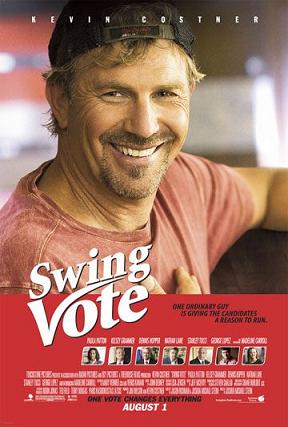
But anyway, the idea of one vote making all of the difference is taken to its logical extreme in the 2008 comedy Swing Vote.  In Swing Vote, a presidential election comes down to who wins the state of New Mexico.  And who wins the state of New Mexico will be determined by just one vote.  You see, the popular vote in New Mexico is tied between the two candidates but it turns out that, due to a voting machine error, one man’s vote has not been counted.  And now, that man has ten days to recast his vote.

(Why does he have ten days?  Mostly because there would not be a movie if they just said, “Please cast your vote again…now!”)

Of course, the problem is that the guy never cast a vote in the first place.  Instead, his vote was cast by his daughter (Madeline Carroll), who basically committed an act of vote fraud and violated federal law.  But it’s cute because she’s super precocious and she just wants her Dad to stop being such a fuck-up.

Oh, did I mention that?

That’s right — the fate of America is in the hands of a complete and total fuck-up.  His name is Bud and he’s played by Kevin Costner.  He’s a rather stupid guy who has never been responsible a day in his life.  He’s also a former felon, which really should have made him ineligible to vote in the first place.  And, on top of that, he’s the type of alcoholic who promises his little girl that he’ll meet her at a scheduled place and time and then proceeds to get drunk inside.

OH MY GOD, WHAT A GREAT GUY!

But, we’re supposed to like Bud because he’s played by Kevin Costner and I really don’t get that logic.  I always find it odd that, every year, we hear about how Kevin Costner is going to be in a few dozen films and how they’re all going to be hits and he’s suddenly going to be a big star again.  I’m never quite sure why people are excited about this prospect.  Whenever I see Costner on-screen (which, admittedly, doesn’t happen that often), I’m always struck by the fact that, regardless of the role, he really does come across as being an asshole.  That really does seem to be his screen presence.  That’s certainly the case in Swing Vote.

And maybe that’s the point of the film.  Be sure to vote so that the fate of America doesn’t end up in the hands of Kevin Costner.

That said, I will say that Swing Vote deserves some credit for casting Kelsey Grammer as the President and Dennis Hopper as his opponent.  Personally, I probably would have voted to reelect Kesley but I think Dennis would have done a good job as well.

(By the way, if ever do find yourself watching Swing Vote, imagine how much funnier the film would have been if it ended with Costner casting his vote and then announcing, “I voted third party!”)