In what could be 2011’s version of Kick-Ass, the latest film from writer-director James Gunn looks to take the superhero genre into the realm of ultraviolence and some heavy dark comedy. The film is simply titled Super and stars Rainn Wilson, Ellen Page, Liv Tyler and Kevin Bacon and it’s about Wilson’s character deciding he’s had enough of being the meek and the weak. His decision to take control of his life takes him into a very dark place where superheroes are made and lots of vigilante justice served on crime everywhere.
From the look of the trailer it definitely looks like its going to go even farther than what Kick-Ass did in 2010. This film may also share something with that film in that it probably won’t make the sort of money it’s supporters and fans are hoping it’ll make.
So, I suggest people see this film as soon as it comes in their area. People need to support films like this or they should just shut up about how Hollywood has run out of ideas and only cookie-cutter flicks are being pushed on the audience year in and year out.
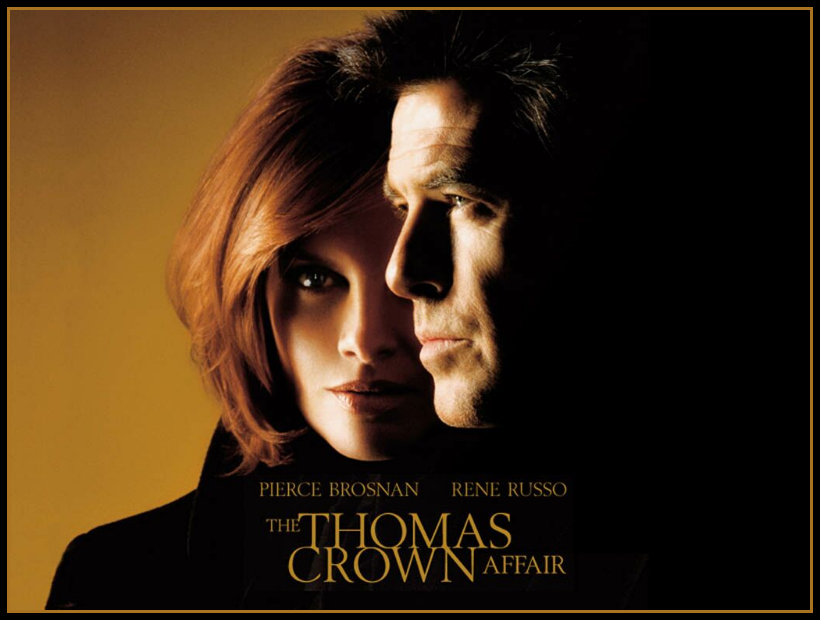
In 1968 there was a little caper film titled The Thomas Crown Affair starring the ever-cool Steve McQueen and a radiant Faye Dunaway. The film was considered hip, cool and sexy in its way during the late 60’s. It took 31 years, but a remake was finally made of this film but this time around starring Pierce Brosnan and Rene Russo in the roles originally played by McQueen and Dunaway. With some great direction from thriller and action filmmmaker John McTiernan, 1999’s The Thomas Crown Affair ends up being the exception to the rule of remakes of older films turning out lesser than the original. This modern and updated version of The Thomas Crown Affair actually surpasses the original McQueen production. McTiernan’s film ably combines humor, thrilling action set pieces, sexy chemistry between the leads and just a beautifully shot film.
Set in New York that never looked as good as shot by McTiernan and his crew, Pierce Brosnan stars and shines as the title character Thomas Crown. Thomas Crown is a suave, roguish and successful businessman who has everything a man could ask for: money, power and any woman he desires.
What does a man like Crown would ever want in life?
The film looks at this and shows that no amount of money in the world could replace the adrenaline rush and thrill of getting acquiring it. Crown does this by staging a complex and elaborate plan to steal a Monet (San Giorgio Maggiore at Dusk) from the NY Metropolitan Arts Museum and do so in the middle of the day. His plan goes off without a hitch and with none the wiser. This heist sequence was actually very fun to watch as McTiernan never lost command of the many threads being weaved to pull off Crown’s plan. McTiernan would one-up this with the climactic finish in the same museum but with a sequence I could only call as the anti-heist.
With the heist completed, the film soon introduces Crown’s foil in the form of Rene Russo as insurance investigator Catherine Banning. Ms. Russo never looked more beautiful, sensual and sexy as she did in this film. Her performance as the determined and crafty Banning more than holds up to Brosnan’s roguish and playful performance as Thomas Crown. From the moment she appears onscreen as the camera slowly pans up her silky-stocking leg and garters, Russo dominated the scene and pretty much commanded attention from everyone. This was especially true whenever she shared the screen with Denis Leary as police detective in charge of investigating the Monet heist. Leary’s always a strong performer in any film he’s in but was pretty much lost in the wake of Russo’s performance when both were on the screen.
The rest of the film was pretty much Crown and Banning trying to get into each others’ heads to find the one advantage that would give them an upper-hand in the “game” they’ve both decided to play. It’s hard to see who is chasing who in the film. Is Banning chasing Crown as her one and only suspect for the theft or is Crown playing her as part of a much more complicated scheme to spice his life. These questions swirl within the frame of the heist investigation and the growing relationship between the two strong-willed characters.
To say that Brosnan and Russo’s on-screen chemistry was strong would be a big understatement. The two pretty much sizzle when together. Whether it’s a playful, flirtation during a nice dinner out on the town to the two steamy dance numbers in the middle of the film. When Crown asks Banning if she wanted to dance or does she want to dance the temperature just went up by degrees. Their love scenes together shows that it could still be done with class and also have a sense of playfulness and fun. It also showed that young couples doing love scenes onscreen have nothing on the mature couple.
There’s not much else to say about McTiernan’s remake of the Thomas Crown Affair than to say that he took a good film, that showcased Steve McQueen’s coolness for everyone to see, and made a much more superior production in every sense. The direction was excellent and the cinematography was beautiful in every second shot. The cast performance was very strong with the two leads in Brosnan and Russo acting their hearts out on the screen. This film shows that remakes really are not bad ideas when put into capable hands. It would be nice to see how the sequel — tentatively titled The Topkapi Affair — to this film turns out with pretty much the same cast and crew returning. I, for one, will be there to see it when it comes out.
This weekend, I saw The Adjustment Bureau, a film that I’ve been looking forward to ever since I first saw the trailer back in November.
In The Adjustment Bureau, Matt Damon plays a New York politician who loses a race for the U.S. Senate and falls in love with Emily Blunt on the same night. Inspired by some advice from Blunt, Damon gives a concession speech which, to me, sounds kinda whiney but apparently, the voters of New York find it to be amazingly compelling. You should understand, of course, that this is a mainstream Hollywood version of the American political system. What that means is that Damon’s character, of course, is a Democrat who would have won that election if not for the fact that apparently, a newspaper ran a photo of him mooning some people in college. Now, seriously, consider that. Not only does this movie start out by asking us to believe that a Democrat could lose a statewide election in New York but it also asks us to believe that he would lose for that reason. Meanwhile, in the real world, Massachusetts (one of the few states more Democratic than New York) is electing a Republican who used to be a Playgirl centerfold to the Senate. Anyway, the film continues to show its political sophistication by having Damon give a speech in which he says that political consultants have too much influence in the American political system and apparently, every voter in New York goes, “Oh my God! He’s right!” I don’t claim to be an expert on politics but seriously, all of the “political” scenes in this film just ring so amazingly false.
Anyway, Damon’s speech is apparently so amazing that his career is revived and soon, he’s being spoken of as a front-runner for the other senate seat (apparently, this film takes place in a world where New York would not only elect one Republican to the Senate but two). In fact, some people are apparently talking him up as a future President. But Damon doesn’t care about that. All he cares about is winning the heart of Emily Blunt.
The Adjustment Bureau, however, has other ideas. What is the Adjustment Bureau? Well, the movie tries to keep it all ambiguous and mysterious but essentially, the members of the Adjustment Bureau are angels and the Chairman they answer to is God. And God has already mapped out Matt Damon’s destiny and Emily Blunt is not meant to be a part of it. (How Calvinistic.) However, Damon insists on pursuing her until eventually, he finds himself being continually pursued by three members of the Adjustment Bureau — the blandly corporate John Slattery, sympathetic Anthony Mackie, and finally the cold and intimidating Terrence Stamp. The whole thing finally culminates in an Inception-like chase through the streets of New York City with Damon insisting that he has free will and the Adjustment Bureau insisting that no, he does not.
What a frustrating film! The plot is intriguing and potentially thought-provoking but the film doesn’t bother with following any of its themes to any sort of real conclusion. In the end, all of the questions raised simply turn out to be an excuse to film Matt Damon being chased across various New York landmarks. Don’t get me wrong. I’m always more than happy to spend money to watch Matt Damon get chased. He looks good running for his life. But still, it’s hard not to look back at the movie and think, “After all that set-up, that’s it?” The Adjustment Bureau is like Inception without that spinning dreidel.
Still, I enjoyed The Adjustment Bureau despite myself and I can’t exactly say that I’m proud of that. With each of its vaguely New Agey themes and its rather simplistic emotional content, this is the type of film that invites me to be cynical. However, I enjoyed the movie even if I did find myself rolling my eyes during some of the more “sincere” moments. A lot of this had to do with the chemistry between Matt Damon and Emily Blunt. They made a likable and cute couple. As well, Mackie, Stamp, and especially Slattery were well-cast as members of the Adjustment Bureau. Director George Nolfi comes up with a few striking images and, if nothing else, he knows how to film people being chased. Then again, it may have just been the fact that I saw this film with a special someone and therefore, I didn’t feel like I had to be cynical. I could just embrace all the emotional silliness in all of its simple-minded glory and as a result, I had a good time.
That said, I don’t think I’ll be seeing The Adjustment Bureau a second time or buying it on DVD. Unlike 0ther guilty pleasures, I don’t imagine this is a film that’s going to hold up well on repeat viewings.
It’s been awhile since I’ve put a new AMV and this time I thought this latest entry is quite appropriate and one which fellow writer Lisa Marie would really enjoy.
Last week Natalie Portman won the Academy Award for Best Actress for her powerful performance in Black Swan. This latest AMV is one which combines two things that Lisa Marie will appreciate most: ballet and French music. The video takes scenes from the magical girl anime series, Princess Tutu, which eerily looks like certain scenes from Aronofsky’s film. The music the creator, Chiikaboom, used is “Le Bien Qui Fait Mal” from the rock musical Mozart L’Opera Rock.
I haven’t really seen much of Princess Tutu and I definitely haven’t listened to much French music outside of classical. I will admit that this AMV has a certain dark appeal to it and the combination of scenes lifted from the anime and the music used makes it quite badass.
Creator: Chiikaboom
Anime: Princess Tutu
Music: “Le Bien Qui Fait Mal” from Mozart L’Opera Rock
This afternoon, as part of my mission to see every single film ever nominated for best picture, I watched Alexander Korda’s 1933 biopic The Private Life of Henry VIII.
Now, I have to admit that I’ve never been a big fan of the historical King Henry VIII as I have a hard time finding much sympathy for a man who beheads one wife, not to mention two of them. I like to imagine that he met his end in much the same way that Joe Spinell meets his end at the end of Maniac, with all of his dead wives suddenly showing up and ripping off his head. But, Henry is one of those larger-than-life historical figures that always seems to end up as the subject of movies, speculative fiction, and, of course, Showtime television series.
The Private Life of Henry VIII is one of the better known recreation of Henry’s life on-screen. For the most part, the film ignores Henry’s policies as king and instead is a darkly humorous recreation of his relationships with five of his six wives. (His first marriage, to Catherine of Aragon, is ignored.) The episodic film opens with the execution of Anne Boyelen (Merle Oberon). This sequence establishes the film’s tone early and it’s actually a lot more cynical than we usually expect a film from 1933 to be. In between shots of Boyelen waiting to meet her fate, we get extended scenes of two executioners — one French and one English — arguing about which nationality is better when it comes to chopping off heads. Meanwhile, the members of Henry’s court spend their time whispering innuendo about Henry’s new wife, Jane Seymour (Wendy Barrie). When Henry (played by Charles Laughton) finally shows up on the scene, he turns out to be a buffoon, a childish man who happens to control the destiny of England. After Jane dies in childbirth, Henry marries Anne of Cleves (played by Laughton’s wife, Elsa Lanchester). Anne, however, finds Henry to be repulsive and, in the film’s most obviously comedic segment, she goes out of her way to make herself as sexually unappealing as possible in order to convince Henry to give her a divorce. (This, of course, led to the split between England and the Catholic Church but the film doesn’t dwell on that. This is a comedy, not Man For All Seasons.) After the divorce, Henry finally marries Catherine Howard (Binnie Barnes) who has spent the whole movie pursuing Henry. For the first time in the movie, Henry is portrayed as being truly in love, unaware (at first) that Catherine only married him for his crown and is actually having an affair with Thomas Culpepper (Robert Donat).
The Private Life of Henry VIII was not the first movie to be made about Henry VIII but it’s probably the most influential because of Charles Laughton’s Oscar-winning performance in the title role. Laughton’s performance pretty much set the standard as far as future Henry’s were concerned. His Henry is buffoonish womanizer who does everything to excess. (This is the film that pretty much created the whole image of monarchs as men who don’t use forks, knives, or spoons.) However, as over-the-top as Laughton’s performance may seem, it’s actually full of very subtle moments that suggest the actual human being lurking underneath all of the bluster. It’s hard not to sympathize with Laughton’s Henry as he struggles to explain what sex is to Anne of Cleves or with his obvious pain when he discovers that he’s been betrayed by the only one of his wives that he actually loved.
(Of course, any similarity between Laughton’s Henry and the real-life Henry is probably a coincidence.)
The Private Life of Henry VIII was the first British film ever nominated for best picture and, perhaps because it wasn’t made by the Hollywood establishment, it hasn’t aged as terribly as most films from the 30s. While the film does have its slow spots, the performances of Laughton, Oberon, and Lanchester still hold up well and some of the film’s dark comedy almost feel contemporary. Oddly enough, this British film about English history lost to an American film about English history, Cavalcade.
(I should mention that I haven’t seen Cavalcade so I can’t say whether it was a better film. I’m going to have to see Cavalcade eventually but it’ll be later than sooner as the movie is only available as part of a DVD boxed set that costs close to 300 dollars. Agck!)
So, last night, me and Jeff were at the AMC Valley View to see The Adjustment Bureau (which I’ll be reviewing here either later tonight or tomorrow). We ended up arriving for the movie a little bit late because, while in route to the theater, we got stuck behind the dumbfug toadsucker who was driving one of those goddamn box-like Smart Cars and, of course, he was so smart that apparently, he couldn’t bring himself to risk going over 30 mph. on a three-lane street. So, we were stuck behind him like forever and then Jeff and I ended up getting into an argument about whether the driver was a woman (as Jeff claimed) or just some old hippie with long hair (as I claimed). The driver also had decorated his car with a lot of political bumper stickers — “Obama in ’08,” “Impeach Bush,” “White For Governor,” “Jesus Was A Community Organizer,” “Jesus Was Not A Republican,” “Socialist And Proud,” “Trees Make the Air We Breathe,” and those are just a few of them.
(Personally, I would never put any bumper stickers on my car because, quite frankly, they’re a little bit too permanent for my taste. I guess I’m too commitment-phobic to turn my car into a propaganda machine. However, I was once tempted to at least order an “I’m Another Person Not Reading Your Crazy, Left-Wing Blog” bumper sticker and to place it on a life-sized poster of me extending my middle finger which I would have then sent to an ex-boyfriend.)
Anyway, we were stuck behind this guy for-freaking-ever and by the time we finally got around him, since both me and Jeff understand that it’s actually more dangerous to go under the speed limit than to go over it, neither one of us had any sympathy for any of the political causes that the driver was trying to sell us on. In fact, that driver came close to turning us into Sarah and Todd Palin. (Don’t worry, we’re over it now.) The lesson here, I think, is that if you’re going to turn your car into a moving advertisement for your political beliefs, make sure you can actually know how to drive.
Anyway, by the time we got in the theater, we were still kinda all like “RAWR!” about getting stuck behind that Smart Car but then we saw a trailer that soothed our nerves and calmed us down. That trailer was for the upcoming Russell Brand film, Arthur.
Now, don’t get me wrong. The trailer looks awful and, having seen it, I now understand why so many people apparently can not stand Russell Brand. (I liked him in Get Him To The Greek.) Seriously, if not for one redeeming feature, the trailer for Arthur would hace to be the worst trailer since the trailer for Sanctum.
Playing in the background throughout the entire trailer was an old song from David Bowie and Queen, Under Pressure. As long as we simply ignored Russell Brand and Geraldine James and just listened to the music, the Arthur trailer was not only bearable but actually enjoyable. If nothing else, this song soothes our souls and brought both Jeff and me back onto the path of relative sanity.
Anyway, with all that in mind, how could I not devote a post to David Bowie and Queen’s Under Pressure?
It’s an animated feature that isn’t in 3D. It caters as much to adults as it does to kids, and doesn’t seem to try to lower itself to be “shiny” in that way. There are a number of scary images that I think would frighten younger kids, but overall, the film is very well done. It’s a fantastic homage to the Wild West, though it does get a little weird at times. I’ll admit that I walked in expecting something like Tangled. It reminds me more of George Miller’s Happy Feet, in how serious at times the story gets. And it does all this under the Nickelodeon banner. Wow, this is a big jump from Spongebob and Rugrats.
It ironic and feels right that Gore Verbinski – who gave us the Budweiser Frogs commercial so long ago and The Mexican – takes on an animated tale. He teams up with his Pirates of the Caribbean stars Johnny Depp and Bill Nighy again, and the results are worth it. Depp brings a spark of funny weirdness to the character of Rango, and the film has a number of pop culture references (including one for Fear and Loathing in Las Vegas). The supporting cast is okay, Isla Fisher (Confessions of a Shopaholic) makes for a quirky female lead trying to hold on to her land and Abigail Breslin (Zombieland)didn’t seem like she was used enough. Ned Beatty and Nighy in particular are the other vocal standouts here, along with Harry Dean Stanton (Big Love) as the the head of a mole family of outlaws. Timothy Olyphant (Justified) has a great cameo as well.
Rango is a chameleon who wishes to be the star of his own story. After an accident leaves him stranded in the desert, he finds is way through the blistering sun to the tiny town of Dirt. The townspeople of Dirt are a diverse lot, and it all has a real Mos Eisley in Star Wars to it. The currency of the town is water, which is pretty hard to come by these days. When he’s asked who he is, Rango takes the moment to be the character he envisioned. After he amazes the town with a display that adds fuel to the fire, the townsfolk end up making him the Sheriff of Dirt and charge him with finding a solution to their money/water issues.
Visually, Rango is a feast for the eyes despite how ugly the main character is. Fur moves, whiskers twitch and the open desert looks wonderful (especially when riding). Sunsets are colorful and Industrial Light and Magic really did some interesting work here. Honestly, I wouldn’t mind seeing this in 3D, but it’s actually nice that it isn’t in that format. Musically speaking, Hans Zimmer’s score adds a nice touch to the film, especially during one key scene involving a chase. I ended up getting the score shortly after seeing the movie.
If Rango suffers from any problems, it would be that it slows down a little in the middle, as if it’s not entirely sure of where it wants to go at one point. It quickly picks up, but the lull may be a little much for younger viewers looking for cartoon action throughout the film. I don’t believe adults will mind this, though.
But what about the Kid Factor?
It’s a Nickelodeon film. It’s designed for kids, and my audience (made up of parents and kids) appeared to really love it. The lessons to learn are that you truly are the center of your own story and growth comes through dealing with struggles. You can’t have a Protagonist without an Antagonist, and a story has to have conflict for it to go anywhere. You can take your kids to see Rango, but Parental Guidance is suggested. There’s a nude top half of a Barbie doll, no biggie there. Nighy’s Rattlesnake Jack brought up a lot of murmurs and gasps from the kids in my audience, so that might be something to be concerned about. There’s also shooting – it is the Wild West, after all – so there are characters that will die. If that doesn’t bother you, then you’ll have tons of fun with Rango. It’s definitely worth seeing.
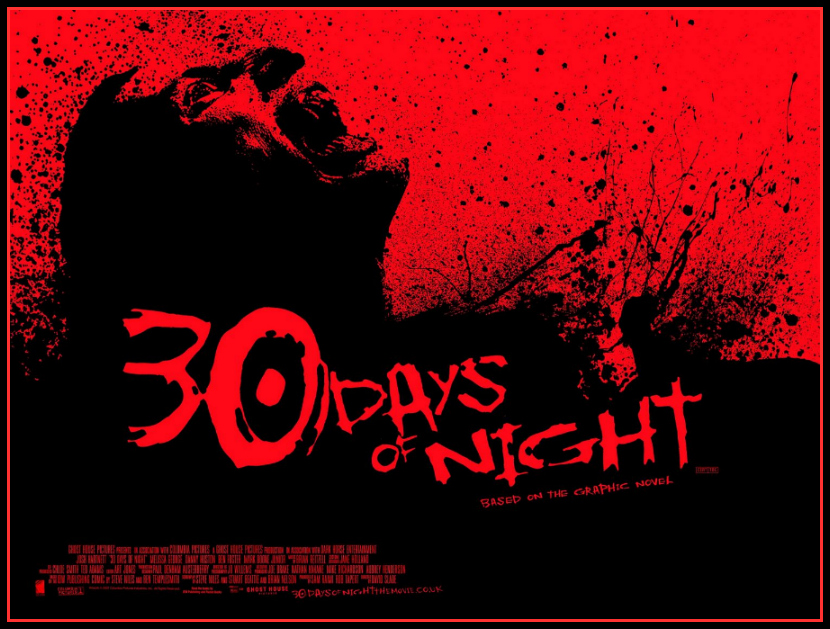
30 Days of Night is pretty much a siege movie with heavy elements of horror and gore. Siege movies always succeed and fail depending on whether the tension and dread built up from the beginning of the film suspends the audience’s disbelief. Siege films like The Thing and Romero’s Living Dead trilogy works well because right from the get-go we see the tension build not just on the location the cast are put in but within the besieged survivors as well. Survival becomes that much more difficult due to human frailties and an inability to work together bringing the whole group down. The monsters outside are bad enough, but sometimes it’s the survivors themselves who must share the blame.
David Slade’s (director of the excellent Hard Candy) movie does a very good job of bringing the initial tension and dread the comic brought to life in its first chapter. The story takes place in Barrow, Alaska which happens to be located within the Arctic Circle. This location allows it a very peculiar yearly event of having pitch-black night which lasts for a period of an entire month. The movie begins just as the town of Barrow prepares for this month-long prolonged night. Most of the town decide to move down south for the month where the night doesn’t last as long, but enough stay in Barrow to give it a semblance of life and activity.
The build-up of the characters in 30 Days of Night marks one of the weaknesses in the film. There’s barely much characterization in distinguishing one Barrow, Alaskan from another. The lack in character development from all the characters whether human or vampire doesn’t invest the film with anyone we want to see make it out through the night and into dawn. Even Danny Huston, a very underrated and overly capable actor in past films fails to elevate his lead vampire character Marlowe beyond it’s genre trappings. Known only as The Stranger in the credits, Ben Foster’s Renfield-like character edges between caricature and genuine creepiness in his performance. Foster knows he’s in a genre movie and has fun with the character. He’s the only one to truly take on his character and roll with it.
I now get to the subject of the vampires themselves. Most vampire movies seem enamored in portraying the vampire as some sort of seductive, fashion-obsessed, or in the case of the Anne Rice-type anachronistic in their dress, with an unnatural immortality they either live as hedonistically as possible or bemoan their cursed existence. Then there’s the more recent trend that Twilight has brought into the vampire mythology and it’s not good. There’s never been a true portrayal of the vampire as a pure, hunger-driven monster with an appetite to match their status as one of folklore and legend’s top-tier boogeymen. Slade goes for speed and agility in his vampires instead of hypnotizing and mesmerizing their victims. The vampires in this movie owes much to the frenetic and over-amped infecteds of 28 Days Later.
The attack itself and the subsequent siege worked well enough in the early going. There were some great overhead shots of the town’s people losing it’s fight during the initial feeding frenzy as the camera shoots the scene high overhead. The only thing Slade had a misstep in terms of the siege itself was after those first couple of nights. The rest of the 30 days didn’t seem to show enough desperation on the faces and bodies of the last few survivors. Really, the only way the audience even knew a couple weeks have passed were the caption telling them how many days into the month-long night has passed. I think with some better editing and a better sense of structure in the middle section of the movie to show time actually progressing the movie would’ve been better on so many levels.
All in all, 30 Days of Night was just good enough to be a fun watch. The premise itself was original and put a new spin on the vampire genre that has rarely been tapped. The performances were pretty average with no one bringing the whole film down with a misstep performance or raising the bar with a great one. The final product had a chance to be something great, but just ends up being a good and original take on the vampire story with elements of Night of the Living Dead.
As I type this, I am soooooooooooooooooooooooo ticked off. I just finished watching Thursday’s episode of American Idol and I now know that Clint Jun Gamboa did not make the final 13. Before trying out for this season of American Idol, Gamboa worked on the soundtrack for the infamous Tommy Wiseau film The Room. That’s right, the man who wrote “Crazy” and “Baby You And Me,” will not be competing for a chance to be the next American Idol. That’s just wrong. What’s even worse is that they sent Gamboa on his way without ever once acknowledging The Room. They could have at least given him a plastic spoon.
Because it’s for Clint, let’s start out with a trailer for a classic, 1975’s A Boy and His Dog. Clint, if you’re feeling down — well, I don’t know you well enough to know if this movie will help or not. It’s kinda one of those you either get or you don’t.
Yes, I know. The title makes it sound like a prequel to the Room. “Oh hai, mom.” Actually, it’s just a very early film from director Brian DePalma. The movie also stars a very young and very unknown Robert De Niro.
This is one of those films that I’ve got on DVD but I need to rewatch it so I can review it. I do remember that the DVD transfer was so bad that it actually started out with one of those “this is made from the best copy we could find — it’s not our fault!” messages.
Sadly enough, the Perfectly Sane, Kinda Boring Doctor of Blood Island was located just a block away but everyone was too busy with the mad doctor to notice.
These Boots Are Made For Walkin’ is one of my favorite songs, one of those that is perfect for making either an entrance or an exit. There’s probably not a day that passes without this song playing somewhere in the back of my head.
Written by Lee Hazelwood, this song has been recorded by everyone from Jessica Simpson to Megadeth but I prefer the version that made it famous, Nancy Sinatra’s.
Plus, the video for Nancy’s version cracks me up because, if you look real closely, one the dancers has got a run in her hose. *
—-
*Actually, as I sit here typing this on my lunch break, so do I.




 Through the Shattered Lens