Shepard’s Last Dance


Mara_Brooks

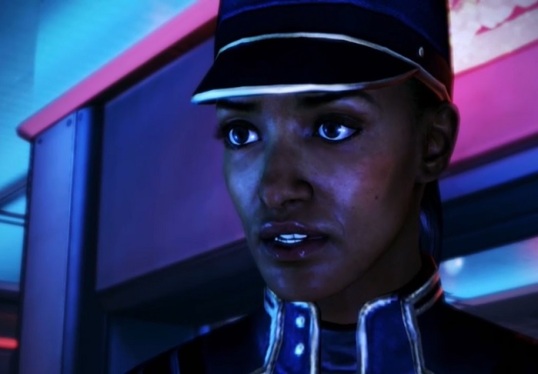
Well, it’s been quite a journey, hasn’t it? We’ve followed Commander Shepard across the years, and across the galaxy, battling against nothing less than our complete annihilation. But there’s one last shot in the chamber, it seems, as a sinister conspiracy seems aimed at killing off the legendary Commander Shepard. Such is the plot of the new Mass Effect 3 “Citadel” DLC, now available for 1200 MS Points.

Note that this review openly discusses details from the original Mass EFfect 3 game. So if you somehow still haven’t played it and still want to, come back and read us later. It’s alright, I won’t be offended.

I know that people have mixed feelings about content DLCs for Mass Effect 3, the ending of which is very definitive. Even with the “best” ending and the added fluff of the “Extended Cut” DLC released last summer, there isn’t anywhere else for Shepard’s story to go after the credits roll. While the “best” ending leaves Shepard’s ultimate fate ambiguous, Bioware has told us that Shepard’s story is over. So what is there to add to the gameplay of Mass Effect 3? I actually think Bioware has done a decent job of addressing this; I enjoyed the “Leviathan” DLC if only for its interesting story reveal. “Return to Omega” is cutting room floor stuff; the conclusion of Aria’s plot arc belonged in the original game, but at least its spot in the Mass Effect story makes sense. But “Citadel”… “Citadel” is one fine DLC. I would have said that the gold standard for Bioware’s DLC before this one was probably “Lair of the Shadow Broker”, which added substantially to my Mass Effect 2 experience, had an interesting plot, and some interesting combats interwoven with some great moments for Liara and Shepard.

“Citadel” is better, and it is better because it honours what has been Mass Effect’s biggest strength all along: the characters. The party interaction. The dialogue. The combat system in Mass Effect 3 is very polished, and it functions very well for what it needs to do, but I would not play Mass Effect 3’s campaign for just the combat sequences. Instead of just fighting through waves of mooks, Shepard finds himself blending into a gala at a casino, blending in at the roulette table and socializing with the who’s who of the Citadel… in between casually shutting down cameras and bypassing security while a companion distracts nettlesome guards. Meanwhile, another companion is sneaking through the ventilation system, all so you can get one single crack at someone who may or may not have answers Shepard wants. It is probably worth noting that this DLC is simply not self-serious in the way that the rest of Mass Effect 3 is. If you feel a shift in tone is dramatically inappropriate, this DLC could rub you the wrong way I suppose.

Things open with orders to put the Normandy in to the Citadel for refits and repairs, where our old friend Admiral Anderson has given over his (ridiculously) swanky Citadel apartment for your use. Anderson does not anticipate ever leaving Earth again; even if he survives the final confrontation with the Reapers, the effort to rebuild Earth is something he knows he can’t walk away from. Once there, you end up meeting Joker for sushi in a highly exclusive restaurant on the Citadel. Things go south soon after, and Shepard is forced to deal with yet another problem dragging him away from the master situation of the Reapers. Things culminate in what could possibly be the most difficult combat in the game (about which I will reveal nothing at all; better that way). I found that I didn’t mind.

The thing about “Citadel” is that it’s genuinely lighthearted and funny, with razor-sharp writing. It’s a remarkably refreshing detour from the otherwise dour tone of Mass Effect 3. The game’s tone is, largely, completely warranted… but this DLC provides a break from the agonizing struggle of the war that the original game really, for the most part, lacked. Combat sequences breezed by in a frenzy of faced-paced action and constant party banter, making me think fondly on the constant party interactions from Dragon Age II. The respites between the action sequences are more of the same. Granted, just shoving characters into the setting of Shepard’s ultra-unbelievably-luxurious-swanky Citadel apartment doesn’t feel as organic as another scenario might… but gathering party members on the Normandy is a bit of a contrivance as well, isn’t it? Let’s give Bioware a pass here. They try hard to get your old squad members involved. Tons of characters return from the previous games, offering them more screen time than they otherwise received in Mass Effect 3… including the opportunity to once again use fan-favourite Wrex as a squad member (really, what’s a squad without a Krogan?)

If you’re still angry about Mass Effect 3’s ending, after all of the time, discussion, and the “Extended Cut” DLC (and, if you are, I certainly don’t blame you – it was a travesty) then you may not find the send-off this DLC gives to the characters and the scenario any more satisfying… but, on the other hand, you might. I thought it was a nice fan-service sort of addition to the Mass Effect canon, and a fun adventure besides. Incidentally, this DLC occupied me for at least three hours so far, and I haven’t gone through everything it offers. You should make your own decisions on whether it is priced fairly based on this.

Arleigh’s Favorite Five (…Songs) of 2012


I must admit that in 2012 I didn’t get to listen in full many new albums outside of soundtracks. My Fave five of 2012 Songs will reflect this fact, but still with the lack of variety in my past year’s listening habit I thought the songs I came up with for the list I still would’ve put on a much bigger favorite 2012 list if I had need to come up with one. Without further ado he are the Fave Five (though it’s more Fave Six but I decided to combine the first entry’s two as a tie).

  • The Fave Five starts off with a tie that comes from the same film. Both songs come from the soundtrack to The Hobbit: An Unexpected Journey. While the film may not have been up to some audiences’ high expectations the soundtrack itself by Howard Shore (and for “Song of the Lonely Mountain” as sung by Neill Finn) continued the high-quality of the Tolkien soundtracks which began with the original Lord of the Rings trilogy. “Song of the Lonely Mountain” is a much more folk rock addition to the soundtrack while the “Misty Mountains” was actually part of the film itself when the character of Thorin Oakenshield sings it with his band of dwarfs while at Bilbo Baggin’s hobbit hole in the beginning. Both songs so a great job of telling the story of the quest that begins with this first film in the new trilogy.
  • The theme song 2012’s Skyfall was a throwback to the classic James Bond theme song’s of the Sean Connery and Roger Moore Bond eras. In fact, I thought it’s one of the best theme songs the long-running spy thriller franchise has had these past 25 years. It helps that you have Adele singing the theme who seems to be able to hit the right proper emotional notes during the song. It’s really hard to think of Skyfall the film being as good as it is without making sure one mentions Adele’s theme for it. I’d take the leap and say that the song itself may even be better than the film itself.
  • Mass Effect 3 was the epic conclusion to what was this gaming generation’s version of the original Star Wars space opera. It was a story that spanned the galaxy with memorable characters, thrilling action and some very good writing. There will always be the vocal minority who seem to think the ending to the trilogy was bungled by the writers over ta BioWare. That’s a whole different debate altogether. One thing that doesn’t seem to bring out the pitchforks was Clint Mansell’s score work for the game and it all culminates with the song simply titled “An End, Once and For All” which in it’s extended version more than makes up for whatever deficiencies the ending it orchestrally-scored may have had.
  • Another game’s music makes itself to my Fave Five list and this time it’s my second favorite song for the year of 2012. It’s from Halo 4 and it’s a song that brought new life to the venerable franchise. It didn’t just make the end credits more than just memorable, but also surprised many fans of the franchise’s music since the song wasn’t composed by the franchise’s original music composer, Martin O’Donnell, but by Kazuma Jinnouchi. It’s the one song in 2012 that I must’ve listened to on repeat for hours on end and probably in the high hundreds by now. It’s a song that brings back memories of the scifi soundtracks of the 80’s. It’s a work that I easily can compare to the best that’s ever been composed by luminaries in the genre like John Williams, Alan Silvestri, Michael Giacchino and others.
  • What can I say. The song speaks for itself. How can one not say this was the best song for 2012.

Trailer: Resident Evil 6 “No Hope Left” Cinematic Live-Action


I haven’t been as big a fan of Capcom’s Resident Evilsurvival horror game franchise (weird considering that zombie fiction and entertainment is like catnip to me), but the upcoming and latest entry in the series has me excited. Resident Evil 6 looks to return the series to its zombie roots after spending the last two titles veering away from it.

While the gameplay still looks to be just something upgraded and tweaked from games past the story itself looks like something that I would find interesting as it moves the danger from being localized to something more global in scope. I’m really hoping that this title brings me back to the franchise which was great in the beginning then began to lose steam and ideas in it’s latest offerings.

This latest trailer takes a page out of the Halofranchise’s marketing book by making it live-action. It might be only 90 seconds but getting a glimpse of how a world reacts to the onset of a zombie apocalypse makes for a nice, brief piece of entertainment.

Resident Evil 6 is set for an October 6 release for the Xbox 360, PS3 and Windows PC.

Video Game Quick Review: The Amazing Spider Man


Rocksteady changed things with 2009’s Batman: Arkham Asylum. As a brand new IP, it’s starting to become the template for a few popular games. Beenox has noted that the game was an influence on their “The Amazing Spider Man” game, and it really shows. Eidos’ Hitman:Absolution will also be working off the same engine (if not a similar one).

Before playing Activision and Beenox’s “The Amazing Spider-Man”, you should first know that it takes place after the events of the Marc Webb’s film that opened recently. Playing the game will give away major plot points from the film, but visually, it’s quite a treat. Unlike the other Spider-Man related tie in’s, this game doesn’t feature the voices of the movie cast. I was kind of hoping that it would, really.

Activision, along with Treyarch, created all of the movie related Spider-Man games (which I’ve owned), and by far, I’ve always thought of Spider-Man 2 as the best game in the franchise. The control in that game, which allowed you to shoot separate weblines from each hand, was amazing. It allowed you to pull off some incredible turns mid-swing and if timed just right, you could pull off sideways swinging. Beenox decided to change the style of the game, focusing on more of a Parkour-style swinging dynamic. This adds two great touches:

The “Web-Rush” system allows you to pick predesignated places for Spider-Man to go at any time. Once chosen, the game will take the quickest route to that target, even if it means Spider-Man has to bounce from Building A, hop off the fire escape of Building B and flip over some cars to get there. The Web Rush system also works similar to Batman’s Detective Mode in the Arkham games, allowing you to lock onto targets of attack, object to grab and use against your enemies. In flight (or fall, however you choose to look at it), it slows down time to allow you to select your destination. It makes it all look very beautiful and stylish, but also manages to take away the effort required to make it happen. It’s not a terrible thing at all, but I suppose it could be compared to Assassin’s Creed vs. Mirror’s Edge. Both games have you climb a building. Assassin’s Creed uses one button to get you to the top. Mirror’s Edge requires a number of calculated button presses to do the same thing. The reward is different, and I tend to prefer the latter. Still, it’s very fun to use, especially in close quarter interior battles. You can leap backwards to the ceiling and then advance right back to the enemy with a button press.

The controls are incredibly easy to access. Climbing a wall is as simple as pushing against it, and you can alternate between climbing and “perching” against any sideways wall. This turns the camera back to it’s original state to give you an idea of where you are as you move.

The camera is closer to Spider-Man overall, so you get a better sense of vertigo during swinging. You aren’t able to do any acrobatics while swinging, but that free fall experience is still there. It’s definitely beautiful. You can literally spend your time swinging all across the city all day. Note that the map is condensed, compared to Spider Man 2, which also contained part of Queens. Considering all of the graphical data that had to be generated, I can understand shrinking the map.

Collector Fiends will love that there are almost 700 comic book pages floating around the city, similar to the feathers in the Assassin’s Creed games. Collecting enough of these will unlock actual viewable versions of classic Spider-Man comics. XP gained from collecting these, along with taking out bad guys via the main storyline or the random crimes that occur in Manhattan will allow to unlock new moves and stealth actions for the old webhead. At one point, you’ll also obtain a camera that will allow you to take pictures around the city. It would have been nice if there was a way to capture screenshots of yourself swinging, but I’ll take it.

Stealth is a new factor in this game, a carryover from the Batman games. Spider-Man has the ability to now climb above and behind bad guys to web them up and get them out-of-the-way. It works to some degree, though some bad guys move in such tight nit groups that it’s hard to get them away from each other to take them out. You’ll be able to stealth eliminate two at a time (with an upgrade), but the rest of the group sees this, you’ll be under attack. Bad guys range from normal thugs to some monsters to even giant robots, which are pretty fun.

The problem with The Amazing Spider-Man is the same problem that plagued all of the other free roaming versions of the game. The mini crimes are so predictable and monotonous that you’ll probably end up getting bored doing them. They literally are all the same ones from the original Spider-Man game, though cleaned up a bit.The web swinging and comic page collecting will make up for it, but I’m not sure if any game developer can find a better way to make the city defending elements better than what they are.

Overall, The Amazing Spider-Man is a fun game to try out, and the reply value is okay in the sense that you can just pick it up and go, but like every other game in the series, it still requires a few tweaks. The game is available for all the console systems.

Battlefield 3: “My Life” Trailer and 12-minute Gameplay Footage


One game which has been on my radar for months now and will be so for the rest of the year until it comes out in November 2, 2011. That’s a long time to wait for a game, but just looking at the footage and the trailer has sold me on this game. As much as I enjoy playing Activision’s Call of Duty series (both it’s Modern Warfare and Black Ops iterations) it will be nice to finally get something new to beat back that juggernaut.

One thing which the Battlefield games have always had above and beyond every other FPS shooters is the ability in multiplayer to not just be a boots-on-the-gorund grunt but also drive tanks and armored vehicles, pilot gunships and fighters. It looks like from this latest trailer (making great use of the song “My Life” from the Swedish band jj.) that driving tanks and piloting jets is still part of the gameplay.

For a game that’s showing gameplay footage at Pre-Alpha Stage of development this game looks beautiful. It’s only a wonder how it will finally end up looking when it’s gone gold and released to the general public. A general public with cash waiting to be spent with me one of said cash spenders.

Catherine: Trailer (PS3/Xbox360)


Atlus is one Japanese video game company who seem to have gained quite the rabid and dedicated fan following despite never having released a game that sold in the millions of units. They’re titles are considered by gamers as being very “Japanese”. This is probably why those in the US and Europe who love their games also happen to be major fans of anime, manga and many other Japanese pop culture.

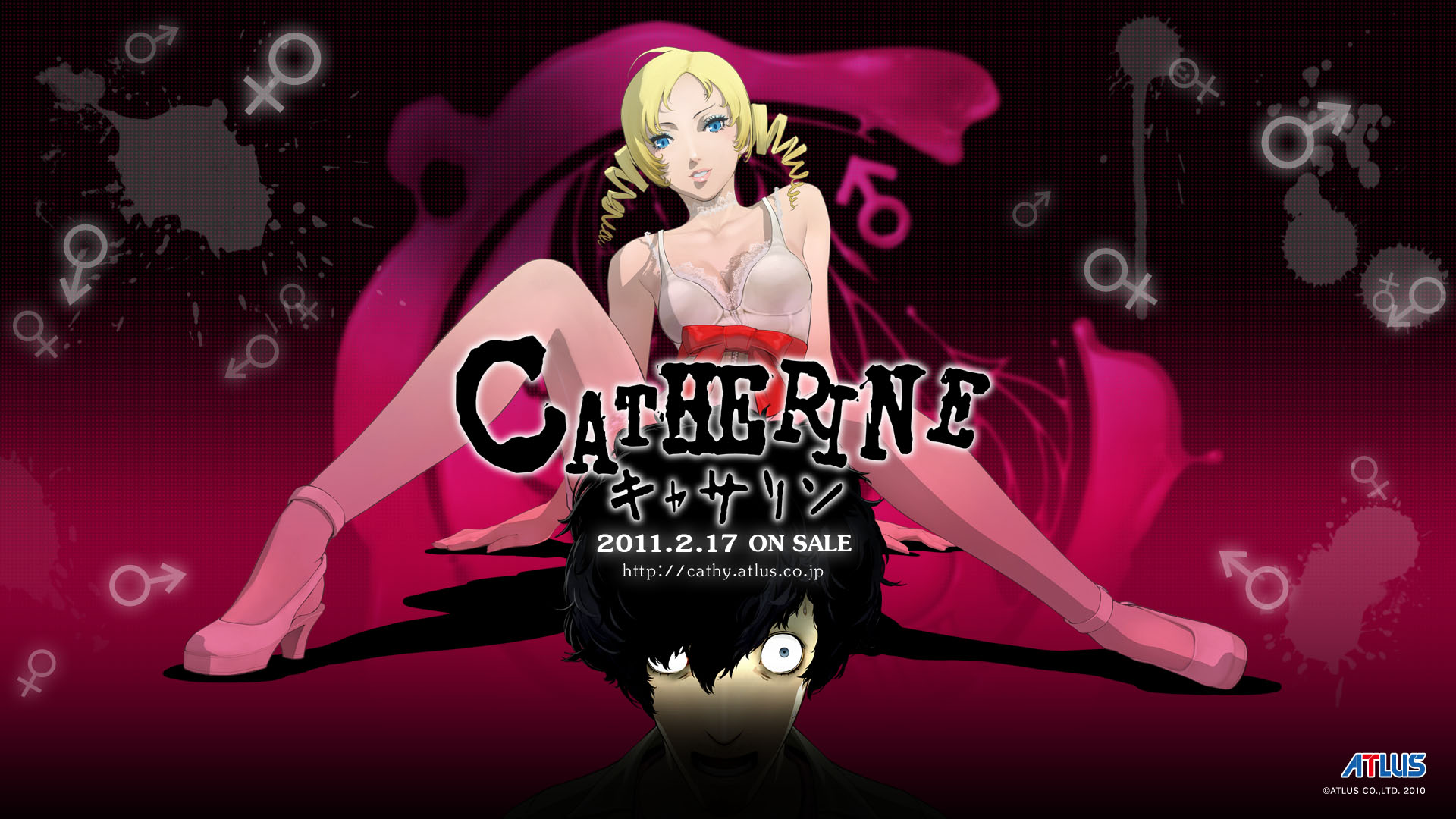
One game being developed  and published by Atlus that was announced sometime in 2010 was the puzzle-platformer/action adventure game Catherine. Right from the get-go Atlus fans were clamoring for more info on the game and when it would be localized for a North American and European release. When the game was just weeks away from it’s Japanese release date news came down from Atlus themselves that there was no plans at the moment to release the game outside of Japan.

To say that Atlus fans were heartbroken would be an understatement. While they could still import the game that would mean higher price due to import shipping fees.

Fortunately, this stance suddenly changed and on March 1st of 2011 the company announced that they were officially releasing the game for North America and with a release date of July 26, 2011. This news was greeted with joy by Atlus fans and some grumblings from those who shelled out the extra cash to import the game.

Catherine is a game that one might call one with “adult” themes and subject matter. It because of this that some call it quite “Japanese” since they’re more willing to release games that are adult in nature without resorting to violence as the foundation. While the game is not one of those eroge titles (erotic game) it is one that should definitely be bought and played only by those who are old enough to buy M-Rated titles.

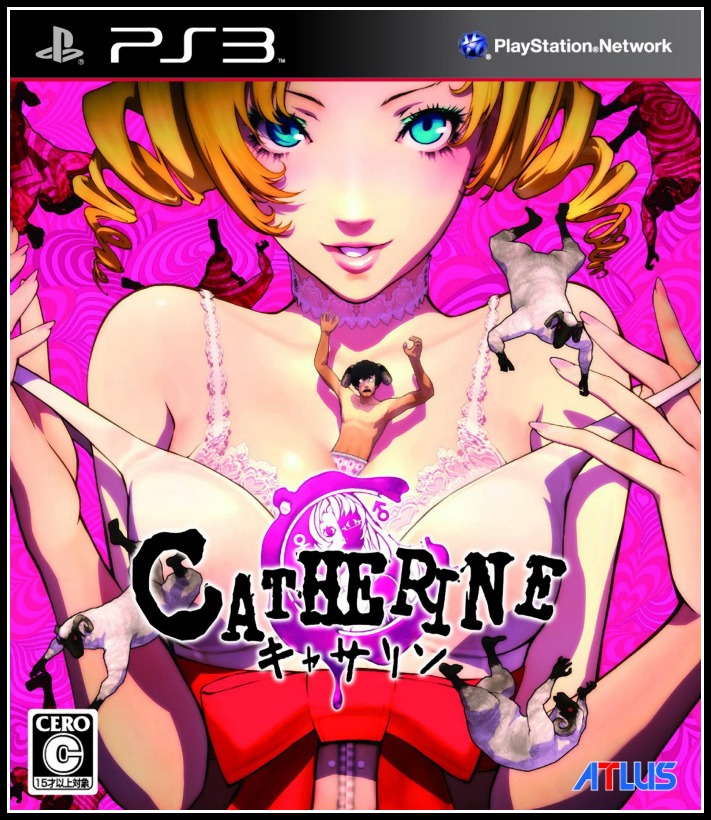
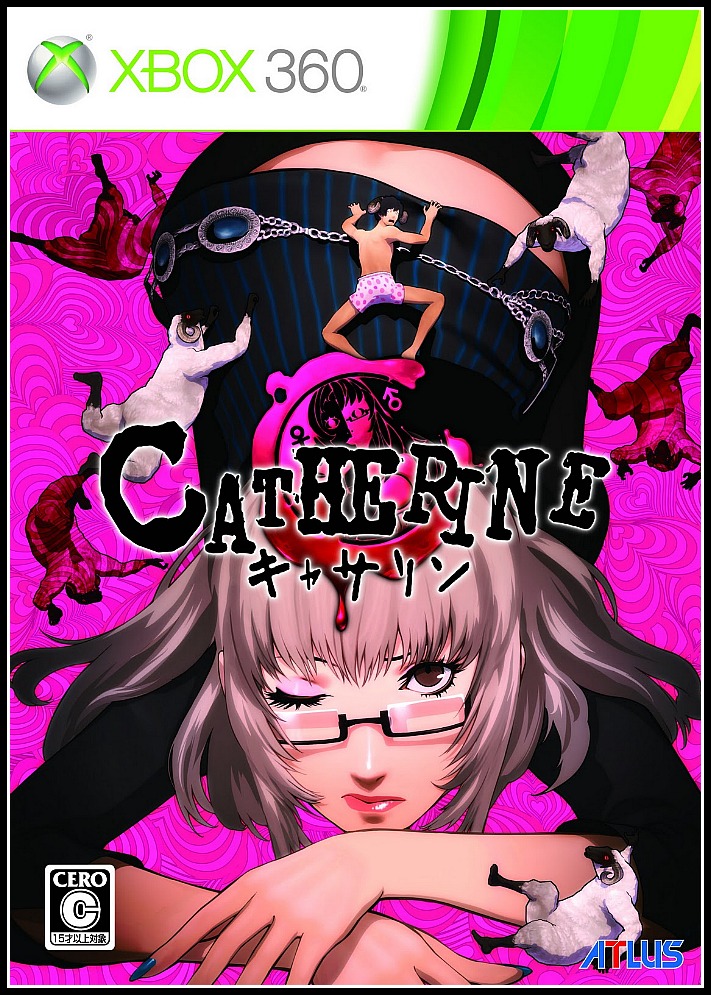
The game will follow the similar Japanese release pattern and come out with different covers for the PS3 and Xbox 360 versions. The game is still set for a July 26, 2011 release.

Song of the Day: Terra’s Theme from Final Fantasy VI (Uematsu Nobuo)


For the latest entry to the “song of the day” feature I go back to my younger years. I’m talking about when I was still barely into my 20’s. My choice for the new song of the day is Japanese composer Uematsu Nobuo’s main title theme for the Squaresoft (before they became Square-Enix) fantasy role-playing game Final Fantasy VI.

The song is “Terra’s Theme” (in the original Japanese it was called “Tina’s Theme”) and starts off the game. The version above is the piano solo version which Square-Enix produced as part of the special “Final Fantasy Piano Collections” cd releases which took all the video game music for each game in the Final Fantasy series game and remade them into piano solo pieces. Uematsu’s original composition for Final Fantasy VI (also for most of the game’s in the series he composed the music for) were very heavily-influenced by classical music traditions and one can really hear it in this main theme.

While the piano solo version is quite a haunting melody which gives some clues to the character of Terra Branford. The two versions below are the original video game music which is really a well-done MIDI file to allow it to be encoded into the game cartridge when it was first released for the SNES system. The other one is a live recording of Uematsu himself conducting an orchestra. While all three have become one of my favorite pieces of music of all kinds (not just video game music) it is the piano solo which solidified “Terra’s Theme” as one of the best songs I’ve ever heard.

Terra’s Theme (Live Orchestral)

Terra’s Theme (Original Video Game Music)

Review: Suikoden V


Konami’s Suikoden series has been a fixture in the Playstation console systems since the PS1. While not as graphically beautiful as Square-Enix’s Final Fantasy series of role-playing games, Konami’s own Suikoden rpgs more than held its own in complexity of character development and storylines. These two factors have become something the Final Fantasy rpgs have really lacked since Final Fantasy VII. I would even say the Final Fantasy series hit its high-point in Final Fantasy VI and has been downhill since. Not so with the Suikoden series. From the beginning the series has beautifully combined characters and storylines to create a game that still uses the basic stats and experience mechanics of most Japanese RPGs but with a unique brand of npc recruiting and a wholly realized complex world which grows and reveals itself with each successive game in the series.

In 2006, Konami released Suikoden V in North America and there were some trepidations on how well the game would turn out. The previous game in the series, Suikoden IV, was abit underwhelming in its execution. A rarity in the Suikoden series in that the game was just ok; with some fans calling it awful. But even Suikoden IV still played better and its story less cliche than most rpgs coming out of Japan. Suikoden fans needn’t have worried about this latest entry in the series. Suikoden V doesn’t bring anything new or innovating in terms of graphics to the genre (but then these games never has in the past) but what it did was bring back the series to the high-standard of character development and storyline the series was very well-known and critically-acclaimed for.

Set six years before the events which played out in Suikoden I, Suikoden V takes places in the Queendom of Falena whose current Queen has in her possession the Sun Rune. The Sun Rune is one of the 27 True Runes which makes the backbone of what makes the critical events of the Suikoden Universe so unique to the role-playing genre. Queen Arshtat rules Falena with the Sun Rune but events prior to the beginning of the game (told in flashback) has set into motion a dangerous game of political machinations and powergrabbing between two powerful groups in the Houses of Barows and Godwins with the Sun Rune in the middle of it all.

The player is given control of Queen Arshtat’s only son to figure out just what sort of secret plans either Houses has in store for the Royals. Accompanying the player are Arshtat’s sister Sialeeds, his bodyguard and lifelong friend Lyon, and Georg (a familiar face for those who have played the previous games in the series). As the game’s story unfolds the complexity of the power struggle between Barows and Godwins and those of the Falenan Royal Family becomes more than a struggle for the realm of Falena but for its ultimate survival as something powerful and beyond human comprehension has slowly influenced those in close proximity. There’s moments of extreme sadness and ultimate sacrifices and love. Machiavellian plots and counterplots from both the protagonists and antagonists keep the player guessing as to how the story will play out. There’s also betrayals and genocidal actions which gives this entry to the series the dark edge the previous fourth Suikoden lacked.

Unlike most JRPG’s (Japanese RPGs), Suikoden V doesn’t have an end-of-the-world storyline but one which stays regional, but makes the plot no less epic and actually gives the game more freedom in how the story unfolds. The game’s story has to rank up there with Suikoden II‘s as one of the best rpg storylines ever and only lags behind the second game due to that game’s having a brilliant and memorable villain in one Luca Blight. The main characters and most of the 108 Stars of Destiny characters were well-written with their own distinct personalities and motivations for joining the fight. The dialogue during the game is mostly done through text with each character show in anime-style profiles. The cutscenes on the other hand uses voice acting which for a rpg was done pretty well with voice actors who actually gave each character voiced a distinct personality. It would’ve been nice if Konami had included the Japanese voice-acting in addition to the English translation. It’s a minor gripe, but nothing that takes away from making Suikoden V such a great game.

The gameplay mechanics returns back to the 6-party formation from the first three games in the series. There’s still the usual co-operative attacks when certain combinations of characters are put in the battle party. The co-op attacks could involve just two characters all the way up to six characters combining to create devastating non-runic attacks. There’s also co-op attacks between characters using runes. These combined runic attacks are some of the most damaging attacks in the game and allows the player a reason to actually bring a balanced party of 6 characters that’s made up of fighter strong in physical attacks and those adept in runes. The newest change in the battle mechanics occur in the war battles. Gone is the turn-based system that’s worked well in the first four games. Suikoden V‘s war battles now takes place in real-time which makes for much more hectic battles. The player must constantly know where each of his units are and how they’re stacked up against the opposing forces.

Suikoden V is a great game and also brings the Suikoden series back to great form after an interesting but lackluster attempt at innovation with Suikoden IV. This fifth entry did everything right in what made the series great. It had a great and compelling storyline with complex and distinct characters. Suikoden V misses surpassing the great Suikoden II in greatness just due to that game having certain classic and memorable characters. This is an unfair comparison but something that still puts the second game ahead of V, but just barely. That shows just how great this game really is. Already announced by Suikoden’s creators that V will be the last Suikoden game for this current generation of Playstation console system. While the title hasn’t made a return to consoles that’s not handheld if this was the last game in the series then it was a proper send-off.

Quickie Review: The Last Starfighter (dir. by Nick Castle)


The Last Starfighter was a nice little sci-fi action movie which was revolutionary when it was released due to it’s use of an early version of CGI-effects. For 1984, the special-effects was quite new and showed just what was possible in the years to come.

The film itself was a fun and simple sci-fi actioner which owes a lot to the arcade shooters which were popular during the 80’s. Even the main plotline of the film was pretty much about a video game sent by a benevolent space-faring Rylan Star League looking to find a few good Starfighters to save their federation from the danger that was Zur and the Ko-Dan Armada. Lance Guest plays Alex Rogan whose only past-time at the trailer-park, where he lives with his mother and younger brother, is his girlfriend Maggie Gordon (played by 80’s genre favorite Catherine Mary Stewart) and constantly playing a video game called The Last Starfighter. Alex’s expert skills in beating the game brings about a new wrinkle in his hum-drum life which seems to be going nowhere. A seeming con-man of a salesman by the name of Centauri (played with gusto and energy by Robert Preston) comes out of nowhere and gives him an offer and opportunity that is out of this world.

The rest of the film brings about Alex’s reluctance to join the Star League as a Starfighter and pilot of the Gunstar fighter. He thinks it’s all a mistake and that he wasn’t signing up for some sort of intergalactic war that may just kill him. Like most action movies Alex will have an epiphany of what his role and destiny must be and, with some reluctance, finally takes the challenge by the controls and goes off to fight Zur and the Ko-Dan Armada with his lone Gunstar and his trusty navigator and all-around lizardman mentor, Grigg (played with equal parts seriousness and fun by Dan O’Herlihy).

For those like me who grew up during the 80’s and enjoyed watching these simple but fun sci-fi films The Last Starfighter was quite the blast from the past which still delights and entertains despite the corny dialogue and cheesy effects. The CGI-effects of the Gunstar and the Ko-Dan Armada looks dated but I still can’t take my eyes off the screen whenever these early looking CG effects come on. The acting is pretty standard B-movie quality with everyone seeming to have fun with the premise and giving it their all. There’s nothing to write the Academy about but in the end the performances do just enough to make the audience like the characters.

The Last Starfighter was quite the underrated scifi action film which should’ve done better than it did when it first came out. It’s since gained a cult following on video and always a welcome sight whenever it comes on cable. The film might seem dated compared to the super advanced CGI-effects laden blockbusters we have now but it still entertains the people who grew up watching it as kids and who have grown up since.

Quick Take: Halo: Reach


Sometimes, a full review isn’t terribly useful to people. Quantitative numbers on Halo: Reach from me aren’t particularly likely to sell more copies of the game. But I do think this game is worth discussing; it’s important, in a way. So here’s some thoughts, for which you are most welcome to join me.

Halo: Reach

I was only peripherally aware that Halo: Reach was launching. I mean, it wasn’t marketed, and it’s only a small-time game series… okay, no, of course, I was suffocated by the news. And I was as excited as any casual fan of the series. The problem is… I’ve never been a casual fan of the series. I’ve played thousands of games of Halo between Combat Evolved, Halo 2, and of course, Halo 3 (I only got Halo ODST because it was bundled for free with my new XBox Arcade), and that’s the telling point for me. By the time Halo: Reach came out, I wasn’t as excited for it as I should have been. I didn’t have it pre-ordered, I wasn’t enticed by the Legendary Edition (although I’m not much for collector’s editions of any kind). And the reason why is very simple, and it’s ultimately the most important thing that I can tell you about this game.

I already knew what to expect, and I wasn’t as excited as I used to be. Were you?

By now, Halo fans know exactly what to expect. The game is based around the balanced trinity of grenades, guns, and melee attacks. It is not a cover or tactical shooter, but rather a fast-paced action shooter with players protected by regenerating energy shields. In most ways, the popular multi-player shooter was defined by Halo: Combat Evolved. The graphics are an improvement, the features have expanded, and this is the biggest and best game that we’ve yet seen in the Halo universe. Bungie is run by very intelligent people; the fans don’t want the wheel to be re-invented. They want a new release that fixes perceived problems with previous titles, hands over a whole new slew of maps, re-imagines some of the weapons while leaving other fan favourites in place, and adds a couple toys that we haven’t seen before. In a lot of ways, Halo: Reach is like Madden 11. If you change too much, then you’re not playing Halo anymore, and then what’s the point? Bungie themselves obviously understand this; to go in a new creative direction, they must create a new series.

So what’s my bottom line with Reach?

Well, like all of the Halo titles, it has a surprisingly meaty single player experience. I know that people look at you funny if you even mention the story of Halo: Combat Evolved, but there’s more there than you might expect. It’s at least as elaborate as the story in any Call of Duty title. And the storytelling is done partially through the environments we travel through. Bungie has done a consistently good job of creating beautiful environments scored by epic music. The locations and places are familiar, and yet somehow very alien. It’s an excellent narrative when you bring everything together, complete even with single moments that make you get the tingles. For my money, Halo 2 was the weakest single player campaign, but the story bridged between the set-up in Combat Evolved and the conclusion of Master Chief’s story in Halo 3.

ODST took things to another level, adding more characters to the dynamic. We saw real interaction between characters, even if the player’s character, the rookie, is the typical “strong, silent type”. Reach, I think wisely, took its cues from ODST. We’re treated to an entire cast of powerful Spartan soldiers in their powered armor, with disparate personalities and motivations that make them interesting to us. But Reach also taps into something that we haven’t seen before in the Halo universe. Reach is a prequel. It’s a historical event in the universe, and we already know how things turn out. Disastrously. So woven into the narrative of Reach is a sense of despair. The Covenant is overwhelming. Each move the Spartans make seems like it could be the tipping point, but we’re always knocked back down by the inevitability of it all. It’s rather sad.

Now, from a gameplay standpoint, I had my problems with Reach‘s single player mode. I thought it went on ages too long (although, for me, it seems that I just don’t love Halo the way I used to) and grew tedious. But the narrative quality of the single player was good; far and away better than contemporary rivals like Call of Duty: Black Ops. It took a little time for me to digest the experience, but in the end, I thought that Halo: Reach was definitely worth playing, and makes a fantastic capstone to a series that has really been revolutionary in terms of a genre that is now one of the biggest around.

Oh, and the multi-player is good. I didn’t focus on it here, though, because as I said in the open, it is exactly what you expect. There are new wrinkles – and they’re good ones! – but all it boils down to is this: Do you still love Halo? Then play on!