Film Review: Cast Away (dir by Robert Zemeckis)


“WILSON!”

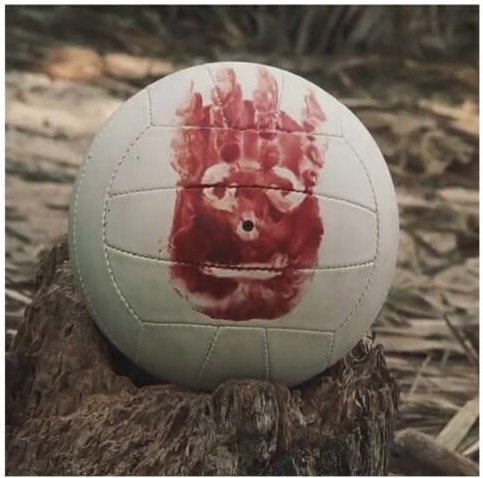
Seriously, I’m usually pretty well-behaved when I watch a movie but every time I see the 2000 film Cast Away, I find myself thinking, “Protect Wilson!  You must protect Wilson!”  And then, every time, I feel the sting of tears in my eyes as Wilson, with that red-face and that understanding attitude, goes floating away.

Wilson is a volleyball.  When a FedEx executive named Chuck Noland (played by Tom Hanks) finds himself stranded on a desert island, Wilson becomes his only companion.  A stain from Chuck’s bloody palm creates something that resembles a face on Wilson’s rubber surface and Chuck spends a lot of time talking to Wilson.  It’s how Chuck maintains his sanity, even as he loses weight, sheds most of his clothes, and grows a beard.

Chuck learns how to make fire.  He learns how to catch fish.  He is able to survive due to the supplies that he gathers from the FedEx packages that were being carried on the plane that crashed into the island.  But Chuck never stops dreaming of returning home to his girlfriend (Helen Hunt).  Eventually, Chuck finds the courage to try to make the journey back to civilization.  He brings Wilson with him but ultimately, this is something that Chuck is going to have to do on his own.  Of course, Chuck has failed to consider that he’s been gone for years.  He is presumed dead.  On the Island, time seemed like it was frozen.  For the rest of the world, life has continued.

Cast Away is a film that a lot of people, especially online film commentators, tend to criticize.  The complaint is usually that the film is essentially a commercial for FedEx, that it’s not believable that Tom Hanks could survive on that island for as long as he did, and that the film itself has a weak ending.  I’ll concede that the film does make FedEx look like the nicest corporation on Earth.  (FedEx’s CEO appears as himself, which should tell you something about how the company is presented.)  And I will admit that the film’s time-advancing jump cut, which abruptly takes Hanks from being clean-shaven and husky to being thin and bearded, does leave a lot of unanswered questions.  But I will always defend the film’s ending.  The film ends on a note of ambiguity but how else could it have ended?  Everyone thought Chuck Noland was dead.  His girlfriend had every right to get on with her life and, in fact, it would have been psychologically unhealthy for her if she hadn’t.  As for that final shot, it’s an acknowledgment that Chuck doesn’t know what lies ahead of him in the future.  All he knows is that he life isn’t over yet.  It’s a melancholy ending.  It’s a frustrating ending.  But it’s also the only way the film could have ended and therefore, it’s a perfect ending.

Cast Away is a film that I will always defend and it’s also a film that really only could have worked with Tom Hanks in the lead role.  He plays Chuck as being the ultimate everyman, an affable guy who was just trying to do his job and whose survival of the initial plane crash was largely due to luck.  Hanks is one of those actors who is instantly sympathetic and Cast Away uses his screen persona to good effect.  You want him to survive because he’s Tom Hanks.  He may be playing a character named Chuck Noland but ultimately, he’s Tom Hanks.  He survived being trapped in space.  Surely, he can survive being stranded on an island.  The majority of the film is just Hanks talking to himself.  This would have brought out the worst in so many actors but Tom Hanks makes it work.  And yes, he’ll bring tears to your eyes as he watches Wilson float away.  That’s the power of a good actor.

As for Wilson, I like to think that he washed up in Pensecola.  Recently, I played a little volleyball on a beautiful Florida beach.  Was that you, Wilson?
 

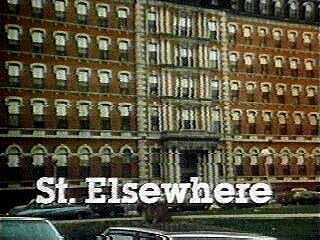
Retro Television Review: St. Elsewhere 2.1 “Ties That Bind”


Welcome to Retro Television Reviews, a feature where we review some of our favorite and least favorite shows of the past! On Fridays, I will be reviewing St. Elsewhere, a medical show which ran on NBC from 1982 to 1988.  The show can be found on Hulu and, for purchase, on Prime!

This week, we start season 2!

Episode 2.1 “Ties That Bind”

(Dir by Bruce Paltrow, originally aired on October 26th, 1983)

The second season is here and there are changes to be found in the opening credits.

David Birney and G.W. Bailey are no longer listed in the opening credits.  I’m not sorry to see Birney go as Dr. Samuels was never that interesting of a character.  I will miss Bailey’s performance as Dr. Beale.

Norman Lloyd is now listed in the credits, appearing right after Ed Flanders.  Ellen Bry, Kim Miyori, and Eric Laneuville are also now listed in the opening credits.  That’s good.  Last season, Shirley Daniels (played by Ellen Bry) was one of the most important characters on the show and it always seemed strange that she was left out of the opening.  Mark Harmon, sporting a mustache, appears in the credits, though he didn’t appear in this episode.  The final addition to the opening credits is Nancy Stafford, who does appear in this episode.

Stafford plays Joan Halloran, the new city budget advisor who has been assigned to cut St. Eligius’s budget.  She tells Westphall and Auschlander that St. Eligius is not popular downtown.  “They call you St. Elsewhere,” she says.  Joan wants to do away with the animal research lab, which is a part of the hospital that has never been mentioned before.  (And with good reason.  Boo, animal research, boo!)  Westphall finally agrees, on the condition that the city fund Dr. Craig’s attempt to perform a heart transplant on teacher Eve Leighton (Marian Mercer).

Wisely, Dr. Craig gets a lot of screentime in this episode.  If the first season seemed to often be unsure of just how abrasive the show should allow Craig to be, the second season premiere would seem to suggest that the show’s writers realized that the more abrasive Craig is, the better.  Of course, Dr. Craig has good reason to be in a bad mood.  As he confesses to Nurse Rosenthal, he caught his son doing drugs.  Craig explains he kicked him out of the house and now, he wants nothing to do with him.

Speaking of drugs, orderly Luther (played by Eric Laneuville) finally manages to capture the thief who has been stealing all the drugs from the hospital.  Dr. White is no longer under suspicion!  Yay, I guess.  I don’t know.  Dr. White wasn’t in much of this episode but he still cames across as being a jerk.  I have to admit that I groaned a little when I saw he was still on the show.  A part of me is hoping he’ll get a redemption arc this season but, from his behavior during rounds, he still seems to be a jackass.

Speaking of jackasses, when Jerry Singleton (Alan Arkin) discovers that his wife, Fran (Piper Laurie), has had a stroke, he responds by crashing his car into the ER and then refusing to leave the doctors along while they try to save his wife’s life.  Jerry is convincing that he knows everything and he’s very demanding.  Naturally, Fran’s doctor is Jack Morrison because Morrison always gets the really depressing cases.  Fran does wake up from her coma but she neither speaks no seems to hear anything anyone says to her.  I can’t imagine this is going to end well, mostly because she’s Morrison’s patient and things never seem to go well when Morrison is involved.  (What’s really sad is that Morrison, unlike Peter White, is a good doctor!  He just has rotten luck.)

Shirley Daniels finds out that Fiscus is cheating on her with Kathy Martin, who spends most of this episode promoting cryogenics.  Shirley responds by dumping Fiscus and telling him that he’s a pig.  Fiscus tells Kathy that they no longer have to sneak around, just for Kathy to say that the sneaking around was the whole point.  She promptly dumps Ficus.

Finally, Dr. Ehrlich meets a woman, Bobbi (Jean Bruce Scott) at the laundromat.  They go back to her apartment.  She strips down to her underwear.  She has Ehrlich tie her to the bed.  Ehrlich realizes that he has to get something from his car so he runs outside and …. gets locked out.  And then he nearly gets arrested while trying to use his credit card to open the building’s door.  However, the next day, Bobbi shows up at the hospital for her “encounter group,” and the two of them are reunited.  Again, I have a feeling this is not going to end well, just because it involves Dr. Ehrlich.

Hey, this episode was pretty good!  It moved quickly, it reintroduced us to the cast, and all of the stories were actually fairly interesting.  It’s obvious that show’s producers paid attention with what didn’t work during season one and they made an effort to improve things with season two.  Compared to the majority of this first season’s episodes, the pace was quicker, the humor was sharper, and just about everyone got a moment or two to shine.  I’m looking forward to next week!

Late Night Retro Television Review: Monsters “Half as Old as Time”


Welcome to Late Night Retro Television Reviews, a feature where we review some of our favorite and least favorite shows of the past! On Wednesdays, I will be reviewing Monsters, which aired in syndication from 1988 to 1991. The entire series is streaming on YouTube.

This week, Monsters asks us, “How far would you go to be immortal?”

Episode 2.11 “Half as Old as Time”

(Dir by Christopher Todd, originally aired on December 17th, 1989)

Dying of a brain tumor, elderly archeologist Dr. Miner (played by Leif Garrett, under a ton of old age makeup) visits his daughter Jacqueline (Valerie Wildman).  Jacqueline, who is also an archeologist, lives in the desert and, from the start, it’s obvious that she and her father have a strained relationship.  However, when Dr. Miner begs her to take him to the secret location of a “fountain of youth,” that she’s spent her career searching for, Jacqueline agrees.

Sitting underneath the statue of an evil-looking serpent and overseen by a Native American named Saspondo (Nick Ramus), the fountain does indeed make Dr. Miner young again.  Unfortunately, it only lasts for a short time.  Saspondo explains that if Dr. Miner wants to be both permanently young and immortal, he has to be prepared to sacrifice a family member and let their blood mix with the water.

Oh, hi, Jacqueline!

Dr. Miner doesn’t waste any time killing his daughter and afterwards, he doesn’t seem to be particularly upset over his crime.  (“She was always a disappointment to me.”)  Saspondo, however, reveals that Dr. Miner should have asked more questions about what immortality meant before killing his daughter and then drinking from the fountain.  Dr. Miner may be forever young but he’s also forever be trapped in front of the fountain….

The main joke here, of course, is the casting of former teen idol Leif Garrett as an old man.  Interestingly enough, he’s more convincing when he’s playing old than when he is later allowed to be his then-young self.  When he’s wearing the makeup and walking with a shuffled gait, Garrett has a character to play.  When he loses all of that, he sleepwalks through the rest of his performance.  Nick Ramus, however, gives an excellent performance all-around as the enigmatic keeper of the fountain.

This episode was uneven but effective.  The pace was occasionally a bit slow but the murder of Jacqueline was shockingly brutal, even by the standards of this show.  If nothing else, it showed who Dr. Miner truly was and it made his eventual comeuppance especially satisfying.  Flaws aside, this episode worked.

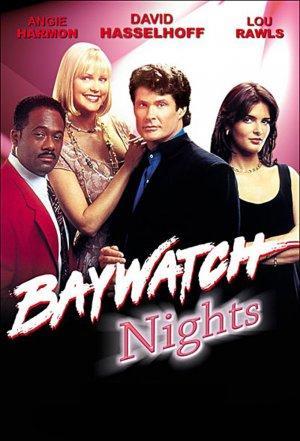
Late Night Retro Television Review: Baywatch Nights 1.14 “Backup”


Welcome to Late Night Retro Television Reviews, a feature where we review some of our favorite and least favorite shows of the past!  On Tuesdays, I will be reviewing Baywatch Nights, a detective show that ran in Syndication from 1995 to 1997.  The entire show is currently streaming on Youtube!

This week, Eddie Kramer returns!

Episode 1.14 “Backup”

(Dir by Charles Bail, originally aired on February 24th, 1996)

Visiting his former home for re-certification, former Baywatch lifeguard Eddie Kramer (Billy Warlock) is patrolling the ocean when he comes across a boat that’s on fire and sinking.  Two people on a dinghy yell that someone is still on the boat.  Eddie boards the boat and doesn’t see anyone.  The two people on the dingy continue to insist that someone is on the boat, even as Eddie dives off of it.

Along with Baywatch regular Newman (Michael Newman, the real-life model for Mitch Buchanan), Eddie searches the now sunken boat.  And, to his shock, he finds a dead man on the boat.  Eddie does a classic “Nooooooooo!” but, being underwater, no one can hear him.

With everyone blaming him for the accident, Eddie continues to insist that no one was alive on the boat when he first checked.  Eddie’s old friend and mentor, Mitch Buchanan, decides to investigate the case himself and he soon figures out the truth.  The dead man did drown but he was already dead by the time the boat sank!  But who wanted to kill him?

It’s actually not much of a mystery as there are only two suspects and it is established early on that they’re working together.  In fact, they talk about how they committed the murder before Mitch even figures out that it was a murder so say goodbye to any suspense.  The truth of the matter is that the storyline was less about the mystery and more about trying to boost the ratings by reminding everyone that this was a Baywatch show.  It might have been more effective if the show had made use of a top-tier Baywatch co-star (David Charvet, Pamela Anderson) as opposed to bringing back Billy Warlock, who hadn’t been on the show for a few seasons before his guest turn here.  But then again, bringing on a “current” co-star would have begged the question of “Why do we need a new show to watch a story from the old show?”

There’s a second storyline, in which a man (Barry Pearl) is concerned that his mistress (Valerie Wildman) has hired a hitman to kill him.  Garner, Ryan, and Lou all stakeout the mistress and discover that she doesn’t actually want to go through with the plot and that her original plan was to kill the man’s wife.  The man is so overjoyed to discover that his mistress wanted to kill his wife that he literally jumps for joy.  This was a weird storyline but at least it featured the characters doing real detective work for once.

This was a breezy and entertainingly dumb episode.  This is perhaps the first episode to feature every member of the main cast doing something and there was a nice feeling of comradery amongst the regulars.  That said, the episode ended with Mitch pointing out that they had solved all the cases and then asking, “What do we do now?”  Uhmm …. how about you go to your other job, Mitch?

Seriously, I don’t know how Mitch balances everything.

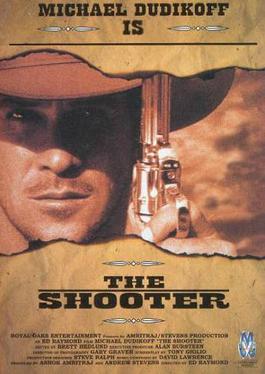
The Shooter (1997, directed by Fred Olen Ray)


While riding his horse through the old, Michael Atherton (Michael Dudikoff) discovers a group of thuggish ranch hands attacking a prostitute named Wendy (Valerie Wildman).  Because Michael is known as being the Shooter, he has no problem coolly gunning the men down and saving Wendy’s life.  Unfortunately, for Michael, one of the dead men is the son of a fearsome rancher named Jerry Krants (William Smith) and Jerry has his own reasons for wanting Wendy dead.  Michael may be the Shooter but Jerry Krants is William Smith so you automatically know that it is not a good idea to mess with him.

In the grand spaghetti western tradition, Krants has his men kidnap Michael, beat him up, and crucify him outside of town.  The men leave Michael for dead but, after they’ve left, Wendy repays Michael’s kindness by untying him from the cross, nursing him back to health, and saving his life.  (The same thing used to happen to Clint Eastwood, except he usually had to nurse himself back to health without anyone else’s help.)  With everyone else believing him to be dead, Michael rides into town to get his violent revenge against Krants and his men.  With all of the townspeople convinced that Michael has returned as a ghost, only the town’s power-hungry sheriff, Kyle Tapert (Randy Travis), understands what has actually happened.  Tapert makes plans to use Michael’s return for his own advantage.  While it wouldn’t look good for Tapert to openly murder all of his opponents, what if he killed them and then framed Michael?  And then what if he made himself a hero by being the one to end Michael’s reign of terror?

Directed by Fred Olen Ray, The Shooter is a low-budget western that turned out to be far better than I was expecting.  Ray is obviously a fan of the western genre and, with The Shooter, he’s made a respectful and, by his standards, restrained homage to the classic spaghetti westerns of old.  He even shows some undeniable skill when it comes to building up the suspense before the climatic showdown.  Ray indulges in every western cliché imaginable but he does so with the respect of a true fan.

With his less than grizzled screen presence, Michael Dudikoff is slightly miscast as a Clint Eastwood-style gunslinger but the rest of the cast is made up of genre veterans who give it their best.  In particular, William Smith shows why he was one of the busiest “bad guys” working in the movies.  To me, the most surprising part of the film was that the casting of Randy Travis as a villain actually worked.  Fred Olen Ray made good use of Travis’s natural amiability, making Kyle into a villain who will give you friendly smile right before he opens fire.  Also be sure to keep an eye out for Andrew Stevens, playing the man who records Michael’s story.  It wouldn’t be a Fed Olen Ray movie without Andrew Stevens playing at least a small role.

Low-budget, undemanding, and made with obvious care, The Shooter is film that will be appreciated by western fans everywhere.

Horror on TV: Tales From The Crypt 5.10 “Came The Dawn” (dir by Uli Edel)


Tonight’s excursion into televised horror is the 10th episode of the 5th season of Tales From The Crypt!  

Came The Dawn tells the twisted story of what happens when a mysterious hitchhiker (Brooke Shields) is picked up by a rich man (Perry King).  This one is full of twists and turns as director Uli Edel pays homage to Hitchcock.

It originally aired on November 17th, 1993!

Enjoy!