Review: My Name


“I’m not afraid of dying. I’m afraid of not knowing the truth.” — Yoon Ji-woo

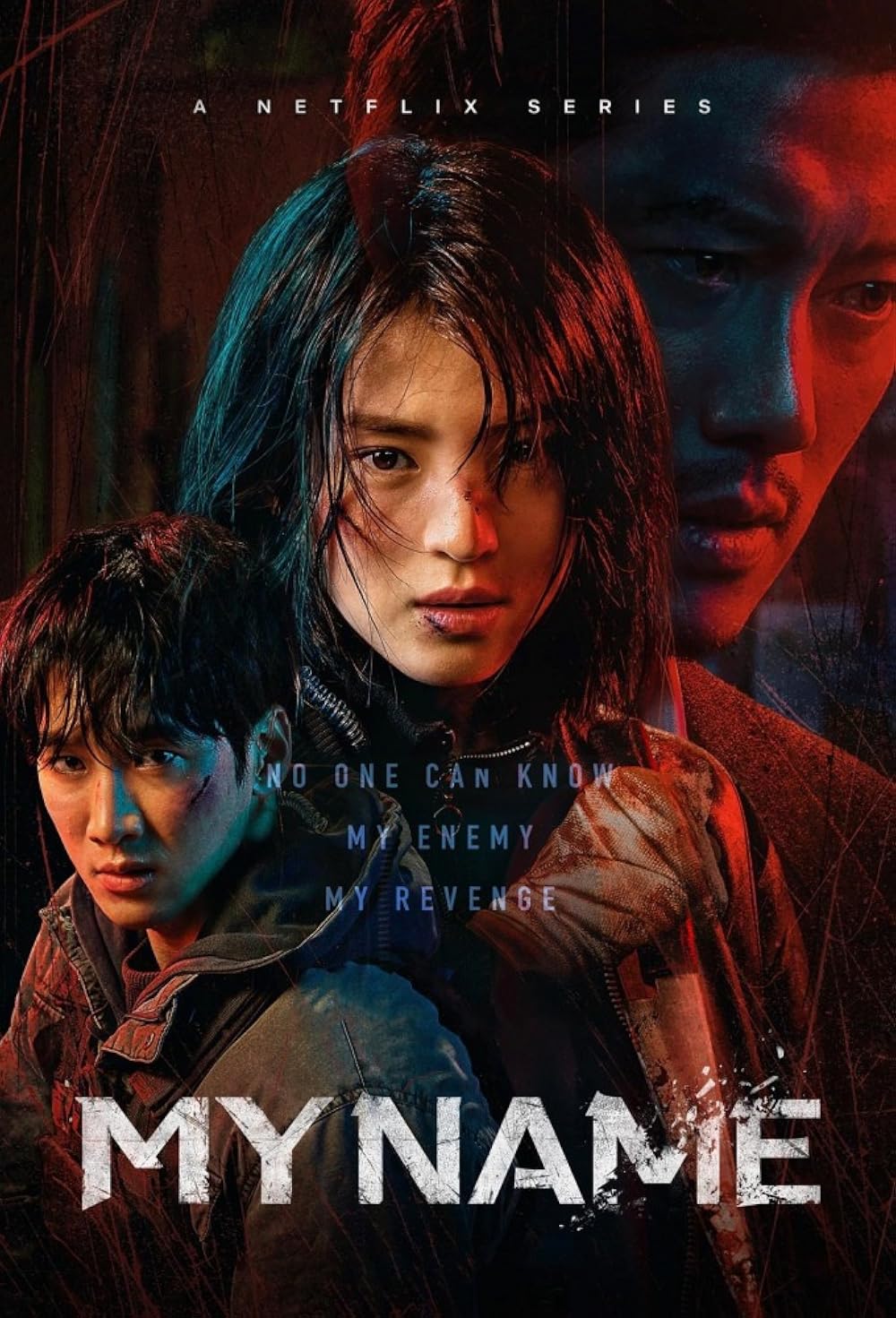
My Name is one of those K-dramas that grabs your attention from the start and maintains a relentless pace throughout. It is a gritty, action-packed series set in a dark, unforgiving underworld marked by crime, betrayal, and a driving quest for revenge. The story follows Yoon Ji-woo, a young woman whose life is shattered when her father, a figure tied to the mob, is brutally murdered. What unfolds is her transformation from a grieving daughter into a formidable and determined fighter intent on uncovering the truth behind her father’s death and exacting vengeance.

The series does not shy away from depicting violence in an unflinching manner. For those who appreciate intense and well-choreographed fight scenes, My Name provides a visually and emotionally striking experience. The physicality Han So-hee brings to her role is notable, lending authenticity to every punch, fall, and desperate struggle. However, the violence serves a narrative purpose beyond mere spectacle; it illuminates the bleak world Ji-woo inhabits and the extreme sacrifices demanded of her.

A particularly compelling aspect of My Name lies in its combination of emotional depth and action. Ji-woo is not portrayed as a simple avenger consumed by rage, but rather as a complex individual wrestling with grief, guilt, and profound loneliness. Han So-hee’s nuanced performance effectively balances raw toughness with moments of vulnerability, inviting viewers to engage with Ji-woo on a deeply human level despite her morally ambiguous actions.

The narrative unfolds briskly across eight episodes, avoiding the typical padding seen in many K-dramas. This lean structure maintains a consistently high level of tension as Ji-woo infiltrates the police force undercover on behalf of the criminal organization responsible for her father’s death. The tension arising from this double life—living between two opposing worlds—heightens the drama, creating an ever-present question of trust and betrayal.

This theme of undercover infiltration shares notable similarities with renowned thrillers such as Infernal Affairs and its American remake The Departed. Like those films, My Name explores the psychological strain of agents embedded within enemy organizations, examining shifting loyalties and blurred moral boundaries. Yet, My Name distinguishes itself by focusing intimately on Ji-woo’s personal journey of vengeance and identity. While Infernal Affairs and The Departed emphasize the intricate duality and game of cat and mouse between multiple undercover agents, My Name offers a singular, emotionally charged narrative driven by Ji-woo’s transformation both physically and mentally through relentless trials.

Supporting characters enrich the story further. Detective Pil-do serves as a humanizing counterpoint to the harshness of Ji-woo’s world. His relationship with Ji-woo adds emotional complexity to the story, gently probing themes of trust and moral conflict. The enigmatic crime boss Mu-jin, who mentors Ji-woo, embodies a pragmatic and often manipulative figure, complicating the traditional distinctions between good and evil with a nuanced portrayal.

Visually, My Name excels in creating a brooding and atmospheric setting, with evocative use of shadow, rain, and urban neon lighting that reinforces the noir tone. The haunting soundtrack complements the tension and emotional undertones, underscoring both frenetic action and quieter character moments with equal effectiveness.

That said, the drama’s heavy focus on violence and its dark tone may not appeal to all viewers. The unrelenting grimness and lack of lighter moments could prove challenging to those who prefer more varied emotional rhythms. Furthermore, some secondary characters are not as fully developed as they might be, which occasionally makes subplots feel less integral. Still, the tight focus on Ji-woo’s narrative keeps the drama paced and impactful without unnecessary distractions.

A central thematic strength of My Name is its exploration of identity. Ji-woo’s undercover infiltration prompts profound questions about the self: how much of her original identity can she retain while adopting false personas dictated by survival and revenge? This internal struggle adds a psychological depth that elevates the series beyond a straightforward revenge thriller, inviting reflection on trauma, loyalty, and selfhood.

The pacing is expertly managed, neither rushed nor weighed down by extraneous elements, culminating in a satisfying and emotionally resonant conclusion. The series even incorporates moments of romance late in the narrative, adding subtle layers of hope and human connection to balance the dominant themes of loss and revenge.

In sum, My Name distinguishes itself through Han So-hee’s powerful performance, its raw and realistic action sequences, and its willingness to grapple with complex emotional and moral questions. It is a compelling option for viewers drawn to intense, character-driven thrillers that refuse easy answers while delivering visceral storytelling.

If you are seeking a drama that explores the cost of revenge with both physical intensity and psychological nuance, My Name offers a gripping experience from beginning to end. It acknowledges its influences—such as Infernal Affairs and The Departed—but forges a unique path grounded in Korean drama sensibilities and the deeply personal story of its lead character. Its unyielding tone and evocative storytelling make it a memorable entry in contemporary Korean thrillers.

Trailer: Andor Season 2


The revolution starts…now.

Star Wars fans have been very critical of Disney’s stewardship of the franchise since Star Wars: The Last Jedi landed with a monumental thud with the hardcore fanbase. There hasn’t been much to celebrate anything Star Wars under Disney with a few exceptions like Star Wars: Rogue One, The Mandalorian and Skeleton Crew. One Star Wars series that drew critical acclaim from fans and critics alike was Tony Gilroy’s series looking at the origins of one of the main characters from Rogue One and that would be the series Andor.

It was series that no one really wanted since it didn’t involve any of the legacy characters. Yet, under Tony Gilroy’s masterful hands it turned into one of the best shows on Disney+ and, if I daresay, one of the best on tv the year it came out.

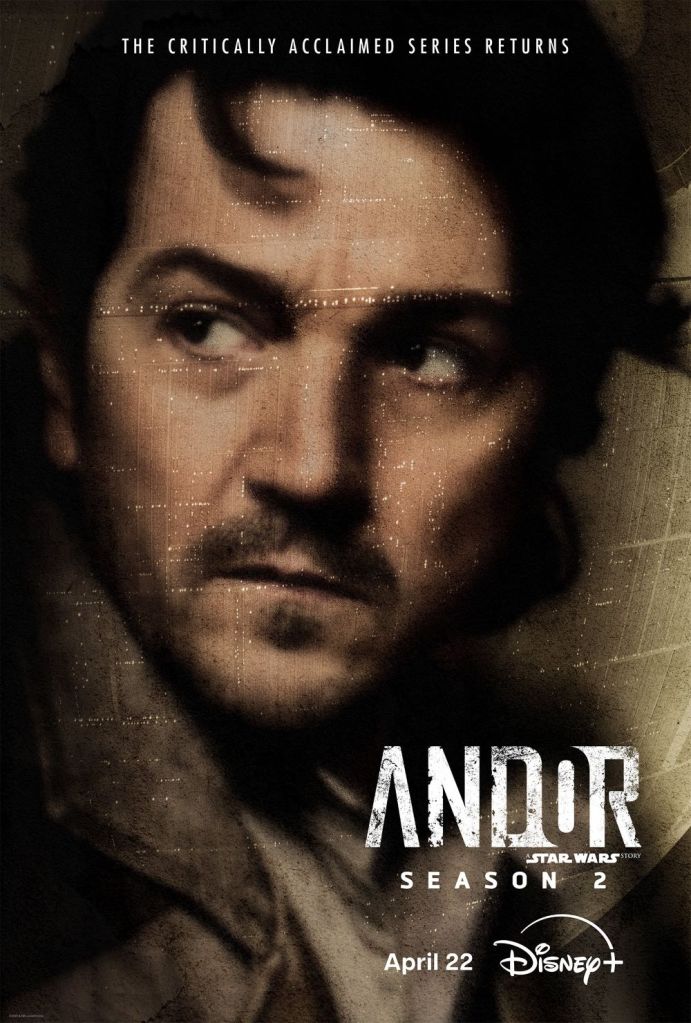
It’s going to be almost three years since the first season premiered and, even though the long wait could’ve been a detriment, the second season has been one of the most-anticipated by Star Wars fans. Season 2 of Andor just got it’s first trailer it fetures a very non-Star Wars’y kind of music but very appropriate considering what the season will be about.

I, for one, never thought Steve Earle’s song of rebellion, “The Revolution Starts…” would be the clarion call to start the revolution.

Andor: Season 2 is set for an April 22, 2025 release.

Scenes I Love: Mr Inbetween


There’s something to say about an individual who follows a code of behavior and has a moral compass that may seem archaic for today’s sensibilities, but when one really thinks about it…well, they’re not wrong.

We may hate that such people may be correct in their way of thinking and that it may offend certain sensibilities but that doesn’t necessarily means its wrong.

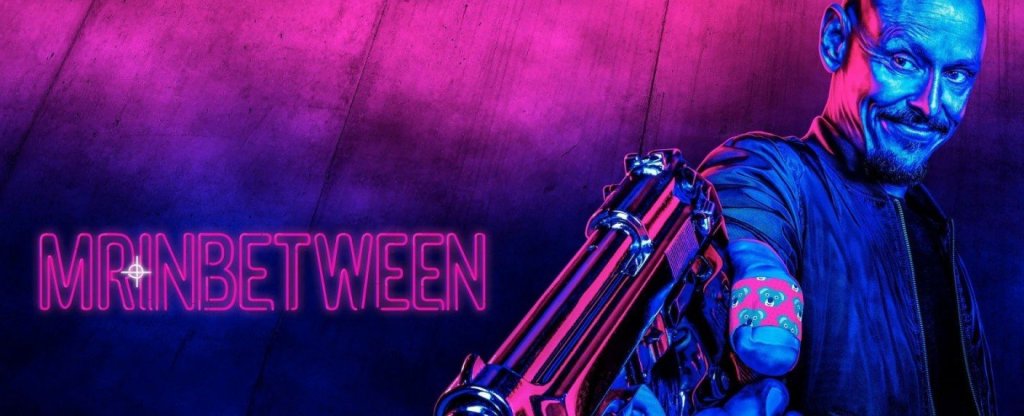
And on that note let me introduce you to Ray Shoesmith aka Mr Inbetween. This scene of him attending an anger management class best describes not just who Ray is but sets the tone for what this series is all about.

Retro Television Review: Homicide: Life on the Street 1.1 “Gone For Goode”


Welcome to Retro Television Reviews, a feature where we review some of our favorite and least favorite shows of the past!  On Sundays, I will be reviewing Homicide: Life On The Street, which aired from 1993 to 1999, on NBC!  It  can be viewed on Peacock.

Today, I take a look at the pilot for a show that has been called one of the best of all time.

Episode 1.1 “Gone For Goode”

(Directed by Barry Levinson, originally aired on January 31st, 1993)

The opening credits for the first episode of Homicide: Life on the Street immediately announce that the show is not going to be a typical network cop show.  The music starts out as moody and low-key before eventually being dominated by a pulsating beat.  The images of dirty streets and crumbling rowhouses and of a dog running around behind a fence are all in black-and-white.  The faces of the cast appear, the majority of them in harsh close-up.  When viewed today, most of the faces are familiar.  Daniel Baldwin, Ned Beatty, Andre Braugher, Clark Johnson, Yaphet Kotto, Melissa Leo, Jon Polito, and Kyle Secor all flash by and the thing that the viewer will immediately notice is that it’s almost as if they’ve been filmed to remove any hint of glamour or attractiveness.  (Out of that impressive cast, only Baldwin, Johnson, Leo, and Secor are still with us.)

Gone for Goode tells several stories, introducing the detectives as they investigate various murders in Baltimore.  Meldrick Lewis (Clark Johnson) and Steve Crosetti (Jon Polito) are first seen searching for a bullet in a dark alleyway and arguing in only the way that two people who have worked with each other for a long time can argue.  Lewis continually refers to Crosetti as a “salami-head,” and Crosetti, who claims that he’s being kept up at night by his doubts about whether or not John Wilkes Booth was actually Lincoln’s assassin, repeatedly says that Lewis will regret that.  Later, Crosetti writes a complaint about the ethnic insults that he’s been forced to listen to but apparently, he never actually sends it.

When not arguing with each other, Crosetti and Lewis investigate “Aunt Calpurnia,” who has buried five husbands and whose niece has nearly been murdered three times.  Aunt Calpurnia has life insurance policies out on everyone.  While digging up Calpurnia’s former husband, Lewis comments that the body in the grave doesn’t look as large as the man in the picture that he’s been given.  The cemetery’s caretaker replies, “Nobody stays fat down there.”  Technically, that’s true but it also turns out that the wrong man was buried in the grave and the caretaker has no idea where anyone is actually buried.

Detective Felton (Daniel Baldwin) and Detective Howard (Melissa Leo) investigate the murder of a man who was found decaying in a basement.  Howard is the primary detective on the case because Felton, being a screw-up, has too many unsolved cases under his name on the dry-erase board that dominates the squad room.  Howard currently has a streak of solved homicides and that continues for her when the murderer just happens to call the crime scene and then agrees to come in for a talk.

Detective Stanley Bolander (Ned Beatty) guilts Detective John Munch (Richard Belzer, who would play the same character years later on Law & Order: SVU) into investigating a hit-and-run that happened months ago.  Munch, who earlier tells a suspect that he is not Montel Williams (“So don’t like to me like I’m Montel Williams”) and leaves both Bolander and the suspect confused as to who Montel Williams is, eventually discovers that the murder was committed by a brain-dread idiot who can only repeat, “I was drinking,” when he’s confronted with his guilt.

Finally, Lt. Al Giardello (Yaphet Kotto) assigns Felton to work with Frank Pembleton (Andre Braugher), a brilliant but arrogant detective who insists on working alone.  Pembleton and Felton’s partnership begins with Pembleton spending an hour in the station’s garage, searching for his squad car because Pembleton forgot to write down the parking space on the back of his keys.  (Of course the garage is full of identical white cars.)  When Felton says suggests just going upstairs and getting a new set of keys, Pembleton shouts that the next car he tries to unlock could be the right car.

Needless to say, the Pembleton/Felton partnership does not last and Pembleton instead ends up working with an eager newcomer to the squad, Tim Bayliss (Kyle Secor).  They two of them work surprisingly well together until Bayliss objects to Pembleton “fooling” a suspect into waving his right to an attorney.

As the episode comes to a close, Bayliss answers his first call in the squad room.  At the crime scene, in the middle of a torrential storm, he discovers the body of a small girl.

I have to say that the idea of trying to review Homicide: Life on The Street is a bit intimidating, just because the show has got an almost legendary reputation.  It’s often described as being the best cop show of the 90s, as well as being held up as a perfect example of a show that was too good to last.  It was never a hit in the ratings and came close to being canceled several times.  Because it was filmed in Baltimore, it was viewed as being an outsider amongst the New York and Hollywood-produced shows that dominated the airwaves.  Executive produced by Barry Levinson (who also directed Gone for Goode) and based on a non-fiction book by David Simon, Homicide is the show that is often cited as the precursor for The Wire, another show that was loved by the critics but not by its network or the Emmy voters.

The pilot is intriguing, largely because it seems determined to scare off its audience.  Unlike other television  detectives, who are inevitably portrayed as being crusaders who are obsessed with justice, the detectives in Homicide are a blue collar bunch who, for the most part, are just doing their job.  Sure, someone like Frank Pembleton might be brilliant.  And Stanley Bolander might truly mean it when he tells Munch that “we speak for the dead.”  And Bayliss does seem to be very enthusiastic about being a “thinking” policeman.  But the show suggests that most detectives are like Felton, Lewis, and Much.  They’re not particularly brilliant and their approach to the job can sometimes seem callous.  But occasionally, they get lucky and a murder is solved.  Indeed, if there is any real message to the pilot, it’s that criminals are stupid.  They get caught not because of brilliant police work but because they do stupid things, like calling the crime scene or failing to ditch the car that they sole.

That said, the pilot also does what a pilot is supposed to do.  It introduces the characters and gives them just enough space to make an impression, along with also leaving enough room for them to grow.  The characters may not all be instantly likeable but, fortunately, the strong cast holds your interest.  The pilot is very much a product of the 90s, with Munch ranting about Montel Williams and Crosetti mentioning Madonna at one point.  But, at the same time, it still feels relevant today.  Pop culture might change but murder remains the same.

Trailer: The Punisher – Season 2


the punisher

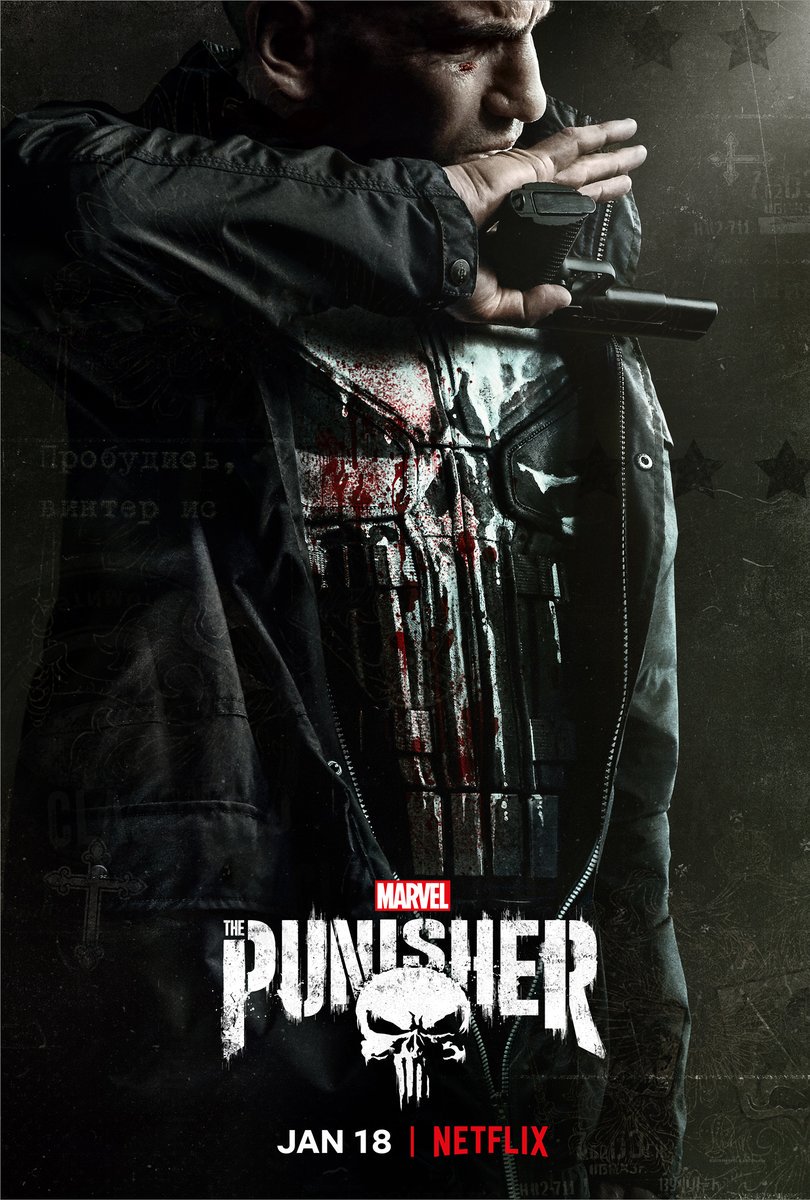
The first season of The Punisher on Netflix ended up being better than what had been advertised. The series and it’s ultraviolent tone became a divisive factor in how the show was scene.

Some saw it as the true adaptation of the titular character and his anti-hero status within the Marvel Cinematic Universe. Others saw it as poor taste considering the rash of mass shootings and gun violence that’s plagued the country the last couple of years.

There was no disagreement in that Jon Bernthal owned and seemed born to play the role of vengeance-fueled and grief-stricken Marine veteran Frank Castle. His portrayal not just of Frank Castle but his vigilante alter-ego, The Punisher, was like watching a force of nature on screen.

It was a no-brainer that a second season of the series would be set into production and Netflix didn’t hesitate. It’s a bit bittersweet knowing that no matter how good season 2 turns out there’s a high probability that this will be the final season of The Punisher on Netflix as every Netflix-produced Marvel show has been cancelled the past year with only the upcoming seasons of The Punisher and Jessica Jones left.

Season 2 is set of a January 18, 2019 release date on Netflix worldwide.

TV Series Review: Ghoul


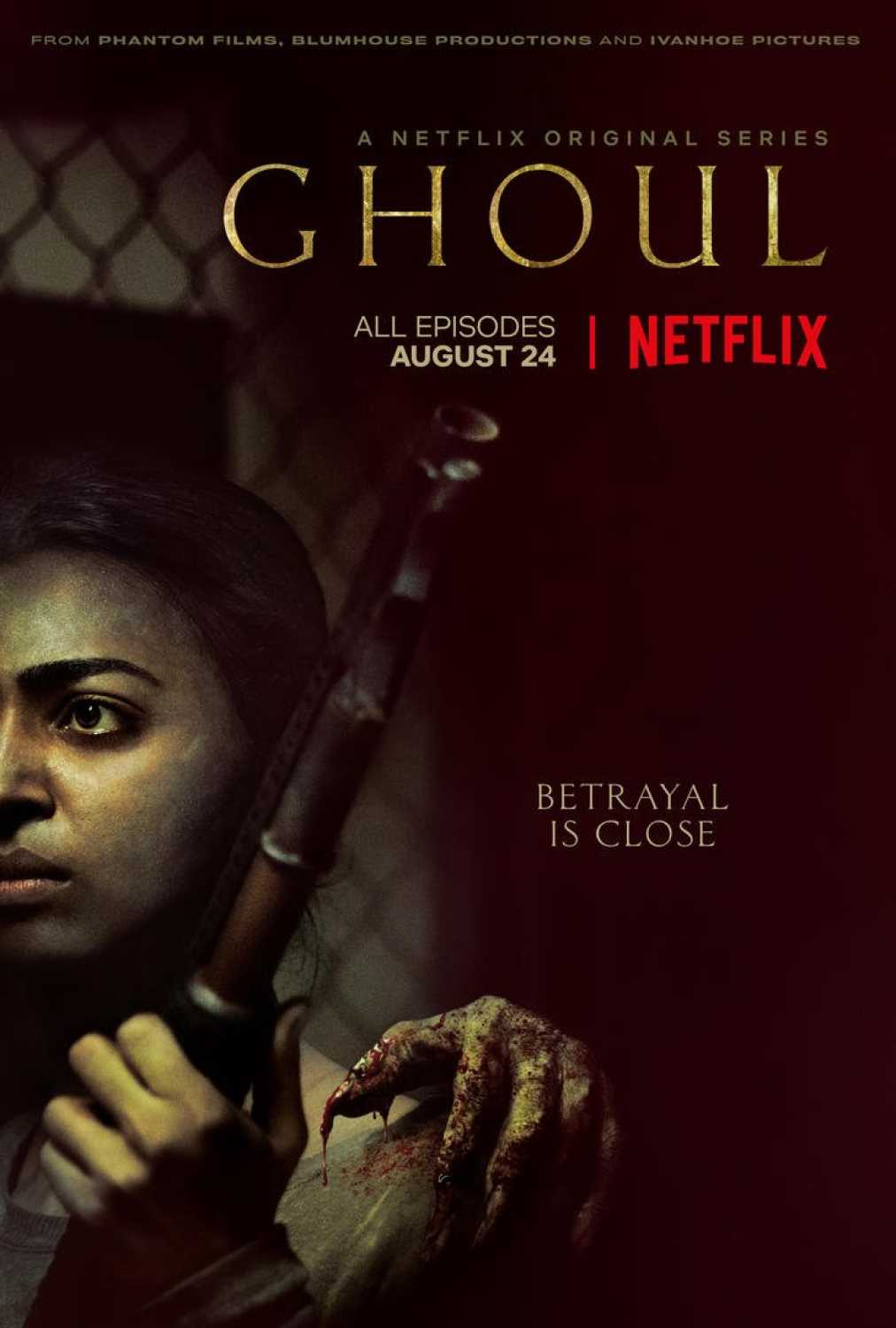
poster

Cast:

  • Radhika Apte as Nida Rahim
  • Manav Kaul as Colonel Sunil Dacunha
  • S. M. Zaheer as Shahnawaz Rahim
  • Ratnabali Bhattacharjee as Lieutenant Laxmi Das
  • Mahesh Balraj as Ali Saeed
  • Mallhar Goenka as Babloo
  • Rohit Pathak as Captain Lamba
  • Robin Das as Maulvi (Muslim Cleric)

Plot:

Based in the Arabic folklore of the ghoul, a monster who can eat the flesh of another and take on its likeness. Set in a dystopian future where everything taught against the ruling class is punishable by any means necessary, Nida’s (Apte) father (Zaheer) is captured for just those crimes. Sentenced to a prison where the only possible outcome is death. Years later, Nida, after being recruited by a special force, is sent as a new recruit to that same prison as a guard and interrogator, only to find it has much darker secrets.


250px-Ghoul_-_2018_Poster

Quotes:

“Strike the deal with your blood….. and out of the smokeless fire…. The Ghul will come….”

“The near future. The country has changed. Sectarian violence has reached crisis point. Secret detention centers are established. A military clampdown is in effect.”

“You will not know its presence…. As it takes to your group…. Awake or asleep, The nightmares will begin…”

“Finish the task… Reveal their guilt… Eat their flesh…”

Review:

This, honestly, was one of the most intense, terrifying and horrific TV series I have ever watched. It seriously is not for the faint of heart. However, it also is one of the best written, acted and directed horror series I have seen in a long time. If you get a bit squeamish at intense horror, this might not be the series for you, but if you do love to be scared and on the edge of your seat for two and a half hours, this is the one for you.

Trailer:

Where can you watch?

The three part terrifying series is streaming on Netflix now.


Review: The Girlfriend Experience


The Girlfriend Experience

In 2009, Steven Soderbergh released a little independent film called The Girlfriend Experience starring, who at that time, was one of the adult industry’s biggest stars in Sasha Grey. The film explored and dealt with the life of a high-class escort by the name of Chelsea as she navigated the world of powerful men and the effect of money in monetizing something as intimate and personal as being someone’s girlfriend. It wasn’t a film that had many supporters. Most saw the inexperience of Sasha Grey as a dramatic actress hamstringing what was an interesting look at the dual themes of sex and capitalism.

It’s now 2016 and the premium cable channel Starz has released a new dramatic series inspired by the very same Soderbergh film mentioned above, but not beholden to it’s characters and storyline. Where Sasha Grey’s character of Chelsea seemed more like an on-screen cipher the audience was suppose to imprint whatever their expectations onto, this series has a more traditional narrative of a young woman whose attempt to balance in her life a burgeoning career in law (she’s just earned an internship at a prestigious Chicago law firm) with her discovery of her inherent sexuality while dipping her toes into the high-end sex-workers trade of the so-called “girlfriend experience.”

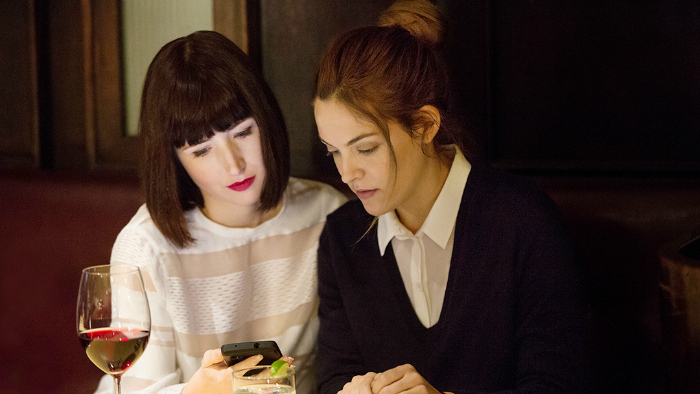
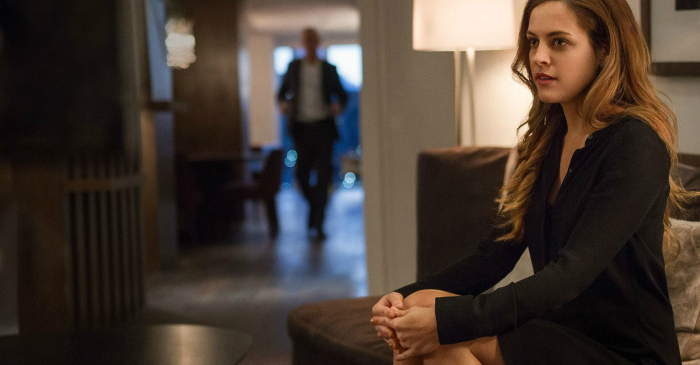
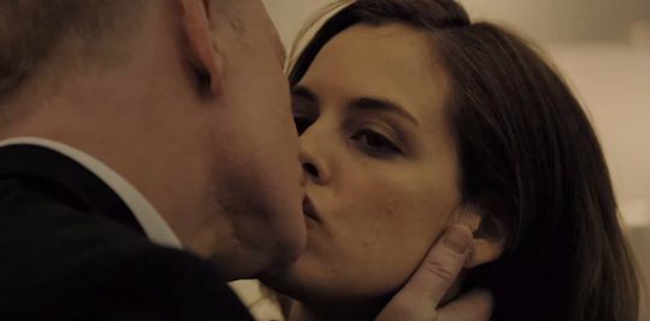
Riley Keough (last seen as the Citadel wife Capable who both romanced and mothers Nicholas Hoult’s War Boy Nux) plays Christine Reade as a struggling law firm intern who has worked hard to get where she’s at and continues to do so both as an intern and as a continuing law student. Yet, she also has the same problems many young people the past couple decades have had when it comes to earning their degrees. Debt has become a major issue and finding ways to make ends meet while still holding onto their dream profession becomes more and more difficult. Christine, at the encouragement of a close friend (played by Kate Lyn Sheil), tries her hand at becoming a high-price escort.

Girlfriend Experience 01

Just like the film it’s loosely based on, the series tries in the beginning to paint the high-priced escort profession that Christine gets herself into as very glamorous. Christine’s clients are white men who are older, rich and powerful. Men whose own interpersonal relationships with those close to them have been left behind in their quest for power. They see in Christine a sort of commodity to help fill in a need missing in their life even if false and just a transactional role-play experience.

Showrunners Amy Seimetz (who plays Christine’s sister Annabel) and Lodge Kerrigan (independent filmmakers and writers of renown) have created a show that explores not just the dual nature of how sex has become just another commodity in a world that’s becoming more and more capitalistic, but also a show that explores the nature of a professional woman in a world where they’re told that in order to fit in with the “men” they must suppress their sexual side. It’s a series that doesn’t hold back it’s punches in showing how the patriarchal nature of the professional world (it could be law, business, Hollywood, etc.) makes it difficult for women like Christine to try and be a successful professional and still retain their sexual nature. It’s a world up-ended and shown it’s cruel and ugly nature by Christine with every new client she meets and entertains.

The show and it’s writers (both of whom took turns directing each of the 13-episodes of the first season) don’t pass any sort of judgement on Christine’s choice of working as a high-paid escort. This series doesn’t look at these sex-workers as beneath what normal society expects of it’s women, both young and old. They instead want to explore the why’s of their decision to enter into such a career even if it means hampering their initial chosen profession. They’ve come up with some intriguing ideas of this world of escorts and powerful men walking through their lives always pretending to be one thing then another. A world where half-lies and made up personas have say much about the true natures of each individual as it does of the world around them.

Girlfriend Experience 02

Christine enters this world of becoming a “girlfriend experience” as a rebellious, adventurous lark, but finds out that her keen, observant and adaptable mind which has served her well in her rise as a law student and intern also serves her well in her new side-career. While her friend Avery who first introduces her to the world sees it all as a rush and exhilarating experience to be done here and there, Christine finds herself drawn deeper into the world as she goes from being represented to finally going off on her own as a freelancer. She’s her own boss and she controls what goes on with this new life.

Yet, The Girlfriend Experience is not all about the glass and steel, cold and calculating glamour of Christine’s new world. Just as she’s reached the heights of her new found power over the very system which tells her what she can and cannot be, outside forces that she thought was in her control brings her back to the reality of her choices throughout the first half of the series. For all the money, power and control she has achieved her old world as a law student and intern begins to fall apart as it intersects with her new one. It’s to the writers credit that they don’t give Christine any easy outs, but do allow her character to decide for herself how to get through both her professional and personal crisis.

While both showrunners Seimetz and Kerrigan have much to do with the brilliance of The Girlfriend Experience it all still hinges on the performance of it’s lead in Riley Keough. She’s practically in every scene and she grows as a performer right before out eyes. From the moment we see her we’re instantly drawn to her character. Hair up in an innocent ponytail and dressed very conservatively as she starts her internship, we still sense more to her character and we’re rewarded with each new episode as Keough’s performance with not just her acting both verbal and silent. Whether it’s the subtle changes in her expression as she transitions from an attentive “girlfriend”, supportive “confidant” and then to a calculating and all-business “escort” and all in a span of a brief scene.

Girlfriend Experience 03

Even the scenes where some audience may find titillating (even for premium cable like Starz, the sex in The Girlfriend Experience are quite eye-opening without being exploitative.), Keough manages to convey her true feelings with her eyes, while her body language convinces her latest client that it’s all real. She’s able to slip into whatever fantasy her client pays for and, in the end, whatever fantasy she wants to insert herself into in order to escape the terrible reality which has hardened and prepared her for the “real world” that all young people in college aspire to join.

The Girlfriend Experience might have been born out of an cinematic experiment by the icon of independent filmmaking, but it more than stands on it’s own take on ideas and themes (while adding and introducing some of their own) that Soderbergh tried to explore. With Sasha Grey’s performance as Chelsea proving to be a divisive reason whether Soderbergh’s film was a success or a failure, with Seimetz and Kerrigan they found in Riley Keough’s performance as Christine Reade a protagonist that engenders not just sympathy but at times frustration. Her Christine Reade doesn’t conform to what society thinks women should be when out and about in public and, for some men, when in private, as well.

The same could be said about this series as it doesn’t fit into any particular narrative and thematic box that we as a viewer have become trained to. It’s both a series exploring the existential idea of sexual identity and the commodifying power that capitalism has had on things intimate and personal. It’s also a series about a young woman’s journey of self-discovery that doesn’t just highlight the high’s but also shows how precipitous the fall can and will be when the traditionalists object. The show also performs well as a thriller due to the exceptional score composed by another brilliant indie-filmmaker. You may know him under the name of Shane Carruth.

The Girlfriend Experience doesn’t have the pulp sensibilities of such shows as The Walking Dead or the rabid following of Game of Thrones, but as of 2016 it’s probably the best new show of the year and here’s to hoping that more people discover it’s brilliance before it goes away.

The Preacher Is About To Begin Mass


Preacher

Preacher the comic book that came out in 1995 and became the title that everyone gravitated to to balance out all the superhero titles that were coming out from Marvel, DC, Image and every small publisher in-between. The book was written by Garth Ennis and drawn by Steve Dillon. It was the book that took on the institutions of the Church, government and family in the most irreverent and blasphemous way one could think of at the time.

The book had been talked of within Hollywood since it’s release as one title that producers (seems all of them at one time or another) wanted to adapt for the big-screen. It wasn’t a superhero title so there was no need to worry about trying to adapt tights-wearing heroes and villains. Yet, the book’s subject matter which tended to go into the extreme at times became something that kept the title from being adapted.

After almost two decades of futile attempts to get Preacher up onto the big-screen it took the star-power of one big-screen star (Seth Rogen) to finally get the book adapted, but not on the big-screen, but on the small-screen to become part of AMC’s stable of unique series titles (The Walking Dead, Better Call Saul, Into the Badlands).

So, fans of the books only have until 2016 to wait for their dreams of Preacher finally coming to live-action life and non-readers will finally see what all the hype has been all about.

Horror Review: Fear the Walking Dead S1E04-05 “Not Fade Away” & “Cobalt”


FearTWDS01E04-05

“Sometimes all we can do is not enough.” — Dr. Bethany Exner

[some spoilers]

Fear the Walking Dead has been a mystery to some audiences and critics. If there was something the original series was criticized on it was that it’s writing throughout it’s current run has been uneven. There would be some great episodes and some good ones, but then some go nowhere episodes that stops any sort of momentum a particular season was having. The Walking Dead deserved some of the criticism leveled at it’s writing and how some of it’s characters appeared one-note for too long. Things began to improve once Scott M. Gimple took over a showrunner beginning with season 4. yet, some of the damage had been done by a very uneven first three season.

One thing The Walking Dead was never lacking was it’s creativity when it came to the zombies and the violence around them. Greg Nicotero and his KNB EFX crew never flinched from whatever hellish idea the writers were able to come up with. It’s probably one of the main reasons why the show has succeeded so much despite flaws in the writing and characterization. People were willing to tolerate the soap opera-style character interactions if it meant the flesh-eating and the headshots came a-plenty.

The first half of Fear the Walking Dead didn’t have much of the zombie action. It was a bold decision by the writers to stay on the path that brought the early days of the zombie apocalypse to life. This was a show that didn’t already have zombies taking over and with civilization having fallen by the wayside. It was still a world where everyone went about their daily routines. Sure the first episode gave some hints that something was amiss, but not until the final minutes did we finally see our first zombie. Even after that initial reveal at the end of the pilot the writers kept the zombies more off-screen. When they did appear it was as one or two.

Episodes four and five, “Not Fade Away” and “Cobalt”, continued this trend of keeping the zombies at arm’s length and off-screen. We saw Travis and Madison’s neighborhood turned into a safe zone by the National Guard who had been deployed to help contain and combat the spreading infection. Some took the military’s arrival with optimism (Travis) while others saw their arrival as a sign that things were just going to get worse and that things might already be too late to save (Daniel).

These two episodes were some of the strongest in this shortened first season of Fear the Walking Dead. We got to learn more about every character, but mostly we learned just how differently each parent of the core group reacted to the growing situation. These were reactions that were as varied and complex as any we’ve seen in any of the characters in The Walking Dead.

Each parent tried to do what they thought was best for their immediate family. On one end of the moral spectrum we had Travis who tried to serve as a sort of de facto mayor of the walled-off neighborhood. Become the person that would be the one who dealt with the military liaison when it came to his family’s and, to an extent, the neighborhood’s well-being. So far, throughout the this short first season, Travis has come across as the sort of enlightened, civilized man who tries to reason and talk things out instead of acting out rashly and on instinct. This sort of personality is what we as a society want to keep the wheels of civilization moving along problem-free. But as we’ve seen this has also become a weakness as things progressively begin to get worst. Travis can’t seem to see that the rule of law and reason seem to be fighting a losing battle with the need to survive.

Yet, despite Travis’ coming off as some sort of pacifist we get a hint of logic to his seeming weak-willed madness. He sees the world crumbling around him and as a father and role model he has tried to be that moral center to his circle of family and friends. Even when what he’s seeing chips away at his belief that those in power will protect and save them, Travis tries to remain that strong, moral center.

The opposite seems to be true for the other father in our group, Daniel Salazar. This character has been quite the revelation in this series. We first meet him in episode 2. He comes across as a leery, but good man like any immigrant in the US looking to make a new life for his family. But with each new episode we learn a bit more of what makes Daniel tick. He’s a father whose past history before coming to the US hints at chaos and bloodshed. He has seen how crisis could spiral out of control in a blink of the eye and he sees that now with the arrival of the military. He doesn’t trust too many outside his wife and daughter and when he does, as the case with Madison, he does so begrudgingly. He’s adaptable to the ever-changing situation the way Travis is not. He’s willing to resort to immediate action to solve a problem or to find a solution. There’s a darkness in him that’s the current situation has awoken once more and it terrifies him, but he allows it to emerge nonetheless in order to keep his family safe.

Throughout these two episodes we see the recurring theme of authority in its many forms (parental, civilian and military) trying to do their best to keep the situation from spiraling out of control, but they despite all their efforts they fail due to that basic flaw that humanity can’t seem to shred and that’s the inability to work together at the most dire situation to solve the problem.

Both Travis and Daniel try to do the best they know how to navigate through and around the encroaching apocalypse. They succeed in some way, but in the end all their efforts still don’t amount to much as everything right from the start of the crisis has been stacked against them. All they could do now is try and save those closest to them.

The question now as we head into the season finale is whose path will ultimately be the best one to navigate in this apocalypse.

Will it be the Way of the Open Palm that we seem be getting from Travis?

A path of sticking to one’s moral center and principles. To try and keep oneself from sliding back into one’s darker impulses as we’ve seen signs of in these two episodes.

Or will it be the Way of the Closed Fist that Daniel seem to be following?

A mentality that requires quick thinking and direct action even if it means allowing one’s darker side to take hold in order to survive. It’s a path that looks to be well-suited for this apocalypse, but one that also brings with it a set of unknown dangers.

So, while the series has so far lacked in major zombie action and the gore quotient has been tame in comparison to The Walking Dead, it has one-upped it’s older sibling by allowing for it’s cast to grow as characters. Whether they all turn out for the better remains to be seen, but in the span of 5 episodes they’ve become full-fledged characters and now the finale will see who will remain steadfast and who will break.

Notes

  • “Not Fade Away” and “Cobalt” were directed by Kari Skogland. Meagan Oppenheimer has writing duties on the former with David Wiener being responsible for the latter.
  • It’s been nine days since the events of episode 3 and it looks like both the National Guardsmen and the neighborhood are fraying at the edges. It doesn’t help that the unit commander is a reservist who also happens to be an LAPD policeman on a power-trip.
  • Still no sign of Tobias. It looks like his own place might be located in the unsafe and unwalled “dead zones” the military have been doing sweeping patrols for the past nine days.
  • Sandrine Holt comes in as Dr. Bethany Exner. Not her first time in a zombie production. She was also in Resident Evil: Apocalypse as Raccoon City news reported Terri Morales.
  • Ruben Blades is turning out to be the MVP of the series, so far. I guess being a government torturer in his native El Salvador during it’s time of troubles is turning to be a good skillset in the coming zombie apocalypse.

Season 1

Horror Song of the Day: Penny Dreadful Theme (by Abel Korzeniowski)


penny-dreadful-logo-penny-dreadful-new-posters-and-a-new-character-trailer

It’s that time of the year. It’s October here in Through the Shattered Lens and that means one thing: horror-theme month.

October has become a sort of favorite month for us over here at Through the Shattered Lens. While other genres and topics will be posted and and get their time in the sun, this month always brings the site back to the shadows and things that made us fear the dark. Horror has been a common thing which drew Lisa and I to continue the site from it’s fledgling early months to going on almost 6 years.

I’d like to start my contribution to all-things horror by introducing those who haven’t experienced one of the best shows on TV which also has one of the most unique horror theme’s on either big or small screen.

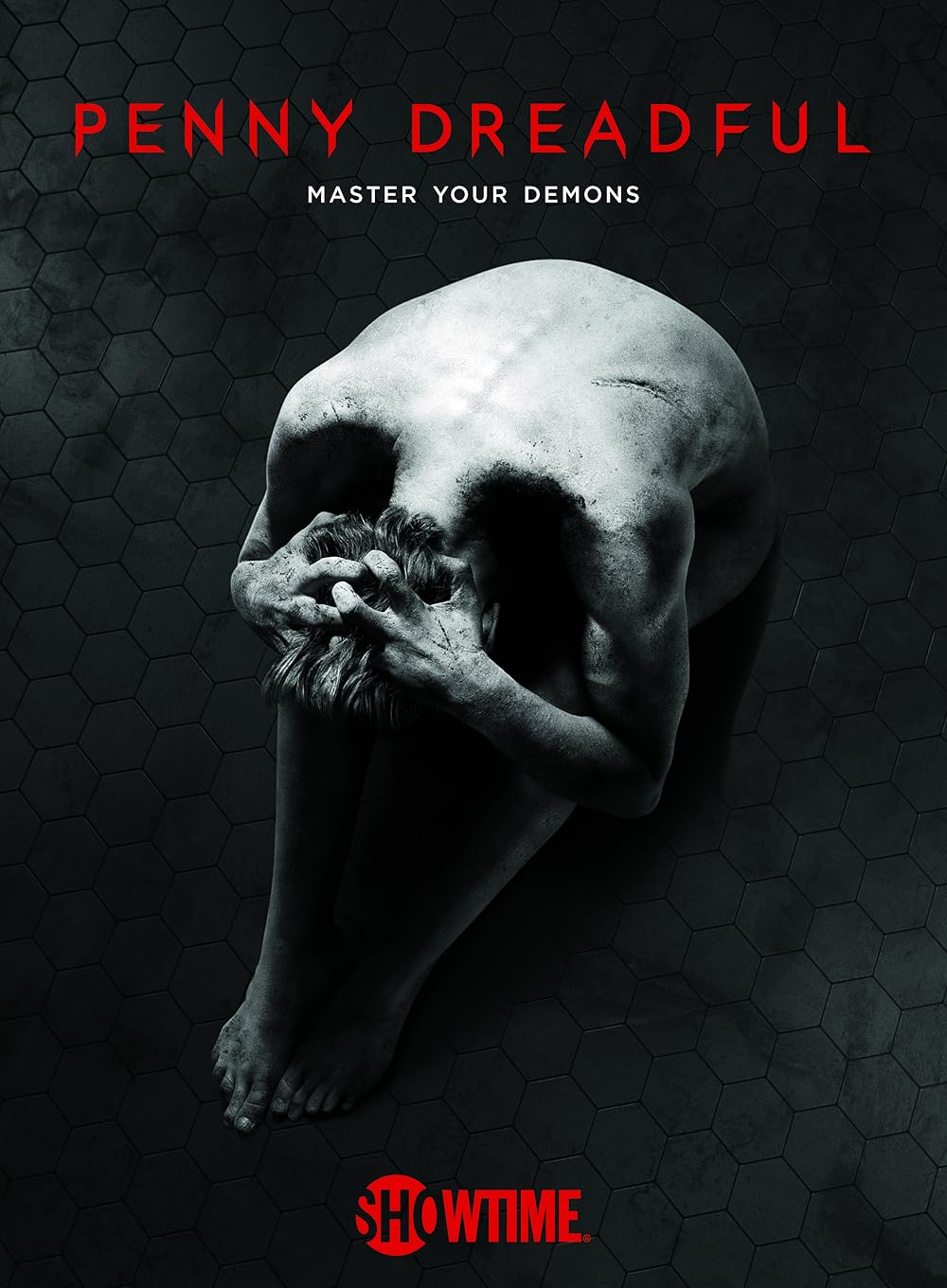
The theme for Showtime’s Penny Dreadful was composed by Abel Korzeniowski. It’s a theme that gives an audience of hint at the show’s Victorian Age gothic setting with just the right amount of dark romance and psychological themes the show has become famous for.

So, here’s the latest “Song of the Day” set for the witching hour.