Horror Film Review: Dracula (dir by Tod Browning)


dracula_movie_poster_style_f

It pains me to say it but, of all the classic Universal monster films, Dracula is probably my least favorite.

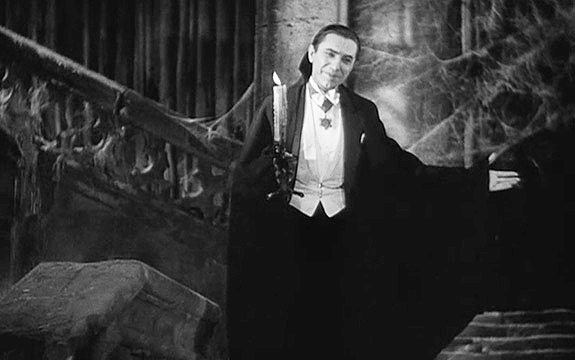
I hate to say that because I love vampires and I love the story of Dracula.  I have read the book several times, I’ve seen several productions of the stage play, and I’ve seen a countless number of  Dracula films.  (Christopher Lee’s version is my favorite.)  The 1931 version of Dracula — while hardly being the first vampire movie — was still a very important moment in the history of horror cinema.  Every vampire film that has come out since owes a debt of gratitude to Dracula.  Bela Lugosi’s performance set the standard against which almost all vampires are judged.

I always want to love Dracula but … no, the film just doesn’t work for me.

Of course, we all know the film’s story.  Dracula (Bela Lugosi) comes to England from Transylvania.  He turns Lucy (Frances Dade) into a vampire and attempts to do the same thing to Mina Seward (Helen Chandler).  Mina’s fiancée, John Harker (David Manners) and father, Dr. Seward (Herbert Bunston), attempt to stop him with the help of Prof. Van Helsing (Edward van Sloan).  Renfield (Dwight Frye) serves as Dracula’s servant and eats bugs.  Dracula tells us that he does not drink … wine.  He talks about the music of the night.  His eyes get wide at the sight of blood and he hides his face when confronted with a cross.

Of course, though Dracula may have first appeared in Bram Stoker’s novel, the film is actually an adaptation of a stage play that was based on the novel.  That’s the main problem with Dracula as a movie.  It’s a very stagey film, one that never seems to quite break free of its theatrical origins.  It’s a rather slow-moving film, one that is full of awkward scene transitions and moments of dead air.  One need only compare it to F.W. Murnau’s Nosferatu or Carl Theodor Dreyer’s Vampyr to see just how visually bland Dracula really is.

Dracula‘s blandness is especially surprising when you consider that the direction is credited to Tod Browning.  Browning directed some of the best horror films of the silent era and, after the release of Dracula, he went on to direct the brilliant Freaks.  Dracula doesn’t feel like a Browning film but perhaps that’s because it actually wasn’t.  Reportedly, Tod Browning was struggling with depression during the filming of Dracula and was rarely on set.  Instead, most of the film’s direction was handled by cinematographer Karl Freund.  Freund had never directed a film before (though he would later acquit himself quite well with The Mummy) and Dracula‘s flaws were largely a result of that inexperience.

Well, that may be true or it may not.  Here’s what we can say for sure: Bela Lugosi’s work as Dracula holds up surprisingly well.  When seen today, it can be difficult to fairly judge Lugosi’s performance.  We’ve seen so many parodies and bad imitations that it’s difficult to imagine the impact that it may have had on audiences in 1931.  Lugosi was recreating his stage performance and it’s a very theatrical performance but, at the same time, Dracula is a character that doesn’t demand or require subtlety.  There’s a power to Lugosi’s performance.  Maybe it’s the piercing stare or the unbridled blood lust that seems to be reflected in his eyes.  Maybe it’s the accent.  Maybe it’s the haughty and arrogant way that he carries himself.  Whatever it is, it works.

No, Dracula does not hold up as well as you might hope.  But Bela Lugosi’s performance remains a classic.

4 Shots From Horror History: Dracula, Frankenstein, Vampyr, White Zombie


This October, I’m going to be doing something a little bit different with my contribution to 4 Shots From 4 Films.  I’m going to be taking a little chronological tour of the history of horror cinema, moving from decade to decade.

Today, we take a look at the start of the 1930s.

4 Shots From 4 Films

Dracula (1931, dir by Tod Browning)

Dracula (1931, dir by Tod Browning)

Frankenstein (1931, dir by James Whale)

Frankenstein (1931, dir by James Whale)

Vampyr (1932, dir Carl Theodor Dryer)

Vampyr (1932, dir Carl Theodor Dryer)

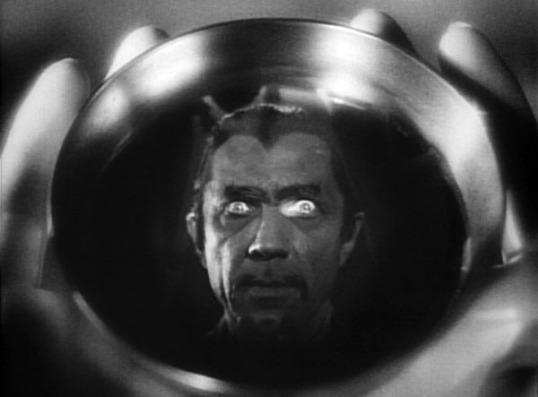
White Zombie (1932, dir by Victor Halperin)

White Zombie (1932, dir by Victor Halperin)

4 Shots From Horror History: The Phantom of the Opera, Faust, London After Midnight, The Fall of the House of Usher


This October, I’m going to be doing something a little bit different with my contribution to 4 Shots From 4 Films.  I’m going to be taking a little chronological tour of the history of horror cinema, moving from decade to decade.

Today, we take a look at the latter half of the 1920s.

4 Shots From 4 Films

The Phantom of the Opera (1925, dir by Rupert Julian)

The Phantom of the Opera (1925, dir by Rupert Julian)

Faust (1926, dir by F.W. Murnau)

Faust (1926, dir by F.W. Murnau)

London After Midnight (1927, dir by Tod Browning)

London After Midnight (1927, dir by Tod Browning)

The Fall of the House of Usher (1928, dir by Jean Epstein)

The Fall of the House of Usher (1928, dir by Jean Epstein)

Cleaning Out the DVR Pt 6: All-Star Horror Edition!


gary loggins's avatarcracked rear viewer

allstar1

As many of you Dear Readers know by now, classic horror has always been my favorite genre. From the Universal Monsters to Bug-Eyed Aliens to Freddie Krueger and friends (fiends?), a good scary movie is a good time! Even a bad scary movie can be fun, if I’m in the right mood. So here are six (count ’em), yes six horror films I’ve recently watched, with some great horror actors and directors at their best (and worst!):

allstar2

MIRACLES FOR SALE

(MGM 1939, D: Tod Browning)

The first great horror director, Browning teamed with Lon Chaney Sr. in the silent era to shock audiences with films like LONDON AFTER MIDNIGHT and THE UNHOLY THREE. He kicked off the Golden Age of Sound Horror with DRACULA, followed by the controversial FREAKS. MIRACLES FOR SALE was his last film, and while it’s more of a locked-room mystery, it’s loaded with those bizarre Browning…

View original post 760 more words

4 Shots From 4 Films: Dracula, Island of Lost Souls, The Black Cat, Son of Frankenstein


Bela Lugosi was born 133 years ago today.  These 4 shots from 4 films are dedicated to him.

4 Shots From 4 Films

Dracula (1931, directed by Tod Browning)

Dracula (1931, directed by Tod Browning)

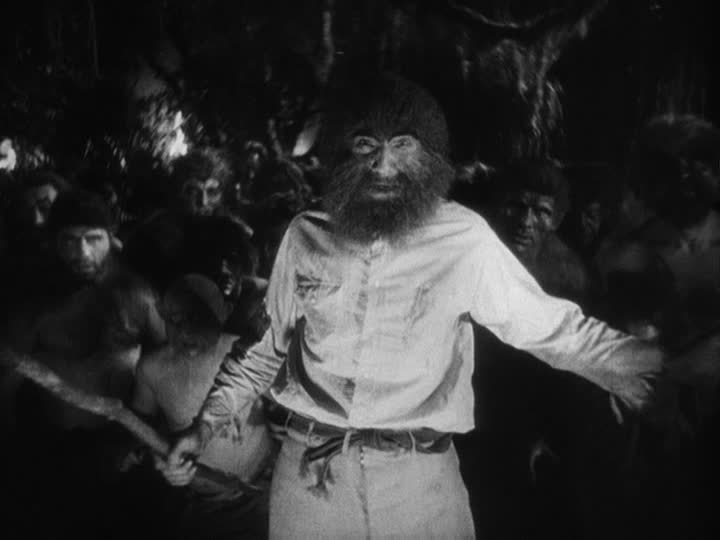
Island of Lost Souls (1932, directed by Erle C. Kenton)

Island of Lost Souls (1932, directed by Erle C. Kenton)

The Black Cat (1934, directed by Edgar G. Ulmer)

The Black Cat (1934, directed by Edgar G. Ulmer)

Son of Frankenstein (1939, directed by Rowland V. Lee)

Son of Frankenstein (1939, directed by Rowland V. Lee)

4 Shots From 4 Films: Frankenstein, Dracula, The Mummy, White Zombie


4 Shots From 4 Films is just what it says it is, 4 shots from 4 of our favorite films.  As opposed to the reviews and recaps that we usually post, 4 Shots From 4 Films is all about letting the visuals do the talking.

4 Shots From 4 Films

Frankenstein (1931, directed by James Whale)

Frankenstein (1931, directed by James Whale)

Dracula (1931, directed by Tod Browning)

Dracula (1931, directed by Tod Browning)

The Mummy (1932, directed by Karl Freund)

The Mummy (1932, directed by Karl Freund)

White Zombie (1932, directed by Vincent Halperin)

White Zombie (1932, directed by Victor Halperin)

The Seventh Annual Academy Awards: 1920


Over on Through the Shattered Lens Presents the Oscars, we are reimagining Oscar history, one year at a time. Today, we take a look at 1920. Prohibition goes into effect, women finally get the right to vote, Harding is elected President, D.W. Griffith finally gets some recognition, and Fatty Arbuckle is the most popular man in Hollywood!

Lisa Marie Bowman's avatarThrough the Shattered Lens Presents The Oscars

William S. Hart, the Third President of AMPAS William S. Hart, the Third President of AMPAS

1920 was a year of many changes.

On January 16th, the 18th Amendment went into effect and prohibition became the law of the land.  Suddenly, it was illegal to transport and sell alcohol in the United States.  As social reformers rejoiced, the government grew and ordinary citizens started to hoard whatever liquor they had.  (Selling alcohol was illegal but drinking it was not.)  Perhaps the people happiest about prohibition were the gangsters who now had a totally new market to exploit.

On August 26th, the 19th amendment to the U.S. Constitution passed and, finally, all women were granted the right to vote.  And it came not a minute too late because it was time for the United States to elect a new president.  Weary after the nonstop drama of  8 years of Woodrow Wilson, the American electorate turned to Warren…

View original post 1,342 more words