Welcome to Retro Television Reviews, a feature where we review some of our favorite and least favorite shows of the past! On Fridays, I will be reviewing St. Elsewhere, a medical show which ran on NBC from 1982 to 1988. The show can be found on Hulu!
This week, Peter White continues to disappoint everyone.
Episode 1.6 “Legionnaires: Part One”
(Dir by Thomas Carter, originally aired on December 7th, 1982)
Dr. Peter White (Terence Knox) is perhaps the most incompetent doctor at St. Eligius. Over the course of the first few episodes, we have watched as he’s taken advantage of his fellow residents, been rude to patients, misdiagnosed obvious medical conditions, and complained nonstop about how difficult his life is. Dr. White is struggling to balance the punishing schedule of being a resident with also being a husband and the father to a young girl and a newborn. He’s in over his head.
What’s interesting is that, despite all of his problems, he’s not a particularly sympathetic character and I don’t think he’s meant to be. He’s never going to be a good doctor and he doesn’t have the courage to admit it. Instead of finding a career for which he’s suited, he insists on being a doctor and risking the life of anyone unlucky enough to be his patient. What makes Dr. White an especially disturbing character is that there are probably a lot of doctors in the real world who are just like him. They’re overwhelmed and they make stupid mistakes. I get overwhelmed sometimes too, as does everyone. And, like everyone, I occasionally make mistakes. However, my mistakes usually amount to something like missing a cringey typo that causes me to feel embarrassment until I get a chance to fix it. A doctor’s mistake can lead to people dying.
This week, Dr. White attempts to give penicillin to a patient who is allergic. Fortunately, Dr. Westphall is able to stop White from putting his patient into a coma. Dr. White also manages to lose his hospital-issued pager and, when he’s told that it will cost him $300 to get a new one, he freaks out. A chance meeting with a lawyer in the hospital cafeteria leads White to offer to sell out the hospital by recommending the lawyer to anyone willing to sue because they ended up with a doctor like Peter White. White finally raises the money by donating his sperm. The nurse at the sperm bank says that it’s really generous for a doctor to donate. Not this doctor!
While Peter is screwing up his life, Dr. Westphall is dealing with what appears to be an outbreak of Legionnaire’s Disease in one of the wards. Westphall wants to immediately shut down the ward. Dr. Auschlander and board member H.J. Cummings (Christopher Guest — yes, that Christopher Guest) disagree. However, after another young woman dies of what appears to be Legionnaire’s, Westphall orders the ward to be closed and the patients to be relocated.
Meanwhile, Kathy Martin broke up with Fiscus because she felt their fling was turning into a relationship and Dr. Cavanero dealt with a nurse who disliked her. Neither one of those subplots did much for me, though Kathy is emerging as one of my favorite characters on this show. Before breaking up with Fiscus, she goes to a funeral of a stranger just so he won’t be buried without someone there to mourn him. She wears white to the funeral. One doctor comments that she’s never seen Kathy wear white before. Kathy’s a great character and deserves better than just being Fiscus’s girlfriend.
This episode was an improvement over the last episode I watched. According to the title, it’s also only “Part One” so I imagine there will be some fallout over closing that ward next week. We’ll see what happens.
Welcome to Retro Television Reviews, a feature where we review some of our favorite and least favorite shows of the past! On Fridays, I will be reviewing St. Elsewhere, a medical show which ran on NBC from 1982 to 1988. The show can be found on Hulu!
This week’s episode of St. Elsewhere featured Dr. Craig winning an award. Good for him!
Episode 1.5 “Samuels and the Kid”
(Dir by Thomas Carter, originally aired on November 30th, 1982)
This week’s episode of St. Elsewhere was kind of boring, It wasn’t a bad episode because the show was well-acted and even the boring subplots felt as is they were part of a bigger whole but, especially when compared to last week’s episode, Samuels and the Kid just wasn’t as compelling.
The Kid of the title is Robbie Durant (Jeremy Licht), a young patient who needs to have some minor surgery done on his ankle. Dr. Samuels take a really intense interest in the kid, bonding with him and even offering him tickets to a Patriots football game. At first, it seems like Samuels is just trying to be nice to a kid who is in a scary situation. (When I was growing up, I spent a few nights in the hospital because of my asthma and it always scared me to death.) But, at the end of the episode, it is revealed that Samuels had a son who was Robbie’s age who died in a freak accident. As for Robbie, the operation is a success but he still dies as the result of an embolism. It was sad but, at the same time, I knew Robbie was going to die as soon as he showed up in the hospital. I’ve seen enough medical shows to know.
Dr. Cavanero was at a bed-and-breakfast when she learned that one of her patients had gone into labor and was at her apartment alone. Cavenro had to beg people for change so that she could use a pay phone to call the patient’s neighbors so that she could talk them through delivering the baby. Seen today, the most interesting thing about this storyline is that it takes place at a time when people had to carry around quarters so that they could call each other in case of an emergency. (There is a very dusty old payphone a few blocks away from my house. I assume it doesn’t work and I don’t think it’s been touched by human hands since the 90s — and I’m certainly not going to touch it! — but it’s always interesting to see it sitting there like some haunted beacon of the past.)
Dr. Fiscus continued to have sex with Kathy Martin. Good for them but I really don’t know that I need to spend a good deal of time listening to Howie Mandel talk about his sex life.
Dr. Chandler (Denzel Washington) accused a nurse of being incompetent. Nurse Rosenthal (Christina Pickles) got mad at him for yelling at the nurse in the hospital hallway. Dr. Westphall mediated and agreed to move the nurse to another floor. Denzel Washington is always fun when he’s yelling at people.
There was one very funny scene. Dr. Craig won an award for surgeon of the year and gave an extremely long, pompous, and rather bitter acceptance speech. (The award was a plaster cast of his own hands.) William Daniels played the scene perfectly and I have a feeling that Dr. Craig is going to end up becoming my favorite character. As a bonus, Daniels’s wife, Bonnie Bartlett, appeared as Craig’s wife. By the middle of Craig’s speech, even she had stoppled listening and lit a cigarette.
As I said, this was a little bit of a boring episode. Still, I look forward to the future of the show!
Speaking of the future, this is my last St. Elsewhere review of 2024. My next review of this show will post on January 3rd!
Welcome to Retro Television Reviews, a new feature where we review some of our favorite and least favorite shows of the past! On Fridays, I will be reviewing St. Elsewhere, a medical show which ran on NBC from 1982 to 1988. The show can be found on Hulu!
This week, William Daniels claims the show as his own.
Episode 1.2 “Bypass”
(Dir by Thomas Carter, originally aired on November 9th, 1982)
“Hey, it’s Tim Robbins!”
Yes, the future Oscar winner shows up in the second episode of St. Elsewhere, playing a rich kid-turned-terrorist named Andrew Reinhardt. Reinhardt, who no doubt learned all about Marxism during his first semester away at college, set off a bomb in a bank, killing two people and putting a woman named Kathleen McCallister into a coma. Both Reihnhardt and McCallister have been brought to St. Eligius. While Kathleen’s husband, Stephen (Jack Bannon), sobs in the hallway, Reinhardt acts like a petulant brat in his hospital room.
With the nurses refusing to change his sheets or even give him his morphine shots, it falls to Dr. Morrison to take care of him. Reinhardt is not at all appreciative and Morrison finds himself conflicted. How is he supposed to give proper medical treatment to someone who he despises? Morrison is so conflicted that he even goes to Dr. Westphall. Westphall responds by telling a long story about a time that he fell in love with a patient. I’m getting the feeling that Morrison feeling conflicted and Westphall telling long stories are both going to be regular features on this show.
(The correct answer to Morrison’s question about how he can take care of a bad person is as follows: It’s your job and you’re getting paid to do it.)
This episode also gave the viewer a chance to get to know Dr. Craig, the very talented but very egotistical head of surgery who is played by the great William Daniels. Dr. Craig holds a press conference to inform reporters about the conditions of both Reinhardt and Kathleen McCallister and declares that, despite its bad reputation, “St. Eligius is the place to be!” He then proceeds to get angry when the press is more interested in talking to the surgeon who actually saved Kathleen’s life than to him.
Dr. Craig browbeats a Mr. Broadwater (Robert Costanzo) into getting bypass surgery done. The surgery appears to have been a success but it’s hard to ignore that Craig essentially bullied the guy into getting a major operation, one that could have killed him if the least little thing had gone wrong. Resident Victor Ehrlich (Ed Begley, Jr.) assists in the operation and, at one point, Dr. Craig intentionally head butts him when Ehrlich cannot name all of the arteries leading into the heart. It’s a bit aggressive but, on the plus side, Ehrlich does learn all of the names. Afterwards, Dr. Craig brags about how his own son is following in his footsteps and tells Mr. Broadwater’s son that some day, a new Dr. Craig will operate on him. In other words, Dr. Craig is kind of a jerk but he’s good at what he does and he’s played by William Daniels so it’s hard to hold anything against him.
There were other subplots playing out in the background, the majority of which just seemed to be there to remind us that St. Elsewhere is an ensemble show and that, just because someone isn’t a major character in this episode, that doesn’t mean they won’t be important later on. Psychiatrist Hugh Beale (G.W. Bailey) attempted to learn how to swim and ended up taking a class with a bunch of children. Dr. Fiscus (Howie Mandel, the least convincing doctor ever) held court in the cafeteria and claimed that the hormones used in processing food were causing children to develop earlier than ever before. Dr. Peter White (Terrence Knox) wandered around with a bunch of X-rays and begged everyone he met to help him understand what he was (or wasn’t) seeing. If nothing else, this episode did a good job of capturing the idea of the hospital as being a place that’s always busy.
For the most part, though, it was Dr. Craig who carried this episode. While Morrison and Westphall ponderously considered the implications of doing their jobs, Craig was an arrogant, angry, and brilliant dynamo and William Daniels’s high-energy performance was a pleasure to watch. Whenever the episode started to slow down, Dr. Craig would liven things up by yelling at someone. The hospital was lucky to have Dr. Craig and St. Elsewhere was lucky to have William Daniels.
Welcome to Retro Television Reviews, a new feature where we review some of our favorite and least favorite shows of the past! On Fridays, I will be reviewing St. Elsewhere, a medical show which ran on NBC from 1982 to 1988. The show can be found on Hulu!
When I started reviewing Homicide, Jeff suggested that I should also review St. Elsewhere because the two shows shared a similar sensibility and a lot of behind-the-scenes personnel. (Homicide showrunner Tom Fontana started out as a writer on St. Elsewhere.) Apparently. a few characters from St. Elsewhere would eventually cross-over to Homicide. Since I’m planning on soon reviewing two shows that were descended from Homicide — Oz and The Wire — it only seemed right to also review a show that was Homicide’s ancestor.
Though the show aired largely before my time, St. Elsewhere is definitely a show that I have heard about. Everyone who follows American pop culture has either read about or seen the show’s infamous final episode and knows about the Tommy Westphall Universe Hypothesis. Obviously, I can’t get into it now because that would be a spoiler but we’ll discuss it when the time comes!
For now, let’s start at the beginning, with the pilot!
Episode 1.1 “Pilot”
(Dir by Thomas Carter, originally aired on October 26th, 1982)
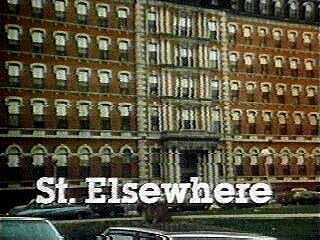
St. Eligius is a hospital in Boston that has obviously seen better days. From the outside, it looks old. On the inside, the hallways have the dim and dull look of a building that hasn’t been renovated in over ten years. As Dr. Mark Craig (William Daniels, long before he played Mr. Feeney on Boy Meets World) angrily puts it, the hospital gets no respect in Boston. It’s seen as being a “dumping ground” for patients who can’t afford anything better. Dr. Craig is world-renowned heart surgeon whose wealthy patients have donated what few improvements the hospital has seen over the past few years. (“All of our clocks now read the same time!” Dr. Craig brags at one point.) But not even Dr. Craig can change the hospital’s reputation as being secondary to Boston General.
There are actually a few good things about St. Eligius. For one thing, a young Denzel Washington is on staff, playing resident Phillip Chandler. Denzel doesn’t get to do much in the pilot but still, his presence fills the viewer with confidence. St. Eligius is also home to a world-renowned liver specialist, Dr. Daniel Auschlander (played by Norman Lloyd, who also worked with Hitchcock and Orson Welles). Auschlander has liver cancer but the hospital chief-of-staff, Dr. Donald Westphall (Ed Flanders), assures everyone that Auschlander will probably “out live us all.” (And he was right, to an extent. Norman Lloyd lived to be 106 years old before passing away in 2021. Ed Flanders died, tragically by suicide, in 1995.) St. Eligius is a teaching hospital and the residents want to make a good impression by keeping their patients alive. That’s always a good thing.
At the same time, how secure can you feel when Howie Mandel is one of the residents? Mandel plays Dr. Wayne Fiscus, who wears a baseball cap and acts …. well, he acts a lot like Howie Mandel. Like Washington, Mandel doesn’t do a lot in the pilot. He does get a subplot where he apparently has sex in the morgue with goth pathologist Cathy Martin (Barbara Whinnery) but otherwise, we don’t see him treating a patient or anything like that. Still, it’s a bit jarring to see Howie Mandel as a doctor. I would not necessarily want him for my doctor because he’s to be easily distracted. Maybe he’ll change my mind as the series progresses.
Speaking of sex, Dr. Ben Samuels (David Birney) has gonorrhea and spends most of the pilot approaching doctors and nurses and informing them of his conditions and suggesting that they might want to get tested themselves. That’s not exactly the best way to be introduced to a character but it also lets us know that this show is not just going to be about dedicated doctors who spend all of their time worrying about their patients and making amazing medical discoveries. Instead, this show is also about doctors who get venereal diseases. Has anyone checked on Fiscus in the morgue?
(That said, Dr. Samuels does get a scene where he saves the life of a woman who was injured in a terrorist bombing, as if the show does want to make sure that we know that he can do his job, even if he is spreading VD through the hospital.)
The majority of the episode follows Dr. Jack Morrison (David Morse), a first-year resident who has been working several 24-hour shifts and who complains, at one point, that he hasn’t seen his wife for days. Dr. Morrison gets upset when a surgeon wants to operate on one of his patients, a 15 year-old girl named Sandy (Heather McAdams). Morrison believes that surgeons always want to cut into somebody. Morrison gets even more upset when Sandy’s mother requests that Sandy be transferred to Boston General, which has a reputation for being a better, more modern hospital. In fact, Morrison is so upset and exhausted that he forgets to file a death certificate for a patient who dies during the night. As a result, it’s believed that the patient, who has a reputation for being violent, has gone missing and is stalking the hospital. Dr. Annie Cavanero (Cynthia Sikes) spends the entire episode looking for a dead man, which at least gives her an excuse to visit every ward and introduce the viewers to the members of the show’s ensemble cast.
Having lost my mom to cancer and now my Dad to Parkinson’s, I was hesitant about reviewing St. Elsewhere. (Actually, I was hesitant about reviewing any medical show.) When my Dad was in the hospital, I felt like I couldn’t get anyone to give me a straight answer about his condition and I often felt the doctors were talking down to me. To be honest, my worst conflicts were with the nurses, one of whom told me that I would have to “lose the attitude” before she would explain why my father had been moved to the Delirium Ward. (It didn’t help that, at the same time my Dad was in the hospital, there was a huge storm that left us without power for a week.) At the same time, there were other doctors who were helpful. The staff at the rehab center that my dad was sent to were also wonderful. I have my regrets about agreeing to hospice care but the nurse who was assigned to my Dad was very empathetic and totally understanding whenever I asked her for a cigarette. (Under normal circumstances, I don’t smoke because I have asthma but seriously, the stress was killing me.) I’m bitter and angry about a lot of what happened but I’m also thankful for the small moments of kindness.
Watching a show set in a hospital was not easy for me but the pilot of St. Elsewhere appealed to me with its mix of melodrama and humor. There was a quirkiness to it that I appreciated. William Daniels made me laugh with his annoyed rant about how little respect the hospital received. Most of all, I cared about whether or not Dr. Morrison would still be alive at the end of his shift. David Morse’s performance won me over. He’s the type of doctor that I would want to have. Well, actually, I’d probably want Denzel to my doctor but Dr, Morrison could assist. Just keep Dr. Howie Mandel away from me. Nothing against him but he seemed to be having way too much fun at the hospital….
Welcome to Retro Television Reviews, a feature where we review some of our favorite and least favorite shows of the past! On Mondays, I will be reviewing Miami Vice, which ran on NBC from 1984 to 1989. The entire show is currently streaming on Tubi!
This week, we learn who Tubbs really is and one scene changes television forever.
Episode 1.2 “Brother Keeper: Part Two”
(Directed by Thomas Carter, originally aired on September 16th, 1984)
The pilot for Miami Vice originally aired as a two-hour made-for-TV movie but, when it was released in syndication, it was split into two separate episodes. That’s the way it’s usually aired on the retro stations and that’s also the way that it’s featured on Tubi. And, as you can tell, that’s the way that I’ve decided to review it for this site.
Picking up where the first half ended, Brother’s Keeper: Part Two finds Sonny and Tubbs searching through the deceased Leon’s apartment. Calderone’s men obviously visited the place and ransacked it before Sonny and Tubbs arrived but Sonny still manages to find Leon’s collection of important phone numbers. Tubbs is surprised to discover that Leon lived in a very nice apartment but that’s the way things work in Miami. Cocaine means big money and any one willing to take the risk can live like a king. While the cops and the regular people go home to small apartments and houses that they can barely afford, the successful criminal lives a life of relative luxury. The question is less why so many people are dealing drugs as why so many people aren’t.
While searching the apartment, Tubbs suddenly realizes that Sonny Crockett used to be a football star with the University of Florida. (“You were a funky honky!” Tubbs exclaims.) Apparently, Sonny was one of the best but a series of injuries ended his NFL dreams and, instead of going pro, Sonny did two tours of duty in Vietnam. (The South Asian conference, Sonny calls it.) Myself, I’m wondering how a semi-famous former football player can also be an undercover detective, working under a false name. Wouldn’t he always be worried that a drug dealer would recognize him from the college days and figure out that Sonny Burnett was actually Sonny Crockett?
Sonny’s co-worker and girlfriend, Gina (Saundra Santiago), takes a break from working the undercover prostitution detail and lets Sonny know that she did a background check on Raphael Tubbs and he’s dead! Raphael was a New York cop who was killed in shootout weeks before the other Tubbs landed in Miami. When Sonny confronts him about this, Tubbs admits that he’s actually Ricardo, Raphael’s younger brother. Raphael was a decorated Brooklyn detective. Rico Tubbs, on the other hand, was a Bronx beat cop who forged a lot of documents in order to come down to Florida and convince Vice to allow him to work the Calderone case. Sonny isn’t happy about being lied to but he has a lot more to worry about because, the night before, he apparently rolled over to Gina and whispered his ex-wife’s name in her ear! Needless to say, things are a bit awkward between just about everyone.
Actually, awkward doesn’t even begin to describe what happens when Tubbs suggests that Lt. Rodriguez could be Calderone’s mole. Sonny refuses to consider it until he overhears Rodriguez talking about enrolling his son in a pricey private school. Fortunately, Rodriguez is innocent and the real mole’s number is found in Leon’s apartment. Unfortunately, that number belongs to Sonny’s former partner, Scott Wheeler (Bill Smitrovich)!
After getting Wheeler to confess and turning him over to Rodriguez, Sonny and Tubbs drive down the dark streets of Miami at night, heading towards a rendezvous with Calderone. They don’t say much. Tubbs loads his shotgun. Sonny stops and makes a call to his ex-wife, something that his former partner Eddie didn’t get to do before he was killed. The neon of Miami glows menacingly in the darkness. Meanwhile, in the background, Phil Collins sings In the Air Tonight….
And it’s an absolutely beautiful sequence. Between the surreal menace of Miami at night, the atmosphere of impending doom, and the moody song playing in the background, this sequence plays out like a surreal dream. Both Tubbs and Crockett know that they are quite possibly driving to their death but, at this point, they have no other choice. Too many people have died to turn back. Neither Sonny nor Tubbs has anything in their life at that moment, beyond arresting Calderone.
And they do manage to arrest Calderone, along with killing quite a few of his associates. However, Calderone is released by a crooked judge and flies away in a private airplane while Sonny and Tubbs can only stand on the runway and watch. Sonny says that Calderone will return eventually. Tubbs replies that he probably doesn’t have a job anymore. Sonny asks Tubbs if he’s interested in a “career in Southern law enforcement.”
The second part of the pilot was dominated by that one scene of Tubbs and Sonny driving down the street. And that scene was so strong and it made such an impression that it’s easy to ignore that the rest of Brother’s Keeper Part Two was not quite as exciting as Part One. If the first part of the pilot set up Miami as a hedonistic playground of the rich and corrupt, the second part felt a bit more conventional in its approach. Or, at least, it did until Phil Collins started to sing and play the drums. One cannot understate the importance of that one scene. That one scene, done with next to no dialogue, pretty much told the viewer everything that they needed to know about the show, about Miami, and about Crockett and Tubbs as partners. In that scene, the show reminded us that no one is guaranteed to get out alive.
Next week: Crockett and Tubbs infiltrate an undercover pornography ring and Ed O’Neill appears as an FBI agent who may have gone over to the dark side.
Welcome to Retro Television Reviews, a feature where we review some of our favorite and least favorite shows of the past! On Mondays, I will be reviewing Miami Vice, which ran on NBC from 1984 to 1989. The entire show is currently streaming on Tubi!
Legend has it that Miami Vice was originally pitched as being “MTV Cops.” That may or may not be true but what is known is that it was a show that, for many people, continues to epitomize the 80s. Its cynical and frequently surrealistic portrait of life in Miami continues to be influential to this day. With Florida currently being at the center of so many discussions, it just seemed like a natural pick for Retro Television Reviews.
(Up until a few days ago, the mayor of Miami was running for President and two other Florida residents are currently the front runners for one party’s presidential nomination. As I sit here writing this, national politics are often described as Florida vs California. Even more than in the past, America revolves around Florida.)
Though Miami Vice is often describe as being a Michael Mann production, the show itself was actually created by Anthony Yerkovich, who felt that Miami in the 80s had become the American equivalent of Casablanca during World War II. Mann served as executive producer and he played a big role in creating the show’s trademark visual style. And, of course, the theme song was provided by Jan Hammer:
Episode 1.1 “Brother’s Keeper, Part One”
(Dir by Thomas Carter, originally aired on September 16th, 1984)
Though the show is considered, to this day, to be the epitome of the Southern Florida aesthetic, Miami Vice actually begins in New York City.
On a dark and wet New York Street, a detective named Tubbs (Philip Michael Thomas) sits in his car. When a group of young men approach the car and demand that Tubbs give them some money, Tubb responds by coolly pointing a shotgun at them. The men take the message and leave.
Tubbs is staking out a Colombian drug dealer named Calderone (Miguel Pinero). Tubbs follows Calderone and his associates to a club, the type of place where even the neon lighting seem to be shadowy. When Tubbs gets into a fight with some of Calderone’s bodyguards, Calderone flees into the dark night.
The action moves to Miami, which is as bright and sunny as New York was cold and dark. Undercover vice cop Sonny Crockett (Don Johnson), wearing a white suit and a green t-shirt, gives advice to his partner, Eddie Rivera (a young and charismatic Jimmy Smits, making his television debut). Eddie talks about how his wife is nervous about him being a cop. Sonny tells Eddie to call her after they get finished dealing with a local drug dealer named Corky.
Corky knows Crockett as “Sonny Burnett” and he believes Eddie is a buyer from California. When Corky arrives, they drive out to an underpass. Corky and Eddie walk over to another car to check out Corky’s product. Sonny spots the bomb that’s been taped under car’s hood but he’s too late to keep it from blowing up both Corky and Eddie.
When Lt. Rodriguez (Gregory Sierra) arrives on the scene, he’s not amused to discover two of his detectives — Stan Switek (Michael Talbott) and Larry Zito (John Diehl) — joking about how the police dogs are going to get hooked on all of the cocaine residue. However, he’s even more annoyed with Sonny, who is quickly established as being the type of cop who does not “do it by the book!” Rodriguez also says that Sonny hasn’t changed since his “football days.” Sonny says that Eddie was killed by a mysterious dealer known as The Colombian. Rodriguez replies that Sonny can’t even prove that the Colombian exists. Rodriguez is particularly angered when Sonny says that there must be a mole working in the department.
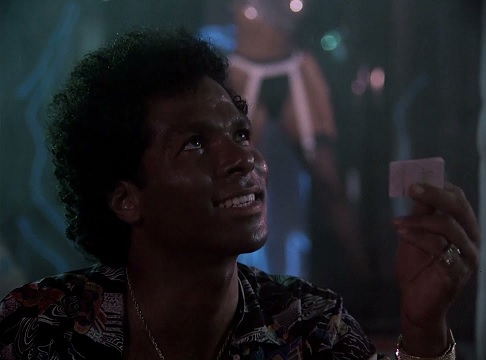
While Sonny tells Eddie’s wife the bad news and then heads over to his son’s birthday party (it’s established that Sonny is divorced), Tubbs lands in Miami. Hanging out at a strip club and doing an elaborate dance to Rockwell’s Somebody’s Watching Me, Tubbs is approached by a man named Scott Wheeler (Bill Smitrovich). Pretending to be a Jamaican named Teddy Prentiss, Tubbs arranges to meet a drug dealer that Wheeler claims to know.
What Tubbs doesn’t know is that Wheeler is an undercover DEA agent and that he’s also Sonny Crockett’s former partner. Sonny is the “dealer.” That night, Sonny and a real-life drug dealer, Leon (Mykelti Williamson) show up at the meeting with Wheeler and “Teddy.” Unfortunately, Zito and Switek show up earlier than expected and they end up arresting everyone before Leon can lead Sonny to the Colombian. Tubbs makes a run for it, jumps into the boat that Sonny drove to the meeting, and speeds away. Sonny jumps into his own car and chases the boat while the Miami Vice theme song plays in the background. (Trust me, it’s a supercool scene.)
Finally confronting Tubbs on a bridge, Sonny reveals that he’s a detective. Tubbs produces his own badge and introduces himself as Raphael Tubbs of the NYPD. He explains that he’s in Miami because he’s after a Colombian drug dealer named Calderone. Sonny explains that he’s too busy searching for the Colombian to worry about Tubbs’s search. Finally, Lt. Rodriguez shows up and helps them to understand that they’re both looking for the same guy. Rodriguez suggests that they work together but Sonny refuses.
The next morning, Tubbs tracks Sonny down on the houseboat on which he lives. It’s a tense meeting, with Sonny punching Tubbs for suggesting that he wasn’t a good enough cop to save Eddie’s life. Sonny apologizes afterwards and Tubbs accepts the apology and then punches Sonny so that they’ll be even. Sonny then introduces Tubbs to his pet alligator, Elvis. It’s male-bonding, 80s style!
Sonny and Scott head over to the courthouse so that they can be “arraigned,” along with Leon. I really liked the performance of Howard Bergman, who played the eccentric judge, Clarence Rupp. At one point, the lights went out in the courtroom and when they came back, everyone from the judge to the bailiffs to the court reporter had drawn a gun. After mentioning his appreciation of the second amendment, Judge Rupp announces that Leon is free to go without bail because he’s cooperating with the police. A panicked Leon yells that he’s not cooperating.
Later, a fearful Leon calls Rodriguez and offers to cooperate in return for protective custody. Leon is hiding out at the beach, where Tubbs is keeping an eye on him. When Sonny arrives, he’s not amused to see Tubbs there. Meanwhile, a hitman who has disguised himself as a woman shoots and kills Leon while Girls Just Want To Have Fun plays on the soundtrack.
And so ends part one of Brother’s Keeper. And you know what? Even after all this time, it’s still easy to see why Miami Vice took off and why it continue to inspire a slew of imitators. The pilot was genuinely exciting, with the perfect mix of music, visuals, and charismatic performances. Jimmy Smits broke my heart in his tiny role. Mykelti Williamson made Leon into an almost sympathetic character as he realized that the cops were willing to sacrifice him to get at his boss. From the start, Don Johnson’s gruff performance as Sonny feels like a perfect match for Philip Michael Thomas’s more earnest portrayal of Tubbs. If Sonny is a cynic, Tubbs seems to feel that he can make a difference by taking down men like Calderone. We’ll have to see how long that lasts.
Next week, we’ll finish up the pilot with part two of Brother’s Keeper!
Welcome to Retro Television Reviews, a feature where we review some of our favorite and least favorite shows of the past! On Sundays, I will be reviewing the made-for-television movies that used to be a primetime mainstay. Today’s film is 1986’s Under the Influence! It can be viewed on YouTube!
Noah Talbot (Andy Griffith) is an upstanding member of the community. He owns a hardware store. He has a large family. He’s known as a gruff but folky storyteller. He’s a deacon in his church and helps to collect the offering every Sunday.
He’s also a drunk and a bit of a bully. His family walks on eggshells around him, fearful of setting him off on one of his benders. He occasionally spends the night in jail, arrested for trying to drive drunk. Even when he gets bailed out, his first instinct is to go back to the bar. The folks at the bar love him, don’t you know. The people at the bar are always happy to see him and never bother him about whether he’s had too much. The people at the bar never let him down the way that he feels his family has left him down.
The members of his family each cope in their own individual way. Noah’s wife (Joyce Van Patten) is in denial and spends a lot of her time popping pills. His oldest daughter, Ann (Season Hubley), is driven to succeed at work and spends all of her time both hating her father and desperately hoping for his approval. (When she tells him that she got a raise at work, he berates her for only getting a 6% increase in her salary. “That’s just a cost of living increase!” he snaps at her.) His eldest son, Stephen (Paul Provenza), fled to Los Angeles and is trying to make a career as stand-up comedian. (“You’re no David Letterman,” Noah tells him.) His youngest daughter, Terri (Dana Anderson), secretly replaces Noah’s liquor with water and food-coloring. And his youngest son, Eddie (Keanu Reeves), is becoming an alcoholic himself.
Having read all that, you may be wondering just how exactly Keanu Reeves could be the son of Andy Griffith and it’s a fair question. This was one Keanu Reeves’s first acting roles and he does a pretty good job in the role of Eddie. That said, he looks so totally different from both Andy Griffith and Joyce Van Patten and the actors playing his siblings that I was half-expecting someone to mention that Eddie had been adopted. Then again, Paul Provenza doesn’t really bear much of a resemblance to the actors playing his parents either. Dana Anderson and Season Hubley do, at least, look like sisters.
Lack of family-resemblance aside, all of the actors in Under the Influence do a good job of inhabiting their characters. For those who are used to seeing Andy Griffith playing friendly Southerners in reruns of The Andy Griffith Show and Matlock, it’s shocking and a little disturbing to see him playing an abusive, alcoholic jerk in Under the Influence. Noah is someone who would not only destroy his own family to get a drink but who would then blame them for it happening in the first place. Noah may be under the influence of alcohol but the entire family is suffering because they’re under the influence of Noah. By the time Noah is spitting up blood and demanding that his youngest son sneak liquor into his hospital room, the viewer knows there is no hope for Noah but hopefully, his family will escape.
It doesn’t make for a particularly happy movie but, speaking as someone who grew up in an alcoholic household, I can attest that it does make for an honest portrayal of what addiction does not just to the addict but also to the people around the addict. I cringed in sympathy through nearly the entire film, especially as I watched three of the four children react in the same ways that I did. (Unlike Eddie, I never became much of a drinker and instead developed an aversion to alcohol in general.) It’s a film that feels real and one’s heart aches for the entire family. If it could happen to Andy Griffith, it could happen to anyone.
4 Shots From 4 Films is just what it says it is, 4 shots from 4 of our favorite films. As opposed to the reviews and recaps that we usually post, 4 Shots From 4 Films is all about letting the visuals do the talking.
Oh my God, it’s my birthday! True, this is the day of the year when I get presents and hear from a lot of wonderful people. That’s the wonderful part of the day! The only downside is that this is also the day of the year when I’m reminded that I’m an adult. But fear not, I know how to chase off any birthday angst. These 4 shots come from 4 films that always cheer me up.
(And, if you know me, you won’ be surprised by what they all have in common!)
4 Shots From 4 Films
Silk Stocking (1957, dir by Rouben Mamoulian)
Save the Last Dance (2001, dir by Thomas Carter)
The Company (2003, dir by Robert Altman)
StreetDance 3D (dir by Max Giwa and Dania Pasquini)
You all have got twitter to blame for this review. I vaguely remember Coach Carter playing in theaters back in 2005 but I didn’t see it. To be honest, the only thing that bores me more than high school football is high school basketball. I have to admit that I really can’t stand to watch basketball, largely because I hate the way the player’s shoes are always squeaking on the court. It just hurts my ears.
But, I’ve noticed that whenever Coach Carter shows up on television, everyone on my twitter timeline seems to get excited about it. Coach Carter is one of those films that is obviously popular with a lot of people so, when I saw that it was going to be playing on Showtime last week, I figured why not?
And you know what?
Coach Carter is actually a pretty good movie. If I don’t seem overly enthusiastic about it, that’s because I’m just not into sports. But I do love movies and Coach Carter is an effective film. That it’s predictable isn’t really that much of a surprise. Predictability is actually probably one of the main appeals of the sports genre. But Coach Carter is distinguished by a strong cast and it has a pretty good message to boot.
Plus, it’s based on a true story! How true I don’t know but I’d like to think that the movie stuck pretty close to the facts if just because the story is so appealing.
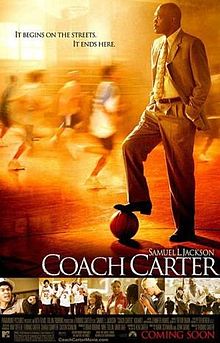
Anyway, the Coach Carter of the title is played by Samuel L. Jackson. At the start of the film, Carter takes over as basketball coach at the same inner city high school that he graduated from. When he first starts, his team is rude, disrespectful, and undisciplined. The majority of them have little direction in their lives and have basically pinned whatever hope they have for the future on eventually playing professional basketball.
(I will admit right now that I was really excited to discover that Channing Tatum played one of the players. The only thing that would have made me happier would have been for James Franco to suddenly show up.)
Carter informs his team that, in order to play for him, they have to be willing sign a contract that states that they will treat everyone respectfully, that they will wear a tie on game days, and that they will all maintain a C+ average. Some of the players refuse to sign (and are promptly kicked off the team) but those who do quickly discover that Carter expects them to honor the terms of the contract.
And, under Carter’s leadership, the team goes on to have a great season. They’ve got an undefeated record and appear to be heading for the play-offs when Carter discovers that several members of the team have failed to keep up their grades. To the shock of both the faculty and the community, Carter benches his entire team and announces that none of them will play until all of them have at least a 2.3 GPA.
Needless to say, it all leads to one of those emotional school board meetings that always seems to show up in films like this.
As I stated above, it’s all fairly predictable but the movie itself is well-made. And if anyone was born to play an outspoken basketball coach who isn’t going to let anyone tell him how to run his team, it’s Samuel L. Jackson. Jackson is one of those actors who is so good and so powerful that I think we sometimes tend to take him for granted. Perhaps the best thing about Coach Carter is that it gives Jackson a chance to show what he’s truly capable of doing as an actor.
Again, I really don’t know that much about basketball and I’m not a fan of the game. But, with all that in mind, I was still entertained by Coach Carter. If nothing else, it proved that a lot of the people on my twitter timeline aren’t crazy.
I’ve always been very much of the belief that you should never feel guilty about feeling pleasure. Of course, speaking as someone who was raised Catholic, I can tell you that’s a lot easier said than done. However, I’ve always been the type who can find something to love in just about any film (with the exception of Avatar). I’ve never felt any sort of guilt about the fact that I can both love a film like Citizen Kane and a film like Confessions of a Go-Go Girl. If anything, I take a lot of pride in the fact that I can see the value of a film like Confessions of a Go-Go Girl.
What, I wondered, could I possibly write about?
And that’s when I remembered Save The Last Dance.
Released in 2001 and produced by MTV films, Save the Last Dance tells the story of Sara (played by Julia Stiles), a high school dance student who fails her audition for Juilliard on the same day that her mother is killed in a car accident. The guilt-stricken Sara gives up on ballet, moves in with her estranged father, and transfers to an urban high school in Chicago.
Sara is literally the only white girl in the entire school but still manages to befriend Chenille (Kerry Washington), who takes her to a club where she meets Chenille’s brother, Derek (Sean Patrick Thomas). Despite the disapproval of apparently everyone else in Chicago, Sara and Derek start dating. Derek encourages Sara to try out for Juilliard again but, as the date of Sara’s audition approaches, Derek finds himself pressured to take part in a drive-by shooting.
When Save The Last Dance first came out, I was a 15 year-old ballet student whose life pretty much was all about dancing.. I went to the movie with some friends from dance class and I have to admit that we were pretty catty in the way that only dancers can be. Our lives, after all, revolved around dance and we weren’t about to cut Julia Stiles any slack just because she spent four months taking ballet lessons before making Save The Last Dance. While the rest of the audience was content to enjoy Save The Last Dance for what it was, we fixated on how awkward Julia looked during her second audition for Juilliard. We commented on how nervous her eyes looked whenever she was dancing and how she really didn’t have a dancer’s body.
As one of my friends put it, “There’s no way she would have gotten into Juilliard,” as if Save The Last Dance was meant to be a documentary about ballet as opposed to a teen romance film.
But you know what?
Though I never admitted it to my dance friends, I enjoyed Save The Last Dance when I first saw it and I still enjoy it today. Yes, it is obvious that Julia Stiles was not a trained ballet dancer and yes, the film’s look at race relations is more than a little bit idealized but so what? Sean Patrick Thomas is hot, the club scenes are fun (and Julia Stiles is more believable as a club dancer than as a ballerina), and director Thomas Carter is appropriately shameless when it comes to manipulating our emotions. When I watch this film now, instead of being critical of the film’s unrealistic portrayal of the dancer’s life, I instead see it as a dramatization of every girl’s ideal fantasy. Like the best fantasies, Save The Last Dance tells us that — if you just believe — you can have it all: hip friends to protect you, a hot guy to love you, and a second chance to go to Juilliard.
Or as Derek says to Sara, “You can do it. Sara, you were born to do it.”
(Incidentally, if not for a memorable supporting character in Save The Last Dance, a New Jersey girl named Nicole Polizzi would never have been nicknamed Snookie. So there’s that, as well.)
And so, with this post, allow me to officially announce to the world: I love Save The Last Dance and I am not ashamed!
To quote the tagline from Save The Last Dance’s theatrical poster, “The only person you need to be is yourself.”





 Through the Shattered Lens