October True Crime: Karla (dir by Joel Bender)


When it comes to true crime cases, few are as disturbing as the story of Paul Bernardo and Karla Homolka.

Paul and Karla were a young, married couple who lived in Ontario.  They were both attractive.  They were both popular.  They were both superficially charming, in the style of someone who you might have taken a class with but the only thing you can really remember about them is their smile.  And they were both killers.  Paul Bernardo, a wannabe rapper who had previously made his money by smuggling cigarettes and who was also a serial rapist, murdered at the least three teenage girls, including Karla’s sister, Tammy.  When Paul was arrested, Karla told prosecutors that she had helped Paul with his murders but only because he threatened and abused her.  Prosecutors, perhaps moved by a picture that Karla’s friend took of her bruised face after one of Paul’s beatings, made a deal with her for her testimony.  In return for testifying against Paul Bernardo, Karla was convicted only of manslaughter and given a 12-year prison sentence.  (She was 23 at the time and would only be 35 when released from prison, assuming that she served the full sentence.)  However, during the trial, video tapes of the murders were uncovered and showed that Karla had been a far more active participant in the murders than she had originally admitted.  That included the murder of her sister, Tammy.

There were calls to rescind Karla’s plea bargain and to try her for murder but since her plea bargain had only required her to provide enough evidence to convict Paul, it was ruled that she had upheld her end of the bargain.  While Paul Bernardo is currently serving his life sentence, Karla Homolka is now free and living somewhere in Canada.

Needless to say, the case drew international attention, both due to the circumstances of Karla’s plea bargain and also to Paul and Karla’s image of being the “Ken and Barbie Of Serial Killers.”  It’s a case that continue to haunt Canada, an example of how the accused was ultimately treated with more respect than the victims.  For her part, Karla continues to claim that it was all Paul and that she was forced into helping.  Paul claims that he and Karla were equal partners and that the actual murders were all committed by Karla.  Personally, I think they’re both lying.

2006’s Karla stars Laura Prepon as Karla Homolka.  The film opens with her already in prison and being interviewed by a psychiatrist (Patrick Bauchau) who has been assigned to determine if there’s a risk of her reoffending.  As Karla tells her story, we see flashbacks of Karla’s life with Paul (Misha Collins).  Prepon and Collins are both chillingly believable as the soulless Paul and Karla.  Laura Prepon plays Karla as being a narcissistic sociopath who is incapable of understand that she’s not the victim in this story.  I imagine that Prepon’s performance probably captures the essence of the real Karla, even if Prepon doesn’t really look like her.

That said, the film itself is largely a surface level exploration of the case.  The film’s script attempts to maintain some ambiguity as to whether or not Karla Homolka was a voluntarily participant in the murders or if she actually was just too scared of Bernardo to stop him.  Prepon plays her as being a sociopath but the script still tries to play both sides of the debate and, as a result, the film falls flat.  The film may be called Karla but it doesn’t really get into her head and, as a result, it has all the depth of an Investigative Discovery special.  In the end, the film feels like it’s trying to exploit the notoriety around a famous case without taking a firm position on the case’s biggest controversy.  When it comes to the crimes of Karla Homolka, that’s not an option.
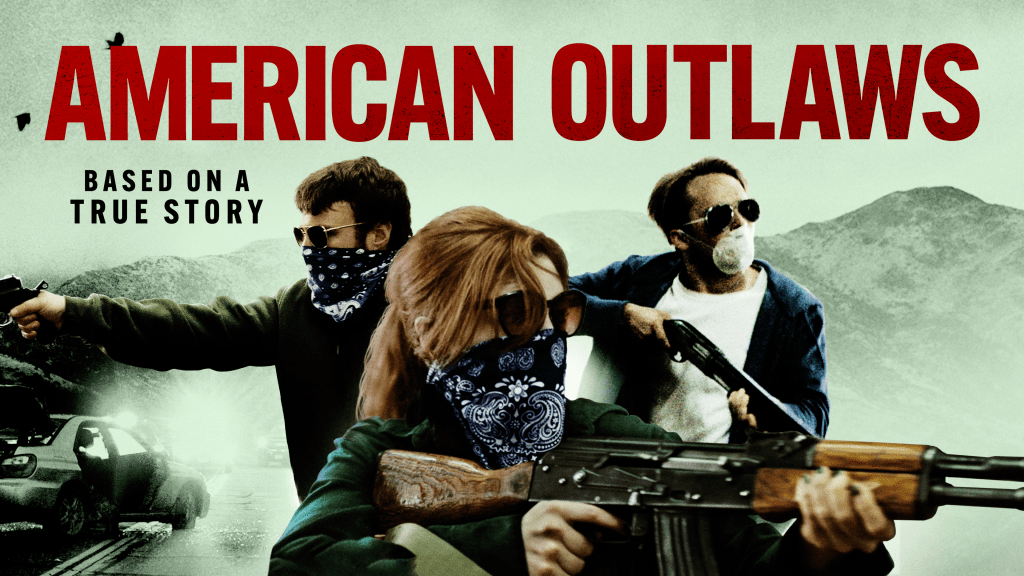
Brad reviews AMERICAN OUTLAWS (2023)!


AMERICAN OUTLAWS is a 2023 crime drama inspired by the true story of the Dougherty siblings, Dylan (Emory Cohen), Lee-Grace (India Eisley), and Ryan (Sam Strike). Starting in Florida, the film follows the three siblings, who, facing potential prison time, embark on a desperate cross-country crime spree in 2011. Dylan, the older brother, leads the trio, with Lee-Grace, a former stripper battling drug addiction, and Ryan, a soon-to-be father at risk of returning to prison for a parole violation. Their plan is to flee to Costa Rica for a fresh start, but their journey spirals into chaos after Dylan escalates a routine traffic stop by shooting at police, leading to a series of bank robberies and an eight-day manhunt. The film explores their loyalty and reckless pursuit of freedom, set against a backdrop of poverty, ultimately culminating with their capture, and collective jail sentences of 179 years in prison.

AMERICAN OUTLAWS, written and directed by Sean McEwen, is a mixed bag, but I definitely enjoyed watching it. It’s a low-budget, ambitious B-movie, but it’s also somewhat a victim of its budget. On the positive side, McEwen creates a gritty feel, particularly during the car chases, shootouts and various criminal acts. He also incorporates real news footage that adds authenticity and grounds the story in a specific date and time. The cast, led by India Eisley’s uninhibited portrayal of Lee-Grace, delivers committed performances, with Emory Cohen and Sam Strike capturing the siblings’ desperate bond. On the negative side, the low budget is also quite evident at times. You can’t help but wonder what McEwen could have done with more money to throw at the production. He’s clearly a talented filmmaker, and I’m looking forward to watching his future projects.

I did want to note that AMERICAN OUTLAWS is the final role of actor Treat Williams, who would pass away in a tragic accident on June 12th, 2023. The actor, who would have roles in classic films like Sidney Lumet’s PRINCE OF THE CITY (1981) and Sergio Leone’s ONCE UPON A TIME IN AMERICA (1984), adds gravitas as Agent Jameison R. Donovan, though his screen time is limited. His five decade career doesn’t end on an extremely high note, but it’s still a joy to see him in a solid, authoritative role. 

Ultimately, AMERICAN OUTLAWS is a solid thriller that gets by on a committed cast and a true-crime story, but it isn’t able to fully capitalize on its premise due to budget limitations. It’s worth a watch for fans of gritty crime dramas. Just be sure to keep your expectations in check. 

Late Night Retro Television Reviews: Gun 1.2 “Ricochet”


Welcome to Late Night Retro Television Reviews, a feature where we review some of our favorite and least favorite shows of the past!  On Tuesdays, I will be reviewing Gun, an anthology series that ran on ABC for six week in 1997.  The entire show is currently streaming on Tubi!

This week, on Gun, Martin Sheen plays a cop who might be investigating the final murder of his career!

Episode 1.2 “Ricochet”

(Dir by Peter Horton, originally aired on April 19th, 1997)

The second episode of Gun opens with the death of a Japanese businessman.  He’s found shot on a cliffside that overlooks the ocean.  The gun that shot him is discovered and taken by a homeless man named Lazy Eye Pete (Bud Cort).  Pete is a cheerfully eccentric type, one who sings for money and who is dedicated to taking care of his pet dog, Chester.  But, as soon as Pete gets that gun, his personality starts to change and he even ends up pulling the gun on a group of teenagers who were attempting to mug him.  In the end, Pete sells the gun to a friend of his.

Also searching for that gun is Detective Van Guinness (Martin Sheen).  Guinness, who suffers from ulcers and who takes his job very personally, has promised his girlfriend (Tess Harper) that he will retire from the force.  However, he doesn’t want to go out on a simple or an unsolved case.  Fortunately, for Guinness, he’s assigned the complicated case of the dead businessman.  Unfortunately, for him, his girlfriend is not at all amused by his refusal to retire.

Van’s partner (Kirk Baltz) thinks that the businessman was killed during a robbery but Guinness disagrees.  Guinness thinks that the businessman was murdered by either his wife (Nancy Travis) or his amoral attorney (Christopher McDonald).  The wife and the attorney are sleeping together and they’ve also come up with a plan to somehow fix the California state lottery.  (I couldn’t really follow what their plan was but then again, I’ve also never played the lottery.)  The attorney thinks that the wife is the murderer.  The wife thinks that the attorney is the murderer.  The truth is a bit more complicated but, in order to full understand what happened, Van Guinness is going to have to find that gun.

Though the plot was a bit too complicated for its own good (Seriously, what was going on with the whole lottery subplot?), the second episode was a definite improvement over the first episode, with director Peter Horton keeping the action moving at a steady pace and establishing the consistent tone that the previous episode lacked.  Ricochet played out like a true ensemble piece, splitting its attention between Martin Sheen, Bud Cort, Nancy Travis, and Christopher McDonald.  All four of the actors did a good job bringing their characters to life.  I especially liked Christopher McDonald’s amoral attorney.  Nobody plays a crooked attorney with quite the style and wit of Christopher McDonald!

Next week: Rosanna Arquette and James Gandolfini appear in an episode directed by the show’s co-creator, James Steven Sadwith.


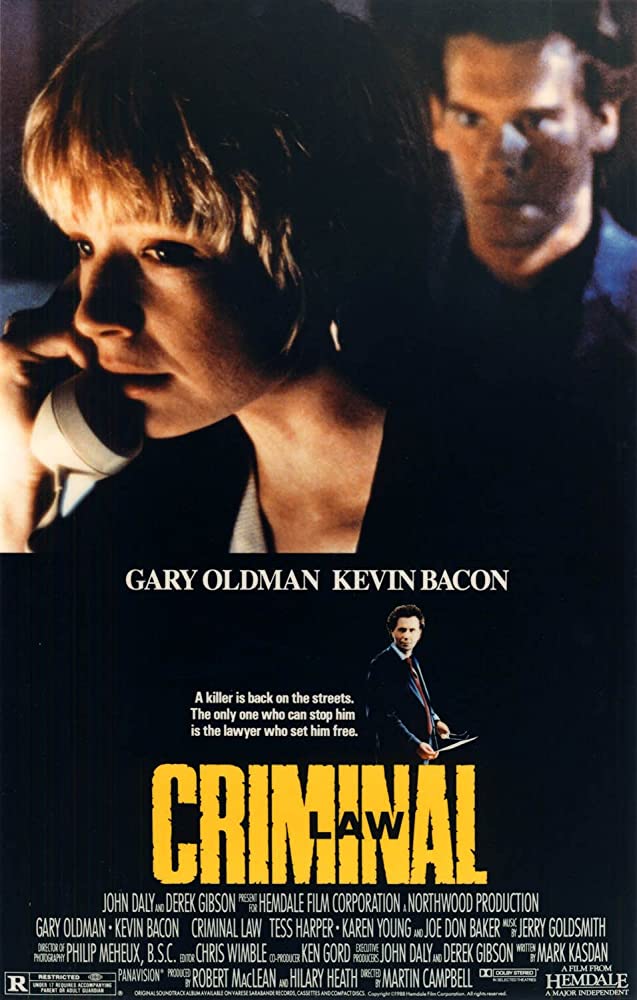
Criminal Law (1988, directed by Matin Campbell)


Gary Oldman is Ben Chase, a hotshot defense attorney who graduated from Harvard and now practices law in Boston.  That means that he gets to have a Boston accent and you know how much Gary Oldman loves playing a role with an accent.  Ben also has a pompadour because Gary Oldman always has something weird going on with his hair in almost every film he appears in.

Ben’s latest client is Martin Thiel (Kevin Bacon), a sociopathic rich kid who has been accused of murder.  Even though Ben thinks that Martin is probably guilty, he still gets Martin off the hook.  As soon as Martin get his acquittal, he starts murdering again.  Ben feels responsible so he decides that what he needs to do is trick Martin into implicating himself.  However, Martin knows what Ben is planning so, instead, he decides to frame Ben for the murders.  Somehow, it all links back to Martin’s feelings about abortion.  I guess Martin is against abortion or maybe he’s for it.  It was hard to keep track.  I watched the movie and I’m still not sure I followed everything that I saw.  It’s not that the plot is diabolically clever.  It’s just that it’s so incoherent that not a single plot point logically follows from another.

The film experiments with suggesting that there’s some sort of deeper connection between Martin and Ben.  Martin is obsessed with Ben and when Ben is in bed with his girlfriend, he briefly imagines that she’s turned into Martin and has a good old-fashioned freak out as a result.  It doesn’t make any sense.  First off, you have to believe that Ben can’t tell the difference between Kevin Bacon and his girlfriend.  Secondly, you have to then accept that Ben — a HARVARD GRADUATE — is so stupid that he would actually believe that his girlfriend had suddenly transformed into Kevin Bacon and must now be strangled.

Criminal Law is a film that you may be tempted to watch because of the pairing of Kevin Bacon and Gary Oldman but you’d be better off just watching JFK again.  They’re both great actors and and it’s always interesting to see them cast against type but neither one of them is particularly good in Criminal Law.  They’re let down by a script that doesn’t allow either one to create a consistent character.  Sometimes, Martin is a soulless attorney and other times, he’s a panicky social justice crusader.  Sometimes, Kevin Bacon is a clever sociopath and, other times, he’s just your typical mindless movie slasher.

On the plus side, Joe Don Baker is in this mess, playing a cop.  Joe Don Baker has played so many cops in so many bad movies that I wonder if he’s ever been tempted to try to arrest someone in real life.  In Criminal Law, he’s not given much to do but it doesn’t matter.  He’s Joe Don Baker!

Lisa Reviews An Oscar Nominee: Tender Mercies (dir by Bruce Beresford)


The other day, on this very site, I mentioned that the 1983 film Tender Mercies was one of the films that David Lynch turned down.  

In his memoir, Room to Dream, Lynch wrote that he was sent the film’s script while he was looking for a project to serve as his follow-up to The Elephant Man.  Lynch wrote that he liked the script, which was written by Horton Foote (who had previously won an Oscar for adapted To Kill A Mockingbird), but that Lynch also felt that it just wasn’t the right project for him at the time.  Tender Mercies was eventually directed by Bruce Beresford and Lynch mentioned that he felt that Beresford did a “brilliant” job.

After I posted the article, it occurred to me that Tender Mercies is not a film that’s as well-known as it deserves to be.  It received five Oscar nominations, including one for Best Picture.  Robert Duvall won his first (and, to date, only) Oscar for playing the lead role.  It’s an acclaimed film but it also plays it in a rather low-key style, particularly when compared to some of the other films that were released in the early 80s.  (1983 may have been the year of Tender Mercies but it was also the year of Scarface, Flashdance, Return of the Jedi, and Risky Business.)  As such, it’s a film that’s been a bit overshadowed over the years.

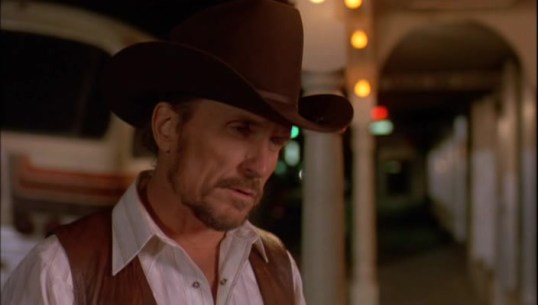
Tender Mercies takes place in rural Texas.  Mac Sledge (Robert Duvall) is a former country-western star whose career has collapsed due to his alcoholism and his own self-destructive behavior.  One morning, a hungover Mac wakes up in a roadside motel.  Not having any money on him, Mac asks the motel’s owner — Rosa Lee (Tess Harper), who lost her husband in Vietnam — if he can work at the motel in return for a room.  Rosa Lee agrees, on the condition that Mac not drink while he’s working.

As the days pass, Mac and Rosa Lee grow closer and Mac becomes a surrogate father to Rosa Lee’s young son, Sonny (Allan Hubbard).  Eventually, Mac and Rosa Lee marry and Mac becomes an accepted member of the community.  However, Mac remains troubled.  His ex-wife, Dixie (Betty Buckley), has built a career on singing the songs that he wrote for her but she refuses to consider anything new that he’s written.  His teenage daughter (Ellen Barkin) stops by the motel and announces that she’s running away to get married.  There’s tragedy but there’s also hope and forgiveness.

Tender Mercies is a simple but affecting film about a good man who is struggling to deal with the fact that he was once a very bad man.  What makes Tender Mercies interesting is what doesn’t happen.  The first time I saw it, I spent the entire movie expecting Mac to fall off the wagon and break everyone’s heart.  Instead, Mac manages to keep his promise to his new family but what he discovers is that being sober doesn’t automatically exempt one from pain or guilt.  He still has to deal with sadness and disappointment but now, he has to do it without using alcohol as a crutch.  Instead of getting his strength from booze, he now gets it from love.

It’s a wonderfully sweet movie, featuring naturalistic performances from Harper, Hubbard, and especially Robert Duvall.  It seem appropriate that, after making his film debut as Boo Radley in a film written by Horton Foote, Duvall would win his first Oscar for another film written by Foote.  Duvall plays Mac as a plain-spoken and weary soul who is still just enough of a romantic to find some sort of redemption in the world.  It’s a great performance and it’s a good film and I’d suggest checking it out if you ever need a good cry.

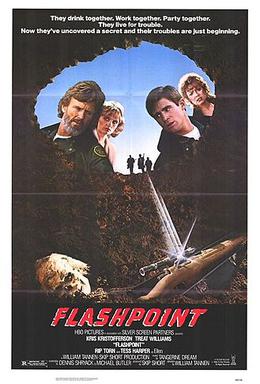
A Movie A Day #317: Flashpoint (1984, directed by William Tannen)


November 22, 1963.  While the rest of the world deals with the aftermath of the assassination of John F. Kennedy in Dallas, a man named Michael Curtis drives a jeep across the South Texas desert, heading for the border.  In the jeep, he has a $800,000 and a high-powered rifle.  When the jeep crashes, the man, the rifle, and the money are left undiscovered in the desert for 21 years.
1984.  Two border patrol agents, Logan (Kris Kristofferson) and Wyatt (Treat Williams), are complaining about their job and hoping for a better life.  It looks like they might get that opportunity when they come across both the jeep and the money.  A bitter Vietnam vet, Logan wants to take the money and run but Wyatt is more cautious.  Shortly after Wyatt runs a check on the jeep’s license plate, a FBI agent (Kurtwood Smith) shows up at the station and both Logan and Wyatt discover their lives are in danger.

Though it was made seven years before Oliver Stone’s JFK, Flashpoint makes the same argument, that Kennedy was killed as the result of a massive government conspiracy and that the conspirators are still in power and doing whatever they have to do keep the truth from being discovered.  The difference is that Flashpoint doesn’t try to convince anyone.  If you’re watching because you’re hoping to see a serious examination of the Kennedy conspiracy theories, Flashpoint is not for you.  Instead, Flashpoint is a simple but effective action film, a modern western that uses the assassination as a MacGuffin.  Though Kris Kristofferson has never been the most expressive of actors, he was well-cast as the archetypical gunslinger with a past.  Rip Torn also gives a good performance as a morally ambiguous sheriff and fans of great character acting will want to keep an eye out for both Kevin Conway and Miguel Ferrer in small roles.

A Movie A Day #255: Her Alibi (1989, directed by Bruce Beresford)


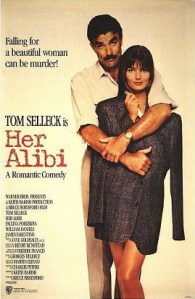
Tom Selleck is Phil Blackwood, a best-selling mystery author who is suffering from writer’s block.  Paulina Porizkova in Nina, a beautiful Romanian who has been accused of murder.  When Phil sees Nina being arraigned in court, it is love at first sight.  He provides her with a false alibi and invites her to stay with him while he writes a book based on her case.  At first, Phil thinks that she is innocent but he soon has his doubts, especially after Nina shows off her skills as a knife thrower.
1989 was a strange year for Australian director Bruce Beresford.  On the one hand, he directed Driving Miss Daisy, which went on to win the Oscar for the best picture.  On the other hand, he also directed Her Alibi, a disjointed comedy that feels like an extended episode of Magnum P.I.  (Even Sellecks’ narration feels like a throwback to his star-making role.  But if Phil is a best-selling writer, why does his narration sound so clunky and clichéd?)  Her Alibi is a predictable film, not really bad but just very bland.  It tries to duplicate the style of a classic screwball comedy but it lacks the bite necessary to make much of an impression.  On the plus side, the great William Daniels was given a few good lines as Phil’s caustic agent and Paulina Porizkova was absolutely beautiful.  The scene where Nina gives Phil a haircut almost makes the movie worth it.

One final note: When watching Her Alibi, be sure to pay attention to the scene where Phil holds up his latest novel.  The book is so thin that it looks like it is only 20 pages long, at the most.

Embracing the Melodrama Part II #107: No Country For Old Men (dir by the Coen Brothers)


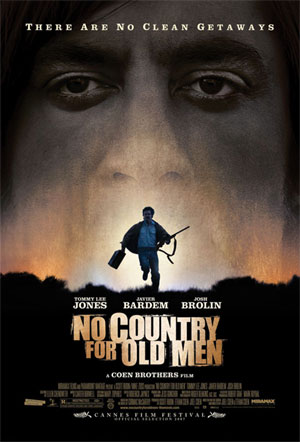
No_Country_for_Old_Men_posterI love my home state of Texas and I love movies. Therefore, it has always upset me that most movies set in Texas get the state totally wrong.  That’s not exactly shocking.  Unlike the rest of the states, there’s actually a lot of variety to Texas.  We’re a big state and we’re home to a lot of people.  Unlike some place like Vermont, Texas is a world all its own and it’s not surprising that most outsiders are incapable of getting their mind around that and instead find themselves embracing simple-minded clichés and stereotypes.  That’s perhaps why the best films about Texas tend to be ones that were actually made by Texans.  If you want to see the real Texas — flaws and all — than I suggest watching the films of Richard Linklater or perhaps Wes Anderson’s Rushmore.

And yet, it took two outsiders to write, produce, and direct one of the best films ever made about Texas.  The 2007 best picture winner No Country For Old Men was largely the work of two brothers from Minnesota, Joel and Ethan Coen.  It’s not only one of the best films about my home state but it’s also one of the best films of the past decade.

Based on a novel by Cormac McCarthy, No Country For Old Men tells the story of three determined men in South Texas whose lives are interconnected despite the fact that three of them spend almost the entire movie one step behind each other.  In fact, despite a few brief encounters where their paths meet, it can be argued that, at no point, do any of them truly interact with each other face-to-face.

Llewelyn Moss (Josh Brolin) is the type of person that anyone who has ever lived in Texas will have met.  He’s a hard-working, plain-spoken man, the type who drives a pickup, owns a gun, and likes to begin and end the day with a beer.  He lives in a trailer with his wife, Carla Jean (Kelly MacDonald, who may be Scottish but speaks here with an almost flawless Texas accent).  Llewelyn’s not a bad guy but he’s not as smart as he thinks and, like a lot of folks down here, he doesn’t like the idea of being told what to do.  In fact, he’d almost rather die for his trouble than admit to making a mistake.  When Llewleyn comes across the aftermath of a drug deal turned violent, he takes off with a suitcase that contains $2,000,000.  After barely escaping the remaining drug dealers (and the scene where Llewelyn is chased by a pit bull is a classic), Llewelyn sends Carla Jeans to stay with her sick mother and then he grabs the suitcase and heads over to the next county.  It quickly becomes apparent, to the viewers at least, that Llewelyn has absolutely no idea how to get out of the mess that he’s found himself in.

And it’s quite a mess because Anton Chigurh (Javier Bardem) has been hired to track down the money.  Perhaps one of the greatest movie villains of all time, Chigurh is an almost unstoppable force of death and destruction.  Chigurh pursues Llewelyn across Texas, killing almost everyone who he meets along the way.  Interestingly enough, just as Llewelyn continually makes excuses for his own greed, Chigurh also makes excuses for his murderous activities, seeming to obsess over the role of fate and chance.  Whereas Llewelyn refuses to give up the suitcase, even though it means that he’s putting his own wife in danger, because he insists that he can figure out a way to keep the money, Chigurh occasionally dodges responsibility for his own actions by flipping a coin and putting the blame on fate.

And finally, there’s Sheriff Ed Tom Bell (Tommy Lee Jones), who is both the most decent and the most ineffectual male character to be found in the film.  He’s an old-fashioned lawman, the type who, had this film been made in the 50s or the 60s, would have been played by Gary Cooper and would have both vanquished Chigurh and given Llewelyn and Carla Jean marriage advice as well.  In the world of No Country For Old Men, however, Ed is almost always one step behind both Chigurh and Llewelyn.  Instead of saving the day, Ed spends most of the movie shocked and saddened by the violence around him.  As the film draws to its conclusion, he’s left to wonder whether any one man can make a difference.  He’s left to literally wonder whether his area of South Texas has truly become no country for old men.

I recently rewatched No Country For Old Men on TCM and I was surprised to discover just how well this film holds up, even after repeat viewings.  If anything, the film actually improves on repeat viewings.  Once you know how the story is going to end (and, in a fashion typical of both the Coens and Cormac McCarthy, No Country For Old Men does not have a traditional ending), it’s easier to see all of the things that you may have been too overwhelmed to appreciate the first time, like Kelley McDonald’s performance as Carla Jean and Stephen Root’s cameo as Chigurh’s shady employer.

However, for me, the main reason that I appreciate No Country For Old Men is because it is one of the few films that actually manages to get South Texas right.  My mom was born and grew up in South Texas, in the town of Benavides to be exact.  I’ve spent a lot of time down there.  The portrait that No Country For Old Man paints of South Texas is not always flattering but it is largely accurate.  No County For Old Men captures both the region’s terrifying violence and its natural beauty.  It’s honest about the fact that there are men like Anton Chigurh but, at the same time, you occasionally meet an Ed Tom Bell as well.  And, of course, there’s a Llewelyn Moss in every town.  He’s the one who you meet and you hope — often against your better instincts — that he won’t get in over his head.

The Academy named No Country For Old Men the best film of 2007.  For once, the Academy was right.