Every Monday night at 9:00 Central Time, my wife Sierra and I host a “Live Movie Tweet” event on X using the hashtag #MondayMuggers. We rotate movie picks each week, and our tastes are quite different. Tonight, Monday June 2nd, we are showing FAREWELL, MY LOVELY (1975) starring Robert Mitchum, Charlotte Rampling, John Ireland, Sylvia Miles, Anthony Zerbe, Harry Dean Stanton, Jack O’Halloran, Joe Spinell, and Sylvester Stallone.
FAREWELL, MY LOVELY finds Los Angeles private eye Philip Marlowe being hired by paroled convict Moose Malloy to find his girlfriend Velma, a former seedy nightclub dancer. All kinds of intrigue ensues as Robert Mitchum puts his droopy-eyed, world-weary spin on the famous detective!
So join us tonight for #MondayMuggers and watch FAREWELL, MY LOVELY! It’s on Amazon Prime. The trailer is included below:
Welcome to Retro Television Reviews, a feature where we review some of our favorite and least favorite shows of the past! On Mondays, I will be reviewing Miami Vice, which ran on NBC from 1984 to 1989. The entire show is currently streaming on Tubi!
This week, Crockett and Castillo take down some home invaders. Yes, Crockett and Castillo. Not Crockett and Tubbs. Read on to find out why.
Episode 1.19 “The Home Invaders”
(Dir by Abel Ferrara, originally produced by March 15th, 1985)
Always do your research.
Philip Michael Thomas does not appear in this episode of Miami Vice. At the start of the episode, it’s mentioned that he’s in New York, visiting Valerie Gordon. It’s a line that sounds like it was written at the spur of the moment and, when I heard it, I assumed that there had been some sort of behind-the-scenes drama between Thomas and the producers. Fortunately, before I went with that and said something snarky, I actually looked up the reason for Thomas’s absence and I discovered that he was injured performing a stunt in the previous episode. Thomas missed this episode because he was recovering. As well, this was the only episode that he missed during the entire run of Miami Vice.
Thomas may be absent but that doesn’t mean that crime is going to take a break in Miami. A series of violent home invasions lead to Crockett and Castillo getting temporarily assigned to the robbery division. Crockett is excited to be working under his former boss and mentor, Lt. John Malone (Jack Kehoe). Castillo quickly realizes that Malone has gotten rusty and that his investigation into the robberies has been sloppy.
This is a moody episode, with the emphasis as much on Crockett’s disillusionment with his old boss as with the efforts to catch the home invaders. That said, the home invaders are a scary bunch. Led by Esai Morales and David Patrick Kelly, they are totally ruthless and willing to kill anyone who fails to move quickly enough. The scenes in which they break into various mansions and threaten the inhabitants are difficult to watch and it definitely captures the trauma of having your personal space invaded and your sense of safety destroyed.
(When I was 17, our house was broken into and, for months, I couldn’t sleep through the night. Almost every night, I was woken up by what I thought was the sound of someone breaking into my house and I would end up walking through the house in my nightclothes, carrying a golf club for protection. One night, I nearly hit my sister when she came out of the kitchen with a midnight snack. It may sound funny now but, at the time, it was terrifying.)
It ends with a shootout that’s violent even by the standards of Miami Vice. Castillo and Crockett gun down the bad guys and it’s hard not to notice that, while Crockett seems to be clearly upset by the fact that he had to kill a few men, Castillo barely shows any emotion at all. Castillo is effective because he holds back his feelings about everything. That’s also why Castillo, and not Crockett, is capable of seeing that Lt. Malone is past his prime. With the home invaders neutralized, Malone tells Crockett that he’s quitting the force. His days of being an effective detective are over. The job and all of the terrible stuff that he deals with on a daily basis has left him burned out and it’s hard not to notice that he and Crockett are the same age. Fighting crime in Miami takes a toll.
This episode was directed by Abel Ferrara, who keeps the action moving quickly and who fills the screen with ennui-drenched images of people who are not sure whether they’re making any difference at all. This is an effective episode, even without the presence of Ricardo Tubbs.
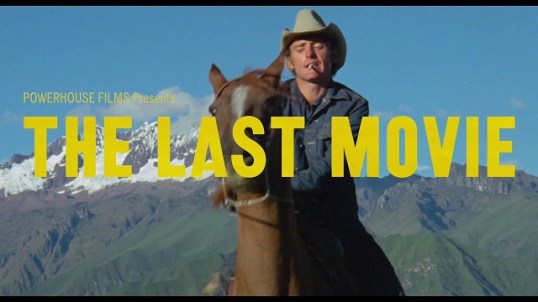
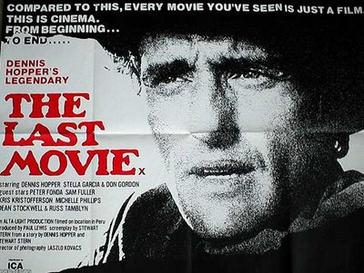
The story behind the making of 1971’s The Last Movie is legendary. It’s also a bit of a cautionary tale.
In 1969, Hollywood was stunned by the box office success of an independent, low-budget counter-culture film called Easy Rider. Easy Rider not only made a star out of Jack Nicholson but it was also the film that finally convinced the studios that the way to be relevant was not to continue to crank out big budget musical extravaganzas like Doctor Doolittle and Hello, Dolly! Instead, it was decided that the smart thing to do would be to hire young (or, at the very least, youngish) directors and basically just let them shoot whatever they wanted. The resulting films might not make much sense to the executives but, presumably, the kids would dig them and as long as the kids were paying money to see them, everyone would continue to get rich. Because Dennis Hopper had directed Easy Rider, he suddenly found himself very much in demand as a director.
Of course, almost everyone in Hollywood knew Dennis Hopper. Long before he became an icon of the counter-culture, Dennis Hopper had been a part of the studio system. John Wayne even referred to Hopper as being his “favorite communist.” Everyone knew that Dennis could be a bit arrogant. Everyone knew that Dennis was very much into drugs and that, as a result, he had a reputation for being a bit unstable. Everyone knew that Dennis Hopper deliberately cultivated an image of being a bit of a wild man and a revolutionary artist. But Dennis Hopper had just directed Easy Rider and Universal was willing to give Hopper some money to go down to Peru and direct his follow-up.
The Last Movie was a film that Hopper had been planning on making for a while. The film’s original script told the story of an aging and broken-down stuntman named Kansas who retires to Mexico and searches for a gold mine with a friend of his. Hopper first tried to get the film going in 1965, with Montgomery Clift in the lead role. After Clift died, Hopper tried to interest John Wayne in the starring role but, though Wayne enjoyed having Hopper in his films so that he could threaten to shoot him whenever Abbie Hoffman said something shocking, he had no interest in being directed by him. When Universal finally agreed to put up the money for the film, Hopper offered the lead role to Jack Nicholson. Nicholson turned it down and told Hopper that it was obvious that Dennis wanted to play the role himself. Dennis decided that he agreed with Nicholson and he cast himself as Kansas. Dennis also made the fateful decision to not only change the story’s setting to Peru but to also film on location.
Dennis and a group of friends flew down to Peru, which, at that time, was the cocaine capitol of the world. Drug use was rampant on the set, with Dennis reportedly being one of the main offenders. The cast and crew filmed during the day and partied at night and no one was particularly sure what the film was supposed to be about. Amazingly, Hopper finished filming on schedule and within budget but, much as he did with Easy Rider, he also overfilmed and ended up with 40 hours of footage. Not wanting to be bothered by the studios, Hopper edited the footage in his compound in Taos, New Mexico. Working slowly and continuing to consume a large amount of drugs and alcohol, Hopper still managed to put together a film that had a straightforward storyline. When Hopper showed his initial cut to filmmaker Alejandro Jodorowsky, the director of El Topo accused Hopper of being too conventional in his approach, which led to Hopper chopping up the film and reassembling it. Finally, after spending over a year working with the footage, Hopper turned in his final edit.
Universal had no idea what to make of the film that Hopper delivered to them. Still, they released it with the hope that the same crowd that loved Easy Rider would embrace The Last Movie. While the film did win an award at the Venice Film Festival, critics hated it and, even worse, audiences stayed away. The film’s reception was so overwhelmingly negative that Hopper found himself largely exiled from Hollywood, with only a few directors (like Francis Ford Coppola) willing to take the chance of working with him. It wasn’t until the 80s, when he finally got clean and sober, that Dennis Hopper was able to reestablish himself as a character actor and, ultimately, a beloved cultural institution.
But what about The Last Movie? Was is it really as bad as the critics claimed? Or was it, as some more recent reviewers have suggested, an unacknowledged masterpiece that was ahead of its time? I recently watched The Last Movie to find out for myself.
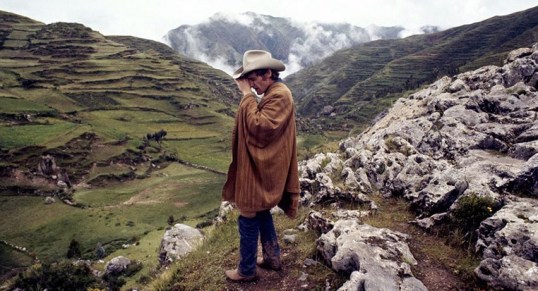
Despite its reputation, The Last Movie gets off to a pretty strong start. Samuel Fuller (playing himself) is directing a hilariously over-the-top and violent western in the mountains of Peru. Kansas (Dennis Hopper) is working as a stuntman. He’s fallen in love with a local sex worker named Maria (Stella Garcia). Kansas is meant to be an aging Hollywood veteran, someone who has broken a lot of bones and who carries a lot of aches as a result of his line of work. (One can see why Hopper initially imagined an actor like John Wayne in the role.) He knows that this is going to be his last job and, as we see over the first 25 minutes of the film, he feels alienated from the rest of the cast and crew. Admittedly, Hopper does appear to be a bit too young for the role. The ideal Kansas would have been someone like Ben Johnson, L.Q. Jones, or perhaps Warren Oates. But, still, Hopper does a good job of capturing Kansas’s mixed feelings about the western that’s being filmed around him.
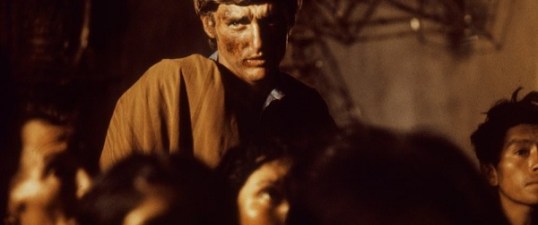
A lot of familiar faces pop up in the film’s fictional western. Dean Stockwell plays an outlaw. Jim Mitchum, Russ Tamblyn and Kris Kristofferson plays his associates. Peter Fonda is the youthful sheriff. Michelle Phillips is the daughter of the town’s banker and apparently, she’s also the girlfriend of one of the outlaws. We watch as the actors pretend to shoot guns and kill each other while the cameras are rolling, just to get up off the ground once “Cut” is yelled. When a local Indian who has been cast as an extra grows upset at the violence, an assistant director explains to him that no one really dies while the cameras are rolling. When shooting wraps, the film company goes home but Kansas stays behind with Maria. One day, the local priest (Tomas Milian) warns Kansas that the local indigenous people have moved into the abandoned film set and are trying to shoot their own movie. Kansas discovers that they have built wooden cameras and wooden boom mics and that their chief is giving orders in the style of Sam Fuller. They’re also firing the guns that the Americans left behind.
The first part of the film works quite well. Hopper’s camera captures the beautiful and isolated Peruvian landscape. The violent western is a pitch perfect and affectionate parody of a generic studio film. Though Hopper is a bit too young for the role, he still does a good job of capturing Kansas’s alienation from his fellow Americans. Even more importantly, the first part of the film seems to have an identifiable theme. The American film crew invaded an isolated part of Peru and changed the culture of the natives without even realizing it. Now, they’ve left but the natives are still dealing with the after effects of the American “invasion.” It’s easy to see, within that part of the story, a critique of both American culture and American foreign policy.
The second part of the film is where things start to fall apart. Kansas meets an old friend named Neville (Don Gordon). Neville has discovered a gold mine in the Peruvian mountains. With Kansas as his partner, he tries to get a businessman named Harry Anderson (Roy Engel) to invest in it. Kansas and Neville try to impress Harry and his wife (Julie Adams, best-known for being stalked by The Creature From The Black Lagoon). Kansas and Neville take the Andersons to a brothel and, in the process, Kansas offends Maria. Kansas then paws Mrs. Anderson’s fur coat and mentions that human beings are covered in hair. For all of their efforts, Harry will not invest, no matter how desperately Neville begs him to reconsider.
The second part of the film drags, with many of the scenes being obviously improvised between Hopper, Gordon, Garcia, Engel, and Adams. Unfortunately, the improved conversations aren’t particularly interesting and they tend to go on forever. Usually a reliable character actor, Don Gordon ferociously chews the scenery as Neville and it doesn’t take long before one grows tired of listening to him yell. (Gordon was far more impressive in Hopper’s Out of the Blue.) With the use of improvisation and overlapping dialogue, the second half of the film tries to feel naturalistic but instead, it’s a migraine-inducing method exercise gone wrong. It’s also during the second part of the film that a “scene missing” title card flashes on the screen, an indication that the discipline that Hopper showed as a director during the beginning of the film is about to be abandoned.
Finally, the third part of the film — well, who knows? The final 25 minutes of the film is collection of random scenes, some of which may be connected and some of which may not. The natives have decided that the only way to properly end their “film” is to kill Kansas. Kansas is shot several times and rides away on his horse. Suddenly, Kansas is back at his home and Maria is taunting him for getting shot. Then, Kansas is riding his horse again. Then suddenly, Dennis Hopper and Tomas Milian are laughing at the camera. A script supervisor tries to get Dennis to look at the shooting schedule while Dennis drinks. This happens:
Milian points out that the blood on Hopper’s shirt is dry. Hopper looks at his shoulder, where Kansas was previously shot, and says that someone needs to add his scar before he can shoot the scene. Ah! So, now we’re acknowledging that it’s all just a movie. Thanks, Dennis! Suddenly, Dennis is Kansas again and he’s collapsing over and over again in the dust. He appears to be dead but no, now he’s Dennis again and he’s standing up and smiling at the camera. And now, he’s singing Hooray for Hollywood. And now, suddenly, Kansas and Neville are talking about The Treasure of the Sierra Madre and then….
Well, let’s just say that it goes on and on before finally ending with a scrawled title card.
It’s a disjointed mess and it’s all the more frustrating because the first 30 minutes of the film is actually pretty good. But then, Dennis apparently remembered that he was supposed to be the voice of the counter-culture and he gave into his most pretentious impulses. Of course, just because a film is a mess, that doesn’t mean that it can’t be entertaining. And again, the first part of the film is entertaining and third part of the film is weird enough that it’ll hold most people’s attention for at least a few minutes. But the middle section of the film is so slow and pointless that it pretty much brings down the entire film.
In the end, what is The Last Movie about? In The American Dreamer(a documentary that was filmed while Hopper was editing The Last Movie in New Mexico), Hopper spends a lot of time talking about revolution and taking over Hollywood but The Last Movie is hardly a revolutionary film. The film is at its most alive when it is focused on the shooting of its fictional western. For all the satirical pokes that The Last Movie takes at the studio system, it’s obvious that Hopper had a lot of affection for Old Hollywood and for directors like Sam Fuller. Kansas may say “Far out,” but he’s hardly a hippie. Even the film’s jumbled finale seems to be saying, “It’s all Hollywood magic!” In the end, the film’s call for a new style of cinema is defeated by its love for the old style of cinema.
Instead, I think The Last Movie works best when viewed as a portrait of paranoia. Hopper himself admitted that he was naturally paranoid and the heavy amount of drugs that he was doing in the 70s didn’t help. One reason why Hopper filmed in Peru and edited in New Mexico was so the studios couldn’t keep track of him and, while directing, he worried about being arrested by the Peruvian secret police. As an actor, Hopper plays Kansas as being someone who views the world with caution and untrusting eyes. He doesn’t trust the other members of the film crew. He loves Maria but he’s still convinced that she’s going to betray him. Even the natives ultimately try to destroy him and the script supervisor tries to get him to stick to the shooting schedule. The film works best as a disjoined portrait of one man’s paranoid and fatalistic world view.
The Last Movie pretty much ended the studio’s attempts to harness the counter-culture by giving money to self-described revolutionaries. The new wave of directors — like Spielberg and Lucas — may have shared Hopper’s then-politics but they weren’t looking to burn down the system. (Hopper himself later became a Republican.) The Last Movie may not have been the literal last movie but it was, for a while at least, the last of its kind.
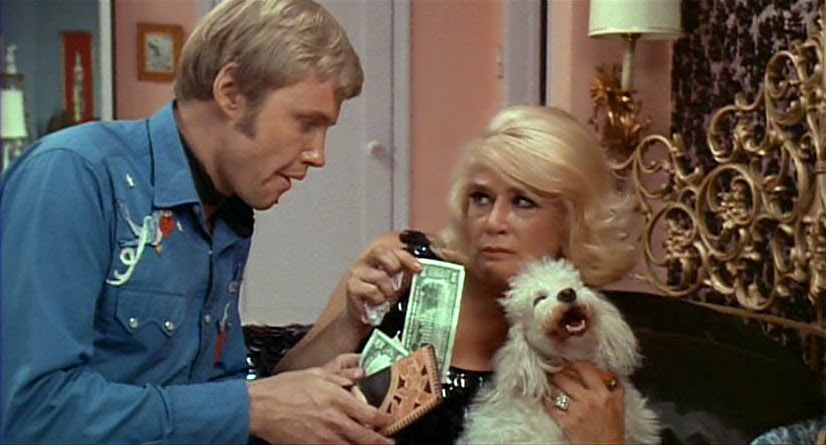
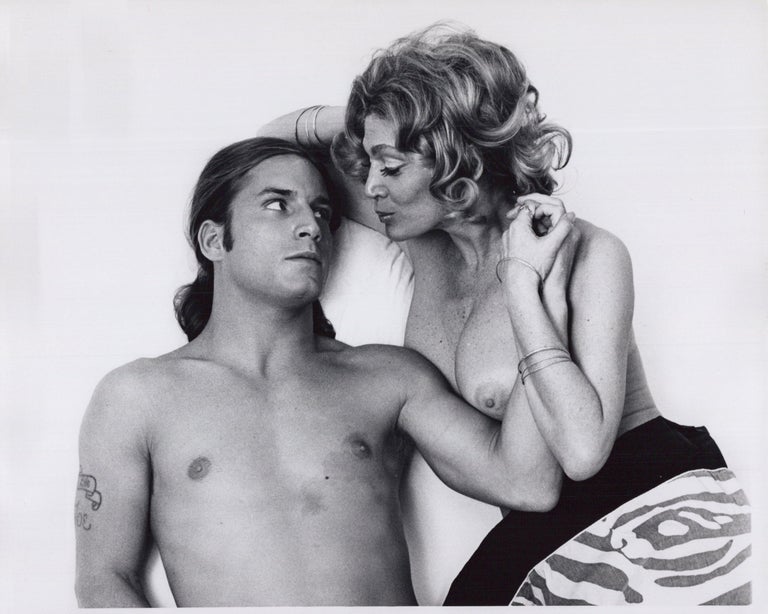
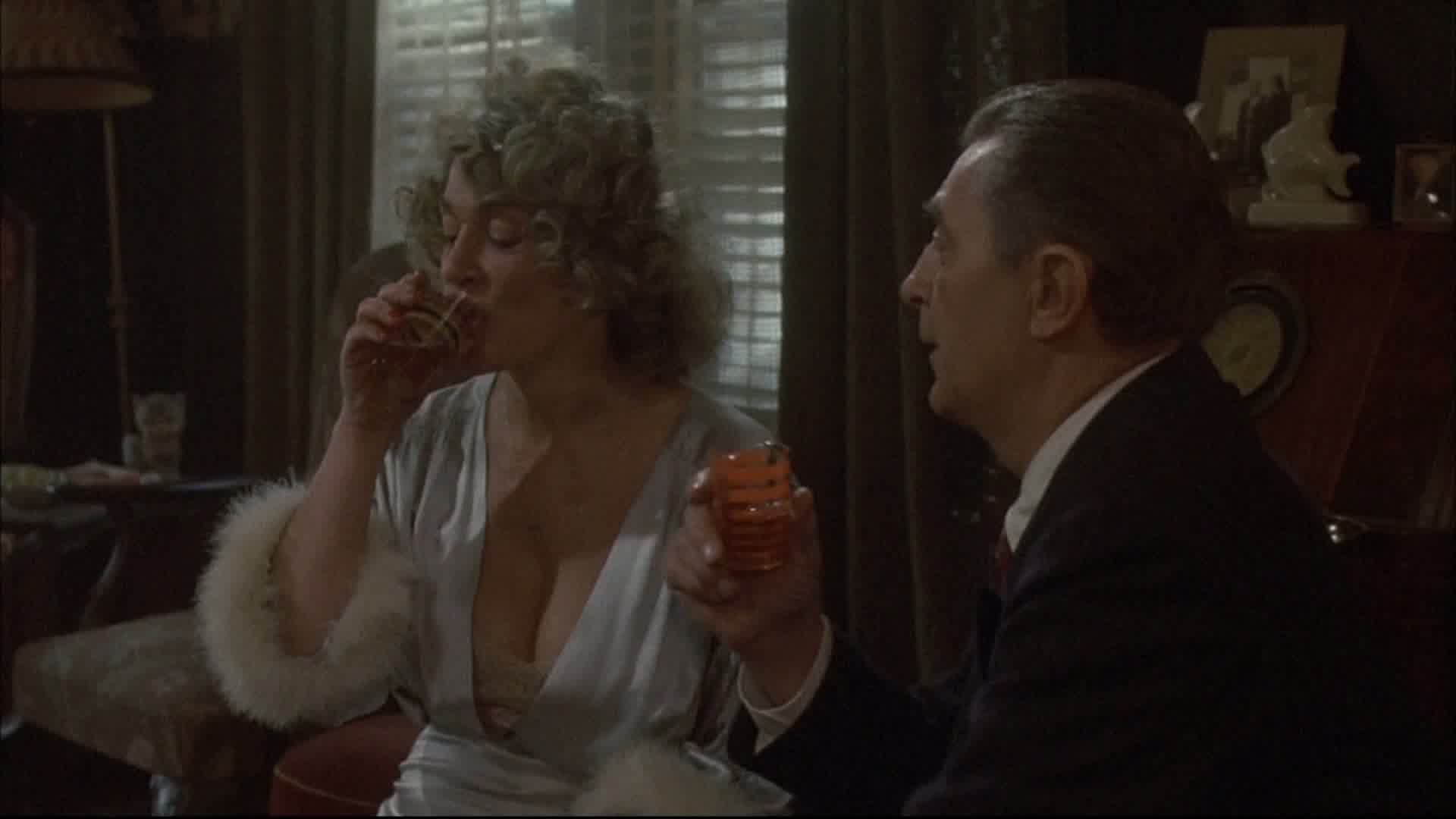
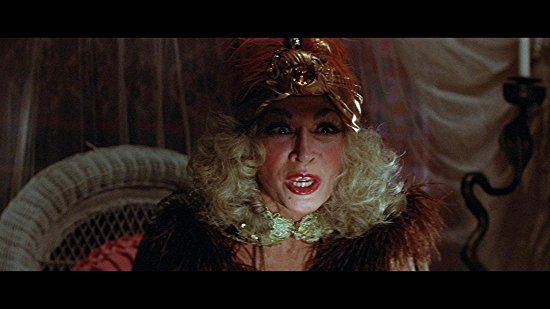
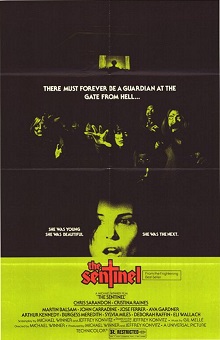
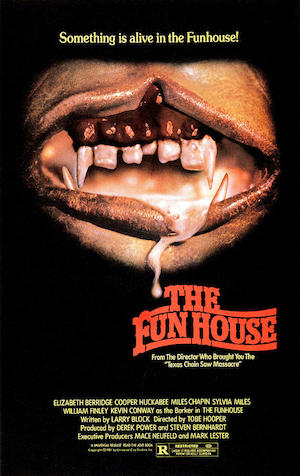
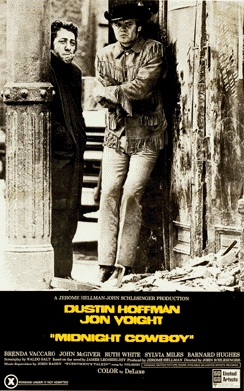
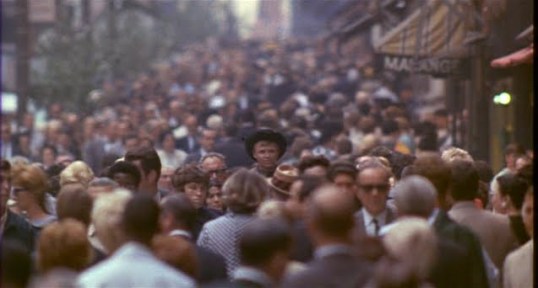
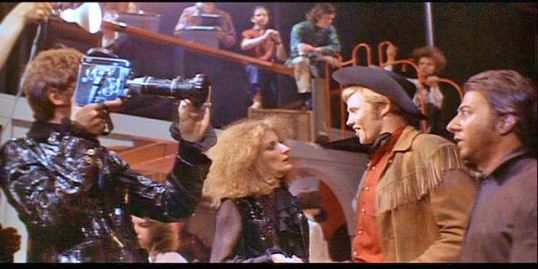
4 Shots From 4 Films is just what it says it is, 4 shots from 4 of our favorite films. As opposed to the reviews and recaps that we usually post, 4 Shots From 4 Films lets the visuals do the talking. Character actress Sylvia Miles passed away today at age 94. Though never a household name, movie lovers knew they were in for a treat whenever Sylvia appeared onscreen, as did her peers, nominating her twice for the Best Supporting Actress Oscar. In her honor, we present 4 shots from the films of Sylvia Miles.
Here’s the main lesson that I’ve learned from watching the 1977 horror film, The Sentinel:
Even in the 1970s, the life of a model was not an easy one.
Take Alison Parker (Cristina Raines) for instance. She should have everything but instead, she’s a neurotic mess. Haunted by a traumatic childhood, she has attempted to commit suicide twice and everyone is always worried that she’s on the verge of having a breakdown. As a model, she’s forced to deal with a bunch of phonies. One of the phonies is played by Jeff Goldblum. Because he’s Goldblum, you suspect that he has to have something up his sleeve but then it turns out that he doesn’t. I get that Jeff Goldblum probably wasn’t a well-known actor when he appeared in The Sentinel but still, it’s incredibly distracting when he suddenly shows up and then doesn’t really do anything.
Alison has a fiancée. His name is Michael Lerman (Chris Sarandon) and I figured out that he had to be up to no good as soon as he appeared. For one thing, he has a pornstache. For another thing, he’s played by Chris Sarandon, an actor who is best known for playing the vampire in the original Fright Night and Prince Humperdink in The Princess Bride. Not surprisingly, it turns out that Michael’s previous wife died under mysterious circumstances. NYPD Detective Rizzo (Christopher Walken) suspects that Michael may have killed her.
(That’s right. Christopher Walken is in this movie but, much like Jeff Goldblum, he doesn’t get to do anything interesting. How can a movie feature two of the quirkiest actors ever and then refuse to give them a chance to act quirky?)
Maybe Alison’s life will improve now that she has a new apartment. It’s a really nice place and her real estate agent is played by Ava Gardner. Alison wants to live on her own for a while. She loves Michael but she needs to find herself. Plus, it doesn’t help that Michael has a pornstache and may have killed his wife…
Unfortunately, as soon as Alison moves in, she starts having weird dreams and visions and all the usual stuff that always happens in movies like this. She also discovers that she has a lot of eccentric neighbors, all of whom are played by semi-familiar character actors. For instance, eccentric old Charles (Burgess Meredith) is always inviting her to wild parties. Her other two neighbors (played by Sylvia Miles and Beverly D’Angelo) are lesbians, which the film presents as being the height of shocking decadence. At first, Alison likes her neighbors but they make so much noise! Eventually, she complains to Ava Gardner. Ava replies that Alison only has one neighbor and that neighbor is neither Burgess Meredith nor a lesbian.
Instead, he’s a blind priest who spends all day sitting at a window. He’s played by John Carradine, who apparently had a few hours to kill in 1977.
But it doesn’t stop there! This movie is full of actors who will be familiar to anyone who enjoys watching TCM. Along with those already mentioned, we also get cameos from Martin Balsam, Jose Ferrer, Arthur Kennedy, Eli Wallach, Richard Dreyfuss, and Tom Berenger. There are 11 Oscar nominees wasted in this stupid film. (Though, in all fairness, Christopher Walken’s nomination came after The Sentinel.)
Personally, The Sentinel bugged me because it’s yet another horror movie that exploits Catholic iconography while totally misstating church dogma. However, the main problem with The Sentinel is that it’s just so incredibly boring. I own it on DVD because I went through a period where I basically bought every horror film that could I find. I’ve watched The Sentinel a handful of times and somehow, I always manage to forget just how mind-numbingly dull this movie really is. There’s a few scary images but mostly, it’s just Burgess Meredith acting eccentric and Chris Sarandon looking mildly annoyed. If you’ve ever seen Rosemary’s Baby, The Exorcist, or The Omen, you’ll figure out immediately what’s going on but The Sentinel still insists on dragging it all out. Watching this movie is about as exciting as watching an Amish blacksmith shoe a horse.
There’s a lot of good actors in the film but it’s obvious that most of them just needed to pick up a paycheck. I’ve read a lot of criticism of Cristina Raines’s lead performance but I actually think she does a pretty good job. It’s not her acting that’s at fault. It’s the film’s stupid script and lackluster direction.
1980’s The Funhouse opens with an almost shot-for-shot recreation of the famous shower scene from Psycho, with Amy (Elizabeth Berridge) getting attacked in the shower by a masked, knife-wielding maniac.
The only difference is that there’s no shrieking violins, there’s no blood, and the knife is quickly revealed to be a fake. It turns out that the “killer” is actually Amy’s younger brother, Joey (Shawn Carson). Joey loves horror movies. In fact, he’s pretty much the perfect stand-in for The Funhouse‘s intended audience. Joey was just playing a rather mean-spirited prank but now, as a result, Amy snaps that she’s not going to take him to the carnival.
Of course, Amy isn’t supposed to be going to the carnival either. Her parents have strictly forbidden it. Everyone knows that traveling carnivals are dangerous and, at the last town the carnival visited, two teenagers disappeared! There’s no proof that the carnival has anything to do with those disappearances, of course. But still…
Amy does exactly what I would have done in her situation. She tells her parents that she’s going over to a friend’s house and then she goes to the carnival anyway! Accompanying her is her boyfriend Buzz (Cooper Huckabee), who is so cool that he has a name like Buzz. Also along for the ride: Amy’s best friend, Liz (Largo Woodruff), and her boyfriend, Richie (Miles Chapin). Richie’s kind of a loser but that’s to be expected. Every group needs at least one idiot who can do something stupid that gets everyone else killed. We all know how that works.
The carnival turns out to be just as sleazy as Amy’s parents thought it would be. There’s a fake psychic (Sylvia Miles). There’s a magician who dresses like Dracula. There’s a barker (Kevin Conway), whose deep voice is constantly heard in the background. And, of course, there’s a funhouse! Still, everyone’s having a good time. Either that or they’re all just stoned.
For his part, Joey sneaks out of the house and goes to the carnival himself. He doesn’t have quite as much fun as Amy. In fact, his experience is pretty scary. Weird carnival people keep yelling at him. He keeps getting lost. Still, things could be worse. By the time his parents arrive to pick Joey up, Amy and her friends are all trapped in the funhouse. They’re being pursued by the barker and his deformed son (Wayne Doba). Needless to say, it’s all pretty much Richie’s fault.
Richie. What a dumbass.
With its teenage victims and its lengthy chase scenes, The Funhouse is often dismissed as just being another early 80s slasher film. However, The Funhouse is actually a fairly clever, entertaining, and occasionally even witty horror film. Much like director Tobe Hooper’s best-known film, The Texas Chainsaw Massacre, The Funhouse gets its scares by convincing audiences that they’re actually seeing more than they are. Hooper emphasizes atmosphere and performances over gore. While The Funhouse has its share of jump scares, it mostly succeeds by convincing us that anyone could die at any moment. It’s an intense film, with excellent performances from both Elizabeth Berridge and Kevin Conway.
After kickstaring the slasher genre with The Texas Chainsaw Massacre, Hooper used The Funhouse to poke a little fun at it. From the opening shower scene to the electrifying finale, Hooper plays with the genre-savvy expectations of the audiences. Our four victims even do the smart thing for once — they try to all stay together. Needless to say, that doesn’t work out too well.
The Funhouse is an entertaining thrill ride and, seen today, it’s more evidence that Tobe Hooper deserved better than he got from the film industry.
Tonight, I watched the 1969 winner of the Oscar for Best Picture, Midnight Cowboy.
Midnight Cowboy is a movie about Joe Buck. Joe Buck is played by an impossibly young and handsome Jon Voight. Joe Buck — and, to be honest, just calling him Joe seems wrong, he is definitely a Joe Buck — is a well-meaning but somewhat dumb young man. He lives in Midland, Texas. He was raised by his grandmother. He used to go out with Annie (Jennifer Salt) but she eventually ended up being sent to a mental asylum after being raped by all of Joe Buck’s friend. Joe Buck doesn’t have many prospects. He washes dishes for a living and styles himself as being a cowboy. Being a Texan, I’ve known plenty of Joe Bucks.
Joe Buck, however, has a plan. He knows that he’s handsome. He’s convinced that all women love cowboys. So, why shouldn’t he hop on a bus, travel to New York City, and make a living having sex with rich women?
Of course, once he arrives in the city, Joe Buck discovers that New York City is not quite as inviting as he thought it would be. He lives in a tiny and dirty apartment. He can barely afford to eat. Walking around the city dressed like a cowboy (and remember, this was long before the Naked Cowboy became one of the most annoying celebrities of all time) and randomly asking every rich woman that he sees whether or not she can tell him where he can find the Statue of Liberty, Joe Buck is a joke. Even when he does get a customer (played, quite well, by Sylvia Miles), she claims not to have any money and Joe Buck feels so sorry for her that he ends up giving her his money.
As I watched the first part of the movie, it stuck me that the main theme of Midnight Cowboy appeared to be that, in 1969, New York City was literally Hell on Earth. But then Joe Buck has flashbacks to his childhood and his relationship with Annie and it quickly became apparent that Midland, Texas was Hell on Earth as well. Towards the end of the film, it’s suggested that Miami might be paradise but not enough to keep someone from dying on a bus.
Seriously, this is a dark movie.
Joe Buck eventually meets Ratso Rizzo (Dustin Hoffman). Ratso’s real name is Enrico but, after taking one look at him, you can’t help but feel that he’s a perfect Ratso. Ratso is a con man. Ratso is a petty thief. Ratso knows how to survive on the streets but New York City is still killing him. As a child, Ratso had polio and now he walks with a permanent limp. He coughs constantly, perhaps because he has TB. Ratso becomes Joe Buck’s manager and roommate (and, depending on how you to interpret certain scenes and lines, perhaps more) but only after attempting to steal all of his money.
Unfortunately, Ratso is not much of a manager. Then again, Joe Buck is not much of a hustler. Most of his customers are men (including a student played by a young but recongizable Bob Balaban), but Joe Buck’s own sexual preference remaining ambiguous. Joe Buck is so quick to loudly say that he’s not, as Ratso calls him, a “fag” and that cowboys can’t be gay because John Wayne was a cowboy, that you can’t help but suspect that he’s in denial. When he’s picked up by a socialite played by Brenda Vaccaro, Joe Buck is impotent until she teases him about being gay. In the end, though, Joe Buck seems to view sex as mostly being a way to make money. As for Ratso, he appears to almost be asexual. His only concern, from day to day, is survival.
Did I mention this is a dark movie?
And yet, as dark as it is, there are moments of humor. Joe Buck is incredibly dense, especially in the first part of the movie. (During the second half of the film, Joe Buck is no longer as naive and no longer as funny. It’s possible that he even kills a man, though the film is, I think, deliberately unclear on this point.) Ratso has a way with words and it’s impossible not to smile when he shouts out his famous “I’m walking here!” at a taxi. And, as desperate as Joe Buck and Ratso eventually become, you’re happy that they’ve found each other. They may be doomed but at least they’re doomed together.
There’s a lengthy party scene, one that features several members of Andy Warhol’s entourage. I was a bit disappointed that my favorite 60s icon, Edie Sedgwick, was nowhere to be seen. (But be sure to check out Ciao Manhattan, if you want to see what Edie was doing while Joe Buck and Ratso Rizzo were trying not to starve.) But, as I watched the party scene, I was reminded that Midnight Cowboy is definitely a film of the 60s. That’s both a good and a bad thing. On the positive side, the late 60s and 70s were a time when filmmakers were willing to take risks. Midnight Cowboy could only have been made in 1969. At the same time, there’s a few moments when director John Schlesinger, in the style of many 60s filmmakers, was obviously trying a bit too hard to be profound. Some of the flashbacks and fantasy sequences veer towards the pretentious.
Fortunately, the performances of Voight and Hoffman have aged better than Schlesinger’s direction. Hoffman has the more flamboyant role (and totally throws himself into it) but it really is Voight who carries the film. Considering that he’s playing a borderline ludicrous character, the poignancy of Voight’s performance is nothing short of miraculous.
Midnight Cowboy was the first and only X-rated film to win best picture. By today’s standards, it’s a PG-13.




 Through the Shattered Lens