Brad’s reflections on STAND BY ME (1986), directed by Rob Reiner!


“I was twelve going on thirteen the first time I saw a dead human being.”

These are the first words spoken in director Rob Reiner’s classic coming of age film, STAND BY ME, which received its widespread theatrical release in the United States on August 22nd, 1986. Actor Richard Dreyfuss spoke words that gave an exact description of my own age in the summer of 1986 when the film was released, and I certainly felt a connection to the characters in Reiner’s film. I watched STAND BY ME many times as a teenager, and with a humble and hurting heart, I decided to watch it again last night. On its surface, it’s a pretty simple story… 

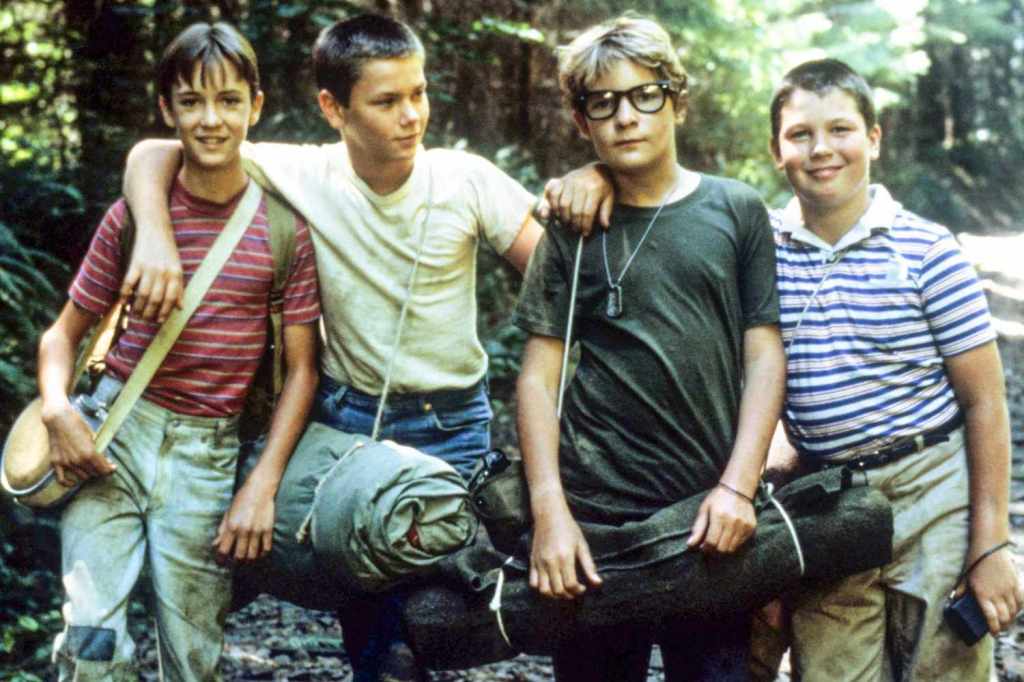
After accidentally learning of the location of the body of a local boy who’s been missing for several days, four boys (played by Wil Wheaton, River Phoenix, Corey Feldman, and Jerry O’Connell) set off on a weekend adventure to find the body in hopes of becoming local heroes. Along the way, they dodge trains, get sucked on by leeches, tell gross-out stories around a campfire, tackle traumatic personal issues, and eventually stand up to a group of older bullies (led by Kiefer Sutherland)! When the weekend is over, they move on with their own lives, lives that are never quite the same again.                   

The main reason I have a real personal connection to STAND BY ME is the fact that I recognize myself and some of my friends in its young characters. I grew up in a very small rural community in Arkansas called Toad Suck. It wasn’t even a town; it was more of just a spot in the road where a few homes built up near a dam and bridge on the Arkansas River. Often when I’d spend the night with my best friend, we’d go walking down the railroad track that ran through our community, carrying our BB guns and hanging out on the railroad bridges where we could take aim at rocks, sticks, turtles, and, at times, the dreaded water mocassin! Like the boys in the movie, we’d always have to be on the lookout for the oncoming trains. As a very naïve and sheltered kid of the mid-80’s who was raised in a strict religious household, I tended to be somewhat judgmental. STAND BY ME forced me to think deeper thoughts and try to find a more mature empathy for those kids I hung out with and saw at school every day. While none of the characters in the film are an exact replica of me or my friends, we knew of people who were probably experiencing abuse, who were looked down upon as “less than,” and who were neglected by their parents. And I think we have all experienced times when we felt insecure, lacked confidence, or were afraid and didn’t have the maturity to handle it in a positive manner. I felt compassion for these characters, which in turn helped me feel more understanding towards those around me in my real life! As a filmmaker in complete control of his craft, Rob Reiner made a movie that even affected someone like me, and I’ve never forgotten those feelings. 

My feeling of kinship with the actors who played in STAND BY ME didn’t end when the movie ended either. Wil Wheaton, River Phoenix, Corey Feldman and Jerry O’Connell were all very close to my age when they filmed the movie, and I’ve followed each of their careers fairly closely my entire life. My two favorites were River Phoenix and Corey Feldman. It was painful to me when River Phoenix died in 1993 at just 23 years of age. I remember all the issues Corey Feldman had with drug addiction. I’m so glad that he’s been able to overcome that addiction and achieve sobriety for multiple decades. I’m not a Star Trek completist, but I always got a kick out of seeing Wil Wheaton on THE BIG BANG THEORY. And then Jerry O’Connell definitely lost his baby fat and has gone on to a solid acting career! The common thread, of course, is the fact that Reiner got great performances from each of these young actors in STAND BY ME. Combine those performances with the quality of the film and the time in my own life when the film came out, and you can start to get the idea of why the film has a position of reverence in my life. You can also see why I have such respect for Rob Reiner as a filmmaker. 

Overall, STAND BY ME is simply one of my favorite films of all time. It has some of the most memorable on-screen moments of my childhood. The pie eating barf-o-rama and the crotch leeches are scenes that are burned into my psyche. Along with the great cast of boys, Kiefer Sutherland gives one of his solid, bully performances in an 80’s film. Sutherland would go on later in his career and play one of my all-time favorite TV characters, Jack Bauer, in 24. More important than all of that, though, is the fact that the coming-of-age film STAND BY ME helped 12-13 year-old me grow up a little bit myself by making me feel something. I guess the greatest compliment you can give any director is to tell them that their film made you think about things more important than yourself and made a difference in your own life. Today, I pay you that great compliment and say Rest in Peace, Mr. Reiner! 

Review: The Running Man (dir. by Edgar Wright)


“Bloodlust is our birthright!” — Bobby Thompson

Edgar Wright’s 2025 take on The Running Man is an adrenaline shot to the chest and a sly riff on our era’s obsession with dystopian game shows, all filtered through his own eye for spectacle and pacing. Unlike many of his earlier works, such as Shaun of the Dead and Scott Pilgrim vs. The World, which bristle with meta-commentary, the film is a sleeker and more bruising affair. At its core, this is a survival thriller decked out in neon, driven by a director who wants to both honor and outpace what’s come before.

Wright’s version ditches the muscle-bound caricature of the 1987 Schwarzenegger adaptation, recentering on a more grounded protagonist. Glen Powell’s Ben Richards isn’t a quip-dispensing tank; he’s a desperate father, pressed to extremes, haunted more by anxiety than rage. We meet him in a world where reality TV devours everything, and nothing is too cruel if it wins the ratings war. Richards is cast as the sacrificial everyman, volunteering for the deadly Running Man show only because his family’s survival is at stake, not his ego. This lends the film a more human—and frankly, more believable—edge than either of its predecessors.

Visually, The Running Man is vintage Wright: kinetic and muscular, with chase scenes propelled by propulsive synths and punchy editing, each set piece designed as much to thrill as to disorient. Gone, however, is much of the director’s comedic ribbing; what remains is a tense visual feast, saturated in electric colors and relentless motion. The camera rarely settles. The television show itself is depicted as both garish and sinister, a spectacle that feels plausible because it’s only five minutes into our own future.

The film takes sharp aim at the machinery of television and the spectacle it creates, exposing how entertainment can thrive on cruelty and manipulation. It highlights a world where reality is heavily curated and shaped to serve ratings and control, with the audience complicit in consuming and encouraging the degradation of genuine human experience. The media in the film mirrors warnings that have circulated in recent years—that it has become a tool designed to appease the masses, even going so far as to use deepfakes to manipulate narratives in favor of particular agendas. While this focus on broadcast media delivers potent social commentary, Wright does drop the ball a bit by concentrating too much on traditional TV media at a time when entertainment consumption is largely online and more fragmented. This narrower scope misses an opportunity to deeply engage with the digital age’s sprawling and insidious impact on public attention and truth.

Glen Powell’s performance is pivotal to the film’s success. He anchors the story, selling both the exhaustion and the resolve required for the role. This Ben Richards is no superhero—his fear feels palpable, and his reactions are messy, urgent, and often impulsive. Opposite him, Josh Brolin steps in as Dan Killian, the show’s orchestrator. Brolin’s performance, smooth and menacing, turns every negotiation and threat into a master class in corporate evil. The stalkers, the show’s gladiatorial killers, are less cartoon than their 1987 counterparts, but all the more chilling for their believability—branding themselves like influencers, they embody a world where violence and popularity are inseparable.

On the surface, Wright’s Running Man leans heavily into social satire. It lobs grenades at infotainment, the exploitation inherent in reality TV, and the way audiences are silently implicated in all the carnage they consume. Reality is a construct, truth is whatever the network decides to show, and every moment of suffering is a data point in an endless quest for engagement. The critique is loud, though not always nuanced. Where Wright has previously reveled in self-aware storytelling, here he pulls back, focusing on the mechanics and cost of spectacle more than its digital afterlife.

Action is where the film hits hardest. Wright brings his expected flair for movement and tension, with chase sequences escalating to wild, blood-smeared crescendos, and hand-to-hand fights that feel tactile rather than stylized. The film borrows more heavily from the structure of King’s novel, raising stakes with each new adversary and refusing to let viewers catch their breath. Despite the non-stop pace, the movie runs a little too long—some sequences feel indulgent, and the final act’s rhythm stutters as it builds toward its conclusion. Still, even in its bloat, there’s always something energetic or visually inventive happening onscreen.

The movie’s climax and resolution avoid over-explaining or revealing too much, instead choosing to leave room for interpretation and suspense about the outcomes for the characters and the world they inhabit. This restraint preserves the tension and leaves viewers with something to chew on beyond the final credits.

For fans of Edgar Wright, there’s a sense of something both familiar and altered here. The visual wit, the muscular editing, the stylish sound cues—they’re all present. Yet the film feels less like a playground for Wright’s usual whimsy and more like a taut, collaborative blockbuster. It’s playfully brutal and thoroughly engaging, but does not, in the end, subvert the genre quite as gleefully as some might hope. For every moment of subtext or clever visual flourish, there is another in which the movie simply barrels forward, content to dazzle and provoke in equal measure.

The Running Man (2025) is a film with a target audience—those who want action, smart but accessible social commentary, and just enough character work to feel the stakes. It will delight viewers drawn to a flashier, meaner take on dystopian spectacle, and Powell’s central performance is likely to win over skeptics and fans alike. If you’re hoping for a thesis on algorithmic age or a meditation on surveillance capitalism, you may need to look elsewhere. But if you want a turbo-charged chase movie that occasionally stops to wag a finger at the world that spawned it, you’re likely to have a great time.

Ultimately, Edgar Wright’s Running Man is a sharp, glossy refit of a classic dystopian story, packed with high-octane action and grounded by its central performance. It won’t please everyone and doesn’t attempt to, but it never forgets that, above all, good television keeps us running. In the era of spectacle, that might be all you need.

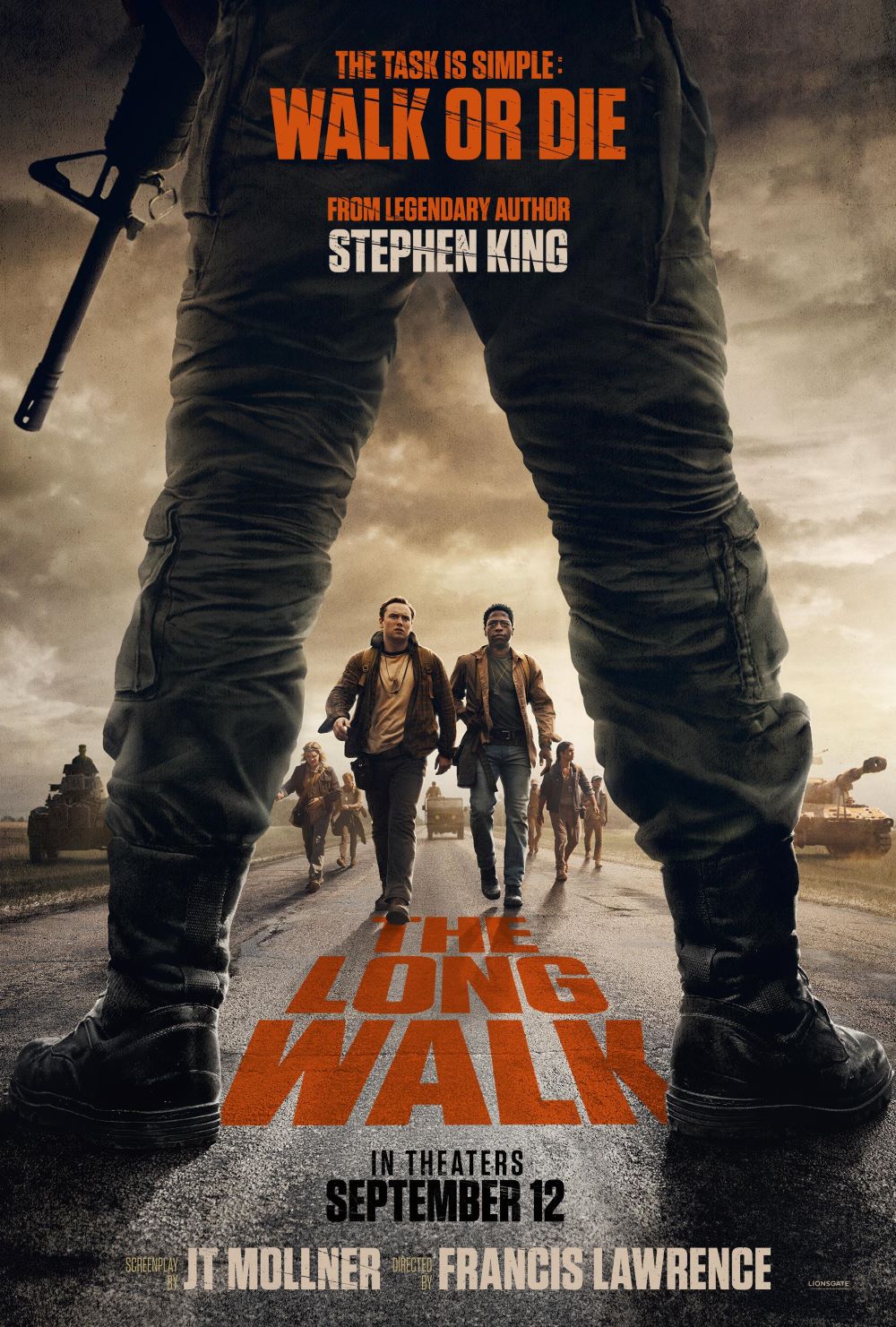
Horror Review: The Long Walk (dir. by Francis Lawrence)


“In this Walk, it’s not about winning. It’s about refusing to be forgotten while the world watches us fade away.” — Peter McVries

Francis Lawrence’s The Long Walk (2025) delivers a relentlessly brutal and unyielding vision of dystopian horror that explores survival, authoritarian control, and the devastating loss of innocence. The film immerses viewers in a grim spectacle: fifty teenage boys forced to participate in an annual, televised event known as the Long Walk. To survive, each participant must maintain a constant pace, never falling below a minimum speed, or else face immediate execution.

At the heart of this bleak narrative is Raymond Garraty, played with earnest vulnerability by Cooper Hoffman. Garraty’s backstory, marked by the tragic execution of his father for political dissent, sets a somber tone from the outset. As the Walk drags on, Garraty forges fragile bonds with fellow contestants, particularly Peter McVries (David Jonsson), whose camaraderie and quiet resilience inject moments of hope and humanity into the harrowing journey. These relationships become the emotional core, grounding the film’s relentless physical and psychological torment in deeply human experiences.

The setting enhances this oppressive atmosphere. The time and place remain deliberately ambiguous, with evident signs that the United States has recently suffered a second Civil War. The aftermath is a landscape ruled by a harsh, authoritarian military regime overseeing a nation economically and politically in decline. Though visual cues evoke a retro, 1970s aesthetic—reflected in military hardware and daily life—the film resists pinning itself to an exact year. This timelessness amplifies its allegorical power, emphasizing ongoing societal collapse and authoritarianism without tying the story to one era specifically. The dystopian backdrop is populated by broken communities and a pervasive sense of hopelessness that mirrors the characters’ internal struggles.

Visually, The Long Walk employs stark, gritty cinematography that traps viewers in the monotonous expanse of endless roads and bleak environments. Lawrence’s direction is unflinching and unrelenting, echoing the merciless march to death and the broader commentary on institutionalized brutality. The atmospheric score complements this oppressive tone, underscoring the emotional and physical exhaustion pacing the narrative.

Performances elevate the film’s emotional stakes significantly. Hoffman’s portrayal of Garraty captures the youth’s evolving vulnerability and determination, while Jonsson’s McVries adds a poignant emotional depth with his steady, hopeful presence. Supporting actors such as Garrett Wareing’s enigmatic Billy Stebbins and Charlie Plummer’s self-destructive Barkovitch bring vital complexity and urgency. Stebbins remains a figure whose allegiance is ambiguous, adding layered mystery to the group dynamics. Judy Greer’s limited screentime as Ginny Garraty, Ray’s mother, stands out powerfully despite its brevity. Each of her appearances is heartbreaking, bringing a wrenching emotional weight to the film. Her panicked, anguished attempts to hold onto her son before he embarks on the deadly Walk amplify the human cost of the dystopian spectacle, leaving a lasting impression of maternal agony amid the surrounding brutality.

Mark Hamill’s role as The Major is a significant supporting presence, embodying the authoritarian face of the regime. The Major oversees the brutal enforcement of the Walk’s rules, commanding lethal squads who execute those who falter. Hamill brings a grim and chilling force to the character, whose cold charisma and unwavering commitment to the ruthless system make him a menacing figure. Despite relatively limited screen time compared to the young participants, The Major’s presence looms large over the story, symbolizing the chilling machinery of power and control that governs the dystopian world.

Yet, the film is stark in its depiction of violence. The executions and suffering are raw and often grotesquely explicit, serving as a damning critique of authoritarian cruelty and the voyeuristic nature of state violence televised as entertainment. This unfiltered brutality can, however, become numbing and exhausting as it piles on relentlessly, occasionally undercutting emotional resonance. The narrative embraces nihilism fully, underscoring the dehumanization and futility within the dystopian world it portrays.

The film’s overall pacing and structure reflect this bleakness but at times suffer from monotony. The heavy focus on walking and survival mechanics leads to a lack of narrative variation, testing the audience’s endurance much like the characters’. There is likewise a noticeable stretch of physical realism—the contestants endure near-impossible physical feats without adequate signs of weariness or injury, which can strain believability.

Character development is another area where the film falters slightly. While Garraty and McVries are well-drawn and immunize emotional investment, other characters tend toward archetypical roles—bullies, outsiders, or generic competitors—diminishing the impact of many deaths or interactions. Similarly, the repetitiveness of the setting and cinematography, relying mostly on basic shots following the walkers, misses opportunities for more creative visual storytelling that might heighten tension or spotlight key emotional beats.

The film’s conclusion, stark and abrupt, offers no real catharsis or closure, reinforcing the overarching theme of unyielding despair. While this resonates with the film’s nihilistic motif, it may alienate those seeking narrative resolution or hope. The visceral shock and bleak tone permeate to the end, leaving the viewer with a lasting impression of relentless suffering and sacrifice.

This demanding yet visually striking and emotionally intense film challenges viewers with its unrelenting bleakness and brutal thematic content. It critiques societal violence, media spectacle, and authoritarianism through starkly powerful performances and an oppressive, immersive atmosphere. Though it excels in evoking emotional rawness in key moments and maintaining thematic consistency, it struggles with pacing, character depth beyond the leads, and occasional narrative monotony. Its ambiguous setting in a post-second Civil War America ruled by a declining authoritarian regime adds a timeless, allegorical layer to its exploration of human endurance and societal collapse.

Ultimately, this film is best suited for viewers prepared for an uncompromising, intense vision of dystopia. It stands as a compelling, if bleak, meditation on youth, survival, and the human spirit under extreme duress, showcasing Francis Lawrence’s aptitude for crafting thought-provoking, provocative horror.

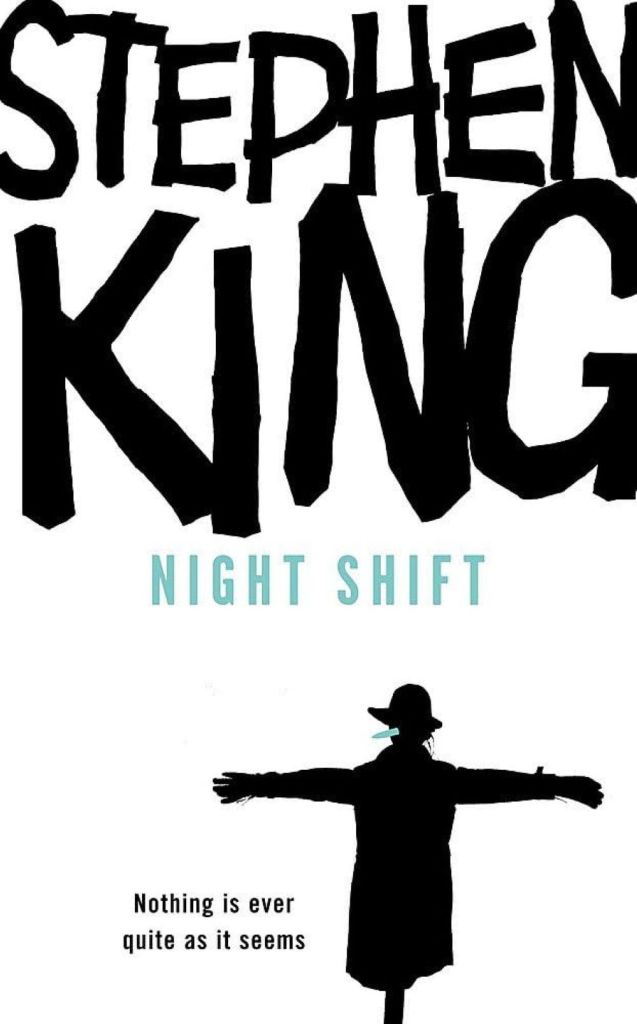
Horror Book Review: Night Shift (by Stephen King)


“Some fears are not of ghosts or demons but of loss, regret, and the quiet mistakes that haunt us long after the night has ended.”

Stephen King’s Night Shift is a fascinating look at the beginnings of one of the most prolific horror writers of our time. Many of these 20 stories first appeared in men’s magazines like CavalierPenthouse, and Gallery, where King started building his reputation from the ground up. This collection offers a wide range of horror—from supernatural thrills to deeply emotional tales—crafted with a realism that makes the scares hit harder. The book naturally moves from more traditional horror into stories that shine a light on human fears and regrets.

Although the collection opens with “Jerusalem’s Lot,” a story about haunted history, one of the more striking horror tales is “The Mangler.” It tells of a demon-possessed industrial laundry machine that becomes a deadly force. King’s detailed storytelling turns familiar machinery into something terrifying, driving the suspense from beginning to end.

“Sometimes They Come Back” takes a more emotional route. It centers on a man who is haunted by the death of his brother, with ghostly bullies from his past making a frightening return. This story blends the supernatural with raw grief, showing that some wounds never fully heal.

“The Last Rung on the Ladder” provides a quiet but powerful punch. It reflects on childhood, family, and the pain that comes with lost chances. This tale stands out by demonstrating King’s skill in generating a deep sense of dread through emotional weight rather than monsters.

In “One for the Road,” the tension ratchets up with a story set during a harsh snowstorm near a vampire-infested Maine town. The narrative grips you with its chilling atmosphere, isolation, and fight for survival. Notably, this story acts as a postscript to King’s novel Salem’s Lot, offering an eerie glimpse into what happens long after the main events, expanding that dark world in a satisfying way.

“Strawberry Spring” unspools slowly like creeping fog. Set on a college campus haunted by a serial killer, the story uses an unreliable narrator and a murky atmosphere to create a sense of growing paranoia and confusion.

Finally, “I Know What You Need” explores obsession cloaked in supernatural mystery. A college student experiences an unsettling friendship that appears to improve his life, but underlying this is a dark manipulation. King carefully builds this eerie tale with layers of tension and reveals the dangerous side of desire.

What makes these tales work so well together is King’s ability to vary tone and pace while grounding the stories with believable characters and locations. The rapid heartbeat of “The Mangler” contrasts with the quiet heartbreak of “The Last Rung on the Ladder.” The claustrophobic fear in “One for the Road” stands alongside the fog-thickened dread of “Strawberry Spring,” and the slow-burning menace in “I Know What You Need” rounds out the mood spectrum.

More than just scary stories, Night Shift taps into fears we all recognize: loss, guilt, loneliness, and obsession. King layers excitement with emotional truths, creating stories that stick with you. These fears aren’t just the stuff of monsters—they’re very real and human.

The order of the stories themselves feels intentional—starting with classic supernatural spins like “Jerusalem’s Lot,” and moving toward more internal, emotional terrors in stories like “Sometimes They Come Back” and “The Last Rung on the Ladder.” Some stories also ground horror in real-life struggles, like dangerous, grueling jobs in “Graveyard Shift” and “The Mangler,” where the horror is as much about the setting as the supernatural.

A lot of these stories have found their way to the screen, but while the films are entertaining, most take only loose inspiration from the originals and often don’t capture the full power of the tales. This disconnect doesn’t lessen the strength or impact of King’s writing, which remains impressive and affecting.

Ultimately, Night Shift is a journey through many forms of fear—from sharp shocks to slow-building unease—and its stories feel personal and alive. Whether it’s an industrial machine come to life, ghostly revenge, or a vampire town trapped in eternal winter, King’s tales connect with readers on multiple levels.

If you want horror that thrills but also hits close to home, Night Shift is a brilliant starting place. These stories show early signs of why King remains a master: he discovers monsters not just in the shadows, but woven into the fabric of everyday life. Sometimes, those are the ones that scare us the most.

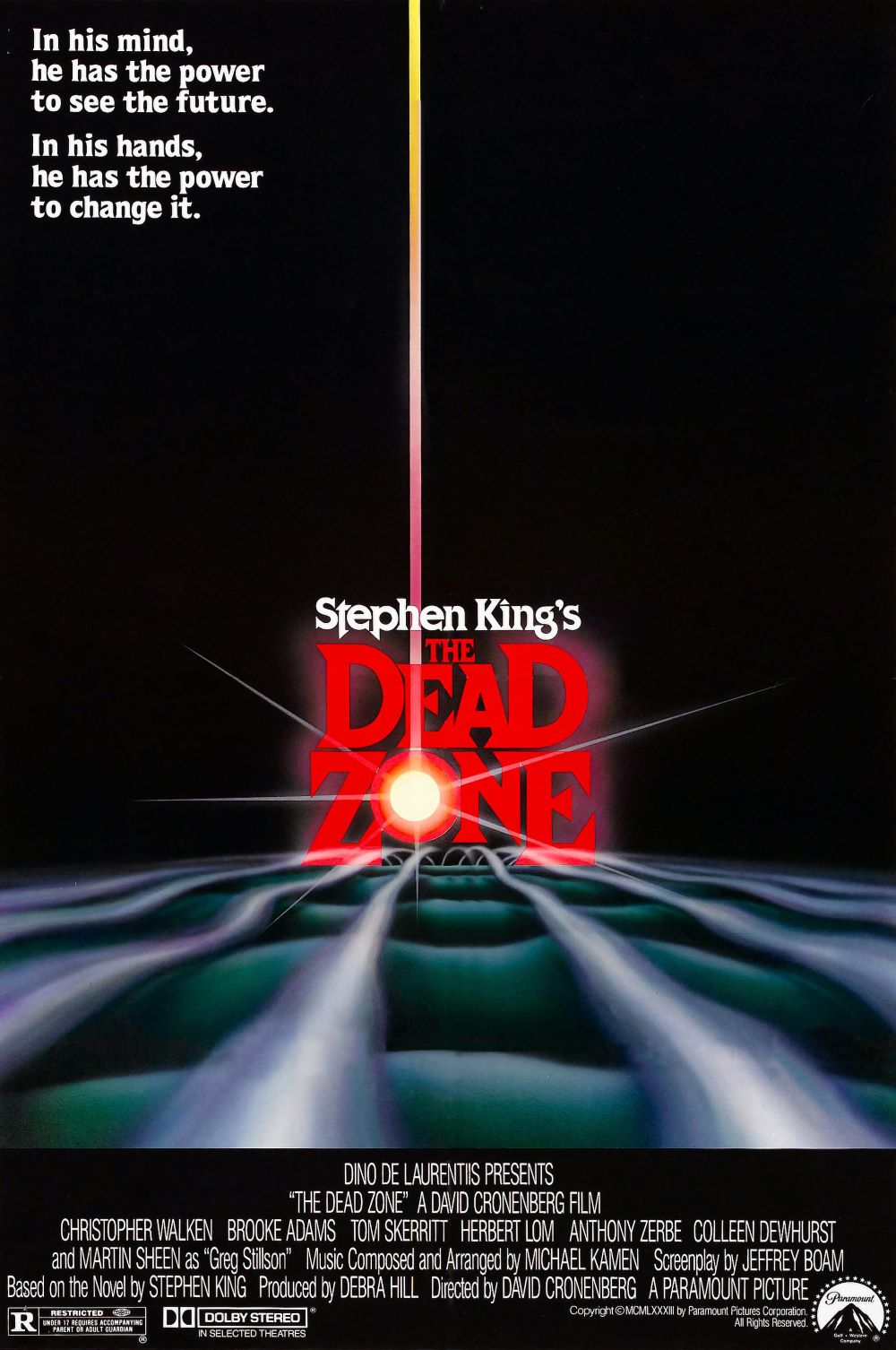
Horror Review: The Dead Zone (dir. by David Cronenberg)


“Bless me, Father, for I have sinned. I had the power… and I tried to prevent what I saw.”Johnny Smith

In 1983, David Cronenberg adapted Stephen King’s The Dead Zone with a distinctive emphasis on mood, morality, and psychological depth rather than traditional horror spectacle. The film follows Johnny Smith (Christopher Walken), a small-town schoolteacher whose life transforms irrevocably after a traumatic car accident leaves him in a five-year coma. Upon awakening, Johnny discovers he possesses psychic abilities that allow him to see the past and future by touch. Rather than a gift, this power becomes a heavy burden, isolating him and forcing him into wrenching moral choices.

Cronenberg’s direction is meticulous and deliberately restrained. The film’s muted color palette and stark winter landscapes visually echo Johnny’s emotional isolation and the fragility of human existence. His careful, often gliding camera movements create a mounting sense of quiet dread, while minimalistic sound design underscores moments of revelation with haunting subtlety. This subdued style elevates the film’s psychological impact, transforming it into a thoughtful and melancholy meditation on the cost of harrowing knowledge.

Significantly, The Dead Zone marks a departure from Cronenberg’s signature body horror. Instead of the grotesque physical transformations and visceral mutations that characterize much of his other work, here Cronenberg turns inward. The real horror lies in the malleability of the mind and the elusive nature of perception—how reality, memory, and the future are unstable constructs that can shift and fracture under psychic strain. This thematic focus on the impermanence and distortion of mental reality touches on some of Cronenberg’s deepest artistic fascinations.

The restrained treatment of body horror in The Dead Zone previews the director’s later, more psychologically driven films such as A History of ViolenceEastern Promises, and A Dangerous Method, where character studies and narrative depth take precedence over startling visuals. In this early pivot, Cronenberg demonstrates that his mastery lies not only in visual spectacle but in probing the profound emotional and moral dilemmas faced by his characters. The vision-focused horror here is cerebral and grounded, rooting supernatural phenomena in human frailty and ethical complexity.

Christopher Walken’s nuanced portrayal is the emotional heart of the film. He captures Johnny’s vulnerability, weariness, and profound solitude, portraying a man burdened by a cursed knowledge that isolates him from the world. Martin Sheen plays Greg Stillson, the ambitious and morally bankrupt politician whose rise Johnny must foretell and who embodies the film’s central threat. The supporting cast, including Brooke Adams as Johnny’s lost love Sarah and Tom Skerritt as Sheriff Bannerman, delivers compelling and authentic performances that humanize the film’s intimate, small-town environment.

Several changes from King’s novel sharpen the film’s thematic focus. The novel’s sprawling plot, including a serial killer subplot and a brain tumor storyline symbolizing Johnny’s mortality, is pared down or omitted. Despite this trimming, the serial killer element retained in the film remains chilling and effective. It highlights the darker repercussions of Johnny’s psychic gift and injects a tangible sense of dread, reinforcing the psychological weight Johnny carries. This subplot grounds the supernatural within a disturbing reality, illustrating the violent and tragic circumstances Johnny must grapple with as part of his burden.

The concept of the “dead zone” itself shifts in meaning. Originally, the term referred to parts of Johnny’s brain damaged by the accident, blocking certain visions. Cronenberg reinterprets it as a metaphor for the unknown and unknowable parts of the future—the gaps in psychic clarity that allow for free will and change. This subtle shift reshapes the narrative toward a more ambiguous, hopeful meditation on destiny and human agency.

Compared to King’s novel, Cronenberg’s Johnny is more grounded and isolated. The novel frames Johnny’s struggle within a broader spiritual and fatalistic context, highlighted by the looming presence of a brain tumor and a nuanced exploration of hope versus resignation. The film, by contrast, focuses on the emotional and moral fatigue induced by Johnny’s psychic gift, emphasizing his loneliness and reluctant responsibility rather than supernatural destiny.

Walken’s restrained, haunting performance strips away mythic grandeur to reveal a deeply human character. The film’s narrowed narrative tightens focus on Johnny’s internal anguish and his difficult ethical choices, making his plight intimate and richly relatable.

On a thematic level, The Dead Zone contemplates fate, free will, and sacrifice. Johnny’s psychic abilities act as a draining, almost chthonic force, transforming him into a reluctant prophet who is tasked with intervening in grim futures at great personal cost. The film’s bleak winter setting visually reflects Johnny’s alienation, while its deliberate pacing highlights the exhaustion and heartbreak that comes with such knowledge.

Ultimately, Cronenberg’s The Dead Zone goes beyond supernatural thriller conventions. It is a profound meditation on empathy, sacrifice, and the human condition—where the greatest horrors are internal, and the cost of knowledge is both psychic and emotional. Johnny Smith emerges as a tragic, flawed figure wrestling with unbearable burdens.

Cronenberg’s direction and the impeccable performances make The Dead Zone a standout in King adaptations. The film’s enduring impact lies in its rich thematic texture, its moral ambiguity, and its unflinching exploration of human frailty, all conveyed through a director shifting skillfully from physical body horror to psychological and existential terror. The film remains as haunting and resonant now as it was upon release, a testament to the synergy of Cronenberg and King’s extraordinary talents.

Shadows and Blood: A Study in Fear, Faith, and Community


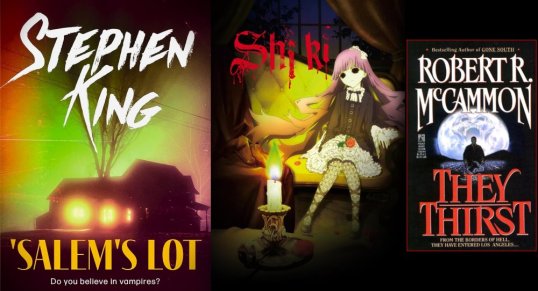
Stephen King’s Salem’s Lot, Robert R. McCammon’s They Thirst, and Fuyumi Ono’s Shiki (particularly the anime adaptation directed by Tetsurō Amino) share a powerful thematic core: each explores how supernatural terror—manifested through vampirism—intertwines with human frailty, exposing fractures within communities. Yet, despite this common ground, these works differ profoundly in their narrative scale, tone, and philosophical approach. While King’s novel grounds horror in the insular confines of a small American town, McCammon unleashes an urban catastrophe at an epic scale. Meanwhile, Shiki artfully meditates on moral ambiguity and the erosion of empathy within a rural village caught between the past and modernity. Together, they illuminate vampire stories as mirrors reflecting social decay from unique but equally compelling vantage points.

The Power of Place: How Setting Shapes Fear

The setting is more than a stage in these three narratives; it actively shapes the nature of horror, informs thematic undercurrents, and amplifies the stories’ emotional resonance.

King’s Salem’s Lot is a quintessential small-town story set in rural New England—a storied landscape in American Gothic tradition. Jerusalem’s Lot (the “Lot”) is painted with affectionate detail that grounds the supernatural in a tractable reality: the rhythms of local life, from church socials to school, from well-worn shops to community gatherings. This attention to the quotidian underscores the fragility of social order; the relatable nature of the town makes the encroaching evil feel intimate and devastatingly personal. The location’s history, marked by both myth and buried trauma, becomes fertile ground for the horror’s growth. The Marsten House, the ominous mansion dominating the town’s outskirts, serves as a physical and symbolic anchor, linking ancient malevolence to present-day community rot. This layering of place and history deepens the story’s resonance, as the familiar becomes uncanny and threatening.

In contrast, They Thirst uses Los Angeles to reflect the sprawling anonymity and fragmented social fabric of a modern metropolis. The city’s vastness and diversity are both a strength and a vulnerability—allowing vampirism to spread nearly unchecked, erasing communal protections afforded by intimacy and face-to-face alliance. McCammon’s choice of a sprawling urban setting serves as a metaphor for modern alienation and the collapse of traditional community structures. The urban chaos mirrors the moral and societal fragmentation that the vampiric horde exploits. This dynamic shifts the story from intimate community horror to an apocalyptic narrative of civilizational collapse. The setting also introduces themes related to urban decay, social stratification, and the fragility of institutions under siege.

Shiki occupies a thematic and emotional space between the two. Sotoba is a small, isolated village clinging to tradition yet caught at the edges of modernization. This geographic and cultural liminality shapes the unfolding horror—the limited population intensifies interpersonal relationships and magnifies the consequences of suspicion and violence. The village setting intensifies the claustrophobic and suffocating atmosphere, reinforcing themes of containment and the difficulty of escape from both physical and moral traps. Unlike the already frayed social fabric in Salem’s LotShiki shows the gradual erosion of trust amid existential threat. Sotoba’s setting underscores the fragility and resilience inherent in small communities confronting existential threat.

Vampires Beyond Monsters: Reflections of Suffering and Evil

While all three works feature vampires as antagonists, the portrayal and symbolic weight of vampirism differ considerably, offering diverse reflections on suffering, evil, and humanity.

In Salem’s Lot, Kurt Barlow is the archetype of absolute evil—essentially a force of pure corruption and predation. His presence is largely offstage for much of the novel, which builds tension by making him a looming, inscrutable threat. Barlow’s influence is insidious, infiltrating the town through secrecy and manipulation. King’s vampires are externalized evil but disturbingly intimate in their effect, feeding not only on blood but on the social fabric of their prey. They corrupt moral order and dismantle trust, intensifying the novel’s exploration of hidden poison beneath surface normality. Importantly, while Barlow is malevolent, he also embodies a supernatural inevitability—his arrival is cataclysmic and transformative, representing a metaphysical challenge to human resilience.

McCammon’s They Thirst features vampires, led by Prince Vulkan, who are ruthless conquerors rather than morally ambiguous figures. Their intent is dominion, and their methods are militaristic and coldly pragmatic. They represent predation on an epic scale—the vampiric plague as a social and political apocalypse. Unlike Salem’s Lot’s psychological and communal disintegration, They Thirst foregrounds survival from overwhelming external threats, casting vampire characters as ruthless agents of annihilation. Their lack of inner conflict or remorse signals a broad symbolic reading of vampirism as unstoppable systemic evil.

Shiki radically complicates this tradition by humanizing the vampire clan. The shiki retain memories, emotions, and even spiritual struggles, particularly in Sunako Kirishiki, whose anguish at perceived divine abandonment shapes her actions. The shiki are not merely villains; their transformation is framed as a tragic condition. This ambiguity invites a reconsideration of vampirism itself—as existential suffering rather than mindless evil. The human characters, in turn, commit atrocities fueled by fear and desperation, blurring moral lines. This treatment of vampirism fosters a deeper ethical inquiry, probing notions of victimhood, survival ethics, and the persistence of humanity amid monstrosity.

Erosion of Community: Patterns of Social Decay

All three narratives depict communities unraveling under supernatural duress, but the patterns and implications of this decay differ greatly.

Salem’s Lot emphasizes denial and insularity as precursors to collapse. The town’s refusal to confront its own mortality and hidden corruption creates fertile ground for vampirism’s spread. Neighbor turns against neighbor, suspicion displaces care, and longstanding relationships dissolve into paranoia. Resistance arises too late and is ultimately futile in preventing societal collapse. King’s portrayal powerfully dramatizes the theme of moral and social deterioration as an existential threat. The town’s downfall is as much a failure of collective conscience as a failure of defensive combat.

They Thirst shifts focus from interpersonal fissures to systemic collapse. The novel portrays institutions—government, law enforcement, emergency services—as overwhelmed by the scale of the crisis. Urban anonymity breeds helplessness and chaos, accelerating civilizational breakdown. The story is less about social betrayal and more about the impotence of modern systems to contain existential threats. The novel’s scale elevates the symbolic to the catastrophic, reflecting late-20th-century anxieties about societal fragility in the face of environmental, political, or medical catastrophe.

Shiki offers a patient, almost clinical examination of social collapse. The villagers’ gradual succumbing to hysteria, paranoia, and cruelty unfolds with intricate detail. The slow erosion of trust echoes real-world dynamics in isolated communities under existential pressure. Individual moral failings aggregate into communal atrocity, making social decay a collective tragedy. Ozaki’s transformation encapsulates this decline—a figure of rational science slipping into barbarity, illustrating the fragility of ethics. Shiki situates social collapse within a matrix of spiritual and existential despair, making the unraveling as much psychological as physical.

Navigating Morality: Clear Lines or Blurred Shades?

Vampire lore often wrestles with morality, and these works chart a spectrum from dualistic good-versus-evil to morally ambiguous coexistence.

King and McCammon largely preserve sharp moral contrasts. In Salem’s Lot, evil is externalized: vampires as corrupting agents and humans as embattled victims and resistors. Despite its nuanced portrayal of social conditions, the novel’s moral universe is anchored in traditional binaries. McCammon’s They Thirst simplifies this further, casting vampire antagonists as irredeemable conquerors, with human protagonists fighting for survival and restoration. Moral complexity here is subordinated to survival imperative and apocalyptic spectacle.

Shiki disrupts this binary, presenting vampirism and human survival as entwined and ethically problematic. The vampire shiki are both perpetrators and sufferers; human defenders often respond with equal brutality and moral compromise. Sunako’s internal struggle with faith and identity contrasts with pragmatic ruthlessness elsewhere, illustrating competing survival philosophies. By the story’s end, categories of hero and villain, monster and human dissolve, demanding viewers engage with ethical ambiguity. This dismantling of clear moral boundaries challenges conventional vampire narratives and invites broader reflection on the nature of evil, survival, and humanity.

Architecture as Living Symbol

In these vampire stories, architecture is more than a mere backdrop; it functions as a potent symbol of the evil, decay, and social malaise at the heart of the narrative’s horror.

In Salem’s Lot, the Marsten House stands as the quintessential haunted house and the novel’s epicenter of malevolence. It looms over the town “like a ruined king,” representing both buried communal sins and unresolved personal trauma. The violent acts of its original occupant, Hubie Marsten, have left a lingering “dry charge” of evil energy in the house, attracting supernatural darkness—namely, the vampire Barlow. This house is not just a dwelling but a repository of the town’s secret violences and moral corruption. It embodies the idea that physical places can retain and amplify the psychological and spiritual wounds of a community. Through protagonist Ben Mears, King explores how the Marsten House symbolizes childhood terror and the inescapable shadow of past trauma, making the horror both intimate and universal. The house’s persistence after Barlow’s death underscores that evil rooted in place tends to endure, emphasizing the novel’s theme of cyclical dread.

In Shiki, the architecture is less centralized but deeply symbolic. The Kirishiki mansion, a large ancestral home, serves as a physical and spiritual focal point for the vampire presence in the village. Unlike the outright malignancy of the Marsten House, the mansion crystallizes the tension between tradition and modernity, life and death, human and shiki. It is a place where the boundaries blur—reflecting the moral ambiguity and spiritual struggles central to the story. The surrounding village’s rural, isolated architecture further evokes containment and stagnation, intensifying the suffocating atmosphere that enables horror to take root.

In stark contrast, They Thirst features Castle Kronsteen, a sprawling medieval fortress transported from Europe and perched dramatically above the sprawling modern cityscape of Los Angeles. This castle’s Gothic turrets and stone walls symbolize an ancient, imperial evil looming over contemporary urban decay. The contrast between the timeless darkness of the castle and the sprawling modern metropolis highlights tensions between the past and present, tradition and decay. Castle Kronsteen functions as a domineering, almost imperial character in its own right, representing the overwhelming scope and scale of the horror threatening to engulf the city beneath it.

Together, these architectural embodiments deepen thematic exploration: the Marsten House as communal sin and personal trauma, the Kirishiki mansion as spiritual and existential tension, and Castle Kronsteen as an ancient, imposing force confronting modern fragility. Each structure anchors and amplifies the stories’ exploration of place, power, and the pervasiveness of evil, turning architecture into a palpable character that shapes and reflects the psychological and narrative landscape.

The Rhythm of Terror: Narrative Pacing

Each narrative’s pacing informs its emotional impact, shaping audience engagement.

Salem’s Lot progresses steadily, escalating horror from subtle dread to siege. Opening with survivors fleeing in the prologue casts a shadow of inevitability over the town’s fall, transforming the novel into a meditation on decay rather than triumph.

They Thirst moves swiftly, in a disaster-novel rhythm that prioritizes adrenaline and spectacle. The story surges through sequences of collapse and resistance, trading introspection for kinetic momentum.

Shiki unfolds with slow deliberation. Deaths and betrayals accumulate steady and eerie, building tension through silence and atmosphere. This measured pace invites deeper reflection on moral erosion, making the horror as much psychological as physical.

Anchoring Horror in Humanity: Characters and Emotions

Character development grounds Salem’s Lot in human emotion. The nostalgia-haunted Ben Mears, courageous Mark Petrie, and wise Matt Burke embody resilience and loss, anchoring the supernatural horror in poignant personal struggles.

They Thirst emphasizes ensemble dynamics over individual depth. Archetypes populate the urban tragedy: heroic officers, fraught leadership, resilient citizens. These characters embody collective survival more than introspective journeys.

Shiki is intensely character-driven, focused on the triangular relationship between Sunako, Ozaki, and Muroi. Ozaki’s ethical collapse and Muroi’s fragile compassion articulate the series’ core tension—survival without soul versus survival with spirit.

Faith and Spirituality as Themes

Faith plays distinct and evolving roles across Salem’s LotThey Thirst, and Shiki, reflecting each work’s unique engagement with spirituality, belief, and existential struggle.

In Salem’s Lot, faith operates primarily as a tactical tool in the fight against vampirism. Catholic imagery permeates the novel—crucifixes, holy water, prayers—serving as weapons with real efficacy against the vampires. However, King’s portrayal of faith is complex and often tinged with failure and doubt. Father Callahan’s journey vividly illustrates this tension. Although a man of the cloth, his faith is broken through possession and temptation, climaxing when Barlow forces him to drink vampire blood. This act symbolically casts Callahan out from both the church and the vampire’s dominion, leaving him a spiritual outcast—neither fully accepted by God nor Satan. The novel explores the fragility of institutional faith and the ambiguity of spiritual power. Despite the tactical use of religious symbols, true victory over darkness demands more than ritual; it requires personal courage and inner faith, which is tenuous and often fragile. King’s depiction reflects a broader struggle with the limits of faith in confronting evil, underscoring a theme of spiritual failure and human imperfection amid horror.

In They Thirst, faith is less central thematically, functioning more as a genre convention than a deep spiritual inquiry. Religious symbolism and rituals exist within the narrative framework to support the traditional vampire mythos—crosses, holy water, exorcisms—but the story emphasizes practical survival and tactical resistance over spiritual redemption. The narrative’s focus on urban apocalypse and large-scale battle sidelines faith as a source of personal or metaphysical strength. It remains a conventional trope rather than a core thematic element.

Shiki, by contrast, places faith and spirituality at the very heart of its story. The fractured spirituality of Sunako Kirishiki, the vampire queen, reflects a profound wrestling with divine rejection and the search for meaning amid despair. Unlike the overt religiosity of Salem’s LotShiki invokes more ambiguous spiritual themes drawn from Shinto and Buddhist ideas of impermanence, suffering, and rebirth. Seishin Muroi, the junior monk and author, embodies compassionate faith—tentative and vulnerable but persistent. His spiritual outlook offers a moral counterweight to the ruthless pragmatism represented by other characters and situates the horror within a larger metaphysical dialogue. The interplay between Sunako’s faltering belief and Muroi’s mercy elevates the narrative beyond a simple predator-prey conflict into an exploration of abandonment, hope, and the endurance of faith through suffering. In Shiki, spirituality challenges characters and viewers alike to consider what it means to remain human in the face of inhuman horrors.

Finally, the enduring appeal of these works lies in their refusal to offer easy answers. Their endings—whether cyclical, incomplete, or quietly hopeful—remind us that horror is a process as much as an event. Evil is never fully vanquished, community is never fully restored, and faith is always delicate. Yet, amid this uncertainty, the stories insist on the necessity of confronting darkness with courage, complexity, and compassion. They teach that survival is not merely physical endurance but a continual struggle to preserve humanity itself.

Together, these treatments of faith reveal differing cultural and narrative priorities: Salem’s Lot interrogates the efficacy and limits of institutional faith in the modern world, They Thirst leans on spiritual motifs mainly for horror tradition and practical effect, and Shiki deeply embeds spirituality as a question of existential and moral survival. This thematic spectrum enriches the vampire myth, showing how faith can be a weapon, a weakness, or a fragile beacon depending on context.

Endings: Closure Denied

Each story concludes with lingering unease rather than resolution.

Salem’s Lot cycles back to exile and loss, its evil dormant but unvanquished—suggesting horror as eternal cycle.

They Thirst ends with partial disaster containment but permanent scars on the city and humanity.

In King’s Salem’s Lot, the vampire infestation is deeply embedded in the fabric of small-town life, making the horror intensely personal and communal. Its portrayal resonates because the vampire threat arises not from some alien void but from the town’s own latent fractures—fear, denial, and the corrosive power of secrets. The Marsten House symbolizes this buried evil, and the story’s relentless progression toward decay reveals how easily normalcy can give way to nightmare when vigilance is lost. King’s novel not only terrifies but also mourns the loss of community, underscoring how vulnerability is often homegrown rather than externally imposed. The cyclical nature of the story’s ending, with evil persisting beyond the narrative, emphasizes the abiding nature of these human weaknesses.

Shiki closes quietly on shattered survivors burdened by guilt, with a faint glimmer of hope in Sunako’s rekindled faith—humanity persists, fragile but unbroken.

Final Thoughts: The Enduring Relevance and Richness of Vampire Horror

The vampire, as a figure in horror, has long transcended its folkloric origins to become a versatile metaphor for broader anxieties about society, identity, and morality. In Salem’s LotThey Thirst, and Shiki, the vampire myth is reimagined and repurposed to explore these anxieties across different cultural and narrative spectrums. What binds these works together is their shared insistence that vampirism is not simply a supernatural curse or a monstrous aberration; rather, it is a prism through which human fears of isolation, decay, and ethical erosion are refracted.

McCammon’s They Thirst pushes this metaphor into the scale and chaos of modern urban life. Here, vulnerability is linked less to hidden secrets than to systemic failures—bureaucratic, social, and infrastructural—that magnify the horror exponentially. Los Angeles becomes a dystopian battleground where ancient darkness asserts itself over sprawling human constructs. The presence of Castle Kronsteen towering above the city embodies the clash of old-world malevolence with contemporary decadence, making the story a grim allegory for the fragility of civilization in the face of relentless corruption. The impersonal, epic sweep of the novel captures the overwhelming scale of modern anxieties—environmental, societal, and existential—that seem beyond any one person’s control, contrasting sharply with Salem’s Lot’s intimate tragedy.

Shiki offers a unique and deeply philosophical take that complicates the vampire legend through the lens of moral ambiguity and spiritual struggle. By humanizing the shiki, granting them memories, emotions, and crisis of faith, Shiki refuses to simplify good and evil into opposing camps. Instead, it insists on the painful coexistence and interdependence of predator and prey. The villagers’ descent into paranoia and violence mirrors the vampires’ own suffering and ethical conflict. This narrative choice invites profound questions: When survival demands brutality, how much of our humanity can we retain? Can faith and mercy endure amidst extinction? These questions transform Shiki into not only a horror story but also a meditation on identity, isolation, and redemption. Its deliberate pacing and atmospheric storytelling deepen the emotional and existential impact, making the horror feel lived and morally urgent.

Together, these narratives illustrate how vampire stories continue evolving to reflect the shifting contours of human anxiety. In the mid-20th century, vampires were often portrayed as exotic or external evils; today, as these works show, they increasingly serve as metaphors for internalized struggles—within communities, within societies, and within the self. They force us to confront darker truths about human nature: how fear corrupts, how survival can harden or break the spirit, and how history and memory haunt both places and people.

Moreover, these stories highlight the importance of empathy as a form of resistance. While vampirism might symbolize physical and moral contagion, it also exposes where empathy has failed—between neighbors in Salem’s Lot, among city-dwellers in They Thirst, and even between predator and prey in Shiki. The endurance or collapse of empathy often determines the characters’ fates. Sunako’s fragile but persistent faith in Shiki suggests that compassion can survive even the most devastating horrors, offering a glimmer of hope. Similarly, in Salem’s Lot, the remaining survivors’ attempts at resistance—despite failure—reflect humanity’s enduring impulse to reclaim connection and meaning amidst ruin.

In a broader cultural context, these works reflect their creators’ environments and eras, imbuing vampire horror with layers of social commentary. King’s New England Gothic resonates with American anxieties about conformity, suburban malaise, and the hidden darkness beneath idyllic calm. McCammon’s Los Angeles setting echoes late-20th-century fears of urban collapse, societal fragmentation, and the loss of civic trust. Shiki speaks from a distinctly Japanese perspective, drawing on rural isolation, Shinto and Buddhist spiritual themes, and the tension between tradition and modern encroachment. This multiplicity enriches the vampire genre—demonstrating its flexibility and capacity to reflect diverse cultural fears and hopes.
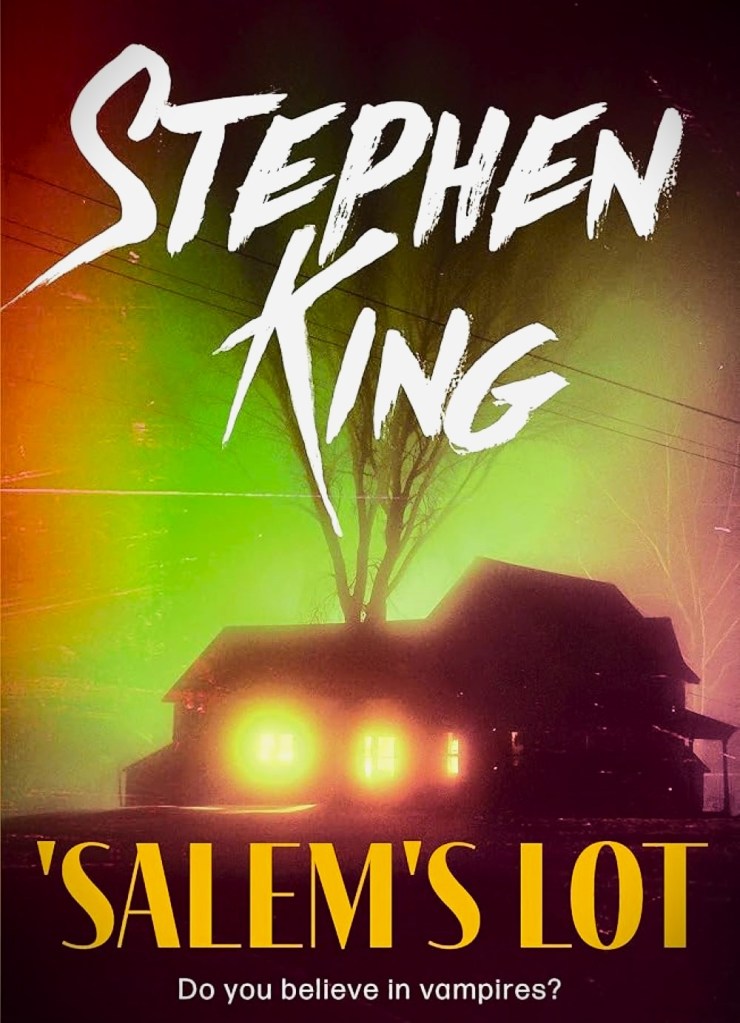
Horror Book Review: ‘Salem’s Lot (by Stephen King)


“Within, walls continued upright, bricks met neatly, floors were firm, and doors were sensibly shut; silence lay steadily against the wood and stone of Hill House, and whatever walked there, walked alone.”
—Shirley Jackson, The Haunting of Hill House

Stephen King’s Salem’s Lot opens with an unsettling and bold narrative choice. Instead of introducing the main characters or setting a conventional stage, the novel begins by showing two nameless figures—an older man and a younger companion, burdened by events already passed. These itinerants are fleeing a terrible evil, seeking refuge in a small Mexican village, suffused with mystery and dread. This brief but cryptic prologue hooks the reader immediately with a pervasive sense of unease and unanswered questions: who are these men, and what horror haunts them so far from home?

This unsettling beginning is not only risky but masterful. King, in just his second published novel, chooses to forgo straightforward exposition and instead promises that the narrative will move backward, retracing the dark events that led to this moment of flight and loss. The prologue casts a shadow into the past, preparing readers for a story where the darkness is already present and will only deepen.

Rewinding, the narrative places us in the small New England town of Jerusalem’s Lot—known to its inhabitants simply as “The Lot”—a quintessential small town in 1970s Maine. Here, Ben Mears, a novelist haunted by childhood trauma centered on the forbidding Marsten House, returns home with the intention of writing about the old mansion. The Marsten House is not just a setting; it is a malignant presence perched over the town like an ominous sentinel. Ben’s youth intrudes everywhere in his memory of that house—a place where something unknowable once touched him—and now, as an adult, he confronts both that past and the house again, its shadow casting unease over the town.

Ben isn’t the only arrival. Richard Straker sets up an antique shop, accompanied by his rarely seen partner, Kurt Barlow—an inscrutable figure whose very mention deepens the novel’s pervasive tension. King reveals Barlow’s presence slowly and indirectly, heightening the atmosphere without immediate confrontation.

King excels at immersing readers in the rhythms of small-town life. Through detailed observation of everyday routines, gossip, and personalities, he crafts a believable, textured community. Each townsperson—whether skeptical official, gossip-prone neighbor, child, or elder—is vividly realized, not as a simple archetype but as a living, breathing individual. Yet beneath this surface of normalcy lurks a pervasive darkness: secrets, resentments, and moral frailties accumulate like hidden mildew in the town’s corners.

In this, Salem’s Lot evokes the spirit of Peyton Place, the classic fictional small town where scandal and hypocrisy fester beneath neighborly facades. King’s Jerusalem’s Lot feels like a much darker cousin—a town where those faults and hidden sins once fodder for gossip become the very soil from which real, supernatural evil springs. While Peyton Place explored human failings within social dynamics, Salem’s Lot reveals how those failings create openings for Kurt Barlow’s vampiric menace. The town’s insularity, mistrust of outsiders, and collective denial become liabilities dooming it—not just morally, but existentially.

At the heart of this encroaching nightmare stands the Marsten House, a building elevated beyond mere backdrop into a living entity. Like Shirley Jackson’s Hill House, Richard Matheson’s Belasco House in Hell House, and King’s own later Overlook Hotel, the Marsten House is steeped in decades of violence and evil. Its walls seem to soak up past horrors; its windows serve as more than architectural features—they are eyes into the house’s dark soul. This physical presence is sinister and predatory, complicit in the nightmarish events it enables. To enter the house is to step into something corrupt and breathing, an organism as alive and malign as the vampire it conceals.

What makes Salem’s Lot especially powerful is how King integrates the supernatural into the texture of daily life. The fantastical elements do not feel imposed or alien but grow organically from the social dynamics, habits, and vulnerabilities of this small town. The horror is inevitable precisely because it grows from recognizable human weaknesses and communal blind spots. This fluid blending invites readers to experience terror as an intimate shattering of the ordinary, a disruption of the familiar.

Relationships anchor the emotional core of the narrative. Ben’s romance with Susan Norton, the steady wisdom of Matt Burke, the youthful courage of Mark Petrie—their humanity keeps the terror grounded and poignant. As vampirism spreads, these bonds are tested and shattered. Community, which once defined the town’s identity, fractures under suspicion and fear. Friends become threats; homes become prisons.

The looming Marsten House is a perfect emblem of this dual threat: a predator perched within the community itself. As Barlow turns neighbors into monsters, the house’s silent complicity looms ever larger. It is as much a character as any human, a sentinel feeding on the decay of place and spirit alike.

As the novel hurtles toward its climax, King heightens the tension with vivid, claustrophobic scenes inside the haunted mansion. The house’s corridors and rooms twist into traps, its atmosphere suffocating and oppressive. King’s mastery of sensory detail brings a visceral dimension to the horror, blending psychological terror with physical menace.

The conclusion returns to the somber tone of the prologue. Although some survive, the town is hollowed out—a ghostly husk abandoned to darkness. Evil is not eradicated but waits patiently, ready to thread its way back through the cracks. The cycle of horror, loss, and exile continues.

Stephen King’s unique strength in Salem’s Lot lies not only in his richly developed characters and finely drawn community but in how seamlessly he introduces supernatural horror into what reads like a real-time study of small-town life. The fantastical elements grow naturally from the social fabric, making the terror feel inevitable rather than contrived. This synthesis of realism and fantasy deepens the novel’s power.

King’s portrayal of Jerusalem’s Lot as a place rotting from within yet clinging to its veneer of normalcy offers a chilling echo of Peyton Place. But while Metalious’s town suffocated under scandal, Salem’s Lot is consumed by predation—the vampire feasting not only on blood but on the fractures of belonging and trust. It is both eerily familiar and profoundly alien: a place where monsters live not just in shadows, but in whispered suspicions and buried sins.

Through this blend of gothic haunted-house traditions, social critique, and psychological realism, Salem’s Lot endures as a masterpiece of horror. The Marsten House is not merely a setting but a sentinel, symbolizing accumulated evil watching over a doomed community. King’s novel terrifies not only with its monsters but with its intimate knowledge of how everyday life can harbor the seeds of nightmare beneath a calm surface.

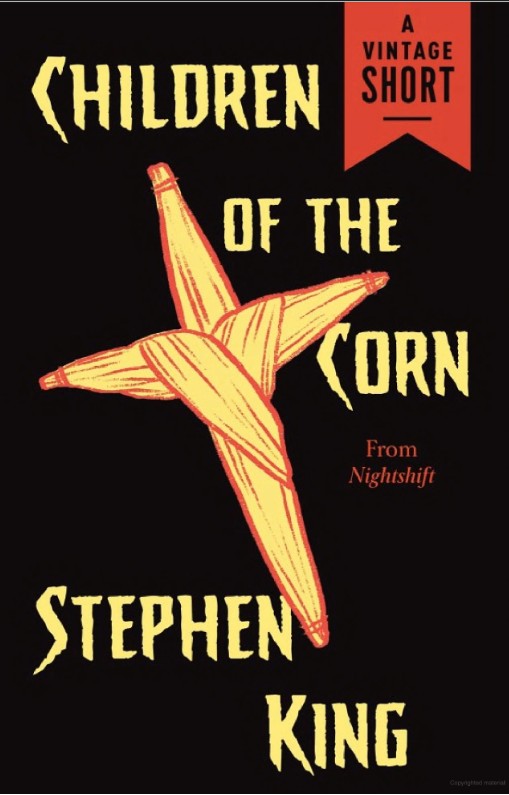
Children of the Corn, Book Review by Case Wright


Horrorthon is in full swing; so, it’s time to review a classic: Children of the Corn from Night Shift. Night Shift is an anthology devoted to failure. It’s all about Men not measuring up and people getting hurt by their failings. Poor Stephen, he needs a hug. Children of the Corn was published in 1977 in Penthouse…the 60s and 70s were weird. I’m not anti-p0rn because I really don’t care, but why mix it with literature? Was it that the WWII and Boomer generations wanted a one-stop shop? If so, why not merge the p0rn, literature, fishing gear, and fire extinguishers?

If you’re reading an early King novel, be prepared to be depressed because it is always a gruesome and unhappy ending because a guy failed. Children of the Corn is no exception. I wonder if Night Shift wasn’t this clever anthology I always thought it was, but was actually Stephen King’s clumsy pitch meeting short story compilation? Many of the stories that were adapted to film were way better written. To be honest, the film versions of Stephen King’s short stories are usually significantly better than his books.

The plot is that Burt and his wife Vicky are trying to do a cross country trip to save their marriage. Once they arrive in Nebraska, they get trapped and sacrificed to a pagan corn god who likes to use children as his henchmen- a typical Nebraska custom. The Cornhuskers draw a big crowd, but in the off season, it’s always about the pagan corn god murders. During the Cornhusker season, the residents still do sacrifices, but the victims are deep fried with the other Fair Foods, which means that the victims are all A salted and Battered. *BOOM*

There are a few more details that I am leaving here like the He Who Walks Behind the Rows etc., but once you’ve seen one pagan corn god, you’ve seen them all.

Tommyknockers, Book Review, by Case Wright


Stephen King has had addiction issues his entire adult life. He’s very open about it. In fact, there are at least three books he’s said that he doesn’t remember writing because he was using more blow than Julie on The Love Boat- the books are The Shining, Misery, and The Tommyknockers.

The plot is that a spaceship crashed long ago in Maine and it takes over the brains of the lifeforms who interact with it. The main characters are Roberta AKA Bobbi who literally stumbles on part of the ship, starting the plot because it starts infecting the town. Gard, a four alarm alcoholic/poet and Bobbi’s former lover, comes to help her and is immune to the ship’s affect because of a steel plate in his head.

As the story progresses, the ship changes the town folk both mentally and physically. The townies make all kinds of wacky and interesting inventions without knowing how they work, lose most of their teeth, and they develop pig-like faces. I told you that he did a lot of cocaine when he wrote this book.

The townies use Gard to help them dig out the ship and there are MANY chapters on the digging logistics. It’s fair to say that Gard spent most of his time in this book as an alcoholic day laborer (maybe he even did some work on my upstairs bathroom because that was done really shitty). I think that you could actually say they were entire chapters just devoted to his digging and things like that; man, Stephen really needs an editor with a spine.

A classic Stephen King plot device is that there are people who power up a haunted house and Tommyknockers uses that to an extreme! Even before I became an engineer, I wonder if Stephen understood how batteries worked? Can you imagine what he did to his kid’s Christmas toys?!

While his stories have recurring plot devices, the heroic journey for his characters changed with his personal change in fortune. The stories in Night Shift and the others from the early part of his career were all about failure: failing your loved ones and failing to maintain control over your life. In those years, the heroes could only succeed by sacrificing their life. The way to stop from harming everyone around them was through suicide because “blood calls to blood” i.e. the family curse. I think that it is clear that the Blood is alcoholism and drug abuse- it’s inherited. When he was failing in life, suicide was described as the only option because the hero was the doorway to misery and I can tell you from my childhood an alcoholic father is definitely the doorway to misery.

After 1979, his career took off and his bank account to pay for copious amounts of cocaine. However, the happy endings became the standard. Money can cure a lot problems, but blood calls to blood and the demons will always remain, but that is what made this book stand out because like his novels in the early part of his career- the hero dies. He can’t save Bobbi and this book was at a high point of addiction. It seems clear to me that it crossed his mind that he couldn’t live with his addiction and that death was the only exit.

Tommyknockers is a messy beach read that is mostly entertaining. If you’re like on a vacation with some real downtime and the Wi-Fi is broken or you’re really into aliens, give it a read.