Trailer: Chappie (Official)


Chappie

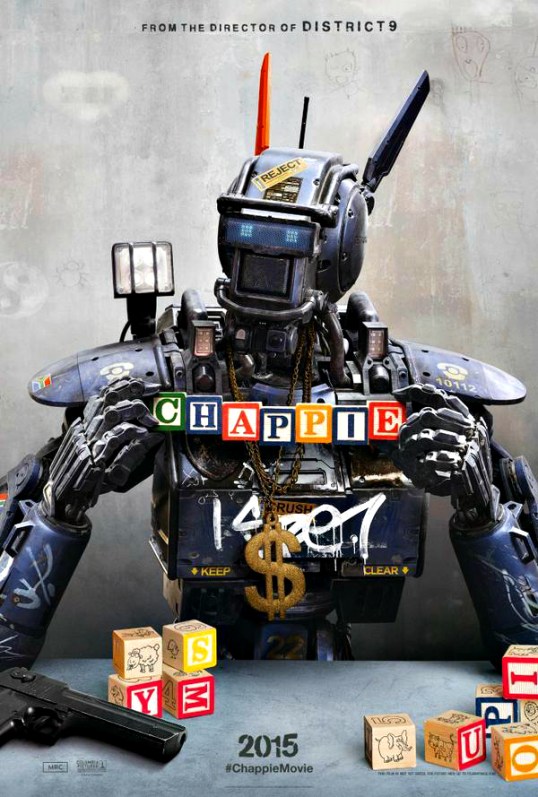
District 9 introduced Neill Blomkamp to the world. People bought into that film hardcore and were soon wondering what he would be doing next. Some fans of Blomkamp who have been following his career since he was first chosen by Peter Jackson to helm the now defunct Halo film thought he now had the leverage to get the film made. This was never going to happen.

The follow-up to District 9 was Elysium and the visuals that was slowly released for the film and having Matt Damon star in it gave it some major buzz and hype. The finished product was more than just a tad disappointing.

Was Elysium a hiccup?

People will find out on March 6, 2015 if this was indeed just a blip on the rising career of Neill Blomkamp as his third feature film, Chappie, will arrive in theaters.

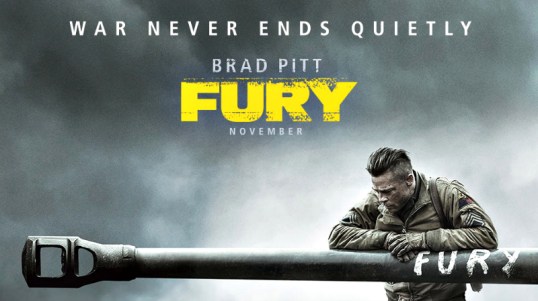
Review: Fury (dir. by David Ayer)


Fury

“Ideals are peaceful. History is violent.”

1998 saw the release of Steven Spielberg’s Saving Private Ryan.

Prior to this most films depicted World War II as a noble endeavor that needed to be done to help rid the world of Hitler and the horror he was inflicting upon Europe (beyond if given the chance). It gave birth to the “Greatest Generation” that people still look up to even to this day. These were young men who volunteered for a conflict that would change history and for the millions involved. Yet, World War II films were always cut and dried. It was always the good guys (American, British, Canadian, etc…) fighting against the nameless and efficient Nazi war machine.

In time, so many of these films followed the same formula that character stereotypes came about. We always had the cynical, older veteran who becomes a sort of father figure to a hodge-podge group of young, untested soldiers. What these films also had in common was the fact that they remain bloodless despite the nature of the story being told. Some filmmakers would try to buck this time-tested formula (Sam Fuller being the most prominent), but it would take 1998’s Saving Private Ryan to set a shift in how we saw World War II.

Spielberg lifted the rose-colored glasses from the audience and dared to show that while noble, World War II was still war and it still had the horror and brutality that all wars have. 2014’s Fury by David Ayer would continue this exploration of the last “Good War” in it’s most gritty and blood-soaked detail.

The film shows the last gasp of the German war machine as Hitler gives one of his final orders for the German people to repel the invading Allies. It was to be a scorched earth defense. Whether by choice or forced into this desperate tactic, every man, woman and child was to take up arms to their last breath to defend the Fatherland. It’s in this nightmare scenario that we find the veteran Sherman tank crew led by Don “Wardaddy” Collier trying to survive these final days til war’s end. Their home for the last two and a half years since North Africa has been a modified Sherman tank they call Fury. It’s a crew that’s been battle tested from the sands of North Africa, the maze-like hedgerows of France’s bocage and now the countryside of Germany itself.

We can see right from the start that this crew has been through hell and back many times and already resigned to going through hell many more times before they can eveb think of getting back home. It’s a crew that’s already lost one of it’s own minutes into the film. Wardaddy (Brad Pitt) looms over his crew like a weary father figure. This ragtag group consists of Bible (Shia LaBeouf) as the born-again Christian who sees their survival battle after battle as a sign that God’s grace is upon Fury and her crew. Then we have Gordo (Michael Peña) who has been so traumatized by the war and what he has had to do to survive that he has numbed himself from these memories by being in a constant state of drunkenness. Lastly, we have the tank’s loader Grady (Jon Bernthal) whose misanthropic attitude comes as a crude and brutish counterpoint to Bible’s religious fervor. Into this misanthropic soup of a crew comes in the replacement to their recently killed comrade.

Logan Lerman’s character, the young and naive clerk typist Norman Ellison, becomes the audience’s eyes in the brutal world of Fury and her crew. We’re meant to see the war’s brutality and horror not through the jaded and cynical eyes of Wardaddy and his men, but through a young man who has never killed an enemy or even fired a weapon in anger. Norman becomes the surrogate through which we determine and decide whether there is such a thing a nobility and honor in war.

Honor and nobility have always been used by those always willing to go to war to convince the young and impressionable to follow them into the breach. Fury takes these two words and what they represent and muddies them through the muck and gore left behind with each passing battle and tries to see if they remain unchanged on the other side. Norman is a literal babe in the woods as he must adapt or die in a war nearing it’s end but also becoming even more deadly and dangerous than ever. His very naivete quickly becomes a hindrance and a real danger to Wardaddy and his crew. He’s not meant for this world but has had it thrust upon him.

The film treats Norman’s humanity as a liability in a war that strips it from everyone given enough time. We see Wardaddy attempt to speed up the process during a tense sequence where Norman’s being forced to shoot a German prisoner. It’s a sequence of events that’s both unnerving and disturbing as we see the veteran soldiers encircling Norman and Wardaddy cheering or looking on with indifference in their eyes. They’ve all been in something similar and one can only imagine what they had to do to make it this far.

Fury straddles a fine line between showing and explaining it’s themes to the audience. It’s to David Ayer’s skill as a writer that the film’s able to use some finely choreographed scenes both violent and peaceful to make a point about war’s effect on it’s participants both physically and mentally. Whether it’s through several well-choreographed battle scenes to a sequence of tense and quiet serenity in the apartment of two German women that bring back the plantation segment from Coppola’s Apocalypse Now Redux, the film does a great job in showing how even when stripped down close to the bone, Wardaddy and his veteran crew still has semblance of humanity and the honor and nobility they all began the war with.

As a war film, Fury brings a type of combat to the bigscreen that has rarely been explored and never in such a realistic fashion as we watch tank warfare at it’s most tactical and most horrific. Ayer doesn’t fall for the jump cut style that many filmmakers nowadays sees as a way to convey the chaos of battle. Ayer and cinematographer Roman Vasnayov have planned every sequence to allow the audience to keep track of the two opposing sides and their place in the battle’s geography. And just like Spielberg’s own Saving Private Ryan, Fury shows the very ugly and bloody side of World War II. There’s a lot of bodies being blown apart and torn to chunks of meat yet they never seem to come off as gratuitous. Every bloody moment makes a point on the horrors of war and the level of inhumanity that another man inflicts on another man.

If there’s something that Fury does lag behind on it would be some of the narrative choices dealing with Norman’s character. The film takes place literally over a day’s time and the quick change in Norman’s mentality about the war seem very sudden and abrupt. While this day in the life of Fury and her crew worked well in Ayer’s past films (both as writer or director) here it puts Ayer stuck in a corner that made it difficult to fully justify Norman’s sudden change of heart from babe in the woods to hardened Nazi-killer. We can see throughout the film that the war is affecting him in ways that could lead up to this change, but to have it happen in just under a day really stretches it’s believability to the breaking point.

Yet, despite this the film is able to stay on course and recover from this misstep on the strength of Ayer’s direction and the performances of the ensemble cast. Brad Pitt has been the focus of the media campaign leading up to the release of Fury, but every actor who comprises the crew of Fury leave their own mark in the film. Shia Labeouf has had a tough past year both professionally and personally, but one has to admit that performances like the one he had in Fury is a reminder that he’s a damn fine good actor. Whether this film has become the path to his redemption in the eyes of the public is irrelevant. One doesn’t need to like the man to respect the talent he’s able to put up on the screen.

Awards season is in full swing as Fall 2014 arrives and Fury makes it’s case known that genre films (and make no mistake this is a genre film) can more than hold it’s own with the more dramatic life-exploring films that critics tend to put on the pedestal as examples of great filmmaking. While Fury is not perfect it is a very good film full of great performances that just misses being great.


Trailer: Elysium (Official)


Elysium

It’s not often that a filmmaker makes such a major splash in the industry with their initial full-length film becoming not just a commercial success but one which gained widespread critical-acclaim. South African filmmaker Neill Blomkamp is one such filmmaker. Initially tapped by Peter Jackson to direct the planned HALO film adaptation Blomkamp ended up doing District 9 (based off of his own short film Alive in Joburg).

The film became the sensation of San Diego Comic-Con 2009 which raised the hype for it’s inevitable release a month later. It’s now been 4 years since District 9 and we finally get a chance to see the first official trailer (a 10-minute film reel was shown to invited industry and press which showed a bit more of what the film will be about) for Blomkamp’s much awaited follow-up to his hit first film.

Elysium looks to continue Blomkamp’s attempt to bring social awareness to the scifi genre and do so with a mixture of real-world gritty realism and scifi fantasy. just looking at the trailer the space station Elysium where all the rich and privilege live in a paradise-setting look like an amalgam of the HALO ringworlds and the Citadel Station from Mass Effect.

It’s still months away, but just this teaser of a trailer has just raised Elysium to the top of my list for most awaited films of 2013. If it’s as good or better than District 9 then Blomkamp will cement himself as one of his generation’s best instead of a flash in the pan like so many of his contemporaries.

Elysium is set for a wide release date of August 9, 2013.

James Bond Review: Quantum of Solace (dir. by Marc Foster)


So, here we are at the end of all things.

About 22 days ago, The Shattered Lens started a project to cover all of the Bond Films in order leading up to the release of the 23rd film, Skyfall. Spearheaded by Lisa Marie and Arleigh, It’s been a fun ride seeing everyone’s thoughts on James Bond over the movies and it’s cool to know that after 50 years, they still (well, most of them) hold their own. Today, we cover the second Daniel Craig film, Quantum of Solace.

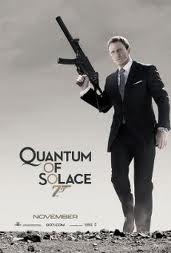
Quantum of Solace reunites the same writing team from Casino Royale – Neal Purvis, Robert Wade and Paul Haggis (Academy Award Winner for 2006’s Crash), and brings on Monster’s Ball director Marc Foster for filming duties. As far as I can tell, it seems to be the first 007 film to start not far from the previous film ended. Literally, there could be a 20 minute difference between the end events of Casino Royale and the opening sequence here. The movie veers away from the classic gun barrel sequence and gets the audience right into the action with Bond avoiding villains in his Aston Martin DBS. The chase leads into a quarry, where he manages to get rid of his opponents. It’s only when he arrives in an unknown location within Siena, Italy that we find he’s had Mr. White in the trunk of his car the entire time. Mr. White was the individual that Bond wounded and introduced himself at the end of Casino Royale.

We basically find James Bond dealing with the loss of Vesper Lynd (Eva Green), and though she never makes any kind of appearance in the film, her presence (or lack thereof) is certainly felt. While Quantum of Solace has some remarkable scenes, for me it suffered from at least one major problem early on. Near the beginning of the film, after the credits, there is a chase between Bond and a villian, as always. At the same time, we’re given shots of a bullfight that’s occurring. While I understand that we’re supposed to see the similarities between both actions, I felt as if I was being pulled away from the story at hand. Foster does this a number of times, including one in the middle of an opera scene. That seemed really strange to me, though others may appreciate it.

Bond is told by M (Dame Judi Dench), after securing Mr. White that she has a lead on Vesper’s boyfriend, but also believes that he’s not quite dead. She asks Bond to leave it alone, but being someone who sees things through, he takes a copy of his photograph. It’s revealed that Mr. White is part of a larger group called Quantum, similar to SPECTRE in some respects. Although Bond loses Mr. White, he gets a clue that leads him to Haiti.

The Haiti sequences were done prior to the earthquake that happened there, and it makes Quantum of Solace one of the last films to show how that area looked before the devastation. 007 is able to find his suspect, but in the course of fighting, he kills him. This becomes something of a thread in Quantum of Solace. Just about anyone that Bond encounters is either killed by him or because of him and at some point, restraint needs to be made. At some point, it goes so far that it becomes something of a “Bond Goes Rogue” tale in the vein of License to Kill. There’s a slight reference to The Spy Who Loved Me with a rooftop fall that’s interesting, as well as a great one for the movie Goldfinger. The Craig Bond stories seem to want to make sure they remind us of all the films before it, though it’s hardly the first 007 story to do so.

The Bond Girls in Quantum of Solace are Olga Kurlyenko and Gemma Arterton. Kurlyenko’s Camille has a mission of her own, as she’s trying to avenge the death of her mother. Arterton’s character, Miss Fields (who’s first name I believe may be Strawberry, but don’t quote me on that) is send in by MI6 to bring Bond back in for debriefing (as he’s been avoiding M’s requests). The actual villain of the movie is played by Mathieu Amalric (Munich), who is more of a hands-off baddie with tons of henchmen at his side.

The problem I had with Quantum of Solace is that it seemed like the Vesper angle was a side note. Yes, we know Quantum is out there, and we learn there’s a plot to control the water of a small area, but outside of all that, it didn’t seem like much of a revenge story. This is unless, of course, it wasn’t meant to be. I’m not a big fan of Quantum of Solace overall. It’s not as bad as Die Another Day (which a number of people consider to be one of the worst) by a longshot, but after what we were given in Casino Royale, it almost seems like it builds on things in the wrong direction.

This weekend, Skyfall is out, and by the time the weekend is up, we’ll have a review for it. We leave you the theme song to Quantum of Solace, “Another Way to Die” by Jack White and Alicia Keys. The Instrumental version of this song is actually really good, though the actual song itself was just a little off.

Trailer: Skyfall (dir. by Sam Mendes)


We finally get the return of Britain’s deadliest and world-renowend “Double-O” agent with Sam Mendes’ Skyfall.

It’s been quite a long time since Marc Foster’s underwhelming Quantum of Solace with MGM’s subsequent bankruptcy being one of the major causes for the delay of this film being made. With the MGM bit now out of the way James Bond finally returns to the big screen with Daniel Craig once again donning the Walther and the tuxedo to play the debonair and ruthless killer agent that Ian Fleming made famous through his spy novels.

This teaser doesn’t show much other than some bits of action (one of which looks like it might’ve been lifted out of a level of Modern Warfare 3) and Bond being coldly ominous about people coming to get him and “M”. I’ve always been a huge fan of the Bond films and even when they don’t go over so well I still enjoy myself. They also tend to have a different director with each and every film which gives each film a different take on the character of Bond. This time around we have Sam Mendes in the director’s chair and it’ll be interesting to see how well he handles the thriller genre and action.

Skyfall is set for an October 26, 2012 release date.

Triple Quickie Reviews: Quarantine 2: Terminal, Devil’s Playground, and Attack the Block


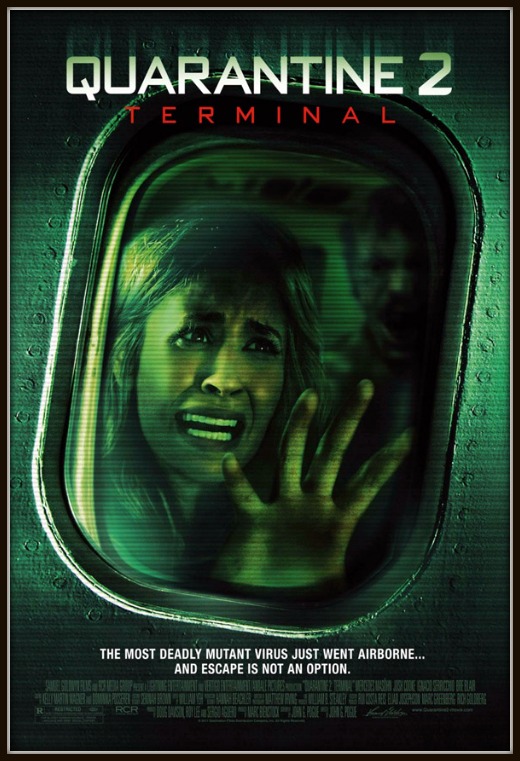
Quarantine 2: Terminal is the 2011 horror sequel to 2008’s Quarantine which was a remake of the much better Spanish horror film [Rec]. This sequel goes off on it’s own different path instead of just remaking the sequel which followed the Spanish film. As directed by John Pogue this sequel dumps the “found footage” style of the first film and instead just goes for a traditional film style. The film also goes it’s own way in explaining how it ties into the previous film.

Where the Spanish sequel had it’s events set at the same place this time around we find our new cast of characters on-board a red-eye flight from Los Angeles to Nashville that soon gets diverted to Las Vegas when one of the passengers suddenly becomes violently ill. Once they land the film mirrors the first film in that the surviving passengers, crew and a lone airport maintenance crewmember get locked in the terminal they’re at. The very bio-weapon that was unwittingly unleashed in the apartment complex in the first film has made it onto the flight and one by one the cast succumbs to it’s “rage zombie”-like symptoms.

Quarantine 2 is not an awful as some would like to tell people, but it is also not a good film. It’s pretty average with little to no tension or scary surprises. It’s a horror film almost done by check-list.  We also don’t get fully realized individuals to root for so that when one becomes infected there’s no sense of loss. In fact, there’s not even a character to root against. That’s how bland the characters ended being in this film. The story itself has built on the details presented about the virus in the first film and it’s an interesting premise that deserved a better film. Maybe a couple years from now the series will get rebooted and remade Bollywood-style and get some energy into it.


Moving onto a much better film that also share’s the above film’s fast-moving “zombie”-like infected is 2010’s Devil’s Playground by British horror filmmaker Mark McQueen. It is set in present-day London where it begins in medias res a hard-looking man all bloodied going by the name of Cole (played by Craig Fairbass) who uses a computer’s webcam to record the events which has transpired to bring him to his current state.

We soon go back to the beginning of the crisis which starts from the human-testing of a new drug by the pharmaceutical company N-Gen. Of the 30,000 test-subjects only one doesn’t succumb to the deadly side-effects of the drug which causes those injected to transform into ravening, cannibalistic killers who also happen to have had their agility amplified that they’re able to parkour their way towards the uninfected.

Yes, you heard right, parkour zombies. That gimmick alone attached to the current trend of fast-moving zombies gives this film an edge over most fast-running zombie films.

Devil’s Playground doesn’t just try to make things interesting with a new brand of zombie-infected killers, but manages to create a story around the usual “man on a mission” plot. Cole has to find the only test subject who didn’t succumb to the experimental drug’s side-effects in hopes that this person carries the means to help end the spread of the virus. The cast itself helps in making this horror film rise above the usual dreck that gets released on video. While I’ve never been a fan of British “tough guy” actor Danny Dyer he wasn’t as annoying in this film as he is in others and it’s due to the performance by Craig Fairbass as the hardened mercenary Cole which makes Dyer’s dishonored cop Joe from chewing everything in the scene he appears in.

Director Mark McQueen does a good job in keeping the story moving forward even as he juggles subplot involving a couple of London river cops trying to find a safe haven in a city that’s going through a deadly crisis of apocalyptic proportion. Even the free-running zombies don’t come across as laughable and at times even come across as quite horrifying when Cole and his small band of survivors try to move from haven to haven in the hopes of getting the one who may be the key to solving the crisis to the right people.

Devil’s Playground may not join the ranks of the classic zombie films since Romero’s Night of the Living Dead changed the world of horror in 1968, but it manages to be both entertaining and scary despite the parkour zombies.


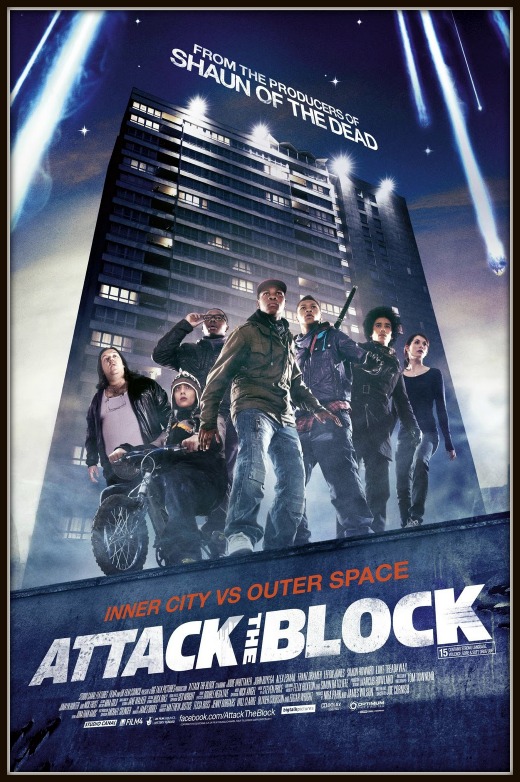
The best of this triple-bill of horror comes courtesy of one of 2011’s festival darlings. Attack the Block by writer-director Joe Cornish was able mash together scifi, horror and comedy and do so seemlessly. It’s a genre-busting film that doesn’t lean too heavily on either three but allows the great script written by Cornish to dictate when the horror begins and when it transitions to some sharp comedic scenes and dialogue.

This is a film that could’ve sunk under the weight of it’s cast of British teen and child actors, but instead gains much of it’s appeal from these fresh, young faces. Even for those across the Atlantic in the US the British slang used by the kids in the film doesn’t confuse as much as it could. The writing and performances by these kids (especially by John Boyega as the teen gang leader Moses) don’t come across as forced, but flow naturally from scene to scene. Their reactions to finding and killing what turns out to be an alien looks and sound exactly how any group of young hoodlums and ragamuffins would have. In fact, some of the film’s funnier scenes was due to how each of them arm themselves in their attempt to protect the block of apartments they all live in.

It wouldn’t be an alien invasion film of any quality if we didn’t get some memorable aliens. Fortunately we do get aliens that come across not just menacing, but also not fake looking. Nothing takes an audience away from suspending their disbelief and enjoying a film than a badly pulled off visual effect. Cornish and his effects crew use a combination of practical and CG effects to bring to life a horde of alien invaders who look like a cross between apes and the ball of fur and teeth from the 80’s cheesetastic scifi-horror film series Critters.

Attack the Block doesn’t skimp on the death and destruction. The film doesn’t treat the young characters with kid’s gloves either as they’re not exempt from the mortal danger posed by the aliens who have invaded their Block. The fact that each character (both young and old) were written to be rounded characters with distinct personalities that we feel each death no matter how minor the role. It’s a rare horror film that actually made great use of character development in-between scenes of action and terror. Even during those particular scenes each character on the screen adds a new layer of complexity to the role. This is a testament to director Joe Cornish who also wrote the excellent screenplay. The fact that this was his feature film debut as a director also makes Attack the  Block such a surprise wonder.

So, our tally for today when it comes to the three films mentioned above would come down to….

Quarantine 2: Terminal – Pass (watch on Netflix Instant if there’s nothing else to watch)

Devil’s Playground – Definite Watch (can be seen through Netflix Instant)

Attack the Block – Must-See (buy the blu-ray to add to your collection or rent if you’re not into that)

Quick Review: The Girl With The Dragon Tattoo (dir. by David Fincher)


Addendum: Leonth3duke has added his own thoughts on The Girl With The Dragon Tattoo, which are worth reading. Lisa Marie has also added her own viewpoint on the film.

I think had I not seen the Swedish version of The Girl With The Dragon Tattoo, this would be a far easier review to write, really. I tried reading the book a number of times, and found it really tough with Larsson’s exposition to stay with it. As such, this review is somewhat biased, perhaps heavily so, and it may be a little spoiler-ish. My assumption here is that with the novel having been available for some time now, and a separate movie to watch, there are very few people who don’t know what the story’s about.

A funny thing happened while watching David Fincher’s The Girl With The Dragon Tattoo the other night.  In the middle of the film, the projector turned off. After I calmed down, eyeing the exits and thinking the Blob might have made it’s way into my theatre, the audience had fifteen minutes of quiet to wait and give their thoughts on the movie.

One fellow stepped down from the seats, ready to ask for his money back when he stopped and turned around.

“Does anyone know what the F this movie is about? ‘Cause I’m frickin’ confused!” he raised his arms to the audience, pleading for reason.

“It’s about a girl with a Dragon Tattoo.”, Someone yelled back.

“What is supposed to mean!?” The angry man replied, sounding a lot like Rooney Mara in The Social Network. “All I’ve seen is Bond shiver his butt off and this chick type away on her laptop. This is garbage.” And with that, he left.”

“Yeah, this is some bulls—.”, Another fellow said as he left.

Needless to say, the movie resumed. There was a problem that caused their fire alarm to shut off and it stopped every film in the theatre. I’m not sure how much I may have missed, but I’ll probably see this again during the weekend.  I know, it’s not the best of review lead ins.

The simplest thing I can say about The Girl With the Dragon Tattoo is this:

– If you read the book and saw the Swedish film, this version only puts on a coat of Fincher Paint on the story. From the opening credits that rival the one in Se7en to the fade to black, it’s all distinctly Fincher’s touch on things.  You could almost argue that it feels like a Bond film, the way they did it. This basically means that the lighting might be dimmer in some places and the film may be more stylized. It comes across feeling more like a motion picture than the Swedish version, which to me felt a little more like a tv movie.

If you never read the book, I would highly recommend the Swedish version first. It’s on Netflix, and as some of the material is delicate, doing so would give you the freedom to hit the pause or fast forward button should you find yourself uncomfortable. That’s kind of hard to do in a movie theatre without walking out on the money you spent on a movie ticket.

And if you saw the Swedish Version, missed the book and are wondering if you should spend your money on this, Rooney Mara really is the only reason to give this a try. It’s essentially the same story, but with a different ending that’s tighter and closer to the book than the Swedish Film. While Rooney’s Salander may not be hard hitting as Noomi Rapace’s Salander , she deserves so much credit for throwing herself into this as deep as she did, and helping to create her own version of Lisbeth.  Daniel Craig, on the other hand, seems to be more restrained here.

The Girl With the Dragon Tattoo is the story of Mikael Blomkvist, an editor in chief of a magazine called Millenium in Sweden who is dealing with a mishap on a libel case against a magnate named Hans-Erik Wennerstrom. His recent notoriety catches the attention of Henrik Vanger (Christopher Plummer, who’s really having a great year), who asks him to investigate the 40 year old murder of his niece, Harriet. Of course, prior to asking Blomkvist to take on the case, Vanger’s lawyers perform a background check on him with the help of Lisbeth Salander (Rooney Mara). Salander happens to be both an ace Hacker and sports a photographic memory, which makes snooping into Blomkvist’s files a cinch.

Eventually, through his investigation of the Vanger Family on their private island, it becomes apparent that Blomkvist needs a little assistance, so he asks the lawyers if Salander can be brought on to work with him. It’s when the two characters meet that the story really picks up some steam.

While I loved it (I’m going back to see it again over the weekend, I think), there was the odd feeling that something was really off. At one point in the film, I find myself quirking my brow, because it occurred to me that there was just a little too much sex in the movie. I understand that’s not something one should complain about, but the Swedish version of the film led me to believe that Salander’s motives for any kind of passion were just a “want, need, have” and move on. In this version, she came across almost needy. It’s not even the right word. Where Rapace’s Salander felt cold and calculating even though the later parts of the story, Mara’s Salander feels like she’s warming up to Blomkvist emotionally. Of course, this could be attributed to screenwriter Steven Zaillian (Schindler’s List, Searching for Bobby Fischer) playing the story closer to the book than the other film, but it was strange for me in that sense. Fincher, who is notorious for control over his scenes may also be to blame here. If you have access to the behind the scenes for The Social Network, you can watch some of his interviews on the behind the scenes to get an idea of just how much he likes to control where a scene goes.

I don’t hate Fincher. I own Se7en, Fight Club and The Social Network and love all three of these, but even I have to admit that as cool and as stylish as the film is, something’s just off. I loved the film, but it’s just different.

The movie was advertised as the ‘feel bad film of the year’, and in that sense, they’re not lying. Keep the kids home, please. All three versions of the story contained a rape scene. Fincher and Co. Don’t pull any punches here, making it all a little disturbing for anyone not actually prepared for it. One standout to the film has to be the score, developed by Oscar Winners Trent Reznor and Atticus Ross (something I’ll never be fully able to handle saying, having been a Nine Inch Nails fan since the mid ‘90s). The movie has no clear-cut theme to it, but the music that fuels the scene add an extra layer to things. That I really enjoyed.

So, overall, the remake didn’t really need to be made, but it does make me interested to see what Fincher and Zaillian have in store if they decide to continue the Millenium Trilogy. My hopes are that they give Lisbeth Salander a bit of a sharper edge than she already has. Mara herself, they don’t have to worry about. She’s a definite lock as Salander, and I’m happy for her on that. It’s where they choose to take her that I’m concerned about.
Battle: Los Angeles (Super Bowl TV Spot)


This site has been pushing the upcoming alien invasion film, Battle: Los Angeles since the first trailer started coming out several months ago. Sony Pictures has just released the latest one and this Super Bowl tv spot is shorter than the usual trailers, but it definitely shows the potential for this film’s awesomeness.

It pretty much uses some of the same footage from the previous trailers, but shows new ones of the soldiers’ reaction to the initial stages of the invasion and how they’ll be the one’s to have to fight the big fight.

The film comes out on March 11, 2011.

Battle: Los Angeles (International Teaser Trailer)


Funny how certain films in the US get a change in how they’re titled for the overseas market.

A couple weeks ago the first trailer for Jonathan Liebesman’s alien invasion film, Battle: Los Angeles, was posted and it certainly looked a tad better than this year’s big alien invasion flick, Skyline. They share not just the type of film it wants to be but the location as well. Both are set in Los Angeles and both seem to be CGI-heavy affairs. Where the Brother Strause’s film was so bad that it was good this film from Liebesman looks to marry alien invasion with Black Hawk Down for a much more down in the ground action.

This new teaser trailer is the international version and it shows a bit more of the action we’ll be seeing in this film. There is one little change which I find more than just a tad bit amusing. When the teaser finally ends we don’t see the title as Battle: Los Angeles, but instead we get the more international sounding World Invasion: Los Angeles. I guess the studio thinks the film will do better overseas by making it sound like the invasion is global instead of local the way the original title has it.

Fret not fellow Americans! The voiceover does say, after listing cities both in the US and around the globe, that we cannot lose Los Angeles thus….USA! USA! USA!