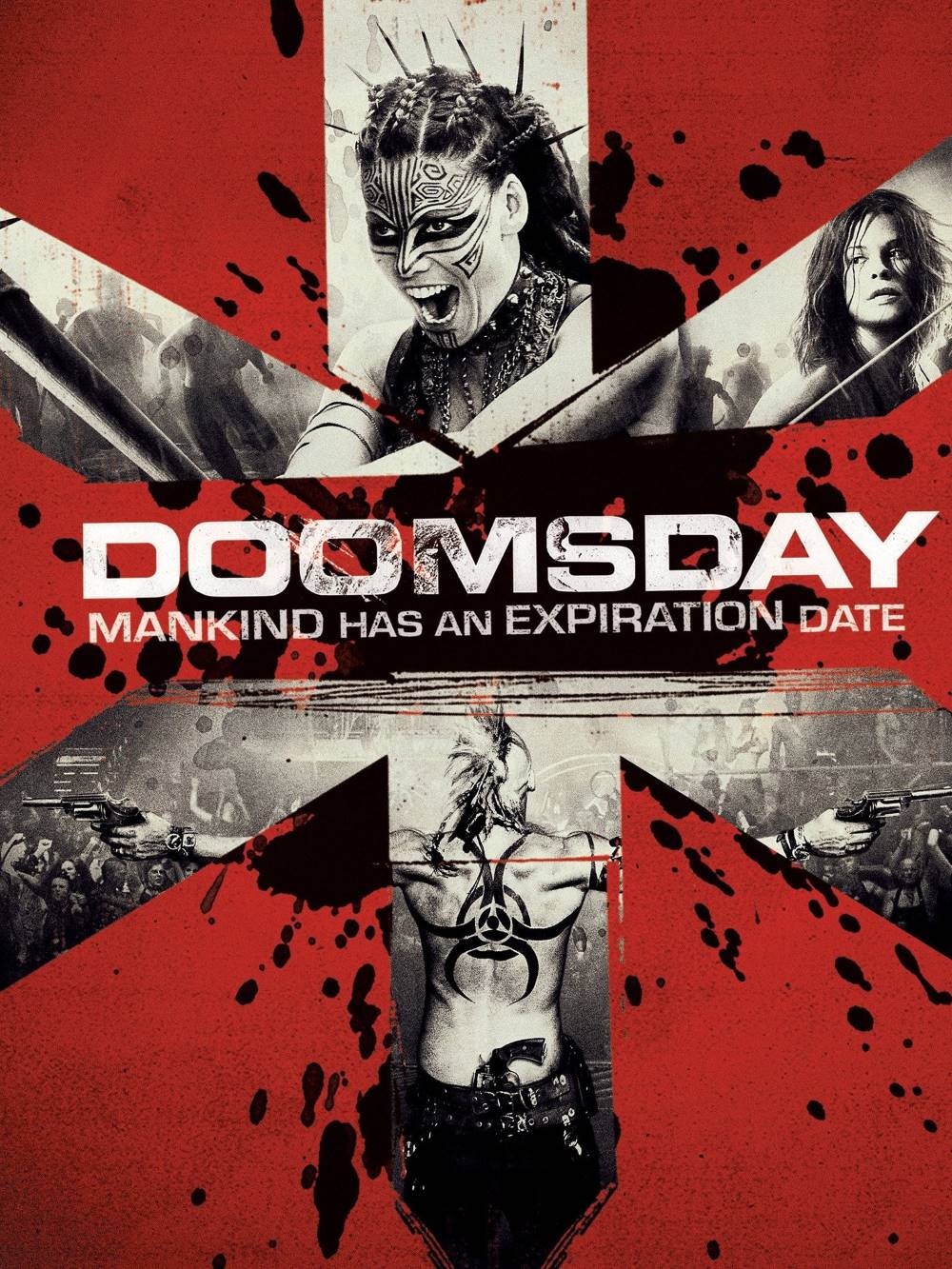
Review: Doomsday (dir. by Neil Marshall)


“Same shit, different era.” — Eden Sinclair

Doomsday tries to be a wild post-apocalyptic romp but ends up as such a profound disappointment, especially coming from Neil Marshall, whose previous two films, Dog Soldiers and The Descent, were much better entries in the horror genre where his attempts to inject new ideas landed the mark with precision and style. Here, Marshall shifts gears into a sprawling, uneven action-horror hybrid that feels like a highlight reel of better movies, bloated and unfocused where his earlier works thrived on tight scripting and fresh twists. While there are flashes of fun in the chaos, the film’s glaring flaws in plotting, tone, and originality outweigh any guilty-pleasure moments, leaving it as more of a curiosity than a recommendation.

The story kicks off with a decent hook: a deadly Reaper virus wipes out much of Scotland, prompting the government to seal it off behind a massive wall and leave the population to fend for itself. Years later, the virus resurfaces in London, and intel suggests survivors—and possibly a cure—lurk inside the quarantine zone. Major Eden Sinclair (Rhona Mitra) leads a ragtag military squad across the wall to hunt down a rogue scientist. It’s a setup that echoes classics like Escape from New York, but Doomsday quickly abandons any tension for a parade of borrowed set pieces that rarely gel, a far cry from the inventive werewolf siege of Dog Soldiers or the claustrophobic crawler terror in The Descent.

Once inside, the movie lurches from one aesthetic to the next without much logic or buildup. First comes a punk-anarchist wasteland with cannibals hosting gladiatorial freak shows amid flames and mohawks, then a sudden pivot to medieval knights in castles complete with jousts and sieges. These shifts feel arbitrary, like Marshall couldn’t decide on a vibe and just threw them all in—a scattershot approach that lacks the confident genre-blending of his prior successes. The worldbuilding is shallow—how did feudalism sprout up so neatly amid the apocalypse?—and the transitions are jarring, undermining any sense of immersion or stakes.

Rhona Mitra holds the center as Sinclair, a one-eyed badass who dispatches foes with grim efficiency, but even she can’t overcome the script’s limitations. Her character is a walking archetype: tough, quippy, and competent, with zero emotional depth or growth. The supporting players, including Malcolm McDowell as a scenery-chewing lord and Bob Hoskins as a gruff boss, are wasted on one-note roles. They’re recognizable enough to highlight how little the film does with its cast, turning potential strengths into reminders of squandered talent.

Visually, Doomsday has some grit thanks to practical effects and location shooting, especially in the grimy urban ruins and over-the-top chases that nod to Mad Max. The gore is plentiful and messy, which might appeal to splatter fans. But the action often devolves into incoherent shaky-cam slogs, and the pacing drags in spots despite the constant escalation. Worse, the film’s self-indulgent excess tips into silliness that undercuts its own grim premise, making it hard to buy the horror of the virus or the desperation of survival.

Tonally, Doomsday is all over the map, swinging from bleak quarantine dread to campy medieval farce without warning. This inconsistency is its biggest sin—serious moments clash with cartoon violence, and the humor lands flat or feels forced. Influences from 28 Days LaterThe Road Warrior, and even Excalibur are blatant, but Marshall doesn’t elevate them; he just remixes them into something louder yet less impactful. The result feels like fan fiction for genre nerds rather than a fresh take, missing the spark that made his earlier horrors stand out.

Thematically, there are glimmers of commentary on government abandonment, class divides, and viral panic, but they’re buried under the bombast and never explored. Instead of probing the ethics of walling off a nation, the film prioritizes spectacle, leaving those ideas as window dressing. It’s a missed opportunity that makes the whole endeavor feel hollow, especially when real-world parallels to pandemics could have added bite.

Doomsday struggles to stand on its own amid a crowded genre field, weighed down by narrative sloppiness and tonal whiplash that overshadow its few strengths. The positives—like visceral kills and Mitra’s presence—fail to overcome the disjointed plotting and lack of fresh ideas. Ultimately, it feels like a missed chance for something more cohesive, leaving little reason to revisit beyond a one-off curiosity.

In the end, Doomsday is a swing-and-a-miss for Neil Marshall, ambitious in scope but sloppy in execution, a letdown after the highs of Dog Soldiers and The Descent. The negatives dominate: uneven pacing, logical gaps, borrowed aesthetics without innovation, and a tone that alienates more than it entertains. If you’re in the mood for undemanding B-movie chaos on a slow night, it might scratch a minor itch. Otherwise, skip it for the films it rips off—they deliver the thrills without the frustration. At around 105 minutes, it’s not a huge time sink, but better options abound in the post-apoc genre.

The TSL Grindhouse: Soldier (dir by Paul W.S. Anderson)


1998’s Soldier starts off with a brilliant seven-minute sequence.  We watch as, over the course of 17 years, a child named Todd is raised and trained to be the ultimate soldier.  From a young age, he’s learning how to fight.  He’s learning discipline.  He’s learning to follow orders without question.  We follow him as he goes on to fight in conflict after conflict.  The name of each conflict in which he fights is tattooed on his muscular arms.  Finally, a title card appears that informs us that Todd (now played by Kurt Russell) is “Between wars.”

Captain Church (Gary Busey) insists that Todd and his fellow soldiers are the greatest fighting force in the galaxy.  The autocratic Colonel Merkum (Jason Isaacs) disagrees, claiming that his genetically-engineered soldiers are superior and that Todd is now obsolete.  After a savage training exercise that leaves Todd unconscious, Merkum orders that Todd be dumped on an abandoned planet.

Of course, it turns out that the planet in question is not actually abandoned.  Instead, it’s home to a group of colonists who crash-landed on the planet years ago and who now live a life that is devoid of conflict.  When Todd approaches the colony, he is cautiously welcomed.  Todd, who rarely speaks, is extremely strong and quick and that pays off when he’s able to save Jimmy (Michael Chiklis) from being pulled into a thrasher.  However, Todd is also haunted by PTSD and he’s been bred to fight and that leaves the other colonists cautious about him.  Despite the efforts of Mace (Sean Pertwee) and his wife Sandra (Connie Nielsen), the other colonists vote to exile Todd from their colony.

Meanwhile, Merkum and his “superior” soldiers are heading towards the planet, eager to execute the colonists as a part of a training exercise.  Todd will have to use all of his training to defeat Merkum’s super soldier, Caine 607 (Jason Scott Lee), and help the colonists reach their final destination.

One of the more interesting things about Soldier is that it apparently takes place in the same cinematic universe as Blade Runner.  The wreckage of one of Blade Runner‘s flying cars is spotted on the planet and Todd is shown to have fought in some of the same battle that Roy Batty claimed to have witnessed in Ridley Scott’s classic film.  For that matter, Ridley Scott himself has said that Blade Runner also takes place in the same cinematic universe as Alien and some people insist that Predator is a part of the universe as well.  That’s a rich heritage for Soldier, which is essentially a dumb but entertaining B-movie.

I liked Soldier, almost despite myself.  It’s a silly film and there are certain scenes, mostly dealing with day-to-day life in colony, that feel a bit draggy.  But I enjoyed Kurt Russell’s performance as the ultimate super soldier.  Russell has very little dialogue in the film and his character is bit stunted emotionally but it doesn’t matter.  Ultimately, Russell’s natural charisma carries the day and his fight with Caine 607 is genuinely exciting.  As usual, Jason Isaacs makes for a wonderfully hissable villain and even Gary Busey gives what is, for him, a rather restrained and ultimately credible performance.  As is so often the case with the work of director Paul W.S. Anderson, the film is a cartoon but it’s an entertaining cartoon.

Horror Film Review: Event Horizon (dir by Paul W. S. Anderson)


event_horizon_ver1

Event Horizon, a sci-fi/horror hybrid from 1997, is one of those films that starts out with a series of title cards:

“2015 First permanent colony established on moon.”

Wait … 2015?  How did I miss that?

” 2032 Commercial mining begins on Mars.”

Yay!  Only 16 more years to wait until we’re finally on Mars!

“2040 Deep space research vessel ‘Event Horizon’ launched to explore boundaries of Solar System. She disappears without trace beyond the eighth planet, Neptune. It is the worst space disaster on record.”

Wow, that sucks.  But things happen…

“2047 Now…”

Alright, let’s get this story going!

Seven years after it disappeared, the Event Horizon suddenly sends out a distress signal.  It turns out that it didn’t blow up like everyone assumed.  Instead, it’s still out in space.  The surly crew of the Lewis & Clark is called off of leave and sent on a rescue mission.  (And when I say surly, I do mean sur-ly!  Seriously, nobody on the Lewis & Clark is in a good mood … ever!)  Accompanying the crew is Dr. Weir (Sam Neill), the scientist who designed the Event Horizon.  Captain Miller (Laurence Fishburne) may not be happy about having Dr. Weir on his ship but, then again, Captain Miller always seems to be annoyed about something.

The Event Horizon appears to be deserted.  The walls are covered with blood.  The captain — at least it appears to be the captain — has been crucified and left on display.  Dr. Weir explains that the Event Horizon was designed to create an artificial black hole and it’s possible that the ship went into another dimension and that it may have brought something back with it.  Other crew members speculate that the Event Horizon may have accidentally been transported to Hell.  Either way, it’s not a good thing but, after the Lewis & Clark suffers some damage, the crew find themselves stranded on the Event Horizon.

Soon, the crew members are having hallucinations.  The ship’s doctor (Kathleen Quinlan) sees her son running through the ship.  Captain Miller sees the burning corpse of a friend that he had to abandon during a previous mission.  Another crewman appears to be possessed and attempts to commit suicide by opening up the airlock.  Dr. Weir has visions of his dead wife.  Things get darker and darker.  People die.  Eyes are ripped out of sockets.  A video of the original crew is found and it’s like something out of a painting by Hieronymus Bosch.  Miller wants to blow up the Event Horizon.  Dr. Weir replies, “We are home!”

Agck!

Seriously, Event Horizon is a curious film.  I’ve seen it a few times and I have to admit that it’s never quite as good as I remembered.  If you want to get really technical about it, Event Horizon is a poorly paced film that is overly derivative of the Alien franchise and it features perhaps the worst performance of Laurence Fishburne’s career.

(Yes, even worse than his performance in Contagion…)

But, at the same time, even if I’m always somewhat disappointed with the film, Event Horizon is also a movie that stays with you.  Whatever flaws the film may have, it is genuinely scary and disturbing.  Director Paul W.S. Anderson does a good job of turning that spaceship into the ultimate floating haunted house and, even more importantly, he keeps you off-balance.  This is one of the few horror films where literally anyone can die, regardless of whether they’re top-billed or have an Oscar nomination to their name.  Whatever the evil is that has possessed the Event Horizon, it is ruthlessly and sadistically efficient.

Plus, there’s that video.  If you’ve seen the movie, you know what I’m talking about.  Anderson has complained that the studio made him cut a lot of footage out of the video but what remains is disturbing enough.  Seriously, you’ll never want to hear another Latin phrase after watching Event Horizon.

Review: Gotham S1E02 “Selina Kyle”


GothamS1E02

Tonight’s Gotham picked up where the “Pilot” left off and that’s the fallout from the murders of Thomas and Martha Wayne. We find out during the episode that the Wayne family was considered one of the two pillars of the Gotham community which kept the city’s order and status quo. The other pillar being Don Carmine Falcone was a nice touch by the writers. It was this little piece of world-building information that is gradually selling me into this series even this early in it’s freshman season.

The history of Batman, the Wayne family and the underworld which permeates Gotham has been told and retold so many times that it’s hard to imagine that anything new could be added to keep things fresh to hardcore fans of the character and the world. It’s actually been a major problem for comic book and film screenwriters when it’s time to come up with something new and not have it become such a major deviation from the character canon to alienate fans.

Showrunner Bruce Heller must’ve seen something within the backstory and history of some of Batman’s adversaries because he looks to be setting up Carmine Falcone and Fish Mooney as the two main antagonists for season 1. In the comics and in the films we don’t really get to explore these two characters very closely. They’re described as underworld mob bosses and, at times, seen as brutish thugs who just happen to be the heads of their criminal enterprises.

“Selina Kyle” is the title of tonight’s episode though we don’t really see the title character until much later in the episode. The episode itself dealt with a new case for the Gordon and Bullock duo who are still feeling their way around each other. It doesn’t help that Bullock seems to be getting tired of Gordon’s “holier-than-thou” attitude towards him and the rest of the force considering he and many in the force think Gordon killed Cobblepot in the previous episode. We, the audience, know better, but Gordon knows he has to continue to sell that assumption made by everyone.

While tonight’s episode wasn’t as overly busy with cramming as many Batman characters and locations it was still quite packed. In addition to building on the Gordon and Bullock relationship, we also have the episode’s main story about teen runaways being grabbed off the streets by unknown parties. Then there’s still the Wayne murders which the pilot episode showed wasn’t really solved. Will the murders of Bruce’s parents take up the bulk of the first season (I sure hope it doesn’t) or will it get a good enough resolution to help move the season’s narrative towards other more interesting storylines.

gotham-selina-kyle_article_story_large

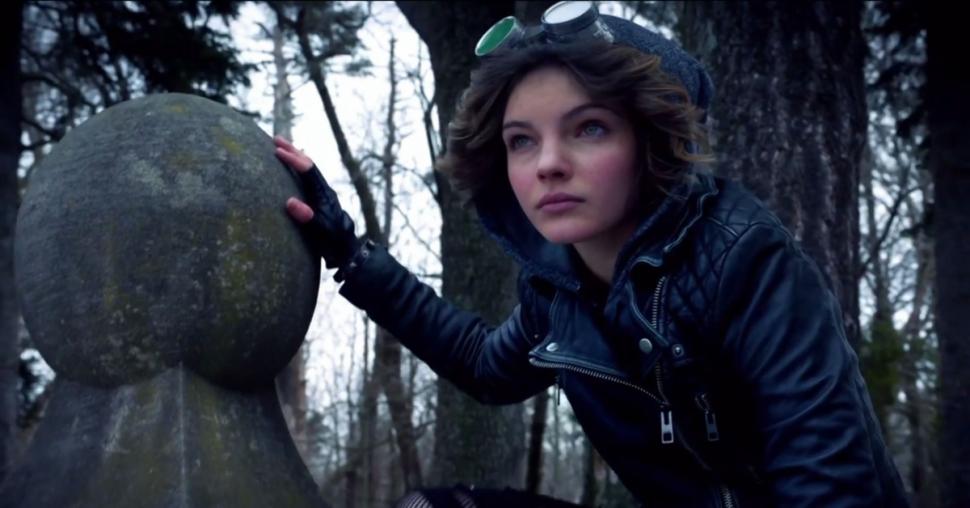
It’s in the last twenty or so minutes of the episode that we finally get to see Selina Kyle. Camren Bicondova has such a unique look that it’s a bit jarring seeing her, at first. Yet, it’s the actress’ very exotic-look that hints at Bruce Wayne and Batman’s one true love turning into quite the seductive beauty. Yet, tonight’s episode just portrayed Selina Kyle as a tough, street-savvy runaway whose major role this season is the fact that she knows who really killed the Waynes.

Now, what really made tonight’s episode keep the series on an upward trend would be the two characters mentioned in the beginning: Carmine Falcone and Fish Mooney.

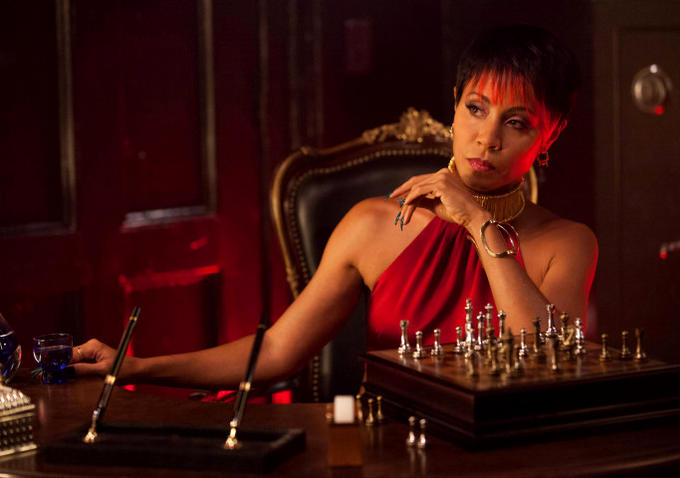
These two characters have become more interesting in just two episodes than throughout all the thousands of stories told about Batman through the comics, films and cartoons. As played by John Doman and Jada Pinkett Smith respectively, Falcone and Mooney make the show really interesting. These are not costume wearing villains or mentally-scarred antagonists. They’re hardcore criminals, but who have learned how to work within the system that is Gotham’s elite society. Where the show pushes forward that the Wayne family has been and continues to be a longstanding pillar of Gotham community, the show also seems to intimate that it does so with a sort of tacit acknowledgement of the seedier side of Gotham.

John Doman’s performance as Carmine Falcone continues to impress. There’s an almost paternal quality to the character but one that never tries to hide the brutality that’s made him the boss of all of Gotham’s criminal underworld. There was such a nice transition from polite businessman to sociopath mob boss in a space of a heartbeat during Falcone’s impromptu meeting with Mooney that one had to rewatch the scene more than once to pick it up.

Of course, many will point out that Jada Pinkett Smith as Mooney was just as good, but in a much more showier fashion. No disagreement in this corner. Smith’s performance is the opposite of Doman’s and it will be interesting how the power play between the two bosses will develop and how it’ll affect the rest of the cast of characters on Gotham.

This show still has growing pains to go through, but tonight’s episode was a good way in working through it while still trying to tell a compelling story. One thing Heller seems to have gotten right (whether by accident or deliberately) with this show’s writing is that he’s made the villains more interesting than it’s supposed heroes. That’s always been the case with Batman outside the comics and this show just continues to perpetuate it.

dcdbb92b4b1341fbc16f9bde1f629fc2

Trash TV Guru — “Gotham” Episode 1, “Pilot”


4GothamCity-610x343

Okay, fair enough, I’m kinda late to the party here since Arleigh has already chimed in with his thoughts on the rather unimaginatively-titled first episode of Fox’s new Gotham TV series, Pilot, but as  the closest thing to a “Bat-fanatic” here at TTSL, I thought I’d go ahead and offer a second opinion — even if it’s not terribly different from the first one you fine folks have read here.

Let’s start by stating the obvious — between Year OneEarth OneZero Year, and Batman Begins, the origins of the Dark Knight detective have been done to death on the printed page and the silver screen over the last couple of decades, so only the venue is really “new” here, the basic outlines of the story this show is going to present are already well-known — aren’t they?

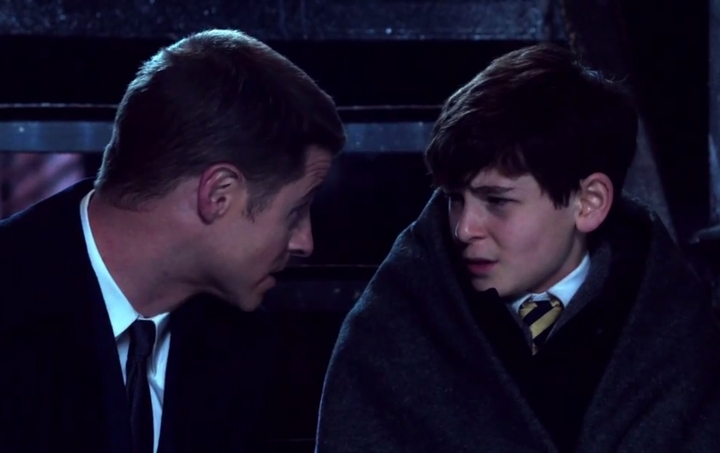
Well, yes and no. We all know how the series “ends,” whenever that happens to be — Bruce Wayne dons the cape and cowl and becomes Batman. Similarly, we all know how the story begins — wealthy socialites Thomas and Martha Wayne are gunned down in the notorious “Crime Alley” neighborhood of Gotham City in front of their young-at-the-time son, (here played by David Mazouz) and his life is, obviously, forever changed.

It’s what happens in between those well-established “bookends” that  events in Gotham will be playing out, and there does seem to be ample room for either whole-cloth invention, or creative re-interpretation, within the confines of that territory, and this pilot episode shows that, as was done with Smallville over the course, of — what,  ten seasons? — the principal creative minds at work here, most notably executive producer (and writer of this opening salvo) Bruno Heller, will be doing a little of both.

gotham-ben-2

Apparently the main plot thread, at least running through the first season, will see clean-cut rookie detective Jim Gordon (Ben McKenzie) and his crooked partner, Harvey Bullock (Donal Logue), investigating the Wayne murders, and this initial episode largely focuses on them chasing a red herring in the form of a small-time hood named Mario Pepper (Daniel Stewart Sherman) , who they end up killing while he’s trying to escape, to the equal parts relief and despair of his wife and young plant-loving daughter, Ivy (Clare Foley). There’s some painfully strained dialogue that will probably make long-time Bat-fans cringe interspersed here and there, and a couple of scenes that are downright painful to watch, but by and large the story moves along at a reasonable enough little clip, the twists and turns our two protagonists encounter are generally involving, and the stage seems to be set for at least a modestly entertaining yarn as things progress.

Was the episode a great intro to the series? Not by any stretch of the imagination. Was it good enough? Sure, what the hell — I’ll be back next week for more, at any rate, and we’ll see where it goes from there.

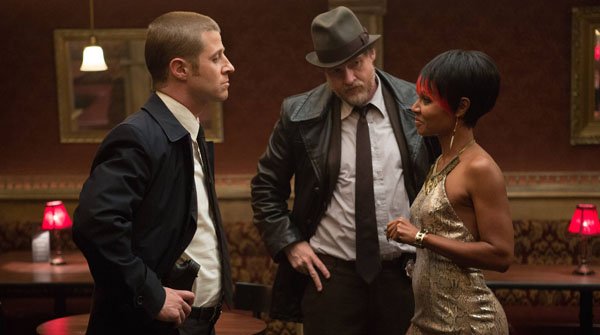
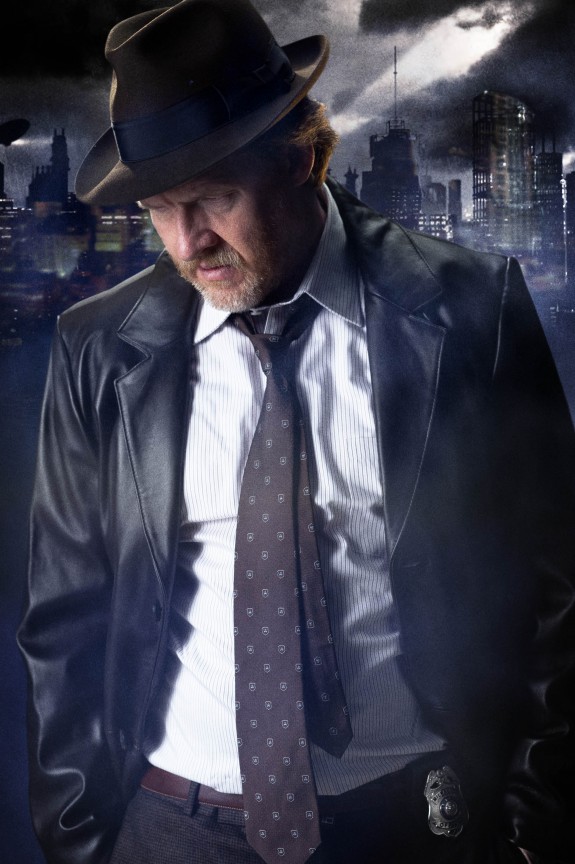
So, how about a rundown of what Heller and director Danny Cannon get right, and what they get wrong, shall we? First, the good stuff : Mazouz is excellent as the pre-pubescent Bruce Wayne, and shows  pretty remarkable acting range for a kid. He’s by turns heartbroken, sullen, withdrawn, and determined. Good show all around. McKenzie displays a requisite amount of “regular-guy charm” as the show’s ostensible lead. Logue is a magnificent casting choice for a gruff and cynical veteran detective who’s definitely on the take — probably from more than one source — but may not be completely beyond redemption. Camren Bicondova largely lurks behind the scenes as a young Selina Kyle, but she exudes mysterious charisma to spare and you’ll definitely want to see more of her. John Doman seems intent on giving crime boss Carmine Falcome a whole new layer of depth and a set of complex motivations that really have me interested in finding out just what makes him tick. Cory Michael Smith is the perfect blend of genius and creepy in his role as police scientist Edward Nygma, who will “grow up” to become, of course, The Riddler. And Robin Lord Taylor as Oswald Cobblepot delivers his lines — and performs his physical actions — with a kind of just-beneath-the-surface insanity that shows that if and when he does become The Penguin, he’ll probably be more of the Danny DeVito ilk than the Burgess Meredith one.

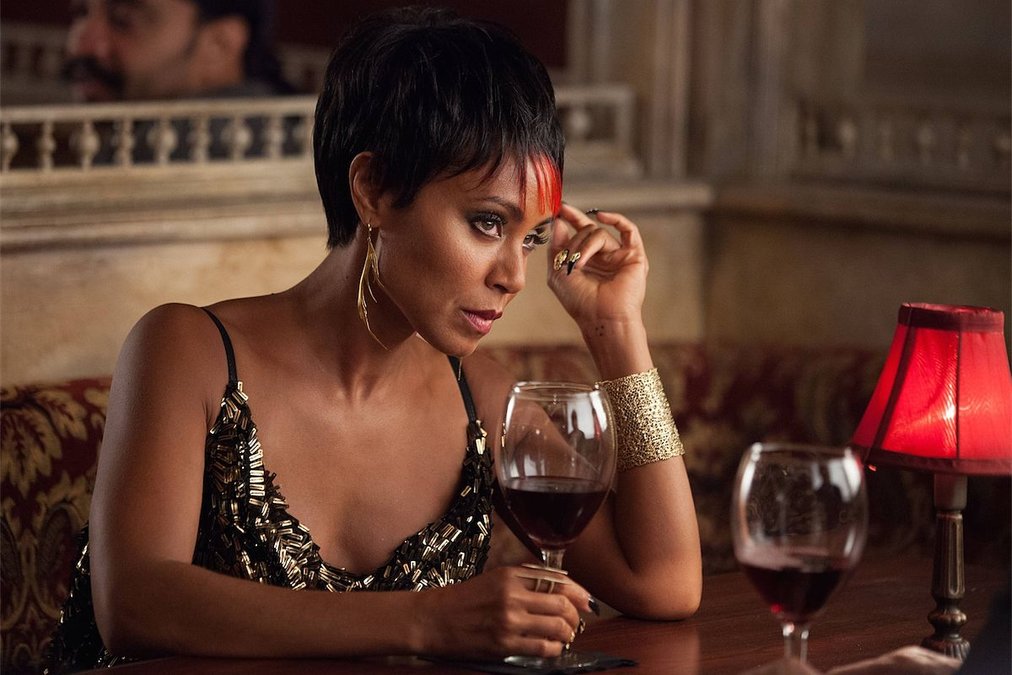
The real show-stealer, though, is Jada Pinkett Smith as new character Fish Mooney, a second-tier — for now — player in the local mob scene who has brains, ambition, cunning, and sex appeal to spare. She seems to be having the time of her life sinking her teeth into the role, and it certainly shows. And if she’s not enjoying herself, well then — guess her acting is even better than I’m giving it credit for.

Oh, and just as a quick aside : does anyone else think the scene where she’s auditioning a struggling young stand-up comic for her club might be the first appearance in this series of, well — you-know-who? Maybe I’m over-thinking things, but I had to put it out there regardless.

harvey-bullock-gotham

It’s not as if Heller isn’t prone to offering other subtle hints in this episode’s script, either — one of Gordon’s superior officers just happens to be named Sarah Essen (Zabryna Guevara), and folks who have read Frank Miller and David Mazzuchelli’s Batman : Year One know that name well. Likewise, fans of the Gotham Central comics series will already be well familiar with the names Crispus Allen and Renee Montoya (played by Andrew Stewart-Jones and Victoria Cartagena, respectively), who pop up here as GCPD internal affairs agents. They’re not given much to do, admittedly, but a word of warning to Heller and all other series writers as far as this subject goes : Renee Montoya, in particular, is someone with a lot of hard-core fans, being that she represents one of the few positive portrayals of strong, independent, lesbian women of color anywhere in mainstream comics. Treat her right, or ignore her altogether, but don’t get this one wrong. There are some lurid hints dropped that she has “a past” with Gordon’s fiancee, Barbara (Erin Richards), but I wouldn’t suggest playing Montoya for pure soap opera value — it would be tremendously disrespectful to a character that was truly groundbreaking on the printed page.

Which brings us to what Gotham, at least so far, seems to be getting wrong (apart from some occasionally dodgy set design and CGI work and the script flaws previously mentioned) : Sean Pertwee (son of my second-favorite Doctor to Tom Baker) is a good casting choice as Alfred, and his protectiveness of his young charge certainly shows through, but Heller writes him as a semi-militaristic hard-ass in a move that seems to be a direct nod to the risible work of writer Geoff Johns in his limp Batman :Earth One graphic novel (please note I’m only singling out Johns’ script for criticism, as Gary Frank’s art on that book was superb). I hope they don’t go too far down that road with the world’s most famous fictional butler. Poison Ivy appears to be the victim of a radically different “re-imagining” that, so far, looks a lot less than promising. The overall tone of the proceedings appear overly concerned with shoe-horning in too many specific Bat-elements and not doing enough to establish the city as an entity separate from its most famous vigilante crime-fighter. And having Barbara be a well-heeled, glamorous socialite is a bit of a betrayal of the working-class roots of Jim Gordon and his family that we’ve all come to know — he just doesn’t look right lounging around in her fashionable penthouse apartment.

gotham

All in all, then, what we’ve got  is a case of “some good, some bad.” By the time the episode was over I was reasonably optimistic that, despite the “mix n, match” approach to re-invention and outright invention that I mentioned earlier,  we’re not looking at another Smallville clone here — i.e. a show that amounts to little more than Beverly Hills, 90210 with super-powers. The jury is still out, though,  on whether or not this show’s creators have enough of a different spin to add to the Bat-mythos to make this a worthwhile project. They’re borrowing influences from a wide range of sources, some of which I would’ve preferred having them ignore altogether, but it’s probably safe to assume that only some of those things will prove to be major factors in the series going forward. How far forward I go along with it remains to be seen, as there was nothing in the pilot episode to make me say “alright, awesome, I’m all in!” — nor was there enough to make me throw up my hands and walk away in disgust. We’ll call how I feel about things “cautious optimism” for now, with the greater emphasis being on “cautious.” Heller and co. have me interested — not it’s time to impress me.

Review: Gotham S1E01 “Pilot”


GothamS1E01

“Gotham stands on a knife’s edge” — Carmine Falcone

It’s one of 2014’s most-anticipated new series. The world is superhero crazy right now and it was only time before DC dipped back into the Batman well to base a live-action tv series on their most-successful property.

Gotham doesn’t actually take the usual tack and bring in Batman himself as it’s main character. The show uses one of Batman’s most important allies as the focal point of the show. Jim Gordon has always been one of Batman’s staunchest friends throughout every story ever told about the Dark Knight. This show looks to explore Jim Gordon’s early years as part of the Gotham City Police Department. We still get to see Bruce Wayne as a child and his character and who he will become still loom large over the pilot and, I suspect, the series in general.

The pilot episode was written by the show’s executive producer Bruno Heller and it’s actually too paint-by-the-numbers. It literally tries to introduce as many of the Batman rogues gallery in it’s less-than-an-hour running time. We get a quick intro to not just the Riddler and the Joker, but we also get the early beginnings of the Penguin, Catwoman and Poison Ivy. Don’t even get me started on Batman’s more traditional adversaries in Fish Mooney and Carmine Falcone.

It’s difficult to judge a series on it’s pilot episode since the show is still trying to find it’s identity. We saw this with last year’s other comic book series, Agents of S.H.I.E.L.D., and how it took literally 2/3’s of it’s first season to finally find it’s stable footing before it could even figure out what show it wanted to be. Gotham may just have an easier time to find its way in the superhero entertainment landscape since DC has confirmed that the series will not tie-in with it’s cinematic universe the way Marvel did with it’s own series. This should give Bruno Heller and his writers a much more free hand in molding the show into what they want. Yet, there’s a danger in that freedom in that too much of a drastic deviation from the Batman source will rile up the character’s rabid fanbase.

FOX-Gotham-Exten-1525

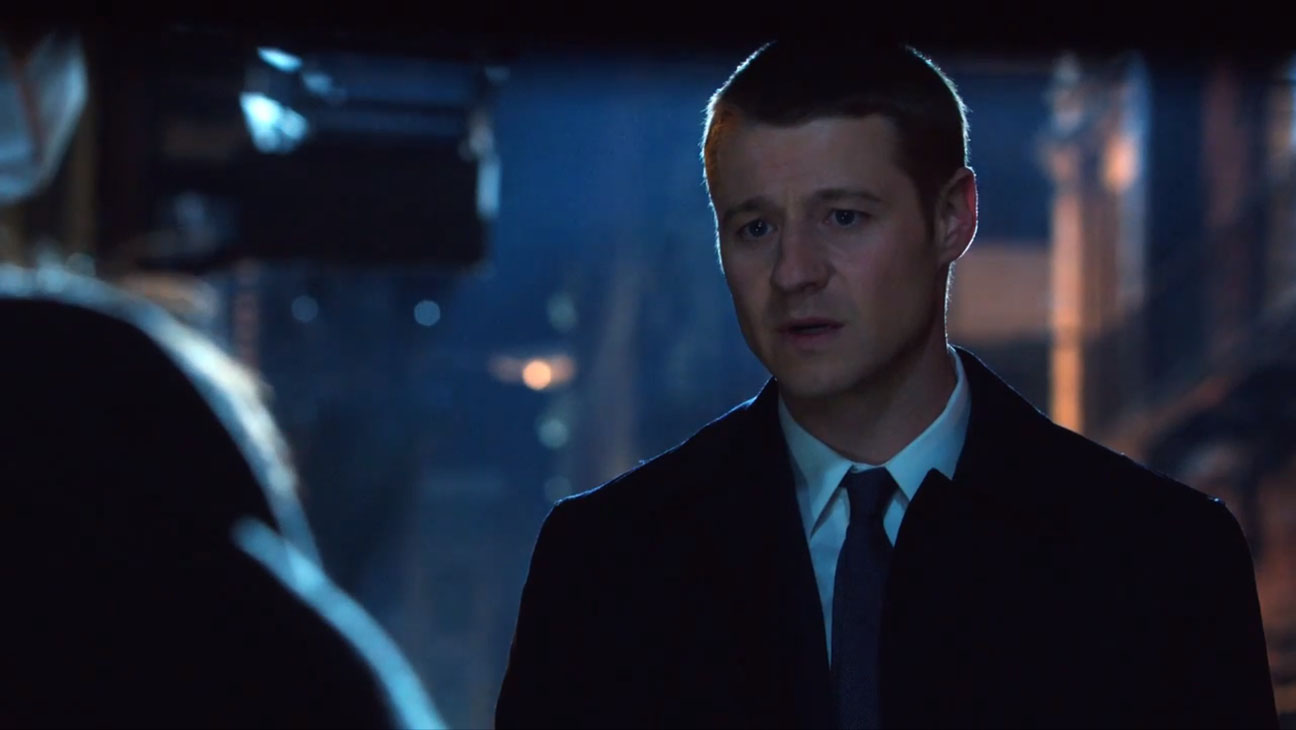
The first episode does arrive with some very good performances from it’s leads. Ben McKenzie as Det. Jim Gordon commands the stage whenever he’s on the screen. He’s able to convey not just the man of integrity we know Jim Gordon to be, but also inject a bit of a darkness to the character that we rarely saw in the films and cartoons, but comic book fans are very well aware of. McKenzie’s Jim Gordon definitely a bit more rougher around the edges but still idealistic than the Gary Oldman take on Jim Gordon who was more seasoned, but also more cynical about the best way to combat crime in Gotham.

Donal Logue as his veteran partner Harvey Bullock does a good job in becoming the bridge for the audience between the principled Gordon and the more corrupt, underbelly of law and order that is Gotham. We’re not sure if he’s a corrupt cop or just one who has learned how to navigate the dangerous waters of the criminal underworld as one of Gotham’s protectors. Time will tell if this version of Harvey Bullock becomes more of the Batman Begins analogue Arnold Flass or the cynical, but loyal cop of the cartoons.

Now, a show about Batman’s hometown wouldn’t be able to call itself by that city’s name if I didn’t mention the rogues gallery that will end becoming Batman’s (and to an extent, Jim Gordon) reason for being. We don’t see colorful costumes or even the recognizable look of Batman’s villains in this pilot episode, but as stated earlier they do try to cram as many of them in this series premiere as they could. It’s almost like a convoy designed to remind audiences that the show will explore not just Jim Gordon’s early days before Batman rises from the shadows, but also the time of the villains before he arrives.

cdn.indiewire.com

Of all the bad guys the show tries to push at the audience in this pilot it’s Fish Mooney as portrayed by Jada Pinkett Smith that stands out most. Her crimelord brings a certain amount of flair to the episode that hints at the over-the-top villainy that will come about once Bruce is all grown up and takes up the mantle of the bat. There’s hints of a past relationship between her and Logue’s Bullock that could turn out to be interesting. Robin Lord Taylor as a young Oswald Cobblepot aka the Penguin is ok, but something in his performance looks like someone trying too hard to bring out in this series the Penguin’s quirky mannerisms that the character looks to be the most cartoony of all introduced in the episode.

Gotham had a good and interesting introductory episode that laid enough stones on the series’ foundation as it moves forward. With only 16 episodes instead of the usual 24 most full-length tv series get Bruno Heller and the show’s writers has less time to create this version of the  Gotham and Batman world we’ve come to expect. Will they manage to inject some new blood into a world that’s been adapted and reimagined through decades of comics, tv and film work or will the series just try to appease the hardcore comic book fanbase thus alienating the wider general audience.

We shall see and future review installments will tell if this site buys into the series with wholeheartedly or end up getting off the ride before it’s over.

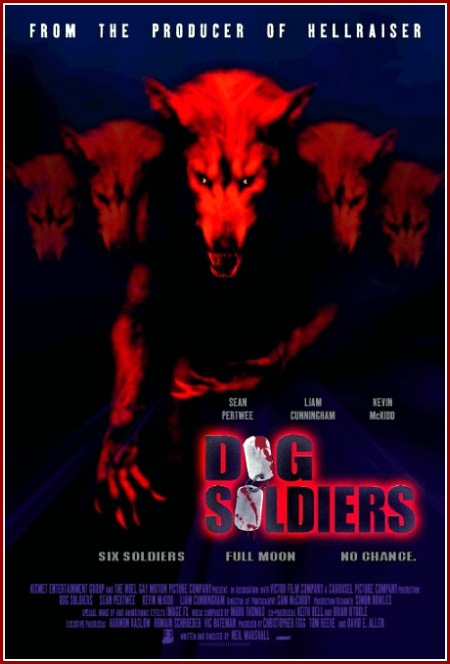
Review: Dog Soldiers (dir. by Neil Marshall)


Werewolf films have always felt like they’ve been given the short end of the stick when it comes to quality and artistry. In horror cinema, vampires tend to be the ones treated with glamour—getting richly developed lore, elegant aesthetics, and narratives that weave romance with menace. Werewolves, by contrast, are too often relegated to playing second fiddle, treated more as brutish monsters than complex characters. This isn’t to say there haven’t been standout entries in the genre—classics such as An American Werewolf in LondonThe Howling, and Wolfen proved that werewolf tales could be inventive, atmospheric, and even poignant. Unfortunately, many modern werewolf films still feel stuck emulating the aesthetics and narrative beats of the 1940s Universal Wolf Man formula, unwilling to evolve past its roots.

That’s why Dog Soldiers, Neil Marshall’s 2002 action-horror film, came as a breath of fresh air. Marshall, then an up-and-coming director from the UK, took the basic premise of a werewolf story and infused it with the pacing, intensity, and tone of military survival thrillers. In doing so, he leaned into genre hybridity, crafting something closer to Aliens meets Zulu, peppered with elements from siege films like Assault on Precinct 13 and even hints of Night of the Living Dead. This fusion not only differentiates Dog Soldiers from typical werewolf fare, it also helps the film sidestep some of the genre’s usual narrative pitfalls.

The plot is refreshingly straightforward and tightly executed. A squad of British soldiers is dispatched to the Scottish Highlands on what appears to be a routine training exercise. However, the mission is actually part of a covert operation led by Captain Ryan (Liam Cunningham) from British special operations. The higher-ups believe there is an unidentified creature prowling the remote wilderness—something worth capturing and experimenting on. Naturally, plans unravel almost immediately when the soldiers stumble upon the very real threat: a pack of predatory werewolves. In quick order, both the military squad and Ryan’s covert team suffer heavy casualties, forcing the handful of remaining survivors to retreat to the relative safety of an isolated country cottage.

At this point, Dog Soldiers shifts from a creature-hunt narrative to a tense siege story. The soldiers, along with Megan (Emma Cleasby), a young anthropologist who happens upon them while driving along a desolate road, barricade themselves inside the cottage. It’s a familiar setup to horror fans—a small, heavily outnumbered group defending themselves against a monstrous threat—but Marshall handles it with sharp pacing and escalating stakes. The werewolves never attack in full force right away; instead, they probe the survivors’ defenses, testing weaknesses, thinning numbers, and forcing improvisation. The incremental nature of these assaults keeps the tension high and recalls the strategic pacing of Aliens and Zulu. By the final act, the film’s momentum surges into a frenetic, revelation-laden climax, where buried secrets between the survivors come to light, confirming that the encounter in the Highlands was anything but accidental.

The performances are one of the film’s strongest assets. Kevin McKidd anchors the story as Private Cooper, a grounded, quick-thinking soldier with a contentious past involving Captain Ryan. McKidd brings a combination of sharp competence and understated emotional weight, keeping the film from tipping into camp even when the gore and action turn exuberant. Liam Cunningham’s Ryan complements this dynamic by embodying the archetype of the cold, mission-focused officer—aloof, calculating, and ultimately morally questionable.

Sean Pertwee’s Sergeant Wells deserves special mention for his portrayal of a gruff but paternal squad leader. Despite being wounded early on, Wells remains a symbol of resilience, offering the squad guidance and resolve amid desperate circumstances. Emma Cleasby’s Megan strikes a balance between being a narrative catalyst and a functional participant in the group’s survival. As the siege wears on, she lets slip fragments of information about the nature of their attackers, deepening the mystery and tension without leaning on clumsy exposition.

Then there’s Darren Morfitt as Private “Spoon.” His performance injects the film with a lively combat bravado that stands out from the rest of the ensemble. Spoon isn’t just a trigger-happy soldier—he revels in the absurdity and extremity of their plight, seeing it as an ultimate test of British military skill against impossible odds. His confidence and gallows humor recall Bill Paxton’s Hudson in Aliens, but with less overt panic and more disciplined enthusiasm. Spoon references historic battles like Rorke’s Drift—famously depicted in Zulu—as touchstones of courage, further cementing Marshall’s homage to siege war films.

For a production with limited resources, the effects work is impressively convincing. With a budget far below that of major Hollywood horror films, Marshall and his crew leaned into practical effects and selective creature reveals. Some critics have accused the werewolf suits of looking like men in costumes, but in execution the designs work well within the film’s framework. The creatures are tall, lean, and menacing without relying on heavy CGI. Importantly, Marshall applies a “less is more” philosophy reminiscent of Spielberg’s handling of the shark in Jaws. Full, lingering views of the werewolves are reserved for the final act, allowing the audience’s imagination to do much of the work until the climax. This restraint helps sustain suspense while ensuring that, when the creatures finally take center stage, viewers are already fully invested in the world of the film.

When the action does explode, Marshall doesn’t shy away from gore. Dog Soldiers takes a hard-R approach, delivering violent set pieces that are as visceral as they are functional to the narrative. Bodies are torn apart, entrails spill onto floors, and dismembered remains are devoured on-screen—a rare choice for werewolf films, which often cut away from feeding scenes. Yet the gore never overshadows the horror elements; rather, it complements them, reinforcing the brutality of the attackers and the hopelessness of the situation.

At its core, what makes Dog Soldiers so memorable and effective is its clever blend of genre DNA, drawing inspiration and structure from both Aliens and Zulu. Much like James Cameron’s Aliens, Marshall’s ensemble of soldiers must depend on each other to survive, facing off against an external threat in an environment where resources and options dwindle by the hour. The tension is ramped up through a progressive siege, with monsters probing at the group’s defenses, forcing rapid adaptation—an approach that maintains the audience’s suspense and empathy. The way the squad’s camaraderie is tested amid escalating shock and violence feels akin to the Colonial Marines in Aliens, with Spoon and Wells providing flashes of humor and heroism reminiscent of Paxton’s Hudson and Biehn’s Hicks.

Meanwhile, the homage to Zulu manifests in the setting and the sense of a last stand. The cottage becomes not just a shelter, but a makeshift fortress, echoing Rorke’s Drift in Zulu, where British defenders held out against overwhelming odds. Spoon’s direct references to the historic battle, coupled with strategic use of terrain and improvisational defense, strengthen the film’s identity as a genre junction—a supernatural thriller rooted in military siege drama. The sense of camaraderie, tactical ingenuity, and resilience facing certain death is palpable throughout, elevating the intensity far above ordinary monster fare.

By fusing these influences, Dog Soldiers revitalizes the werewolf genre and offers a reminder that horror doesn’t have to retreat into soft scares or ironic pastiche. Its hybrid approach creates a kinetic, emotionally resonant narrative, where supernatural terror and military heroism collide. The suspense not only builds from the threat outside, but also from the evolving relationships and secrets inside, giving the film depth and dimension.

In summary, Dog Soldiers succeeds not only as a visceral werewolf film but also as a smart genre blend, marrying elements of action-horror and siege war drama to make something memorable and genuinely thrilling. For fans of both horror and action cinema—especially those that crave suspense, teamwork, and practical effects—it’s an exemplary demonstration of how fresh vision can rejuvenate even the most familiar legends. Neil Marshall proves with his debut that he understands exactly what makes horror gripping, and with Dog Soldiers, he gives audiences a wild, unrelenting ride they won’t soon forget.