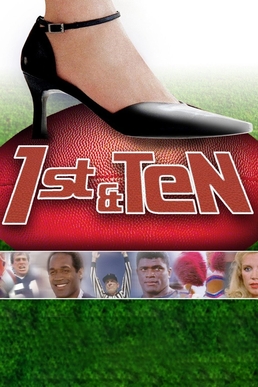
Welcome to Late Night Retro Television Reviews, a feature where we review some of our favorite and least favorite shows of the past! On Wednesdays, I will be reviewing 1st and Ten, which aired in syndication from 1984 to 1991. The entire series is streaming on Tubi.
This week, the playoffs continue.
Episode 2.9 “A Family Affair”
(Dir by Burt Brinckerhoff, originally aired on January 13th, 1987)
A playoff game against Denver is approaching. Denver is coached by a former protegee of Denardo’s and Denardo is obsessed with winning. He’s so obsessed that he alienates the players and Coach Grier (Stan Kamber). Grier is tempted to take a job as Houston’s head coach. Denardo says he doesn’t care until Diane reveals that Grier has turned down several other jobs out of loyalty to Denardo.
As for the other assistant coach, T.D. Parker (OJ Simpson) has problems of his own. His youngest son is acting out and the only thing that’s kept him out of juvenile detention is the fact that the cops are all fans of T.D. and the Bulls. T.D. tells his son that he’s not allowed to leave the house. When T.D.’s wife says that she thinks T.D. is being too strict, T.D. tells her to back off. T.D. gets really mad in this episode but none of it is convincing because OJ Simpson was too amiable an actor to really come across as being threatening. That’s something that would prove helpful to OJ in the years to come.
Meanwhile, the players all invest in the stock market. The stock doesn’t do well. The player who recommended the stock is chased out onto the field before the start of the big game against Denver. Ha ha, those players are all broke now. Good luck dealing with life after the game.
This show, I never know what to make of it. Is it a comedy? Is it a drama? Why is it so oddly edited? How many scenes were cut for syndication? Why do storylines start and then just disappear? For that matter, why do characters suddenly vanish? Dr. Death was a huge part of the show during the first half of the second season but I haven’t seen him during the second half. Did he get traded? Did he get injured? Seriously, what’s going on with this show?
Some people love money so much that they make their own.
In 1985’s To Live And Die In L.A., Williem DaFoe is magnetically evil as Rick Masters, a genius at counterfeiting who has gotten rich by selling other people fake money. The film features a lengthy sequence showing how Masters makes his money and the viewer really is left feeling as if they’ve just watched an artist at work. Masters has a talent and he’s a professional. He’s good at what he does. Unfortunately, he’s also a sociopath who is willing to kill just about anyone who he comes across. There have been a lot of movies made about sympathetic counterfeiters. They’re often portrayed as being quirky and rather likable individuals. This is not one of those films. DaFoe’s charisma makes it impossible to look away from Rick but he’s still not someone you would ever want to have to deal with for a prolonged period of time. One gets the feeling that Rick eventually kills everyone that he does business with.
Secret Service agents Richard Chance (William Petersen) and John Vukovich (John Pankow) are investigating Masters. They’re a classic crime movie partnership. Vukovich is youngish and, when we first meet him, goes by-the-book. Chance is a veteran member of the Secret Service, an impulsive loose cannon whose last partner was killed by Masters. Chance is now obsessed with taking Masters down and he’s willing to do whatever it takes. If that means threatening his lover and informant, the recently paroled Ruth (Darlanne Fluegel), so be it. If that means defying the lawyers (represented by Dean Stockwell), so be it. If that means committing crimes himself and nearly getting Vukovich killed in the process, so be it. At first, Vukovich is horrified by Chance’s techniques but, as the film progresses, Vukovich comes to embrace Chance’s philosophy of doing whatever it takes.
What sets To Live and Die in L.A. apart from some other films is that, even as it concludes, it leaves us uncertain as to whether or not Chance and Vukovich’s actions were really worth it. This is not a standard cops-vs-robbers film. This is a William Friedkin film and he brings the same moral ambiguity that distinguished The French Connection to this film’s portrait of the Secret Service. (When Chance isn’t chasing after a counterfeiter, he’s foiling an assassination attempt against the president.)
Like The French Connection, To Live and Die In L.A. features an pulse-pounding car chase, one that occurs as Chance and Vukovich make an escape from robbing a man who they believe to be a criminal. (The man turns out to have been an FBI agent.) This chase involves Chance and Vukovich driving the wrong way down a crowded freeway, desperately tying not to crash into any of the cars that are swerving out of the way. It’s such an exciting scene that it’s easy to forget that Chance and Vukovich are actually escaping from committing a crime. In The French Connection, Gene Hackman was chasing the man who tried to assassinate him. In To Love and Die In L.A., Chance is fleeing the consequences of his own actions.
To Live and Die In L.A. holds up well. DaFoe and Petersen both give charismatic performance but, for me, it really is John Pankow who carries the film. Vukovich’s transformation from being a straight-laced member of law enforcement to being a doppelganger of his partner is both exciting and a little disturbing, To Live and Die In L.A. is a crime film that leaves you wondering how far one can go battling the bad guys before becoming one of them.
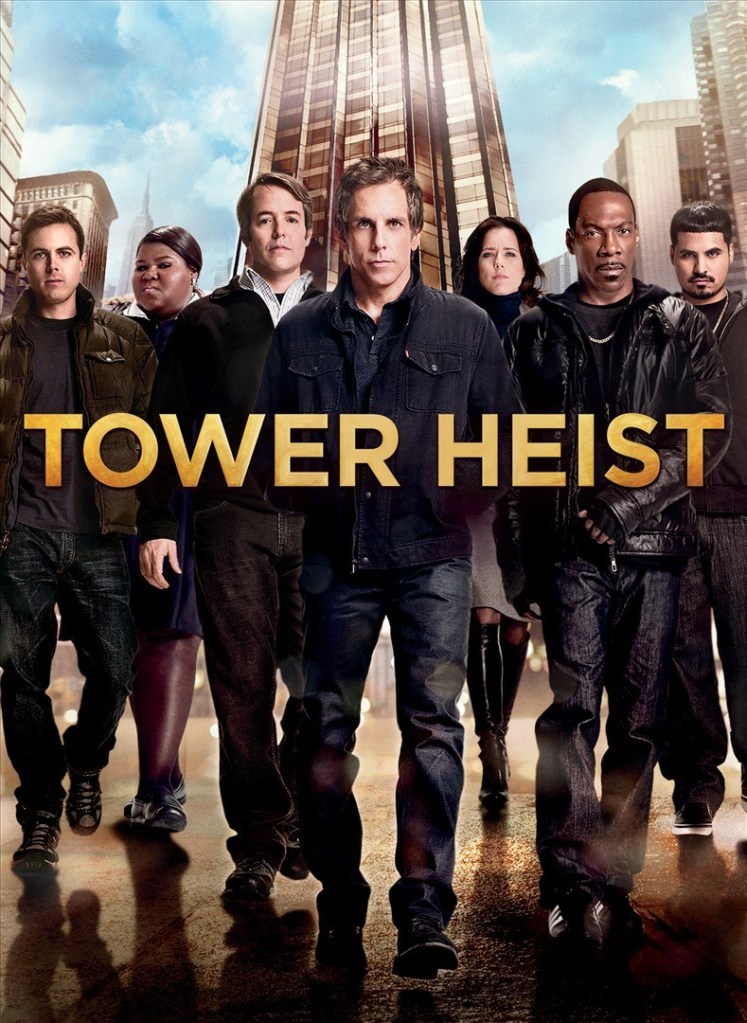
Every Monday night at 9:00 Central Time, my wife Sierra and I host a “Live Movie Tweet” event on X using the hashtag #MondayMuggers. We rotate movie picks each week, and our tastes are quite different. Tonight, Monday November 25th, we’re watching TOWER HEIST starring Ben Stiller, Eddie Murphy, Casey Affleck, Alan Alda, and Matthew Broderick.
So why did Sierra pick TOWER HEIST, you might ask? It’s simple. It’s a Thanksgiving movie. The Macy’s Thanksgiving Day Parade is even used as a key part of the heist strategy! Sierra and I love the holidays and we’re getting in the spirit. We hope watching this movie will enhance your Thanksgiving week!
It’s on Amazon Prime, and we’ll be following along the theatrical edition (NOT the Extended Edition). Join us if you’d like!
Johnny Walker (Anthony Michael Hall) may be the best high school quarterback in the country but he has a difficult choice to make. He promised his girlfriend, Georgia (Uma Thurman), that he would go to the local state college with her but every other university in the country wants him. (Even legendary sportscaster Howard Cosell calls Johnny and advises him to go to an Ivy League college.) As Johnny tours universities across the country, he faces every temptation. By the time he makes his decision, will Johnny still be good?
The main problem with Johnny Be Good can be found in the first sentence of the above synopsis. Anthony Michael Hall plays the best high school quarterback in the country. By taking on the role of Johnny Walker, Hall was obviously attempting to prove that he was capable of more than just playing nerds for John Hughes. But Hall is never convincing as a quarterback, much less the best in the country. Though he bulked up for the role, it is impossible to imagine Hall in a huddle, coming up with the big play that wins the game. It’s easier to imagine Johnny getting shoved in a locker and left there until the school year ends. Hall seems to be lost in the role and the movie never seems to be sure who Johnny Walker is supposed to be. (Two years later, Hall would again play a jock and give a far better performance in Edward Scissorhands.)
As for the rest of the cast, Robert Downey, Jr., who plays Johnny’s teammate and best friend, is even less convincing as a football player than Hall. In the 1980s, Downey could play a quirky sidekick in his sleep but not a wide receiver. Paul Gleason also shows up in the movie, basically playing the same role that he played in The Breakfast Club. Uma Thurman is sweet and pretty in her film debut but it’s a nothing role. Fans of Cannon Picture will want to keep an eye out for Steve James, in a small role as a coach.
Poorly written and slackly directed with few laughs, Johnny Be Good fails to take its own advice.
The 1997 film Boogie Nights (which, amazingly enough, was not nominated for best picture) is a bit of an overwhelming film to review. It’s a great film and, if you’re reading this review, you’ve probably seen Boogie Nights and you probably already know that it’s a great film. And if you haven’t seen Boogie Nights, you really should because it’s a great film. So, this review, in short, amounts to: Great film.
Boogie Nights takes place in the late 70s and the early 80s. Eddie Adams (Mark Wahlberg) is a high school dropout who works as a busboy, lives with his parents, and has a really big cock. (Indeed, one of the film’s most famous lines is, “This is a giant cock.”) When we first meet Eddie, he’s likable and cute in a dumb sort of way. Then he meets adult film director Jack Horner (Burt Reynolds) and becomes a star. At first, everything is great. Eddie changes his name to Dirk Diggler and no longer has to deal with his abusive mother (a chilling Joanna Gleason). Jack and Amber Waves (Julianne Moore) become his new parents. He gets a cool older brother in the form of actor Reed Rothschild (John C. Reilly, totally nailing the “People tell me that I look like Han Solo,” line). He makes friends with other adult film actors, like the desperately unhip Buck (Don Cheadle), the free-spirited (and secretly very angry) Rollergirl (Heather Graham), and the poignantly insecure Jessie St. Vincent (Melora Walters). He gets new admirers, like Scotty J. (Philip Seymour Hoffman). He also gets addicted to cocaine. And while Dirk falls from stardom, the adult film industry is taken over by gangsters like Floyd Gondolli (Philip Baker Hall) and self-styled artists like Jack Horner find themselves pushed to the side.
And you may have noticed that I mentioned a lot of actors in the paragraph above. That’s because Boogie Nights is a true ensemble piece. It’s full of great performances and memorable characters. Along with everyone that I mentioned above, the cast also includes William H. Macy as cinematographer “Little Bill” Daggett. From the minutes we first meet Little Bill, we get the feeling that he might be a little bit too uptight for pornography. Maybe that’s because his wife — played by the inspiring sex positive feminist and veteran adult film star Nina Hartley — is constantly and publicly cheating on him. Macy and Hartley do not have as much screen time as the rest of the cast but, ultimately, their characters are two of the most important in the film.
And then there’s Robert Ridgely, who is marvelously sleazy as the paternal but ultimately icky Col. James. When we first meet the Colonel, he’s almost a humorous character. But then, suddenly, there’s one chilling scene where he opens up to Jack Horner and we are forced to reconsider everything that we had previously assumed about both the Colonel and his business.
And how can we forget Luis Guzman, as a club owner who desperately wants to appear in one of Jack’s films? Or Ricky Jay as a plain-spoken cameraman? Or how about Thomas Jane, playing one of those tightly wound characters who you know is going to be trouble as soon as you see him? And finally, nobody who has seen Boogie Nights will ever forget Alfred Molina, singing along to Sister Christian and running down the street, clad only in black bikini briefs and firing a shotgun.
But it’s not just the actors who make Boogie Nights a great film. This was Paul Thomas Anderson’s second film and, under his direction, we feel as if we’ve been thrown straight into Dirk’s exciting and ultimately dangerous world. When the film begins, the camera almost seems to glide, capturing the excitement of having everything that you could possibly want. But, as things go downhill for Dirk, the camerawork gets more jittery and nervous. A sequence where Anderson cuts back and forth between Jack trying to shoot a movie on video (as opposed to his beloved film) and Dirk nearly being beaten to death in a parking lot remains one of the best sequences that Anderson has ever directed.
And then there’s the music! Oh my God! The music!
And the dancing!
And the singing!
I’ll be the first admit that I have no idea whether or not Boogie Nights is a realistic portrait of the adult film industry in the 70s and 80s. But ultimately, Boogie Nights is not about porn. It’s about a group of outsiders who form their own little family. At the end of the film, you’re happy that they all found each other. You know that Dirk will probably continue to have problems in the future but you’re happy for him because, no matter what happened in the past or what’s going to happen in the future, you know that he’s found a family that will always love him.
As I mentioned at the start of this appreciation, Boogie Nights was not nominated for best picture. Titanic was named the best picture of 1997. As I’ve said before, I loved Titanic when I was 12. But, nearly 18 years later, Boogie Nights is definitely the better picture.
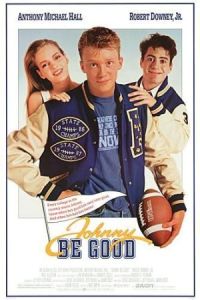 Johnny Walker (Anthony Michael Hall) may be the best high school quarterback in the country but he has a difficult choice to make. He promised his girlfriend, Georgia (Uma Thurman), that he would go to the local state college with her but every other university in the country wants him. (Even legendary sportscaster Howard Cosell calls Johnny and advises him to go to an Ivy League college.) As Johnny tours universities across the country, he faces every temptation. By the time he makes his decision, will Johnny still be good?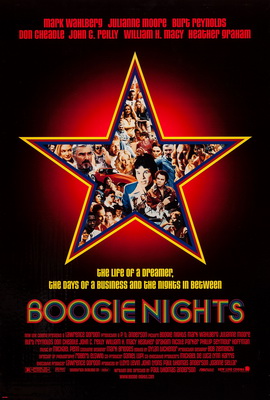
 Through the Shattered Lens