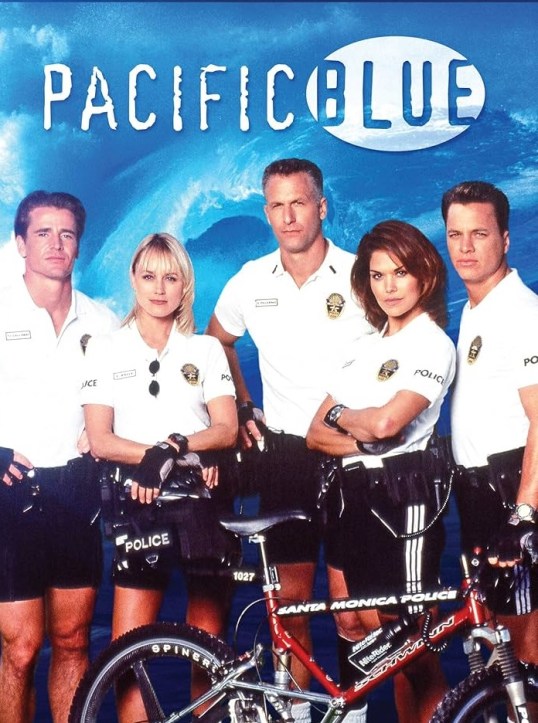
Welcome to Late Night Retro Television Reviews, a feature where we review some of our favorite and least favorite shows of the past! On Tuesdays, I will be reviewing Pacific Blue, a cop show that aired from 1996 to 2000 on the USA Network! It’s currently streaming everywhere, though I’m watching it on Tubi.
This week, Chris has a crisis.
Episode 3.19 “Heat of the Moment”
(Dir by Terrence H. Winkless, originally aired on March 22nd, 1989)
Chris and TC respond to reports of a robbery occurring at a jewelry store. One of the robbers, carrying a shotgun, makes a run for it. TC goes after him. The other robber is easily captured and handcuffed by Chris. Chris calls for backup and then leaves the store to help TC, despite the owner of the store begging her to stay. As soon as Chris leaves, it is revealed that a third robber was hiding in the backroom. He proceeds to beat up the owner and then free his partner. Meanwhile, the other robber manages to escape from Chris and TC. When Chris returns to the store, she is shocked to learn about the third robber.
Chris is also shocked that anyone could think that she made the wrong decision. She didn’t know there was another robber in the store. As she explains it, TC was out there, chasing a guy with a shotgun. She made the right decision! Not everyone agrees and soon, Chris starts to wonder if maybe her relationship with TC clouded her judgment.
Uhmm …. yeah, Chris, that’s pretty much what happened. I mean, Chris basically abandoned an innocent woman to two psychotic criminals just because she was worried about TC. It would have taken Chris just a few seconds to check the backroom. Add to that, the owner was obviously terrified and begged Chris not to leave. Chris’s response was to be rude. Even if there hadn’t been a third robber, Chris still left the owner alone with the second robber and didn’t bother to secure the crime scene.
This is another episode of Pacific Blue where the viewer is expected to not dwell on the fact that Chris is terrible at her job. Chris being bad at her job has pretty much been her defining characteristic. Even before she started sleeping with TC, Chris was regularly rude to crime victims and frequently violated the constitutional rights of the people she arrested. She also spent a lot of time complaining nonstop about going from being a Navy pilot to being a bicycle cop. By any standard, Chris should have been fired a long time ago. She certainly should have been fired for not checking the backroom of that jewelry store.
But this is Pacific Blue. And, on Pacific Blue, no one with a badge is ever held accountable for screwing up. The bike patrol captures the main robber and his girlfriend. Chris shoots and kills the other robbers. And she decides that maybe she and TC should just be honest about their relationship.
“I know this week has been tough on you,” Chris tells TC.
Actually, you know who this week was hard on? The poor jewelry store owner who got beaten up because Chris is terrible at her job!
Ugh. Bicyclists just think the world revolves around them.
“Don’t count on me to make you feel safe.” — The Stranger
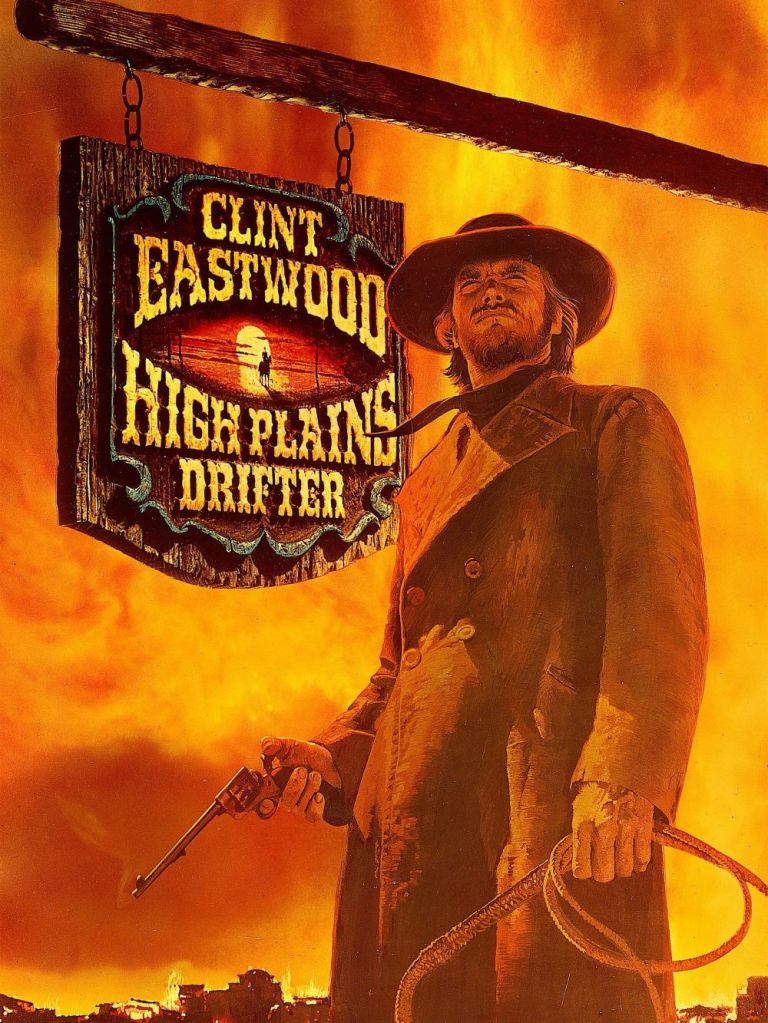
High Plains Drifter stands as one of the bleakest, most enigmatic entries in Clint Eastwood’s filmography—a Western that bleeds unmistakably into the realms of psychological and supernatural horror. This 1973 film is not just another dusty tale of lone gunfighters and frontier justice. It’s a nightmare set in broad daylight, a morality play whose hero is more monster than man.
Eastwood’s Stranger comes riding into the town of Lago from the shimmering desert, a silhouette both akin to and apart from his famed Man With No Name persona. The townsfolk are desperate, haunted by fear—less afraid of imminent violence, more of the sins they’ve half-buried. This is a place where a lawman was brutally murdered by outlaws while the townspeople looked away, their silence paid for with cowardice and greed. When the Stranger assumes command, he does so with often-gleeful sadism—kicking people out of their hotel rooms, replacing the mayor and sheriff with the dwarf Mordecai, and ordering that the entire town be painted red before putting “Hell” on its welcome sign.
There’s a surface plot: the Stranger is hired to protect Lago from the same three outlaws who once butchered its marshal. But he’s there for far more than that. The story unspools through dreamlike sequences, flashbacks that suggest the Stranger may well be an avenging spirit or a revenant—the dead lawman, spectral and merciless, returned to claim what the townsfolk owe to Hell itself.
The horror here isn’t about jump scares or gothic haunted houses. The supernatural lurks everywhere and yet nowhere. The Stranger moves with the implacable calm—and violence—of a slasher villain, transforming Lago into his personal stage for retribution. His nightmares, full of images of past atrocities, are painted with the same vivid brutality as the daytime violence. Eastwood’s use of silence, the squint of a face, the twitch of a pistol replaces musical cues in amplifying dread. The sound design evokes otherness—a howling wind, footsteps echoing across empty streets—that builds a shadow of terror around the Stranger’s presence.
This violence is hurried and brutal; its sexual politics unflinching. When the Stranger enacts revenge, he punishes not just the outlaws, but the townsfolk complicit in their crimes. There is little comfort in his sense of justice—the pleasures he takes border on sadistic. The film’s moral ambiguity cuts deeper than most Westerns or horrors: this is not a clear-cut tale of good versus evil, but a brutal reckoning of collective guilt, cowardice, and corruption.
Lago itself acts almost like a town stuck in purgatory—a holding pen between redemption and eternal damnation. The infamous “Welcome to Hell” sign the Stranger paints at the town’s entrance serves as a grim message. It’s no welcome to law and order, but a symbolic beacon to the very outlaws the Stranger is hired to confront, suggesting that Lago is a place where sin festers and punishes itself. The town’s dance with Hell is both literal and metaphorical. The inhabitants aren’t just awaiting judgment; they have invited it in their desperate attempts to hide their cowardice and greed under the guise of civilization.
This notion of Lago as purgatory stands in sharp contrast to other recent horror Westerns, which serve as prime examples of the genre’s thematic spectrum. These films tend to focus on the primal terror of nature barely held at bay by the fragile veneer of civilization the settlers claim. They pit human beings against the ancient, untamed forces of the wilderness—whether monstrous creatures or surreal phenomena—emphasizing that the supposed order and progress of the West remain fragile and constantly threatened. This dynamic symbolizes the uneasy balance between civilization’s reach and nature’s primal power, often revealing how thin and tenuous that barrier truly is.
Among these, Bone Tomahawk and Ravenous stand out as vivid examples. Bone Tomahawk confronts menacing cannibals lurking in the wild, reminding viewers that the West’s order is fragile and under perpetual threat from untamed wilderness. Ravenous uses cannibalism and survival horror as metaphors for nature’s savage predation hidden beneath the polite façade of civilization—nature’s horrors masked but not erased.
By contrast, High Plains Drifter directs its horror inward, exposing the corruption that manifest destiny imposed on settlers themselves. Instead of fearing nature as an external force, the film presents settlers as haunted by their own moral failures and complicity in violence and betrayal. The Stranger’s vengeance is a reckoning with the darkness festering inside the community, a brutal meditation on guilt, collective cowardice, and the price of greed disguised as progress.
Eastwood’s film strips away the mythic promises of the American West as a land of freedom and opportunity, revealing instead the brutal reality of communities locked in complicity, violence masquerading as justice, and the moral rot at the heart of manifest destiny. This moral ambiguity and psychological depth give High Plains Drifter a unique position in the horror Western subgenre, elevating it beyond simple scares to a profound exploration of American cultural myths.
The Stranger is not a traditional hero but a spectral judge, embodying divine or supernatural retribution. His calm yet ruthless punishment exposes the cruelty, cowardice, and malevolence within Lago’s population, meting out a justice that is neither neat nor forgiving. His supernatural aura and sadistic tendencies make him an unforgettable figure of terror and fate.
Visually, the film’s harsh daylight contrasts with the romanticized Western landscapes of earlier films. Instead of shadows hiding evil, blinding light exposes the town’s moral decay. Characters are reduced to symbols of greed, fear, and cruelty, highlighting that the true horror lies within human nature and the failure to uphold justice.
High Plains Drifter operates on multiple levels—a Western, a ghost story, a horror film, and a dark morality play. It is a relentless meditation on justice and punishment and a dismantling of the traditional Western hero myth. Through layered narrative, stark visuals, and Eastwood’s chilling performance, it remains an essential entry in the horror Western canon.
For those seeking a Western that doesn’t just entertain but unsettles and challenges, High Plains Drifter offers an unforgiving descent into darkness. It strips away the comforting myths of the frontier and exposes the raw, rotting core beneath. Unlike other modern horror Westerns such as Bone Tomahawk and Ravenous, which confront external terrors lurking in the wilderness, this film turns its gaze inward—on the moral decay, guilt, and violence festering within the settlers themselves. It’s a brutal, haunting reckoning, and Eastwood’s Stranger is the cold, relentless agent of that reckoning. This is a journey into a hell both literal and psychological, where justice is merciless and safety is a long-forgotten promise.
Welcome to Late Night Retro Television Reviews, a feature where we review some of our favorite and least favorite shows of the past! On Saturdays, I will be reviewing Good Morning, Miss Bliss, which ran on the Disney Channel from 1988 to 1989 before then moving to NBC and being renamed Saved By The Bell. The entire show is currently streaming on Prime!
This week, we close out the Miss Bliss years.
Episode 1.13 “The Mentor”
(Dir by Gary Shimokawa, originally aired on March 18th, 1989)
For some reason, Miss Bliss’s mentor — James Lyman (Robert Donner) — shows up at the school to visit his favorite student, Carrie Bliss. (Apparently, the very British Miss Bliss grew up in Indiana. I’m not saying it’s not possible, as her parents could have come over when Miss Bliss was still young. That said, it just seems odd that no one — not even her students — ever mention anything about Miss Bliss being British. It would seem like something Miss Bliss would have mentioned during all of those lessons about the Constitution and American history.) Mr. Lyman is retired but he agrees to substitute for Miss Bliss while she spends a week doing paperwork. (Most teachers would probably just have to suck it up and both teach and do paperwork during the week but not our Miss Bliss!)
This is one of those annoying episodes where Mr. Lyman is the unconventional teacher who gives the kids free hall passes and takes them on extended field trip without getting permission beforehand. Mr. Lyman makes learning fun! (Gag!) Miss Bliss gets upset because Mr. Lyman isn’t following her lesson plan and Mr. Lyman basically accuses Miss Bliss of being a sellout. For once, I’m on Miss Bliss’s side here. Mr. Lyman is a substitute. His job is to follow the lesson plan. If Miss Bliss doesn’t want him to handing out hall passes, that’s her right. It’s her class! And this whole thing of trusting the students not to abuse the hall pass? I would have totally abused a free hall pass. Everyone would abuse a free hall pass! I would laughed at any teacher dumb enough to give me a free hall pass. It’s almost as if the people who wrote this episode had absolutely no knowledge of how teenagers think. In the end, Mr. Lyman comes across as being an unlikable crank. The episode ends up with dressing up like Abraham Lincoln and showing up, unannounced, in Miss Bliss’s classroom. Seriously, someone call the cops on their weirdo.
Meanwhile, Nikki worries that boys don’t see her as being feminine. Lisa teachers her how to wear makeup. Next year, maybe Nikki and Zach….
Oh, wait a minute. Sorry, Zach, Mr. Belding, Screech, and Lisa are all moving to California. Nikki, Mickey, Miss Bliss, Ms. Palladino, Mylo are staying in Indiana. The Mentor was the final episode of Good Morning, Miss Bliss. The Disney Channel canceled the show but producer Peter Engel took some of the cast over to NBC and launched Saved By The Bell. The Miss Bliss episodes would later be repackaged for syndication with Zach saying, “I remember this time in Junior High…..” I remember changing the channel whenever I realized a Miss Bliss episode was starting.
We’ll start Saved By The Bell next week. Finally, the tyranny of Miss Bliss is over.
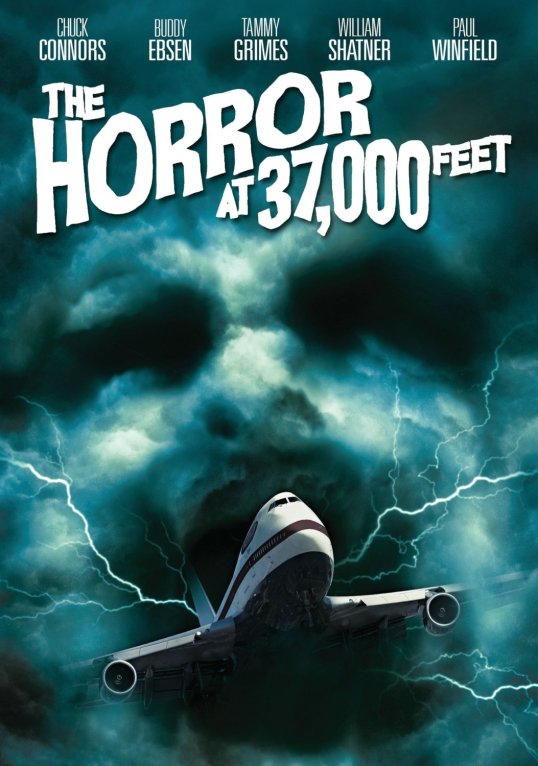
I imagine that it should go without saying that, if you’re on an airplane and you’re flying high above the ground, the last thing that you want to deal with is a bunch of angry ghost druids.
And yet, that’s exactly what happens in this made-for-TV horror film from 1973.
The ghost druids are upset because two architects (played by Roy Thinnes and Jane Merrow) have traveled to England, specifically so that they can supervise the deconstruction of ancient druid altar. Now, they’re flying the pieces of the altar back over the ocean so that the altar can be reconstructed in the United States. The spirits of the ancient druids aren’t happy about being moved so they start doing everything they can to make the journey difficult.
First, they attempt to freeze the plane. When that doesn’t work, they decide to rip it in half. One of the passengers, Mrs. Pinder (Tammy Grimes), suggests that maybe the druids will settle down if they’re offered a sacrifice. When the druids reject an offer of a doll, the passengers start to wonder if maybe the spirits would be happier with a human sacrifice.
Although some of the passengers are reluctant to buy into the whole sacrifice thing, a few of them do start to come around. For instance, there’s a perpetually angry businessman who is played by Buddy Ebsen. Once he realizes that the druids aren’t going anywhere, he has no problem with the idea of a human sacrifice. There’s also a cowboy played by Will Hutchins. If sacrificing a human is what he has to do to have another chance to ride the range, that’s what he’s going to do. Paul Winfield plays a distinguished doctor who tries to keep everyone calm while Chuck Connors is stuck in the cockpit, trying to keep the plane in the air while his passengers and crew debate the ethics of human sacrifice.
And then there’s William Shatner.
Shatner plays a former priest who has lost his faith. From the minute he gets on the plane, he starts drinking and he doesn’t stop for almost the entire movie. It doesn’t matter what’s happening on the plane, Shatner always has a glass in his hand. Playing a character who never has anything positive to say, Shatner smirks through the entire film. Shatner delivers all of his lines in his standard halfting and overdramatic fashion and it’s something of a wonder to behold. Shatner has said that The Horror At 37,000 Feet may be the worst movie in which he ever appeared and just one look at his filmography will show why this is such a bold statement.
The Horror at 37,000 Feet is definitely a film of its time. The plane comes complete with a swinging cocktail lounge, William Shatner wears a turtle neck, and all of the flight attendants wear boots and miniskirts. Everything about this film screams 1973. It’s an incredibly silly but undeniably fun movie. With a running time of only 73 minutes, the pace is fast and the druids don’t waste any time getting down to business. The film’s on YouTube so check it out the next time you’ve an hour and 13 minutes to kill.
In 1973’s High Plans Drifter, Clint Eastwood plays …. The Stranger.
No, not the Man With No Name. The Stranger has a name but he chooses not to share it. That said, when one person says that he doesn’t even know the Stranger’s real name, the Stranger replies, “Yes, you do.” The Stranger appears to emerge from the heat of the desert, riding into the small mining town of Lago and gunning down the three bullies that the townspeople hired to protect them after the murder of their town marshal. With no other option, the townspeople accept the Stranger as the town’s new protector.
The Stranger is drawn to the town and the townspeople but he doesn’t seem to particularly like any of them, with the exception of Mordecai (Billy Curtis), the dwarf that the Stranger appoints as the town’s new sheriff. The townspeople, the majority of whom are cowardly and motivated by greed, aren’t particularly likable themselves. The Stranger rules the town like a dictator, kicking everyone out of the hotel so that he can have it for himself and ordering that every building in the town be painted red. Over the town’s welcome sign, he paints one word: “Hell.” When the townspeople see how well the Stranger can shoot, they celebrate in the belief that they’ll always be safe. The Stranger responds by leaving town just as three sadistic outlaws, led by Stacey Bridges (Geoffrey Lewis), approach. The Stranger may be looking for revenge on Bridges but he also seems as if he wants to make the town suffer for its sins as well.
Much as with the case of The Man With No Name, the Stranger is not motivated by kindness or any sort of concern for the safety of the townspeople. He often shows a cruel-streak when it comes to dealing with the cowardly townspeople. He doesn’t attack unless he’s attacked first but once you’re on his bad side, he’ll gun you down without a hint of emotion. When the Stranger sleeps, he is haunted by nightmares of the previous marshal (played by Buddy Van Horn, Clint Eastwood’s stunt double) being murdered by Bridges and his men while the townspeople stood by and did nothing. We learn that the townspeople, worried that it might be bad for their business interests, didn’t even give the late marshal a decent headstone after his death. One woman mentions that spirits can’t rest unless they have a proper marker….
Getting the idea?
High Plains Drifter is probably the closest that Eastwood has ever come to making a supernatural horror film. The Stranger may or may not be a vengeful ghost (the movie leaves that for you to decide) but he turns the small town of Lago into his own personal version of Hell and, when he attacks the men who killed the marshal, he moves with the ruthless determination of a slasher villain. The scene where Bridges and his men ride into the town is like a filmed nightmare. This is a dark film, one in which Eastwood’s Stranger is not the hero because he’s particular heroic but just because everyone else in the film is so bad.
This was also Eastwood’s second film as a director (following Play Misty For Me) and also the first of many westerns that Eastwood would direct. The imagery is often haunting, all the more so because some of the most violent scenes take place in broad daylight. The scenes where the Stranger seems to materialize out of the desert’s heatwaves perfectly capture the mythology of the old west and its “heroes.” Eastwood gets good performances out of his ensemble cast and, even more importantly, he shows that Eastwood the director had a perfect understanding of Eastwood the actor. As the Stranger, Eastwood says more with a snarl or a half-smile than most actors could say with a multi-page monologue.
High Plains Drifter is violent, often disturbing, and ultimately unforgettable.
Welcome to Late Night Retro Television Reviews, a feature where we review some of our favorite and least favorite shows of the past! On Mondays, I will be reviewing CHiPs, which ran on NBC from 1977 to 1983. The entire show is currently streaming on Freevee!
This week, Baker takes charge!
Episode 2.22 “Ride The Whirlwind”
(Dir by Larry Wilcox, originally aired on March 10th, 1979)
Just as with the week’s episode of Miami Vice, I am going to do a bullet-point review of this week’s episode of CHiPs because, quite frankly, it’s the holidays and I’m pressed for time.
In order to combat a crime wave that has apparently broken out in the nearby California hills, Baker has suggested creating a three-person dirt-bike team. His hope is that the team will be made up of him, Ponch, and Sindy. However, when Sindy gets delayed while helping a stranding motorist and ends up missing the morning briefing, Baker is forced to pick Grossman (Paul Linke) instead.
“Yay!” you might be saying. Seriously, Grossman is a far more entertaining character than Sindy. However, Ponch, Baker, and Sindy are not happy about it. My personal feeling is that if riding a dirt bike was that damn important to Sindy, she should have arrived on time.
Ponch pays Grossman forty dollars to fake an injury so Sindy can take his place. Grossman takes the money and then explains that he would have done it for free, just because he can tell who much riding a dirt bike means to Sindy. If it meant so much to her, she could have showed up on time!
The dirt bike patrol is a huge success. One guy rides through an old woman’s lettuce patch on his bike. Baker tracks down the miscreant and not only gives him a ticket but also gets a date with the guy’s girlfriend.
Larry Wilcox also directed this episode, which perhaps explains why, for once, Baker’s the one who gets a date as opposed to Ponch.
Ponch busts a city councilman who later explains that he was just riding his bike recklessly because he was having a midlife crisis.
Sindy busts a punch of PCP dealers. It takes her two tries, however. The first time she chases them, she falls off her bike and sprains her ankle. The second time, she proves that she belongs on a bike.
That’s good because Getraer is in a total panic about putting a woman on any sort of motorcycle, even just a dirt bike. “If she gets injured,” Getraer warns Baker, it’ll be bad news for the entire department. Getraer, I guess, hasn’t noticed that the entire second season had pretty much centered on just how hyper-competent Sindy is.
The stars of this episode were the California scenery and the stunt people. The members of the dirt bike patrol all wear bulky uniforms and face-obscuring helmets, in order to disguise the fact that Larry Wilcox, Erik Estrada, and Brianne Leary are clearly not the ones who are actually riding the bikes.
Noted character actor Paul Koslo appears as one of the PCP dealers. He’s believably redneck-y.
This episode featured some impressive stunts, which is really the main thing that most people ask for when it comes to a show like this. That said, I do think the episode would have been more with Grossman as a member of the team.
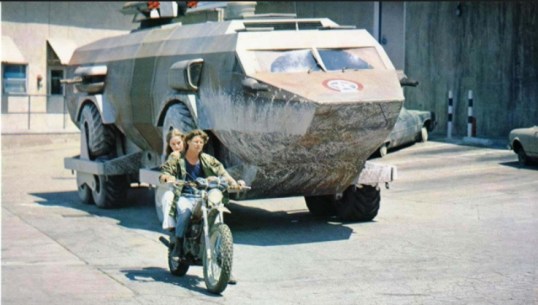
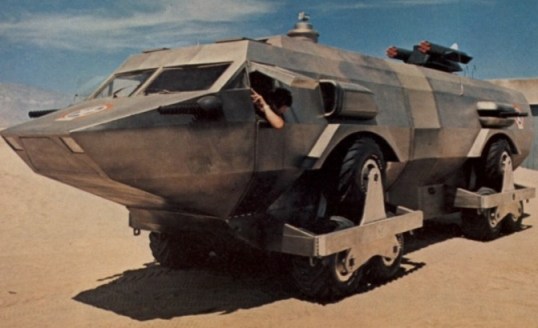
Anyone who has seen Damnation Alley knows that the only thing that matters is the Landmaster.
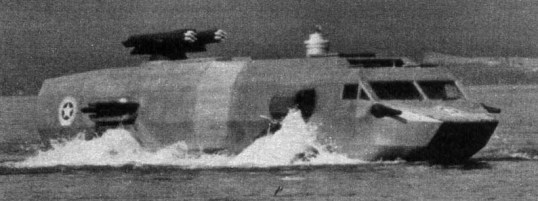
Damnation Alley has a slight plot. A nuclear war has knocked the Earth off of its axis. The skies are green and purple. The scorpions are huge and the cockroaches eat humans. Crazed survivors are living like savages, attacking anyone that they come across. When a radio signal seems to indicate that there might still be civilization in Albany, four military men (George Peppard, Jan-Michael Vincent, Paul Winfield, and Kip Niven) decide to drive across the country to check it out. To reach Albany, they will have to cross an inhospitable stretch of land called Damnation Alley. They will be making the journey in two Landmasters, amphibious vehicles that provide RV comfort with the extra advantage of a rocket launcher. Along the way, they fight scorpions, roaches, and pick up some extra passengers (Dominique Sanda and Jackie Earle Haley).
The radioactive sky looks cool but otherwise, the scorpions and the cockroaches are all obviously fake and no one in the cast makes any effort to do more than recite their lines. But no one who has watched Damnation Alley cares about any of that. We just want to drive a Landmaster.
There is nothing that the Landmaster cannot do. It can speed across desert sand. It can tear up city streets. It can break through walls. It can turn into a boat. It can fire missiles. It also appears to be bigger on the inside than the outside, just like the TARDIS. Either that or whoever did the set design for Damnation Alley was not detail-oriented.
Despite the awe-inspiring Landmaster, Damnation Alley was neither a critical nor a box office hit. It was one of two science fiction films released by 20th Century Fox in 1977. The other one was Star Wars, which was a good movie but didn’t have a Landmaster.
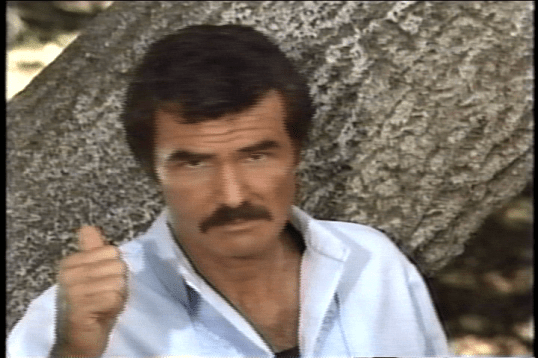
As for the Landmaster itself, it currently resides in California and has appeared in a handful of other movies. Sadly, it missed out on the opportunity to appear in any of the Smoky and the Bandit movies. Burt Reynolds driving a Landmaster? That would have been box office gold.

 Through the Shattered Lens