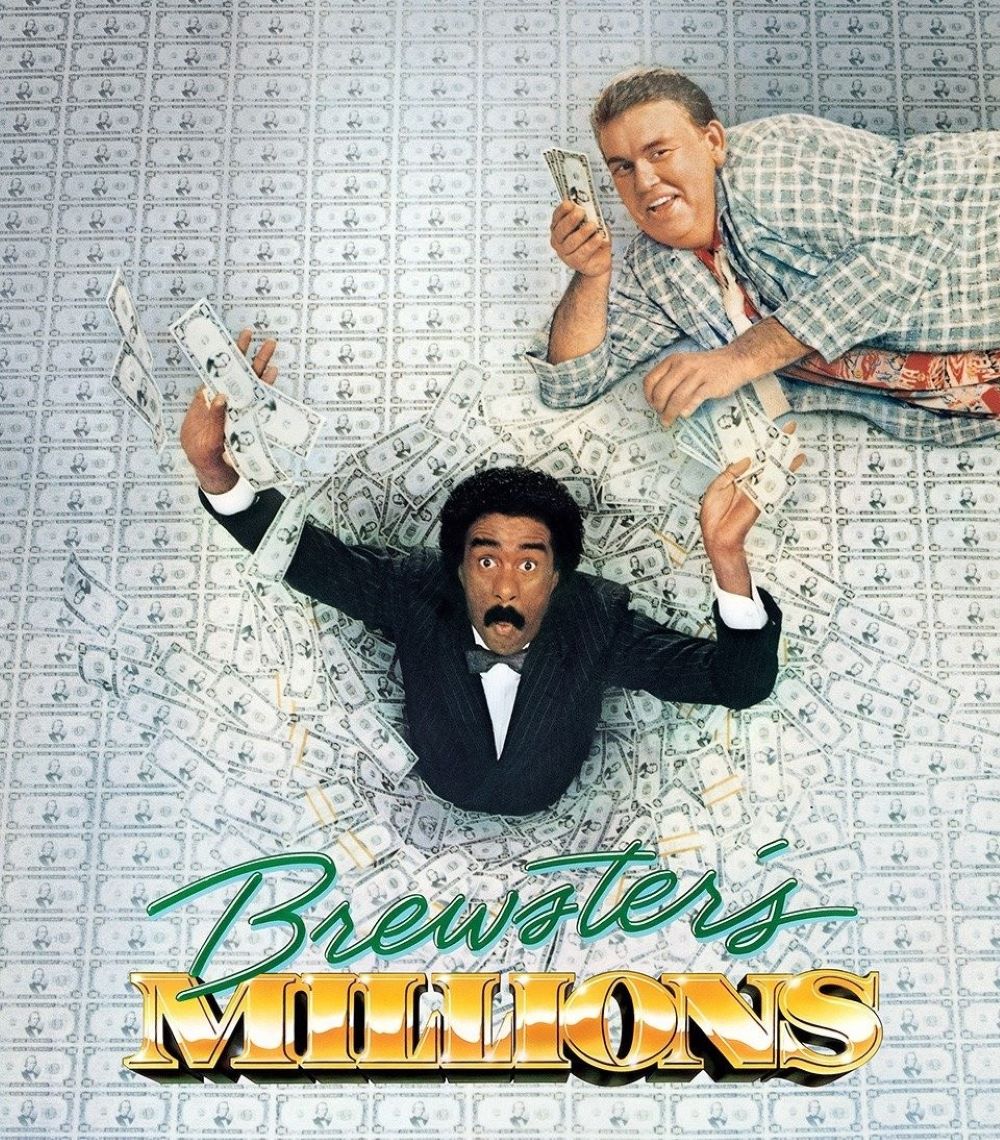
Guilty Pleasure No. 92: Brewster’s Millions (dir. by Walter Hill)


Walter Hill’s Brewster’s Millions (1985) isn’t a perfect movie by any stretch, but it’s the kind of film that sneaks up on you. It may not be sharp enough to qualify as great satire or consistent enough to hit every comedic note, but it has an undeniable charm that pulls you in regardless. It’s loud, uneven, and often ridiculous, yet few comedies from the 1980s are as weirdly entertaining when they’re firing on all cylinders. For many movie fans, it’s that quintessential “guilty pleasure”—a film you know has problems, but that somehow feels impossible to turn off once it starts. And in many ways, that’s exactly where Brewster’s Millions finds its lasting appeal.

The setup alone is too fun to resist. Richard Pryor stars as Montgomery Brewster, a minor league baseball pitcher who unexpectedly inherits the opportunity of a lifetime—to claim a $300 million fortune from a distant relative. The catch? Before he can get it, he has to spend $30 million in 30 days under a bizarre set of conditions that make financial ruin easier said than done. He can’t give the money away, can’t destroy it, can’t buy assets or investments that retain value, and can’t tell anyone why he’s doing it. Fail, and he gets nothing. Succeed, and he becomes one of the richest men alive. It’s the sort of gleefully absurd premise that could only have come from Hollywood in the 1980s, and it’s immediately clear that the film wants audiences to sit back, grab some popcorn, and watch Pryor tear through cash in increasingly funny and desperate ways.

Richard Pryor is, without doubt, the heart and soul of the movie. He imbues Montgomery Brewster with equal parts manic energy and human frustration, giving the character a real emotional arc beneath all the comic spectacle. Pryor’s talent for blending humor with exasperation makes Brewster’s predicament believable, even when it’s insane. Watching him scramble to lose money while the world keeps rewarding him is strangely satisfying. Pryor understood how to play ordinary men caught in extraordinary circumstances, and that quality grounds the film when it could have easily spiraled into total silliness. In scenes where he loses his patience with accountants, schemes wild spending sprees, or watches his good intentions backfire, Pryor’s comic timing keeps the chaos enjoyable.

John Candy adds another layer of charm as Brewster’s best friend and teammate, Spike Nolan. Candy brings warmth, loyalty, and that unmistakable good-heartedness that made him one of the decade’s most beloved comedic actors. The chemistry between Pryor and Candy keeps the film buoyant even through its weaker stretches. Their friendship defines the film’s tone—it’s loose, goofy, and full of bro-ish camaraderie. Without Candy’s infectious energy, the movie’s more hollow comedic beats might have hit the floor with a thud. Together, they create a dynamic that feels real, even inside a premise that’s totally absurd.

As a director, Walter Hill feels like an odd fit for this kind of broad comedy, but that’s part of what makes Brewster’s Millions interesting. Hill, better known for tough, kinetic action films like The Warriors and 48 Hrs., approaches this farce with a surprising amount of structure and visual precision. The film looks slicker and sharper than most comedies of its kind, which gives the excess on-screen an unintentionally epic flair. Hill’s direction keeps the story moving, and though he’s not naturally a comedic filmmaker, his grounded style adds a peculiar edge to all the craziness. It’s chaos with discipline—an aesthetic that somehow works in the movie’s favor.

Still, Brewster’s Millions can’t quite escape its shortcomings. The pacing is uneven, especially in the middle, where the film loses some steam as Brewster cycles through increasingly repetitive spending gimmicks. The story flirts with satire but rarely commits, brushing up against deeper commentary on wealth, politics, and capitalism before retreating to the comfort of broad comedy. The “Vote None of the Above” subplot, where Brewster’s money-wasting political campaign taps into voter cynicism, is one of the smartest parts of the film—but it’s introduced and resolved too quickly to leave a mark. And while the movie is full of lively energy, not every gag lands; a few supporting performances veer into caricature, and some jokes feel very much of their time.

Yet these flaws are partly what make Brewster’s Millions such a delightful guilty pleasure. It’s the cinematic equivalent of junk food—high on calories, low on nutritional value, but deeply enjoyable all the same. Pryor’s constant exasperation, the sheer absurdity of trying to “waste” money legally, and the exaggerated set pieces (like the overblown parties or his failed attempts to lose at gambling) make for irresistible entertainment. Even when the humor dips into predictable territory, the concept keeps pulling you back in. There’s a giddy satisfaction in watching Brewster try—and fail—to lose money, especially because the universe just won’t let him.

The romance subplot with Lonette McKee’s character, Angela Drake, adds just enough heart to balance the absurdity. McKee gives a grounded, intelligent performance that prevents the love story from feeling tacked on, even if it never fully takes center stage. Her presence keeps Brewster tethered to some kind of reality, and the moral through-line—learning that not everything valuable can be bought—lands gently rather than preachily. It’s not profound, but it fits the breezy tone perfectly.

As a comedy of excess, Brewster’s Millions is very much a product of its time. The slick suits, the gaudy parties, the blind faith in wealth, and the Reagan-era optimism about money’s moral neutrality all ooze from every frame. That time-capsule quality is part of its modern appeal. Watching it today, you can’t help but smile at how on-the-nose it feels—a movie from the “greed is good” decade that accidentally ends up mocking the very mindset it sprang from. It’s self-aware only in flashes, but those flashes are enough to make you recognize the movie’s satirical edge hiding beneath its loud surface.

In the end, that’s what makes Brewster’s Millions endure as a lovable guilty pleasure. It has flaws you can’t ignore—uneven pacing, scattershot tone, underdeveloped ideas—but none of them outweigh its charm. Pryor’s comic genius makes even the weakest joke land better than it should. Candy’s warmth keeps the film light. And Hill’s straightforward direction infuses the lunacy with just enough realism to make it believable. The result is a movie that’s too silly to take seriously but too fun to dismiss. You watch it, laugh at its audacity, shake your head at the logic gaps, and yet somehow come away smiling.

Brewster’s Millions may not be a comedy classic, but it’s easy to see why people keep revisiting it. It’s comfort food cinema—lighthearted, clumsy, and endlessly watchable. And like all the best guilty pleasures, it doesn’t need to be perfect to make you happy. Sometimes, seeing Richard Pryor outsmart the meaning of money for two hours is more than enough.

Previous Guilty Pleasures

  1. Half-Baked
  2. Save The Last Dance
  3. Every Rose Has Its Thorns
  4. The Jeremy Kyle Show
  5. Invasion USA
  6. The Golden Child
  7. Final Destination 2
  8. Paparazzi
  9. The Principal
  10. The Substitute
  11. Terror In The Family
  12. Pandorum
  13. Lambada
  14. Fear
  15. Cocktail
  16. Keep Off The Grass
  17. Girls, Girls, Girls
  18. Class
  19. Tart
  20. King Kong vs. Godzilla
  21. Hawk the Slayer
  22. Battle Beyond the Stars
  23. Meridian
  24. Walk of Shame
  25. From Justin To Kelly
  26. Project Greenlight
  27. Sex Decoy: Love Stings
  28. Swimfan
  29. On the Line
  30. Wolfen
  31. Hail Caesar!
  32. It’s So Cold In The D
  33. In the Mix
  34. Healed By Grace
  35. Valley of the Dolls
  36. The Legend of Billie Jean
  37. Death Wish
  38. Shipping Wars
  39. Ghost Whisperer
  40. Parking Wars
  41. The Dead Are After Me
  42. Harper’s Island
  43. The Resurrection of Gavin Stone
  44. Paranormal State
  45. Utopia
  46. Bar Rescue
  47. The Powers of Matthew Star
  48. Spiker
  49. Heavenly Bodies
  50. Maid in Manhattan
  51. Rage and Honor
  52. Saved By The Bell 3. 21 “No Hope With Dope”
  53. Happy Gilmore
  54. Solarbabies
  55. The Dawn of Correction
  56. Once You Understand
  57. The Voyeurs 
  58. Robot Jox
  59. Teen Wolf
  60. The Running Man
  61. Double Dragon
  62. Backtrack
  63. Julie and Jack
  64. Karate Warrior
  65. Invaders From Mars
  66. Cloverfield
  67. Aerobicide 
  68. Blood Harvest
  69. Shocking Dark
  70. Face The Truth
  71. Submerged
  72. The Canyons
  73. Days of Thunder
  74. Van Helsing
  75. The Night Comes for Us
  76. Code of Silence
  77. Captain Ron
  78. Armageddon
  79. Kate’s Secret
  80. Point Break
  81. The Replacements
  82. The Shadow
  83. Meteor
  84. Last Action Hero
  85. Attack of the Killer Tomatoes
  86. The Horror at 37,000 Feet
  87. The ‘Burbs
  88. Lifeforce
  89. Highschool of the Dead
  90. Ice Station Zebra
  91. No One Lives

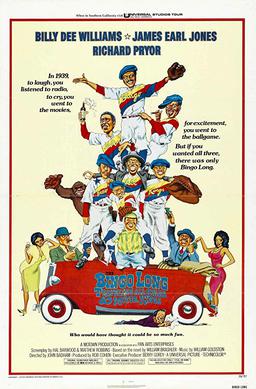
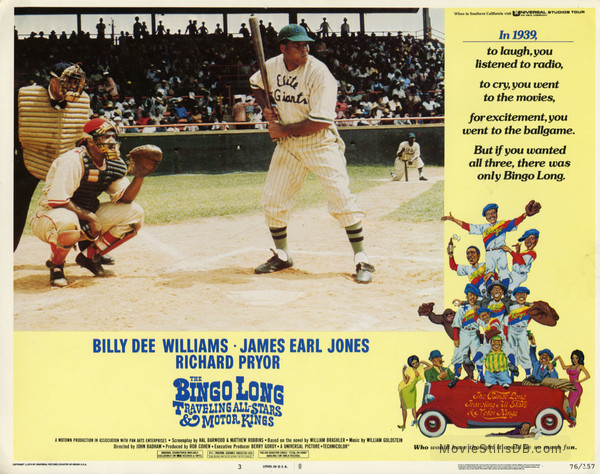
The Bingo Longo Traveling All-Stars & Motor Kings (1976, dir. by John Badham)


Up until 1947, Major League Baseball was segregated. Though there was no written rule barring blacks from playing on major league teams, there was an agreement among the team owners that no blacks would be signed to a major or minor league contract. Instead, starting in the 1920s, black players could only play for the teams in the Negro League. It was in the Negro Leagues that future greats like Jackie Robinson and Willie Mays got their start. Josh Gibson, who spent his entire career playing in the Negro Leagues, is believed to have hit more home runs in a season than Babe Ruth ever did. For that reason, many baseball fans believe that any MLB records set before 1947 should come with an asterisk included. How can you determine who was the best when many of the best players in the game were never allowed to compete against each other?

The Bingo Longo Traveling All-Stars & Motor Kings is a comedy that pays tribute to those players. Billy Dee Williams plays Bingo Longo, a charismatic pitcher who plays in the Negro Leagues but who, frustrated with the money that he’s earning and the owner’s callous attitude towards the players, breaks away and forms his own independent, barnstorming baseball team, the All-Stars Among the players that he recruits are catcher and power hitter Leon Carter (James Earl Jones) and Charlie Snow (Richard Pryor), who is constantly changing his name and lying about his background in an attempt to get signed to the major leagues. Bingo also steals a player named Esquire Joe (Stan Shaw) away from one of the teams that the All-Stars defeat.

Going across the country and playing other teams, the Bingo Longo Traveling All-Stars make a name for themselves as both players and showmen. Though Leon just wants to concentrate on playing the game, Bingo understands that importance of putting on a show for the people in the stands. They start out playing other independent black teams but soon, they’re even playing against amateur white teams. The games against the white teams are tense, as the All-Stars ever know how the people in the stands are going to react when the All-Stars win. The All-Stars usually do win, though. They’re the best and they’re not going to let the people watching forget it.

The Bing Longo Traveling All-Stars is a good film, especially if you’re interested in the history of baseball. It’s an episodic comedy with the emphasis on the various situations that the members of the All-Stars find themselves in as they travel from town to town but there’s also a serious subtext. The All-Stars are proving to a League that refuses to let them play that they are the best. At the same time, no matter how many games they win, the All-Stars still have to deal with living a society that treats them like second-class citizens. Even though they win on the field, they still have a hard time finding a hotel to stay at. It’s a movie that will make you laugh but it also makes you think. Billy Dee Williams is perfect in the role of Bingo Longo and James Earl Jones is the type of player that anyone would want on their team. The Bingo Longo Traveling All-Star & Motor Kings is a good film for both baseball fans and people who have never even heard of the designated hitter rule.

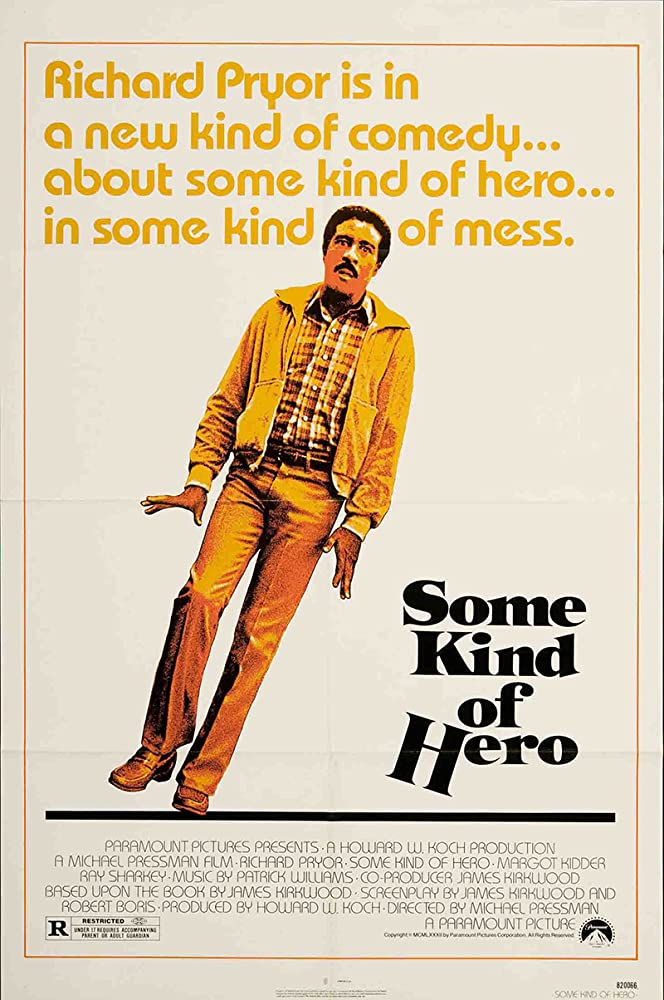
Some Kind of Hero (1982, directed by Michael Pressman)


Eddie Keller (Richard Pryor) is a member of the U.S. Army, serving in Vietnam when he gets captured by the VC and spends the next few years in a POW camp.  During that time, he befriends another POW named Vinnie (Ray Sharkey).  Though the quick-witted Eddie is often able to outsmart his captors and their attempts to turn him into a propaganda tool, he finally snaps when he’s told that Vinnie will be allowed to die unless Eddie signs a “confession” in which he renounces both America and the war.  Hoping to save his friend’s life, Eddie signs the paper.

After 5 long years in the camp, Eddie finally returns to America.  He’s given a momentary hero’s welcome and then he is quickly forgotten about.  After all, everyone wants to move on from Vietnam and Eddie, by his very existence, is a reminder of the war.  However, Eddie can’t move on.  His wife (Lynne Moody) left him for another man while he was missing.  His mother (Olivia Cole) suffered a stroke and is now in a nursing home.  Worst of all, because Eddie signed that confession, the army considers him to be a traitor and is refusing to release his backpay.

What can Eddie do?  How about a rob a bank and then run off with Toni (Margot Kidder), a hooker with a heart of gold?

Like a lot of Richard Pryor’s starring vehicles, Some Kind of Hero is an uneven film.  Pryor was a skilled dramatic actor but he was best known as a comedian and, in most of his starring roles, there was always a conflict between his serious instincts and the demand that all of his films be funny.  Some Kind of Hero starts out strong with Pryor in Vietnam.  The scenes with Pyror and Sharkey in the POW camp are strong.  (In the novel on which the film was based, Eddie and Vinnie were lovers.  In the film, they’re just friends.)  Though there are funny moments during the first half of the film, the humor arises naturally out of the situation.  During the first half of the film, Pryor may make you laugh but he also makes sure that you never forget that he’s on joking to maintain his sanity.  But once Eddie returns to the U.S., Some Kind of Hero awkwardly turns into a heist film and the comedy goes from being darkly humorous to being broadly slaptstick.  Eddie, who could survive being a prisoner of war and who could usually outsmart the VC, is suddenly transformed into a naive klutz.  Richard Pyror does his best but the two halves of the film never seem to belong together.

Unfortunately, Hollywood never really figured out what to do with Richard Pryor as an actor.  Some Kind of Hero at least shows that Richard Pryor could be a strong dramatic actor.  Unfortunately, the film doesn’t really live up to his talents.

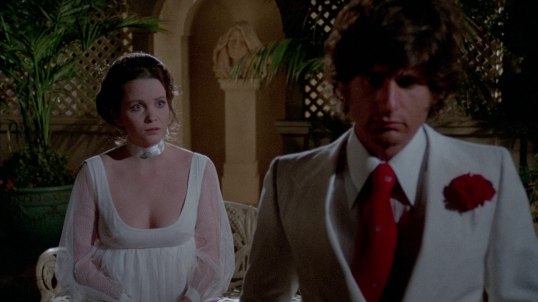
Film Review: Some Call It Loving (dir by James B. Harris)


1973’s Some Call It Loving tells the story of Robert Troy (Zalman King).  He’s rich.  He has a girlfriend (or maybe she’s his wife, we’re never quite sure) named Scarlett (Carol White).  He lives in a big, beautiful mansion with Scarlett and Scarlett’s girlfriend, Angelica (Veronica Anderson), and several different women who Robert and Scarlett bring home so that they can all pretend to be someone other than who they are.  (When the film begins, Scarlett is pretending to be the strict head mistress of a finishing school.  Later, she’ll pretend to be a nun.)

Robert seems like he should be happy but, from the minute we see him, it’s obvious that he’s not.  He’s mired in deep ennui and even playing in a jazz band at a nightclub doesn’t seem to bring him any real joy.  Robert plays saxophone.  His best friend in the band is Jeff (Richard Pryor), a barely coherent junkie who is probably only alive because of the pills that Robert keeps him supplied with.

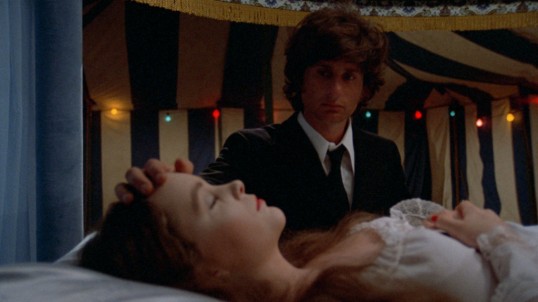
One night, Robert goes to a carnival.  He stops at a tent that apparently houses “Sleeping Beauty.”  Inside the tent, a young woman named Jennifer (Tisa Farrow, later to star in Lucio Fulci’s classic Zombi 2).  Jennifer is in a comatose state.  People pay a dollar so that they can enter the tent and kiss her.  Her “owner” says that Robert can do more with her if he’s willing to pay $50.  Robert instead buys her for $20,000.

It turns out that Jennifer has been in a coma for eight years.  She’s been kept in that state by a “sleeping potion,” a cocktail of drugs that has to be administered on a daily basis.  Robert takes her back to his mansion and doesn’t give her the potion.  Eventually, Jennifer wakes up.

Now, speaking for myself, if I woke up in a strange place after being in a forced coma for eight years, I’d probably be pretty pissed off.  Jennifer, however, cheerfully accepts that the fact that she’s been asleep for eight years and now she’s living with a somewhat creepy man and his two girlfriends.  She’s just happy to have her mansion and her Prince Charming!

While Scarlett and Angelica view Jennifer as being someone new to play games with, Robert starts to develop real feelings for her.  He wants to have a real life with Jennifer but, unfortunately, the only life that Jennifer knows is the fake one that he’s created with Scarlett and Angelica.  Robert finds himself torn between deciding whether or not to commit to Jennifer or to the fake world that he and Scarlett have created at the mansion….

Some Call It Loving is a strange film.  It’s incredibly pretentious in the way that only an art film from 1973 could be.  Reportedly, the film was a box office disaster in America but the European critics loved it.  That’s not surprising because the film’s sensibility is far more European than American.  Not only does the film refuse to judge its characters but it also ends on the type of ambiguous note that seems specifically designed to alienate mainstream audiences.  Though the film’s plot has all the making for a kinky melodrama, it’s actually far more of an erotic fairy tale.  Jennifer really is Sleeping Beauty but, unfortunately, Robert may not be quite prepared to be a true life Prince Charming.  In the end, both Jennifer and Robert are trapped by their own fantasies.

As I said, it’s pretentious but it’s also strangely watchable.  From the opening of the film, director James B. Harris achieves a properly dream-like feel and Zalman King manages to be both compelling and creepy at the same time.  Tisa Farrow is perfectly cast as Jennifer and the mansion where the majority of the film takes place is simply to die for.  Even if Robert is a creep, he at least has good taste when it comes to interior design.  Some Call It Loving is obviously not a film for everyone.  What some will find dream-like, others will find to be muddled and annoying.  But it’s an intriguing artifact of early 70s arthouse cinema.

Black Brigade (1970, directed by George McCowan)


During the closing days of World War II, General Clark (Paul Stewart) wants to capture a Nazi-controlled dam and he thinks he’s found just the man for the job.  Captain Beau Carter (Stephen Boyd) is a tough and good with a knife and a gun.  Carter is sent to take command of a ragtag group of soldiers who have spent the last three years waiting for combat.  The only catch is that the soldiers are all black and Captain Carter is a racist redneck.

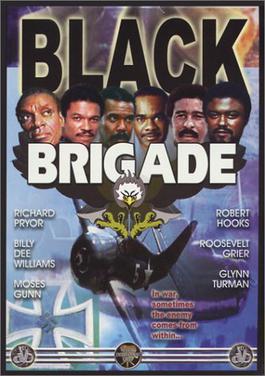
This was an Aaron Spelling-produced television movie that was originally broadcast under the name Carter’s Army.  When it was released on video, the name was changed to Black Brigade, probably in an effort to fool viewers into thinking that it was a cool blaxploitation film instead of a simplistic TV movie.  The film has gotten some attention because of the cast, which is full of notable names.  Roosevelt Grier plays Big Jim.  Robert Hooks is Lt. Wallace while Glynn Turman is Pvt. Brightman (who keeps a journal full of the details of the imaginary battles in which he’s fought) and Moses Gunn brings his natural gravitas to the role of Pvt. Hayes.  Probably the two biggest names in the cast are Richard Pryor as the cowardly Crunk and Billy Dee Williams as Pvt. Lewis, who says that he’s from “Harlem, baby.”

Don’t let any of those big names fool you.  Most of them are lucky if they get one or two lines to establish their character before getting killed by the Germans.  The movie is mostly about Stephen Boyd blustering and complaining before eventually learning the error of his ways.  The problem is that Carter spends most of the film as such an unrepentant racist that it’s hard not to hope that one of the soldiers will shoot him in the back when he least expects it.  The other problem is that, for an action movie, there’s not much action.  Even the climatic battle at the dam is over in just a few minutes.

There is one daring-for-its-time scene where Lt. Wallace comes close to kissing a (white) member of the German Resistance, Anna Renvic (Susan Oliver).  When Carter sees him, he angrily orders Wallace to never touch a white woman.  Anna slaps Carter hard and tells him to mind his own goddamn business.  It’s the best scene in the movie.  Otherwise, Black Brigade is forgettable despite its high-powered cast.

Built For Speed: Richard Pryor in GREASED LIGHTNING (Warner Brothers 1977)


gary loggins's avatarcracked rear viewer

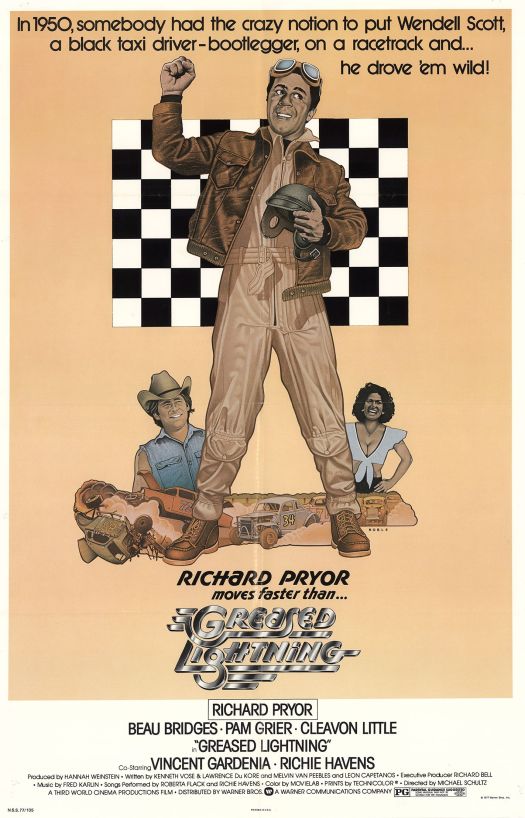
Richard Pryor  (1940-2005) has been hailed as a comedy genius, and rightly so. But Pryor could also more than hold his own in a dramatic role. Films like WILD IN THE STREETS, LADY SINGS THE BLUES, and BLUE COLLAR gave him the opportunity to strut his thespic stuff, and GREASED LIGHTNING gave him top billing as Wendell Scott, the first African-American NASCAR driver. Pryor plays it straight in this highly fictionalized biopic about a man determined to break the color barrier in the predominantly white sport of stock car racing.

We see Scott returning to his rural Danville, VA hometown after serving in WWII.  He tells everyone he wants to drive a cab and someday open a garage, but his secret wish is to become “a champion race car driver”. He meets and falls in love with Mary (Pam Grier, who’s never looked more beautiful), and they eventually marry…

View original post 427 more words

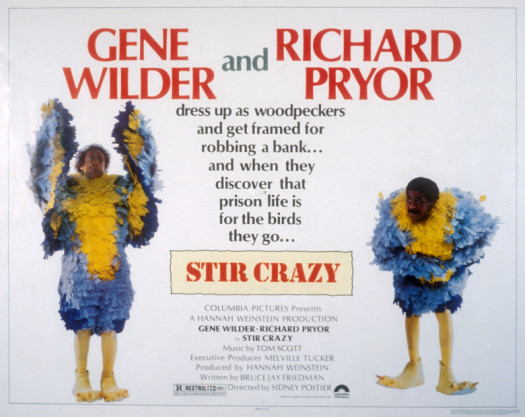
Brute Farce: Wilder & Pryor Go STIR CRAZY (Columbia 1980)


gary loggins's avatarcracked rear viewer

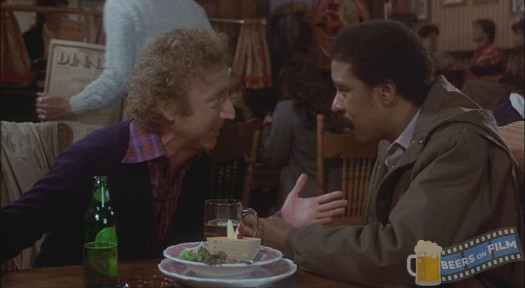
Gene Wilder  and Richard Pryor weren’t really a comedy team at all, just two incredibly funny comic actors who happened to work well together.  Both were stars in their own right, first appearing together in the 1976 comedy-thriller SILVER STREAK, with Pryor in the pivotal supporting role as a thief who aides the in-danger Wilder. Audiences loved the chemistry between the two, and of course Hollywood took notice. STIR CRAZY is not a sequel, but a funny film of its own allowing Gene and Richard to be their loveably loony selves.

New Yorkers Skip Donahue (Wilder) and Harry Monroe (Pryor) are a couple of buds who’ve both lost their jobs. Playwright Skip’s a dreamer, while aspiring actor Harry’s a realist, but somehow Skip talks his pal into leaving The Big Apple to seek fame and fortune in Hollywood. Their cross-country trek ends when Harry’s decrepit Dodge van breaks down in…

View original post 530 more words

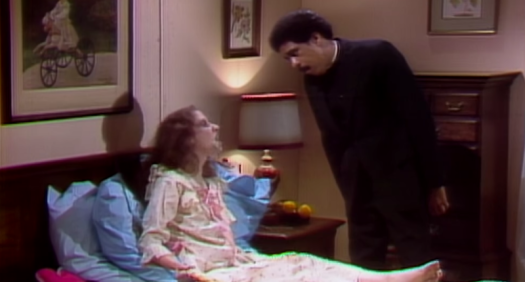
Halloween TV Havoc!: Richard Pryor Meets The Exorcist on SNL!


gary loggins's avatarcracked rear viewer

Back when SATURDAY NIGHT LIVE was actually funny, guest host Richard Pryor (making his first and only appearance on the show) starred in an EXORCIST parody called THE EXORCIST 2, which is no relation to the later film (and much better!). Pryor and Thalmus Rasulala (BLACULA ) play two priests battling Satan for a little girl’s soul, with Laraine Newman in the Linda Blair role. Enjoy this priceless Halloween spoof from 1975:

View original post

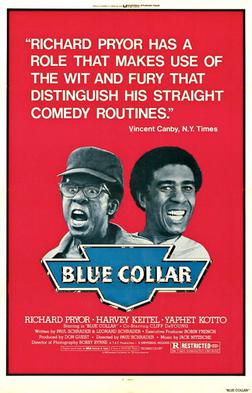
A Movie A Day #153: Blue Collar (1978, directed by Paul Schrader)


Three Detroit auto workers (played by Harvey Keitel, Yaphet Kotto, and Richard Pryor) are fed up.
It’s not just that management is constantly overworking them and trying to cheat them out of their money.  That’s what management does, after all.  What really upsets them is that their union is not doing anything to help.  While the head of the union is getting rich off of their dues and spending time at the White House, Keitel is struggling to pay for his daughter’s braces, Kotto is in debt to a loan shark, and Pryor is lying to the IRS about the number of children that he has.  (When a social worker shows up unexpectedly, Pryor’s wife recruits neighborhood children to pretend to be their’s.)  Kotto, Pryor, and Keitel plot to rob the union but instead, they just discover evidence of the union’s ties to the mob.  The union bosses will do anything to keep that information from being revealed, from trying to turn the friends against one another to committing murder.

Blue Collar was the directorial debut of screenwriter Paul Schrader.  Schrader has said that the three main cast members did not get along during the filming, with Richard Pryor apparently bringing a gun to the set and announcing that there was no way he was going to do more than three takes of any scene.  The tension between the lead actors is visible in the film, with all three of them giving edgy and angry performances.  That anger is appropriate because Blue Collar is one of the few films to try to honestly tackle what it’s like to be a member of the “working class” in America.  While management is presented as being a bunch of clowns, Blue Collar reserves its greatest fury for the corrupt union bosses who claim to represent the workers but who, instead, are just exploiting them.  The characters in Blue Collar are pissed off because they know that nobody’s got their back.  To both management and the union, the workers are worth less than the cars that they spend all day putting together and the money that can be subtracted from all their already meager pay checks.

Since it’s a Paul Schrader film from 1978, the action in Blue Collar does come to a halt, 40 minutes in, for a cocaine-fueled orgy that feels out of place.  While Keitel and especially Kotto give believable performances, Pryor sometimes seems to be struggling to keep up.  Still, flaws and all, Blue Collar has a raw and authentic feel to it, something that few other movies about the working class have been able to capture.  Perhaps because it never sentimentalizes its characters or their situation, Blue Collar was not a box office success but it has stood the test of time better than many of the other films that were released that same year.  Sadly overlooked, Blue Collar is a classic American movie.


“A Little Nonsense Now And Then Is Relished By The Wisest Men”: RIP Gene Wilder


gary loggins's avatarcracked rear viewer

wilder1

The world just got a little sadder. News has been released that funnyman Gene Wilder has passed away at age 83 from complications due to Alzheimer’s Disease. Wilder was without question one of the greatest comic actors of the late 20th Century, beloved by both filmgoers and peers for the manic energy he brought to his everyman characters.

wilder2

Born in Milwaukee, Gene Wilder (nee’ Jerome Silberman) made his film debut in the small part of Eugene, hostage of the outlaw duo BONNIE & CLYDE. He then scored the plum role of neurotic accountant Leo Bloom, caught by in Zero Mostel’s scheme to produce a Broadway bomb in Mel Brooks’ THE PRODUCERS. This was the first of three Wilder/Brooks collaborations, each one funnier than the last. BLAZING SADDLES casts Wilder as The Waco Kid, an alcoholic ex-gunfighter who helps Sheriff Bart (Cleavon Little) bring peace to Rock Ridge. Best of all was YOUNG…

View original post 419 more words