6 More Films From 2012: 4:44: Last Day On Earth, First Position, Flight, The Paperboy, Red Tails, and The Trouble With Bliss


Continuing my desperate attempt to review all of the 2012 films that I’ve seen but haven’t gotten around to reviewing yet, here’s six more reviews.

1) 4:44: Last Day On Earth (dir. by Abel Ferrara)

Whether it’s because of the Mayan calendar or the fact the Obama got reelected, people seem to be obsessed with the end of the world right now and it’s been the subject of several recent films.  4:44: Last Day On Earth is one of the more low-key entries in this genre.

Willem DaFoe plays a New York-based actor who deals with the impending end of the world by meditating in his loft, having sex with his much younger girlfriend, and having awkward conversations on Skype with his daughter.  As opposed to the characters in several other end of the world films, DaFoe doesn’t use the situation as an excuse to go on a quest for true love.  Unlike 2012, there’s no talk of escaping the apocalypse.  Instead, the world is ending and DaFoe has no choice but to accept it.  From a cinematic point of view, DaFoe’s passivity can be frustrating (4:44 is a film that’s willing to be boring to make its point) but, at the same time, it does force a viewer like me to wonder how she would handle the end of the world in a way that a film like Seeking A Friend For The End Of The World does not.

One interesting thing that distinguishes 4:44 from other end-of-the-world films is that, in 4:44, the world ends specifically because of the actions of mankind.  Whereas films like Melancholia and Seeking A Friend For The End Of The World presented a random apocalypse, 4:44 presents the apocalypse as the fitting punishment for the sins of humanity.  While I could have done without the scenes of DaFoe listening to Al Gore droning on and on about global warming (because, seriously, Gore always sounds like the creepy community college professor who you know is having an affair with one of his students), this still adds an interesting element to the film.

4:44 requires a bit of tolerance and a lot of patience but it’s still a film that’s worthy of being seen.

2) First Position (dir. by Bess Kargman)

First Position is a documentary about ballet so, of course, you know that I loved it.  The film follows six young dancers as they prepare for the Youth American Grand Prix in New York City and it brought back a lot of memories (both good and bad) for me.  First Position captures both the beauty and the pain of both dance and life.

3) Flight (dir. by Robert Zemeckis)

In Flight, Denzel Washington plays a cocky and talented pilot who is also an alcoholic and a drug addict.  In a truly harrowing sequence, the plane that Washington is piloting goes into a nosedive over Atlanta.  After Washington manages to crash-land the plane with only a few fatalities, he finds himself hailed as both a hero and also under investigation.  Working with a union rep (Bruce Greenwood) and a slick attorney (Don Cheadle), Washington tries to cover up his mistakes while, at the same time, romancing a recovering heroin addict (Kelly Reilly).

Flight has a brilliant opening and a strong ending.  Unfortunately, the middle of the film tends to drag.  Flight also suffers from the fact that cinematic addicts are always more fun to watch when they’re under the influence as opposed to when they’re getting sober.  On the plus side, the film itself is well-acted and the cast is always fun to watch even when the rest of the film is getting bogged down.  Washington is brilliant in the lead role and John Goodman has a great cameo as the world’s most helpful drug dealer.

4) The Paperboy (dir by Lee Daniels)

In 1960s Florida, Hillary Van Wetter (an amazingly sleazy John Cusack) is on death row for the murder of a small town sheriff.  His girlfriend, the flamboyant Charlotte Bess (Nicole Kidman), convinces reporter Ward Jansen (Matthew McConaughey) to return to his hometown and investigate the case against Van Wetter.  With the help of his younger brother (Zac Efron) and an arrogant colleague (David Oyelowo), Ward works to get Van Wetter off of death row but it becomes obvious that all of the film’s characters are hiding secrets of their own.

The Paperboy has a few isolated moments where it achieves a certain pulp poetry but, for the most part, Lee Daniels’ follow-up to his Academy Award-winning Precious is a total and complete mess.  Unfortunately, it’s not even all that interesting of a mess.  Nicole Kidman’s vampish performance and her white trash femme fatale outfits are definitely the film’s highlight.  As for Zac Efron, he’s not much of an actor but he’s pipin’, boilin’ hot.  It’s just  too bad the character that he’s playing isn’t that interesting.

In the end, The Paperboy showcases everything that didn’t work about Precious and nothing that did.

5) Red Tails (dir. by Anthony Hemingway)

Red Tails was one of the first “major” releases of 2012 and it’s also one of the most forgettable.  The film, which was executive produced and reportedly co-directed by George Lucas, is based on the story of the Tuskegee Airmen, a group of African-Americans who served in the U.S. Air Force during World War II and who had to not only fight Nazis abroad but racial discrimination at home.  There’s undoubtedly an inspiring story to be told here but Red Tails is such a predictable and corny film that it feels as if Lucas and Hemingway essentially wasted the real life story of the Tuskegee Airmen on a painfully generic movie.

6) The Trouble With Bliss (dir. by Michael Knowles)

Morris Bliss (played by Michael C. Hall) is the type of guy who always seems to show up in quirky independent films.  He has no job, he has no money, and he lives in a tiny apartment with his father (Peter Fonda).  Since there’s nothing more attractive than a middle-aged guy with no future, he finds himself being pursued by an 18 year-old (Brie Larson), who also happens to be the daughter of a former high school classmate, and his married neighbor (played by Lucy Liu).

I have a weakness for quirky indie films but the nonstop quirkiness of The Trouble of With Bliss feels less like narrative imagination and more like total desperation.  Michael C. Hall’s a likable actor but he essentially turns Morris Bliss into Dexter Morgan and, as a result, I kept expected for the trouble with Bliss to turn out to be that he had about a few dozen bodies hidden away in a closet somewhere.

Now that would have been a quirky film!

6 More Films That You May Have Missed: Ai Weiwei: Never Sorry, Goon, Headhunters, Jeff Who Lives At Home, The Philly Kid, and Safety Not Guaranteed


Hi there!  Continuing my effort to get caught up, here are six more films that I saw earlier this year but, for whatever reason, had not reviewed yet.

1) Ai Weiwei: Never Sorry (dir by Alison Klayman)

One of my favorite films of 2012 was this revealing documentary about the Chinese artist and activist Ai Weiwei.  Filmed over the course of two years, this film follows Ai as he uses the tools of social media to try to stand up to the oppressive Chinese government.  In the film’s strongest scenes, Ai reveals how the government attempted to cover up the massive destruction of the 2008 Sichuan Earthquake.  For his efforts to give identities to the victims of this natural disaster, Ai is beaten by the police and eventually imprisoned.

Ai WeiWei: Never Sorry is a film that should be seen by anyone who thinks that any greater good can be accomplished by sacrificing personal freedom.

2) Goon (dir by Michael Dowse)

Based on a true story, Goon tells the story of Doug Glatt (played, in a winning performance, by Seann William Scott), a Boston bouncer who joins a minor league hockey team.  Eventually, he gets called up to play in Canada and faces his idol (and new rival) Ross Rhea (played by Liev Schreiber) on the ice.  Along the way, he also romances a hockey groupie (Alison Pill) and befriends a burned out teammate (Marc-Andre Gondrin).

I have to thank Arleigh for suggesting that I see Goon because, otherwise, I probably wouldn’t have given this film a chance.  I don’t know much about sports in general and I know even less about hockey.  (Leonard is our resident hockey expert here at the Shattered Lens.)  However, Goon turned out to be a truly pleasant surprise, a sports film that even someone like me can enjoy.

While the film’s plot may be predictable, director Dowse and his cast tell the story well and they all manage to strike the perfect balance between humor, melodrama, and sentimentality.  Seann William Scott is usually not thought of as being a versatile actor but, on the basis of his performance here, he deserves to be reevaluated.  Williams makes Doug Glatt into a truly likable thug and he and Alison Pill make for a very cute and likable couple.  When you start watching Goon, you know where the journey is going to lead you but that doesn’t make the trip any less enjoyable.

3) Headhunters (dir by Morten Tyldum)

In 2012, one of the best thrillers to be released in America was this import from Norway.  Roger Brown (played by Askel Hennie) is Norway’s most successful corporate headhunter.  Along with having a beautiful wife, Roger also has a mistress and all the other material trappings of wealth.  Despite this, Roger is insecure over only being 5’6 and he deals with his insecurity by pursuing a second, secret career as an art thief.  When Roger discovers that Clas, his latest client, is having an affair with his wife, Roger breaks into Clas’s apartment and steals a valuable painting.  However, it turns out that Clas is not only a trained mercenary but he’s also a psychotic killer and soon, he’s pursuing Roger.

Headhunters is a truly exciting film, one that actually keeps the audience guessing with each twist and turn.  Best of all, the film features a truly memorable lead performance from Askel Hennie.  Playing the type of character who, in the past, would have been played by Klaus Kinski, Henie makes his sleazy character into an odd likable and compelling hero.

4) Jeff, Who Lives At Home (dir by Jay and Mark Duplass)

Jeff (Jason Segal) is a 30 year-old unemployed stoner who lives in his mother’s basement and who spends his day obsessing on the movie Signs and talking about his belief in Destiny.  One day, he gets a phone call from some one asking for “Kevin.”  Jeff reacts by finally leaving his mom’s basement and searching for this mysterious Kevin.  Meanwhile, Jeff’s brother (Ed Helms) is convinced that his wife (Judy Greer) is cheating on him and Jeff’s lonely mom (Susan Sarandon) spends her workday at work getting messages from a secret admirer.

Not much happens in Jeff, Who Lives At Home and the film dares you to get as annoyed with Jeff as everyone else in his family.  However, when taken on its own mellow terms, this is an enjoyable and occasionally even moving film.  It helps if you really like Jason Segal and seriously, who doesn’t?  Susan Sarandon gives a touching performance as well and the filmmakers make excellent use of Helms’ needy persona.

5) The Philly Kid (dir by Jason Connery)

Dillon (Wes Chatham) is a college wrestler who is wrongly convicted for the murder of a police officer.  After spending ten years in prison, Dillon is paroled and returns to his home in Baton Rouge.  Managed by his friend Jake (a manic Devon Sawa), Dillon becomes a cage fighter and ultimately finds himself fighting for his life against corrupt promoters and a crooked cop.

The Philly Kid is a pretty uneven film.  The plot will never surprise you and, halfway through the film, The Philly Kid descends into over-the-top melodrama.  However, both Chatham and Sawa give good performances and, as directed by Jason Connery, the film’s many fight scenes are vivid and exciting to watch.  The film was filmed in Baton Rouge and it makes good use of the Louisiana atmosphere.

The Philly Kid may ultimately just be a genre film but it’s a well-done genre film.

6) Safety Not Guaranteed (dir. by Colin Trevorrow)

Kenneth (Mark Duplass) is the type of person that we’ve all met at some point in our life.  He works as a clerk in a grocery store and spends his time talking about his dead girlfriend and how secret agents are watching his every move.  He also claims to have built a time machine and posts a classified ad where he asks for someone to volunteer to go back in time with him.  The ad is spotted by Jeff (Jake M. Johnson), a smarmy magazine writer in Seattle who travels to Kenneth’s hometown in order to investigate (and, it’s later revealed, track down an ex-girlfriend).  Accompanying the reporter is Darius (played by Aubrey Plaza), a disillusioned intern who has her own reasons for wishing that she could go back into past.  Following Jeff’s orders, Darius approaches and befriends Kenneth by claiming to be interested in his ad.  While the well-meaning but paranoid Kenneth trains her for their trip into past, Darius finds herself falling in love with him…

Safety Not Guaranteed is one of those low-key, sweet natured films that I simply can’t help but love.  The film views it’s damaged characters with a wry compassion and it wraps up its story with one of the best endings of 2012.  Aubrey Plaza is best known for being sarcastic on Parks and Recreation but, with this film, she shows that she’s capable of doing a lot more.

4 Late Quickies With Lisa Marie: Bully, For Greater Glory, Sound of My Voice, To Rome With Love


While I try to review just about every film I see, there are times when I don’t get to review a film as soon as I would like.  Fortunately, in this age of Netflix, DVDs, and Blu-ray, it’s never too late to review a film!  I saw the following four films earlier this year.  These reviews are a little late but here they are.

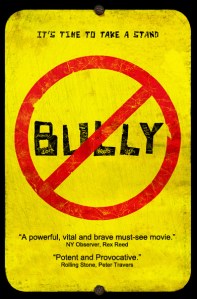
1) Bully (directed by Lee Hirsch)

This documentary, which follows and tells the story of several bullied teenagers over the course of one year, has the best of intentions and it’s definitely effective as far as making you dislike bullies and feel sorry for their victims.  That said, did anyone really like bullies before this film was released? 

Bully got a lot of attention when it was released earlier this year and a lot of people (who should have known better) said that the film itself was a solution to the problem of bullying.  I doubt that this film (or anything else, for that matter) will solve the issue of bullying but it is a well-made look at what kids do whenever adults aren’t watching (and, sad to say, sometimes when they are). 

One problem I did have with this film is that it chooses to limit itself to schools in small towns and rural communities, which gives the whole enterprise something of an elitist feel.  Are there no bullies up north? 

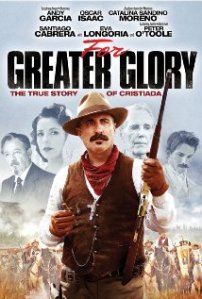
2) For Greater Glory (directed by Dean Wright)

For Greater Glory is a dramatization of the bizarrely obscure period of Mexican history known as the Cristero War.  In 1920s, Mexican President Plutarco Elias Calles (played in this film by Ruben Blades) started a violent and relentless crackdown on the country’s Catholic faithful.  Churches were burned, priests and nuns were murdered by supporters of the government, and eventually Catholic peasants rose up in violent rebellion.  The Cristero War lasted from 1926 until 1929, eventually ending with a truce that was brokered by the U.S. Ambassador to Mexico, Dwight Morrow (played by Bruce Greenwood).

For Greater Glory set box office records in Mexico but it received some pretty negative reviews from American film critics.  To a certain extent, the negative reviews are not surprising.  The film is long, frequently heavy-handed and melodramatic and it’s also unapologetically pro-Catholic in its storytelling.  (Roger Ebert, who never seems to get tired of apologizing for having been born into a Catholic family, was especially critical of that aspect of the film.) 

With all that in mind, I still enjoyed For Greater Glory.  It’s a well-made and ultimately rather moving film (though I imagine some parts of the film might be a bit confusing if you don’t have at least a little bit of a Catholic background) and it features excellent performances from Andy Garcia and Oscar Isaac as two of the rebel leaders.  In many ways, For Greater Glory feels like a throwback to the epic films of the past and that’s not necessarily a bad thing.

3) Sound of My Voice (directed by Zat Batmanglij)

Like last year’s Another Earth, Sound of My Voice is a science fiction film that stars and was co-written by Brit Marling.  The difference between the two is that Another Earth was a pretentious mess while Sound of My Voice is an effectively creepy little film that puts story and atmosphere above trite pronouncements about the state of existence.

Brit Marling plays a mysterious woman who claims to have been sent from the future.  She has a devoted cult of followers who spend their nights sitting on the floor around her, listening to her talk about the horrors waiting for them in the future.  Two journalists go undercover and infiltrate her cult, hoping to expose her as a fraud.  

Sound Of My Voice keeps the viewer guessing as to whether or not Marling is who she says she is and the film’s ending, while not a total surprise, is still effective enough to inspire debate after the end credits roll.  As opposed to Another Earth, Marling gives an actual performance here and is both creepy and sympathetic at the same time.

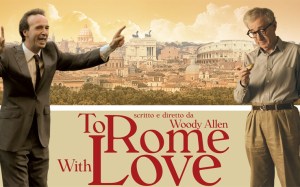
4) To Rome With Love (directed by Woody Allen)

Woody Allen’s follow-up to Midnight in Paris, To Rome With Love tells four separate stories that all take place in Rome.  Despite the fact that the cast features everyone from Alec Baldwin to Roberto Begnini to Penelope Cruz to Ellen Page, the true star of the film is the city of Rome.  I spent the summer after I graduated high school in Italy and this film brought back a lot of good memories.

Unfortunately, the film’s four stories are pretty uneven and the film’s frequent transitions from story to story are pretty awkward.  The worst story features Alec Baldwin meeting his younger self (played by Jesse Eisenberg) and trying to prevent him from falling in love with a neurotic actress (Ellen Page).  The film’s best story is a satiric fable about an ordinary man (played, in an excellent performance, by Roberto Begnini) who wakes up one day to discover that he’s the most famous man in Italy. 

The film doesn’t really work but I still loved to getting to see Rome once again.

6 Films That Are Not The Dark Knight Rises: The Girl From Naked Eye, Magic Mike, Rock of Ages, Ted, 21 Jump Street, and Underworld: Awakening


Right now, everyone seems to be heading out to see The Dark Knight Rises for the first, second, or hundredth time.  By my own personal count, the  various writers here at The Shattered Lens have seen the film a combined total of 12 times since it opened on Friday.  (Myself, I’ll be seeing it on Tuesday.)

But what if you don’t want to see The Dark Knight Rises this week?  What if you just don’t want to deal with the big crowds?  Maybe you want to wait a few months so that you can see it for a dollar.  Or maybe,  you showed up at the theater and discovered that the showing was sold out or perhaps you’re just not into the whole Batman thing.  What then?  Well, believe it or not, there are other movies out there and below, you can find 6 reviews of films that came out this year but are not The Dark Knight Rises.  Some of them are worth seeing and some of them definitely are not.  But all six of them are alternatives for those of you who want to see a movie but, for whatever reason, don’t want to see The Dark Knight Rises.

(Even better, they’re six films that I saw earlier this year but, until now, still hadn’t gotten around to reviewing.)

1) The Girl From Naked Eye (dir by David Ren)

Jake (Jason Yee) is the driver for a sleazy escort service that’s headquartered out of a strip club called Naked Face.  Jake ends up falling in love with Sandy (Samantha Streets), an escort who writes poetry in her spare time.  (Yes, one of those…)  When Sandy is murdered, Jake goes on a violent search for her murderer.

The Girl From Naked Eye is a pretty uneven and rather predictable film but I actually enjoyed it.  It’s obvious that director David Ren is a fan of the same old film noirs that I love and, at its best, Girl From Naked Eye is a loving tribute to those films.  Streets is likable as the ill-fated Sandy and Gary Stretch brings some unexpected depth to his villainous role.  Perhaps best of all, Girl From Naked Eye is only 80 minutes long.  Sometimes, you just don’t need that extra 30 minutes to tell your story.

The Girl From Naked Eye is very much an independent film so it might be playing near you or it might not.

2) Magic Mike (dir. by Stephen Soderbergh)

After me and my BFF Evelyn saw Magic Mike, I hopped on twitter and I tweeted, “Memo to single guys.  Go hang out around the theater when Magic Mike gets out.  You will get laid!”  Yes, Magic Mike is that type of film…

“Magic” Mike (played by Channing Tatum) is the most popular attraction at Xquisite, a male strip club that’s run by Dallas (a wonderfully sleazy performance from Matthew McConaughey).  Mike ends up serving as a mentor for Adam (Alex Pettyfer) while pursuing Adam’s disapproving sister (Cody Horn) and saving up his money so that he can start his own business.  However, the life proves a lot more difficult for him to leave then he originally thought…

There’s actually a lot of plot in Magic Mike but, ultimately, it doesn’t matter.  The film knows that we’re all here to watch Tatum, Alex Pettyfer, and Joe Manganiello shake everything that they’ve got and the film does not disappoint.  Director Steven Soderbergh’s directs in such a way that the film’s dance numbers are both exciting and, at the same time, distancing.  By taking a rather documentary approach to otherwise salacious material, Soderbergh reminds us that, ultimately, Tatum is just doing a job and fulfilling the requirements of fantasy as opposed to reality.

When Christy Lemire of the Associates Press gave a less than positive review to The Dark Knight Rises, all of the fanboys on Rotten Tomatoes became obsessed with the fact that she had previously given a positive review to Magic Mike.  Many of them left comments complaining that the only reason Lemire enjoyed Magic Mike was because it featured naked men.  While all one has to do is read Lemire’s review to see that’s not the case, so what if it was?  Films have been objectifying women for over a century.  What’s wrong with a little fair play?

Magic Mike is still in theaters.

 3) Rock of Ages (dir. by Adam Shankman)

In this adaptation of the hit Broadway show, Sherrie Christian (Julianne Hough) is an innocent girl from Oklahoma who dreams of finding super stardom in Los Angeles.  She gets a job working as a waitress at an incredibly filthy-looking club run by Alec Baldwin and she also gets a boyfriend (played by Diego Boneta) who is an aspiring musician himself.  Everything’s great except for the fact that the mayor’s puritanical wife (Catherine Zeta-Jones) hates rock and roll and wants to close the club down.  Luckily, alcoholic rock star Stacee Jaxx (Tom Cruise) is willing to help out.  Did I mention that Russell Brand is in this film as well?  Because, he like totally is…

Rock of Ages gives you a chance to watch your favorite actors and actresses shake it to some of the least danceable music ever written and it’s just about as bad you might expect.  Between the vanilla performances of Hough and Boneta and the film’s rampant sexism (every female in the film is either a shrew or a whore and apparently, the only thing that can redeem them is allowing Tom Cruise to drunkenly cop a feel), Rock of Ages is a combination of the forgettable and stuff that you wish you could forget.  For a director who specializes in musicals, Shankman seems strangely lost here and the majority of the big numbers feel lifeless.  The one bright spot is Mary J. Blige who shows up in a minor role and quickly reminds everyone what singing is all about.

Rock of Ages opened with a lot of hype but that hype didn’t translate into box office success.  You can probably still catch it at the dollar theater but you might want your money back afterward.

4) Ted (directed by Seth MacFarlane)

Ted tells the story of a lonely 8 year-old boy who, one night, wishes that his beloved teddy bear Ted might come to life.  Well, Ted does come to life and ends up proving to the world that magic does exist.  Briefly, Ted and his owner are celebrities but soon, Ted’s fame fades and, 28 years later, Ted (voiced by director Seth MacFarlane) and his owner (now played by Mark Wahlberg) are slackers who spend their time smoking weed, watching TV, and obsessing over pop culture. (At times, it almost felt as if the film was a documentary about life here at the TSL Bunker.)  However, Wahlberg’s girlfriend (Mila Kunis) feels that Ted is holding him back and eventually, Wahlberg is forced to make a choice between childhood friendship and adult love.

I have to admit that I’m not a huge fan of Seth MacFarlane’s.  I hate the Family Guy and I’ve never gotten through more than 2 minutes of The Cleveland Show.  However, I also have to admit that I enjoyed Ted for what it was.  It’s a massively uneven film that pretty much tells the same joke over and over again but that joke (i.e. a cute toy saying or doing something incredibly crude) turns out to be surprisingly resilient.  For their part, Wahlberg and Kunis are a likable couple and Kunis does a good job generating some much-needed sympathy for her thinly drawn character.  Add to that, Joel McHale is in this film and how can I not enjoy a film that features Joel McHale?

Ted is still playing at a theater near you.

5) 21 Jump Street (dir. by Phil Lord and Chris Miller)

Morton (Jonah Hill) and Greg (Channing Tatum) have been unlikely friends since high school.  Greg was a jock and bully while Morton was a guy who looked and acted a lot like Jonah Hill.  When Greg and Morton graduate high school, they both enter the police academy together and, upon getting out of the academy, they find themselves assigned to hazardous duty like patrolling the local park.  However, it turns out that there’s a new designer drug out there and Hill and Tatum are both sent back to high school.  Only now, they’re working under cover…

21 Jump Street was a real surprise when it came out earlier this year, a laugh-out-loud comedy that managed to both satirize and celebrate the conventions of the American cop film.  Hill and Tatum had a lot of chemistry together and there was something oddly touching about watching Hill return to high school and discover that he was now considered the cool guy while Tatum was now the outsider.  21 Jump Street has kinda gotten forgotten in all the hype surrounding The Avengers and the Dark Knight Rises but ultimately, 21 Jump Street can stand with those two films as proof that occasionally a big-budget studio production can turn out to actually be a good film.

(Plus, James Franco’s look-alike brother, Dave Franco, is in it!)

21 Jump Street is available now on DVD and Blu-Ray but it’s also still playing at a few dollar theaters across the country.

6) Underworld: Awakening (dir by Mans Marlind and Bjorn Stein)

Selene (Kate Beckinsale) is back and this time, she’s searching for Michael, who has gone missing.  The plot doesn’t make much sense and the film has one of the most disappointing endings ever but it does provide the viewers with everything that they’ve come to expect from an Underworld film (with the exception of Scott Speedman, who does not return to the role of Michael in this film).

Underworld: Awakening opened at the beginning of the year, got terrible reviews, and made a decent enough amount of money that there will probably be yet another installment in the series come 2014.  That said, Underworld: Awakening is probably the most vapid of all of the Underworld films (and that’s saying something) and, following the releases of both The Avengers and the Dark Knight Rises, it looks like even more of an empty exercise in CGI and action than it did when it was originally released.  That said, this film does star my girl crush, Kate Beckinsale, and, after watching her in this film, I spent a few hours looking for monsters to fight.  I will always recommend any film that features a women kicking ass and that’s about the only reason I have to recommend Underworld: Awakening.

Underworld: Awakening is currently available on both DVD and Blu-Ray.

Oh my God! 6 More Chilling Classics: The Cold, Dr. Tarr’s Torture Dungeon, The Legend of Big Foot, Oasis of the Zombies, Slashed Dreams, and Track of the Moon Beast


It’s a lonely Saturday here at the TSL Bunker.  Leonard Wilson is at a theater in the city, watching Chernobyl Diaries.  My sister, the Dazzling Erin, has abandoned me to go shopping for ingredients so she can make something later tonight for our family’s annual memorial day get together tomorrow and our cat, Doc, is too busy sleeping at the foot of my bed to pay much attention to me   Probably even as I sit here typing this, Leon the Duke is watching season 3 of Lost and how I envy him!  The Trash Film Guru has escaped to the grindhouse. Necromoonyeti is discovering new music, Pantsukudasai is undoubtedly meeting with his enigmatic anime connection, Semtex Skittle is playing Diablo Something-Or-Another, and SenorGeekus is off spreading the gospel of Jack Kirby.  Even Arleigh is off somewhere else, watching a war movie no doubt.

Yes, I’ve been left here alone in my section of the Bunker, which I’ve decorated by utilizing a combination of Catholic iconography, Hello Kitty, and pink wallpaper.  I should be working on getting caught up because I am running behind on meeting my quota for the month.  However, instead of writing about what’s currently playing in a theater near you, I find myself once again distracted by my continuing mission to watch and review every single film included in Mill Creek’s 50 Chilling Classics Boxset.  Fortunately, I’m happiest when I have a mission.  Here are reviews of 6 more of the Chilling Classics that I’ve sat through.

The Cold (dir by Bill Rebane)

First released in 1984, The Cold is yet another odd little morality tale from Wisconsin-based filmmaker Bill Rebane.  Three mysterious millionaires invite nine people (and just try to keep them all straight) to a secluded mansion that looks suspiciously like an EconoLodge.  The nine guests are informed that if  they spend a few nights at the “mansion” and face their greatest fears, they’ll win a million dollars.  Of course, everyone agrees to do that but how could they have imagined that their fears would include a giant spider that shows up in soup bowl, a shark that shows up in a swimming pool (Agck!  That would be my fear right there), rats, and people who wander around hallways while wearing white sheets.  Of course, it all ends with a twist that you’ve already guessed and then the film introduces another twist that you’ve already guessed.

This is the third Rebane film that I’ve come across in the Chilling Classic Boxset (the previous two being The Alpha Incident and The Demons of Ludlow).  Rebane is one of those odd directors whose uneven films are genuinely inept and yet occasionally show a flash of equally genuine imagination.  The Cold is a complete and total mess that features bad acting (after 5 minutes, I’d had enough of the slow-witted girl with the bad Southern accent), bad dialogue (“You can’t come in here.  I’m nude.” “Don’t worry, I’ve had a vasectomy”), and a truly incoherent style of editing.  Rebane punctuates the action by including random snatches of old timey music and boy did that get irritating fast.  And yet, once you start watching, it’s impossible to look away.  You simply have to watch to convince yourself that what you’re seeing isn’t just a dream.  Plus, the film includes not only an endless disco sequence but a narrator who admits that he can’t really follow the story either.

Dr. Tarr’s Torture Dungeon (dir by Juan Lopez Moctezuma)

This Mexican film from 1972 is based on an Edgar Allan Poe short story and, despite the poor picture quality that we’ve come to expect from anything put out by Mill Creek, it is one of the most visually interesting films to be found in the Chilling Classics boxset.  A newspaper reporter visits a sanitarium in order to investigate the revolutionary form of therapy practiced by Dr. Maillard (Claudio Brook).  As Maillard explains (and sh0ws), the inmates are essentially allowed to roam freely through the asylum and live under whatever delusions make them happiest.  However, it quickly becomes obvious that Dr. Maillard is insane himself and his asylum is part of a bigger plot to rule the world.  The plot makes little sense and it quickly becomes pretty clear that it’s not meant too.  Director Juan Louis Moctezuma was a collaborator of the famed surrealist Alejandro Jadorowsky and it quickly becomes obvious that he’s more interested in putting as many odd and surreal images on-screen as possible and, on that level, he succeeds.  For whatever the film’s narrative failings, it’s fascinating to just sit and look at some of the images that appear on-screen.  Claudio Brook gives a wonderfully over-the-top performance that perfectly compliments the film’s visuals.

The Legend of Big Foot (dir by Harry Winer)

In this documentary from 1976, a wildlife expert named Ivan Marx rambles on and on about Big Foot while unrelated stock footage plays out on-screen.  It’s just as exciting as it sounds.  Seriously, I try to make it a point to stick with any film I start watching, no matter how boring it may turn out to be, but the Legend of Big Foot severely tested my patience.  Some of the animals in the stock footage are cute, though.  Regardless of what he may be discussing at any particular moment during the film, Marx delivers his narration in the most dramatic way possible and that provides a few laughs as well.

Oasis of the Zombies (dir. by Jess Franco)

In this 1981 Eurocine film, a group of unlikable people come across a lost Nazi treasure in the middle of the African desert.  Unfortunately for them, the Nazis are still there, standing guard.  Of course, the Nazis have now all been transformed into zombies!  As far as Nazi zombie films are concerned, Oasis of the Zombies isn’t as scary as Shock Waves and it’s not as much fun as Zombie Lake.  What it is, however, is a Jess Franco film which means that the film features actors in tacky outfits, poorly dubbed dialogue, a zoom lens that just won’t quit, and a few oddly surreal (and occasionally nightmarish) visuals.  This is really a pretty shoddy film but it’s enjoyable if you’re a fan of Franco’s “unique” style of filmmaking.

Slashed Dreams (dir. by James Polaskof)

This film was originally released in 1974, under the title Sunburst.  It was obviously not meant to be a horror film (though it was clearly meant to appeal to the exploitation market) but instead, it was a painfully sincere, annoyingly naive, and, ultimately, rather offensive attempt to make an important statement about the need to drop out of society and “do your own thing.”  However, Robert Englund shows up for the film’s final 10 minutes so, at some point in the 80s, Sunburst was re-released, retitled, and resold as a horror film.

Anyway, this 74 minute film is about two perky and attractive college students (Peter Hooten and Katharine Baumann, both of whom give good performances) who decided to go visit their first Michael who has dropped out of society and is currently living in a cabin out in the middle of the woods.  The majority of the film is an endless montage of scenes of Hooten and Baumann hiking through the wilderness while a singer named Roberta Van Dere warbles away on the soundtrack, singing some of the most annoyingly 70s folk songs ever written.  I’m sad to say that I got one of them, Animals Are Clumsy Too, stuck in my head.  Once they finally reach the cabin, they discover that Michael is off wandering about.  They decide to wait around for Michael to show up which leads to them being spotted by two inbred hicks who proceed to rape Baumann before running off.  The next morning, Michael shows up and hey, he’s Robert Englund!  Michael hears what has happened and, instead of going to the police or, at the very least, getting Baumann to a hospital,  he tells her that she just needs to “push the demons out” and get on with living.  Which, by the way, is complete bullshit.  It’s one thing to discover strength you previously didn’t realize you had as the result of something terrible, it’s another thing to seriously expect a woman to shrug it off after a day or two or to consider rape to be a character-building exercise as this film seems to.  Say what you will about I Spit On Your Grave, at least that film understood that rape is an unforgivable violation and more than just a bad thing that might happen in the woods.  I swear, just when I think that I can’t hate the late 60s and early 70s anymore than I already do, I see a film like this.

Track of the Moon Beast (dir. by Dick Ashe)

When it comes to bad movies from the 70s, I prefer the likes of 1976’s Track of the Moonbeast to Sunburst/Slashed Dreams.  This films takes place in New Mexico and tells the story of Paul (Chase Cordel), a slow-talking mineralogist who gets a chunk of moon rock lodged into his brain.  As a result, he turns into a gigantic lizard and goes around killing people.  His only hope appears to be his old friend, the stoic Profession Johnny Longbow (Gregorio Sala) who knows all sorts of indian lore.  He also knows how to make stew and early on in the film, he gives a world-weary monologue about what ingredients he puts in his stew.  (Onions, mostly).  Anyway, this is an awful, awful film that’s full of bad acting, bad special effects, and dumb dialogue.  It’s also a lot of fun and it features the guy pictured below singing a song called California Lady that got stuck in my head almost as quickly as Animals Are Clumsy Too.  I loved Track of the Moon Beast.

So, out of these six, I would definitely recommend Track of the Moon Beast and Dr. Tarr’s Torture DungeonThe Cold and Oasis of the Zombies should be watched only by people who are already familiar with the work of Bill Rebane and Jess Franco.  Legend of Big Foot might be amusing if you’re intoxicated and Slashed Dreams is the one to definitely avoid.

6 More Chilling Classics: Jesse James Meets Frankenstein’s Daughter, Scream Bloody Murder, Silent Night Bloody Night, Sisters of Death, War of the Robots, and Werewolf in a Girl’s Dormitory


For the past few months, I’ve been attempting to watch and review every film to be found in Mill Creek’s 50 Chilling Classics box set.  Here’s are 6 quick reviews of the latest few “chilling classics” that I’ve found the time to watch.

1) Jesse James Meets Frankenstein’s Daughter (Dir by William Beaudine)

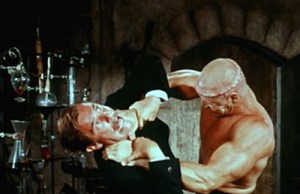
This 1966 western/horror hybrid is just about as stupid as you think it is but it’s also a lot of fun if you’re in the right mood.  Notorious outlaw Jesse James (John Lupton) attempts to hold up a stagecoach but, in the process, his hulking partner Hank (Cal Bolder) is serious wounded.  Some helpful peasants direct Jesse and Hank to the mysterious German doctor who happens to live in a nearby dark and scary house.  That doctor is Maria Frankenstein (Narda Onyx) and she’s been conducting experiments to bring dead Mexicans back to life.  Imagine her joy when the nearly dead Hank shows up at her laboratory.  Anyway, Maria performs a brain transplant on Hank and once Hank comes back to life, she informs him that his new name is “Igor.”  Yes, she does.  That plot description pretty much tells you everything you need to know about the movie but I vaguely enjoyed vaguely paying attention to it.  Maria’s German accent is hilariously overdone, the Frankenstein laboratory is full of pointless electrical things, and a character dies halfway through the film just to later show up again with no explanation.  It’s that type of movie.

2) Scream Bloody Murder (dir. by Marc Ray)

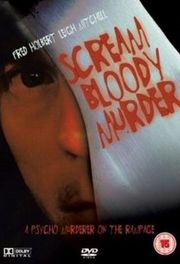
So Matthew (played by Fred Holbert) is a disturbed young man who murders his father with a tractor and loses a hand in the process.  He’s sent off to a mental asylum for a few years and while there, he’s given a sharp and potentially deadly hook as a replacement for his hand.  Seriously, why would you give a weapon like that to a mental disturbed person who has just murdered his own father?  That’s just one of the many mysteries that goes unexplored in 1973’s Scream Bloody Murder, an occasionally watchable slice of entertainment that is ultimately too slow and predictable to really be effective.  Once Matthew is released from the asylum, he goes on the expected murder spree and goes all Collector-like on a prostitute named Vera (played by Leigh Mitchell, who also plays Matthew’s doomed mother in a clever bit of Oedipal casting).  Mitchell and Holbert both give surprisingly good performances and director Marc Ray comes up with a few visually inventive scenes of mayhem but, for the most part, this film never quite lives up to the excessive promise of its premise.

3) Silent Night Bloody Night (dir. by Theodore Gershuny)

Filmed in 1972 and subsequently released in 1974, Silent Night Bloody Night is a real treat, an atmospheric thriller that has a wonderfully complicated plot that will keep you guessing.  On Christmas Eve, Jeff Butler (James Patterson) comes to an isolated town to arrange the sell of his grandfather’s home.  As we discover through some wonderfully dream-like flashbacks, Jeff’s grandfather died nearly 40 years ago when he was set on fire in his own home.  With the help of local girl Diane (Mary Woronov), Jeff investigates his grandfather’s death and discovers that the town is full of secrets and people who are willing to kill to maintain them.  Director Theodore Gershuny uses the low budget to his advantage and the sepia-toned flashbacks are truly disturbing and haunting.  Ultimately, Silent Night Bloody Night feels like a dream itself and the mystery’s solution is less important than the journey taken to reach it.

4) Sisters of Death (dir. by Joseph Mazzuca)

Technically, this isn’t the best film to be found in the Chilling Classics box set but it’s still one of my personal favorites.  The 1977 film opens with a very baroque sorority initiation that ends with one of the sisters being killed in a game of Russian Roulette.  A few years later, the surviving sisters are invited to an isolated and lavish estate where it turns out that the dead girl’s father (well-played by Arthur Franz) is looking for revenge.  This film is predictable and a lot of the plot depends on people refusing to use any common sense but Sisters of Death is such a fun little melodrama that I can’t complain too much.  The film plays out like a surprisingly violent Lifetime movie and it all ends on a wonderfully cynical note.

5) War of the Robots (dir. by Alfonso Brescia)

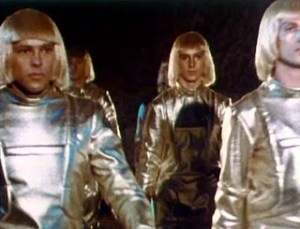
Whatever you do, don’t watch War of the Robots alone.  Seriously, you need somebody there — preferably several people — so you can take turns making snarky comments and rude jokes.  Otherwise, you’ll just be stuck watching this amazingly bad science fiction film from 1978 and wondering how much more of it you can take.  Set in the generic future, War of the Robots tells the story of what happens when two human scientists are kidnapped by a bunch of robots.  Capt. John Boyd (Antonio Sabato) is sent to get the scientists back and the end result?  A war of the robots.  Or something like that.  This is one of those films where it’s difficult to really pay that much attention to what’s happening on-screen.  However, it’s worth seeing just for the chance to spot the wires that are enabling the model spaceship to hang over the “alien” landscapes.  Naturally, since this film was made in the 70s, everyone wears space suits with really wide lapels.

6) Werewolf in a Girls Dormitory (dir. by Paolo Heusch)

First released in 1961, Werewolf in a Girls Dormitory is an Italian/Austrian co-production.  It was originally titled Lycanthropus and while Werewolf In A Girls Dormitory is a lot more memorable, it also makes this film sound like a lot more fun than it actually is.  This slow and oddly somber film tells the story about a series of murders that occur at a school for delinquent girls.  The school’s newest teacher is the obvious suspect but then again, the killer might just be a werewolf.  I liked the look of this film — the film is lit to emphasize shadows and it gives the whole thing a very noir-like feel — but, much like Scream Bloody Murder, this movie was just too slow to really be effective.

So, out of this batch of 6, I would definitely recommend that you track down and see Silent Night Bloody Night and Sisters of Death.  I would also definitely suggest that you do your best to avoid War of the Robots.  As for the other 3, they’re all better than The Wicker Tree.

In Conclusion: 10 Final Thoughts on The Friday the 13th Franchise


Over the previous two weeks, I reviewed all 11 films in the Friday the 13th franchise.  I reviewed the final film, appropriately enough, on Friday the 13th.  Now that I’ve sat through all 11 of these films, I’d like to provide just ten thoughts in conclusion:

1) Have you seen Cabin In The Woods yet?  While that brilliant film is obviously influenced by a lot of films, the Friday the 13th influence was especially obvious, right down to the crazy old man trying to let everyone know that they were doomed.

2) As for the Friday the 13th franchise itself, what is left to be said?  I think my interest in these films comes from the fact that even though their critically reviled and utterly dismissed by many, they’ve managed to survive and they’re still being watched by viewers (like me) who weren’t even born and/or weren’t old enough to see the majority of them when they were first released in theaters.  Like it or not — and again, this is a point that should be obvious to anyone who truly appreciated Cabin In The Woods — these films appeal to something primal in human nature.

3) The most frequent complaint made against the Friday the 13th franchise is that the films are anti-female.  I don’t agree.  I think that, unfortunately, a lot of people who watch these films are anti-female but I don’t think that the same can be said of the films themselves.  Quite frankly, if I was ever cast in Friday the 13th, I would rather play a victim than a survivor because the victims are the ones that are remembered afterwards.

4) Instead of seeing the Friday the 13th films as some sort of attempt to punish women, I see them as simply being updated bits of American folklore.  Those famous urban legends — the escaped mental patient with the hook hand, the vanishing hitchhiker — are about as close as America can get to having its own mythology and the Friday the 13th franchise (and similar horror films) are a reflection of that mythology.

5) Much like the scary story told at slumber party or around a campfire (not that I’ve been near a campfire though I have been to a few thousand slumber parties), Friday the 13th is meant to be a communal experience.  It’s a chance to admit that we’re all scared of the dark.  We scream and jump because, ultimately, it’s fun to do that in the safety of a theater or your own home.

6) Friday the 13th, as a franchise, was at its best when it kept things simple.  As you may have noticed from my reviews, I struggled more with the gimmicky later films in the series than I did with the originals.

7) The first two Friday the 13th scenes are both excellent examples of how to use a low budget and a largely unknown cast to your best advantage.  There is a lesson there for all aspiring filmmakers.

8) Having now rewatched the 11 films in the franchise, I have to say that I think that Part 4 is the best, followed by Part 2Part 3 remains the worst while Jason Takes Manhattan is perhaps the most pointless.  Ted White was the best Jason but Kane Hodder is a close second.

9) When I was reviewing these films, Peter M. Bracke’s book Crystal Lake Memories proved to be an invaluable resource.  I highly recommend it to anyone who is interested in film, horror, or both.

10) Finally, did you all enjoy me devoting two weeks to reviewing one film franchise or were you thinking to yourself, “Oh my God, Lisa, give it a rest already!”  I enjoyed writing them but, to be honest, I’m really in the mood for a romantic comedy now.

Well, that does it for Friday the 13th.  Again, I hope everyone enjoyed revisiting this franchise with me and I hope that everyone will enjoy revisiting the James Bond films with me in October.  As always, stay supple!

A Quickie With Lisa Marie: My Week With Marilyn (dir. by Simon Curtis)


My Week With Marilyn is apparently based on a true story. 

We know this because the film not only uses the opening title card to tell us that the story is true but the movie itself is narrated by Colin Clark (played by Eddie Redmayne) and Colin tells us pretty much the same thing, over and over again. (Seriously, this film reminded me of why I usually don’t care much for first person narration.)  Anyway, the film takes place in the late 1957.  Colin is the 3rd Assistant Director, working with Laurence Olivier (a haughty and pompous yet oddly touching performance from Kenneth Branagh) on a film called The Prince and the Showgirl.  The film stars Marilyn Monroe (Michelle Williams) who quickly starts to annoy Olivier when it becomes obvious that she’s painfully insecure, self-destructive, and dominated by her agent, acting coach, and cold husband.  Colin, however, is smitten with Marilyn and, despite the ominous warnings delivered by everyone else in the film, he soon finds himself falling in love with her and giving this film a title by spending a week with Marilyn.

My Week With Marilyn has been getting a lot of attention lately because many Oscar watchers are expecting to see Michelle Williams receive a Best Actress nomination for her performance as Marilyn Monroe.  Lately, Kenneth Branagh has become something of a dark horse for a best supporting actor nomination and personally, I would say that Julia Ormond (as a paranoid Vivien Leigh) and Judi Dench (as a supportive actress) both deserve some consideration as well. 

The film is ultimately dominated by Michelle Williams and it works whenever she’s on-screen. (And, unfortunately, it pretty much falls apart whenever she’s not.)  Williams has the daunting job of playing an icon here and she manages to be both believable as an icon and as a very fragile and poignant human being.  The script, to be honest, doesn’t give her much help.  As written, Marilyn is alternatively presented as being a helpless damsel in need of a white knight, a calculating seductress who threatens to lead Colin off of the straight and narrow path (represented here by Emma Watson as the girl that Colin treats quite badly)  and a convenient symbol of a lost age.  The brilliance of Michelle Williams is in how she manages to use these three conflicting characterizations to create one very believable Marilyn Monroe.

The main problem with this film is that it’s not called Marilyn.  Instead, it’s My Week With Marilyn and, as a result, the film is actually about the male gaze of the “My” of the title.  As good a performance as Williams gives, it’s hard to avoid the fact that, as far as this film is concerned, Marilyn ultimately exists just to teach Colin a few life lessons.  Unfortunately, as a character, Colin Clark is so thinly written that he’s never all that compelling and, as the film progresses, it’s hard not to feel that he’s ultimately using Marilyn just as surely as everyone else is. 

(In all honestly, however, I have to admit that one of my issues with Colin is that he’s played by Eddie Redmayne.  Don’t get me wrong, Redmayne is a good actor and he manages to make Colin almost likable but I simply cannot look at him without flashing back to Redmayne’s performance in Savage Grace.  That’s the movie where he plays a schizophrenic who has an incestuous relationship with his mother (Julianne Moore) before murdering her.  Redmayne was so effectively creepy in that film that, as unprofessional as it may be for a film critic, I had a hard time accepting him in the role of white knight.)  

I’ve read a lot of reviews that have complained that this film is basically just a big budget Lifetime Movie and, in many ways, it is.  Director Simon Curtis is a veteran of television and the film has the crisp but flat look of a tv show.  But even more than just the cinematography, My Week With Marilyn feels like a TV movie because its script hesitates to raise any issues that can’t be resolved in two hours.  That said, it’s really not sordid or silly enough to be a great Lifetime movie and it’s far too well acted to be a waste-of-time.  Ultimately, this is a flawed film that deserves to be seen for its performances.  If only the entire film was as compelling and interesting as the performances of Kenneth Branagh, Julia Ormond, and especially Michelle Williams.

Film Reviews: The Skin I Live In (dir. by Pedro Almodovar) and Take Shelter (dir. by Jeff Nichols)


In terms of film, the horror genre has never gotten the respect that it undeniably deserves.  Afterall, some of the most effective trends in cinema (German expressionism, for instance) first had their start in the horror genre.  However, most critics seem to be more comfortable just dismissing most horror films as being a bunch of predictable tropes and easy shocks as opposes to admitting that the horror genre is one that is rich with history, subtext, and importance.  Right now, there are two horror films playing the art houses of America and they are both more than worth your time.  Those films: Pedro Almodovar’s The Skin I Live In and Jeff Nichols’s Take Shelter.

In The Skin I Live In, a weary-looking Antonio Banderas plays a world-renowned plastic surgeon who, unknown to all of his colleagues, has trapped a young woman in his sprawling estate.  With the help of his devoted servant Marilla (Marisa Paredes), he keeps the woman (played by Elena Anaya) a total prisoner while continually experimenting on her in his efforts to create a new type of skin that is immune to bug bites and being burned.  However, Anaya — who has been held prisoner for six years — is desperate to escape and is even willing to engage in self-mutilation in her effort to make things difficult for Banderas.  Finally, while Banderas is out, Marilla’s psychotic son (a terrifying Robert Alamo) shows up at the estate and, convinced that he knows the young woman, tries to kidnap her for his own.

In between the scenes involving the strange experiments going on at the estate, another story plays out as Antonio Banderas exacts a disturbing revenge on the young man (Jan Cornet) that Banderas holds responsible for the death of his daughter.  The film’s two stories eventually intersect in a surprising yet disturbingly logical way.

As a director, Almodovar often pays homage to other, similarly iconic filmmakers and The Skin I Live In feels like a combination of the over-the-top melodrama of Douglas Sirk (right down to the film’s “hero” being a doctor) and the unapologetic sordidness of Jesus Franco.  This is especially evident in the film’s big, surprise twist; a twist that manages to be both ludicrous and compelling at the same time.  (I should also note that, at the showing I went to, the twist inspired about a fourth of the people in the theater to leave.)  The end result is a creepily effective, thought-provoking horror film that is both deliberately absurd and touched with a strain of undeniable melancholy.

As opposed to the baroque The Skin I Live In, Take Shelter takes place in the deceptively mundane American midwest.  Michael Shannon plays Curtis, a soft-spoken construction worker who suddenly finds himself haunted with terrifying nightmares of an incoming apocalypse.  The nightmares always start with rain and, as the film unfolds, they grew progressively more and more disturbing.  Soon, he’s seeing shadowy figures wearing hospital gowns standing out in the rain, waiting to attack him and even worse, he starts to see visions of his friends and family waiting to attack him.  Is Curtis seeing the future or has he simply inherited his mother’s schizophrenia?

The genius of the film is that, up until the final scene, you’re not quite sure.  I’ve seen a lot of nightmares in a lot of horror films and I can usually spot them long before the inevitable scene of the film’s hero waking up in bed with a shout.  Take Shelter is full of nightmares and they all follow the same basic theme but they are so effortlessly woven into the film that they still take you by surprise long after they shouldn’t.  As a viewer, you find yourself relating to Curtis because, like him, you’re never quite sure what’s real and what’s just in his mind.  The film forces us to try to figure out whether Curtis is scared because he’s crazy or is he going crazy because he’s scared. 

The film’s apocalyptic visions reminded me a lot of Peter Weir’s somewhat similar film, The Last Wave.  However, both director Jeff Nichols and star Michael Shannon manage to make this story their own.  Shannon is in nearly every scene of the film and he gives a performance that’s both dramatic and subtle.  In the past, whenever Shannon’s played a mentally ill character (Revolutionary Road, The Runaways), I’ve always felt he’s come really close to caricature.  However, in this case, he gets it right and brings a real sense of reality and urgency to the film.  Also giving good performances: Kathy Baker (as Curtis’s mother) and Jessica Chastain (who plays Shannon’s wife).

The horror genre may never get the respect it deserves.  However, films like The Skin I Live In and Take Shelter are here to let us know that horror remains a vibrant genre that will not be ignored.

8 Quickies With Lisa Marie: 13 Assassins, Bunraku, The Double Hour, Jig, Meek’s Cutoff, Of Gods and Men, One Day, and There Be Dragons


As part of my continuing effort to offer up a review of every 2011 release that I’ve seen so far this year, here’s 8 more quickie reviews of some of the films that I’ve seen over the past year.

1) 13 Assassins (dir. by Takashi Miike)

The 13 Assassins are a group of samurai who are gathered together to assassinate a sociopathic nobleman in 19th Century Japan.  As directed by Takashi Miike, this is a visually stunning film full of nonstop, brutal action and Miike powerfully contrasts the old school honor of the 13 Assassins with the soulless evil of their target. 

2) Bunraku (dir. by Guy Moshe)

There are some films that simply have to be seen to believed and Bunraku is one of those films.  In the aftermath of a global war, guns have been outlawed but this attempt at social engineering has just resulted in greater societal collapse.  Nicola (Ron Perlman) is the most powerful man on the East Coast but he lives life in paranoid seclusion and instead sends out nine assassins to enforce his will (his main assassin being Killer No. 2, played by a super stylish Kevin McKidd).  Two strangers ( a drifter played by Josh Hartnett and a samurai played by Gackt) arrive in town and, with the help of a bartender played by Woody Harrelson, they team up to destroy the nine assassins and ultimately Nicola himself.  Bunraku, which comes complete with an ominous narrator and sets that look like they belong in a Lars Von Trier film, is a glorious and fast-paced triumph of style over substance, an exciting and fun celebration of the grindhouse films of the past.  With the exception of a miscast Demi Moore (playing Perlman’s mistress), the film is very well-acted but it’s completely stolen and dominated by Kevin McKidd, who can poke me with his sword any time he wants.

3) The Double Hour (dir. by Giuseppe Capotondi)

It took The Double Hour about two years to make it over here from Italy and when it did finally play in American arthouse theaters, it really didn’t get as much attention as it deserved.  That’s a shame because the Double Hour is a pretty entertaining mystery-thriller that’s full of twists and turns and which features an excellent performance by Kseniya Rappoport as an enigmatic hotel maid.  It hasn’t been released on region 1 DVD or blu-ray yet but apparently, there’s some interest in doing an American remake which will probably suck.

4) Jig (dir. by Sue Bourne)

Jig is a documentary that follows several competitors at the 40th Irish Dancing World Championships held in Glasgow in 2010.  I always try to be honest about my personal biases and I have to admit that one reason why I absolutely loved this film is because I not only love to dance but I love Irish stepdancing in specific and, as much as I love ballet, stepdance will always hold a special place in my heart.  I’m not quite sure how to put it into words other then to say that it just makes me incredibly happy as both a participant and a  watcher.  For me, Jig captured that joy as well as showing just how much dedication and sacrifice it takes to truly become proficient at it.  This film — much like Black Swan — made me dance.

5) Meek’s Cutoff (dir. by Kelly Reichardt)

I’ll never forget going to the Cinemark West Plano and seeing Meek’s Cutoff last May.  The theater was nearly deserted except for me, Jeff, an elderly couple, and two women who were, in their appearance and manner, almost stereotypically upper middle class suburban.  As the film’s frustratingly ambiguous conclusion played out on-screen and the end credits started to roll, one of the women angrily exclaimed, “WHAT!?  Well, that won’t win any Academy Awards!”  In many ways, Meek’s Cutoff is a frustrating film.  Based on a true story, it follows a group of 19th century settlers as they try to cross the Oregon Trail while following a guide (Bruce Greenwood) who might be totally incompetent.  Plotwise, not much happens: the settlers kidnap an Indian and demand that he lead them to water, Michelle Williams plays a settler who doubts that any of the men in the party know what they’re doing, and everyone continues to keep moving in search of … something.  The film is, at times, really frustrating and I think it’s been overrated by most critics but, at the same time, it remains an oddly fascinating meditation on life and fate.  Add to that, both Greenwood and Williams give good performances and the film’s cinematography is hauntingly beautiful and desolate at the same time.

6) Of Gods and Men(dir. by Xavier Beauvois)

Of Gods and Men is a quietly powerful and visually stunning French film that’s based on the true story of 7 Trappist monks who were kidnapped from their monastery and murdered by muslim rebels during the Algerian Civil War.  The film imagines the final days of the monks and attempts to answer the question of why they didn’t flee their monastery when they had the opportunity to do so, but instead remained and chose to accept their fate as martyrs.  This meditative film also features excellent performances from Lambert Wilson and Michael Lonsdale and avoids the trap of both easy idealization and easy villainy. 

7) One Day (dir. by Lone Scherfig)

This is another one of those films that was dismissed by almost every critic except for Roger Ebert and you know what?  For once, I’m going to agree with Roger.  I absolutely loved One Day and I think that all the haters out there need to take a chance on romance and stop coasting on the easy cynicism.  One Day follows the love affair of a writer (Anne Hathaway) and a TV personality (Jim Sturgess), visiting them repeatedly on the same day over the course of 20 years.  The film starts with them as college students having a wonderfully awkward one night stand and it ends with Sturgess and their son walking up a beautiful green hill and it made me cry and cry.  Hathaway and Sturgess have a wonderful chemistry together and the film also features some good supporting performances from Patricia Clarkson (as Sturgess’ dying mother) and Rafe Spall (bringing humanity to the thankless role of being the “other guy.”) This is one of the most deliriously romantic films that I’ve ever seen and I loved it.  So there.

8 ) There Be Dragons (dir. by Roland Joffe)

There Be Dragons came out in May and it didn’t get much respect from the critics.  I’ve also read that it was considered to be a box office failure, which is odd because I seem to remember that it was actually in theaters for quite some time.  Anyway, There Be Dragons is an oddly old-fashioned war epic that attempts to mix the fictional story of a Spanish revolutionary (played by Wes Bentley) with an admiring biopic of the founder of Orpus Dei, St. Josemarie Escriva (played by Charlie Cox).  The two stories never really seem mix and instead, they just coexist uncomfortably beside each other.  It doesn’t help that Wes Bentley gives one of the worst performance of 2011.  On the plus side, Charlie Cox gives a good and believable performance as Escriva and the film looks great.  The film is so sincere in its desire to make the world a better place that its hard not to regret that it doesn’t succeed.