Retro Television Review: Fantasy Island 7.8 “Random Choices/My Mommy, The Swinger”


Welcome to Retro Television Reviews, a feature where we review some of our favorite and least favorite shows of the past!  On Tuesdays, I will be reviewing the original Fantasy Island, which ran on ABC from 1977 to 1984.  Unfortunately, the show has been removed from most streaming sites.  Fortunately, I’ve got nearly every episode on my DVR.
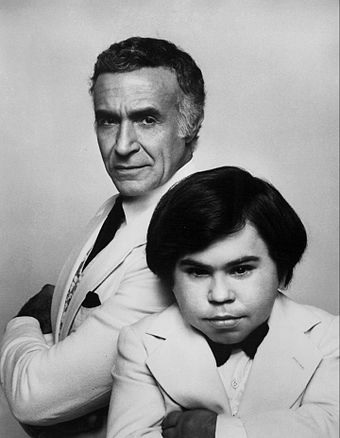
This week, we have two more fantasies that do not feature Tattoo.  What even is the point?

Episode 7.8 “Random Choices/My Mommy, The Swinger”

(Dir by Bob Sweeney, originally aired on December 3rd, 1983)

Elaine Ashley (Florence Henderson) is divorced and raising two kids on her own.  Her fantasy is to be a swinger for the weekend!  Mr. Roarke arranges for Lawrence to watch the kids and then he sets Elaine up with tennis player Martin Avery (Robert Goulet).  While Lawrence attempts to explain to the kids why their mother doesn’t want them around for the weekend, Martin offers Elaine a job.  It’s a good job with a nice salary but it would require her to put her children in a boarding school.  On the plus side, I guess Elaine would finally get laid again since that seems to be her main concern.  On the negative side, no more kids.

Elaine is tempted.  In fact, Elaine is so tempted that it actually make her into a really unsympathetic character.  At first, Elaine takes the job but then, when she sees how upset her children are about no longer living with her, she changes her mind.  Hey, Elaine — how did you think the children would react!?

This fantasy irked me.  Of course, to be absolutely honest about things, Florence Henderson irks me in general.  Maybe I’m still holding the last episode of The Brady Bunch Variety Hour against her but, whenever Florence Henderson appeared on this show or on The Love Boat, the characters she played always came across as being judgmental and self-absorbed.  That’s certainly the case here.  You take your children to a tropical paradise and then you abandon them with the butler?  Really?

As for the other fantasy, it featured Jose Ferrer as a dying billionaire who needed to find someone who he could trust to give away his money to people who deserved it.  Roarke determined that person was Eddie Random (James Read), an angry young man who felt his father had been cheated by Ferrer’s tycoon.  The entire fantasy came down to Eddie proving himself by taking supplies to an Island and helping a crotchety old man come to terms with the death of his wife.

This second fantasy felt like a backdoor pilot.  It literally ended with Eddie and the billionaire leaving to have many more adventures.  As such, the fantasy itself felt rather incomplete and …. well, silly.  Why would the tycoon need Fantasy Island to help him find the right person to give away his money?  Why does he even need a person to do that?  He should have just arranged for a big scavenger hunt and whoever found the most items would get the money.  That would have been a lot more fun.

You know who always enjoyed fantasies dealing with money?  Tattoo.  I miss him.
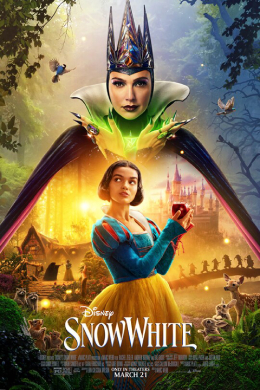
The Films of 2025: Snow White (dir by Marc Webb)


Let’s just get this out of the way.

Snow White is bad.

I’m not talking about the original Grimms’ Fairy Tale and I’m certainly not talking about the classic animated Disney film, which is one that always make me smile whenever I watch it.  For that matter, I’m also not talking about the majority of the Snow White remakes that have come out over the years.  (There’s been a surprisingly large amount.)

No, I’m talking about the live-action remake of the Disney animated film.  This the Snow White that finally came out earlier this year, after being delayed a countless amount of times.  If it wasn’t the SAG-AFTRA strike that delayed the film, it was the PR nightmares caused by Rachel Zegler’s inability to promote the film without hectoring everyone about her politics.  Even before that, the film was controversial because of a photo from the set that people interpreted to mean that the seven dwarves had been replaced by seven people of average size.  In Disney’s defense, it turned out that the people in the photo were not meant to be the Seven Dwarves.  Instead, the Seven Dwarves were created via CGI, which turned out to be an even worse solution.  (Though Peter Dinklage famously complained about Snow White being a “backwards story about seven dwarves living in a cave,” it’s also true that there are plenty of actors with dwarfism who probably would have appreciated the work.)

Whenever there’s a film that gets totally slammed online before it’s even released, there’s a part of me that always hopes that the film will prove the naysayers wrong and turn out to be a masterpiece.  I wanted Snow White to be good just because the online vitriol often seemed to go overboard.  For example, I may not have agreed with a lot of Rachel Zegler’s comments and I think it was selfish of her to drag her own personal politics into the promotion of a film that a lot of people worked on but I still think it’s important to be able to set aside those feelings when judging the actual film.  People who insist that they can only celebrate films made by people that they agree with are truly limiting themselves.

I was determined to ignore all of the bad publicity and watch the film with an open mind.  And the first few images made me smile.  The film opens with a bunch of animals opening up a storybook and that was such a cute image that I was briefly optimistic.  Unfortunately, the rest of the film is pretty bland.  Rachel Zegler can sing and Rachel Zegler can dance but, at least as far as this film is concerned, she has absolutely zero screen presence.  (For the record, I wasn’t really that impressed by her in West Side Story either.)  As a character, Zegler’s Snow White is boring.  The only person more boring than Zegler is Andrew Burnap as Jonathan, the bandit who is this film’s version of the original’s Prince.  They both give boring performances and they’re saddled with boring songs and neither actor seems to be sure how they should perform opposite the CGI dwarves.  (As for the CGI dwarves, they look like cartoons and they’re distracting in a way that could have been avoided by simply casting actual actors in the roles.)

I have to note that much of the online criticism of Snow White has been directed at Gal Gadot, who plays the Wicked Queen with the magic mirror.  The online film community insists that Gal Gadot is a bad actress despite all of the evidence to the contrary.  (Many of the people who insists on criticizing her now were the same people who swooned when she first played Wonder Woman.  Of course, that was before most of them went down the activist rabbit hole.)  Reading the criticism of Gadot, much of it seems to have less to do with Gadot’s performance and more to do with the fact that she’s from Israel.  If you’re that much of an anti-Semite that you’re going to judge someone’s performance based on where they were born, I don’t really know what to tell you.  Personally, I found Gadot to be one of the few bright spots of the film.  She understood the assignment and she thoroughly embraces the melodrama as the Wicked Queen.  Good for her.  It’s exactly the type of performance that the film needed.

I opened this review by saying that Snow White was bad and I stand by that.  That said, it’s main sin is that it’s so bland that it’s not even enjoyably bad.  After all the drama that went into the production, the film product is about as forgettable as a film can be.

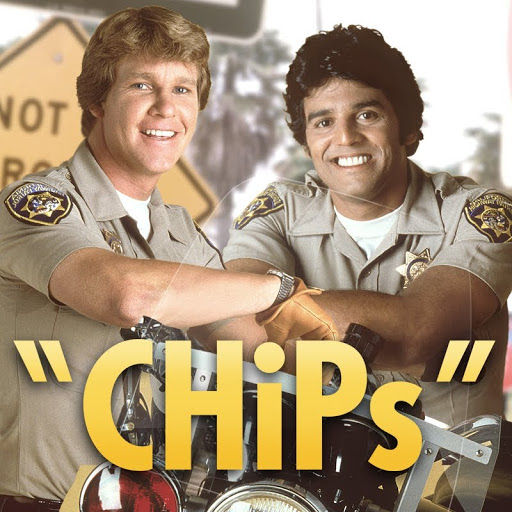
Late Night Retro Television Review: CHiPs 4.11 “11-99: Officer Needs Help”


Welcome to Late Night Retro Television Reviews, a feature where we review some of our favorite and least favorite shows of the past!  On Mondays, I will be reviewing CHiPs, which ran on NBC from 1977 to 1983.  The entire show is currently streaming on Prime!

This week, Ponch fixes everything.

Episode 4.11 “11-99: Officer Need Help”

(Dir by Phil Bondelli, originally aired on January 18th, 1981)

Three criminals are stealing trucks from a trucking company.  One of the criminals works for the company but he gets fired, not for his thievery but because he accidentally put a cate of corrosive chemicals on the wrong truck.  Now, the highway patrol has to track down the chemicals and also stop the criminals.

It’s a typical episode of CHiPs.  A man loses his job after he’s wrongly accused of being the thief.  The man’s son (Greg Bradford) helps Jon and Ponch catch the real criminals.  There’s a subplot about all of the members of the high patrol carrying a new device that sends out of a signal whenever an officer’s down.  Grossman accidentally pushes the button while chasing a lost dog.  The emphasis here is on everyone working together and the Highway Patrol going out of their way to always have the best equipment to do their job.  In the end, this is such a typical episode that the whole thing is kind of boring.

Really, for me, the only interesting thing about this episode is that it featured a subplot about a new police dispatcher who spoke with a stammer and who had trouble sending out instructions over the radio.  I had a lot of sympathy for Kathie Lark (Katherine Moffat) because I had a pretty pronounced stammer up until I was about twelve years old.  (It now only comes out if I’m extremely tired or stressed.)  That said, considering just how important the dispatchers are when it comes to the Highway Patrol, I was a bit surprised that Kathie got the job in the first place.  Kathie mentioned that she had previously been a dispatcher in a small town and again, I wondered how she got that job.  To me, it seemed like the Highway Patrol was basically setting Kathie up for failure.

The good thing is that eventually someone gives Kathie some advice that helps her to overcome her nervousness and become an excellent dispatcher.  Do you want to guess who gave her the advice?  Seriously, I dare you to guess who, out of the show’s cast of characters, magically knew exactly the right thing to say to help Kathie out.  If you’re thinking that Ponch was responsible for Kathie becoming a badass on the airwaves, you are exactly right!  Is there no problem that Ponch can’t solve?  Ponch’s advice, by the way, was that Kathie should always imagine that she was speaking directly to him.  The next time that I find myself tripping over a word that starts with B, I’ll try the same thing.

It’s the Ponch Show!  Seriously, there’s nothing that Ponch can’t do!  Beyond that, this was a boring episode.  The California scenery was nice to look at but otherwise, this episode felt like CHiPs on autopilot.

Retro Television Review: Miami Vice 4.18 “Badge of Dishonor”


Welcome to Retro Television Reviews, a feature where we review some of our favorite and least favorite shows of the past!  On Mondays, I will be reviewing Miami Vice, which ran on NBC from 1984 to 1989.  The entire show can be purchased on Prime!

This week, Crockett and Tubbs battle some corrupt cops.

Episode 4.18 “Badge of Dishonor”

(Dir by Richard Compton, originally aired on March 18th, 1988)

Badge of Dishonor opens with Underworld’s Glory, Glory playing on the soundtrack.  It’s an early electronic tune, one that isn’t quite EDM but still definitely shows hints of what Underworld and a lot of other synth-pop bands would eventually become.  Usually, that would be pretty cool but, unfortunately, the song also has a gospel music feel and I personally gospel music to be excruciatingly dull.

That’s certainly the case here, where the music is played over the opening teaser and the gospel sounds robs it of whatever momentum it might have had.  The episode opens with a drug deal gone wrong.  Tubbs is working undercover when he and his contacts are suddenly busted by four cops, who kill the real dealers and then steal the drugs and the money.  Tubbs barely manages to escape with his life.  It should have been an exciting opening but it had a “been there, done that” sort of feel to it.  This isn’t the first Miami Vice episode to feature an drug deal gone wrong and it’s not even the first to feature corrupt cops.

The cops in question are all originally from Cuba.  Back in Castro’s Hellhole, they were all members of the same street gang.  After coming to Miami and building up lengthy juvenile records, the four men were subsequently hired after a race riot (a real-life event that Castillo discusses in his terse manner) led to demands for a more racially-balanced police force.  Because the force desperately needed some non-redneck cops, no one bothered to do an extensive background check on the four men when they applied to be cops.  Tubbs comments that the corrupt cops are setting “minority hiring back 400 years.”

Crockett and Tubbs’s investigation at first centers on a lieutenant (Reni Santoni) who they think is crooked because he lives on a yacht.  The lieutenant explains that he married well and that he suspects the same four cops as Crockett and Tubbs.  The lieutenant is subsequently murdered by the cops.  It turns out that the corrupt cops are getting their information from an undercover detective named Madison Stone (Michele Shay).  Stone has spent the past few years deep undercover, living in a homeless community on the riverfront.  Stone is not herself corrupt.  She’s just been manipulated and is now in an impossible situation.  At least, that’s the way Tubbs views it.  Myself, I just felt that Madison Stone appeared to be as bad at working undercover as Sonny Crockett.

Technically, this was a well-made episode.  The main problem is that the plot itself just felt so familiar and the four corrupt cops were not particularly interesting.  Compared to the usual flamboyant Miami Vice criminals, the cops were pretty bland.  In typical Miami Vice fashion, it ended on a dark note.  The corrupt cops were defeated but both Madison Stone and their lieutenant were dead.  There’s no happy endings in Miami.

The Films of 2025: The Alto Knights (dir by Barry Levinson)


In The Alto Knights, I’m pretty sure that Robert De Niro sets the record for saying “What’s the mater with you!?” the most times in one movie.

I don’t know for sure, of course.  While I was watching the movie last night, I didn’t keep an exact count and, for that, shame on me.  That said, when you consider that The Alto Knights features Robert De Niro playing not just one but two old school Italian gangsters, you can be sure that there were a lot of scenes of either Vito Genovese (Robert De Niro) or Frank Costello (De Niro, again) demanding to know what was the matter.  When Genovese watches Costello testifying in front of a Congressional hearing, the “What’s the matter with you!?” count truly goes haywire.

The Alto Knights was directed by Barry Levinson, who has directed some great films.  It tells the relatively true story of the rivalry between Costello and Genovese.  Both Costello and Genovese were present when the modern Mafia was first created.  The diplomatic and negotiation-minded Costello was known as the “Prime Minister of the Underworld.”  Genovese was a much more violent gangster and he became one of the most powerful members of the New York Mafia by basically killing anyone who stood in his way.  Costello and Genovese started out as weary friends before coming mortal enemies.  Costello retired from the rackets after Genovese ordered one of his men to shoot Costello in the head.  Meanwhile, Genovese ended up involving the Mafia in the drug trade and died in prison.  In the film, Costello narrates their story.  There’s a lot of shots of an elderly Costello sitting in what appears to be a park as he speaks directly to the camera.  Interestingly enough, Gotti tried to do the same thing, with Travolta’s John Gotti speaking directly to the audience while standing in front of the Brooklyn Bridge.

The Alto Knights pretty much features all of the usual Mafia tropes.  All the usual points are hit.  Albert Anastasia (played by Michael Rispoli) is assassinated while getting a haircut and some viewers will remember that, before De Niro played the man who ordered Anastasia’s assassination, he also played the man who claimed to have shot Anastasia in The Irishman.  Personally, I love Mafia films but The Alto Knights felt a bit too recycled to be truly effective.  Barry Levison does the usual thing of dropping real-life newspaper headlines and photographs into the middle of the film and it doesn’t so much add verisimilitude as much as it just reminds one of David DeCoteau’s film about Bonnie and Clyde.

The film’s main selling point is that it features Robert De Niro playing two gangsters but there’s really not much gained from casting De Niro in both roles.  We get a few scenes of De Niro acting opposite of himself and it’s hard not to notice that Genovese’s reactions often don’t seem to match whatever it is that Costello’s saying.  As an actor, De Niro has the ability to be believable as both the cerebral Costello and the hot-headed Genovese but ultimately, the double casting just feels like a distraction.  Watching De Niro acting opposite himself, I found myself thinking how much more entertaining it would have been if Joe Pesci, Al Pacino, Harvey Keitel, or even John Travolta had played Genovese.  To be honest, if Levinson really had any courage, he would have given the role to James Woods and given us the Once Upon A Time In America/Casino reunion that we all deserve.

The film did win me over a bit towards the end with a recreation of the Apalachin meeting.  That was when Genovese invited every mob boss in the country to come to a meeting in upstate New York, just for the feds to suddenly show up and send everyone scattering.  For most of the film, it was hard not to feel that Barry Levinson was past his prime as a director but he actually did a good job with the Apalachin scenes.  I genuinely laughed when Genovese got into a pointless argument with his driver.  I loved the way the film captured the real-life absurdity of a bunch of mob bosses fleeing into the woods, all of their bravado suddenly dissipating as they scrambled into the wilderness.  If the entire film had just been about the Apalachin meeting, this review would probably be a lot of different.  As it is, one good sequence can’t save the film as a whole.

This is an offer you can refuse.

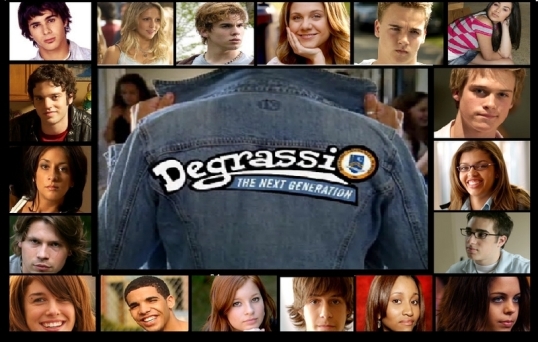
Late Night Retro Television Review: Degrassi: The Next Generation 1.3 “Family Politics”


Welcome to Late Night Retro Television Reviews, a feature where we review some of our favorite and least favorite shows of the past!  On Sunday, I will be reviewing the Canadian series, Degrassi: The Next Generation, which aired from 2001 to 2015!  The series can be streamed on YouTube and Tubi.

It’s the first day of school!

Episode 1.3 “Family Politics”

(Dir by Anthony Browne, originally aired on April 1st , 2002)

It’s the first day of school at Degrassi Community School and — hey!  There’s all the folks we know.

Spinner (Shane Kippel) and Jimmy (Drake, then known as Aubrey Graham) make their first Degrassi appearance, demanding that Emma and Manny show them their hall passes and then laughing about how “Grade Sevens are such geeks.”  Emma and Manny are soon referring to Spinner as being “the jerk,” little aware that — in the far future — Emma will end up marrying Spinner.  As for Jimmy, he’s walking.  That’ll change in another few seasons.

There’s Liberty Van Zandt (Sarah Barrable-Tishauer), already showing herself to be one of the most annoying characters in Degrassi history by zealously running for student council secretary.

There’s Ms. Kwan (LinLyn Lue), the first of many English teachers who are destined to torment Spinner.

There’s Mr. Raditch (Dan Woods), promoted to principal!

There’s Paige (Lauren Collins), bragging about her clothes and her plans to start a school spirit squad.  Eventually, Spirit Squad drama will become one of the most enduring parts of Degrassi: The Next Generation.  In this episode, Paige is presented as being fashionable and shallow and nothing like the complex character she would become in later seasons.

Finally, we meet Toby’s stepsister, Ashley Kerwin (Melissa McIntyre) and Ashley’s loyal friend, the insecure Terri (Christina Schmidt).  Ashley is running for class president and struggling to get along with her new stepbrother.  I don’t have any brothers to compare him to but I still imagine that I would struggle to get along with Toby too.  At the start of the episode, Toby spots Ashley’s bra hanging in the bathroom and proceeds to put it on and run around the house.  “MOM!” Ashley yells as the episode segues into “Whatever it takes, I know I can make it through…..”

Annoyed with the fact that no one is running against Ashley for school president, Toby convinces JT to run a joke campaign.  “I’ll do what real politicians do,” JT says, “nothing!”  The students love him!  A poll comes out that shows JT beating Ashley.  Who conducted the poll?  Seriously, who polls a student election?  Degrassi never tells us and that’s the kind of thing that’s going to keep me up at night.

Ashley finally bribes JT to drop out of the election.  When Toby hears about the bribe, he threatens to expose Ashley to the school but, in the end, he doesn’t.  Ashley wins the election and she and Toby agree to try to get along.

Watching this episode, I was struck by two things.  First off, it was a less trampy remake of the first episode of Degrassi Junior High, with Ashley and Toby stepping into the roles previously filled by Stephanie Kaye and Arthur.  Secondly, it’s easy to forget how much the first season revolved around Ashley and Toby.  Much as happened with Stephanie and Arthur on Degrassi Junior High, both Ashley and Toby would become significantly less important after the first season as Degrassi shifted its attention to characters like Paige and Spinner.  This episode, however, is all Toby and Ashley.

Seen today, this episode is a good example of an episode that does what it needed to.  It introduced us to the main characters.  It had a few moments of humor that indicated Degrassi was going to be slightly more clever than the average teen show.  It established the hierarchy of the school.  That’s really all the episode had to do.  The entire student election subplot was pretty silly, as most student council storylines tend to be, regardless of which show might feature them.  On television, student councils are always absurdly powerful.  In real life, they’re just busy work.

Next week: It’s time for the first school dance!

Retro Television Review: Homicide: Life On The Street 4.4 “A Doll’s Eyes”


Welcome to Retro Television Reviews, a feature where we review some of our favorite and least favorite shows of the past!  On Sundays, Lisa will be reviewing Homicide: Life On The Street, which aired from 1993 to 1999, on NBC!  It  can be viewed on Peacock.

This week’s episode made me cry and cry.

Episode 4.4 “A Doll’s Eyes”

(Dir by Kenneth Fink, originally aired on December 1st, 1995)

Here in America, there’s recently been a lot of debate about how much of a problem crime actually is.  It’s a bit of an odd debate because much of it is based on telling people to ignore what they’re seeing and experiencing and to instead, just take comfort in abstract statistics and numbers.  “Actually,” we’re told, “crime is down from last year,” as if the claim that there’s slightly less of it being reported somehow negates the fact that it exists.

Those who say that crime is not a big deal often forget that crime is not just a matter of statistics and police reports.  Crime is something that happens to people.  It’s something that scars people.  It’s not something that most people can just shrug off.  Every crime is different and everyone reacts to being a victim in their own individual way but react, they do.  It’s easy to be dismissive of people’s concerns about crime when you’re not the one getting your house broken into or hearing gunshots in the night.  It’s easy to say “It was just a mugging,” when you’re not the one getting mugged and losing whatever trust you may have once had in the system. Seth Rogen once tweeted that he didn’t care that his car got broken into because he wasn’t into worrying about possessions.  That’s easy to say when you can just buy a new car whenever you feel like it.  For someone who can’t and is now stuck with the knowledge that they’re not even safe in their own car, it’s considerably more difficult to be so cavalier.   Crime is about more than just statistics and numbers.  For those who have been victimized, it’s about loss.  It’s about never feeling truly safe or secure again.

This week’s episode of Homicide fellows Pembleton and Bayliss as they investigate a shooting at a mall.  A young boy was caught in the crossfire and now, he’s on life support at the hospital.  For Pembleton and Bayliss, it starts out as another case.  Tracking down the shooters is not difficult.  Getting the shooters to confess is not difficult.  Pembleton and Bayliss aren’t dealing with master criminals here.

For the boy’s parents (played, in two heart-breaking performances, by Marcia Gay Harden and Gary Basaraba), the shooting of their son is the moment that their lives stopped.  They’re the one who eventually have to make the decision to take their son off of life support.  Hearing that their son’s organs were donated and are helping other people provides cold comfort.  Their only son is dead and, as this episode make clear, they’re not going to be okay.  Some would describe their son as just being another statistic, part of the count of how many people died in Baltimore during any given year.  For his parents, he’s Patrick, a 10 year-old who loved dinosaurs and science and whose life was ended because he was in the wrong place at the wrong time.  When Bayliss runs into the father of a girl who got an organ transplant as the result of the Patrick’s death, the girl’s father muses on how strange it is that one child died so that his girl could live.  It’s a powerful moment, one that really captures the humanity at the heart of this show’s best episodes.  Patrick’s parents will never recover but his murder has led to other people being saved.  Was it worth the cost?  The show is smart enough to leave the question for us to ponder.

This episode made me cry.  It reminded me a bit of season 2’s Bop Gun, with its mix of the family trying to deal with an unimaginable tragedy while, for Pembleton and Bayliss, it’s another day at work.  I would actually say this episode was superior to Bop Gun.  Bop Gun tried too hard to wrap things up.  A Doll’s Eyes understands that sometimes, this is no way to wrap things up.  Life just keeps moving.

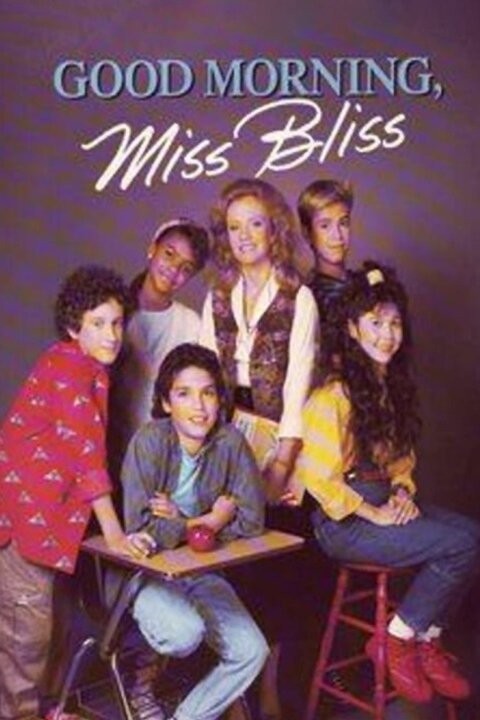
Late Night Retro Television Review: Good Morning, Miss Bliss 1.7 “Save The Last Dance For Me”


Welcome to Late Night Retro Television Reviews, a feature where we review some of our favorite and least favorite shows of the past!  On Saturdays, I will be reviewing Good Morning, Miss Bliss, which ran on the Disney Channel from 1988 to 1989 before then moving to NBC and being renamed Saved By The Bell.  The entire show is currently streaming on Prime!

This week, the Eighth Grade Dance nearly turns violent!

Episode 1.7 “Save The Last Dance For Me”

(Dir by Gary Shimokawa, originally aired on January 25th, 1989)

Mikey (Max Battimo) wants to go to the Eighth Grade Dance with Shana (Alexondra Lee) but Shana wants to go with Mikey’s evil best friend, Zach Morris.  Zach agrees to go to the dance with Shana before he finds out that she’s the girl that Mikey was planning on asking.  But, once Zach does find out, he refuses to cancel his date with her.  Mikey gets upset.  Mikey, I should add, is totally in the wrong here.  Shana wants to go with Zach.  Deal with it, Mikey.

Mr. Belding is worried about a fight breaking out at the dance.  Fortunately, when Mikey tells Zach to meet him outside so they can fight, Zach apologizes and refuses to fight his friend.  All the students go, “Awwww!”  (That would not have been the reaction of the students at any school that I ever went to.)  Mr. Belding is relieved that the fight is cancelled.  Miss Bliss and her date Sherman (Lonnie Burr) bust out some disco moves.

This was a thoroughly predictable episode.  I will say that Max Battimo, who retired from acting after Good Morning Miss Bliss, gave a pretty good performance as Mikey.  Mikey may have been in the wrong as far as Shana was concerned but he was absolutely right to wonder why Zach always gets everything that he wants.  Mark-Paul Gosselaar almost sold the scene where he apologized to Mikey.  That’s not something that would ever happen in a real middle school but whatever.  It is something that used to happen pretty frequently on shows like Good Morning Miss Bliss.

The main problem with this episode was that it was overlit.  Zach’s hair was glowing so brightly that it actually hurt my eyes.  This was actually a frequent problem on Saved By The Bell.  The lighting was always way too harsh.  The whole school looked like it was about to burst into flames.

Retro Television Review: The American Short Story #13: Barn Burning


Welcome to Retro Television Reviews, a feature where we review some of our favorite and least favorite shows of the past!  On Saturdays, Lisa will be reviewing The American Short Story, which ran semi-regularly on PBS in 1974 to 1981.  The entire show can be purchased on Prime and found on YouTube and Tubi.

This week, we have an adaptation of a William Faulkner short story.

Episode #13: Barn Burning

(Dir by Peter Werner, originally aired in 1980)

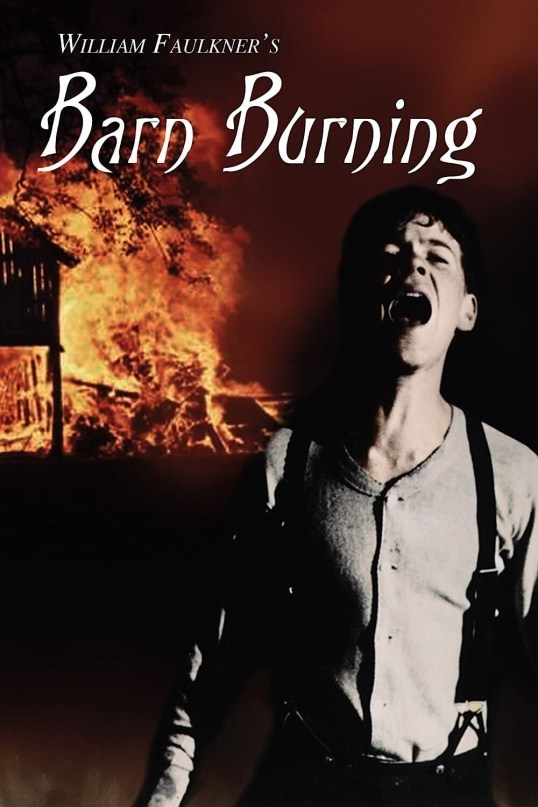
The year is 1895 and everyone in Yoknapatawpha County, Mississippi knows that Abner Snopes (Tommy Lee Jones) is no good.  The taciturn and bitter Abner is notorious for burning down the barns of those who he feels have mistreated him.  When Abner is dragged into the Justice of the Peace’s courtroom (which also happens to be a general store), he’s only acquitted because the judge and the prosecutor realize it would be unfair to force Abner’s young son, Sartoris “Sarty” Snopes (Shawn Whittington), to testify against him.  Abner and his family are ordered to move to another town but Abner avoids any legal punishment.  Despite that, Abner still accuses Sarty of thinking about betraying him.

This episode follows Sarty as he tries to understand his abusive father, a man who is offended over being told to wash a rug that he intentionally damaged that he plots to burn down another barn.  (The owner of the rug is played by Jimmy Faulkner, the grandson of William Faulkner.)  Sarty wants his father’s love but it soon becomes clear that Abner is too angry and resentful to love anyone.  The story ends with a fire and an ambiguous tragedy, leaving both the fate of Abner and the future of Sarty unclear.

With his shifting viewpoints and his internalized style of narration, William Faulkner is not an easy writer to adapt to the screen.  With Barn Burning, director Peter Werner takes a straight-forward approach to Faulkner’s short story.  While Werner’s film might lack the nuance that was brought to the tale by Faulkner’s stream-of-consciousness style, it does work as a portrait of living with an angry man who is determined to let the world know that he’s not going to be pushed around anymore.  Tommy Lee Jones gives a strong, intimidating, and ultimately charismatic performance as Abner, a tyrant who only shows emotion when he feels that he’s been treated disrespectfully.  The story takes place in the ruins of the Old South and capture the struggle between the forced gentility of the old aristocracy and the crassness of the future, represented by Abner and his family.

This was a strong episode that truly did justice to William Faulkner’s short story.