Lisa Reviews An Oscar Nominee: 49th Parallel (dir by Michael Powell)


Hello and welcome to the TSL’s continuing coverage of Oscar Sunday!  Today, along with some other Oscar-related things, I’m going to post reviews of some of the films that have been nominated for best picture over the years!  Let’s start things off with the 1941 Best Picture nominee, 49th Parallel!

Before anything, I should clear up some confusion about this film.  This is a British film about Nazis trying to reach the border between Canada and the U.S.  When it was first released in the UK, it was named after the coordinates of the border.  However, in the actual film, the Nazis never actually go to the 49th Parallel.  Instead, the film concludes at Niagara Falls.  However, it was probably reasonable assume that British audiences would not necessarily know or care whether Niagara Falls was actually located on the 49th Parallel.  Considering that they were currently at war with Germany, they had more important things to concern themselves with.

However, it was apparently felt that American audiences would notice that Niagara Falls wasn’t actually located on the 49th Parallel.  (Personally, I think the British may have been giving us too much credit.)  So, when the film was released in the United States, the title was changed to The Invaders.  When the film was subsequently nominated for Best Picture, it was nominated under the name The Invaders.  I’ve actually come across some online sources that claim that The Invaders and 49th Parallel are two separate films.  No, they’re the same film, it’s just that the film in question has two different titles.  Out of respect to the people who actually made the movie, I’ve decided to use the original title in this review.

When watching 49th Parallel (it’s available on YouTube), it helps to know something about history.  Today, there’s a tendency to overlook the fact that World War II had already been raging for nearly two years before the United States got involved.  Though the U.S. was an ally to Britain, it remained officially neutral until the Japanese bombed Pearl Harbor.  Up until that moment, many prominent Americans were isolationists and took the attitude that the war was Europe’s problem.  (On the other hand, Canada, as a Dominion of the British Empire, followed Britain into the war in 1939.)  Though the 49th Parallel may have been a British film that was largely set in Canada, it was also meant to frighten Americans and hopefully bring them over to the British side.

(When interviewed about the film, screenwriter Emeric Pressbruger said, “”Goebbels considered himself an expert on propaganda, but I thought I’d show him a thing or two.”)

Directed by Michael Powell, 49th Parallel opens with a German U-boat creeping into the waters around Canada.  The Nazis are hoping to disrupt shipping operations but it turns out that they’re no match for the Royal Canadian Navy.  (GO CANADA!)  When the U-boat sinks into the Hudson Bay, only six Nazis manage to survive.  Led by the arrogant Lt. Hirth (Eric Portman), the Nazis attempt to make their way to the border and to the safety of America.

Of course, it doesn’t turn out to be an easy journey.  Not only are the Germans in an unfamiliar country but they also keep running into Canadians.  Without fail, nearly every Canadian they meet is polite but willing to fight and die for his country.  The Canadians themselves are played by actors who, in the 40s, would have been familiar faces.  Laurence Olivier plays a fur trapper, getting top-billing for his cameo appearance.  Raymond Massey, who was best known for playing Abraham Lincoln, shows up as a Canadian solider.  Leslie Howard is the writer who discovers that Nazis have no respect for art.  Anton Walbrook is a German-Canadian farmer who rejects the attempts of Lt. Hirth to bring him over to the Nazi side.  The Canadians are so sympathetic that one of the Nazis is even moved to reject the Third Reich and is promptly executed by his compatriots, showing the audience the foolishness of hoping that the “good Germans” would ever be able to overthrow the bad ones.

It’s pure propaganda but it’s anti-Nazi propaganda so that’s not really a problem.  Powell keeps the story moving at a steady pace and all of the actors get impassioned performances.  You can tell this movie was more than just a job for them.  Instead, it was their way of fighting for their country and hopefully inspiring others to join in the battle against Hitler.  The film is both a love letter to Canada and a plea to the United States to renounce neutrality.  (Interestingly enough, by the time 49th Parallel made it to U.S. screens, America had finally declared war on the Axis Powers.)

49th Parallel was nominated for best picture but it lost to another World War II propaganda film, Mrs. Miniver.

Crown International Pictures’s Only Oscar Nomination


If you’re fan of old movies that used to play in the grindhouses or at the drive-ins, you’re familiar with the Crown International Picture logo.

This logo appeared at the start of some of the most entertaining and cheaply made exploitation films of all time.  These were movies with titles like Malibu Beach, The Teacher, Cavegirl, They Saved Hitler’s Brain, The Sidehackers, My Tutor, Trip With The Teacher, Best Friends, and The Sister-in-Law.  These films may have never been critically acclaimed but they’re still being discovered and loved by viewers today.

Crown International Pictures was founded in 1959 and ceased operations in 1992.  Over the course of 43 years, the studio only received one Oscar nomination.  That was in 1972, for Best Original Song.  Written by Sammy Fain and Paul Francis Webster, Strange Are The Ways Of Love played over the credits for The Stepmother.

In honor of both the Oscars and Crown International Picture, here is Strange Are The Ways Of Love

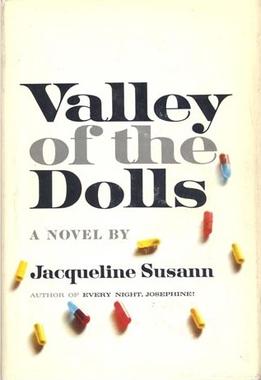
Guilty Pleasure No. 35: Valley of the Dolls by Jacqueline Susann


Way back in January, I took the time to read the 1966 novel, Valley of the Dolls.  While I had already seen the film that this work inspired, this was my first time to read the actual book.

Before I even opened to the front page, I knew that Valley of the Dolls had been a best-seller, that it inspired a countless number of imitations, and that it had a reputation for being really, really bad.  As soon as I started to read the first chapter, I discovered that the book’s reputation was well-earned.  To call author Jacqueline Susann’s prose clunky was a bit of an insult to clunky prose everywhere.

Opening in 1945 and covering 24 years in cultural, sexual, and drug history, Valley of the Dolls starts with Anne Welles leaving her boring home in New England and relocating to New York, where she promptly gets a job at a theatrical agency.  Everyone tells Anne that she’s beautiful and should be trying to become a star but Anne says that she’s not interested in that.  (You’ll be thoroughly sick of Anne’s modesty before reaching the tenth page.)  Everyone says that Anne is incredibly intelligent, even though she never really does anything intelligent.  Everyone says that she’s witty, even though she never says anything that’s particularly funny.  In short, Anne Welles is perhaps the most annoying literary character of all time.  Anne spends about 20 years waiting for her chance to marry aspiring author Lyon Burke.  When she does, Lyon turns out to be a heel and drives Anne to start taking drugs.  I assume it’s meant to be somewhat tragic but who knows?  Maybe all of the pills (or “the dolls” as the characters in the book call them) will give Anne a personality.

They certainly worl wonders for everyone else in the book.  Neely O’Hara is constantly taking pills and she’s the best character in the book.  Unlike Anne, she’s never modest.  She’s never quiet.  She’s actually funny.  Even more importantly, she doesn’t spend the whole book obsessing over one man.  Instead, she’s always either throwing a tantrum or having an affair or abandoning her children or getting sent to a mental institution.  Neely’s a lot of fun.  Unfortunately, we don’t really get to see much of Neely until after having to slog through a hundred or so pages of Anne being boring.

The other major character is Jennifer North, a starlet who was apparently based on Marilyn Monroe.  The parts of the book dealing with Jennifer are actually about as close as Valley of the Dolls actually gets to being, for lack of a better term, good.  In fact, if the book just dealt with Jennifer’s tragice story, it would probably be remembered as a minor classic.  Instead, Jennifer is often overshadowed by Neely (which is understandable since Neely’s insane and therefore capable of saying anything) and Anne (who, as I mentioned before, is the most annoying literary characters of all time).

Why is Valley of the Dolls a guilty pleasure?  A lot of it is because of all of the sexual melodrama and pill-popping, the descriptions of which are often so overwritten that they’re unintentionally hilarious.  Most of it is because Neely O’Hara goes crazy with so much overwrought style.    Whenever the book focuses on Neely, Susann’s inartful prose is replaced with a stream-of-consciousness tour of Neely’s paranoid and petty mind.  Interestingly enough, some of the most infamous scenes from the movie are also present in the novel.  Remember that scene where Neely rips off Helen Lawson’s wig and then flushes it down a toilet?  That’s actually in the book!

Anyway, it’s an incredibly silly but compulsively readable book … or, at least, it is if you can make it through all the boring stuff with Anne at the beginning.  Then again, as annoying as Anne is, she doesn’t exactly get a happy ending.  Perhaps that’s why Valley of the Dolls is such a guilty pleasure.

Previous Guilty Pleasures

  1. Half-Baked
  2. Save The Last Dance
  3. Every Rose Has Its Thorns
  4. The Jeremy Kyle Show
  5. Invasion USA
  6. The Golden Child
  7. Final Destination 2
  8. Paparazzi
  9. The Principal
  10. The Substitute
  11. Terror In The Family
  12. Pandorum
  13. Lambada
  14. Fear
  15. Cocktail
  16. Keep Off The Grass
  17. Girls, Girls, Girls
  18. Class
  19. Tart
  20. King Kong vs. Godzilla
  21. Hawk the Slayer
  22. Battle Beyond the Stars
  23. Meridian
  24. Walk of Shame
  25. From Justin To Kelly
  26. Project Greenlight
  27. Sex Decoy: Love Stings
  28. Swimfan
  29. On the Line
  30. Wolfen
  31. Hail Caesar!
  32. It’s So Cold In The D
  33. In the Mix
  34. Healed By Grace

Music Video of the Day: She Said by Brie Larson (2005, dir by Chris Applebaum)


With this being Oscar Sunday, it’s good to be reminded that everyone had to start somewhere!  Brie Larson rightly won an Oscar for Room but, before that movie, she was just another singer pretending to be a waitress and singing songs of empowerment.

Need proof?

Watch today’s music video of the day and…

ENJOY!

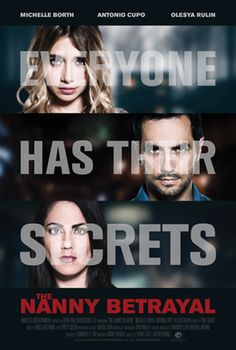
What Lisa Watched Last Night #175: Devious Nanny (dir by Devon Downs and Kenny Gage)


Last night, I turned over to the Lifetime Movie Network and I watched Devious Nanny!

Why Was I Watching It?

I’ve got a long history with Lifetime nanny films.  I’ve watched films about Bad Nannys, Betrayed Nannys, Nightmare Nannys, Evil Nannys, Killer Nannys, and Dangerous Nannys.  So, how could I resist something called Devious Nanny?

(Actually, it was apparently also called both The Nanny Betrayal and The Au Pair.  Devious Nanny, though is an improvement on both of those.)

What Was It About?

Elise (Michelle Borth) and Brian (Antonio Cupo) have it all.  Elise works at an art gallery.  Brian works in … well, I think it was advertising but I could be wrong.  All I know is that he worked in an office and he was worried about landing a big account and he wore a suit to work.  Isn’t that what they do in advertising?  Anyway, it’s a good job.  Brian and Elise have a nice house and an adorable son.  All they need to complete the picture is … an au pair!

Enter Amber (Olesya Rulin), who appears to be the perfect nanny.  She loves kids and she’s even okay with cleaning up around the house!  Of course, Amber did lie a little to get her job.  And she didn’t tell her new employers that she grew up in the foster system and that she has a history of mental instability.  Soon, Brian and Amber are exchanging lustful glances and people are turning up dead.

But here’s the thing.  I’ve seen enough killer nanny films that I immediately realized that it was probably significant that the film never actually showed Amber killing anyone.  So, is Amber the murderer or is it someone else?  The film is full of suspects!

What Worked?

It all worked.  This was the type of Lifetime movie that made me fall in love with the unique Lifetime aesthetic in the first place.  Well-acted and full of snarky lines, Devious Nanny also featured a rather clever last-minute plot twist.  The end of the film also features a line of dialogue that is perhaps the coldest sentiment over to be offered up in a Lifetime film.

Needless to say, this was a fun movie to live tweet.  Those of us on twitter last night had a blast trying to figure out who the killer was and who was going to be the next victim.

All in all, it was a very entertaining movie.

What Did Not Work?

It all worked!  At first, I was worried that the film would turn out to be just another Lifetime Nanny film but the script, by Adam Rockoff, was full of unexpected plot twists.  I’m going to guess that Rockoff has seen enough nanny films that he knew exactly what most people would be expecting and he very skillfully manipulated those expectations.

In fact, my only issue is that Lifetime aired this on Friday night and it didn’t really seem like they made much of an effort to publicize it.  Sometimes, I think Lifetime doesn’t truly understand just how many people love watching their movies.  They’ll promote the Hell out of some forgettable (and often regrettable) celebrity biopic but entertaining thrillers, like this one, rarely get the fanfare that they deserve.

“Oh my God!  Just like me!” Moments

I’ve been lucky, in that I’ve never had to work as an au pair.  I’ve also never been suspected of murder.  I guess I’ve just lived a sheltered life.  However, if any of that did happen to me, I would hope, when it was all over, that I could be as snarky about it as Amber.

Lessons Learned

Life’s not easy when you’re a nanny.

Music Video of the Day: Sweet Home Alabama by Caroline Says (2018, dir by ????)


First off, this not a cover of the famous Lynard Skynard song.

Though it is a song about living in Alabama, there’s a bit of sarcasm to be found in the title.  The song is about Caroline Sallee’s experience growing up in Huntsville, Alabama, a town that she would eventually leave for Austin, Texas.  The lyrics aren’t going to do much for Alabama tourism, if such a thing exists.

As for the video, the claymation was done by Sallee herself.

I just like trippy videos, especially when they’re done by people who live in Texas.

Enjoy!


Music Video of the Day: Texas Forever by Kevin Fowler (2016, dir by ????)


Admittedly, I’m not really a big country music fan.  My musical tastes pretty much start with EDM and end with more EDM.  But you know what?

Today is Texas Independence State and I love my home state.  So, it just seems right that today’s music video of the day should Kevin Fowler’s Texas Forever!

Enjoy the beautiful Texas scenery!

Music Video of the Day: We Ready (Dallas) by Moses Uvere


I’ll be honest.

The main reason why I like this video is because I recognize every location where it was filmed, from the DART Station to Reunion Tower to Forrest Lane to that stairs.  I think I even recognize the elevator.

Enjoy!

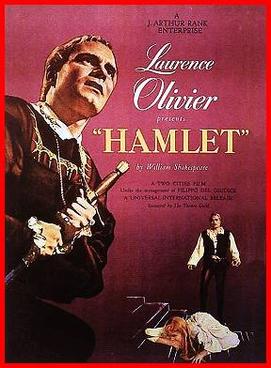
Lisa Reviews An Oscar Winner: Hamlet (dir by Laurence Olivier)


(With the Oscars scheduled to be awarded on March 4th, I have decided to review at least one Oscar-nominated film a day.  These films could be nominees or they could be winners.  They could be from this year’s Oscars or they could be a previous year’s nominee!  We’ll see how things play out.  Today, I take a look at the 1948 best picture winner, Hamlet!)

Hamlet is a film of firsts.

It was the first British production to win the Oscar for Best Picture.  In winning, it beat out three American films (Johnny Belinda, The Snake Pit, and The Treasure of the Sierra Madre) and one other British film (The Red Shoes).

It was also the first adaptation of Shakespeare to win Best Picture.  Of course, it wasn’t the first Shakespeare adaptation to be nominated.  That honor would go to 1935’s A Midsummer Night’s Dream.  Adaptations of Romeo and Juliet would be nominated in 1936, 1961, and 1968.  Henry V (which, like Hamlet, was directed by and starred Laurence Olivier) was a 1946 nominee.  Then there was 1953’s Julius Caesar.  The Dresser featured scenes from Shakespeare.  Shakespeare in Love imagined the circumstances behind the writing of Romeo and Juliet.  However, Hamlet was the first to win.

It also remains the only traditional Shakespearean adaptation to win.  West Side Story updated Romeo and Juliet while Shakespeare in Love … well, let’s just not get into it.

It was the first Best Picture winner to be directed by the man starring in the movie.  Laurence Olivier was nominated for both Best Director and Best Actor.  He lost the directing Oscar to John Huston but he won for his performance as Hamlet.  In winning, he became the first actor to direct himself to an Oscar.

Finally, Hamlet was the first of 24 films to feature both Peter Cushing and Christopher Lee!  In fact, this was Lee’s film debut.  Now, before anyone gets too excited, I should point out that Cushing and Lee don’t actually interact.  In fact, Lee doesn’t even speak in the film.  He appears in the background as a Spear Carrier and it’s pretty much impossible to spot him.  He has no dialogue and wasn’t even listed in the final credits.  From what I’ve read, I don’t think Lee and Cushing even knew each other at the time and, when they later met, they were surprised to learn that they had both appeared in the film.  For his part, Cushing plays Osiric, the courtier who everyone remembers because he had such a cool name.

It’s always fun to play “what if.”  Rosencrantz and Guildenstern do not appear in Olivier’s adaptation of the play.  To modern audiences, that might seem strange but, really, that’s just because we’re all familiar with the two characters from Tom Stoppard’s Rosencrantz and Guildenstern Are Dead.  When Olivier filmed Hamlet, he excised portions of the play in the interest of time.  (Hamlet uncut runs over four hours.  Olivier’s version clocks in at nearly three.)  Rosencrantz, Guildenstern, Fortinbras, and the second gravedigger are all dropped from Olivier’s version and, to be honest, none of them are particularly missed.

And yet … as I watched Hamlet, I found myself wondering what would have happened if Olivier had kept Rosencrantz and Guildenstern around and had cast Cushing and Lee in those roles.  It probably wouldn’t have happened, of course.  Cushing maybe but Lee was a total unknown at the time.  Still, how amazing would that have been?

As for the actual film, Olivier’s Hamlet turned out to be far more cinematic than I was anticipating.  Olivier’s camera snakes through the darkened hallways of Elsinore Castle while Olivier’s Hamlet veers between self-righteous fury and apparent madness as he seeks revenge on his Uncle Claudius (Basil Sydney).  As Hamlet grows more obsessed with death and vengeance, the castle seems to grow darker and the hallways even more maze-like, as if the castle’s changing shape to conform with the turmoil in Hamlet’s mind.  Among the cast, Jean Simmons is poignantly fragile as Ophelia while Eileen Herlie is the perfect Gertrude, despite being 12 years younger than the actor playing her son.  Olivier gives a wonderfully physical performance as Hamlet, killing Polonious with a demented gleam in his eye and literally leaping towards his uncle at the end of the film.

If you’re one of those people who thinks that Shakespeare is boring … well, Olivier’s Hamlet probably won’t change your mind.  One thing I’ve noticed about the “Shakespeare is boring” crowd is that nothing can change their minds.  But, for the rest of us, Olivier’s Hamlet is an exciting adaptation of Shakespeare’s more difficult play.

You won’t miss Rosencrantz and Guildenstern at all.  And seriously, Fortinbras who?

Music Video of the Day: Nobody Does It Better by Carly Simon (1977, designed by Maurice Binder)


Yesterday, veteran British film director Lewis Gilbert passed away.  Gilbert directed several films, in all sorts of different genres, but he’s probably best known for directing three James Bond films, including The Spy Who Loved Me.

Since The Spy Who Loved Me is one of my favorite Bond films, I thought it would be appropriate to pick Carly Simon’s theme song, Nobody Does It Better, for today’s music video of the day.  However, the closest that I could find to an “official” video was the Maurice Binder-designed title sequence from The Spy Who Loved Me.

Written by Marvin Hamlisch and Carole Bayer Sager, Nobody Does It Better was Carly Simon’s longest-charted hit and it’s a song that has continued to have a long life outside of the Bond franchise.  It was the second Bond theme song to be nominated for Best Original Song.

Enjoy!