Meow! Kitty go swing now!
Meow! Kitty go swing now!
Meow!
Meow!

The Emmy Nominations are due to be announced tomorrow so it’s time for the Shattered Lens to play a game that should be familiar to our longtime readers, What If Lisa Marie Had All The Power.
Below, you’ll find my personal Emmy nominations. Keep in mind, these are not necessarily the shows and performers who I think will be nominated, though a few definitely will be. Instead, these are my personal picks. This is what would be nominated if I had all the power.
Now, there’s a lot of Emmy categories. I went through the Emmy submissions and I picked nominees for every single category. However, in the interest of space, I can’t list all of them in this post. Instead, below, you’ll find my picks for the major categories. If you want to see the complete list of my nominees, you can see it by clicking here!
Another thing you’ll probably notice while looking over my nominations is that I really, really liked The Amazing Race, Survivor (both the movie and the unrelated reality show), I Want You Back, The Voyeurs, The House, Barry, Atlanta, Cobra Kai, Abbott Elementary, Only Murders In The Building, Maid, Pistol, The Dropout, Candy, The Offer, Euphoria, Dexter: New Blood, The Gilded Age, Severance, Yellowstone, and Yellowjackets. I also made an effort to make sure that each of the primetime networks got a little bit of love when it came to nominating the best shows of the year. Fantasy Island and Dynasty may not be remembered by the Emmys but I enjoy both of them and I’m going to remember them!
Here are my nominees! The winners are in bold.
Programming
Outstanding Comedy Series
Abbott Elementary (ABC)
Atlanta (FX)
Barry (HBO)
Brooklyn Nine Nine (NBC)
Cobra Kai (Netflix)
The Flight Attendant (HBOMax)
Ghosts (CBS)
The Marvelous Mrs. Maisel (Amazon Prime)
Murderville (Netflix)
Only Murders In The Building (Hulu)
Saved By The Bell (Peacock)
What We Do In The Shadows (FX)
Outstanding Drama Series
Better Call Saul (AMC)
Dexter: New Blood (Showtime)
Dynasty (The CW)
Euphoria (HBO)
Fantasy Island (Fox)
The Gilded Age (HBO)
Severance (Apple TV+)
Squid Game (Netflix)
Stranger Things (Netflix)
The Walking Dead (AMC)
Yellowjackets (Showtime)
Yellowstone (Paramount)
Outstanding Limited or Anthology Series
Angelyne (Peacock)
Candy (Hulu)
Dr. Death (Peacock)
The Dropout (Hulu)
1883 (Paramount Plus)
The Essex Serpent (Apple TV+)
Maid (Netflix)
The Offer (Paramount Plus)
Pistol (Hulu)
Slasher: Flesh & Blood (Shudder)
A Very British Scandal (Amazon Prime)
The Woman In The House Across The Street From The Girl In The Window (Netflix)
Outstanding TV Movie
Birds of Paradise (Amazon Prime)
Chip ‘N Dale: Rescue Rangers (Disney Plus)
The House (Netflix)
I Want You Back (Amazon Prime)
List of a Lifetime (Lifetime)
The Manor (Amazon Prime)
Psych 3: This is Gus (Peacock)
The Survivor (HBO)
The Valet (Hulu)
The Voyeurs (Amazon Prime)
Outstanding Variety Talk Show
Conan (TBS)
Friday Night Vibes (TBS)
Half in the Bag (YouTube)
Hart to Heart (Peacock)
E! Nightly Pop (E!)
Tha God’s Honest Truth With Charlemagne Tha God (Comedy Central)
Outstanding Variety Sketch Show
The Truth With Ed and Randall (Peacock)
Whose Line Is It Anyway? (The CW)
Outstanding Variety Special (Live)
Annie Live! (NBC)
The Oscars (ABC)
The Pepsi Super Bowl LVI Halftime Show (NBC)
The 28th Annual Screen Actors Guild Awards (TBS)
Outstanding Variety Special (Pre-Recorded)
Merry Wives (Great Performances) (PBS)
Norm McDonald: Nothing Special (Netflix)
Rita Ora at the Eiffel Tower (Streaming)
Step Into The Movies …. With Derek and Julianne Hough (ABC)
Taylor Tomlinson: Look At You (Netflix)
2022 Fangoria Chainsaw Awards (Shudder)
Outstanding Short Form Comedy, Drama, or Variety Series
I Think You Should Leave …. With Tim Robinson (Netflix)
State of the Union (Sundance TV)
Outstanding Short Form Non-Fiction or Reality Series
Beyond The Headlines (Lifetime)
Let’s Unpack That (People TV)
True Dating Stories (Fuse)
What Happens in Hollywood (Roku)
Outstanding Hosted Non-Fiction Series or Special
Gordon Ramsay’s Uncharted (Disney Plus)
History’s Greatest Mysteries (History)
The Last Drive-In (Shudder)
Painting With John (HBO)
Sketchbook (Disney Plus)
Talking Dead (AMC)
Outstanding Structured Reality Program
Antiques Roadshow (PBS)
Collector’s Call (MeTV)
Impractical Jokers (TruTV)
Love is Blind (Netflix)
Storage Wars (A&E)
Temptation Island (USA)
Outstanding Unstructured Reality Program
Bachelor in Paradise (ABC)
Bar Rescue (Paramount)
Cheer (Netflix)
Intervention (A&E)
Married At First Sight (Lifetime)
Selling Sunset (Netflix)
Outstanding Competition Program
The Amazing Race (CBS)
American Idol (ABC)
The Bachelor (ABC)
The Bachelorette (ABC)
Dancing With The Stars (ABC)
Hell’s Kitchen (Fox)
Making The Cut (Amazon Prime)
Survivor (CBS)
Tough as Nails (CBS)
The Ultimate Surfer (ABC)
Performers
Outstanding Lead Actor In A Comedy Series
Will Arnett in Murderville (Netflix)
Will Forte in MacGruber (Peacock)
Donald Glover in Atlanta (FX)
Bill Hader in Barry (HBO)
Ralph Macchio in Cobra Kai (Netflix)
Steve Martin in Only Murders in the Building (Hulu)
Andy Samberg in Brooklyn Nine Nine (NBC)
Martin Short in Only Murders In The Building (Hulu)
Jason Sudeikis in Ted Lasso (Apple TV+)
William Zabka in Cobra Kai (Netflix)
Outstanding Lead Actor in a Drama Series
Jason Bateman in Ozark (Netflix)
Kevin Costner in Yellowstone (Paramount)
Michael C. Hall in Dexter: New Blood (Showtime)
Tom Hiddleston in Loki (Disney Plus)
Lee Jung-jae in Squid Game (Netflix)
Bob Odenkirk in Better Call Saul (AMC)
Norman Reedus in The Walking Dead (AMC)
Adam Scott in Severance (Apple TV+)
Morgan Spector in The Gilded Age (HBO)
Billy Bob Thornton in Goliath (Amazon Prime)
Outstanding Lead Actor in a Limited Series
Jon Bernthal in We Own This City (HBO)
Anson Boon in Pistol (Hulu)
David Cronenberg in Slasher: Flesh & Blood (Shudder)
Sam Elliott in 1883 (Paramount Plus)
Tom Hiddleston in The Essex Serpent (Apple TV+)
Oscar Isaac in Moon Knight (Disney Plus)
Joshua Jackson in Dr. Death (Peacock)
Samuel L. Jackson in The Last Days of Ptolemy Grey (Apple TV+)
Michael Keaton in Dopesick (Hulu)
Toby Wallace in Pistol (Hulu)
Outstanding Lead Actor in a TV Movie
Charlie Day in I Want You Back (Amazon Prime)
Eugenio Derbez in The Valet (Hulu)
Ben Foster in The Survivor (HBO)
Dule Hill in Psych 3: This is Gus (Peacock)
James Roday Rodriguez in Psych 3: This is Gus (Peacock)
Troye Sivan in Three Months (Paramount Plus)
Outstanding Supporting Actor in A Comedy Series
Andre Braugher in Brooklyn Nine Nine (NBC)
Anthony Carrigan in Barry (HBO)
Thomas Ian Griffith in Cobra Kai (Netflix)
Brian Tyree Henry in Atlanta (FX)
Martin Kove in Cobra Kai (Netflix)
Mario Lopez in Saved By The Bell (Peacock)
Richie Moriarty in Ghosts (CBS)
Chris Perfiti in Abbott Elementary (ABC)
Stephen Root in Barry (HBO)
Henry Winkler in Barry (HBO)
Outstanding Supporting Actor in a Drama Series
Clancy Brown in Dexter: New Blood (Showtime)
Patrick Fabian in Better Call Saul (AMC)
Josh Hamilton in The Walking Dead (AMC)
Cole Hauser in Yellowstone (Paramount)
Ray Liotta in Hanna (Amazon Prime)
John Turturro in Severance (Apple TV+)
Christopher Walken in Severance (Apple TV+)
Sam Waterston in Law & Order (NBC)
Owen Wilson in Loki (Disney Plus)
O Yeong-su in Squid Game (Netflix)
Outstanding Supporting Actor in a Limited Series
Naveen Andrews in The Dropout (Hulu)
Thomas Brodie-Sangster in Pistol (Hulu)
Stephen Fry in The Dropout (Hulu)
Matthew Goode in The Offer (Paramount Plus)
William H. Macy in The Dropout (Hulu)
Dylan Minnette in The Dropout (Hulu)
Nick Robinson in Maid (Netflix)
Alan Ruck in The Dropout (Hulu)
Christian Slater in Dr. Death (Peacock)
Sam Waterston in The Dropout (Hulu)
Outstanding Supporting Actor in a TV Movie
Corbin Bernsen in Psych 3: This is Gus (Peacock)
Bruce Davison in The Manor (Amazon Prime)
Scott Eastwood in I Want You Back (Amazon Prime)
Ben Hardy in The Voyeurs (Amazon Prime)
Billy Magnussen in The Survivor (HBO)
Peter Sarsgaard in The Survivor (HBO)
Outstanding Lead Actress in a Comedy Series
Pamela Adlon in Better Things (FX)
Rachel Brosnahan in The Marvelous Mrs. Maisel (Amazon Prime)
Quinta Brunson in Abbott Elementary (ABC)
Miranda Cosgrove in iCarly (Peacock)
Kaley Cuoco in The Flight Attendant (HBOMax)
Natasia Demetriou in What We Do In The Shadows (FX)
Selena Gomez in Only Murders in the Building (Hulu)
Rose McIver in Ghosts (CBS)
Sandra Oh in The Chair (Netflix)
Jean Smart in Hacks (HBOMax)
Outstanding Lead Actress in a Drama Series
Carrie Coon in The Gilded Age (HBO)
Elizabeth Gillies in Dynasty (The CW)
Nicole Kidman in Nine Perfect Strangers (Hulu)
Juliette Lewis in Yellowjackets (Showtime)
Melanie Lynesky in Yellowjackets (Showtime)
Anna Paquin in Flack (Amazon Prime)
Kelly Reilly in Yellowstone (Paramount)
Winona Ryder in Stranger Things (Netflix)
Roselyn Sanchez in Fantasy Island (Fox)
Zendaya in Euphoria (HBO)
Outstanding Lead Actress in a Limited Series
Kristen Bell in The Woman In The House Across The Street From The Girl In The Window (Netflix)
Jessica Biel in Candy (Hulu)
Lily Collins in Pam & Tommy (Hulu)
Claire Danes in The Essex Serpent (Apple TV+)
Elle Fanning in The Girl From Plainville (Hulu)
Claire Foy in A Very British Scandal (Amazon Prime)
Isabel May in 1883 (Paramount Plus)
Margaret Qualley in Maid (Netflix)
Emmy Rossum in Angelyne (Peacock)
Amanda Seyfried in The Dropout (Hulu)
Outstanding Lead Actress in a TV Movie
Kristine Foseth in Birds of Paradise (Amazon Prime)
Barbara Hershey in The Manor (Amazon Prime)
Kelly Hu in List of a Lifetime (Lifetime)
Diana Silvers in Birds of Paradise (Amazon Prime)
Jenny Slate in I Want You Back (Amazon Prime)
Sydney Sweeney in The Voyeurs (Amazon Prime)
Outstanding Supporting Actress in a Comedy Series
Zazie Beetz in Atlanta (FX)
Hannah Einbinder in Hacks (HBOMax)
Melissa Famero in Brooklyn Nine Nine (NBC)
Sarah Goldberg in Barry (HBO)
Janelle James in Abbott Elementary (ABC)
Elizabeth Berkley Lauren in Saved By The Bell (Peacock)
Peyton List in Cobra Kai (Netflix)
Sheryl Lee Ralph in Abbott Elementary (ABC)
Kristen Schaal in What We Do In The Shadows (FX)
Rebecca Wisocky in Ghosts (CBS)
Outstanding Supporting Actress in a Drama
Patricia Arquette in Severance (Apple TV+)
Christine Baranski in The Gilded Age (HBO)
Jennifer Carpenter in Dexter: New Blood (Showtime)
Julia Garner in Ozark (Netflix)
Jung Ho-yeon in Squid Game (Netflix)
Cynthia Nixon in The Gilded Age (HBO)
Christina Ricci in Yellowjackets (Showtime)
Rhea Seehorn in Better Call Saul (AMC)
Sydney Sweeney in Euphoria (HBO)
Sophie Thatcher in Yellowjackets (Showtime)
Outstanding Supporting Actress in a Limited Series
Anne Archer in The Dropout (Hulu)
Kate Burton in The Dropout (Hulu)
Sydney Chandler in Pistol (Hulu)
Kaitlyn Dever in Dopesick (Hulu)
Molly Ephraim in Angelyne (Hulu)
Faith Hill in 1883 (Paramount Plus)
Camryn Mi-young Kim in The Dropout (Hulu)
Melanie Lynesky in Candy (Hulu)
Laurie Metcalf in The Dropout (Hulu)
Michaela Watkins in The Dropout (Hulu)
Outstanding Supporting Actress in a TV Movie
Jacqueline Bisset in Birds of Paradise (Amazon Prime)
Natasha Liu Bordizzo in The Voyeurs (Amazon Prime)
Vicky Krieps in The Survivor (HBO)
Sylvia Kwan in List of a Lifetime (Lifetime)
Gina Rodriguez in I Want You Back (Amazon Prime)
Maddie Ziegler in The Fallout (HBOMax)
Outstanding Guest Actor On A Comedy Series
James Caverly in Only Murders in the Building “The boy From 6B” (Hulu)
David Duchovny in The Chair “Last Bus In Town” (Netflix)
Paul Walter Hauser in Cobra Kai “Party Time” (Netflix)
Nathan Lane in Only Murder In The Building “The Boy From 6B” (Hulu)
Joe Mantegna in Barry “crazytimeshitshow” (HBO)
Liam Neeson in Atlanta “New Jazz” (FX)
Craig Robinson in Brooklyn Nine Nine “PB&J” (NBC)
Miguel Sandoval in Barry “all the sauces” (HBO)
Sting in Only Murders in the Building “The Sting” (Hulu)
Matt Walsh in Ghosts “The Vault” (CBS)
Outstanding Guest Actor on Drama Series
Michael Biehn in The Walking Dead “Warlords” (AMC)
Colman Domingo in Euphoria “Ruminations: Big and Little Bullys” (HBO)
Robert Englund in Stranger Things “Chapter Four: Dear Billy” (Netflix)
Michael Gill in The Gilded Age “Face The Music” (HBO)
Richard E. Grant in Loki “Journey Into Mystery” (Disney Plus)
William Hurt in Goliath “Spilt Milk” (Amazon Prime)
Sam Neill in Invasion “The Last Day” (Apple TV+)
Tom Pelphrey in Ozark “You’re The Boss” (Netflix)
John Douglas Thompson in The Gilded Age “Let The Tournament Begin” (HBO)
Yul Vasquez in Severance “In Perpetuity” (Apple TV+)
Outstanding Guest Actress On A Comedy Series
Odessa A’zion in Ghosts “Attic Girl” (CBS)
Vanessa Bayer in Barry “710N” (HBO)
Kelly Bishop in The Marvelous Mrs. Maisel “Maisel vs. Lemon: The Cut Contest” (Amazon Prime)
Tina Fey in Only Murders in The Building “The Sting” (Hulu)
Ava Grey in Atlanta “New Jazz” (FX)
Oona O’Brien in Cobra Kai “Minefields” (Netflix)
Elizabeth Perkins in Barry “crazytimeshitshow” (HBO)
Laura San Giacomo in Barry “crazytimeshitshow” (HBO)
Sharon Stone in The Flight Attendant “Brothers & Sisters” (HBOMax)
Alanna Urbach in The Flight Attendant “Drowning Woman” (HBOMax)
Outstanding Guest Actress in a Drama Series
Karen Aldridge in Severance “Defiant Jazz” (Apple TV+)
Ashlie Atkinson in The Gilded Age “Tucked Up In Newport” (HBO)
Linda Emond in The Gilded Age “Charity Has Two Functions” (HBO)
Jeannine Kasper in Law & Order “The Right Thing” (NBC)
Martha Kelly in Euphoria “Stand Still Like The Hummingbird” (HBO)
Amybeth McNulty in Stranger Things “Chapter One: The Hellfire Club” (Netflix)
Gabriella Pizzolo in Stranger Things “Chapter Six: The Dive” (Netflix)
Christen Sharice in Law & Order “Fault Lines” (NBC)
Jackie Weaver in Yellowstone “Winning or Learing” (Paramount)
Lee You-mi in Squid Game “Gganbu” (Netflix)
Outstanding Actor In A Short Form Comedy or Drama Series
Brendan Gleeson in State of the Union (Sundance TV)
Sean Kanan in Studio City (Amazon Prime)
Tim Robinson in I Think You Should Leave With Tim Robinson (Netflix)
Nick Stahl in Fear The Walking Dead: Dead in the Water (AMC+)
Outstanding Actress In A Short From Comedy or Drama Series
Natalie Burn in Studio City (Amazon Prime)
Patricia Clarkson in State of the Union (Sundance TV)
Carolyn Hennesy in Studio City (Amazon Prime)
Juliet Vega in Studio City (Amazon Prime)

The nominations will be announced tomorrow! Good luck to all the contenders!
Meow!
My summer job as a Big Brother recapper started this week! So, guess what I’ve been watching a lot of? Along with the Big Brother live feeds, I’ve also been doing the last bit of work to get caught up on all of the potential Emmy nominees.
Here’s my thought on what I watched this week:
The Andy Warhol Diaries (Netflix)
I watched this Ryan Murphy-produced docuseries throughout the week. Essentially, the documentary takes a look at the last few decades of Andy Warhol’s life. Warhol kept a diary over those years and we actually hear an AI-generated voice reading Warhol’s thought in Warhol’s voice. It makes for an interesting documentary. At times, in this diary, Warhol is surprisingly open and honest. At other times, it’s obvious that he’s playing for an audience for he surely knew that his diaries would be read after his death.
The Beatles: Get Back (Disney Plus)
I watched the final two episodes of this documentary on Sunday, Monday, and Tuesday. Yes, it took me two days to get through two episodes. To be honest, it’s a bit of an exhausting documentary but, at the same time, its undeniably fascinating to watch The Beatles working together, working separately, love each other and hating each other at the same time. I’d be lying if I said that I wasn’t a little emotional by the end of it all. The documentary both celebrated the group while also showing why the time had come for them to go their separate ways, George Harrison was my favorite at the end of the first episode. Paul McCartney was my favorite by the end of the series.
Big Brother 24 (All Week, CBS and Paramount Plus)
You can read my thoughts on Big Brother over at the Big Brother Blog!
The Challenge USA (Wednesday Night, CBS)
The Challenge comes to the USA, featuring teams made up of veterans from other reality shows. I watched the first episode on Wednesday but I have to admit that I didn’t really pay much attention to it. Maybe next week’s episode will have more success capturing my attention.
Euphoria (HBO)
I watched the second episode of Euphoria. As much as I’ve made fun of “visionary Sam Levinson” over the past two years (mostly due to Malcolm and Marie), Euphoria is a well-done show. Fortunately, it’s very well-cast. It’s impossible it working with Zendaya, Sydney Sweeney, Jacob Elordi, and the rest. They somehow manage to strike the right balance so that the show works even at its most excessive.
Goliath (Amazon Prime)
I watched a few episodes of Goliath’s fourth and final season. This episode features Billy Bob Thornton as an attorney and it’s perfect casting. This season also featured Bruce Dern and you really haven’t lived until you’ve seen Thornton and Dern, two actors who have no fear when it comes to embracing eccentricity, acting opposite of each other.
Hanna (Amazon Prime)
As much as I love the original movie, I was never really been able to get into Hanna the series. The third and final season features a nicely villainous turn from Ray Liotta and it ended on a satisfying note, with Hanna hopefully finally getting to live a life of her own.
Inspector Lewis (YouTube)
Inspector Lewis and Hathaway investigated a murder that had religious overturns. Hathaway considered returning to the seminary but, perhaps realizing the show would end if he did that, he didn’t.
Invasion (Apple TV+)
The Earth is being invaded by aliens! I watched the first episode of this show on Thursday. It was a bit slow but Sam Neill gave an excellent performance as the sheriff of a small town in Oklahoma.
Nine Perfect Strangers (Hulu)
Eh. Another over-written David E. Kelley production. At least Nicole Kidman had a good role, as the somewhat enigmatic owner of a wellness resort. I have to admit that I kind of zoned out on this one.
Ozark (Netflix)
I watched the finale of Ozark. To be honest, this show has never done as much for me as it’s done for others. To me, it owes a bit too much to Breaking Bad and Better Call Saul. Despite moving the action to Ozarks, it simply cannot escape the shadow of those two shows. That said, Jason Bateman and Julia Garner both gave excellent performances.
Phoenix Rising (HBO)
In this two-part documentary, Evan Rachel Wood talks about the abuse that she says she suffered at the hands of Marilyn Manson and her efforts to create and lobby for the Phoenix Act. The documentary was perhaps a bit overlong but compelling nonetheless.
Severance (Apple TV+)
An absolutely brilliant mind-bended of a show, Severance is brilliantly odd and moving. I wonder how many people heard that Ben Stiller was directing and Adam Scott was starring and assumed that this would just be another Judd Apatow-style comedy? Severance is a wonderful series about emotional and intellectual freedom, memories, and …. well, life itself. Christopher Walken and John Turturro are both such quirky actors that it’s good to have a show like this that allows them to remind audiences that they happen to be brilliant as well.
Succession (HBO)
Eh. The media’s favorite television drama has never done much for me. I watched two episodes. It’s a talented cast but I got bored fairly quickly.
Meow!
My aunt has always been a prodigious reader and, when I was growing up, I always enjoyed looking through the stacks of books that she had sitting in the closets of her room. A few years ago, for medical reasons, my aunt had to move out of her house. Because she wouldn’t have room for all of her books in her new place, she gave the majority of them to me. So far, I’ve only read a few but, over the course of this year, I plan to read all of them and review the ones that I like or, at the very least, find interesting. That was one of the resolutions that I made on January 1st and I have to admit that I haven’t really been doing a great job keeping up with it. Hopefully, I’ll do better during the second half of the year.
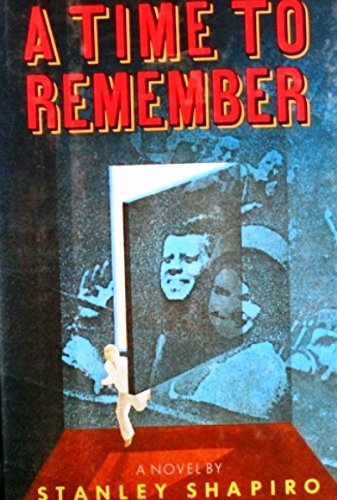
This week, from my aunt’s book collection, I read Stanley Shapiro’s A Time To Remember.
A Time To Remember was originally published in 1986 and it tells a story that might sound a little bit familiar. David Russell is a school teacher in Dallas. He is haunted by the death of his brother, who was killed in Vietnam. David has convinced himself that, if John F. Kennedy had lived, America would have withdrawn from Vietnam and his brother would still be alive. In fact, as far as David is concerned, America itself would be a better place if Kennedy had lived. Not only would the Vietnam War have been prevented but the Watergate break-in would never have occurred. Nixon would never have been president. Martin Luther King would never have been assassinated. Robert F. Kennedy would still be alive. Americans would never have become disillusioned with their country or their government. America would have kept its innocence.
Too bad that David can’t do anything to change history.
Or can he? It turns out that David’s girlfriend is a reporter and she knows a scientist named Dr. Hendrik Koopman. Koopman has created a time machine! David uses the machine to go to the past, intent on preventing Lee Harvey Oswald from assassinating Kennedy. (Sorry, conspiracy folks. Like me, A Time To Remember is firmly in the Oswald Acted Alone camp.) Unfortunately, David doesn’t succeed and he ends up getting arrested in Oswald’s place! Now, David has to not only escape but he also still has to find a way to save Kennedy!
Obviously, the plot is a bit similar to Stephen King’s 11/23/63. That’s not to say that King deliberately plagiarized or even knew of the existence of Shaprio’s earlier novel. Not only do the two books take vastly different approaches to the material but the idea of saving America by saving JFK has long been a popular one amongst the boomers. That said, it’s interesting that it was King, who plays the epitome of a committed 60s liberal on Twitter, who wrote the book that was more skeptical about whether or not saving Kennedy would truly save the world. Shapiro takes a much simpler approach to the material, one that’s almost charmingly naïve. I’m fairly agnostic on whether or not JFK would have been a transformative or even a well-remembered President if he had lived but one doesn’t necessarily have to buy into the mythology that’s sprung up around JFK to appreciate the sincerity of Shapiro’s idealization of the man and the era that he represented. Just as 11/23/63 was redeemed by King’s cynicism, A Time To Remember is redeemed by Shapiro’s nostalgia.
Shapiro, it should be noted, also tells his story far more quickly and far more economically than King did. 11/23/63 runs for close to 900 pages. A Time To Remember doesn’t even make it to 200. It’s a book that you can read in one sitting and Shapiro keeps the story moving at a quick pace. Though the characters aren’t particularly deep and one can certainly debate the book’s conclusion, Shapiro tells the story well. Those who like to play “What If?” with history will appreciate the book.
Last month, when I finally watched The Lost City, I had two thoughts.
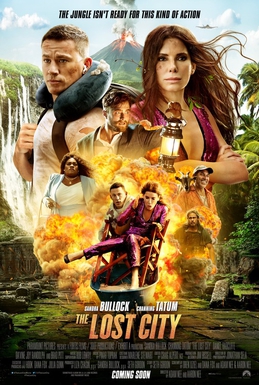
First off, I thought it was a perfectly charming little movie, a well-made and unpretentious film that went out of its way to entertain its audience and which, for the most part succeeded. The film, which features Sandra Bullock as Loretta Sage, a reluctant writer of sex-filled romance/adventure novels, and Channing Tatum as Alan Caprison, an earnest but not terrible bright cover model, strikes just the right balance of adventure and comedy. Bullock and Tatum are charming together. Brad Pitt has a fun cameo as an ultra-macho wilderness guide who is hired to help track down Bullock after she’s kidnapped by a wealthy businessman who wants her to help him track down the fabled crown of fire. Daniel Radcliffe gives a nicely eccentric performance as the villain and, for once in his post-Potter career, actually seems to be having fun with a role. The jungle scenery is lovely to look at. Bullock’s purple sequin jumpsuit is to die for. Tatum shows off his physique. The jokes come fast, the action is exciting, and we get to watch two people fall in love. What more could one ask for?
My other thought is that The Lost City is a film that Sandra Bullock could have made at any point of her career. There’s never been a time when Bullock wouldn’t have been convincing in the role of Loretta Sage. It’s easy to imagine The Lost City coming out in the aughts, starring Sandra Bullock as Loretta and Brendan Fraser as Alan. Or perhaps even in the 90s, with Bullock and Matthew McConaughey as Alan. Much as Top Gun: Maverick does for Tom Cruise, The Lost City serves to remind us that Sandra Bullock is one of the last true film stars, someone who can effortlessly move from genre to genre without losing any of their onscreen charisma in the process. For audiences who have just spent the last two years being told that the world was collapsing and that nothing would ever be the same again, there is something undoubtedly comforting about films like Top Gun: Maverick and The Lost City. They are a reminder that yes, it is permissible, possible, and even necessary to just have a good time.
And have no doubt about it, The Lost City is definitely a good time. From the opening scene (which literally takes us into one of Loretta’s novels) to Loretta’s disastrous book tour to the eventual journey through the jungle, The Lost City is an entertaining film. It’s not a film that asks for much from the audience. There’s no complicated backstory. It’s not necessary to have seen 10 earlier movies and a miniseries to understand everyone’s motivations. There’s no bad CGI to challenge the audience’s willingness to buy into the story. The film gets the job done in a relatively brisk 112 minutes and, at a time when even comedies are regularly running over two hours, it’s hard not to appreciate the efficiency with which The Lost City tells its story. There is a mid-credits scene but it’s actually kind of funny. For once, the promise of a sequel feels likes something for which to look forward.
If you missed The Lost City in theaters, it can currently be viewed on Paramount Plus.
In 1975, United Artists released a political thriller called Rosebud.
Rosebud was based on a best-selling novel.
Rosebud dealt with terrorism, an important topic both in 1975 and today.
Rosebud was directed by Otto Preminger, an acclaimed, award-winning filmmaker who was known for making controversial movies and who had a showman’s flair for publicity.
Rosebud had an international cast of screen veterans and up-and-coming stars. Peter O’Toole, Richard Attenborough, Cliff Gorman, Peter Lawford, Raf Vallone, Adrienne Corri, Lalla Ward, Claude Dauphin, Isabelle Huppert, and Kim Cattrall all had key roles. Former New York City Mayor and presidential candidate John V. Lindsay made his acting debut as a U.S. senator.
Rosebud was released with a good deal of publicity.
And, finally, Rosebud is almost totally forgotten today. Not only did Rosebud receive less-than-stellar reviews, it’s box office failure pretty much spelled the end of Preminger’s directorial career. (He directed one more film after Rosebud.) Rosebud sunk into such obscurity that, for years, it wasn’t even available on anything other than VHS tape. It was finally given a Blu-ray release in 2021 but, unlike some of Preminger’s other films, Rosebud isn’t going to end up getting a Criterion release anytime soon. (That said, it can currently be streamed for free on a few sites. So, go watch it after you finish this review.)
Having seen Rosebud, I can tell you that the film wasn’t forgotten because it was a disaster or anything like that. Instead, Rosebud was forgotten because it was thoroughly mediocre. There’s nothing particularly terrible about it but there’s nothing particularly good about it. Instead, it’s a slowly-paced and flatly directed film. There are a few interesting scenes, the majority of which involve Richard Attenborough’s terrorist. But otherwise, it’s just a mediocre film from a director who was past his prime.
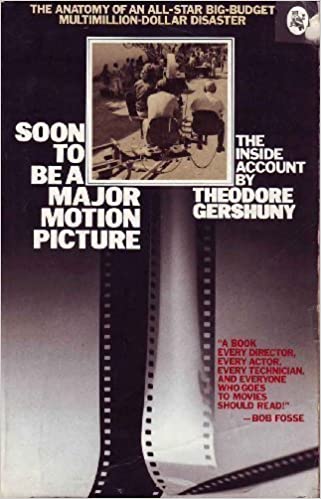
Interestingly enough, Rosebud’s mediocrity is what makes the 1980 book, Soon To Be A Major Motion Picture, such an interesting read. While directing Rosebud, Otto Preminger allowed journalist and filmmaker Ted Gershuny to observe every detail of the production. From Erik Lee Preminger’s attempt to write a workable script to the casting sessions to the film’s eventual release, Gershuny was there. Soon To Be A Major Motion Picture tells the story of how a group of talented people ended up making a thoroughly forgettable film. There have been plenty of books written about the production of terrible movies. There’s been even more books written about the making of classic films. But Soon To Be A Major Motion Picture is one of the few books to take a serious and detailed look at what it’s like to make a thoroughly mediocre film. And let’s be honest, most films are mediocre. Most films are more likely to be Rosebud than they are to be The Godfather, Goodfellas or Battlefield Earth.
The book, not surprisingly revolves around Otto Preminger. The Preminger described in the book is a complex figure, a proud man and an occasionally sensitive artist who is also frequently a bully. As the book makes clear, Preminger can be kind but he also came of age at a time when it was common place for directors to yell and be autocratic. Preminger’s habit of shouting rubs more than a few crew and cast members the wrong way. When he’s not yelling, Preminger comes across as thoughtful and witty but there’s also an undercurrent of sadness to him as Preminger realizes that the film industry is changing and that he’s getting left behind. The fact that he directed films like Anatomy of a Murder, Laura, Exodus, and The Cardinal didn’t matter in the new Hollywood. The same things that had once led to Preminger being branded a rebel and an innovator now led to him being branded as being out-of-touch. Rosebud was Preminger’s attempt to remain relevant, both artistically and politically. Unfortunately, the 70s were a brutal decade for the directors who previously defined Hollywood’s Golden Age. Some, like John Huston, were eventually able to adjust and make a few more good films before their careers were ended by either retirement or death. Most, however, were like Preminger, too engaged to quit but too old-fashioned to keep up with the younger filmmakers. Still, even when it becomes obvious that Rosebud is not going to work as a film, Preminger refuses to give up or surrender. He’s going to make his movie.
Also making a huge impression is Robert Mitchum. Mitchum was originally cast in the film’s leading role and, having seen Rosebud, it’s easy to understand why Mitchum would seem like the ideal choice to be play Larry Martin, a cynical and hard-boiled journalist and CIA asset. When Mitchum first appears in the book, he’s a breath of fresh air. Even on the printed page, it’s easy to see that Mitchum’s no-nonsense style invigorated the disorganized production. However, Mitchum quickly becomes disillusioned, walks off the film, and is hastily replaced by Peter O’Toole. Not even Gershuny seems to be sure what specifically caused Mitchum quit the film, though it’s suggested that Mitchum felt that he had been personally slighted by Preminger. (At one point, Mitchum claims that Preminger accused him of being drunk when he was sober. At another point, it’s suggested that Mitchum walked because he realized that film wasn’t going to be any good and he felt he was wasting his time.) O’Toole does his best to take Mitchum’s place, though his poor health proves to be almost as much of a challenge as Mitchum’s bad attitude.
(That said, O’Toole’s apparent frailty disappeared after the production received a bomb threat that is later revealed to have been a hoax. The book suggests that O’Toole and his entourage tracked down the hoaxer and essentially beat the Hell out of him.)
It’s a highly interesting and well-written book, one that will make you appreciate the effort that goes into making even a forgettable film. Used paperback copies can ordered off of Amazon for $22.00. I found my copy at Recycled Books in Denton, Texas and paid $3.00 for it. Support you local independent book stores, people.

