Lisa Marie’s Week In Television: 4/24/22 — 4/30/22


I saw some pretty good things this week.  Barry is back.  We Own This City looks like it’s going to be a worthy follow-up to The Wire.  I finally binged the first season of Abbott Elementary.  Here’s some thoughts on what I watched:

61st Street (Sunday Night, AMC)

As of this point, I really don’t see 61st Street becoming anything more than a second-rate version of The Wire so I think I’m done with it.  As I said last week, I think the show would be fine if it was just about Courtney B. Vance and his family but the show is trying to tackle too much in its first season.  The best shows develop naturally whereas 61st Street has been overstuffed since the beginning.

Abbott Elementary (Hulu)

Throughout this week, I binged the first season of ABC’s Abbot Elementary on Hulu.  A comedic mockumentary about the teachers at a Philadelphia public school, Abbott Elementary owes a bit of a debt to The Office but, at the same time, it also quickly established an identity of its own.  It was a good, heartfelt comedy, one that made a point about the importance of supporting teachers without ever committing the Parks and Rec sin of getting preachy or self-satisfied.  Of the ensemble cast, Sheryl Lee Ralph and Janelle James were the stand-outs but really, everyone did a good job of bringing their characters to wonderful life.  I look forward to season 2!

Allo Allo (Sunday Night, PBS)

How to get the British airmen out of France?  How about sending them up in a Helium balloon?  But how to keep the Germans from noticing the balloon?  How about moving up the wedding of Fanny and Ernest LeClerc?  Sure, why not?  It didn’t necessarily make any sense but I’m used to that by now.  The episode ended with the wedding and the release of what Officer Crabtree called a “carrier podgeon.”  I suppose that next Sunday, I’ll learn why this latest attempt to rescue the airmen failed.

Atlanta (Thursday, FX)

This week’s episode of Atlanta was another stand-alone episode dealing with white people struggling to understand black culture.  This time, the story dealt with a wealthy New York couple who, while attending the funeral of their Trinidadian nanny, discover that not only was she more of a parental figure to their son than they were but that she was also so busy raising the children of wealthy white people that she missed out on raising her own children.  Chet Hanks had an odd but somehow appropriate cameo as one of the people who the nanny had raised.

It was an okay episode and, unlike the other stand-alone episodes, it was clearly not a dream.  (For the same of continuity, posters advertising Paper Boi’s tour are visible during one scene.)  The humor and the satire was still sharp but also notably gentler this week than it’s been all season. That said, this episode felt like a clear follow-up to White Fashion, with its portrayal of neglectful white parents who use people of color to raise their children but who, at the same time, can’t even be bothered to learn anything about their nanny’s life or culture.

Barry (Sunday Night, HBO)

Barry’s back!  After all the excitement of last season’s finale, the new season Barry opened with everyone stuck in the same rut.  Barry is auditioning for roles and still killing people for money.  Sally is working on her television series.  NoHo Hank is struggling to be a gangster.  Gene is in mourning and looking for revenge.  (I loved the fact that his gun was a gift from Rip Torn.)  Fuches is in Chechnya, eating cereal.  The first episode served its purpose.  It reintroduced us to the characters (due to the Pandemic, there was a long delay between the 2nd and 3rd seasons) and reminded us of why we watch them in the first place.  Bill Hader both directed and starred and showed once again that he is a talent to be reckoned with.

Better Call Saul (Monday Night, AMC)

Better Call Saul is an enthralling show, even if I’m often left a little bit confused as to what exactly is going on.  Bob Odenkirk is brilliant, though this week’s episode was dominated by Michael Mando in the role of the intimidating but ultimately tragic Nacho.  Perhaps because we know what’s going to happen to the majority of the characters once Walter White shows up, the shadow of death hangs even heavier over Better Call Saul than it did over Breaking Bad.

The Brady Bunch (Sunday Morning, MeTV)

Upset that his children were tying up the phone, Mike Brady came up with the brilliant idea of installing a pay phone in the house.  How did that even work?  Who installed the phone?  Who collected the money?  Seriously, this was one of Mike’s worst ideas and he was never held responsible for it.

This was followed by an episode in which Bobby got it into his head that Carol was going to kill him so he tried to run away.  Would anyone have missed Bobby in that crowded house?  This was followed by an episode in which Marcia got braces and the world world stopped while everyone tried to make her feel better.  (Good for them!  I never needed braces, by the way.)  The fourth episode of MeTV’s bloc of Brady programming featured Peter saving a little girl from being crushed by a collapsing wall.  Peter was a hero but he let it go to his head.  Mike had to remind Peter that he was still only the middle child and, as such, had no right to feel good about anything.

Full House (Sunday Afternoon, MeTV)

I missed last week’s bloc of Full House but I get the feeling that once you’ve seen one episode of this show, you’ve seen them all.  The first episode of Sunday’s bloc was yet another one where Jesse was worried that he was no longer as cool as he had once been.  After being ridiculed by his old friend Scott Baio, Jesse hopped on his motorcycle and drove up to the roof of a building.  Apparently, he planned to jump from one roof to another.  Rebecca, however, talked him down.  The funniest thing about this episode was the discovery that Jesse’s nickname was once “Dr. Dare.”  Like, seriously, I get the feeling that Jesse’s fiends were probably making fun of him when they gave him that nickname.

This was followed by an episode in which Michelle’s third birthday party was ruined by the combined stupidity of Jesse and Stephanie.  Michelle may have said she was happy celebrating her birthday in that dirty gas station but she was lying big time.  The next episode featured Stephanie panicking due to an earthquake and Danny eventually taking her to a therapist so that she could discuss her feelings.  Luckily, it only took five minutes to cure Stephanie of her anxiety.  The day’s final episode found Joey and Jesse once again struggling to write a jingle together.  Meanwhile, the family’s new dog, destroyed Stephanie’s childhood toy but no one cared because Stephanie’s the middle child.

The Girl From Plainville (Hulu)

Much last week, this week’s episode of The Girl From Plainville got bogged down with a lot of boring courtroom dramatics.  Still, the final scene, with Michelle Carter fantasizing about her sister singing Teenage Dirtbag, was nicely done.  The Girl From Plainville seems like it would be a fine miniseries if it was only four episodes long but, at eight episodes, it just feels a bit too overextended.

Happy Days (Weekday Evening, MeTV)

I watched Happy Days on Monday, Tuesday, and Wednesday, despite the fact that the continuing popularity of this show has always escaped me.  The reason I watched is because it was the three-part episode in which the Cunninghams and Fonzie went to California and Fonzie ended up proving his courage by putting on water skis and jumping over a shark.  It was an important moment in pop cultural history so I felt it was important that I watch.  Fortunately, Fonzie made it over the shark and Richie realized that he would rather be a journalist than an actor.

King of the Hill (Weekday Afternoons, FXX)

On Tuesday, I watched the episode where Jimmy Carter tried to heal Hank and Cotton’s relationship.  It’s a classic episode, if just for Hank and Cotton’s disdainful comments as Jimmy and his secret service detail fled the scene.  “Why, that’s was just a one-term peanut farmer.”  “The man wore a sweater.”  Take that, Carter!

On Wednesday, I watched four episodes.  Hank carried the Olympic torch and learned that it was okay to be happy.  Peggy overthrew the tyrannical king of a Renaissance Faire.  (Alan Rickman voiced the king, which was pretty neat.)  Connie and the Dale Gribble Bluegrass Experience went to Branson, where Bobby sold a joke to comedian Yakov Smirnoff.  Peggy was conned out of her retirement savings but she got the money back.  Yay!

Law & Order (Thursday Night, NBC)

The headmaster of an exclusive private school has been shot!  Was it because he was too woke?  Nope, it turns out that he was shot by a troubled student.  The D.A.’s office decided to charge both the student and the student’s father. Personally, I found their actions to be legally dubious but the jury disagreed.  D.A. Jack McCoy was okay with manipulating legal statutes but I don’t think Adam Schiff nor Arthur Branch would have been happy with what his office ended up doing.

Open All Hours (Sunday Night, PBS)

Granville’s broom fell apart and Nurse Gladys Emmanuel needed a new washing machine.  In the end, no one got what they needed.  That’s what happens when you’re open all hours.

Survivor (Wednesday Night, CBS)

I wrote about the latest episode of Survivor here!

T.J. Hooker (Saturday, Decades TV)

William Shatner is a tough cop who speaks in a very dramatic fashion.  I was doing some work in my office on Saturday so I had this old 80s cop show playing in the background.  (Decades TV was apparently celebrating the 80s with a TJ Hooker marathon.)  The episodes kind of blended together but watching Shatner back when he was still taking himself seriously is always fun.

We Own This City (Monday Night, HBO)

The latest Baltimore-set miniseries from David Simon and The Wire crew, We Own This City premiered this week and the first episode proved to be, in typical Simon fashion, both frustrating and fascinating.  The show’s political asides were heavy-handed but it’s depiction of a troubled American city was heart-breaking.  Simon has never flinched from showing how political corruption, racism, poverty, and crime all come together to create a destructive cycle that’s impossible to escape.  Because happy endings are nearly nonexistent, Simon’s show can be difficult to watch but each one is something that should be watched.  As for We Own The City, this miniseries deals with police corruption in the wake of the death of Freddie Gray and the subsequent uprising.  Out of the large ensemble cast, Jon Bernthal and Josh Charles are early stand-outs.

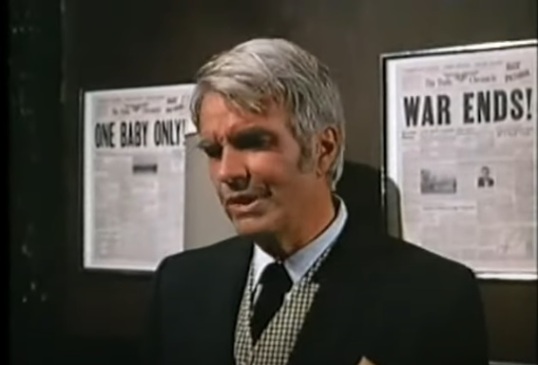
Guilty Pleasure No. 54: Solarbabies (dir by Alan Johnson)


Solarbabies is a film that has a reputation.  And it’s not a good one.

First released in 1986, Solarbabies is one of those post-Mad Max films that takes place in a post-apocalyptic desert society.  There are no more trees.  There is no more rain.  Order is kept by force.  The people are oppressed.  Outsiders live in desert towns that have names like “Tiretown.”  Children are forced to grow up in a combination of a prison and an orphanage.  The orphanage’s Warden (played by Charles Durning) mourns for the way the world used to be, before it became a sun-drenched nightmare without plants or water.  The fearsome Grock (Richard Jordan) makes sure that all of society’s rules are followed and the viewer knows he’s a bad guy because he wears a leather trench coat even when it’s over a 100 degrees outside.  (Grock never sweats.  If only the same could be said of the Warden.)  The evil Professor Shandray (Sarah Douglas) experiments on living subjects.  It’s a grim, grim world.

However, hope arrives in the form of a glowing orb!  A ten year-old deaf boy named Daniel (Lukas Haas) finds the orb and, after regaining his ability to hear, he names it Bodhi.  When Darstar (Adrian Pasdar) realizes that he can use Bodhi to protect the people of Tiretown, he steals the orb and runs off with it.  Determined to retrieve Bodhi, Daniel chases after him

How will Daniel survive in the desert?  Well, luckily, he’s not alone!  Daniel was a member of the orphanage’s roller hockey team, the Solarbabies.  Terra (Jami Gertz), Jason (Jason Patric), Metron (James LeGros), Rabbit (Claude Brooks), and Tug (Peter DeLuise) strap on their skates and roll out into the desert.  Pursuing them is Grock and his stormtroopers.

Meanwhile, somewhere in the desert, an old man named Greentree (Frank Converse) hopes to help the world recover.  Greentree looks like a thin version of Santa Claus and he hopes to bring rain and trees back to the Earth.  Yes, his name is Greentree.  There’s not really much room for subtlety in the world of Solarbabies.

Now, as I said at the beginning of this review, Solarbabies has a reputation.  Today, it’s probably best known for being the film that nearly bankrupted Mel Brooks.  Yes, that Mel Brooks.  When Brooks originally signed on to produce Solarbabies, it was envisioned as being a low-budget sci-fi film that would not have any spectacular special effects.  However, Brooks became convinced that Solarbabies had the potential to be a Star Wars-level hit so he increased the budget.  He also brought in Alan Johnson to direct the film, despite the fact that Johnson was a choreographer who had only directed one other film and had no experience with science fiction.  (Johnson’s previous film had been a remake of To Be Or Not To Be, which starred Brooks and featured Solarbabies’s Charles Durning in a supporting role).  At Brooks’s insistence, the film was shot in Spain to save money.  Unfortunately, no sooner had Johnson and the film’s cast arrived than Spain was hit by a series of unexpected storms that caused production to shut down.  Even when the rain stopped, disagreements between Johnson and the cast delayed the film even further.  The footage that was shot satisfied no one, leading to expensive reshoots.  In the end, Mel Brooks invested close to $20 million dollars in the film, even taking a second mortgage out on his house.  When the film was finally released, it was a critical and box office disaster, though Brooks later said that he did eventually break even after Solarbabies was released on DVD.

So, yes, Solarbabies has a bad reputation and it could be argued that it deserves it.  Tonally, the film’s a mess.  For a film that appears to have been made for a “family” audience, parts of the film are surprisingly violent  Scenes of the Solarbabies playing LaCrosse and cheerfully crossing the desert are mixed with some surprisingly graphic scenes of Grock and Shandray torturing prisoners.  Bodhi is a cute and glowing orb who gives Daniel back his hearing and then later brutally kills a lot of bad guys.  Jason Patric, Jami Gertz, and Charles Durning all seem to be trying to take the film seriously while Richard Jordan and Sarah Douglas give performances that feel more appropriate for a Hammer horror film.  Solarbabies is a bizarre mix of sincerity, sadism, and camp.  Nothing about it makes much sense.

And yet….

Listen, I can’t help it.  When I watched it last week, I enjoyed Solarbabies.  For all of its many and obvious flaws, it’s a hard film not to like.  It’s just so thoroughly ludicrous and messy that watching it becomes a rather fascinating viewing experience.  It’s hard not to, at the very least, be entertained by the sight of the cast roller skating through the desert.  A LaCrosse team battling futuristic Nazis for possession of a glowing orb that can cause rain to fall from a cloudless sky?  As far as I’m concerned, it’s impossible not to enjoy that on some level.

Of course, I seem to be in the minority as far as that’s concerned.  Alan Johnson never directed another movie after Solarbabies, though he did direct some of those really cool GAP commercials that aired in the early aughts.  You know the ones that featured people enthusiastically dancing in khakis?  That was him!  Those commercials are kind of a guilty pleasure themselves.  (Of course, because Mel Brooks nearly didn’t lose his house producing them, they’re not quite as infamous as Solarbabies.)  But still, Johnson stared his directorial career by directing Charles Durning to an Oscar nomination in To Be Or Not To Be and he ended it by directing Durning in a box office flop.  Well, no matter!  I enjoyed Solarbabies and I don’t care who knows it.

Previous Guilty Pleasures

  1. Half-Baked
  2. Save The Last Dance
  3. Every Rose Has Its Thorns
  4. The Jeremy Kyle Show
  5. Invasion USA
  6. The Golden Child
  7. Final Destination 2
  8. Paparazzi
  9. The Principal
  10. The Substitute
  11. Terror In The Family
  12. Pandorum
  13. Lambada
  14. Fear
  15. Cocktail
  16. Keep Off The Grass
  17. Girls, Girls, Girls
  18. Class
  19. Tart
  20. King Kong vs. Godzilla
  21. Hawk the Slayer
  22. Battle Beyond the Stars
  23. Meridian
  24. Walk of Shame
  25. From Justin To Kelly
  26. Project Greenlight
  27. Sex Decoy: Love Stings
  28. Swimfan
  29. On the Line
  30. Wolfen
  31. Hail Caesar!
  32. It’s So Cold In The D
  33. In the Mix
  34. Healed By Grace
  35. Valley of the Dolls
  36. The Legend of Billie Jean
  37. Death Wish
  38. Shipping Wars
  39. Ghost Whisperer
  40. Parking Wars
  41. The Dead Are After Me
  42. Harper’s Island
  43. The Resurrection of Gavin Stone
  44. Paranormal State
  45. Utopia
  46. Bar Rescue
  47. The Powers of Matthew Star
  48. Spiker
  49. Heavenly Bodies
  50. Maid in Manhattan
  51. Rage and Honor
  52. Saved By The Bell 3. 21 “No Hope With Dope”
  53. Happy Gilmore

Lisa Marie’s Week In Television: 4/17/22 — 4/23/22


I’m still in the process of trying to get caught up with everything.  I still need to watch the mid-season finale of The Walking Dead and the latest episode of Fear the Walking Dead.  I also look forward to checking out CNN+ next month.

61st Street (Sunday Night, AMC)

The second episode of 61st Street was only a slight improvement over the first.  I liked the scenes involving Courtney B. Vance and his son and I actually kind of wish that the entire show was just about those two characters.  The rest of the episode was painfully heavy-handed and, most importantly, it still had no sense of place.  For all the show’s attempts to be a Chicago show (and, perhaps even more importantly, a 61st Street show), the setting still felt generic.  For a show like this to reach the lofty heights to which it aspires, Chicago would have to become a character in much the same way that Baltimore was a character in The Wire or New York City was a character in a few of the better episodes of Law & Order.  61st Street isn’t there yet.

Allo Allo (Sunday Night, PBS)

I had two episodes of this British sitcom on the DVR.  In the aftermath of the attempted rescue of the British airmen from the Chateau, Herr Flick was briefly arrested, Rene continued to be annoyed by the demands put upon him, and Michelle continued to say things only once.  The airmen were eventually rescued, which led to another round of trying to find and sell the stolen painting.  In the end, Rene has to disguise himself as a priest.  It was all a bit confusing.

Atlanta (Thursday Night, FX)

After four years, Donald Glover’s surreal comedy-drama is back.  Actually, it’s been back since March but it was only this week that I was able to catch up with it.  I watched the first three episodes on Tuesday.  The first episode was a disturbing horror story, about a black child who is forced into the foster system and who is nearly murdered by his white foster parents.  This episode turned out to all be a dream but, at the same time, it was also based on a very real murder case and it stuck closely to what actually happened.  This was followed by episodes that followed Earn, Al, Darius, and Van as they explored first Amsterdam and then London.  The third episode, which dealt with rich white guilt and the white savior complex , was particularly well-done.

I watched the fourth and the fifth episodes on Thursday afternoon.  The fourth episode featured none of the regular characters and told the surreal story of a white man (Justin Bartha) who was being sued by the descendant of a slave who was owned by his ancestors.  A character from the first episode made an appearance, still talking about what it meant to be white.  I assume this was meant to indicate that this episode may have been another dream but, as opposed to the first episode, it didn’t end with Earn waking up so …. who knows?  The fifth episode featured the search for Al’s missing phone and, though it was a bit more obviously comedic than the previous episode, it was also a bit unsettling.  It was obvious that the phone was meant to represent much more than just a phone, that it was instead a symbol of both Al’s talent and his individuality.

This bring us to the most recent episode, “White Fashion.”  “White Fashion” opens with a London fashion house making a huge mistake when they sell a terrifying but all too plausible “Central Park 5” jersey.  Looking to do damage control, they bring in Al and a host of other social justice influencers.  “Racism will be over by 2024!” one of them shouts during the press conference.  Al’s attempt to get the company to make a commitment to investing in black communities leads to a terrifying but, again, all too plausible black-and-white commercial in which a collection of people, ranging from a gender fluid cowboy to a posh old lady, announce that this is “our hood.”  Meanwhile, Darius took a white woman to a Nigerian restaurant and, within our hours, the woman had bought the restaurant and transformed it into her own take on Nigerian food.  Earn and Van danced together in a nice hotel room but then Earn woke up alone, leaving us all to wonder if perhaps this entire season has just been a collection of dreams.

Better Call Saul (Monday Night, AMC)

Better Call Saul is back, in all of its twisty and grimly funny glory.  Knowing that Bob Odenkirk nearly died during shooting does add an extra poignancy to the show’s final season. This Monday, AMC aired the first two episodes of Season 6.  The characters, with their complete and total amorality, remains fascinating.

The Doctors (Tuesday morning, Syndication)

I drove my Dad to a doctor’s appointment on Tuesday.  An episode of this amazingly vacuous talk show was playing in the front lobby.  I have to admit that I didn’t pay much attention to it.  I mean, I was already in a doctor’s office.  Why would I want to watch a show that would only remind me of that?

The Girl From Plainville (Hulu)

This week’s episode of The Girl From Plainville really overestimated the excitement that can be generated by watching people read text messages aloud.  The show has moved on to the trial portion of Michelle Carter’s story, which is a bit dull since the actual trial was already televised so it’s not as if The Girl From Plainville is showing us something new.  The episode also featured scenes of Michelle and Conrad dealing with their own mental health and the main theme seemed to be that, even if Michelle hadn’t met him, Conrad would have been doomed by growing up in his dysfunctional family.  Seriously, there is not a single character on this show who is the least bit likable.

Only Murders In The Building (Hulu)

I binged the first season of Only Murders In The Building on Friday and Saturday.  Steve Martin, Martin Short, and Selena Gomez play three mismatched true crime aficionados who end up solving a murder in their building, along with starting a true crime podcast.  I could have done without the dead cat but, for the most part, I really liked this show.  Maybe it’s because I’ve always wanted to solve a mystery myself.  Amy Ryan, Steve Martin, Selena Gomez, and especially Martin Short all gave wonderful performances in the lead roles.  As well, Nathan Lane was wonderfully (and surprisingly) menacing in the episodes in which he appeared.  And, of course, Sting played himself and was basically the guy that you would never want to live next to.  This show wonderfully captured the current morbidity of our national cuture.

Open All Hours (Sunday Night, PBS)

I actually had two episodes of Open All Hours on my DVR.  I watch them both.  It was a depressing hour.  I found myself wondering why Granville never tried to run away.  What power did Arkwright have over him?

Rachael Ray (Tuesday morning, Syndication)

When I took my Dad to a doctor’s appointment on Tuesday, I watched two shows in the front lobby.  The first was The Doctors.  The second was Rachael Ray.  Personally, I like Rachael Ray but I think she would get mad at me if she ever saw me trying to cook.

Survivor (Wednesday Night, CBS)

I wrote about the latest episode of Survivor here!

The TSL’s Grindhouse: Avengement (dir by Jesse V. Johnson)


I’m not really sure if “Avengement” is actually a word but, regardless, that’s what Cain Burgess is determined to get.  AVENGEMENT!

Martial artist Scott Adkins plays Cain in this 2019 British film.  When we first meet Cain, he’s in prison but that quickly changes once he manages to escape.  Cain heads to a pub, one that’s owned by his brother, Lincoln (Craig Faibrass).  After he’s taken everyone in the pub hostage, we learn about how Cain not only came to be a prisoner but also how he ended up with some rather prominent facial scars.  It turns out that Cain likes to tell a story and, for whatever reason, the gangsters are willing to sit around and listen.  Through the use of flashbacks, we see how Cain went from being an innocent martial artist to being the most feared man in prison.  We see how he learned to kill and how not even getting acid thrown in his face could slow him down.  Cain’s a scary dude and he’s out for revenge!  Or avengement!

Of course, we also can’t help but notice that a lot of Cain’s adventures feel as if they’ve been lifted from other British crime films.  The talkative gangsters bring to mind the films of Guy Ritchie.  A lengthy chase scene owes more than a little to the opening on Trainspotting.  Even the fight in the pub owes a bit to the finale of Shaun of the Dead.  It’s all a bit familiar but then again, that’s part of the appeal of the modern British crime thriller.  We watch these films specifically for the posh villains and the pub fights and the often indecipherable dialogue.  The familiarity is often exactly what the viewer is looking for.  (That said, I was a little bit surprised by the lack of Russian mobsters wearing track suits.  That was a missed opportunity.)  I think the other reason why Americans, in particular, like British gangster films is the novelty of seeing that British gangsters can be just as unnecessarily violent as American gangsters.  It’s nice to be reminded that America isn’t the only country that breeds violence.

Speaking of violence, Avengement is a very violent film and it’s also often a very bloody film.  When you consider how much of the film takes place in prison, it’s not surprising that there’s a lot of stabbings.  (What is somewhat surprising is that there are also a lot of stabbings outside of prison, even when there are guns nearby.)  I’m usually not a fan of gratuitous violence but Avengement handles it all with a certain wit.  The violence is so over-the-top that it’s hard not to suspect that the filmmakers are commenting on the excessive nature of other British gangster films.  There’s a lengthy montage of Cain just fighting anyone who comes near him and it goes on for so long that it actually becomes somewhat humorous.  It’s hard not to feel at least a little admiration for Cain’s determination to start a fight with every single person that he sees.  He certainly doesn’t give up.  Scott Adkins is a gymnast, along with being a martial artist, and there’s a grace to his movements that comes through even when the film is at its most brutal.  Early on, I joked that the film would only work if its ultraviolent protagonist turned out to be likable and strangely enough, that’s exactly what happened.  Scott Adkins, to my surprise, turned out to be not only an exciting fighter but also a pretty good actor.  He shows enough screen presence in Avengement to make viewers hope that he’ll someday get a major action role.

Avengement is a ferocious but entertaining and unpretentious action film.  Watch it.  Experience it.  Just don’t worry about trying to understand what everyone’s talking about.  Just assume that everyone has a reason to want Cain dead and Cain has a reason to want the same for everyone else and there should not be any trouble at all.

TV Review: The Girl From Plainville 1.5 “Mirrorball” (dir by Pippa Bianco)


Well, I tried.

I really did.  Coming off of the high that I got off reviewing each episode of The Dropout, I thought it would be pretty easy to review all 8 episodes of The Girl From Plainville but, having watched the fifth episode last night, I think I’m done.

Don’t get me wrong.  I will continue to watch the series.  (There’s only three weeks left.)  And I’ll certainly include any thoughts that I have about the show in my “Week in Television” post.  But I think I’m done with trying to come up with 500-1000 words to use to review each episode because, quite frankly, there’s just not much to say about The Girl From Plainville.  The story of how Michelle Carter encouraged Conrad Roy to commit suicide is well-known.  The fact that Michelle Carter was put on trial and convicted is also well-known.  This show is trying to build-up suspense about a story that most viewers will already know.

It perhaps wouldn’t matter if The Girl From Plainville had something new or unexpectedly insightful to say about the case.  But the fact of the matter is that Michelle Carter is not that interesting of a human being.  Everything that I’ve read and seen about the case seems to suggest that she really didn’t have much going on inside of her brain.  Because she lacked an actual personality, Michelle learned how to behave and how to interact through social media and television.  Conrad’s death allowed her to live her life as if it was an episode of Glee, or at least that’s what Michelle was hoping.  And now, years after Conrad’s suicide, Michelle is out of prison and being played in a miniseries by Elle Fanning.  It doesn’t seem to be quite fair, does it?

As for last night’s episode, it felt pretty much like a filler episode.  The prosecution team continued to build a case against Michelle while Michelle had to deal with going from briefly being the most popular girl in school to being an absolute pariah.  We also got a few clumsily handled flashbacks to Michelle texting Conrad.  Last weekend, I watched Dopesick, which also aired on Hulu and also used a jumbled timeline.  The timeline in Dopesick did occasionally get confusing but, at the same time, it worked because it took place over several years and the actors could be made to look older or younger, depending on the timeline.  If Michael Keaton had a hint of hair, you know the show was taking place in the 90s.  If he was bald, you know it was 2004.  The Girl From Plainville, on the other hand, is only dealing with a two-year period and, as such, it’s hard to keep track of what’s happening when.  The characters played by Elle Fanning and Chloe Sevigny pretty much look and act the same in 2012 as they do in 2014.  It’s a very clumsily constructed story structure, one that does the miniseries little good.

That said, Elle Fanning continues to give a convincingly unhinged performance as Michelle and Colton Ryan is appropriately vulnerable as Conrad.  (Sorry,  I’m not going to call him Coco.)  I think if the miniseries had done away with all of the flashback nonsense and just told their story in chronological order, Fanning and Ryan’s strong performances would have been better served.  For now, I’m done with doing full reviews of this show but, if next week’s episode is a surprisingly good one, that could change.

Book Review: The 103rd Ballot by Robert K. Murray


Cinematically, the 1968 Democrat Convention has been done to death.

There have been a lot of movies made about the 1968 Democrat Convention and certainly, I can understand why.  Not only did you have an epic battle taking place in the Convention Hall between the Democrat establishment and the reformers but there were also riots in the streets.  The police were beating up protestors and slogans were being chanted and Haskell Wexler was filming footage for Medium Cool.  Yes, it was all very cinematic but again, it’s just been done to death.  We don’t need another movie about what happened in 1968.

Instead, what is needed is a movie about the 1924 Democrat Convention, which was held in Madison Square Garden and which lasted for two and a half weeks because none of the men running for President could get enough votes.  The two major candidates were Al Smith of New York and William McAdoo of California.  Smith was an anti-prohibitionist and was seeking to become the first Catholic to be nominated by a major political party.  McAdoo was the son-in-law of America’s greatest monster, Woodrow Wilson.  Smith’s campaign was managed by a young Franklin D. Roosevelt, who was making a political comeback after being previously struck down by polio.  Though he was not himself a member and had no use for the organization, McAdoo found himslef being supported by the Ku Klux Klan, who was then at the height of its political influence and which opposed Smith because of his Catholicism.

With neither Smith nor McAdoo able to command a majority of the delegates, other “favorite son” candidates emerged.  U.S. Sen. Oscar Underwood of Alabama, a longtime opponent of Klan, was not only nominated but also fought a heroic but losing battle to insert a plank condemning the Klan into the Democrat platform.  West Virginia’s John W. Davis was nominated, as was Kansas’s Jonathan M. Davis.  Meanwhile, in the wings, William Jennings Bryan managed the presidential campaign of his brother, Charles, and waited to see if the Convention would perhaps turn to him and put him on the national ticket for a record fourth time.  (Little did Bryan know, of course, that the Scopes Monkey Trial was waiting for him, right around the corner….)

In the end, 58 men received votes for the presidential nomination at the 1924 Democrat Convention.  It took a record 103 ballots for the party to finally nominate a candidate who, after all of that, would still have to run against the enormously popular incumbent, Calvin Coolidge.  Along the way, there were fist fights, political chicanery,  and many accusations of lies, bad faith, and prejudice.  FDR re-launcher his career with his pro-Smith speech but, in doing so, he also inspired the jealousy that would lead to Al Smith becoming one of the leading opponents of the New Deal.  Meanwhile, the aging William Jennings Bryan struggled to control a party that no longer had much use for him.

It’s a fascinating story, and one that I know about because I read a book called The 103rd Ballot, which tells the story of not only the convention but also the election that followed it.  The book was written by Robert K. Murray and it was originally published in 1976.  It’s been around for a while but the issues that it deals with and the politicians that are profiled all feel very familiar.  Today, control of the major political parties is still being fought over by the activist who do the work and the politicians who reap the rewards.  Extremism is still a threat.  Just as the Democrats did in 1924, Americans are still trying to figure out what the country’s role in the world should be.  As described by Robert K. Murray, historic figures like FDR, Al Smith, McAdoo, Calving Coolidge, and John W. Davis all come to life.  Their motivations are often petty but their actions change the course of history.

The next presidential election is going to be the 100-year anniversary of the 1924 debacle and the issues that made that convention so chaotic are the same issues that political types are still dealing with today.  In 1924, America was recovering for a war and a pandemic.  In 2024 …. well, you get the idea.  The main difference, of course, is that we now have air conditioning.  At the 1924 convention, air conditioning was still a relatively new concept and the delegates spent two and a half-weeks jammed into Madison Square Garden in the summer.  Agck!

So, seriously, some aspiring Aaron Sorkin (though not Sorkin himself, that’s the last thing we need) needs to buy the rights to this book and get to work on a movie or a miniseries about what happened in 1924.  I can’t wait to see who plays Al Smith!

Film Review: Death on the Nile (dir by Kenneth Branagh)


The main mystery at the heart of Kenneth Branagh’s adaption of Agatha Christie’s Death on the Nile is not who committed the film’s murders but just how seriously we, the audience, are meant to take what we’re watching.

In this much-delayed (by COVID and a cast full of actors who could not escape personal scandal) follow-up to 2017’s Murder on the Orient Express, Kenneth Branagh again plays the eccentric detective Hercule Poirot.  Poirot is again in an exotic land, this time Egypt.  And again, circumstances have conspired to isolate him and a group of wealthy and glamorous suspects from the rest of the world.  In Murder on the Orient Express, everyone was stuck on a train.  Here, they are stuck on a boat.  Admittedly, the boat provides a nice view of the pyramids but, eventually, even those testaments to engineering seem to be mocking the people stuck on the boat.  The pyramids, after all, have survived for centuries.  The same cannot be said for the people who have come to see them.  Over the course of the film, there are several murders.  (Indeed, Death on the Nile is significantly bloodier than Murder on the Orient Express and, unlike what happened on the Orient Express, the majority of the victims have done nothing to deserve their grisly fate.)  Like Murder on the Orient Express, Death on the Nile is based on a novel by Agatha Christie.  Branagh changes a few details from Christie’s novel, which is understandable since it’s important to keep the audience guessing.  For instance, Bouc (Tom Bateman), who was Poirot’s assistant in Murder on the Orient Express, returns in Branagh’s film version and provides some continuity between the two films.  It also provides a nice side-mystery as the audience tries to figure out how Poirot and Bouc could just happen to run into each other in Egypt.  Fear not, the film offers up a solution.

As is to be expected, the victims and the suspects are brought to life by a cast of stars and familiar character actors, all of whom act up a storm.  Some, of course, do a better job of embracing the melodrama than others.  Armie Hammer and Gal Gadot play a glamorous couple and, regardless of how we feel about Hammer as a human being, it works because Gadot and Hammer both look they could have stepped out of a sophisticated, 1930s RKO comedy.  (Hammer’s stiff line readings, which are totally appropriate for his character, would actually be a highlight of the film if he wasn’t Armie Hammer.)  Russell Brand is oddly subdued as the doctor with the secret while Dawn French and Jennifer Saunders show up to keep all of the British comedy fanatics happy.  Sophie Okonedo plays a jazz singer and how you react to her character will depend on how much patience you have for anachronistic musical numbers.  (There’s a surprisingly large amount of them.)  Annettte Bening plays Bouc’s mother and there’s really not a subtle moment to be found in her performance but again, it works because Death on the Nile is not a particularly subtle film.  It’s a film that demands a certain amount of calculated overacting and Bening is enough of a veteran performer to deliver exactly what the film needs.

No, there’s nothing particularly subtle about Death on the Nile but then again, that’s always been a part of Kenneth Branagh’s appeal.  Branagh’s endless (and often justified) faith in his own abilities as a director and an actor means that Branagh is willing to do things that others would avoid, whether that means making a 4-hour version of Hamlet or a black-and-white film about growing up in Belfast or, for that matter, a gaudy Agatha Christie adaptation in which he plays the lead detective.  Death on the Nile is a celebration of melodrama, beautiful people, and nice clothes.  Even the fact that the Egyptian backdrops are obviously phony works to the film’s advantage, giving the proceedings a bit of a retro, Hollywood studio system feel.  At its best, Death on the Nile is an homage to old-fashioned camp..

And yet, there are hints that Branagh means for the film to be something more.  The films opens with a prologue, one that is not included in Christie’s book or in anything else that Christie wrote about Poirot.  The prologue, which is filmed in black-and-white, features Poirot getting terribly wounded during World War I and growing his famous mustache to cover his scars.  We also discover that the great love of Poirot’s life was a nurse who died during the war.  Later, while solving the murder, Poirot often talks about how he has shut himself away from the world, never wanting to risk falling in love again.  There’s even a hint that Poirot has fallen for one of the suspects.  Branagh’s a good actor and can obviously pull off Poirot’s inner turmoil but those little serious asides still feel out of place in a film that features Armie Hammer and Russell Brand as romantic rivals.  It’s hard not to wonder if Branagh is in on the joke or if he’s seriously attempting to use Poirot as a symbol for an alienated and traumatized society.

One could argue that Poirot uses his mustache to hide from the world in much the same way that many people have spent the past two years using their masks to hide from COVID.  Except, of course, Death on the Nile was actually filmed three years ago, before anyone had even heard of COVID-19.  The film was first delayed by the theaters shutting down.  It was delayed a second time by the scandals surrounded Armie Hammer.  (Indeed, this film will probably be the last major studio release to feature Armie Hammer.)  It was finally released in February of this year and, within a month, it was on Hulu and HBOMax.  It didn’t exactly kill at the box office but I think Death on the Nile will be rediscovered over the years.  It’s a minor entry in Branagh’s filmography but it’s still enjoyably silly, regardless of whether that was Branagh’s intention or not.

Lisa Marie’s Week In Televison: 4/3/22 — 4/9/22


For the next few weeks, I’ll be trying to catch up on all the potential Emmy nominees that I missed when they first aired.  So, I guess my week in television is about to get a lot busier!

Allo Allo (Sunday Night, PBS)

“I shall say this only once,” Rene announced to Michelle, “I am done with the Resistance!”

Rene says this during nearly every episode of Allo Allo and no one ever believes him.  Such was the case with Sunday’s episode.  Michelle responded to Rene’s resignation from the Resistance by giving him suicide pills and announcing that the British airmen had been captured but she had a great plan to rescue them, a plan that would, of course, hinge on Rene’s involvement.  While Rene’s mother-in-law prepared for her wedding and Lt. Gruber tried to make sure that the painting did not fall into the hands of his rivals, Rene had to deal with a code book that had been eaten by rats.  I realize that previousy sentence makes no sense but that’s to be expected with this show.  Eventually, everyone ended up disguised as an undertaker while Crabtree wished everyone a “Good moaning,” in his fractured French.

American Idol (Sunday and Monday Night, ABC)

Hollywood week came to a close with two episodes of American Idol.

On Sunday, the finalists were forced to perform duets, which meant that the episode was full of people singing painfully sincere songs and getting all emotional.  It was a bit awkward to watch at times.  There was a definite lack of drama, as only one duet team failed to get along.  Though a lot of Idol fans are going to hate me for saying this, I found myself getting a little bit tired of Kelcie going on and on about how insecure she was.  Fortunately, she was paired with Betty, who made it her life mission to bring Kelcie out of her shell.  And it worked, as both Kelcie and Betty made it to the next round.

On Monday, the remaining competitors performed one last time for the judges and they were whittled down to 24.  Both Betty and Kelcie were let go during this round.  We didn’t actually get to see Betty’s performance but we did see Kelcie perform and she wasn’t bad.  She’s got a great voice, even if the insecurity is a bit hard to take.  But she was apparently let go specifically because of the insecurity, with the judges telling her to work on her confidence so …. I don’t know.  It seems like, if that was going to be a determining factor, that’s something that they could have said during the Duets.  Instead, they put Kelcie through because it would make for good television to then cut her at the last minute.

Anyway, it’s a pretty bland bunch of singers this season.  They’ve got good voices but there’s very little real quirkiness to be found.  And no, Leah Marlene is not quirky, no matter how many times she tells us that she is.  Real quirkiness is natural.  It’s not something you have to work at.

Bar Rescue (Sunday and weekday mornings, Paramount)

Sunday’s bloc of Bar Rescue episodes was all about Jon rescuing bars in Texas!  I watched two episodes on Sunday evening.  They were both set in Houston and they both involved a lot of yelling.  The important thing, though, is that every bar was made profitable by the end of the hour.

On Monday, I watched an old episode that found Jon Taffer and the crew in Florida.  The bar owner thought that Taffer had good ideas.  The bar manager felt that Taffer was rude and he resented being yelled at.  I was kind of on the manager’s side as far as that was concerned because Taffer really did go a bit overboard with the yelling during this episode.  Fortunately, everything worked out in the end.  The bar was rescued, just in time for the hurricane season.

Beyond the Edge (Wednesday Night, ABC)

It amuses me to no end how this show keeps pretending like the celebrities are in mortal danger in the jungle.  We all know that production is not going to let Metta World Peace drown in quicksand.  After I pointed this out on twitter, a fan of the show wrote to me, and said, “Your weird.”  (That’s an exact quote, including the misuse of your.)  Oh well!  You can’t please everyone.

The Brady Bunch (Sunday Morning, MeTV)

What a weird collection of episodes!  First off, we had an episode where Mike’s father and Carol’s mother visited and the kids tried to get them to fall in love with each other.  Robert Reed and Florence Henderson played their own parents.  You could tell Florence was just having fun but Robert really went all in and acted up a storm.  This was followed by the episode where Cindy and Bobby auditioned to be on television and Cindy ended up freezing once the cameras were on her.  Poor Cindy!  Finally, Bobby got his first kiss and turned into a jerk and then Greg got in trouble for helping his friends steal a goat.  The drama never stopped with those Bradys!

The Chair (Netflix)

I watched all six episodes of The Chair‘s first (and, perhaps, only) season on Thursday.  In this comedy-drama, Sandra Oh plays the newly named chair of Pembroke University’s moribund English department.  When the department’s most popular professor (Jay Duplass) is filmed doing a Nazi salute in jest, all heck breaks loose.  The Chair is a bit uneven but ultimately, it works.  It’s well-acted and the mix of comedy and drama is, for the most part, effectively handled.  A recurring bit about David Duchovny being invited to give a lecture is a highlight of the show’s first season.

Couples Court With The Cutlers (Weekday Afternoon, OWNTV)

I had this on as background noise for two hours on Monday.  That’s a total of four episodes, for those keeping count.  I didn’t really pay much attention because, again, it was background noise.  I did hear the audience gasp quite frequently.  And, of course, I looked up whenever Kendall Shull came out to deliver the lie detector results.

Court Cam (Wednesday, A&E)

I watched four episodes on Wednesday evening.  Mostly, I just had them on for background noise.  I do remember that one episode featured an attorney getting mad at a deputy who went through her private papers while she was giving her closing statement.  The deputy was held in contempt of court, as he definitely should have been.  He spent ten days in jail, after refusing to apologize to the attorney.

Cruel Summer (Hulu)

The first season of Cruel Summer aired on FreeForm last year.  With each episode jumping back and forth between three separate years, the show tells the story of two teenage girls in Texas.  One is abducted.  The other takes her place.  On Thursday, I watched the first two episodes of Hulu.  It was all a bit overdone and overheated but undeniably compelling.  I always enjoy a good melodrama.

Dopesick (Hulu)

On Thursday night and Friday morning, I finally watched the highly acclaimed miniseries, Dopesick.  The miniseries deals with the introduction of OxyContin and how the drug literally destroyed communities and continues to destroy them today.  This was one of those miniseries where good scenes co-existed with scenes that were a bit too on-the-nose for their own good.  Michael Keaton and Kaitlyn Dever both gave excellent performances as two people caught up in the epidemic.  The miniseries wasn’t quite as good as I had been led to believe and it was definitely heavy-handed but it was still effective enough to make an impression.

The Dropout (Hulu)

I wrote about the series finale of The Dropout here!

Full House (Sunday Afternoon, MeTV)

Poor Uncle Jesse!  On his 26th birthday, he and his band had a gig at the hottest club in town.  Unfortunately, when the band couldn’t make it, Jesse’s idiot roommates decided to help him out and basically, they ruined Jesse’s big night.  Everything worked out in the end, though, because it’s not like Jesse could move out and have a normal life or anything like that.  The other three episodes that were shown on Sunday featured Joey getting back together with his ex (ewww!) and a two-parter in which Jesse and Becky nearly got married at a tacky casino before decided that it would be better to hold off so that Becky’s parents could come to the ceremony.  Run, Becky!  Escape while you still can.

The Girl From Plainville (Hulu)

I reviewed the latest episode of The Girl From Plainville here!

King of the Hill (Weekday Afternoons, FXX)

I watched two episodes on Wednesday, both classics from the show’s final season.  In the first episode, Louanne and the Manger Babies got involved in the lucrative but demanding world of direct-to-DVD children’s programming.  As John Redcorn put it, “We are already direct-to-DVD.  There is no other place to go.”  This episode featured one of my favorite Dale storylines, as he tried to write a children’s book about the “gun who cared.”  The second episode featured Boomhauer allowing an obnoxious Canadian family to stay at his home while he went up to Ontario.  The Canadians were not impressed with America but Hank still helped one of them get out of jail because that’s what neighbors do.  Awwwww!

Law & Order (Thursday, NBC)

Eh.  The Law & Order revival is just as clumsy when it comes to handling political issues as the original series was.  This week, a congressional candidate was murdered and an extremist group went on trial and it all felt very much like partisan fan fiction.

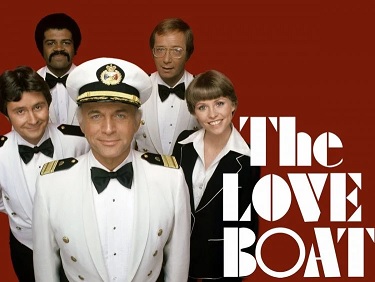
The Love Boat (Sunday Afternoon, MeTV)

On this Sunday’s cruise: Frank Bonner, Shelley Fabares, Jennilee Harrison, Arte Johnson, Stephen Shortridge, McLean Stevenson, William Window, and Jane Wyatt.  Not exactly the most exciting line-up, to be honest.  And this was actually a pretty boring episode but the ship and the ocean both looked really nice!

The Office (All the time, Comedy Central)

I watched two episodes on Saturday.  Unfortunately, they were both from the 8th season.  In the first one, the Office crew went to a local trivia night.  The second episode was the pool party episode.  The trivia episode was actually fairly amusing but the pool party was the 8th season at its worse.  There was never any reason for Robert California to invite the Scranton branch to a pool party.  The problem with all of these ensemble party episodes during the post-Carell era is that they mostly just served to remind us that we really only knew these characters by how they related to Michael.

Open All Hours (Sunday Night, PBS)

After being rejected by Nurse Gladys Emmanuel, Arkwright considered burying Granville alive in the storeroom.  It was an intense episode.

Parking Wars (Monday Morning, A&E)

In Detroit, Pony Tail handed out the tickets and encouraged everyone to be kind to each other.  It was a valiant effort but we all know that it’s cold in the D.  Anyway, I watched two episodes on Monday morning and they left me as aggravated as usual.

Survivor (Wednesday Night, ABC)

I wrote about the latest episode of Survivor here!

Talking Dead (Sunday Night, AMC)

Chris Hardwicke interviewed people and complained about the villainy of Lance Hornsby.

The Walking Dead (Sunday Night, AMC)

I reviewed Sunday’s episode here!

Yellowjackets (Showtime)

I missed the first season of Yellowjackets when it first aired so I decided to catch up this weekend.  I binged the first half of the season on Saturday and I’ll do the second half tomorrow.  So far, this show has been playing out like a combination of Lost, Degrassi, and This is Us.  Even though I already kind of know what’s going to happens thanks to Wikipedia, I’m still intrigued by the show.  That said, I’m also spending a good deal of the show with my hands over my eyes because OH MY GOODNESS!  THE COACH LOST A LEG!  THAT GIRL’S FACE WAS RIPPED APART!  THERE’S A COMPOUND FRACTURE ON THE SOCCER FIELD!  EVERYONE’S PERIOD HAS SYCNED UP!  AGCK!  Christina Ricci, Melanie Lynesky, and Juliette Lewis are all Emmy-worthy.