Retro Television Reviews: Half Nelson 1.9 “Beverly Hills Princess”


Welcome to Retro Television Reviews, a new feature where we review some of our favorite and least favorite shows of the past! On Fridays, I will be reviewing Half Nelson, which ran on NBC from March to May of 1985. Almost all nine of the show’s episodes can be found on YouTube!

Today, we close the book on the adventures of Rocky Nelson in Beverly Hills.

Episode 1.9 “Beverly Hills Princess”

(Dir by Bernard McEveety, originally aired on May 10th, 1985)

The hottest new thing in Beverly Hills is a movement called Emotional Awareness.  Led by the slick Dexter Breen (played by Marjoe Gortner, who was himself a former child evangelist) EA is a self-improvement cult that definitely should not be mistaken for Scientology.  Not surprisingly, EA is a scam.  Dexter and his people encourage the rich and the powerful to confess all of their secrets during “Awareness Sessions” and then use those secrets to blackmail their followers.

Businessman George Farrell (Dick Van Patten) is sick of being blackmailed.  However, when George tries to confront Dexter, he gets into a struggle with one of Dexter’s goons.  The goon has a gun, which goes off.  Fear not, George is not wounded.  However, he is arrested for murder when the goon drops dead.  Because George doesn’t want to admit that Dexter was blackmailing over him over an affair he had with a congresswoman, George finds himself sitting in prison.

Fortunately, George Farrell is a client of Beverly Hills Security!  After being approached by George’s 14 year-old daughter, Leslie (Sydney Penny), Rocky (Joe Pesci, who was shorter than Sydney Penny) makes it his mission to prove that George didn’t mean to kill anyone.  To do this, he’ll visit two more of Dexter’s victims (played, in this week’s cameos, by Rich Little and Lyle Waggoner).  He’ll also steal several cars, including a police car.  Why is Rocky stealing cars?  Because he keeps wrecking them, of course!  Detective Hamill (Gary Grubbs) isn’t happy about all of the wrecked cars.  When he demands to know why Chester (Fred Williamson) keeps Rocky employed despite all of Rocky’s mishaps, Chester replies, “Because he cares!”

As usual, Rocky recruits Beau (Dick Butkus), Kurt (Bubba Smith), and Annie (Victoria Jackson) to help him out.  When Rocky discovers that one of Dexter’s victims is holding auditions for a drag revue, Rocky decides that Annie should audition.  “But I’m a real woman!” Annie replies.  At this point, I was expecting thing to get pretty cringey but, by the standards of when the show was produced, the whole drag revue subplot was handled with maturity and with a relative lack of cheap jokes.  I sat there dreading the moment that Bubba Smith and Dick Butkus would put on ball gowns and start speaking in falsetto but it didn’t happen.  Instead, they just mentioned how talented all of the performers were.  It was pretty clear that the director of the revue was being blackmailed because he was gay but, again in contrast to a lot of shows and movies from the period, both the show and Rocky treated the character with respect.  It was an unexpected moment in a show that many would probably dismiss as just being another generic detective series.

While Rocky is stealing cars, Dean Martin is searching for his.  No, Rocky didn’t steal Dean’s car.  According to Dean, Sammy Davis, Jr. stole it.  In this episode, Dean shares all of his scenes with Fred Williamson.  Because this was Half Nelson‘s final episode, this was also Dean Martin’s last onscreen moment.  Dean passed away ten years later.

Yes, this was indeed the final episode of Half Nelson.  In fact, towards the end of the episode, Rocky crashes Chester’s car and then comments that he’s probably going to get fired as a result.  Since this was the final episode, I guess we can assume that, once George got out of prison, Rocky was unemployed and on the next flight back to New York City.  I hope he got to take the dog with him.

As for the episode itself, it wasn’t a bad way to wrap things up.  Everyone got to do something.  Chester defended Rocky, for once.  Victoria Jackson got to sing a song.  Joe Pesci got one final chance to make a joke about his height, snapping that he was “5’4,” when he heard a report that a car had been stolen by a man standing “5’2.”  Dean Martin was clearly unwell during filming but he still had a devilish twinkle in his eye.  As always, Marjoe Gortner was a good villain.  On the negative side, Rocky didn’t so much solve the mystery as he just stumbled into solutions and Detective Hamill’s intense dislike of Rocky never made any sense.  As well, Hamill and Annie were dating in the previous episode but they barely even acknowledged each other in this one, which leads me to suspect that this episode was originally meant to air earlier than it did.

Having now watched the entire show, it’s easy to see why Half Nelson failed to attract a regular audience, despite it’s strong pilot.  The show never really found the right balance between comedy and drama and, far too often, it turned into a retread of Beverly Hills Cop.  The ensemble often felt underused, with Jackson and Williamson spending far too much of their time sitting in the office.  The show had a great star in Joe Pesci but many episodes got bogged down with the antics of Bubba Smith and Dick Butkus.

Here’s the thing, though.  The show was always interesting, specifically because it did star Joe Pesci.  There was something undeniably fun about having stolid TV actors — like Robert Reed and Dick Van Patten — appearing opposite a combustible force of nature like Joe Pesci.  Though there were a few times that Pesci did seem a bit bored with going through the detective show motions, he was still a force of chaos and, by his very presence, he made Half Nelson into something more than just another generic crime show.

Next week, we start Freddy’s Nightmares!

Retro Television Reviews: City Guys 4.20 “Unhappy Hour” and 4.21 “Compromising Principal”


Welcome to Retro Television Reviews, a feature where we review some of our favorite and least favorite shows of the past!  On Thursdays, I will be reviewing City Guys, which ran on NBC from 1997 to 2001.  Nearly the entire show is currently streaming on YouTube!

This week, everyone has too much to drink and Ms. Noble tries to win a contest!

Episode 4.20 “Unhappy Hour”

(Dir by Frank Bonner, originally aired on December 2nd, 2000)

Ms. Noble’s best friend, Kiki, hosts her town talk show because of course she does.  (How does a high school principal have all of these connections?)  Kiki wants to do a show featuring the students of Manny High discussing the importance of friendship.  To be honest, that sounds like the most boring show in the world but whatever.  Chris, Jamal, Dawn, Cassidy, Al, and L-Train all agree to be on it.

Cassidy’s parents are out of town so everyone ends up at her penthouse to discuss what they’re going to say on the show.  But before the discussion even begins, Al has brought over four pizzas and L-Train has discovered a bottle of Tequila!  Before you know it, everyone’s drunk.  (Apparently, no one learned a lesson from any of the other episodes of this show that featured everyone getting drunk and suffering as a result.)  Al and L-Train throws eggs off the balcony.  Chris tries to work up the courage to tell Cassidy how he feels about her, which is interesting since Chris and Cassidy dated during the second season so it’s not as if Cassidy doesn’t know that Chris has feelings for her.  Cassidy is so drunk that she kisses Jamal instead.  Chris gets mad and kiss Dawn.  Al gets mad and has no one to kiss.  Meanwhile, L-Train calls Ms. Noble at school and tells her that he loves her.

Big mistake.

Ms. Noble and her husband, Billy, break into Cassidy’s penthouse and yell at the students for drinking too much.  Apparently, it’s not bad enough that Ms. Noble’s entire life revolves around spying on her students.  Now, Billy has had to sacrifice his freedom as well.  The next morning, the kids are hungover and angry but they still have to go on Kiki’s show.

“Why did you drink so much?” Kiki asks.

Dawn confesses that they were all stupid and now they’re all suffering from the worst hangover ever while appearing on live television.  Chris apologizes for kissing Dawn.  Cassidy confessed to like Chris.  Al says that he can’t forgive Chris for kissing his girlfriend.  “How could you do such a stupid thing!?”  Jamal suddenly gets angry and says that Al was just as stupid for throwing eggs off the balcony.  Personally, I kind of think that kissing your best friend’s significant other is considerably worse than tossing eggs off of a balcony but maybe that’s just me.

“I guess you guys realize that drinking isn’t all it was made out to be,” Kiki says.

“Don’t let one drunken night ruin your friendships,” Ms. Noble says, as if this doesn’t happen at least once every season.

Actually, if they didn’t realize it after all the other episodes this show has done about drinking and doing drugs, they’re never going to realize it.  Face it, the City Guys are doomed!

Episode 4.21 “Compromising Principal”

(Dir by Frank Bonner, originally aired on December 9th, 2000)

This is what happens, according to plot description at Wikipedia: “When Ms. Noble decides to loosen up and be more cool in order to win a most popular principal contest, the school turns into an undisciplined zoo. In the midst of the chaos, the gang try their hand at after school elective classes.”

Wow, sounds exciting!  Unfortunately (or maybe fortunately), this is one of the missing episodes of City Guys.  As far as I can tell, it’s not streaming anywhere as of this writing.  So, let’s just assume that everyone learned an important lesson and that the students once again spent way too much time worrying about their principal.

Seriously, a most popular principal contest?

Film Review: Cocaine Bear (dir by Elizabeth Banks)


Cocaine Bear is the story of a duffel bag full of cocaine and the bear that gets into it.  It’s loosely based on a true story.  I say loosely because, in real life, the bear promptly overdosed and died.  In the film, the bear not only survives eating a bag of cocaine but it also subsequently goes on a coke-fueled rampage.

The film opens in 1985, with a series of anti-drug commercials airing on television and a drug smuggler flying high above Georgia.  The smuggler kicks his shipment of cocaine out of the plane, so that it can later be retrieved from the mountains below.  Unfortunately, for him, he also manages to slip and plummets out of the plane to his death.  A day later, in Georgia’s Chattahoochee–Oconee National Forest, two hikers are debating which band they should hire to play for their wedding when they happen to come across a black bear.  The hikers decide to snap a picture of the bear.  The bear, whose face is coved in cocaine, decides to eat the hikers.

Yep, both the bear and her two adorable cubs have discovered the joys of cocaine.  It would probably be best to close down the park until someone can hold an intervention but, unfortunately, more and more people keep showing up.  For instance, there’s a detective named Bob (Isiah Whitlock, Jr.) who is determined to track down the cocaine and use it to finally take down the St. Louis’s drug kingpin, Syd (Ray Liotta, in his final film role).  Syd, meanwhile, has sent his son Eddie (Alden Ehrenreich) and his employee Daveed (O’Shea Jackson, Jr.) to retrieve the drugs.  Daveed is determined to get the job done while Eddie, who is mourning the death of his wife, just wants to leave the family business behind.  Local criminal Stache (Aaron Holliday) wants to deal the drugs himself but instead ends up bonding with Eddie.  Park ranger Liz (Margo Martindale) wants to pursue her crush on animal inspector Peter (Jesse Tyler Ferguson).  Finally, two kids, Dee Dee (Brooklynn Prince) and Henry (Christian Convery) have skipped school and are lost in the park.  Dee Dee’s mother (Keri Russell) is determined to rescue them and then ground them for the rest of their lives.

Yes, there’s a lot of people in this film.  I haven’t even mentioned Stace’s partners-in-crime or the paramedics who pick an inopportune time to show up.  The majority of the people in this film end up getting ripped apart by the bear and, make no mistake about it, the bear is the true heroine of the film.  All of the actors do well with their roles, though I do wish that Liotta could have ended his career playing something other than just another psycho criminal.  Keri Russell, Margo Martindale, Isiah Whitlock, Jr., and Alden Ehrenreich all deserve a lot of credit for bringing their characters to life.  But the bear is the true star here.  The bear kills a lot of people and most of the deaths are pretty bloody but, at the same time, the bear doesn’t really mean any harm.  It just really likes cocaine and the majority of the people who the bear kills are killed precisely because they either got cocaine on their clothes (or face) or they allowed themselves to become a part of the cocaine trade.  The bear ultimately becomes a satirical representation of every anti-drug commercial that has ever aired.  If you’re not worried about overdosing, how do you feel about getting torn apart by a bear?  Not so much fun being a rebel now, is it?

Cocaine Bear is an admittedly dark comedy, one in which almost all of the human characters have at least one bizarre quirk to make them memorable.  Usually, I’m not a huge fan of gory comedies but the humor in Cocaine Bear has an appealingly weird edge to it.  Eddie, Stache, and an annoyed Daveed playing twenty questions while looking for a duffel bag full of drugs is amusing but it becomes hilarious when combined with scenes of the bear joyfully finding more cocaine.  As well, Henry and Dee Dee’s reaction to finding a brick of cocaine is every parent’s nightmare but also one to which everyone should be able to relate and maybe even chuckle at.  I laughed, even as I thought, “OH MY GOD, DON’T DO THAT!”

Finally, in a time when so many movies are full of unnecessary padding, Cocaine Bear deserves a lot of credit for telling its story in 90 quickly placed minutes.  The film doesn’t waste any time getting to the point and it doesn’t overstay its welcome.  A lot of filmmakers could learn a lesson from Cocaine Bear.

Retro Television Reviews: The Love Boat 2.12 “The Captain’s Cup/ The Folks From Home/ Legal Eagle”


Welcome to Retro Television Reviews, a feature where we review some of our favorite and least favorite shows of the past!  On Wednesdays, I will be reviewing the original Love Boat, which aired on ABC from 1977 to 1986!  The series can be streamed on Paramount Plus!

This week, the Love Boat departs on one weird cruise.

Episode 2.12 “The Captain’s Cup / The Folks from Home / Legal Eagle”

(Dir by Alan Rafkin, originally aired on December 2nd, 1978)

This was a strange episode.

Let’s start with the simplest of our three stories first.  Danny Holt (Bert Convy) is recently divorced and still crying over having to pay his wife alimony.  When he boards the boat, he specifically asks Gopher if there are any single men onboard who might be interested in marrying his ex-wife.  His ex isn’t even on the cruise!  Danny is one bitter passenger.  From the minute he boards the boat, he’s whining about how unfair his divorce was and how badly he was treated by his wife’s divorce lawyer, Ann Sterling (Leigh Taylor-Young).

Uh-oh, it turns out that Ann is one the cruise as well!  And she’s been assigned to be Danny’s dinner companion.  Danny isn’t happy about this but then, from out of seemingly nowhere, the two of them end of falling in love.  It’s hard to say why they suddenly fall in love.  Danny is superbitter over his divorce and Ann knows all of the details about what type of husband he was so it seems like the last thing that would ever happen would be them leaving the ship, arm-in-arm.  But somehow, that’s what happens.  It was a straight-forward story but it lacked any scenes that would have explained why the two of them fell in love.  They just did because they were characters on The Love Boat.  (It certainly wasn’t due to any noticeable romantic chemistry between Bert Convy and Leigh Taylor-Young.)  This story felt lazy and generic.

In the episode’s second storyline, Captain Stubing is excited because he’s due to receive the Captain of the Year Cup.  Diane DiMarzo (Florence Henderson, proving that former Bradys just cannot stay off The Love Boat) boards the ship with the Cup but she’s shocked to discover that 1) her boss — the guy who actually decided to give Stubing the Cup — will not be on the ship and 2) Stubing fully expects her boss to personally present him with the Cup.  Now, I’m not really sure how the logic works here but apparently, Diane could lose her job if her boss isn’t there to give Stubing the cup.  But why would that be Diane’s problem?  She did what she was supposed to do.  She boarded the ship with the Cup.  Her boss is the one who decided not to show up and he is the boss so it’s not like there was anything Diane could have done about it.

Anyway, Diane recruits one of the ship’s handymen to pretend to be her boss.  Though he works on the boat and the rest of the crew know him, it appears that the Captain himself has never met Hank Vosnik (Pat Harrington, Jr.), which kind of leads one to wonder if Stubing really deserves his award.  Anyway, Hank falls in love with Diane and is crestfallen when she turns down his marriage proposal.  (Seriously, at this point, they had only known each other for like three days so I’m not sure what Hank was expecting.)  But, despite being turned down, Hank still pretends to be Diane’s boss.  So, Diane decides that she might as well marry him.  WHAT!?

Finally, Doc Bricker is happy to meet two passengers from his hometown.  George (John McIntire) and Gloria (Jeanette Nolan) spend every moment with Doc and they even announce that, as far as they’re concerned, the 40-something Doc is a member of their family.  Doc is touched.  But then Gloria falls down a flight of stairs and Doc has to do emergency surgery on her.  Gopher calls a doctor in San Francisco and he talks Doc through the surgery.  Doc removes Gloria’s spleen and saves her life!  Yay!  Only at the end of the surgery does he get George to sign a consent form.  In real life, that would lead to Doc to losing his job and the cruise line getting sued.  But, on The Love Boat, it just leads to more laughter.

On the plus side, this storyline featured the charming performances of McIntire and Nolan, who were married in real life.  The story was also written by Fred “Gopher” Grandy and Bernie “Doc” Kopell so, not surprisingly, it actually allowed Grandy and Kopell to do something more than just leer at the passengers.  The show rarely gave Grandy or Kopell a chance to show off the fact that they were both capable of giving good dramatic performances so, whenever they got that rare chance to do so, they took advantage of it.  That said, it was still a bit awkward to see Doc suddenly performing major surgery in his tiny examination room.  It was all for the best on the show but, in real life, it would have led to a major lawsuit.  Even though Doc Bricker saved Gloria’s life, it still seems like the ship could probably be held liable for her getting injured in the first place.  I mean, the boat is in the middle of the ocean.  Shouldn’t there at least be a warning posted on the stairs?

Well, who knows?  Strange things happen at sea.  Let’s just be happy that everything worked out in the end.

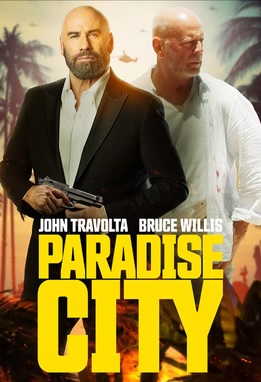
Film Review: Paradise City (dir by Chuck Russell)


Ian Swan (Bruce Willis) is a famed bounty hunter who has spent the last ten years of his life pursuing an escaped fugitive who is wanted for the cold-blooded murder of four FBI men.  Swan has tracked his prey to Hawaii but, when he’s shot and falls into the ocean, Swan is presumed dead.  Swan’s long-estranged son, Ryan (Blake Jenner), comes to Hawaii to try to track down the man who killed his father.  He meets up with Ian’s former partner, Robbie Cole (Stephen Dorff), and also the only cop on the island who cares about justice, Savannah (Praya Lundberg).  Reluctantly, Cole works with Ryan and discovers that Ian’s shooting is somehow connected to a shady businessman named Arlene Buckley (John Travolta).  A real estate developer, Buckley is working hard to elect a man named Kane (Branscombe Richmond) to the U.S. Senate.  Buckley’s plan also involves taking control of a part of the Island that the natives call Paradise City.  Got all that?

2022’s Paradise City has been advertised as being a John Travolta/Bruce Willis film but make no mistake.  Neither Travolta nor Willis get much screen time, though they both make an impression in the limited time that they do have.  Stephen Dorff manages to steal every scene in which he appears, playing Robbie as a well-meaning guy who can’t help but be kind of a screw-up.  That said, Dorff really isn’t in that much of the film either.  Instead, the main star of the film is Blake Jenner.  Jenner has the blandly affable screen presence of a low-key frat boy.  That worked for him when he was in films like Richard Linklater’s Everybody Wants Some!! but it’s not exactly ideal for an action star.  Whereas the best action stars feel as if they’re always ready for a fight, Jenner comes across as the guy who would be trusted to order the keg for the next party.

Instead of taking charge of the screen, Jenner finds himself overshadowed by the gorgeous Hawaiian scenery.  Hawaii is the true star of Paradise City and, even when the film itself doesn’t make a whole lot of sense, Hawaii itself is always amazing to look at.  In many ways, Paradise City feels like an extra-violent episode of Baywatch Hawaii.  (The film’s Baywatch aesthetic is confirmed when Savannah wears a bikini to a crime scene.)  Just as with that show, the beaches and the jungles and the waterfalls and the oceans are all so stunning that it’s tempting to give the film a pass on the fact that the plot never makes much sense and any genuine emotional stakes are pretty much non-existent.

Unfortunately, it’s impossible to ignore the plot because, for a low-budget B-movie, Paradise City takes itself way too seriously.  It’s one thing for Ryan to be estranged from his father.  It’s another thing for the film to feature flashbacks to Ryan’s childhood, in which we discover firsthand that Ian never understood Ryan.  It’s also one thing to make Buckley a family man.  It’s another thing try to create a clumsy parallel between the way that Buckley is raising his son and the way that Ian raised Ryan.  As opposed to films like Gasoline Alley or the Detective Knight films, Paradise City seems to be trying too hard to be something that it isn’t.  Instead of just embracing its pulpy style and trying to entertain, the film is determined to tug at the audience’s heartstrings and make a statement about evil land developers.  The film forgets that, sometimes, just being entertaining is the best thing that a film can be.

This was one of the last films that Bruce Willis made before it was announced that he would be retiring from acting.  Watching the film, it’s easy to tell that a stand-in was used for most of Willis’s action scenes.  When Willis delivers the majority of his lines, it’s hard not to miss the wiseguy energy that used to be his trademark.  That said, when Willis is acting opposite Travolta and Dorff, he shows a bit of his old spark.  The two scenes in which he confronts John Travolta are the best in the film.  For a few minutes, he seems like the Bruce Willis who we all remember and it’s hard not to get a bit emotional watching two talented (if often underappreciated) actors acting opposite each other for what will probably be the last time.

Paradise City is not a particularly memorable film and the overly complicated plot is next to impossible to follow but I am happy that the cast and the crew got to hang out in Hawaii for a bit.  It’s a lovely place to visit.

Retro Television Reviews: Fantasy Island 2.20 “Birthday Party/Ghostbreaker”


Welcome to Retro Television Reviews, a feature where we review some of our favorite and least favorite shows of the past!  On Tuesdays, I will be reviewing the original Fantasy Island, which ran on ABC from 1977 to 1986.  The entire show is currently streaming on Tubi!

This week, Mr. Roarke reunites a family and arranges for a man to battle a “ghost.”

Episode 2.20 “Birthday Party/Ghostbreaker”

(Dir by Cliff Bole, originally aired on March 3rd, 1979)

This week, Tattoo has both a joy buzzer and a pink carnation that squirts water.  He explains to Mr. Roarke that he read somewhere the women love a man with a sense of humor.  “I want to be the king of humor on Fantasy Island,” he explains.

“Lucky us,” Mr. Roarke replies while dramatically rolling his eyes and reminding viewers of just how much he despises his scene-stealing assistant.

As for the two fantasies, this is another episode where the fantasies don’t really seem like they should be happening on the same island.  One is rather serious.  The other is a bit cartoonish.

The first guest to get off the plane is Elliott Fielding (Ken Berry), a librarian who believes in ghosts and who is pretty sure that he knows how to exorcise a ghost from a haunted location.  He’s so confident that he’s even written a book about it.  However, because Elliott has never actually seen a ghost, no one is willing to publish his book.  Elliott’s fantasy is to exorcise a real ghost and prove that his theories are true.  Mr. Roarke obliges by taking him to a mansion that Roarke explains was once occupied by a murderer known as the Gentleman Strangler.  Now, however, it’s a private all-girls boarding school!  (This is one of those episodes that leaves the viewer wondering just what exactly Fantasy Island is exactly.  When the show started, it was just a resort.  Now, it appears to have become a thriving nation, home to not only industry but also an exclusive boarding school.)

The school’s students have been reporting sightings of the ghost of the Gentleman Strangler.  Elliott sets out to exorcise the ghost and along the way, he falls in love with the school’s headmistress (Annette Funicello).  He also finds an enemy in the form of the school’s fencing instructor (Larry Storch).  Oddly there aren’t any other teachers at the school so I guess the students just spend all of their learning how to fence.

This was an odd fantasy because, on the one hand, you had this ghost potentially threatening to strangle a bunch of teenage girls and, on the other hand, you had the very broad comedy of Ken Berry and Larry Storch facing off.  Of course, it turns out that there really wasn’t a ghost haunting the school so, at first, it appears that Elliott’s fantasy didn’t come true.  However, after Elliott leaves, Roarke explains to Tattoo that Elliott actually did meet a ghost when he had a conversation with a helpful handyman.  That probably would have been a good thing to let Elliott know before he left but …. well, Mr. Roarke does what he wants.  If there’s any lesson to be learned from watching Fantasy Island, it’s that Mr. Roarke makes the rules and it is best to never question his arbitrary decisions.

Meanwhile, Carol Gates (Janet Leigh) comes to the island to be reunited with the twins (Skye Aubrey and Christopher Stone) that she gave up for her adoption.  I was expecting the twins to reject her or to be angry.  Instead, with her support, her son gets signed to a football team and her daughter decides not give her own children up for adoption.  Yay!  It was a bit of an easy fantasy, with little of the drama that I was expecting.  But Janet Leigh was a talented actress and she’s good here, bringing a lot of genuine emotion the story.

The fantasies were a bit mismatched but I like ghost stories (even when they’re a bit silly) and Janet Leigh is one of my favorite actresses so this trip to Fantasy Island was worth it.

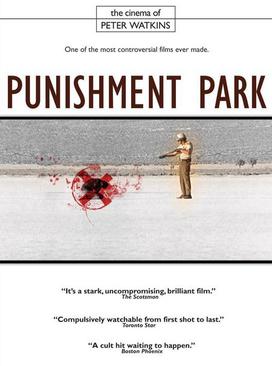
Film Review: Punishment Park (dir by Peter Watkins)


The 1971 “pseudo-documentary”, Punishment Park, imagines an alternative America that still feels very familiar.

With America paralyzed by continuing protests against racism, economic inequality, and the war in Viet Nam, President Richard Nixon declares a state of emergency and invokes the McCarran Internal Security Act of 1950.  The law (which is a real law and still on the books, by the way) allows the federal government to detain anyone who is deemed a risk to national security.  Anti-government activists are rounded up and put on trial before “community tribunals,” which are made up of a combination of military officers, politicians, businessmen, and housewives.  Though the arrested are given a chance to defend themselves against the charges, there’s never any doubt that each trial will end with a conviction.  Those convicted are given two options.  They can either serve their entire sentence in federal prison.  Or they can spend three days in Punishment Park.

Most of them make the mistake of picking Punishment Park.

What is Punishment Park?  It’s 53 miles of California desert.  Detainees have got three days to cross the desert, without food or water.  If they make it to the American flag at the end of Punishment Park, they will be given their freedom.  However, along with having to deal with the extreme heat, the detainees are also going to be pursued by a group of police officers and National Guardsmen.  If the detainees are caught before reaching the flag, they’ll be sent to prison.  The detainees are given a head start but it soon becomes apparent that the head start doesn’t count much for much when you’re in the desert without water.  It also becomes apparent that Punishment Park is much more about revenge and reminding people of their place than it is about justice.  The rules of Punishment Park only apply to the detainees.

As he did with the majority of his films (including the Oscar-winning The War Game), director Peter Watkins presents the film as being a documentary.  Though they’re never seen onscreen, we hear the voices of the British and German film crews asking questions to both the detainees and the people pursuing them.  (We also occasionally hear them protesting the brutality of what they’re witnessing, though the cops and soldiers are quick to point out that they really don’t care what a bunch of Europeans thinks about their actions.)  The film cuts back and forth from one group being chased through Punishment Park and another group being put on trial and eventually convicted.  Watkins cast the film with amateur actors, with the detainees being played by actual anti-war activists while many of the people pursuing them were played by actual guardsmen and police officers.  Watkins has subsequently started that the attitudes and the hostilities of the people in the film were mirrored off-screen by those playing them as well.  Much like the Stanford Prison Experiment, every one was more than willing to play their roles.  It brings a much-needed authenticity to the film’s alternative history.  (Interestingly enough, it also leads to several of the detainees coming across as being a bit annoying, as people who are convinced of their own righteousness tend to be.  The important thing is that they’re authentically annoying.  Even 50 years after the film was shot, both camps are full of people who still seem familiar.)  Ironically, the film’s biggest weakness is that everyone seems to be so genuinely worried about whether or not they’ll survive the trek through the desert that it’s difficult to believe that they would actually stop moving so they could have a conversation with the documentary crew.

Still, whatever flaws the film may have, Punishment Park feels sickeningly plausible.  In our current era of rising authoritarianism, militarization, reckless accusations of treason, and cries to set aside the Constitution so that “enemies” can be stripped of their rights, Punishment Park continues to feel frighteningly relevant today.

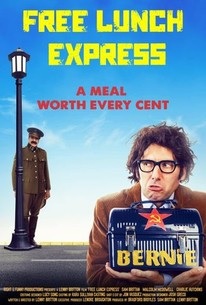
The Eric Roberts Collection: Free Lunch Express (dir by Lenny Britton)


Eric Roberts appears about twenty minutes into 2020’s Free Lunch Express.  He plays a man standing in line at a Vermont welfare office.  He tells a youngish Bernie Sanders (played, at that point in the movie, by Sam Brittan) that the easiest way to make some extra money is to run for public office because there’s no limit on the amount of money you can raise and you can keep whatever you have left after the campaign.  Having been recently kicked out of a commune and having no interest in getting a real job, Sanders is intrigued by the advice and soon embarks on his first political campaign.  Roberts only appears in that one scene.  It probably took an hour or two of his time to film.  Roberts spends the entire scene laughing, supposedly because he’s amused over the idea of making a living as a perennial political candidate.

(For that matter, Eric Roberts is not the only familiar face to pop up in Free Lunch Express.  Not surprisingly, Kevin Sorbo shows up.  He plays the ghost of George Washington and I’ll admit that I chucked at his Elizabeth Warren joke.  Far more surprisingly, Malcolm McDowell shows up as the narrator and epically rolls his eyes at every major moment of Sanders’s life.)

As for the rest of the film, Free Lunch Express is an attempt to do an Adam McKay-style satire about the career of Bernie Sanders.  Unfortunately, the problem with trying to make fun of Bernie Sanders is that even Bernie’s most fervent supporters already realize and often acknowledge that he’s a vaguely ludicrous figure.  Indeed, the very things that the film pokes fun at — like Bernie’s permanently messy hair, his thick Brooklyn accent, his habit of yelling out his comments while pointing upwards, and his apparently inability to make normal small talk — are the same things that most of his supporters find to be appealing about him.  I disagree with Bernie on the majority of the issues and I would probably move to another country if he was ever elected President but, at the same time, I can’t help but kind of like him.  One reason why so many people voted for him in 2016 is because he seemed to be authentic in a way that other politicians did not.  It’s easy to poke fun at a slick politician but it’s far more difficult to do so at someone who looks like he just got out of bed and who tends to say whatever pops into his mind.  It’s far easier to satirize the personality of a Hillary Clinton or a Mitt Romney than it is to satirize a Bernie Sanders.

Free Lunch Express follows Bernie through three stages of his life.  As a child, Bernie (played by Jonah Britton) swears a blood oath while standing in front of a poster Joseph Stalin and he declares that he’ll never be bullied again.  As a young man, Bernie (Sam Brittan) moves to Vermont and annoys all the other hippies to such an extent that he’s forced to take Eric Roberts’s advice and run for political office.  And, as an old and ineffective Senator, Bernie (now played by Charles Hutchins) runs for the presidency and only drops out after Hillary (Cynthia Kania) promises to campaign in Wisconsin and Ohio in the general election.  There were a few moments that made me chuckle, like the portrayal of Ben & Jerry as being two hippies who can’t have a conversation without shouting out the name of their latest flavor or Bernie cluelessly traveling to dreary Moscow for the worst honeymoon ever.  But, for the most part, the humor falls flat and the jokes are often too repetitive to really be effective.  Having a young and nerdy Bernie swear his allegiance to Stalin because he thinks that Stalin, who killed millions of his own citizens, will create a world without bullies is funny.  However, having the ghost of Stalin randomly speak to Bernie throughout the years is a joke that grows tiresome and never really pays off.  It’s pretty much the same issue that I had with Adam McKay’s Vice.  Much as Vice did with Dick Cheney, the film tries so hard to take down Sanders with ridicule that it instead makes him seem almost likable.  Indeed, by focusing on the times that Bernie was, in the film’s view, humiliated by Hillary Clinton, the hippies at the commune, and basic economic realities, the film actually portrays Bernie as someone who refuses to surrender his principles, regardless of how often the rest of the world tells him that he’s wrong.  The film aims to be Tartuffe and instead turns into Candide.

Finally, on a personal note, I think anyone who ever runs for office should be ridiculed, regardless of what they believe or whether or not they’ve done a good job.  It’s a good way to keep them honest and to remind theme that they’re supposed to work for us and not the other way around.  If one’s beliefs can’t survive a joke or two, that says far more about the beliefs than it does about the jokes.

Previous Eric Roberts Films That We Have Reviewed:

  1. Star 80 (1983)
  2. Blood Red (1989)
  3. The Ambulance (1990)
  4. The Lost Capone (1990)
  5. Love, Cheat, & Steal (1993)
  6. Love Is A Gun (1994)
  7. Sensation (1994)
  8. Doctor Who (1996)
  9. Most Wanted (1997)
  10. Mr. Brightside (2004)
  11. Six: The Mark Unleased (2004)
  12. Hey You (2006)
  13. In The Blink of an Eye (2009)
  14. The Expendables (2010) 
  15. Sharktopus (2010)
  16. Deadline (2012)
  17. Miss Atomic Bomb (2012)
  18. Lovelace (2013)
  19. Self-Storage (2013)
  20. This Is Our Time (2013)
  21. Inherent Vice (2014)
  22. Road to the Open (2014)
  23. Rumors of War (2014)
  24. A Fatal Obsession (2015)
  25. Stalked By My Doctor (2015)
  26. Stalked By My Doctor: The Return (2016)
  27. The Wrong Roommate (2016)
  28. Stalked By My Doctor: Patient’s Revenge (2018)
  29. Monster Island (2019)
  30. Seven Deadly Sins (2019)
  31. Stalked By My Doctor: A Sleepwalker’s Nightmare (2019)
  32. The Wrong Mommy (2019)
  33. Her Deadly Groom (2020)
  34. Top Gunner (2020)
  35. Just What The Doctor Ordered (2021)
  36. Killer Advice (2021)
  37. The Poltergeist Diaries (2021)
  38. My Dinner With Eric (2022)

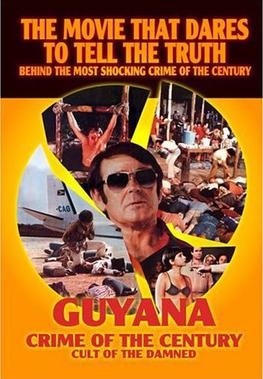
The TSL Grindhouse: Guyana: Crime of the Century (dir by Rene Cardona, Jr.)


In the late 1970s, the Rev. Jim Jones was a very powerful man.

The leader of the California-based People’s Temple, Rev. Jones had made a name for himself as a civil right activist.  As a minister, he made it a point to reach out to the poor and to communities of color.  (It was said, largely by Jones, that he had been forced to leave his home state of Indiana by the Ku Klux Klan.)  Local politicians eagerly sought not only Jones’s endorsement but also the donations that he could easily raise from the members of the People’s Temple.  Though there were rumors that he was more of a cult leader than a traditional preacher, Jones was appointed chairman of the San Francisco Housing Authority.  Everyone from Governor Jerry Brown to San Francisco Mayor George Moscone appeared with Jim Jones at campaign events.  Among the national figures who regularly corresponded with Jim Jones were First Lady Rosalyn Carter and Vice President Walter Mondale.

Of course, what actually went on behind the closed doors of the People’s Temple was a bit of secret.  Jones was a self-proclaimed communist who claimed to have had visions of an upcoming nuclear war between the U.S. and Russia.  In his sermons, he often claimed that it would be necessary for both him and the rest of the People’s Temple to eventually leave the United States.  Jones spoke of enemies that were trying to destroy him, like the reporters who investigated Jones’s claim of being a faith healer and who followed up on reports that Jones was sexually exploiting both the women and the men who followed him.  Jones secretly started to make plans to leave the United States in 1973 but it would be another four years before he and a thousand of his followers arrived in Guyana.  The People’s Temple Agricultural Project sat in the jungle, isolated from oversight.  It was informally known as Jonestown.

Over the next year, Jonestown did not exactly thrive.  Rev. Jones demanded that his people work hard and he also demanded that they spend several hours a day studying socialism and listening to him preach.  Jones ran his commune like a dictator, refusing to allow anyone to leave (for their own safety, of course).  Anyone who questioned him was accused of being an agent of the CIA.  In the U.S, the families of Jonestown’s citizens became concerned and started to petition the government to do something about what was happening in Guyana.  A few people who did manage to escape from Jonestown told stories of forced labor, suicide drills, rape, and torture.  The People’s Temple claimed that those people were all lying and, because Jones still had his government connections, he was largely left alone.

Finally, in 1978, Congressman Leo Ryan, a Democrat who had a history of opposing the political establishment, flew down to Guyana so that he could see Jonestown for himself and also bring back anyone who wanted to leave.  Despite the efforts of Jones to disguise the truth about life in Jonestown, several people did ask to leave the colony with Rep. Ryan.  Jones sent his most loyal men to meet and open fire on Rep. Ryan’s entourage at a nearby airstrip.  Rep. Ryan and four others were shot and killed, making Ryan the first Congressman to be assassinated since 1868.  Nine others, including future Rep. Jackie Speier, were wounded in the attack.

Back at Jonestown, Jim Jones announced that his prophecy was coming true and that the imperialists would soon descend on Jonestown.  Though 85 of Jones’s followers managed to escape into the jungle, the other 909 residents of Jonestown subsequently died.  Though some showed signs of having been murdered by Jones’s followers, the majority committed suicide by drinking poisoned Flavor-Aid.  Jim Jones shot himself in the head.

The world was horrified and the term “drinking the Kool-Aid” entered the discourse.  And, of course, many filmmakers were inspired by the horrific events that happened in Jonestown.  Ivan Rassimov, for instance, played a Jim Jones-style cult leader in Umberto Lenzi’s Eaten Alive.  Meanwhile, Powers Boothe would win an Emmy for playing Jim Jones in a 1980 television miniseries called Guyana Tragedy.

Guyana Tragedy is often described as being the definitive film about Jim Jones.  However, a full year before Guyana Tragedy aired, the Mexican director, Rene Cardona Jr., was in theaters with his own version of the Jim Jones story.  To anyone who is familiar with Cardona’s style of filmmaking, it’s perhaps not surprising that 1979’s Guyana: Crime of the Century did not win any awards.

Cardona’s film opens with a rather odd title card, explaining that, though the film is based on Jonestown, the names of certain characters “have been changed to protect the innocent.”  But if you’re going to start the film by announcing that it’s about the biggest news story of the past year, what’s the point of changing anyone’s name?  And for that matter, why is Jim Jones renamed James Johnson and his colony rechristened Johnsontown?  Jones was hardly one of the innocents, not to mention that he was dead and in no position to sue when the film came was released.  Why is Leo Ryan renamed Lee O’Brien, especially when the film portrays Ryan as being the type of hard-working and honest congressman that anyone would be happy to vote for?

The film opens with Rev. James “Johnson” (played by Stuart Whitman) giving a lengthy sermon about how it’s time for the congregation to move to Guyana, which he describes as being a Socialist paradise.  Oddly, in the film, the People’s Temple is portrayed being largely white and upper middle class whereas, in reality, the opposite was true.  Indeed, Jones specialized in exploiting communities that were largely marginalized by American society.  One reason why Jones’s claim of government persecution was accepted by the members of his church is because the People’s Temple was made up of people who had very legitimate reasons for distrusting the American government.

A few scenes later, Johnson is ruling over “Johnsonville.”  Since this is a Cardona film, the viewers are shown several scenes of people being tortured for displeasing Johnson.  A child is covered in snakes.  Another is shocked with electricity.  A teenage boy and girl are forced to kneel naked in front of Johnson as he announce that their punishment for trying to run away is that they will be forced to have sex with someone of Johnson’s choosing.  Once the torture and the nudity is out of the way, the film gets around to Congressman O’Brien (Gene Barry) traveling to the Johnsontown.  Since the audience already knows what’s going to happen, the film becomes a rather icky game of waiting for O’Brien to announce that he’s ready to go back to the landing strip.

Because the film has been released under several different titles and with several different running times, Guyana: Crime of the Century has gotten a reputation for being one of those films that was supposedly cut up by the censors.  I’ve seen the original, uncut 108-minute version of Guyana and I can tell you that there’s nothing particularly shocking about it.  Instead, it’s a painfully slow film that doesn’t really offer much insight into how Jim Jones led over 900 people to their deaths.  While Gene Barry make for a convincing congressman, Stuart Whitman gives a stiff performance as the Reverend Johnson.  There’s very little of the charisma that one would expect from a successful cult leader.  One gets the feeling that Whitman largely made the film for the paycheck.

Of course, Whitman was hardly alone in that regard  The film features a host of otherwise respectable actors, including  Yvonne DeCarlo, Joseph Cotten, John Ireland, Robert DoQui, and Bradford Dillman.  As well, Cardona regular Hugo Stiglitz appears as a photographer.  (Stiglitz is perhaps best known for starring in Nightmare City and for lending his name to a character in Tarantino’s Inglourious Basterds.)  Of the large cast, I appreciated the performances of Cotten and Ireland, who play Johnson’s amoral but well-connected attorneys.  (The characters are based on the Temple’s real-life attornes, Charles Garry and Mark Lane.  Lane also wrote the first JFK conspiracy book, Rush to Judgment.)  I also liked Yvonne DeCarlo’s performance as the most devoted of Johnson’s followers.  Even Bradford Dillman’s natural blandness was used to good effect as his character comes to represent the banality of evil when it comes time for him to start administering the Flavor-Aid.  But those good performances still can not overcome the film’s slow pace and the fact that the film didn’t bring any new insight to the tragedy.

The film sticks fairly close to what is believed to have actually happened at Jonestown but, in the end, it barely even works as an example of shameless grindhouse filmmaking.  It’s not even offensive enough to be enjoyable on a subversive level.  Instead, it was just a quick attempt to make some money off of the crime of the century.

Retro Television Reviews: Hang Time 4.15 “The Tall And The Short Of It” and 4.16 “Just Friends”


Welcome to Retro Television Reviews, a feature where we review some of our favorite and least favorite shows of the past!  On Mondays, I will be reviewing Hang Time, which ran on NBC from 1995 to 2000.  The entire show is currently streaming on YouTube!

Today, YouTube makes watching Hang Time difficult!

Episode 4.15 “The Tall and the Short Of It”

(Dir by Patrick Maloney, originally aired on October 31st, 1998)

Rico has finally got a girlfriend!  She loves video games and basketball almost as much as he does!  The problem, as far as Rico is concerned, is that Rico is short and Gail (Bree Turner) is tall.  Rico is worried that the team will make fun of him because of the height difference and, from what we’ve seen of the team, he’s probably right.  Then again, Rico was addicted to marijuana just a few weeks ago so maybe he’s still having episodes of paranoia.

When the team starts to suggest that Rico is lying about having a girlfriend, Rico decides that the best possible solution would be pay his cousin, Lisa (Constance Zimmer, who later starred on Unreal), ten dollars to pretend to be his girlfriend.  Knowing Rico, that’s probably not the first time he’s paid a cousin to make out with him.  Needless to say Gail sees Rico with Lisa (who, at least, has a good name) and she breaks up with him.  But then Rico apologizes and dances with her at the school’s 70s party so I guess everything’s resolved.

Honestly, who cares?  It’s Rico. Rico makes Vince seem like an interesting character.

While this was going on, Mary Beth searched for Hammer’s lucky jacket, which she lost after he gave it to her for safekeeping.  Don’t worry.  She found it.

Episode 4.16 “Just Friends”

(Dir by Patrick Maloney, originally aired on October 31st, 1998)

In this episode….

OH MY GOD!  IT’S NOT ON YOUTUBE!

Yep, it’s sad but it’s true.  As far as I can tell there are only two episodes of Hang Time that can’t be found online and this is one of them.  Obviously, I can’t review this episode but I can tell you what apparently happened.

According to the imdb, this episode found the team working, once again, as counselors at a basketball camp.  You may remember that Coach Fuller bought the camp last season.  Fuller’s gone but apparently, the camp is still a thing and now Coach K. is in charge of it.  Did Coach K. buy the camp or did Fuller ask him to keep an eye on it?  I can’t tell you because I can’t watch the episode but, from my knowledge of Hang Time, I have a feeling this question was probably never even addressed.

Anyway, it appears that this episode featured Julie kissing some other guy and realizing that she and Michael were better as just friends.  Poor Michael!  What’s funny is that, at this point, I’m so used to Julie cheating on her boyfriends and then making them feel as if it’s their fault that I feel as if I’ve seen this show without having seen it.