October Hacks: Meat Cleaver Massacre (dir by Edward D. Wood, Jr.)


Filmed, reportedly over the course of a few days, in 1974 but not released until 1977, The Meatcleaver Massacre is known for two things.

First off, it’s known for opening and ending with on-screen narration for Christopher Lee.  The distinguished-looking Lee begins the film sitting in what appears to be his own personal office.  He talks to us about the history of the supernatural and the paranormal and he suggests that the story that we’re about to see, may very well change someone like me from being a skeptic into a believer.

Secondly, Meat Cleaver Massacre is known for being one of the last films to be directed by the infamous Edward D. Wood, Jr.  Now, it should be understood that Wood didn’t have anything to do with writing or producing the film.  And when filming started, the director was a guy named Ken Burns who I assume is not the famed documentarian.  Unfortunately, Burns was judged not to be up to the role of directing and he was fired.  Edward D. Wood, Jr., who by this point was living in alcoholic squalor in Los Angeles and making his money through writing pornographic books, was brought in as his replacement.  When the film was released, the director was credited as being “Evan Lee.”  It wasn’t until 2022 that the film’s cinematographer (who was not paid for his work on the film) posted on Facebook that Ed Wood was the director.  The cinematographer’s claim was backed up by the film’s editor.

Now, my immediate reaction to learning this was to think: “Oh my God, Ed Wood directed Christopher Lee!”

Well, sorry …. no.  All the evidence points to Wood directing Meat Cleaver Massacre.  It’s an Ed Wood film, even if it doesn’t feature Wood’s trademark obsession with angora.  But the two scenes with Christopher Lee were apparently filmed for a different project, one that was abandoned.  In 1977, the distributors of Meatcleaver Massacre purchased the footage of Christopher Lee and inserted it into their film, which was promptly sold as a Christopher Lee film.  But the truth of the matter is that Lee’s footage was obviously meant for a far “classier” film than Meatcleaver Massacre and, judging from how dismissive Lee tended to be of the work that he did strictly for the money, it’s totally possible that he didn’t even know that he had become the star of Meatcleaver Massacre.  

As for Ed Wood, he died a year after this film was released.  At the time of his death, he had been evicted from his apartment and his landlord apparently threw away all of his scripts and movie memorabilia.  Sorry, everyone.  The first half of Ed Wood’s life story may be popular and funny but it definitely did not lead to a happy ending.

But what about Meat Cleaver Massacre, you may be asking.  Well …. actually, it’s not terrible.  It’s definitely a low-budget affair and none of the actors are particularly impressive but there are a few scenes that work when taken on their own terms.

James Habif stars as Professor Cantrell, who is first seen teaching a class on how to summon an Irish demon and then returning home to his family.  Unfortunately, that night, one of this students, Mason (Larry Justin), orders his gang to break into Cantrell’s house.  Mason says that he just wants to play a prank on the professor but instead, he and his idiot friends murder Cantrell’s family and leave Cantrell in a paralyzed state.  That said, Cantrell may be paralyzed but he can still summon the demon Morak to hunt down and kill all of Mason’s friends, one-by-one.  The deaths are grisly, with Mason’s home invasion bringing to mind the crimes of the Manson’s family and the demon’s acts of vengeance ranging from a disembowelment in the desert to an accident in a garage to an exploding movie projector.

As with most of Ed Wood’s film, the pacing is a bit off and the film is edited in such a way that it’s sometimes difficult to keep track of how much time has passed between scenes.  The acting isn’t great, though it’s really not any worse than the acting you would expect to find in a low-budget 70s horror film.  The scene in which one of Mason’s gang meets his fate in the desert is actually rather well-done and intentionally surreal.  To be honest, there’s not much about the film that would make you think it was an Ed Wood production.  As I said before, there’s no references to angora.  There’s no Kelton the Cop.  Criswell doesn’t make an appearance.  By most accounts, Ed spent the final decade of his life broke and doing whatever he had to do to scrounge up enough cash to pay his rent and keep drinking.  Doing whatever he had to do included directing films like Meatcleaver Massacre.  I wonder how many other films were secretly directed with Ed Wood?

Anyway, if you’re a Christopher Lee or Ed Wood completist, Meatcleaver Massacre is currently available on Tubi.

Horror Film Review: Goodnight Mommy (dir by Matt Sobel)


Poor Naomi Watts.

I mean, let’s just be real here.  Naomi Watts is an excellent actress.  One could argue that she’s one of the best actresses working today.  She’s someone who can be convincing in just about any genre.  She can do drama.  She can do comedy.  She can do horror.  She can star in small indie films and expensive blockbusters.  She can play suburban housewives and sultry femme fatales with equal skill.  She’s an actress who has played a wide variety roles and has shown a willingness to take risks in her career.

And yet, far too often, she gets cast in disappointing and misconceived films.  Indeed, it sometimes seem like David Lynch is the only director to really understand just how good Naomi Watts can be, whether he’s working with her in Mulholland Drive, Inland Empire, or Twin Peaks: The Return.  Watts provided Twin Peaks: The Return with a heart and the scene where she tells off the two crooks who are extorting money from her husband still carries a punch.  She brought a lot of genuine and needed emotion to a miniseries that would have otherwise been cold and impersonal.  Unfortunately, not every director has the insight or the skill of a David Lynch.

Just consider 2022’s Goodnight Mommy, a thoroughly unnecessary remake of a 2014 Austrian film.  Watts is cast as the Mother, a former Hollywood actress who now lives on an isolated farm and who spends most of her time drinking and sulking in her room.  Due to some recent plastic surgeon, the Mother’s face is completely and totally bandaged.

This concerns her twin sons, Elias (Cameron Crovetti) and Lukas (Nikolas Crovetti).  They worry about how strange the Mother has been acting ever since they moved out to the farm with her.  (While the Mother was getting plastic surgery, the twins were living with their father.)  The Mother orders them to stay out of her room and hardly speaks to them.  When Elias notices that his mother’s formerly blue eyes now appear to be green, he worries that his real mother may have been replaced with an imposter.

As I mentioned earlier, Goodnight Mommy is based on a 2014 Austrian film.  The original film, if I remember correctly, was effective creepy, well-acted, and full of atmosphere.  The remake feels more than a bit pointless and slow.  The big twist that was so effective in the Austrian film falls flat in the American remake, largely because the kids playing the brothers in the remake are both directed to give boring and inauthentic performances.  The remake of Goodnight Mommy mistakes a slow space for a creepy atmosphere.

That said, Naomi Watts gives a good performance as the Mother, one that will probably keep viewers guessing if they haven’t already seen the original film.  In fact, Watts is so good that it just makes it all the more disappointing that the film itself feels so pointless.  When it comes to Goodnight Mommy, go with the original and ask your local film producers to give Naomi Watts a role in a decent movie.

Retro Television Reviews: Miami Vice 1.6 “Calderone’s Return Part 2: Calderone’s Demise”


Welcome to Retro Television Reviews, a feature where we review some of our favorite and least favorite shows of the past!  On Mondays, I will be reviewing Miami Vice, which ran on NBC from 1984 to 1989.  The entire show is currently streaming on Tubi!

This week, Crockett and Tubbs finally get their revenge on Calderone!

Episode 1.6 “Calderone’s Return Part 2: Calderone’s Demise”

(Dir by Paul Michael Glaser, originally aired on October 26th, 1984)

This episode of Miami Vice opens with Crockett and Tubbs interrogating an associate of the hitman who Calderone (Miguel Pinero) sent to kill Sonny during the previous episode.  Crockett and Tubbs yell at the man and basically threatened to beat the crap out of him unless he tells them where Calderone is hiding in the Bahamas.  They eventually get the information that they want but it’s hard not to compare their methods to the methods that the “bad” cops previously used to get a false confession from the Haitians in episode 4.

Of course, in this case, it’s personal for Crockett and Tubbs.  Calderone killed Tubbs’s brother.  Calderone’s assassin killed Lt. Rodriguez and nearly killed Sonny’s wife and son.  And besides, how could any viewer spend too much time worrying about the ethics of how they got their information when it leads to an extended sequence of Crockett and Tubbs stoically standing in one of Crockett’s speed boats as they race across the ocean to the Bahamas?

Miami Vice has often been described as being the ultimate example of style over substance and, while I think that’s an oversimplification because Miami Vice definitely had something to say about greed and the war on drugs, it is true that this episode proves just how many illogical plot developments an audience is willing to accept as long as the story is told with a certain amount of visual fliar.

Because, seriously, at no point does Crockett and Tubbs’s plan make any sense.

Basically, Crockett and Tubbs are planning to work undercover on the island so that they can get close to Calderone.  Here’s the thing, though — Calderone has seen both Crockett and Tubbs so it’s not like he’s not going to recognize them if he spots them.  (Calderone even sent a hitman to kill Crockett.)  As well, since neither Calderone nor anyone in his entourage actually met the hitman, Crockett is planning on pretending to be the hitman and demanding more money for his services.  However, the hitman is from Argentina and there’s absolutely nothing about Don Johnson (or Sonny Crockett) that suggests that he could be from anywhere in South America.  Finally, one has to be willing to accept that Calderone no longer has any contacts in Miami who could call him up and say, “Hey, your hitman’s dead and Sonny Crockett  is still alive.”

Tubbs, meanwhile, pretends to be an art gallery owner so he can approach Angelina (Phanie Napoli), the artist who he believes to be Calderone’s mistress.  It’s not until after Tubbs has slept with her that he discovers that she is actually Calderone’s daughter and she believes her father to be a legitimate businessman.  Despite having known her for only a day, Tubbs tells Crockett that he’s falling in love with her.

By that point, Calderone has already figured out that Sonny and Tubbs are on the island and they’ve already been through one exciting car chase.  Logic would suggest that Sonny and Tubbs should now leave the island but, instead, they decide to put on masks so that they can attend the carnival.  The masks, however, don’t do fool anyone as they’re both grabbed by Calderone’s men and taken to Calderone’s mansion where Calderone ends up getting gunned down while Angelina screams, “NOOOOOO!”  Needless to say, that’s pretty much the end of Angelina’s romance with Tubbs.

As I said, the plot doesn’t always make much sense.  The whole storyline is dependent on Tubbs, Crockett, and Calderone almost always choosing to make the most illogical choices.  Calderone could have easily killed Tubbs and Crockett at the carnival but, for some reason, he brought them to his home.  Tubbs and Crockett could have arrested Calderone for jumping bail and taken him back to Miami but, instead, they came up with an undercover plan that was doomed to failure.  It makes no sense but it’s so stylish that it doesn’t matter.  The slow motion shootouts, the car chases, the masks, the beautiful island scenery, the spacey comedic relief provided by Sam McMurray in the role of a stoned resort manager, all of that comes together so nicely that the plot ultimately doesn’t matter.  It’s pure style and both Johnson and Thomas are so charismatic as Crockett and Tubbs that they’re a pleasure to watch even when they’re doing stupid things.

Next week: Edward James Olmos arrives at Vice.

Horror Film Review: Bloody Pit of Horror (dir by Domenico Massimo Pupillo)


First released in 1965, the Italian horror film, Bloody Pit of Horror, tells the story of the Crimson Executioner.

Back in the 17th century, The Crimson Executioner was one of the most feared men in Italy.  Well-known for his red mask, red tights, and his cape, The Crimson Executioner was one of the best executioners that the Vatican ever had but then it was discovered that he was taking his work home with him and executing people in his own private dungeon.  As these murders were sanctioned by neither the Church nor the State, the Crimson Executioner was forced into his own Iron Maiden and executed.

Centuries later, the Crimson Executioner’s castle is owned by a retired actor named Travis Anderson (played by body builder Mickey Hargitay).  Travis enjoys living in the castle, where he is waited on by two henchmen who wear blue striped shirts and who look like they should be playing revolutionaries in a Monty Python parody of a Jean-Luc Godard film.  Travis especially likes that, despite the fact that the Crimson Executioner was executed for having the stuff, no one ever got around to cleaning out the torture dungeon.  All of the torture devices are still down there but, unfortunately, Travis doesn’t really have anyone to use them on.

Then, one day, a group of people arrive at the castle.  The group is made up of photographers, a writer, a publisher, and several attractive models.  They’re looking for a location where they can take pictures that will be used to illustrate an upcoming horror book.  At first, Travis tells them that he doesn’t want them taking picture at his castle and he doesn’t really want them hanging out either.  But then, after seeing the models, Travis changes his mind.  The group heads down to the torture dungeon so that they can start snapping pictures while Travis dresses up the like The Crimson Executioner and prepares to torture everyone to death, one-by-one.  Yikes!

A lot of the torture devices that are seen in the dungeon do look frightening and I’ll admit that I snapped, “No, what are you thinking!?” when the only male model agrees to lay down under a bunch of very sharp spikes so that his picture could be taken.  (Needless to say, that didn’t go well.)  A lot of the torture devices involved the use of fire and again, that totally made me cringe.  That said, it should also be pointed out that a few of the other devices weren’t that impressive.  A scene of Travis spinning two models around while pushing several swords closer and closer to them was less than effective because the torture device itself just looked incredibly stupid.

Actually, speaking of looking incredibly stupid, Travis really does himself no favors by dressing up as The Crimson Avenger.  With his red, rubber mask and his tights and his cape, he looks like a character who would be the comic relief villain in a Marvel movie, like the incompetent, wannabe crook who Spider-Man captures before the real villains show up.  Mickey Hargitay was a body builder who was married to Jayne Mansfield and who is today perhaps best-remembered as being the father of Law & Order: SVU’s Mariska Hargitay.  Mickey’s performance in this film is over the top without being entertaining.  It’s impossible to take him seriously as an intimidating menace and it doesn’t help that the models at the castle are often just as likely to die from their own stupidity than from anything that Mickey did.  (One model literally stumbles in front of him right before he fires a crossbow at someone else.)

This film does have a brief scene with a big, fake spider and giant, booby-trapped web.  That scene is so ludicrous that, for a few minutes, Bloody Pit of Horror becomes just weird enough to be entertaining.  Otherwise, this is a fairly forgettable horror film.  The opening credits claim that the film is based on the writing of Marquis de Sade.  If that’s true, I can only conclude that he should never have been rescued from the Bastille.

(Seriously, they tried to execute Thomas Paine but they let the Marquis de Sade go free?  What was up with the French Revolution?)

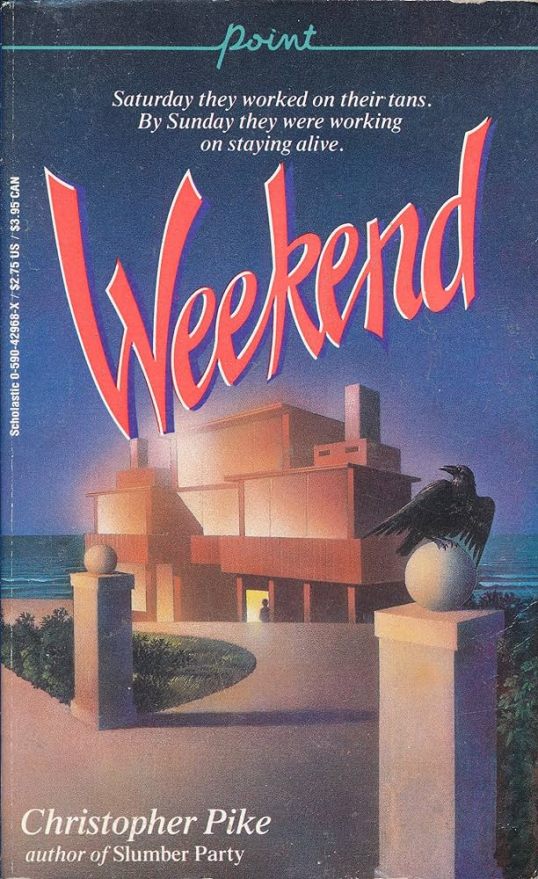
Horror Novel Review: Weekend by Christopher Pike


The 1986 novel, Weekend, involves the most memorable senior ditch day ever!

9 friends, who have a tangled web of personal relationships and conflicting feelings towards each other, head down to Mexico for the weekend.  They’ve got a mansion to stay in, one that belongs to the absent parents of their friend Robin.  Robin once had a great singing voice and a great future but, at the last party that her friends threw, someone spiked her drink with insecticide.  Now, Robin can barely speak and is only being kept alive by a dialysis machine.  The weekend in Mexico starts out as a fun but soon, secrets are being revealed, live are being put at risk, and who knows who will survive to the end!

The majority of the story is told through the eyes of Shani, who is a well-written and complicated character.  As opposed to the characters who populate the majority of R.L. Stine’s Fear Street books, Shani is nether perfect nor totally evil.  Instead, she’s someone who has very real emotions and, even more importantly, very real reactions to everything that’s going on around her.  (Christopher Pike’s novels have always felt a little less generic than R.L. Stine’s.  That said, Pike’s novels also have a tendency to be a bit more unnecessarily complicated than Stine’s.)   That said, the other characters are not as well-written as Shani and, with a total of 9 people staying at that mansion, it can get a bit difficult to keep straight of who is who.  Keep a notebook nearby so you can jot down who betrayed who at which pep rally because it’s not always easy to keep track of it all.

I always enjoy books about people stranded with a killer for the weekend and Weekend does a good job of keeping you guessing as to who is responsible for what.  The finale, in which everything is explained, is enjoyably over the top.  Pike, wisely, chooses to embrace the melodrama when it comes to wrapping everything up.

Weekend is an enjoyably over-the-top novel.  If nothing else, this book might make you appreciate your own occasionally overdramatic friends.  Because as dramatic as they may be, they’re nowhere near as bad as the folks in Weekend.

October True Crime: The Frozen Ground (dir by Scott Walker)


In the early 80s, Robert Hansen was a respected businessman in Anchorage, Alaska.  He owned a restaurant.  He was known for being a family man.  He held several local hunting records.  Almost everyone who met him described him as being friendly and good-natured.  In those days before the Internet, it wasn’t as if someone could do a Google search and discover that Hansen had a long criminal record in both Iowa and Alaska.  There was no way to know that Hansen had been a teenage arsonist and that had been arrested and charged with rape in the early 70s.  (The charges were ultimately plea bargained down to assault.)  Even those who did know about his background felt that Hansen had turned his life around and was now an upstanding member of society.

At the same time that Hansen was a respected member of the Anchorage community, he was abducting young women and, after holding them prisoner and raping him at his cabin, flying them into the Alaskan wilderness where he would then hunt them in his own version of The Most Dangerous Game.  It’s known, for sure, that Hansen murdered at least 18 women.  It’s felt that the number is much higher.  Along with his own good reputation, Hansen was protected by the fact that many of his victims were transients and sex workers.  Their disappearances were rarely reported to the police and, when they were, the police didn’t go out of their way to find them.  Much as happened with the Green River Killer in Washington State, Hansen was able to get away with his crimes for over 20 years not because he was particularly clever but because his victims were considered to be on the fringes of society.

The 2011 film, The Frozen Ground, is a fictionalized account of the investigation that led to Hansen’s arrest.  John Cusack plays Robert Hansen.  Nicolas Cage plays Jack Holcombe, a weary Alaskan state trooper who has to deal with uncooperative witnesses and beaurocratic indifference while investigating Hansen’s crimes.  Vanessa Hudgens plays Cindy Paulson, a 17 year-old sex worker who survives her encounter with Hansen but whose story is originally ignored by the police because of what Cindy does for a living.  Both Jack and Hansen comes to realize that Cindy is the only person who can positively identify the killer but Cindy has disappeared into the Anchorage underworld, working as a stripper and being manipulated by her pimp, Clate Johnson (50 Cent).

Taking full of advantage of the chilly atmosphere and the isolation of the Alaskan wilderness, The Frozen Ground is an effective journey into the heart of darkness, featuring excellent performances from Nicolas Cage and John Cusack.  Cusack smoothly alternates between being the arrogant hunter and the desperate prey while Cage’s weary expression captures the psychological toll of investigating the crimes of someone like Robert Hansen.  Of course, when the film came out, it received a lot of attention for featuring Vanessa Hudgens in a dramatic role.  Hudgens’s performance here continues the tradition of former Disney (and Nickelodeon) actresses trying to prove their range by playing an edgy role.  Though there’s a few scenes where she does seem to be trying too hard to make sure that we all know she’s capable of more than High School Musical, Hudgens is convincing for the most part.

As for the real-life Robert Hansen, he was sentenced to spend 461 years in prison for his crimes.  (Alaska has no death penalty.)  In 2014, three years after the release of this film, the 75 year-old Hansen died of natural causes while still incarcerated.

Guilty Pleasure No. 67: Aerobicide (dir by David A. Prior)


It doesn’t get more 80s than 1987’s Aerobicide, a rather ludicrous slasher film that is also known as Killer Workout.

The clients and the staff at Rhonda’s Work-Out are in danger.  People are being murdered inside the gym, left and right.  One member of the gym is slashed to death in the showers.  Another one is beaten to death with a barbell while his friend is killed with a very large safety pin.  One instructors ends up hanging in a closet while another is stabbed to death in a locker room.  A group of teens show up to spray graffiti on the outside of the club and they all end up getting murdered as well.

Most people would assume that, with all of those murders going on, that the place would be closed down or, at the very least, people would stop frequenting the gym.  But no, the opposite happens.  Every murder is followed by an aerobics class, in which the camera shamelessly lingers on the lycra-clad participants, none of whom seem to be particularly concerned about working out at a crime scene.  ( If your body’s looking too big, one of the film’s many songs tells us, Like a hippo or a pig/ Gotta workout/ gotta work out….) The gym’s owner, Rhonda Johnson (Marica Karr), doesn’t seem to be particularly concerned about the gym getting a bad reputation as a result of all the murders.  Instead, she’s more annoyed with her surviving instructors, snapping at one, “Stop showing off your tits and that tight little ass!”  Personally, I would think looking good would be a top priority for someone working at a gym but apparently, Rhonda feels differently.

(Then again, if people were being murdered at my gym, I’d probably cancel my membership, despite the fact that my gym is only a few blocks away from my house and most of the people who go there are relatively cool.  That said, the main reason why I signed up for a membership was so my sister could get a discount on her membership fees.  Personally, I prefer running.)

Even if Rhonda refuses to close the gym, you would think that Lt. Morgan (David James Campbell) would make sure that the gym had a full-time police presence.  Eventually, Morgan does assign one policeman to watch the gym but that’s only after several murders have already occurred and that one policeman’s presence doesn’t really do much good.  Then again, Lt. Morgan never comes across as being a particularly good cop.  Morgan is spectacularly bad at his job, which wouldn’t be a huge problem if not for the fact that Morgan is also the hero of the film.  Eventually, he does figure out that the murders are connected to a tragic tanning bed accident but it’s hard to say how exactly he managed to do that.  Rather than actually showing us Lt. Morgan gathering  clues and drawing conclusions, the film just has him randomly blurt stuff out.

It’s all pretty ridiculous but, because the film is such a film of it’s time, it’s also rather fascinating.  Killer Workout may not have been the only or even the first film to combine Flashdance with slasher chills but it is the first one to feature a song with lyrics like, “It’s the perfect body you’re looking for/it’s aerobocide.”  This is one of those films where you come for the big hair and the 80s fashions and the bass-heavy score and you stay for the ludicrous plot twists, the overacting, the overheated dialogue, and the out-of-nowhere plot twists that dominate the film’s final 30 minutes.  It’s not necessarily a “good” film but I defy anyone to look away once it begins.

Previous Guilty Pleasures

  1. Half-Baked
  2. Save The Last Dance
  3. Every Rose Has Its Thorns
  4. The Jeremy Kyle Show
  5. Invasion USA
  6. The Golden Child
  7. Final Destination 2
  8. Paparazzi
  9. The Principal
  10. The Substitute
  11. Terror In The Family
  12. Pandorum
  13. Lambada
  14. Fear
  15. Cocktail
  16. Keep Off The Grass
  17. Girls, Girls, Girls
  18. Class
  19. Tart
  20. King Kong vs. Godzilla
  21. Hawk the Slayer
  22. Battle Beyond the Stars
  23. Meridian
  24. Walk of Shame
  25. From Justin To Kelly
  26. Project Greenlight
  27. Sex Decoy: Love Stings
  28. Swimfan
  29. On the Line
  30. Wolfen
  31. Hail Caesar!
  32. It’s So Cold In The D
  33. In the Mix
  34. Healed By Grace
  35. Valley of the Dolls
  36. The Legend of Billie Jean
  37. Death Wish
  38. Shipping Wars
  39. Ghost Whisperer
  40. Parking Wars
  41. The Dead Are After Me
  42. Harper’s Island
  43. The Resurrection of Gavin Stone
  44. Paranormal State
  45. Utopia
  46. Bar Rescue
  47. The Powers of Matthew Star
  48. Spiker
  49. Heavenly Bodies
  50. Maid in Manhattan
  51. Rage and Honor
  52. Saved By The Bell 3. 21 “No Hope With Dope”
  53. Happy Gilmore
  54. Solarbabies
  55. The Dawn of Correction
  56. Once You Understand
  57. The Voyeurs 
  58. Robot Jox
  59. Teen Wolf
  60. The Running Man
  61. Double Dragon
  62. Backtrack
  63. Julie and Jack
  64. Karate Warrior
  65. Invaders From Mars
  66. Cloverfield

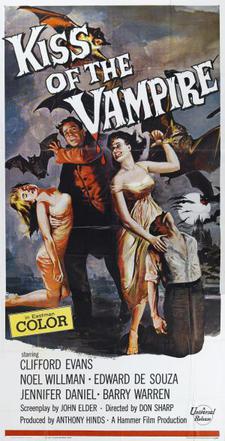
Horror Film Review: Kiss of the Vampire (dir by Don Sharp)


The 1963 Hammer film opens with a funeral in early 20th century Bavaria.  It’s a solemn affair, full of mourning villagers and taking place in an atmospheric cemetery.  However, just as the wooden coffin is being lowered into the grave, the stern Prof. Zimmer (Clifford Evans) walks through the funeral party, carrying a stake and a hammer.  Without bothering to open the coffin, he hammers the stake through the lid.  As the members of the funeral party wail and scream, bright red blood bubbles up from the coffin.

Yep, it’s a Hammer vampire film!  That means that once again, we’ve got a small village, we’ve got superstitious townspeople, we’ve got an aristocratic vampire and his vampire brides, and we’ve got a mix of red blood and cleavage.  What we do not have is Christopher Lee, despite the fact that Kiss of the Vampire was originally planned to be a Dracula film.  Lee, who was a serious student of the occult and a  fan of Bram Stoker’s version of the legendary vampire, was very much not a fan of Hammer’s interpretation of the character and, whenever he could get out of doing a Hammer Dracula film, he would.

As a result, Kiss of the Vampire features not Dracula but instead Dr. Ravna (Noel Willman), a vampire who lives in a castle and who has a loyal cult of followers.  Both his son (Barry Warren) and his daughter (Jacquie Wallis) are also vampires.  When two British newlyweds drive into town on their honeymoon, Dr. Ravna hopes to turn Marianne Harcourt (Jennifer Daniel) into a vampire as well.  Marianne’s husband, Gerald (Edward de Souza), teams up with Prof. Zimmer to keep that from happening.  It’s vampire doctor versus human professor!

This was director Don Sharp’s first horror film for Hammer and he does a pretty good job of creating an appropriately gothic atmosphere.  Almost all of the things that we love about Hammer films is present in Kiss of the Vampire, from the cobblestone streets to the imposing castles to the elaborate masquerade ball that allows Dr. Ravna to abduct Marianne in the first place.  There’s also a lot of blood, including a wonderfully grisly scene where Prof. Zimmer deliberately sets his arm on fire in order to cauterize a vampire bite.  Visually, the film is full of macabre images and operatic horror.  In fact, one could argue that the absence of Dracula and Van Helsing allows Kiss of the Vampire to go in a direction that the other Hammer vampire films could not.  The finale, which featured the heroes using black magic to battle the vampires, was originally meant to be the finale of The Brides of Dracula until Peter Cushing objects that Prof. Van Helsing would never use dark magic to battle a vampire.  Prof. Zimmer, on the other hand, had no such qualms.

That said, the film really does suffer from the fact that Noel Willman does not have the evil charisma of Christopher Lee and Dr. Ravna and Prof. Zimmer do not share the long history of Dracula and Van Helsing.  Kiss of the Vampire is a good film but it’s hard not to mourn what it could have been.

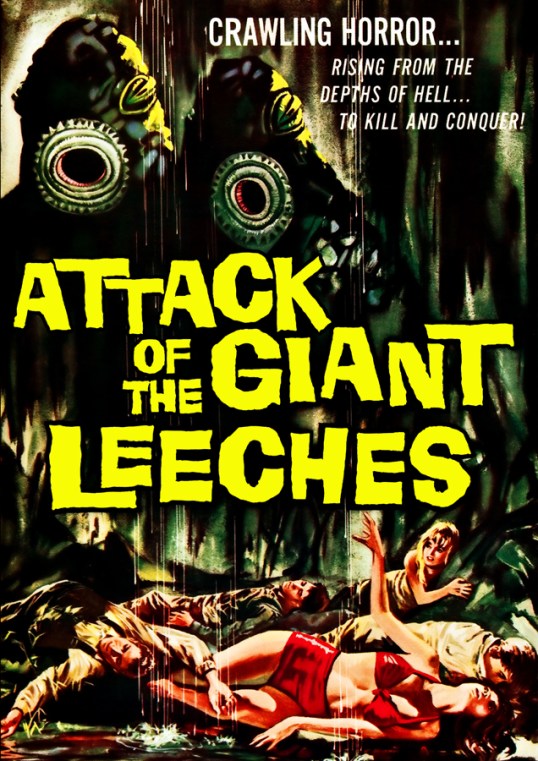
Horror On The Lens: Attack of the Giant Leeches (dir. by Bernard Kowalski)


For today’s public domain horror film, I present to you 1959’s Attack of the Giant Leeches. This 60-minute film is a classic Drive-in film.  It features an iconic performance from Yvette Vickers, who is one of my favorites of the strong, confident, unapologetically sexy women who dominated the old B-movies. (Plus, she was only 5’3 and it’s not easy being brave when you’re having to look up at everyone. Trust me, I know.) This short little film is steamier than Louisiana in August and is full of bayou atmosphere.

I have to admit that I’m kinda freaked out by the scenes of people floating underwater in this film. And leeches .… agck! Don’t even get me started on leeches. Especially giant leeches….

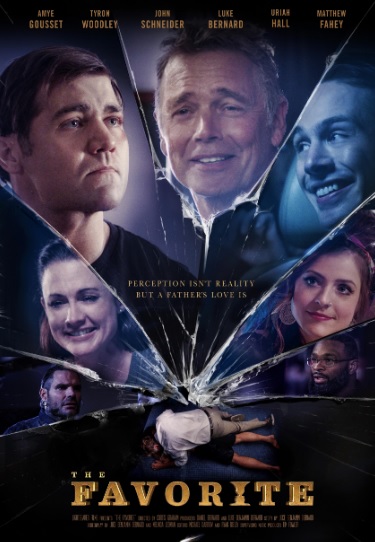
October Positivity: The Favorite (dir by Curtis Graham)


The 2019 film, The Favorite, tells the story of two brothers.

Benjamin Bernard (Luke Benjamin Bernard) is an MMA fighter, an up-and-comer who never gives up in the ring and has won the loyalty of his fans as a result.  His nickname is “The Favorite” because the crowd loves to watch him fight.  What the crowd doesn’t know is that Benjamin rarely feels like the favorite in his everyday life.  Instead, he’s lived his life overshadowed by his brother and, as a result, he’s grown up to be angry and insecure.

Benjamin’s brother is Luke (Matthew Fahey).  Luke is a star soccer player, one who is destined to go pro as soon as he graduates.  (At one point, he’s projected to be the number one draft choice.)  Luke has always been a good son and a good friend and a good brother.  He and Benjamin love each other but Benjamin just cannot get over his jealousy towards the strong relationship between Luke and their father, Daniel (John Schneider).

The tensions between the two come to a head one night while the two of them are on a double date.  Luke is driving when Benjamin punches him.  Luke loses control of the SUV, resulting in a catastrophic crash.  Luke’s girlfriend is killed.  Benjamin’s girlfriend may never walk again.  Luke is taken to the hospital in a coma and the doctors are forced to remove a part of his skull in order to save his life, causing half of the top of Luke’s head to cave in.  Somehow, Benjamin survives the accident with only a few minor cuts and bruises.

After spending days in a coma, Luke finally opens his eyes.  It quickly becomes apparent that he’s suffered severe brain damage.  He can barely walk or speak but Luke also makes it clear that he intends to recover.  With the help of Benjamin and Daniel, Luke makes quick progress.  But when Benjamin confesses that it was his actions that led to the car crash and the death of Luke’s girlfriend, will Luke ever be able to forgive him?

The Favorite ends with an interesting postscript.  As the end credits roll, the viewers are informed that the film’s star, Luke Benjamin Bernard, was in a similar car accident in 2013.  The accident left him in a stage 3 coma and, just as happened to Luke in the film, the doctor’s had to remove a portion of Bernard’s skull in order to save his life.  Bernard was given little chance of recovery but, to the shock of everyone, he did eventually wake up from his coma.  He had to learn how to walk, talk, and write again.  He even had to re-learn how to swallow and eat solid food.  Much like the film’s Luke, the real Luke made remarkable progress in his recovery, completing rehab in three weeks.  While in the hospital, Bernard had a dream about two brothers who were dealing with the same thing that he was dealing with.  That dream led to Bernard writing the script for The Favorite, with Benjamin and Luke representing two sides of himself and his recovery.  The film ends with a shot of him giving a motivational speech and I don’t care how cynical you may be, it’s incredibly touching.

It’s a touching film as well.  Yes, the budget is low and there are a few scenes that are a bit overwritten.  A subplot about Benjamin trying to win the MMA championship felt like it was lifted from a dozen other films.  But, in the end, it doesn’t take away from the power of the film’s story or the excellent performances of Bernard, Fahey, and Schneider.  This is a heartfelt movie, one that celebrates the love of family and the promise of hope.