We have a new pope and he’s from Chicago! Which brings us to today’s song of the day….
Now, this could only happen to a guy like me And only happen in a town like this So may I say to each of you most gratefully As I throw each one of you a kiss, this is
My kind of town, Chicago is My kind of town, Chicago is My kind of people, too People who smile at you
And each time I roam, Chicago is Calling me home, Chicago is Why I just grin like a clown It’s my kind of town
My kind of town, Chicago is My kind of town, Chicago is My kind of razzmatazz And it has all that jazz
And each time I leave, Chicago is Tuggin’ my sleeve, Chicago is The Wrigley Building, Chicago is The Union Stockyard, Chicago is One town that won’t let you down It’s my kind of town
This was Victoria Justice’s debut solo single. It took seven people to write this song. Personally, I think Victoria has sounded better in just about every other song she’s ever performed but at least she got to flirt with Colton Haynes in this music video.
The House on the Edge of the Park (1980, dir by Ruggero Deodato)
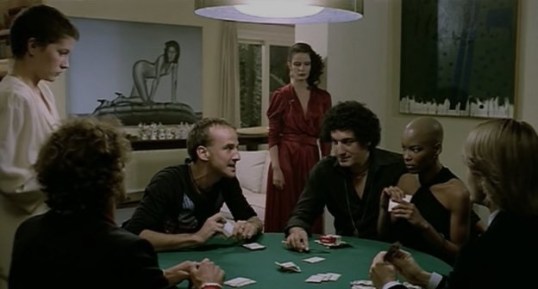
Today’s song of the day is a deathless little disco song that comes from the soundtrack of Ruggero Deodato‘s legendarily tacky film, The House On The Edge Of The Park. This was one of many songs composed by Riz Ortolani, the John Williams of Italian exploitation cinema.
Episode 15 opens with Shane (David Carradine) at a hotel in Cheyenne, WY. He hears a ruckus in the next room where a guy named Jed (Charles Grodin) is holding court with a group of men and women. Jed, who has clearly been drinking way too much, is going on about the honor of serving with Captain William Quantrill. He asks Shane to have a drink with him and Shane declines. Offended by this, Jed challenges Shane only to get his ass thoroughly kicked in about 10 seconds flat. One of the men in the group recognizes Shane as the great gunfighter. Soon the men force Shane at gunpoint to go see their boss, Major George Hackett (Bradford Dillman). It seems Hackett is putting together a group of men for a project and offers Shane the large sum of $75 per week to join up. Sensing something bad, Shane turns down his offer and leaves. Shane is right to leave as we soon learn that Hackett’s “project” is to eliminate any homesteaders who are not a part of the Cattlemen’s Benevolent Association, a large outfit out of Chicago.
While in Cheyenne, Shane also runs into his old friend Longhorn Jenny (Constance Ford) who is in town selling a herd of cattle. She’s accompanied by her assistant Dan (Archie Moore). The two swap some old stories, with Shane even asking how she came across that herd of cattle. They seem to hint that she didn’t necessarily come across them legally. Shane says goodbye and starts the journey back to the ranch. Before leaving Cheyenne, he reads a story in the paper that specifically mentions Longhorn Jenny, implying that she’s a rustler. The story in the paper, which seems to back the Cattlemen’s Association, plus Major Hackett’s offer convinces Shane that something truly bad is on the way. When he gets back to the ranch, he tells Tom (Tom Tully), Marian (Jill Ireland) and a few other local homesteaders that he’s concerned that they may all be in danger. Unfortunately, everyone he speaks to in the valley about this situation, including cattleman Rufe Ryker (Bert Freed), think he’s overreacting and don’t seem concerned at all. Then Major Hackett and his men ride out to Jenny’s ranch, unveil their Gatling Gun and proceed to kill Jenny and Dan, ultimately hanging her at the gate with a sign that says “Rustler.” Even after Jenny is killed, no one in the valley will listen to Shane and prepare to defend themselves. Marian tells Shane that she’ll prepare to defend their ranch, but she is not leaving. Not knowing what to do to keep those he loves safe, Shane heads back to Cheyenne and accepts Hackett’s offer to work for him. Credits roll for the end of Part 1.
A lot happens in the “The Great Invasion: Part 1.” All the main people are introduced, with Hackett and his plan coming into light. We also spend an inordinate amount of time with Longhorn Jenny as we meet her, learn about her and ultimately see her die. This being the first part of a two part episode, I’ll withhold my larger analysis for the next review, but I am looking forward to seeing where the story goes. I find the characters quite interesting. Bradford Dillman comes off as very odd and extremely dangerous as Major Hackett, a man who seems to relish the opportunity to use his Gatling Gun. Charles Grodin’s Jed appears to be your typical loudmouth killer at this point, but it will be interesting to see what happens to him. And I’m looking forward to seeing what Shane does to stop the madness before it takes out the people in their valley. There’s no way they can compete with Hackett’s Gatling Gun, so Shane will have to figure out a way to stop things from within.
There were a few other interesting things I noted while watching this episode. First, when Shane is heading back to the ranch from Cheyenne, we see the Grand Teton Mountain range behind him for the first time in the series. If you remember, the Tetons are prominently featured in the classic 1953 film SHANE, and it was cool seeing them here. Second, Shane goes on a rant to Marian at one point about how newspapers spin the facts in a way that distorts the truth. Just in case anyone thought that a dishonest media was only a current issue, this should lay that theory to rest. And finally, Marian Starett flat out asks Shane why he continues to stay at the ranch. She’s clearly wanting to know if it’s for her. Once again he won’t give her the satisfaction of confirming her thoughts, and it appears that his reluctance to be honest with her is starting to wear thin. Couple that with a crying Joey who doesn’t understand why Shane left and the interpersonal emotions are running high as the episode fades out. I’m all in for seeing how it plays out.
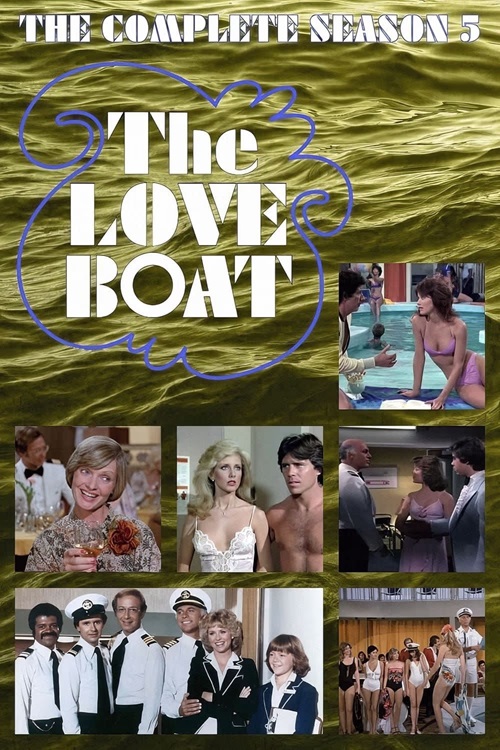
Welcome to Retro Television Reviews, a feature where we review some of our favorite and least favorite shows of the past! On Wednesdays, I will be reviewing the original Love Boat, which aired on ABC from 1977 to 1986! The series can be streamed on Paramount Plus!
This week, Charo’s back!
Episode 5.27 “April in Boston/Saving Grace/Breaks of Life”
(Dir by Richard Kinon, originally aired on May 1st, 1982)
April Lopez (Charo) is back! This time, she has given up show business and is now working as a Spanish tutor for stuffy private school headmaster Bradford York (David Hedison). She is falling for Bradford but she knows that he would never accept her as an entertainer. Or would he? We’re about to find out because the entertainment that Julie booked, probably while in a cocaine-fueled haze, fails to show up. Would April be willing to perform?
April sings “Let’s get physical, physical,” in the ship’s lounge but when Bradford stops by to get a drink, April covers her face with a mask. “If I sang like that,” Bradford says, “I’d wear a mask too….”
And that really gets to the main problem with this story. Bradford York is jerk! Seriously, I know why some people find Charo to be annoying and I do think The Love Boat tended to overuse the character but she deserves a lot better than Bradford York! Eventually, of course, Bradford leans that April is the singer and he tells her that he loves her in Spanish. (He has to ask April how to say it first.) So, I guess it’s a happy ending but we all know that April’s going to be single again once the sixth season starts.
As for the other storylines, Gwen (Jayne Meadows) and George Finley (Gene Rayburn) are a divorced couple who end up in the ship’s infirmary together. We’ve never seen the infirmary before and I assume we’ll never see it again. The two of them fall in love all over again. It tuns out Gwen was just faking her injury so she could be with George. It seems like Doc Bricker should have noticed that.
Finally, Grace Bostwick (Jane Powell) is a widow who is prevented from jumping overboard by Gabriel (Hugh O’Brian). Gabriel says he’s angel, sent from Heaven to help Grace move on from her grief. It turns out that he’s not. He’s just someone who knew Grace was suicidal and figured he would have to come up with something dramatic to keep her from plunging into the ocean. Everyone on the boat acts as if this makes total sense. Grace is very forgiving. Never has one lie been responsible for so much love.
What a weird episode. A man pretended to be an angel, Charo performed while wearing a mask, and the ship has an infirmary! Weird as it was, the episode kept me entertained. I’ve always liked Charo’s mix of sincerity and flamboyance. That said, she deserves better than Bradford York. The angel storyline was problematic for all sorts of reasons but at least Jane Powell and Hugh O’Brian gave good performances. They almost sold it. Almost.
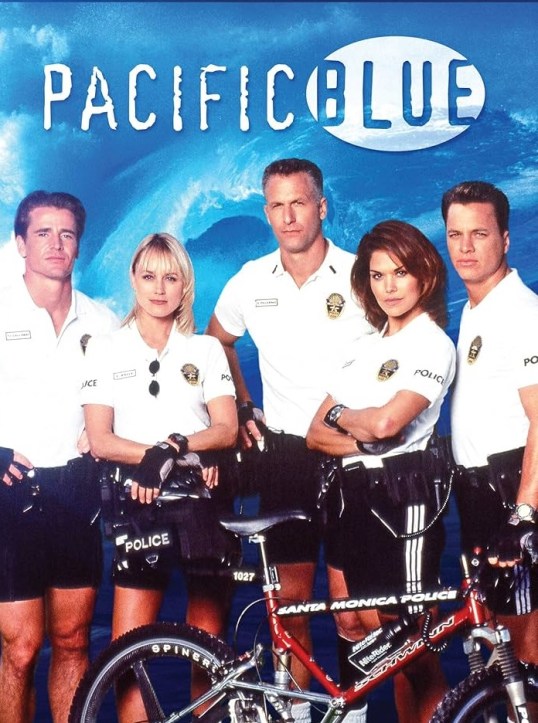
Welcome to Late Night Retro Television Reviews, a feature where we review some of our favorite and least favorite shows of the past! On Tuesdays, I will be reviewing Pacific Blue, a cop show that aired from 1996 to 2000 on the USA Network! It’s currently streaming everywhere, though I’m watching it on Tubi.
It’s another day in L.A.
Episode 2.3 “Rapscallions”
(Dir by Gary Winter, originally aired on September 7th, 1996)
There’s a lot happening in Santa Monica or wherever it is this stupid show takes place.
Mr. Baron (Tom Towles) has hired two thugs to run all the tenants out of a building so it can be turned into a drug den. TC and Cory help the tenants. TC encourages one of them, Travis (Anthony De Longis), to be a big old hero.
The lifeguards challenge the bicycle cops to a street hockey game. Victor goes crazy trying to recruit good players. The lifeguards bring in a professional player who apparently works as a lifeguard during the summer. The bicycle cops still manage to hold the lifeguards to a tie. Their goalie collapses at the end of the game, apparently as a result of getting hit in the face by the puck a hundred times. So, I guess he’s dead now. Oh well. At least the bike cops can feel like heroes before facing another day of people laughing about how dorky they look on their bicycles.
Palermo has a new girlfriend (Marisa Urkovich), which upsets his 16 year-old daughter, Jessie (Johna Stewart-Bowden). Jessie wants her parents to get back together but Palermo has to explain that the divorce is final. He is never going to remarry Jessie’s mother. Palermo’s heart belongs to the bicycles now.
There was a lot happening in this episode and I have to admit that I really didn’t care about any of it. After this episode ended, I started thinking about the show’s main characters and I asked myself whether or not any of them were actually likable. I mean, let’s consider this:
Jim Davidson plays TC Callaway, who doesn’t even have a consistent backstory. When we first met him, he was being pressured to quit his job and become an executive at his family’s business. TC was wealthy when we first met him but we haven’t heard anything about his family or their company since then and TC certainly doesn’t act like someone who grew up with money. Sometimes, TC has a regular girlfriend who lives with him and sometimes, it appears that he does not. Of course, the main problem with TC is that it’s hard to keep him straight from either Victor or Palermo. Once he puts on his riding helmet and his sunglasses, TC basically looks about as generic as someone can. A huge part of the problem is that TC never has any facial expressions or anything that would suggest any sort of personality at all.
Darlene Vogel plays Chris Kelly, who is still whining about being on the bike patrol. When the show started, she was obviously meant to have a will they or won’t they thing with TC but the total lack of chemistry between Darlene Vogel and every performer on the show pretty much ended that. For someone who was originally meant to be one of the main characters, Chris never really seems to have much to do on the show. She spent this episode smirking whenever anyone asked to see Palermo. Everyone’s had that friend that they secretly can’t stand and that’s pretty much who Chris is on this show.
Marcos A. Ferraez plays Victor Del Toro, who at least has a bit of a personality in that he’s always getting angry about something and he always stops and stares whenever he sees anyone wearing a bikini. (Since this series takes place on a beach in California, you can imagine the amount of time that is taken up by this.) Victor is impulsive and competitive but he’s also a bike cop so it’s still hard not to feel like he’s overcompensating because of his job.
Paula Trickey plays Cory McNamara. Cory is as close to being a likable character as you’re going to find on PacificBlue and Paula Trickey, at least by this point in the series, is definitely the best member of the ensemble. Unfortunately, the show itself seems to only be interesting in either finding excuses for her to get sprayed with water or having her get menaced while wearing a tank top.
And finally, Rick Rossovich is Lt. Palermo. Palermo is strict and no-nonsense, which is actually what you want from a boss. Unfortunately, for the by-the-book boss thing to be compelling, someone in the group has to be a rule-breaker and that’s not really a description that applies to anyone on PacificBlue. Rossovich was not a bad actor but, at least at this point in the series, Palermo still spends way too much time telling people that bicycle cops are real cops. If you haven’t been able to convince them yet, you never will.
In short, this episode of PacificBlue didn’t work because the cast was boring and putting them on bicycles did not help. Hopefully, things will change as I continue to watch the series or else it’s going to be long couple of seasons.
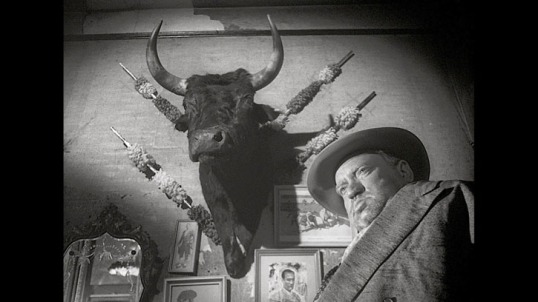
As today is Orson Welles’s birthday, it seems appropriate that today’s song of the day should come from the score of one of his best films, Touch of Evil.
Though the Academy of Motion Picture Arts and Sciences claim that the Oscars honor the best of the year, we all know that there are always worthy films and performances that end up getting overlooked. Sometimes, it’s because the competition too fierce. Sometimes, it’s because the film itself was too controversial. Often, it’s just a case of a film’s quality not being fully recognized until years after its initial released. This series of reviews takes a look at the films and performances that should have been nominated but were, for whatever reason, overlooked. These are the Unnominated.
I come here to defend Charlton Heston.
1994’s Ed Wood is a great film that has one unfortunate line. Towards the end of the film, director Ed Wood (Johnny Depp) meets his hero, Orson Welles (Vincent D’Onoforio), in a bar. They talk about the difficulties of directing a film. Wood talks about the trouble that he’s having with Plan 9 From Outer Space. Welles says that he can understand what Wood is going through because the studio is forcing him to cast Charlton Heston as a Mexican in his next movie.
And look, I get it. It is true that Charlton Heston does play a Mexican prosecutor named Mike Vargas in Welles’s 1958 film, Touch of Evil. And it is true that Heston is not the most convincing Mexican to ever appear in a film. And I understand that there are people who enjoy taking cheap shots at Charlton Heston because he did have a tendency to come across as being a bit full of himself and he was a conservative in a industry dominated by Leftists. There are people who actually think Michael Moore doesn’t come across like a self-righteous prick when he confronts Heaton in Bowling for Columbine. I get the joke.
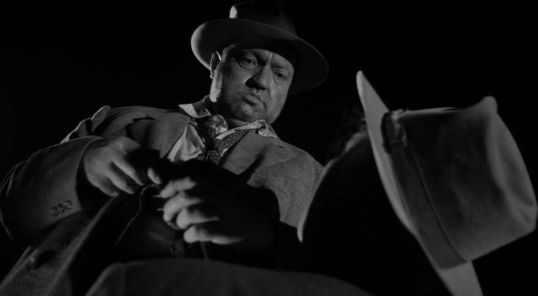
But it’s not true and it’s not fair. When Touch of Evil was first put into production by Universal, Welles was not hired to direct. He was hired to play Hank Quinlan, the formerly honest cop with a habit of planting evidence on those who he believed to be guilty. When Charlton Heston was offered the role of Vargas, he asked who had been hired to direct. When he was told that a director hadn’t been selected, Heston was the one who suggested Welles be given the job. When, as often happened with Welles’s film, the studio decided to take the film out of Welles’s hands, Heston argued for Welles’s vision while Welles was off trying to set up his long-dreamed of film of Don Quixote. Say what you will about Charlton Heston’s career, he fought for Orson Welles, just as he later fought for Sam Peckinpah during the making of Major Dundee. Heston may not have agreed with either Welles or Peckinpah politically but he fought for them when few people were willing to do so.
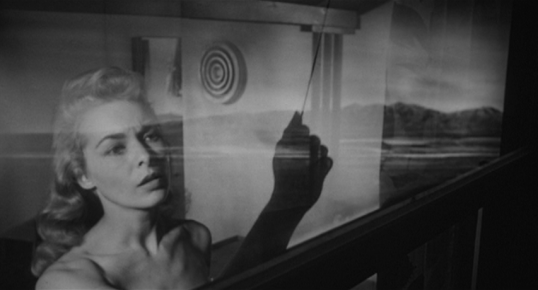
That Touch of Evil is a brilliant film is pretty much entirely due to Welles’s directorial vision. The story is pure pulp. While investigating the murder of an American businessman in Mexico, Vargas comes to believe that Quinlan is attempting to frame a young Mexican for the crime. While Vargas watches Quinlan, his wife Susie (Janet Leigh) is menaced by the crime lord Joe Grandi (Akim Tamiroff), who has his own issues with both Vargas and Quinlan. The plot may be the stuff of a B-programmer but, as directed by Welles, Touch of Evil plays out like a surreal nightmare, a journey into the heart of darkness that is full of eccentric characters, shadowy images, memorably askew camera angles, and lively dialogue. Welles and cinematographer Russell Metty create a world that feels alien despite being familiar. Just as he did with Gregg Toland in CitizenKane, Welles shapes a film that shows us what’s happening in the shadows that most people try to ignore.
There’s really not a boring character to be found in Touch of Evil and the cast is full of old colleagues and friends of Welles. Marlene Dietrich shows up as Quinlan’s former lover. Mercedes McCambridge plays a leather-clad gang leader. Dennis Weaver is the creepy owner of a remote motel. (Two years before Psycho, Touch of Evil featured Janet Leigh being menaced in a motel. Mort Mills, who played Psycho’s frightening highway patrolman, plays a member of law enforcement here as well.) Zsa Zsa Gabor shows up for a few brief seconds and it makes a strange sort of sense. Why shouldn’t she be here? Everyone else is. Joseph Cotten plays a coroner. Ray Collins plays a local official. In the film’s skewered world, Charlton Heston as Mike Vargas works. His upright performance grounds this film and keeps it from getting buried in its own idiosyncrasies. Big personalites are everywhere and yet the film is stolen by Joseph Calleia, playing Quinlan’s quiet but observant partner. Calleia’s performance is the heart of the film.
TouchofEvil was not nominated for a single Oscar and that’s not surprising. It’s not really the type of film that was noticed by the Academy in the 50s. It was too pulpy and surreal and, with its story of a crooked cop framing someone who might very well be guilty anyway, it was probably too subversive for the Academy of the 1950s. It would take a while for TouchofEvil to be recognized for being the noir masterpiece that it is. In a perfect world, Welles would have been nominated for directing and for his larger-than-life performance as Quinlan. Joseph Calleia would have been nominated for Supporting Actor and perhaps both Janet Leigh and Marlene Dietrtich would have been mentioned for Supporting Actress. That didn’t happen but it would have been nice if it had.
As I continue my celebration of Chow Yun-Fat, who turns 70 years old on May 18, 2025, I decided to revisit the film that made him a star, the Hong Kong classic A BETTER TOMORROW (1986).
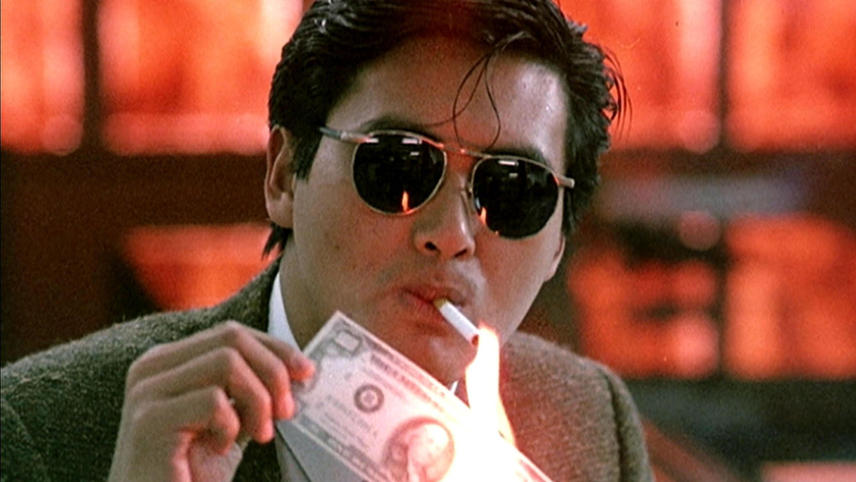
This undisputed action movie classic opens with Ho (Ti Lung) and his partner and best friend, Mark (Chow Yun-Fat) going about a normal workday. Except these two men are part of a triad organization that manufactures counterfeit American dollars. Ho seems serious while Mark appears to be the fun, cool guy, with his trench coat, Alain Delon sunglasses, and huge smile. They stroll through their organization’s offices, play with piles of fake money, and Mark even lights his cigarette with a $100 bill. They seem to have the world by a string when their boss asks Ho to take an up and coming guy in the organization named Shing (Waise Lee) along on their next deal in Taiwan. Before heading to Taiwan, Ho goes to see his dad in the hospital where he sees his younger brother Kit (Leslie Cheung), who has entered the Hong Kong police academy and is completely unaware that Ho is part of a criminal organization. Ho’s dad doesn’t want to see his sons on the opposite side of the law, so he asks him to leave his life of crime behind. Ho decides that the job in Taiwan will be his last, but unfortunately, the deal quickly goes awry, turning into a big shootout, with Ho and Shing barely escaping with their lives. They are tracked down by the police where Ho turns himself in, allowing Shing to escape. When the triad bosses find out that Ho has been arrested, they send a big henchman to kidnap his dad, who is now at Kit’s house, as leverage to make sure Ho doesn’t talk to the police. Kit, his girlfriend and his dad all fight the huge henchman, but dad is eventually stabbed to death. Cut to Mark reading the paper and seeing that his best friend has been arrested. He finds the betrayer in the Fung Lim restaurant and proceeds to take his revenge, in slow motion and with two guns no less. On his way out though, he takes a couple of rounds to his right knee.
Cut to three years later and Ho is getting out of prison. Kit doesn’t want to have anything to do with him and blames him for their father’s death. Distraught, but knowing he needs to work, he goes to a taxi company run by Ken (Kenneth Tsang) and is able to land a job. While working his shift, he goes by their old office building and sees Mark, who’s now a cripple with a limp and a leg brace. Shing, now a boss, walks out of the building surrounded by his bodyguards and throws cash on the ground at Mark’s feet, treating him like nothing more than a beggar. Ho goes to talk to Mark and the two men embrace. Mark wants to join forces with Ho and retake the underworld by storm. Ho wants to steer clear of his old life and try to reconnect with a completely uninterested Kit. Everything comes to a head when Kit is set up by Shing to be shot and Mark is viciously beaten. Determined to relive his old glory days, and now having given up on Ho for help, Mark breaks into the triad’s offices and steals the plate that is used to create the phony money. Ho has decided he can no longer sit on the sidelines. He and Mark use the plate as an excuse to lure Shing and his men to the docks where they engage in an apocalyptic shootout that will change all of their lives forever.
It’s hard to know where to start when talking about a movie like A BETTER TOMORROW. I’m not going to do a normal review where I discuss the various pros and cons of the film. Why, you ask? Because it’s a great movie, but it’s so much more than just that. A BETTER TOMORROW would change action filmmaking forever, and eventually turn Director John Woo and actor Chow Yun-Fat into worldwide stars. It would become the highest grossing film in Hong Kong cinema history. It would create a trenchcoat fad in tropical Hong Kong that would find its way across the world entrapping movie nerds like a young Quentin Tarantino. It would create the heroic bloodshed film genre, a genre that would become a staple of Hong Kong cinema for years to come. It would mix balletic action and raw emotion in a way that had never been done before. And the whole world would eat it up. John Woo may have even made better action films in the ensuing years with movies like THE KILLER and HARD-BOILED, but they were all inspired by the greatness and success of A BETTER TOMORROW. It’s quite simply one of the most influential movies of all time, and it’s still influencing later generations of filmmakers. I watched Gareth Evans’ new film HAVOC (2025) a few days ago, and it clearly pays homage to this amazing film through its use of music from a key scene.
I did want to talk a little bit about the main stars of the film. Ti Lung, who plays Ho, was one of the great stars of the Shaw Brothers kung fu films from the 70’s. He’s excellent in the lead role, so much so that the he would win the Taiwan Golden Horse award as best actor for his performance. Leslie Cheung, who plays the younger brother Kit, was a huge pop star in Hong Kong. He sings the memorable tune that plays over the film’s closing credits. I’ll admit that his portrayal of Kit gets on my nerves, though. While I can understand his feelings of anger towards his brother, he often comes off as whiney, acting more like a petulant child than a serious adult. He would become a very good actor over time, but I don’t think he’s very good here. On a sad note, on April 1st, 2003, suffering from depression, Cheung would commit suicide by jumping off the 24th floor of the Mandarin Hotel in Hong Kong. It was a tragic end for a great Hong Kong artist. It’s hard to believe now, but prior to A BETTER TOMORROW, Chow Yun-Fat was considered “box office poison.” He had been a TV star in Hong Kong, but his movies would never do very well. That would all change with A BETTER TOMORROW. Even though he was more of a supporting character in the film, he became the undisputed breakout star and he would capture the hearts of the people of Hong Kong and all of Asia from that point forward. His charismatic performance became the personification of the flawed, emotional, heroic, super-badass. Women loved him and men wanted to be like him, and he made it all look so easy. I’ve said before that he’s one of the great international movie stars of the last 40 years. It all began with A BETTER TOMORROW.
Finally, I wanted to take a moment to discuss the Director of A BETTER TOMORROW, John Woo. Woo had been kicking around the Hong Kong film industry for many years, having directed quite a few martial arts films and comedies in the 70’s and early 80’s. By the time of A BETTER TOMORROW, he was considered past his prime. He wanted to make films like his heroes Jean-Pierre Melville and Martin Scorsese, but was considered too much of a risk by most of the local industry. Luckily for him, Tsui Hark and Cinema City would give him a chance to make the movie he wanted to make, even if it came with a tight budget, and a cast that included a fading martial arts star and the human equivalent of box office poison. Woo would take this opportunity and change what action movies looked like forever. Good for him, and us, as we’d get so many great films, including one of my all time favorites, FACE/OFF (1997) with John Travolta and Nicolas Cage. I said all of this about the stars because before A BETTER TOMORROW came out, it looked like a project that would go nowhere fast. Instead it changed the world of cinema. It also changed the world of a movie nerd from Toad Suck, Arkansas, with the aftermath of its success providing so many hours of entertainment in my own life. It’s truly amazing what one great film can do.