Blood Mirrors: How I Saw the Devil, Cold Fish, and Revenge Redefine the Horror of Retribution


“Revenge reveals the darkest reflection we hide within.”

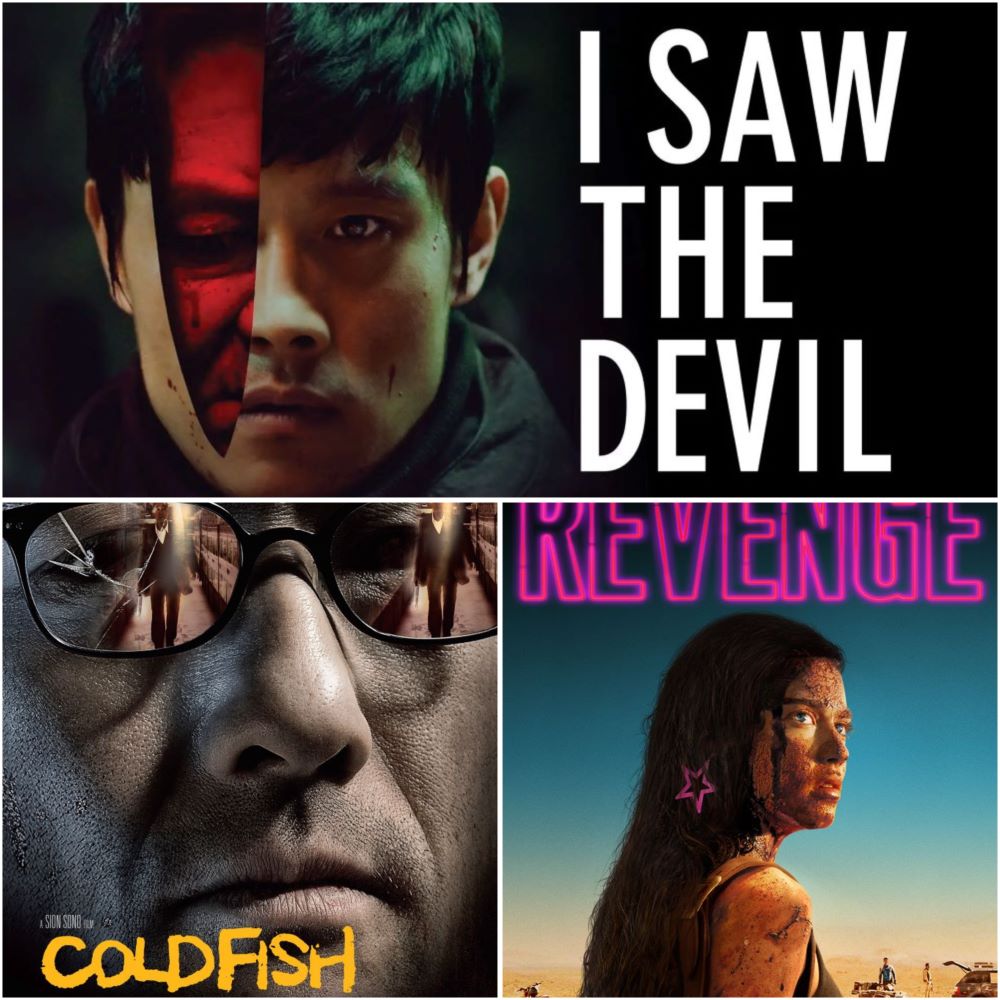
Horror cinema has long functioned as a reflective surface, exposing humanity’s deepest fears, desires, and moral uncertainties. The films I Saw the Devil (2010), Cold Fish (2010), and Revenge (2017) serve as “blood mirrors,” revealing not merely the visceral violence inflicted upon their characters but also the profound psychological and ethical transformations that vengeance ignites. Emerging from South Korean, Japanese, and French cinematic traditions, respectively, these works reconceptualize the trauma of retribution into nuanced explorations of identity, power, justice, and morality. This essay unpacks how such acts of revenge fracture and distort the avengers themselves—blurring the boundary between hunter and hunted—and challenge audiences to consider the complicated ethics of vengeance.

Becoming the Monster: I Saw the Devil and the Infinite Cycle of Vengeance

Kim Jee-woon’s I Saw the Devil opens with searing loss. Government agent Kim Soo-hyun’s fiancé is gruesomely murdered by the psychopathic serial killer Jang Kyung-chul. Rather than delivering immediate justice, Kim embarks upon a merciless cycle of capture and release aimed not at ending Kyung-chul’s life but extending his suffering to mirror the anguish Kim feels. This circular vengeance becomes a vehicle for exploring grief’s corrosive power, blurring the avenger’s and victim’s identities.

The film’s structure, with its repetitive cat-and-mouse dynamic, becomes a visual metaphor for obsession and moral degradation. With every brutal encounter, Kim sacrifices more of his humanity, evolving into the very monster he’s vowed to destroy. Lee Mo-gae’s cinematography blends stark clinical detachment with visceral brutality; meticulously framed shots contrast vividly with the film’s emotional chaos, compelling the audience into uncomfortable identification with Kim’s dark crusade. The snowy landscapes and cold colors evoke spiritual desolation, emphasizing the film’s existential chill.

Kim’s work transcends procedural thriller conventions by resisting catharsis—vengeance is portrayed not as liberation but endless torment. Critics laud the film for masterfully challenging traditional revenge narratives by suggesting that acts of retribution can perpetuate cycles of violence, consuming both victim and perpetrator. The tension not only lies in physical danger but in the moral disintegration of a man who becomes what he hates.

Hidden Rage Beneath Ordinary Lives: Social Collapse in Cold Fish

Sion Sono’s Cold Fish presents revenge as an eruption of buried rage within the façade of mundane suburban existence. The gentle tropical fish store owner, Nobuyuki Syamoto, leads a restrained, law-abiding life until meeting the domineering and psychopathic Murata. Their relationship becomes a dance of psychological and physical domination, exposing latent violence simmering under cultural conformity.

Unlike the clinical precision of I Saw the DevilCold Fish captures chaos and collapse. Syamoto’s eventual violent revolt is neither heroic nor cathartic but an enactment of existential despair born of oppressive social codes emphasizing politeness, hierarchy, and silence. The oppressive suburban setting becomes almost a character itself—sterile, suffocating, and emotionally barren. The circling fish motif highlights the recursive cycles of repression and violence that trap the characters.

Sono’s cinematic approach balances absurdist, at times black humor with grim horror. This tonal dissonance destabilizes viewer complacency, forcing reflections on how individual suffering is structured and concealed by social and cultural norms. Syamoto’s dissolution challenges viewers to reconsider traditional narratives of justice and victimhood, emphasizing the fragility of identity under systemic pressures.

From Exploitation to Empowerment: Revenge and the Reclamation of Agency

Coralie Fargeat’s Revenge radically revisits the “rape and revenge” genre notorious since 1970s grindhouse cinema. While drawing inspiration from films like I Spit on Your Grave and The Last House on the LeftRevenge rejects those works’ often exploitative male gaze, recasting the survivor’s story through a fully realized lens of autonomy and violent reclamation.

Jen’s transformation—from a sexualized object within a hyper-saturated, colorful visual palette to a mythic force of nature marked by the symbolic phoenix brand—signifies death and rebirth. Fargeat’s use of chiaroscuro lighting, surreal settings, and visceral violence elevates physical trauma to the level of mythic metamorphosis.

This film subverts traditional victim and villain binaries. Jen’s ascent dismantles deeply embedded patriarchal structures, underscoring a reclamation of body, gaze, and power. The climactic chase, drenched in blood and primal energy, becomes a ritualistic unshackling rather than mere revenge. Through this revival of grindhouse aesthetics, Fargeat forges a new grammar of feminist survival and cinematic empowerment.

Power, Gender, and Hierarchies in Contemporary Revenge Narratives

These films foreground power dynamics traditionally gendered but reinterpreted here in ways promoting gender-neutral critique. In Cold Fish, toxic masculinity manifests as violent domination versus passivity within strict social codes, both Syamoto’s submission and Murata’s cruelty reinforcing systemic violence.

I Saw the Devil portrays injured masculine pride and control as drivers of vengeance. Kim’s obsession symbolizes fragile protector ideals collapsing into moral ruin. Female characters often exist as symbolic voids, underscoring systemic gender violence and erasure.

Revenge, by contrast, deconstructs these codes. Jen transcends rigid gender norms and victimhood, suggesting power as a fluid, elemental force beyond biology. The film’s desert setting serves as a symbolic womb of transformation, projecting possibilities of autonomy and sovereignty through defiance of hierarchical structures.

National Contexts: Morality, Control, and Crisis

Each film emerges from distinct cultural anxieties and historical trajectories. I Saw the Devil reflects South Korean skepticism about institutional justice amid rapid modernization and lingering traditionalism. Private vengeance becomes a desperate, isolating reaction to systemic failure.

Cold Fish critiques a Japanese culture steeped in social conformity and emotional repression, revealing the violent potential beneath controlled civility. The film reflects post-war tensions and growing awareness of societal alienation.

France’s Revenge draws from the New Extremity movement, blending philosophical and visceral approaches to suffering, reflecting intellectual and artistic responses to modern oppression. Fargeat’s fusion of grindhouse with feminist critique signals contemporary cultural struggle for voices outside dominant systems.

Narrative and Visual Style: Diverse Paths to Transformation

The narrative architectures differ but complement one another. I Saw the Devil’s repetitive structure illustrates cyclical moral decay; Cold Fish depicts downward spiral into absurd chaos; Revenge follows mythic death-and-rebirth arc.

Their visual languages communicate complex ethical positions: Kim’s symmetrical, controlled shots reflect calculated cruelty; Sono’s frenetic, disorienting camera work conveys mental disintegration; Fargeat’s vivid, stylized imagery channels surreal transcendence.

Each film implicates the viewer uniquely. I Saw the Devil seduces with calculated violence; Cold Fish overwhelms with chaotic brutality; Revenge reorients the gaze empathetically to survivor experience. Together, they articulate a profound inquiry into horror spectatorship and ethical engagement.

Societal Reflections: Alienation and Moral Fragmentation

These films manifest collective crises of modernity—gendered hierarchies, failed justice, fractured communities—within intimate personal revenge stories. They diagnose alienation and fragmentation, transforming revenge into language for voicing trauma and injustice. This intersection exposes how power, violence, and identity intertwine in contemporary cultural narratives.

The Horror of Becoming

Ultimately, I Saw the DevilCold Fish, and Revenge frame horror as a meditation on transformation rather than pure evil. Vengeance reshapes the self, often toward destruction. Kim becomes the hunted devil; Syamoto lives his oppressor’s violence; Jen transcends human limits through fiery renewal.

Together, they depict revenge as curse, collapse, and painful rebirth—a global meditation on violence and selfhood. Their shared revelation: revenge unmasks the darkness dwelling quietly within us all, proving that horror’s deepest mirror reflects ourselves.
Horror Review: Revenge (dir. by Coralie Fargeat)


“Violence is a language written in blood; it tells the story of those who refuse to be silenced.”

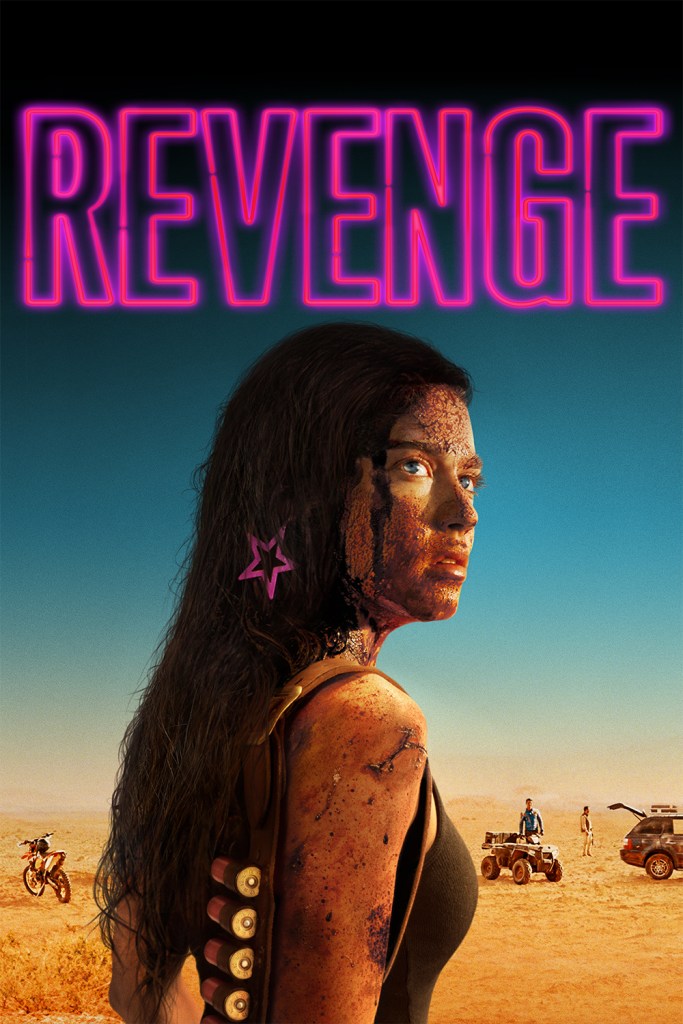
Coralie Fargeat’s 2017 film Revenge is an intense and striking blend of horror and thriller that refreshes the rape-revenge genre with a strong emphasis on female empowerment and resistance. At its core, the film follows Jen, a young woman who is brutally assaulted and left for dead in a desert. Against all odds, she survives and seeks brutal revenge on her attackers. What makes Revenge stand out is its blend of graphic, realistic violence and a striking, highly stylized visual approach, resulting in a film that is both visceral and symbolic.

Revenge sits within a long tradition of rape-revenge films that includes both grindhouse exploitation and serious art films. One of the earliest and most influential films in this tradition is Ingmar Bergman’s The Virgin Spring (1960), a somber and moral exploration of a father’s response to his daughter’s rape and murder in medieval Sweden. Bergman’s film inspired many later works, including Wes Craven’s famously brutal The Last House on the Left (1972), which reinterprets the same story through the lens of exploitation horror. Other notorious examples include I Spit on Your Grave (1978), known for its graphic depiction of sexual violence and violent retaliation. More recent films like Jennifer Kent’s The Nightingale (2018) revisit these narrative themes with psychological and political depth. Fargeat’s Revenge draws on this history, combining symbolic storytelling and thematic depth with the raw brutality and energy of grindhouse exploitation.

The narrative structure of Revenge is familiar: Jen, introduced as the mistress of a wealthy man, is assaulted by his friends. Her lover Richard tries to silence her by pushing her off a cliff, but Jen survives, severely injured and impaled on a tree. Her journey is one of intense physical suffering, but also resurrection and fierce empowerment. The film’s use of bright, vivid colors such as hot pinks and blues shifts the story into a surreal, symbolic space where gender roles are exaggerated and the desert becomes a mythic battleground where Jen fights to reclaim control.

Fargeat depicts Jen’s trauma and physical recovery through graphic and detailed body horror—not simply for shock, but as a visual metaphor for reclaiming agency. For example, Jen’s self-treatment of her impalement wound with a hot beer can brands her skin and symbolizes her rebirth and determination. These elements mark a clear departure from earlier rape-revenge films that sensationalized female suffering, shifting the focus to the survivor’s power and autonomy.

Cinematographer Robrecht Heyvaert’s work enhances this dynamic, contrasting the bright, harsh desert landscape with the cold, sterile luxury of Richard’s home. This contrast symbolizes the clash between raw survival and social control. The violence throughout the film is explicit and often hard to watch, but it is deeply rooted in the reality of trauma rather than fantasy.

Matilda Lutz’s performance as Jen is a key strength of the film. She transforms from a vulnerable, objectified figure into a fierce, focused avenger. The male antagonists are less developed, serving as archetypes of toxic male dominance—entitlement, violence, and cowardice—and their downfall reflects the collapse of that social order.

While Revenge maintains the fast pace and suspense of a thriller, its focus on graphic body horror and trauma places it firmly within the horror genre, aligning with the French Extremity movement known for its intense depictions of suffering and transgression. The source of horror here is not supernatural but very much rooted in the physical and psychological impact of violence.

The film has been praised for its technical skill and its focus on female resistance and empowerment. Instead of exploiting female suffering, it forces audiences to confront violence and trauma in a way that centers strength and rage. This is a clear reimagining of the revenge narrative through a modern lens that highlights resilience.

Revenge stands as both a tribute and a reinvention within its genre. It nods respectfully to the moral complexity of Bergman’s The Virgin Spring, the shock tactics of grindhouse staples like The Last House on the Left and I Spit on Your Grave, and the psychological depth of The Nightingale. Yet it simultaneously reinterprets these influences, making a statement that is both timely and provocative.

Coralie Fargeat’s Revenge is a powerful and contemporary entry into the rape-revenge genre, blending horror and thriller conventions with a focus on survival and agency. The film explores the physical and emotional effects of trauma and the possibility of reclaiming power through violence. Its vivid visuals, symbolism, and intense violence challenge audiences to rethink assumptions about gender, justice, and survival. It is a film that provokes strong reactions while delivering a deeply felt story of empowerment and resilience.

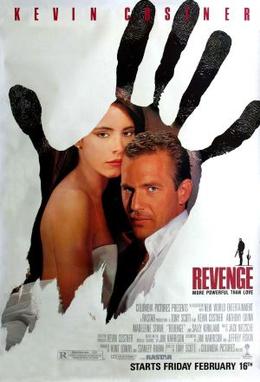
Insomnia File #42: Revenge (dir by Tony Scott)


What’s an Insomnia File? You know how some times you just can’t get any sleep and, at about three in the morning, you’ll find yourself watching whatever you can find on cable? This feature is all about those insomnia-inspired discoveries!

Earlier today, If you were having trouble getting to sleep around one in the morning, you could have turned over to TCM and watched the 1990 action film, Revenge.

Revenge is an almost absurdly masculine film about two men who are in love with the same woman and who, as a result, end up trying to kill each other and a lot of other people.

Jay Cochran (Kevin Costner) is a U.S. Navy aviator who, when we first see him, is doing the whole Top Gun thing of flying in a fast jet and making jokes while his navigator worries about dying.  Interestingly enough, Top Gun and Revenge were both directed by Tony Scott so perhaps this opening scene was meant to be a self-reference.  Well, regardless of intent, it’s a scene that goes on forever.  This is Jay’s last flight, as he’s due to retire.  We go through an extended retirement party, where everyone has a beer and Jay gives one of those bullshit sentimental speeches that men always give in films like this.

Jay has been invited to estate of Tibbey (Anthony Quinn), who is a Mexican gangster.  Tibbey and Jay are apparently old friends, though it’s never quite explained how the youngish Jay knows the not-very-youngish Tibbey.  Tibbey is one of those gangster who is incapable of doing anything without first talking about what an amazing journey it’s been, going from poverty to becoming one of the most powerful men in Mexico.

Tibbey apparently wants to play tennis with Jay and take him hunting.  Jay decides that he’d rather have an affair with Tibbey’s much younger wife, Miryea (Madeleine Stowe).  Miryea is upset that Tibbey doesn’t want to have children because he feels that pregnancy would ruin her body.  When Tibbey finds out about the affair, he sends Miryea to a brothel and Jay to the middle of the desert.  That’s Tibbey’s revenge!

Except, of course, Jay doesn’t die because he’s Kevin Costner and if he died, the movie would end too quickly.  So, Jay fights his way back from the desert, intent on not only finding Miryea but getting his own revenge on Tibbey!

(It’s hard to take a bad guy named Tibbey seriously, even if he is played by Anthony Quinn.)

Revenge goes on for way too long and neither Tibbey nor Jay are really sympathetic enough to be compelling characters.  You never really believe in Tibbey and Jay’s friendship, so the whole betrayal and revenge aspect of the film just falls flat.  On the plus side, youngish Kevin Costner is not half as annoying as cranky old man Costner.  Anthony Quinn was one of the actors who was considered for the role of Don Corleone in The Godfather and, watching him here, you can kind of see him in the role.  He would have been a bit of a crude Corleone but Quinn had an undeniably powerful and magnetic screen presence.  In Revenge, Quinn chews up and spits out all of the scenery and is not subtle at all but it’s entertaining to watch him because he’s Anthony Quinn.

Anyway, Revenge ends with a tragedy, as these things often do.  Anthony Quinn never says, “Revenge is a dish best served cold,” and that, to me, is a true missed opportunity.

Previous Insomnia Files:

  1. Story of Mankind
  2. Stag
  3. Love Is A Gun
  4. Nina Takes A Lover
  5. Black Ice
  6. Frogs For Snakes
  7. Fair Game
  8. From The Hip
  9. Born Killers
  10. Eye For An Eye
  11. Summer Catch
  12. Beyond the Law
  13. Spring Broke
  14. Promise
  15. George Wallace
  16. Kill The Messenger
  17. The Suburbans
  18. Only The Strong
  19. Great Expectations
  20. Casual Sex?
  21. Truth
  22. Insomina
  23. Death Do Us Part
  24. A Star is Born
  25. The Winning Season
  26. Rabbit Run
  27. Remember My Name
  28. The Arrangement
  29. Day of the Animals
  30. Still of The Night
  31. Arsenal
  32. Smooth Talk
  33. The Comedian
  34. The Minus Man
  35. Donnie Brasco
  36. Punchline
  37. Evita
  38. Six: The Mark Unleashed
  39. Disclosure
  40. The Spanish Prisoner
  41. Elektra

Artwork of the Day: Terror From Under The House


This poster is for a 1971 film called Terror From Under The House.  I haven’t actually seen this film.  Normally, I would look at this poster and assume that it must be about a monster living in a basement but this is 70s exploitation that were talking about.  Just because its featured on the poster doesn’t mean that it’s necessarily going to be in the film.

Apparently, Terror From Under The House was just one of the many titles used by this film.  It’s also known as:

  1. Revenge
  2. Behind the Cellar Door
  3. After Jenny Died
  4. Inn of the Frightened People
  5. I ekdikisis (which means “The Revenge” in Greek)
  6. Il passo dell’assassino (which means “The Killer Steps” in Italian)
  7. Miedo sangriento (“Bloody Fear” in Spanish)
  8. Violence en Sous-Sol (“Violence in the Basement” in French)

The main thing that I noticed about this poster was that apparently, audiences were forced to accept the “Free Screaming Teeth of Terror” as proof that this movie was so frightening that watching it could lead to death.  I’m not sure what exactly that means but this film was rated PG so, honestly, how scary could it be?

Someday, I’ll watch it and let you know.

Greatest Film Ever Made


Happy Thanksgiving!

What better way to kick off the holiday season than to put up the greatest film ever made. It’s a film about love, compassion, helping one’s people and standing up for those who cannot defend themselves. Produced and directed by filmmaker Jason Eisener this film has become a sort of tradition here at Through the Shattered Lens whenever the holiday season rolls around and it would be a shame to break the cycle now.

So, sit back and enjoy. Eat, drink and be merry for tomorrow we die.

9 Favorite Revenge Films


Having recently seen Michael Caine’s revenge film Harry Brown I got to thinking about other revenge-themed films I’ve watched through the years and I realized that there were quite a bit of them. There’s something just primal and Old Testament about revenge flicks. It doesn’t matter whether they’re high-brow art-house films or the cheapest grindhouse flicks in the end it all boils down to one individual raining down their own version of Divine Wrath on those who wronged them.

Who hasn’t fantasized or thought about going all medieval on someone who just screwed them over. Maybe it was an infraction that was minor that one didn’t need to get overly upset over or something so heinous that only violence at its most basest was the only response. Going through with such thoughts usually stayed there: in one’s thoughts and imaginings. Revenge films seems to be quite popular because they allow even the meekest and most pacifist to secretly live vicariously through the revenge-minded leads in the film.

The list below is not the best revenge films out there but they definitely are my favorites…

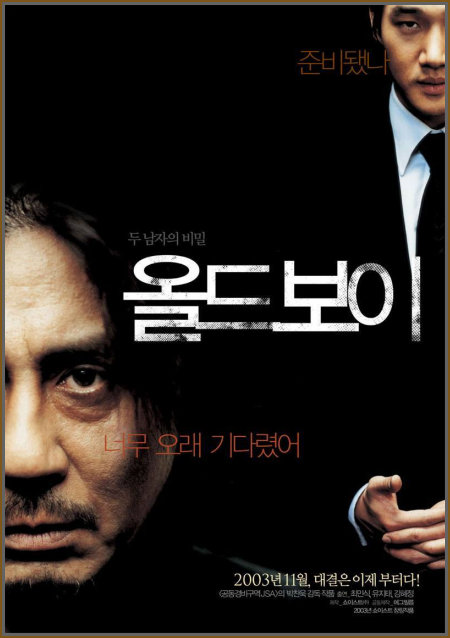
Oldboy – This revenge film by South Korean auteur Park Chan-wook wasn’t just a blast to watch but also happens to be one of the best films of the past decade. It takes a simple plot of a man imprisoned against his will for 15 years with no explanation whatsoever that he literally goes insane and back to sane during his captivity. Revenge being the one thing which keeps him going and revenge he gets to inflict on all those he discovers were responsible. The mind-twisting last act in the film takes the revenge-theme right on it’s head as we find out that the main lead wasn’t the only one on a revenge train of thought.

I Spit On Your Grave aka Day of the Woman – This grindhouse classic from Meir Zarchi is the epitome of the rape victim turned revenge valkyrie. The film is not very easy to sit through since there’s nothing subtle about how filmmaker Meir Zarchi filmed every exploitative scene. From the prolonged gang rape sequence to each subsequent revenge act by Camille Keaton’s Jennifer character. Some critics have blasted the film as pandering to the lowest common denominator while others have hailed it as a post-modern feminist film. I like to think that both sides are correct and that the film lies somewhere in the middle. It definitely will put a scare on any group of men who are having thoughts of shenanigans.

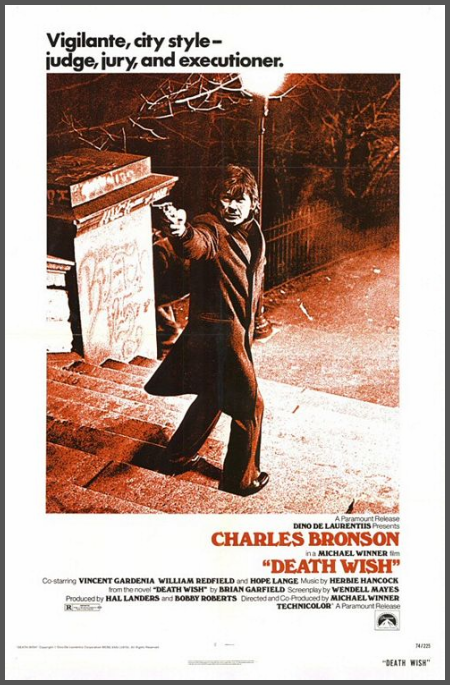
Death Wish – When people hear revenge flick they almost always say this iconic film by Charles Bronson from the 70’s. The film was adapted from Brian Garfield’s 1072 novel of the same name and directed by Michael Winner. While critics had mixed reactions to the film with some calling it irresponsible filmmaking, the nation as a whole embraced the film. Here was a film which screamed to the nation that the rising crime-rate in the U.S. during the 1970’s wasn’t going to go unanswered. While some people may have seen the film as a blank check to actually commit vigilantism in the end it just helped a country sick and tired of the crime they see day in and day out. Again here was art becoming a driving force in changing a nation’s collective malaise into something more positive. It didn’t hurt that Bronson was badass as Paul Kersey.

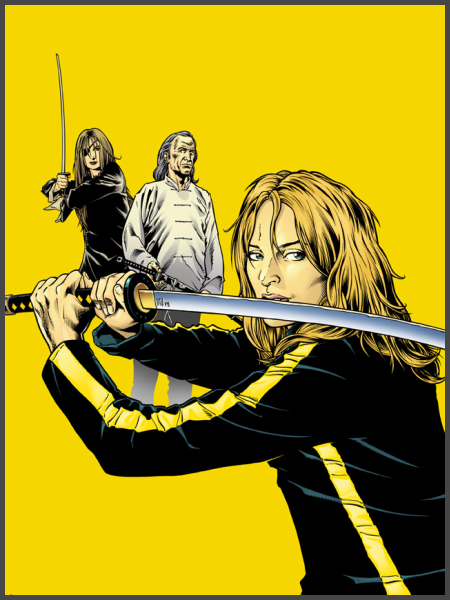
Kill Bill: Volume 1-2 – Who else but the video clerk made good would make what I would consider the greatest genre mash-up film ever made. Quentin Tarantino’s ode to kung fu, spaghetti westerns and revenge flicks became so massive that he had to split the film into two volumes. I am talking about Kill Bill. Not his greatest film ever but I definitely consider it his most geek-friendly and most entertaining. Uma Thurman as The Bride tearing a bloody and witty path of revenge on those who failed to kill her created some of the most iconic fight sequences of the generation this film came out in. Every scene almost seemed to be inspired by other films of a similar theme and genre that film geeks everywhere must’ve exploded in their pants from all the awesomeness they were witnessing. Each volume had two great action sequences that were both fantastical and brutal.

Straw Dogs – One of the most controversial films in Sam Peckinpah’s controversy-filled directing career. Released in 1971 it told the story of how even the meekest person could be pushed into dealing out extreme violent justice on those who have wrong them and those they love. Seen by critics as quite misogynistic due to the nature of the rape scene of Susan George’s Amy character the film was banned for two decades in the UK for it’s unflinching look at violence. Being a huge fan of Sam Peckinpah I had to see it and when I did it automatically became one of my favorite films ever and not just a favorite revenge film. If there was ever a modern retelling of a Biblical-level fable it is this classic from Sam Peckinpah. Every revenge-fueled act by Dustin Hoffman literally oozes Old Testament justice. Just the way I like my revenge. 🙂

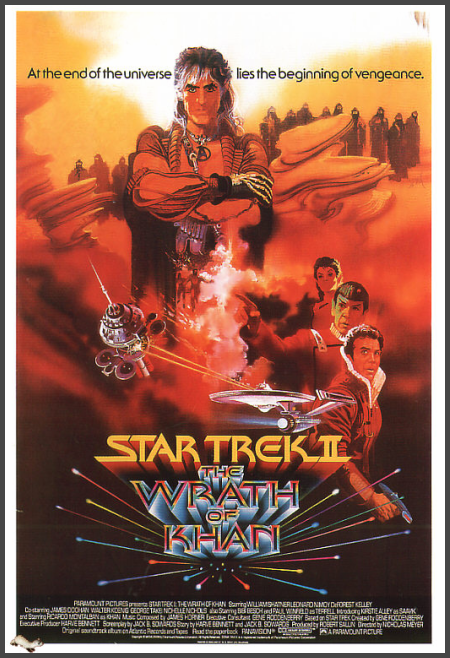
Star Trek II: The Wrath of Khan – Speaking of Biblical this first sequel in the Star Trek film franchise still considered by fans and non-fans alike as the best in the series. Hard to argue with them since it’s also an opinion I share. The sequel takes a popular episode from the original series and follows it up with all the cast of characters older and more seasoned. In the case of Ricardo Montalban’s Khan Noonian Singh quite seasoned and classy as smooth Corinthian leather. It’s a film with Shatner’s Kirk and Montalban’s Khan in an everending cycle of revenge which would culminate in what would be one of film’s most heartbreaking scenes. One could taste the revenge emanating from the two characters as age-won wisdom and genetically-engineered intellect fell by the wayside to feed the vengeance sought by Kirk and Khan. This revenge flick also has one of the most awesome death speeches by a character on film.

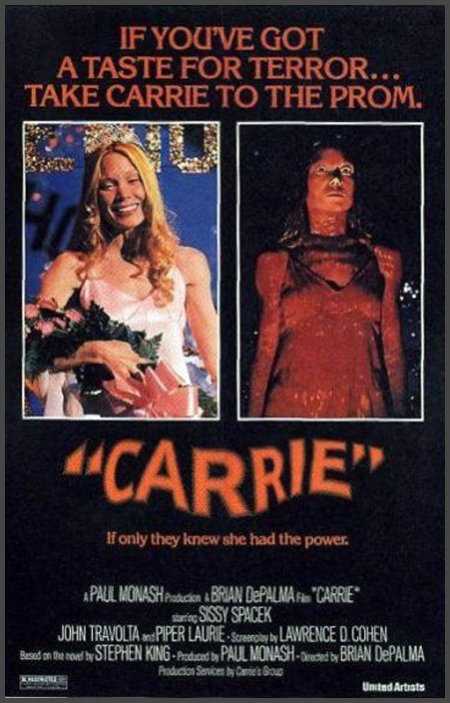
Carrie – Brian De Palma’s film adaptation of one of Stephen King’s better horror novels still seen by many as the best film adapt of a King novel. It combines the existential horror of being a girl and her body maturing in the dog-eat-dog world of high school and the horror said girl can inflict on those tormenting her. It’s high school bullying and revenge with a healthy dose of Stephen King shenanigans mixed in. Sissy Spacek was great as the titular character. One doesn’t have to be a high school girl to feel for Carrie and what she goes through. Her snapping in the last act and inflicting her psychokinetic-brand of revenge on her tormentors must’ve gotten more than a few “Hell yeah!” from some of the teens and adults who went through high school hell. It also has a classic line uttered by Carrie’s mother played by Piper Laurie: “I can see your dirty pillows. Everyone will.”

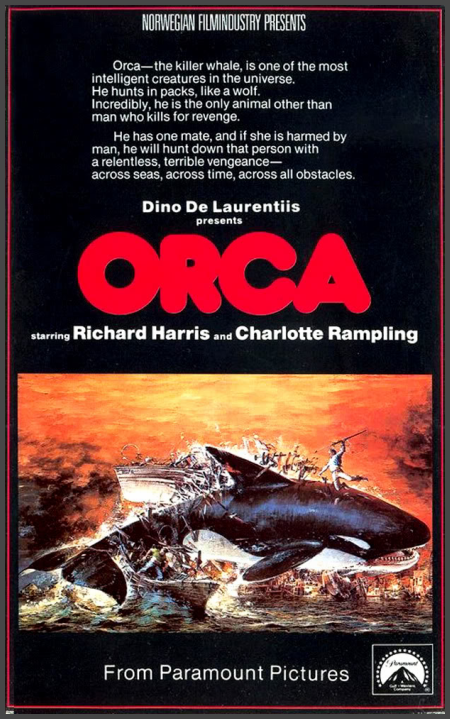
Orca – This film was to be producer Dino De Laurentiis’ attempt to capitalize on the success of Steven Spielberg’s classic man-versus-nature thriller, Jaws. Starring Richard Harris, Charlotte Rampling and Bo Derek the film wasn’t a success when it first came out. While Spielberg’s film was a modern retelling of Moby Dick this killer whale version by director Michael Anderson was Death Wish on water with Paul Kersey as the killer whale. This was one of the first films where I realized none of the people on the screen were worth rooting for to survive. I was all for the killer whale who was on a warpath to avenge his mate and unborn wee killer whale who were killed by Harris and his crew. Shamu this killer whale was not and it always brought a smile to my face whenever the killer whale outsmarted the humans and killed each and everyone in inventive ways. I’m wondering if all the killer whales in all the aquatic parks are just biding their time before they too go all Orca on their handlers and the audience. I’d pay to see that!

Treevenge – Last but not least the greatest film ever made!

Review: Grindhouse (dir. by Robert Rodriguez and Quentin Tarantino)


Robert Rodriguez and Quentin Tarantino have always professed to anyone within hearing distance their extreme and fanboyish love for the grindhouse days of filmmaking. Both directors’ resume of work look like a modern grindhouse films but with better writing, effects and directing. Anyone who grew up watching grindhouse film’s of the 70’s and 80’s can see it’s heavy influence on films such as From Dusk Til Dawn, Desperado, Pulp Fiction and Kill Bill. With 2007’s Grindhouse, both Rodriguez and Tarantino take their fanboy love for all things grindhouse and exploitation to a whole new level with personal take on the cheap John Carpenter-knock offs, zombie gorefests, slasher film and revenge-driven flicks that made being a young kid during the 70’s and 80’s quite enjoyable.

For those who do not know what grindhouse films are they’re the ultra-cheap and, most of the time, very bad, shlocky horror, revenge, softcore porn, badly-dubbed kung fu flicks and a myriad of other B- to Z-grade movies. These movies were shown in dingy, decrepit (usually former burlesque stagehouses) movie houses which showed double to triple-bills of titles for a low, cheap price all day long (where the popcorn and concession snacks were as stale as week-old coffee). These places and their films were book-ended by the cheap drive-in theaters which grew out of the suburban sprawl boom era of the 60’s and 70’s. One could not avoid the fact that the projector equipment were in bad shape and in desperate need of maintenance while the films played out. Then there’s the film reels themselves with their washed out sequences, out of focus scenes, burnt-in spots and missing film reels where the sex scenes would’ve been. This was the grindhouse experience and with the rise of Hollywood as a corporate entity even moreso than it’s been in the past and urban renewal projects by big city leaders, the grindhouse experience has pretty much faded away and kept alive only in the memories of its fans worldwide.

What Robert Rodriguez and Quentin Tarantino have cranked out with their three-hour long opus to those grindhouse days has been both a literal and thematic homage to an era long since gone. Grindhouse also has allowed Rodriguez and Tarantino to pull out all the stops in filming their respective halves of the film. Rodriguez went all-out in paying literal homage to the zombie gore-fests of George A. Romero, Lucio Fulci and Umberto Lenzi. Planet Terror plays like a hodgepodge of all the zombie movies from these masters of the walking dead but Rodriguez has the use of digital effects to match the over-the-top feel of the past zombie-fests without making the effects look too cheap.

The story for Planet Terror is quite simple yet full of so many incoherent subplots that trying to keep track with whats going on would just confuse a viewer even more. Rodriguez gets the grindhouse feel with such a ludicrous storyline. Whether it was done on purpose or not, the feeling of confusion in addition to the non-stop zombie action was only compounded even more by the digitally-added film stock scratches, burns to the edges of the reel and when the movie was about to get all hot and sexy, missing reel footage. Anyone who watched movies in grindhouse theaters would recognize the look quite well. Rodriguez goes all out in letting his zombie fanboy out. The violence in Planet Terror begins strong and just gets stronger and even more over-the-top right up to the final frame. Zombie’s getting their heads blown apart is shown in scratchy, loving detail with an impossible amount of blood, bone and brain for people to gawk at. The female characters are hot and sexy. Rose McGowan as Cherry Darling holds Planet Terror together with her spunky go-go dancer dreaming to be a stand-up comedienne turning into Ellen Ripley minus a leg but gaining an M16A3 w/ M203 grenade launcher as a leg prosthetic. Freddy Rodriguez as El Wray, her wayward and mysterious lover, almost seem to be channeling a hilariously bad version of Snake Plissken. These two make for quite the explosive couple as they must try and save their small Texas town from the infected townspeople turned pus-oozing, boil-ridden zombies.

Planet Terror sports a nice collection of current B-list actors like Josh Brolin (making like a Nick Nolte at his growliest) and Marley Shelton as a pair of married doctors with marital problems compounded by the increasing amount of zombies their hospital seem to be bringing in for medical help. There’s also genre veterans Michael Biehn, Jeff Fahey and Tom Savini to give Planet Terror the appropriate grindhouse look and feel to it. Ever the good friend and buddy collaborator, Rodriguez even gives Quentin Tarantino a role in his half of the film. He’s shown in the credits for Planet Terror as The Rapist. If any director seem destined to be one, if their love for movies didn’t steer them on the right path, Tarantino seem to look just like one to be called “Tha Rapist”.

There’s explosion and gore galore in Rodriguez’s ode to the zombie genre. Some who sees it might say there’s too much and they would be right if the title of the whole film wasn’t Grindhouse. I, for one, am glad Rodriguez decided to not hold back with what he threw onto the screen. I’m sure that when the dvd finally comes out and the unedited full version of Planet Terror is shown it’ll even surpass the 85-minute running time in the film. I think I can forgive Rodriguez for his gore excess and at times I actually wished for more, but then that would mean taking even more time before I get to Tarantino’s half of the movie. Planet Terror truly got the look of a grindhouse flick, but it’s Tarantino’s Death Proof half which got the spirit of grindhouse down to near-perfect.

Before Tarantino’s Death Proof half of Grindhouse begins the audience gets treated to a sort of intermission involving three fake trailers for movies which celebrate just how ridiculously fun grindhouse movies really were during the 70’s and 80’s. There’s Rob Zombie’s Werewolf Women of the SS which was this weird mish-mash of the women-in-prison flicks with that of the infamous Ilsa: She-Wolf of the SS films that brought about the exploitation in grindhouse. This trailer was great just for the inspired casting of Nicolas Cage as Fu Manchu and Sybil Danning as one of the so-called SS women werewolves. There’s also Edgar Wright’s fake trailer for Don’t (director of Shaun of the Dead and Hot Fuzz) which parodies the trailers for all the gothic, European haunted and horror movies where none of the actors in the trailer speak a word to make sure the film doesn’t get labeled as a “foreign film”. But it’s the third trailer in that intermission trio which had everyone in the audience reacting wildly.

Eli Roth’s Thanksgiving is a throwback to the seasonal-themed slasher flicks like Black Christmas but this time turns the yearly, turkey day and Pilgrim celebration into a trailer with some of the most disturbingly inventive scenes for a fake slasher movie. I don’t know what the Pilgrim serial killer was doing with that turkey at the end of the trailer but I’m sure it will have many people talking about it afterwards. It’s this Eli Roth trailer which fully captures the gritty and gratuitious nature of what makes a grindhouse horror movie. It’s also the one fake trailer I hope Roth would re-visit and turn into a full-length movie.

Now, with the trailers out of the way, Tarantino’s half of Grindhouse begins and we’re treated to a different take on the grindhouse experience. Death Proof begins as if it will continue Rodriguez’s literal examination and homage to the grindhouse experience, but after messing with the film’s focus, adding a few film scratches to the celluloid and even adding a missing reel gag, Tarantino suddenly slows all those grindhouse trickeries and actually ends up making a rip-roaring slasher-revenge-carchase flick. Tarantino takes one part slasher movie adds in a heavy dose of his own Reservoir Dogs (the talking between the female characters in Death Proof are as foul-mouthed and trivial as the diner scene in Reservoir Dogs) then mixes in equal amounts of Vanishing Point, Faster Pussycat! Kill! Kill! and I Spit On Your Grave. Instead of just mimicking these particular grindhouse classics, Tarantino uses his own flair for extended dialogue to slow down the pace of the film thus lulling the audience for the two pay-offs which happen in the middle and the end of Death Proof. Tarantino’s half of Grindhouse could’ve went nowhere with all its estrogen-laced talkies, but Kurt “I AM SNAKE PLISSKEN” Russell really saves the day once he makes his appearance as the automotive-themed serial killer, Stuntman Mike. Where Jason uses farming and bladed implements as his tool of the serial killing trade, Stuntman Mike uses both a 1971 Chevy Nova SS and a 1970 Dodge Charger R/T 440 as his weapons of choice. Both vehicles have been made death proof for filming violent car stunt sequences, but in order to appreciate it’s unique life-saving properties then one has to sit where Mike sits.

Kurt Russell can now add Stuntman Mike to his classic list of badass roles. Mike would feel quite welcome amongst the like of Snake Plissken, John J. MacReady, and Jack Burton to name a few of Russell’s classic characters. Mike comes across as cooly and slickly dangerous, yet not psychotic. His charm is quite disarming until it turns deadly. He really takes the slasher-character stereotype and turns it on its ear. Death Proof once again shows that when Tarantino gets to work with one of his boyhood idols he really gives them a role that they could sink their teeth into.

Death Proof captures the spirit of what makes a grindhouse exploitation film. Even with the heavy references to Vanishing Point, especially with a white 70’s Dodge Challenger used just like in that movie, Tarantino still injects his own brand of craziness to the whole movie. I know many who have complained that Death Proof was too much talk with only the car chase in the end being the saving grace. I politely disagree and say that it’s that very long periods of dialogue between the women in Death Proof that brings some of the spirit of grindhouse to the story. Many forget or don’t remember that most grindhouse cheapies had so much extraneous dialogue to hide the fact that the budget was low to none when the movies were being made so they had to fill-up the movie’s running time with as much nonsensical dialogue before the big effect shots payoff.

The final chase-scene between the Russell’s Stuntman Mike and the female-trio of Rosario Dawson, Tracie Thoms (channeling Jules from Pulp Fiction) and real-life stuntwoman Zoe Bell (she doubled as Uma Thurman in the more dangerous stunts in Kill Bill) has to go down as one of the craziest, whiteknuckling, barnburning car chase sequences of the modern times. No CGI-effects trickery and fancy MTV-style editing was used. George Miller, John Frankenheimer and Richard Sarafian would be proud of what Tarantino was able to accomplish with Death Proof‘s 20-minute long car chase. By the time Death Proof ends the audience have bee put through the wringer and one was hard-pressed not to cheer and root for Stuntman Mike even though we know we shouldn’t. Death Proof proves that “hell hath no fury like a woman scorned” or at least a trio of women endangered.

Grindhouse is a film not for everyone. There’s going to be quite a few people who won’t “get” the film homages and references by both Robert Rodriguez and Quentin Tarantino. Some would say that the movie was too over-the-top, badly made and just out there, but then they would be missing the point of the whole project altogether. For those who grew up watching these kind of films as kids and teenagers, it’s a belated Valentine’s gift from two fanboy filmmakers who finally were able to do the films they grew up idolizing and enjoying. For the rest who are not as well-versed in the grindhouse cinema, this is a good enough starter before they move on to try the classic ones which are now on video (I would suggest they find a worn-out VHS copy of it instead of the cleaned up DVD version). The film is over three-hours long, but one who goes in really can’t say that they didn’t get their money’s worth when they went in to watch Grindhouse.

Michael Caine is Harry Brown (trailer)


This is another film from 2009 that has still to get a release in the United States. A thriller from filmmaker Daniel Barber and starring two-time Academy winner Michael Caine, Harry Brown looks like another in the line of revenge films which all share some similarities with the Charles Bronson 70’s classic Death Wish. The film also stars Emily Mortimer, Liam Cunningham and Iain Glen.

The premise of the film does seem to owe much to Bronson’s Death Wish series with some of the rioting of hoodlums and gang members in the trailer reminiscent of the cult-classic Death Wish 3 where Bronson’s Korean War veteran literally goes to war with the neighborhood gang on the streets. I like Michael Caine as an actor and he always seems to inhabit a role no matter how much, at first glance, it seems like its not a good fit. Caine’s early works has had him play characters with a darkness in them and I think this film will help remind younger viewers to the fact that he was not always Alfred the Butler.

The film makes it’s U.S. debut on April 30, 2010.

Review: Hard Candy (directed by David Slade)


The film directed by David Slade and written by Brian Nelson seems disturbing enough for just the subject matter alone, but it’s also eerie in how timely it’s release has been. With reports of teenage girls becoming victims of internet sexual predators appearing in all types of news media, Hard Candy arrives in the theaters through a limited release to highlight this current trend. Slade and Nelson has created an disturbing and, at times, a very uncomfortable film that shows the many twists and turns that happens when the roles of prey and predator become interchangeable.

There’s no denying that Hard Candy aims to put a new twist on the exploitation subgenre of the rape-revenge films that dominated the late 70’s and early 80’s. Brian Nelson’s clearly channeling the influences from such rape-revenge fantasy films like Mastrosimone’s Extremities and the very disturbing and exploitative I Spit On Your Grave (Day of the Woman) by Meir Zarchi. From the beginning the audience is shown the set-up of an adult instant messenging another person with the screen name of Thonggrrl14. Thonggrrl14 is in fact a 14 year-old teenage girl named Hayley and the adult on the other end a 32 year-old photographer named Jeff who goes by the screen name Lensman319. Jeff has an unhealthy and disturbing penchant for pubescent girls as the subject of his camera lens.

From their first meeting meeting at a coffee house where Jeff gradually begins a flirtatious conversation with the young Hayley to the point in the first act when he finally convinces her to go back to his house whcih doubles as his studio. There’s really no denying the sense of unease that permeates the first act as Hard Candy gradually paints Jeff as the sexual predator that he is. There’s no denying the fact that a man of his age should not be flirting and behaving as if the girl across from him is a fully-grown and developed woman of similar age. Hayley also comes across during this first act like a teenage girl dazzled by an older man who treats her older than her real age. It’s really a disturbing look at just how easily an adult can seduce a child into doing things they normally shouldn’t be doing.

Hayley (played by Juno herself, Ellen Page) soons shows just how wrong and mistaken Jeff has been in picking her as his new prey. I don’t use that word loosely for that was what this film truly was when boiled down to its basic component. A one-on-one three-act play (Brian Nelson’s experience as a playwright shows in the stage-like sequences from beginning to end) between a predator and prey. This time around the prey has turned out to be the one who has done the hunting and the consequences on the wanna-be predator that is Jeff leads to a slow and deliberate set-up that looks like something out of Takashi Miike’s Audition. Hayley’s turning the tables on her stalker shows that girls her age are intelligent enough to know that what Jeff’s doing was wrong. Hayley’s answer to that is to be the hunter instead and fix Jeff’s “problem” through what she calls as “preventive maintenance.” What she calls “preventive maintenance” will definitely cause many men watching this film to sit very uncomfortably and wince on more than once occassion.

The acting job done by Ellen Page was dazzling and really showed why she was listed as an up and coming talent years before Juno. She was technically 15 year-old when the film was made and already she showed a keen grasp of the script which deals with disturbing topics. There’s a scene in Jeff’s car as they reach his home where a passing glance of the camera at her face shows not a gullible teenager, but a determined and somewhat oft-kiltered individual who knows what she will be doing in the coming hours will be medieval harsh but in her mind justified. Patrick Wilson as Jeff plays the would-be sexual predator admirably. His range of emotions go from outright denials of Hayley’s accusations to impotent rage and desperation as his fate is described to him in Miike-like detail by his teenage captor.

If there’s a flaw to mar the intense and suffocating atmosphere this stage-like film creates it would be in the script itself. At times the Hayley character becomes a one-note individual whose beyond her years demeanor seemed too cold and rehearsed. I really can’t put the blame for this on Ms. Page, but on the writer himself. It seems like Brian Nelson was trying too hard to add twist and turns on the story being told. He seems to enjoy overmuch his ability to tug back and forth on his audiences’ emotional investment in the film and the two characters. He actually pulls off the trick of making the sexual predator earn the audiences’ sympathy at what is about to be done to him. But instead of continuing on with that tangent and thus putting Hayley on a darker and more sinister light, Nelson backs off and pulls the audience back to wanting physical and emotional destruction to be visited on Jeff. Nelson used too much zig-zagging in making his script look more complicated than it ought to be. A rape-revenge film works best in its most simplest form.

The direction by David Slade (well-known as a music video director) was actually very subdued and deliberate in its pacing. Slade doesn’t fall back onto his music video experience with unnecessary quick-cut editing that’s plagued his music video director brethren. Slade managed to pull off a very Hitchcockian-style of directing by letting the stage and the actors speak for the scene without much bells and whistles to clutter things. There’s a few sequences where he lets the camera film things through one long, continuous take thus adding a sense of realism to the situation developing inside Jeff’s home.

The use of too much twists and turns in the script notwithstanding, Hard Candy is a tour de force piece of suspenseful filmmaking that borders on the great psychological horror films of the 70’s. In fact, the subject matter on the screen lends a sense of real horror to the film with its timely release and story. Any parent or adult who knows teenagers who use social networking sites like Facebook, MySpace and Twitter would think hard about wanting to know more of what their kids are doing on the net. Hard Candy can be brutal at times and almost suffocating at others with little or no levity to break the tension. It’s a difficult film to sit through and probably won’t be the type of film for some, but just watching the performance by Ellen Page is worthy of the price of a viewing. The subject matter is very adult and straddles the line of what constitute a rated R film and one strictly for adults only. Hard Candy definitely falls on the latter.

Treevenge aka When Christmas Trees Go Wrong!


When Tarantino and Rodriguez first created their ode to all things grindhouse with Planet Terror and Death Proof they also put out a word to their directing buddies who enjoyed the same things to make fake trailers to begin and break between the two films. They also created a contest where fans could create their own fake grindhouse trailer and the winner gets added to the dvd release. The winner of this contest was one aptly titled, Hobo With A Shotgun. While the trailer was ok it did introduce me to filmmaker Jason Eisener.

He has know followed up Hobo With A Shotgun with a horror shortfilm that has become the darling of the film festival circuit. His 16-minute short film is titled Treevenge and I will say that it’s one of the most original and inventive piece of storytelling and filmmaking of the year. This little shortfilm is why horror has its place in the filmmaking community as a way for aspiring filmmakers to get their creative juices flowing. This little gem of a film is also why I also love film in general. Little jewels like this make going through the awful films worthwhile.

For the complete uninterrupted short film click: Treevenge

…or watch it’s YouTube two-parter.