Retro Television Review: Miami Vice 2.20 “Payback”


Welcome to Retro Television Reviews, a feature where we review some of our favorite and least favorite shows of the past!  On Mondays, I will be reviewing Miami Vice, which ran on NBC from 1984 to 1989.  The entire show can be purchased on Prime!

After taking a two-month hiatus, I think it’s time to finally get back to the reviews.  Thank you for your patience, everyone.  Now, let’s head to down to Miami for some Vice!

Episode 2.20 “Payback”

(Dir by Aaron Lipstadt, originally aired on March 14th, 1986)

A low-level drug dealer named Jesus Moroto (Roberto Duran) wants a meeting with the detective who arrested him and sent him to jail.  When Sonny Crockett arrives to see what Moroto wants, Sonny is shocked when Moroto commits suicide in the visitation room.

Sudden and violent deaths are a recurring thing in Miami but the death of Moroto haunts Sonny.  As Sonny explains to Tubbs, it doesn’t make any sense for Moroto, who was only looking at a few years in jail, to have killed himself.  Sonny wonders why Moroto died in front of him.  Tubbs suggests that Sonny instead focus on their current assignment, trying to get close to the elusive drug lord, Mario Fuente (played by famed art rocker, Frank Zappa).  As a lot of drug lords do on this show, Fuente lives on a yacht and it’s next to impossible to see him.  Using their undercover identities as Burnett and Cooper, Crockett and Tubbs have so far only been able to meet with Fuente’s second-in-command, Reuben Reydolfo (Dan Hedaya).

Crockett and Tubbs find themselves assigned to work with two DEA agents, one whom — Kevin Cates (Graham Beckel) — claims that he can get Crockett and Tubbs onto Fuente’s boat.  Crockett and Tubbs are reluctant to work with anyone but it soon turns out that Cates is apparently better at his job than Crockett and Tubbs gave him credit for.

Except, of course, everyone’s got a secret.  Before he went to jail, Moroto stole several million dollars from Fuente.  It turns out that Internal Affairs is convinced that Crockett helped Moroto steal the money and Fuente, who knows that Burnett and Cooper are actually Crockett and Tubbs, believes the same thing.  The only person who can truly prove that Crockett is innocent is Kevin Cates and that’s because he’s the one who stole the money!

It doesn’t matter that the twisty plot of this particular episode is not always easy to follow.  It also doesn’t matter that this episode leaves you wondering just how exactly Crockett and Tubbs have managed to maintain their Burnett/Cooper personas for so long without everyone in Miami’s underworld figuring out the truth.  (Personally, I wonder that after every episode.)  This episode works due to the atmospheric direction of Aaron Lipstadt and the performances of Don Johnson, Edward James Olmos, Frank Zappa, and especially Graham Beckel.  Beckel gives a performance that will keep you guessing at just who exactly Kevin Cates is working for and whether or not he can be trusted.  That he makes Kevin into a somewhat likable character makes it all the more disturbing when he turns out to not be quite the honest law enforcer that he made himself out to be.  If the main theme of Miami Vice often seemed to be that Crockett and Tubbs were fighting a war that there was no way to win, this episode shows why their work often felt so futile.  In this episode, Crockett not only has to battle a drug lord but he also has to battle Internal Affairs.  No one trusts anyone.

The episode ends on an ambiguous note, with Crockett technically cleared but still unable to truly prove his innocence.  (Kevin Cates, the only man who can truly prove Crockett’s innocence, is naturally gunned down during the show’s final few minutes.)  Crockett is warned that Fuente is still going to be coming after him.  (Unfortunately, Zappa was in poor health when he filmed this episode and Fuente would never return.)  This episode is Miami Vice at its most cynical and its most effective.
Late Night Retro Television Review: Highway to Heaven 2.14 “Close Encounters of the Heavenly Kind”


Welcome to Late Night Retro Television Reviews, a feature where we review some of our favorite and least favorite shows of the past!  On Thursdays, I will be reviewing Highway to Heaven, which aired on NBC from 1984 to 1989.  The entire show is currently streaming on Freevee and several other services!

There’s really not much to say about this episode.

Episode 2.14 “Close Encounters of the Heavenly Kind”

(Dir by Victor French, originally aired on January 15th, 1986)

Adam (Jerry Supiran) is a kid who lives with his grandfather, Harvey (Harold J. Stone).  Unless Harvey can find a real job, Adam is going to be put in foster care.  Harvey is a self-taught electrician but, since he never graduated high school, no one is willing to take a chance on him.

One night, a meteorite crashes into the Earth.  When Adam rides his bike out to the impact area, he sees Jonathan and Mark stepping out of the crater.  Though Jonathan and Mark just happened to be driving by and decided to investigate the meteorite on their own, Adam assumes that they’re aliens.  Jonathan lets him assume that as he and Mark go on to help Harvey find a job and also help Adam to find the courage to stand up to his bullies.

Especially when compared to last week’s episode, this was all pretty bland.  Jerry Spurian was one of those child actors who overemoted with every line while Harold J. Stone comes across as just being cranky and disagreeable.  This felt like a throw-away episode and there’s really not much else to be said about it.

(How’s that for a short review?  Sorry, there’s not much to say about this one.)

Retro Television Review: Malibu, CA 1.7 “Scott’s Old Girlfriend”


Welcome to Retro Television Reviews, a feature where we review some of our favorite and least favorite shows of the past!  On Thursdays, I will be reviewing Malibu CA, which aired in Syndication in 1998 and 1999.  The entire show is currently streaming on YouTube!

Is this a good episode of Malibu, CA?  Read on to find out!

Episode 1.7 “Scott’s Old Girlfriend”

(Dir by Gary Shimokawa, originally aired on November 22nd, 1998)

Scott and Sam’s relationship is going strong.  They’re even planning on spending the weekend in Catalina together.  But then Scott’s girlfriend from New York, Megan (Tsianina Joelson), comes to California for a series of dance auditions.  Scott swears that he broke up with Megan before leaving New York but it turns out that seeing, “See ya,” is not the best or clearest way to break up with someone.  Megan still thinks that she’s dating Scott.

Instead of telling Megan and Sam the truth, Scott attempts to keep them from learning about each other.  Why?  Because Scott is a character in a Peter Engel-produced sitcom and the guys in these shows always did the stupidest possible things.  Scott’s attempt to lie to both of his girlfriends ends in failure and Sam dumps him.

We’re back in familiar territory with this episode.  Once again, for 20 minutes, we see that Scott Collins is the worst person who has ever lived.  The show attempts to make Scott likable by having him regularly break the fourth wall and speak directly to the audience but smirking while bragging about lying to not one but two girlfriends does not exactly make one likable.  His brother Jason is a bit less annoying than usual in this episode but he still helps Scott in his attempted deception so, even if he’s not as much of a sociopath as Scott, Jason’s still a bit of a wimp.  (In many ways, being wimpy is even worse than being evil.)  It’s actually very satisfying when Sam dumps Scott because it’s exactly what an actual human being would do in this situation.  In fact, it’s so satisfying that it actually makes this episode a smidgen better than the ones that came before it.

There is a B-plot but it’s not as annoying as usual.  Stads helps Murray train for a surfing contest, which Murray wins even though he’s torn between his love of surfing and his newly found love for Traycee.  Stads encourages Murray to break up with Traycee so he can concentrate on surfing and, continuing the show’s theme of people behaving in a semi-realistic way, she feels guilty about it afterwards.  But Traycee quickly gets back together with her ex and Murray is excited to have a surfing trophy.  And you know what?  Good for him.  Murray started out as a kind of annoying character but, compared to Scott and Jason, he’s a prince.

Was this a good episode?  Well, no, not really.  Due to just how unlikable the show’s two main characters are, I don’t think there’s such a thing as a good episode of Malibu CA.  But it wasn’t quite as bad as the ones that came before it.

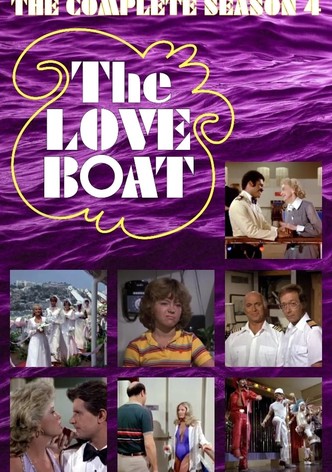
Retro Television Review: The Love Boat 4.20 “Quiet, My Wife’s Listening/Eye of the Beholder/The Nudist from Sunshine Gardens”


Welcome to Retro Television Reviews, a feature where we review some of our favorite and least favorite shows of the past!  On Wednesdays, I will be reviewing the original Love Boat, which aired on ABC from 1977 to 1986!  The series can be streamed on Paramount Plus!

This week, The Love Boat makes history.

Episode 4.20 “Quiet, My Wife’s Listening/Eye of the Beholder/The Nudist from Sunshine Gardens”

(Dir by Harry Mastrogeorge, originally aired on February 21st, 1981)

This episode contains a historical first.  It features the first interracial romance to ever be featured on The Love Boat.  It took them three and a half seasons to feature one but, at the same time, in 1981, it still probably took some courage for a primetime television show to feature white David Hedison falling in love with black Leslie Uggams.  Today, of course, we tend to take it for granted that every movie, TV show, and advertisement is going to feature at least one interracial couple.  It’s easy to forget that this is actually a rather recent development.  Consider this:  I’ve reviewed over a hundred episodes of Fantasy Island and The Love Boat and this is the first episode to feature an interracial romance.

It should be noted, of course, that Leslie Uggams plays a blind woman.  At first, I thought the episode was trying to hedge its bets, by assuring any racists in the audience that Uggams didn’t know she was falling in love with a white guy.  But then, David Hedison asked Leslie Uggams to marry him and come live with him on his ranch.

“I am a blind, black woman,” Uggams replies, before asking Hedison how he’s going to handle the reactions of the “people in that small town” to him marrying her.

This, of course, would have been a great chance for Hedison to declare that he didn’t care what anyone else had to say and that love is love.  Unfortunately, he doesn’t say that.

Instead, Hedison jokes, “We’ll just tell people that you’re the new housekeeper.”

AGCK!  Oh, Love Boat, you were so close!  That truly unfortunately joke aside, it was a good story and David Hedison and Leslie Uggams had a likable chemistry together.  It was nice to see them leave the ship together.

(Incidentally, Leslie Uggams herself married a white man in 1965, at a time when interracial marriage still illegal in many States.  They’re still married today.)

As for the other two stories, they were pleasantly bland.  Barbie Benton played a nudist who was determined to sunbathe on the ship.  Though Doc Bricker volunteered to deal with the problem personally, Gopher instead declared that it was his duty — as purser — to convince her to cover up.  Peter Haskell played the ACLU lawyer who threatened to sue Gopher for violating Benton’s first amendment rights.  Haskell and Benton fell in love, despite the fact that Benton was 20-something while Haskell appeared to be close to 70.

Meanwhile, Dick Martin boarded the ship with his mistress (Judith Chapman) but he was so paranoid about the possibility of his wife bugging his cabin that his mistress got frustrated and left him.  Martin then fell in love with Mary Ann Mobley, an electronic expert who offered to de-bug his cabin.  Of course, Mobley was actually a detective sent to catch Martin with his mistress but she fell in love with Martin so I guess it just sucks for Martin’s wife.

The Barbie Benton storyline had some funny moments.  The Dick Martin storyline reminded me how hard it is to have sympathy for someone who would cheat on his wife with two different women on one cruise.  Overall, this was a pleasant — and historically significant — cruise.

Retro Television Review: Fantasy Island 5.6 “Druids/A Night In A Harem”


Welcome to Retro Television Reviews, a feature where we review some of our favorite and least favorite shows of the past!  On Tuesdays, I will be reviewing the original Fantasy Island, which ran on ABC from 1977 to 1984.  Almost the entire show is currently streaming on Daily Motion, YouTube, Plex, and a host of other sites.

Let’s see what’s happening on Fantasy Island this week!

Episode 5.6 “Druids/A Night In A Harem”

(Dir by Don Weis, originally aired on November 14th, 1981)

Hey, Tattoo is back!

Now, interestingly enough, Tattoo is in this episode but Julie only appears for a few seconds, just long enough to tell Roarke that she will be too busy babysitting to help out with any of the fantasies this week.  Considering that she’s screwed up almost everything she’s been entrusted with, I’m sure Roarke was relieved to hear this.  Still, you have to wonder if there was some rule that Julie and Tattoo couldn’t be equally featured in the same episode.

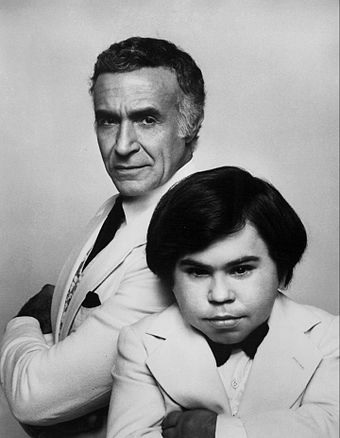
Tattoo is enthused about one of the fantasies this week.  Shy and nerdy Herbie Snyder (Paul Williams) wants to have a harem for the weekend so that he can build up his confidence.  Tattoo offers to accompany Herbie on his fantasy but Roarke says that won’t be necessary.  It turns out Herbie screwed up when he requested his fantasy and asked to be a part of a harem.

Soon, Herbie finds himself surrounded by a bunch of oily body builders as he becomes a member of an all-male harem that belongs to the Contessa (Jayne Meadows)!  Herbie is not comfortable being a sex toy but he is happy to meet and fall in love with Lisa (Pat Klous), the daughter of the Contessa.  Fortunately, it turns out that the Contessa has a fantasy of her own and that’s for Lisa (hey, great name!) to meet and fall in love with a good man.  Herbie and Lisa even get married on Fantasy Island!

This whole fantasy was silly, with Jayne Meadows devouring the scenery as only a veteran guest star can.  That said, Paul Williams and Pat Klous were a cute couple.

As for the other fantasy, Lauren Fandell (Joan Prather) wants to be the center of attention.  Roarke informs her that she’s a descendant of Druid queen.  It turns out that there’s some druids living on a nearby island!  Lauren heads over to Druid Island and is promptly proclaimed Queen of the Druids.  “Are you married? she is asked.  When she says she’s not, she is proclaimed the Virgin Queen.  Uhmmm, okay.  Maybe that’s a druid thing but that just seems like a huge assumption to me….

Unfortunately, being the Virgin Queen means that she’s due to be sacrificed to their God, the evil Pan.  Roarke shows up briefly and gives her a magic acorn necklace, which she does eventually use to distract Pan and escape with her new boyfriend, Paul (Dennis Cole).

(And yes, it does turn out that Paul was another guest whose fantasy was to study the druids.)

This was a good episode.  The fantasies were entertainingly silly and Tattoo was back.  We even got a little of the old Roarke/Tattoo banter, which used to be a highlight of the show.  This episode, with all of its silliness and melodrama, felt like what Fantasy Island was meant to be.

Late Night Retro Television Review: CHiPs 2.9 “The Sheik”


Welcome to Late Night Retro Television Reviews, a feature where we review some of our favorite and least favorite shows of the past!  On Mondays, I will be reviewing CHiPs, which ran on NBC from 1977 to 1983.  The entire show is currently streaming on Freevee!

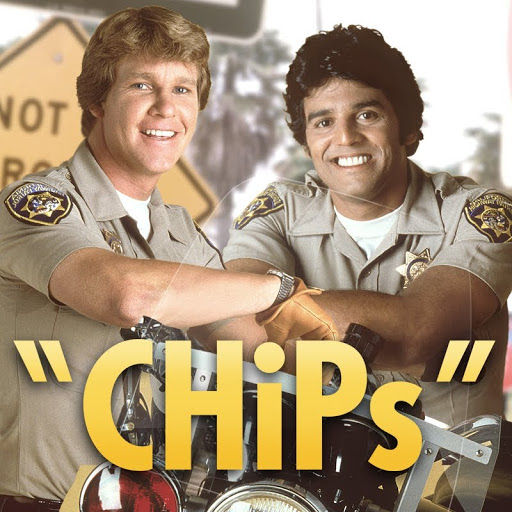
This week, Ponch and Jon’s attempts to keep the highways safe are endangered by a young man with a fast car, a bad attitude, and diplomatic immunity.  Cue the music!

Episode 2.9 “The Shiek”

(Dir by Phil Bondelli, originally aired on November 18th, 1978)

The title character of this week’s episode is Barney (Kario Salem), the son of the ruler of a Middle Eastern country.  Wealthy beyond belief, Barney is in the United States.  He’s supposed to be studying but he spends most of his time recklessly speeding around Los Angeles in his sportscar.  When Ponch and Baker pull him over, he announced that he has diplomatic immunity.  When Ponch tries to reprimand Barney for putting people at risk, Barney slaps him.

Barney gets arrested but again …. diplomatic immunity!  In fact, the State Department sends a representative to come down personally and ask that Barney not only be released but that Ponch and Baker apologize for inconveniencing him.

Barney subsequently invites Ponch and Jon to a party on his yacht.  Ponch spends his time flirting with Barney’s assistant, Fay (Marianne Meeks).  Baker struggles to hit on two French girls.  But when someone passes out while on a speeding motorboat, Ponch and Jon both jump on their jet skis and save the day.

Barney, it turns out, is interested in seeing how the American police do their job.  He is scheduled to return home and take over his father’s private police force.  Despite the fact that it sounds like Barney will basically be rounding up and torturing political dissidents, Baker and Ponch take him on a ride along.  Witnessing a real car accident and the struggle to save the lives of the people involved all leads to Barney renouncing his speeding ways.  Ponch and Baker have to agree that Baney’s not such a bad guy.

This episode felt a bit strange.  Instead of featuring several different storylines and rescues, the entire episode pretty much revolved around Ponch and Baker’s relationship with Barney.  It’s never really made clear which country Barney is from but Ponch does mention the Shah at one point.  If Barney is planning on returning to Iran, that means he’s going to return just in time for the revolution.  Poor Barney.

Anyway, Barney had a nice car and the jet ski rescue was exciting.  Baker was charmingly inept at speaking French.  Ponch smiled a lot.  It was pretty much a basic episode of CHiPs.  Seen today, it’s probably most interesting as a portrayal of a pre-911 America’s attitude towards the Middle East and its leaders.  Barney may have been spoiled and arrogant but ultimately, he just needed some straight-talking, no-nonsense, blue collar Americans to explain the way the world worked to him.  Ponch and Baker were happy to oblige.

Retro Television Review: Miami Vice 2.19 “The Fix”


Welcome to Retro Television Reviews, a feature where we review some of our favorite and least favorite shows of the past!  On Mondays, I will be reviewing Miami Vice, which ran on NBC from 1984 to 1989.  The entire show can be purchased on Prime!

This week, Crockett and Tubbs discover a judge may be taking bribes.

Episode 2.19 “The Fix”

(Dir by Dick Miller, originally aired on March 7th, 1986)

Roger Ferguson (Bill Russell) is a powerful man in Miami.  A former basketball player turned lawyer, Ferguson could have been elected mayor but instead, he chose to take an appointment to the bench.  In his art deco courtroom, Judge Ferguson hands down sentences and sets bail.  In fact, sometimes, he sets bail at a surprisingly low amount.  After a drug lord is released on a $5,000 bond and immediately catches a plane for Colombia, Crockett and Tubbs come to suspect that the Judge might be taking bribes.

And he is!  Judge Ferguson has a gambling problem and a corrupt lawyer named Benedict (Harvey Fierstein, clean-shaved but recognizable from the minute he starts to speak) is taking advantage of that fact.  In fact, Ferguson is so in debt that he’s had to borrow from a notorious loan shark named Pagone (Michael Richards — yes, the future Kramer from Seinfeld).  Pagone is now demanding that the judge convince his son, a basketball player named Matt (Bernard King), to throw his next game.

There were some good things about this episode.  It was directed by Dick Miller and yes, that is the same Dick Miller who, as a character actor, appeared in countless Roger Corman films.  As a director, Miller had a good sense of style.  The opening sequence, where the Vice Squad arrests a drug lord at an aviary, is genuinely exciting and well-done.  There was also some moments of genuine humor, largely supplied by the contrast between Crockett’s intensity and Tubbs’s laid-back cool.

The problem is with the casting, some of which is not entirely the show’s fault.  In 1986, no one knew that casting Harvey Fierstein and Michael Richards as ruthless villains would come across as being unintentionally humorous in 2024.  Richards does not give a bad performance as Pagone but, whenever he threatens the judge, he sounds just like Kramer demanding the day off for Festivus.  As for Bill Russell and Bernard King, I looked them up on Wikipedia after watching the show and I was not surprised to discover that they were both actual basketball players.  Both of them gave earnest performances but it was easy to see that neither one of them was a natural or a trained actor.  It wasn’t quite as bad as when actual basketball players used to show up on Hang Time but still, they definitely seemed to be struggling to keep up with the veteran actors in the cast.

This is yet another episode that ends with Crockett staring in horror as someone is shot on a yacht.  (In this case, it’s Judge Ferguson committing suicide after killing Pagone.)  Seriously, what was the yacht budget for this show?

Late Night Retro Television Review: Degrassi Junior High 3.6 “He Ain’t Heavy”


Welcome to Late Night Retro Television Reviews, a feature where we review some of our favorite and least favorite shows of the past!  On Sunday, I will be reviewing the Canadian series, Degrassi Junior High, which aired on CBC and PBS from 1987 to 1989!  The series can be streamed on YouTube!

Finally, it’s time to return to Degrassi!

Episode 3.6 “He Ain’t Heavy”

(Dir by Kit Hood, originally aired on January 9th, 1989)

Snake’s older brother Glenn (Montgomery Randal) is a Degrassi legend, a star football and basketball player who graduated at the top of his class and who is now attending medical school on a full scholarship.  When Glenn unexpectedly returns to Toronto, Snake is confused.

Glenn explains that he’s come home to tell his parent that he’s moving out of the dorms and getting an apartment with someone with whom he has become very close.

Snake laughs about Glenn moving in with a girlfriend.

No, Glenn says, my new roommate is gay.

Yuck, Snake (who, we should remember, is only 14) replies, why do you want to move in with one of them?

I am gay, Glenn replies.

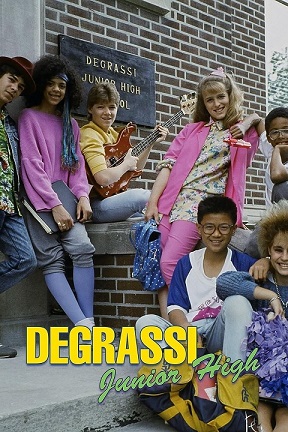
This episode is a huge moment in Degrassi history, because it’s the first episode to deal with someone coming out.  (Coming out episodes would eventually become a regular occurrence on Degrassi: The Next Generation, to the extent that they would actually become a bit of a cliche.)  Though not a regular character, Glenn is the first person on Degrassi to come out and the episode focuses on Snake’s reaction to his brother being gay.  It’s to the show’s credit that Snake does not have the ideal reaction that one would hope to have.  While the show clearly supports Glenn and portrays him sympathetically, it doesn’t lose sight of the fact that Snake is a 14 year-old boy growing up during a very homophobic time and it portrays his reaction realistically, showing how even a “nice guy” like Snake has his own prejudices, though in his case his prejudices are largely due to peer pressure and growing up in a society and an era that portrays people like his brother to be somehow a threat.  (Early on in the show, Snake and his classmates snicker as their teacher attempts to educate them about AIDS.)  Of course, those of us who are longtime Degrassi fans know that Snake is going to grow up to be a level-headed and open-minded and tolerant adult and this episode offers up hints of the man who Snake is destined to be.  Snake may be 14 years old and he has a lot of growing to do but even he realizes that it took a lot of courage for Glenn to come out and that their mother’s reaction is even worse than Snake’s.  The episode ends with Glenn telling Snake that he won’t be returning home until he feels his family has accepted him.  Snake may not be where he needs to be but, by the end of the episode, one can see that he’s changing and maturing.

This episode was dominated by Snake and Glenn’s storyline and Stefan Brogren’s sensitive performance as Snake.  That said, there were three minor subplots that played out over the course of this episode.  Joey desperately tried to get the program manager of CRA-Z Radio to listen to the Zit Remedy’s demo tape and discovered that it takes a lot more than desire to be a rock star.  While that was going on, L.D. refused to be Lucy’s friend until Lucy shamed her ex-boyfriend into admitting that they didn’t have sex at Lucy’s last party.  (Like it’s any of L.D.’s business, quite frankly.)  And Arthur freaked out because a bunch of younger students asked him if he was rich.  “Who could be telling everyone we won the lottery?” Arthur asks Yick.  Uhmm, Arthur …. remember your cousin, who goes to Degrassi and is a year under you?  Seriously, Arthur gets the worst storylines.

Retro Television Review: The Chadwick Family (dir by David Lowell Rich)


Welcome to Retro Television Reviews, a feature where we review some of our favorite and least favorite shows of the past!  On Sundays, I will be reviewing the made-for-television movies that used to be a primetime mainstay.  Today’s film is 1974’s The Chadwick Family!  It  can be viewed on YouTube.

Who are the Chadwicks?

They’re a family living in San Francisco.  They claim to be an average middle class family but, as has apparently been typical of television since its very first broadcast day, they live in a way that can only be explained by having a good deal of wealth.

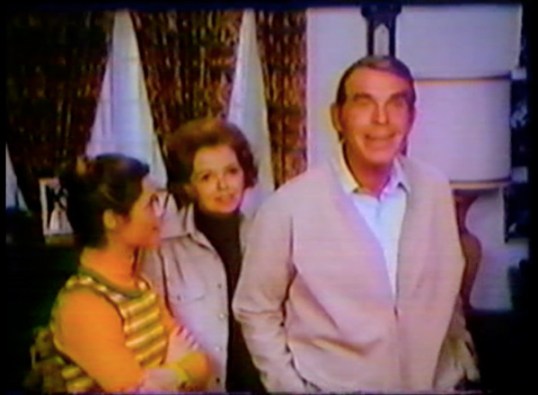
Consider this: Patriarch Ned Chadwick (Fred MacMurray) is a prominent newspaper columnist who writes so well that a mere column from him can settle a potential labor strike.  A national magazine has noticed the power of Ned’s words and they’ve offered him a job.  They want to turn him into a national figure.  The only catch is that he and his wife (Kathleen Maguire) would have to leave their beloved San Francisco and move to Chicago.  There’s no ocean in Chicago, as Ned puts it.  Sure, it would mean more money but who needs money when you’re a fabulously wealthy couple pretending to be middle class?

Moving would also mean leaving behind their children, all of whom have dramas of their own to deal with.  Tim (Stephen Nathan) is a college student, struggling to make the grade.  Lisa (Jane Actman) is engaged to Lee (Frank Michael Liu) and, for some reason, decides that it would be a good idea to tell her future mother-in-law that her desire for a long engagement is “bad chop suey.”  (Lee’s family is Chinese.)  Eileen (Lara Parker) is pregnant and her husband worries this will sabotage their support for “zero population growth.”  And Joan (Darleen Carr) is having to deal with the fact that her charismatic and fun-loving husband, Duffy (a young Barry Bostwick), is seriously ill and might even die before he can finish teaching Ned how to play the bagpipes.  Like all middle class people, Duffy owns his own airplane.

This is one of those movies that was obviously meant to serve as a pilot for a weekly television series and it’s easy to imagine Ned handing out wisdom to his kids on a weekly basis as they tried to navigate their way through the 70s.  Fred MacMurray gives off a nice grandfatherly vibe as Ned, so much so that it’s hard to believe that he’s the same actor who brought to life memorable heels in Double Indemnity, The Caine Mutiny, and The Apartment.  Unfortunately, the rest of the cast is not as memorable as MacMurray, largely because their roles are underwritten and their characters never feel like more than caricatures.  Barry Bostwick acts up a storm as Duffy but the fact that he’s listed as being a “special guest star” in the opening credits pretty much gives away his fate from the start.  As for Lisa, I usually like any character who shares my name but how much sympathy can you have for someone dumb enough to use a phrase like “bad chop suey” while speaking to her Chinese future in-laws.  Indeed, it was kind of weird how everyone in the family seemed to be totally comfortable with making jokes about Lee being Chinese and speaking with an accent.  One has to wonder how Lee felt about that.

Anyway, as far as I know, The Chadwick Family has no further adventures but their sole outing will live forever thanks to YouTube.

Late Night Retro Television Review: Check It Out 2.9 “Don’t Take My Job Please”


Welcome to Late Night Retro Television Reviews, a feature where we review some of our favorite and least favorite shows of the past!  On Saturdays, I will be reviewing the Canadian sitcom, Check it Out, which ran in syndication from 1985 to 1988.  The entire show is currently streaming on Tubi!

Well, it’s been over a month so I guess it’s time to get back to reviewing this show.  I can’t really remember why I picked this show to review but whatever.  Let’s see what’s happening in Canada.

Episode 2.9 “Don’t Take My Job Please”

(Dir by Alan Erlich, originally aired on December 12th, 1986)

It’s contract renegotiation time and Howard is convinced that his 12 years of loyal service and the fact that his store is making a lot of money will lead to him getting a raise.  Instead, Corbin from Corporate (Grant Cowan) informs him that the company is letting him go.

Howard vanished, without even Edna knowing for sure where he’s gone.  Jack Christian becomes the new  manager and is soon putting pictures of himself up all over the store.  However, when Christian’s “Buy One, Get One Free” sale leads to the store losing a huge amount of money, Corbin tells Christian that he’s fired …. unless, of course, he can track down Howard and convince him to take the manager’s job.

What?  Is this how they do business in Canada?  I understand firing Howard because the company didn’t want to give him a raise.  I understand firing Christian because he lost a lot of money on a stupid promotion.  But what type of company then begs the first fired guy to come back?  Does Cobb’s not have any other potential store managers?  Do they not have a management training program?  This doesn’t sound like a well-managed company.

Of course, the problem with bring Howard back is that Howard has disappeared, with his last words to Edna being that he was struggling to find anyone willing to hire someone as old as him.  (Howard says he’s 45.  Don Adams was in his 60s when this show aired.)  But then Christian takes everyone out to dinner at Musketeer, the Canadian version of Medieval Times, and guess who is dressed up like D’Artagnan and leading people to their tables?  It’s Howard!  Edna tells him that Cobb’s wants him to come back.  Howard says this is the best news he’s ever heard.

Uhmm …. Howard, it’s obvious they don’t appreciate you and they’re probably just going to try to screw you over again.  Tell ’em to kick rocks in Manitoba.

Anyway, that’s the episode.  It didn’t really add up too much but that’s to be expected with Check It Out.  This was one of those episodes where nothing made any sense but — to give credit where credit is due — the cast made the most of it, with Jeff Pustil, Kathleen Laskey, Aaron Schwartz, and Simon Reynolds all wringing laughs out of the most mild of dialogue.  It’s too bad that the episodes were always so plot-heavy because Check It Out! worked best when it just lets everyone be strange.