Welcome to Retro Television Reviews, a feature where we review some of our favorite and least favorite shows of the past! On Tuesdays, I will be reviewing the original Fantasy Island, which ran on ABC from 1977 to 1986. Almost entire show is currently streaming is on Youtube!
Smiles, everyone! Smiles!
Episode 3.16 “Rogues and Riches/Stark Terror”
(Dir by Cliff Bole, originally aired on January 19th, 1980)
Our latest weekend on Fantasy Island is both strange and entertaining!
Attorney Mark Hendicks (John Schuck) comes to the Island with a briefcase full of papers. He’s searching for his former law partner, Pete Gilbert (singer Robert Goulet). Years ago, Pete came to Fantasy Island with a simple fantasy. He wanted to be an 18th century British outlaw. However, Pete had so much fun in the past that he decided that he never wanted to leave. Mark needs to get Pete’s signature on some official forms so that Mark can sell some land that he and Pete bought before Pete’s fateful trip to the Island.
Mr. Roarke explains to Mark what’s going on with Pete and Mark is surprisingly accepting of Roarke’s explanation. Roarke drives Mark out to a bridge. He tells Mark that crossing the bridge will transport Mark to Pete’s fantasy. Mark crosses the bridge and immediately sees Pete being chased by a bunch of British soldiers. Pete is having a grand ol’ time in the 18th century but he’s more than willing to take some time out from plundering so that he can sign the papers so that will allow Mark to become a millionaire once he returns to the present. However, after a dinner scene that is basically lifted shot-for-shot from Tom Jones, Mark falls in love with Margaret Winston (Dolly Read), the wife of sword-wielding Judge Winston (Alan Hale, Jr). Mark is tempted to remain in the past but, in the end, he decides that his place is in the present. Fortunately, it turns out that Margaret was having a fantasy of her own and she and Mark leave the Island together.
While that silly but enjoyable fantasy plays out out, Amy Marson (Melissa Sue Anderson) searches for the solution to a mystery that was so traumatic that it caused her to lose her ability to speak. Amy’s mother (Elinor Donahue) died in front of her and Amy hopes to discover not only who killed her mother but also to recover her ability to speak. This leads to Amy visiting the lighthouse where she grew up and having a reunion with the kindly lighthouse keeper, Joshua Templar (Michael Constantine). Amy’s flashbacks lead her to the solution to the mystery of her mom’s death and also to Joshua’s secret son (David Drucker).
This storyline, much like last week’s battle against Elizabeth Bathory, was enjoyably creepy and it featured good performances from Anderson, Constantine, Donahue, and Drucker. In the best tradition of FantasyIsland, the storyline was both macabre and also rather life-affirming. Fantasy Island was always at its best when it revealed the hidden humanity at the heart of each fantasy. Amy learns the truth of her mother’s death and she regains her ability to speak. Tattoo tells her that she has a beautiful voice. Awwwwww!
Welcome to Retro Television Reviews, a feature where we review some of our favorite and least favorite shows of the past! On Mondays, I will be reviewing Miami Vice, which ran on NBC from 1984 to 1989. The entire show is currently streaming on Tubi!
This week, Crockett and Tubbs drive into the abyss and discover what happens when you lose yourself in vice.
Episode 1.3 “Heart of Darkness”
(Dir by John Llewellyn Moxey, originally aired on September 28th, 1984)
The third episode of Miami Vice appears to be take place at least a month or two after the end of the pilot. Tubbs is not only now a member of the Miami Vice Squad but he and Crockett are now best friends. Gone is all the animosity and mistrust that characterized their initial relationship. Now, Crockett is willing to open up to Tubbs and Tubbs is willing to defend Crockett’s pet alligator, Elvis, when Sonny briefly flies into rage mode and threatens to throw away its favorite blanket.
(Sonny is upset because Elvis, who doesn’t like being left on the boat alone, ate one of Sonny’s records.)
Though Tubbs has been accepted by the Vice Squad, he’s still struggling to adjust to Miami, which is a bit more laid back than New York. Early on, he complains to Lt. Rodriguez about his apartment. Rodriguez just rolls his eyes. Sorry, Tubbs. Only one Miami cop gets to live with an alligator on a houseboat. Everyone else is stuck with a one-bedroom.
Crockett and Tubbs’s current assignment is to penetrate the world of Southern Florida porn kingpin, Walter Kovics (Paul Hecht). Kovics is involved with the Mafia and is suspected of having ordered several murders. When one of his actresses (played by Suzy Amis, making her television debut) is not only murdered but also turns out to be an underage runaway from Kansas, the case becomes personal. Crockett and Tubbs want to take down Kovics but the only way to get to Kovics is through his second-in-command, Artie Rollins. At first glance, Artie seems to be a typical coked up criminal but, upon further investigation, Crockett and Tubbs learn that Artie Rollins is actually Arthur Lawson, an FBI agent who has spent the last few years of his life working undercover. Now, no one is sure if Artie is still working undercover or if he’s truly gone over to the other side. Artie claims that he’s still working to bring down Kovics but when Kovics discovers that Crockett and Tubbs are undercover cops, Artie is the one who is ordered to shoot them. Which side is Artie on? Not even he seems to know for sure.
Artie is played by Ed O’Neill. The future star of Married With Children and Modern Family star was in his mid-thirties when he appeared in Miami Vice and this was one of his earliest television roles. O’Neill gives an unpredictable performance, one that is often frightening and sometimes even a bit poignant. As played by O’Neill, Arthur is a man who has truly lost himself and the character is compelling because Arthur himself doesn’t seem to know what he’s going to do from minute-to-minute. He may want to take down Kovics but he’s also spent so many years in Kovics’s world that he knows he won’t ever be able to adjust to anything else. In the end, Arthur does the right thing but he sacrifices his soul as he does it and his joy at gunning down Kovics is almost as disturbing as the look he had in his eyes when he was previously considering whether to execute Crockett and Tubbs. The show’s final moments find Crockett and Tubbs sitting in a cop bar. Crockett confesses that he saw a lot of himself in Arthur Lawson. Rodriguez approaches them and informs them that, while being debriefed at FBI headquarters, Arthur committed suicide.
This was an interesting episode. The plot was a bit conventional but it was elevated by Ed O’Neill’s performance as the unstable Arthur. (O’Neill kept the viewer guessing, along with Crockett and Tubbs, as to who Arthur really was.) And, of course, just when it seems like everyone’s gotten their happy ending, Rodriguez reminded us that happy endings are never guaranteed. Everything comes with a price. Indeed, that’s one of the major themes of Miami Vice. Arthur sacrificed his identity, his soul, and ultimately his life to see that justice was done but, in the end, someone will quickly replace Kovics and the business of vice will continue with little interruption. Arthur will be largely forgotten and only mentioned as a cautionary tale. Can anyone blame Sonny for wanting to spend all of his time on a boat with an alligator?
Welcome to Retro Television Reviews, a feature where we review some of our favorite and least favorite shows of the past! On Sundays, I will be reviewing the made-for-television movies that used to be a primetime mainstay. Today’s film is 1986’s The George McKenna Story! It can be viewed on Netflix, under the title Hard Lessons!
George Washington High School is a school that has defeated many well-meaning principals. The hallways are full of drugs and gang members. A good deal of the student body never shows up for class. Fights are frequent. The police are a common sight. The majority of the teachers are men like Ben Proctor (Richard Masur), burned-out and content to hide in the teacher’s lounge.
New Orleans-raised George McKenna (Denzel Washington) is the latest principal and, from the minute that he shows up at the school, he seems a bit more confident than the other principals that the school has had. He barely flinches when a raw egg hits his suit. When he hears a fight occurring, he doesn’t hesitate to head down the hall to investigate. McKenna is determined to make George Washington High into a worthwhile institution and that means inspiring both the students and the teachers.
When it comes to films about dedicated educators trying to reform a troubled school, most films tend to take one of two approaches. One approach, the well-intentioned but not always realistic liberal approach, features the teacher or the principal who demands respect but who also treats the good students and teachers with equal respect and who turns around the school through the power of benevolence. The other approach is the one where the principal or teacher grows frustrated and turns into an armed vigilante who forces the students to shut up and learn. Think of The Principal or The Substitute or Class of 1984. The first approach is the one that most teachers claim that they try to follow but I imagine that, for most of them, there’s an element in wish-fulfillment to be found in watching the second approach. In the real world, of course, neither approach is as automatically successful as it is in the movies.
The George McKenna Story was made for television and it’s based on a true story so, not surprisingly, it follows the first approach. Denzel Washington plays McKenna as someone who could probably handle himself in a fight if he ever got into one but, for the most part, the film portrays McKenna as succeeding by treating his students with more empathy and respect that they’ve gotten from anyone else in their lives. Though cranky old Ben Proctor thinks that McKenna’s methods are foolish and that he’s asking the teachers to do too much, McKenna starts to turn the school around. One student, whose father was threatening to make him drop out, ends up getting nearly straight A’s and reciting Shakespeare. Unfortunately, not everyone can be rescued. One student is arrested for murder and taken away by the cops but McKenna is still willing to be there for that student. McKenna doesn’t give up on his students and, unlike that music teacher in The Class of 1984, he doesn’t allow them to fall through a skylight either.
The George McKenna Story is a predictable film. It’s easy to guess which student will be saved by McKenna’s approach and which student will end up getting stabbed in a gang fight and which student will end up in prison. That said, the film definitely benefits from Denzel Washington in the lead role. Washington exudes confidence from the minute that he appears on screen and you’re left with little doubt that if anyone could reform a school simply through good intentions, it would definitely be Denzel Washington.
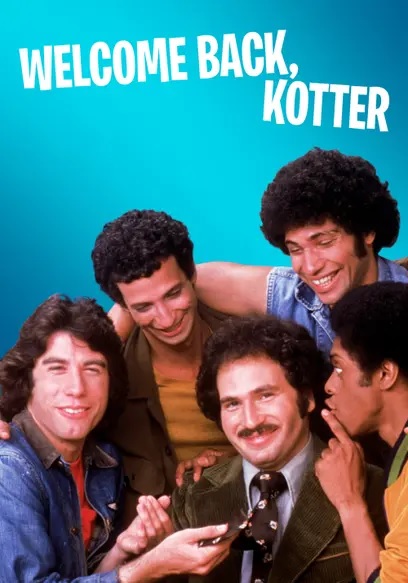
Welcome to Retro Television Reviews, a feature where we review some of our favorite and least favorite shows of the past! On Saturdays, I will be reviewing Welcome Back Kotter, which ran on ABC from 1975 to 1979. The entire show is currently streaming on Tubi!
This week, Mr. Kotter gets a student teacher!
Episode 2.9 “Hello, Ms. Chips”
(Dir by Bob LaHendro, originally aired on December 2nd, 1976)
Instead of telling a joke about a relative, Gabe starts the show by coming home from shopping with Julie. When Julie says that everyone at the store was crazy, Gabe comments that the women were all pushing and shoving and “bumping into me.”
“I’m going back tomorrow!” Gabe declares while Julie gives him a pity laugh.
At Buchanan High School, Woodman introduces Gabe to his new student teacher, Ms. Wright (Valerie Curtin).
“Ms. Wright,” Gabe says, “My mother always said I’d meet you someday.”
“Keep your sick fantasies out of this, Kotter,” Woodman replies. “Watch her carefully, you remember what happened to the last student teacher …. she still sends me ceramic wallets from the home.”
After Woodman leaves, Gabe gets to know Ms. Wright and discovers that she’s read about the Sweathogs in her textbooks. Gabe acknowledges that the classroom is famous and adds, “Some of our best teachers have passed through the windows.”
The Sweathogs make their arrival. Ms. Wright observes the way that Gabe handles getting them to read their essays on what they would do if they were president and then she steps in and tries to teach while looking through her thick lesson plan. Needless to say, the Sweathogs do not react well to that and Epstein throws a fit when Ms. Wright reads his essay (which is actually a poem) about how he would make the world a better, flower-filled place as President. Ms. Wright runs, sobbing, from the room.
Gabe tracks Ms. Wright down to the front office, where Ms. Wright is asking Mr. Woodman what it was like when he was a teacher. Woodman proceeds to sing Nobody Knows The Trouble I’ve Seen.
“Didn’t they have spankings in those days?” Ms. Wright asks.
“Yes,” Woodman replies, “but my students only spanked me once.”
The next day, Ms. Wright tries again. This time, she tires to imitate Gabe’s approach and awkwardly tells Epstein, “In your mouth with a sandwich,” when he tries to apologize her. Ms. Wright tells a series of Kotter-style jokes but her cheery delivery is all wrong. Ms. Wright suddenly announces that Gabe’s technique isn’t right for her and that she’s just going to quit.
“You can’t quit,” Freddie says, “You’re not a lousy teacher, we’re just lousy students!”
Ms. Wright learns a valuable lesson about not teaching from the book and not trying to teach like someone else but just teaching as herself. Ms. Wright says that she wants to tell the class about President Buchanan.
“That name sounds familiar,” Vinnie says.
This was not a bad episode. I appreciated that Ms. Wright had to find her own style as opposed to just blindly following Gabe’s style. Speaking of Gabe’s style, he ends the episode telling Julie about his Uncle Wilford Kotter, who was in love with an elephant.
Episode 2.10 “Horshack vs. Carvelli”
(Dir by Bob LaHendro, originally aired on December 9th, 1976)
At the apartment, Gabe calls his Uncle Herman and tells him that Julie’s going to be home in five minutes and he doesn’t have a joke to tell her. Gabe asks if anything funny has happened in Herman’s life recently. Herman tells Gabe about a guy who crossed an elephant and a beaver. Herman says that he once knew a guy who was so mean that he used to train homing pigeons and then move. Judging from the expression on Gabe’s face, Herman then proceeds to tell him something really wild.
(Julie, by the way, apparently never comes home and, therefore, does not appear in this episode.)
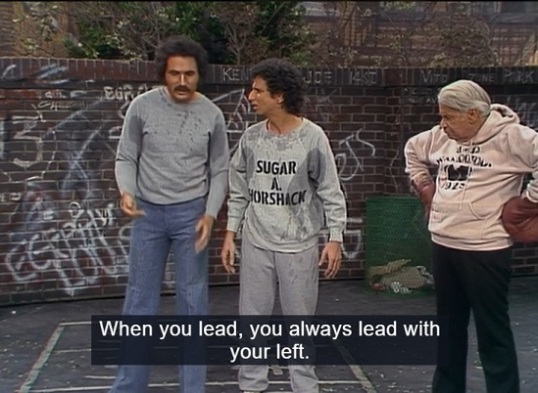
At school, the Silver Gloves Boxing Tournament is approaching and the Sweathogs are debating who will take on New Utrecht High’s most fearsome fighter, Carvelli (Charles Fleischer). Woodman is especially concerned because he says that, in 20 years, Buchanan has never won the tournament. When Gabe says that Bonzo Maretti won one year, Woodman replies, “Eating your opponent doesn’t count!” Woodman wants a Sweathog to bring home a trophy. Unfortunately, it appears that all of Woodman’s hopes rest on Arnold Horshack who is demanding to be the one to fight Carvelli. As Horshack puts it, he’s tired of always being the one who is pushed to the side.
It’s time for a training montage, as Gabe and Woodman teach Horshack how to throw a punch.
Unfortunately, it doesn’t go well as Horshack ends up getting knocked down by Mr. Woodman. “Maybe I should fight Carvelli!” Woodman says.
At the boxing match …. actually, I was expecting this to be one of those episodes where Horshack somehow ended up winning despite the odds but actually, he gets knocked out during the first round. But all the Sweathogs are proud of him for having the guts to enter the ring so it’s a bit of a personal victory for him. Plus, Gabe tells him a joke about his Uncle Maxie Kotter.
Yay! Horshack finally won some self-respect! Horshack was often the most cartoonish thing about this show and it’s rare that there was ever anything subtle about Ron Palillo’s performance but he deserves some credit for his work on this episode. He revealed that, beneath the weird façade, Horshack was just as vulnerable and insecure as all the rest of the Sweathogs. He didn’t win the fight but he won the audience’s heart and good for him!
Welcome to Retro Television Reviews, a new feature where we review some of our favorite and least favorite shows of the past! On Fridays, I will be reviewing T. and T., a Canadian show which ran in syndication from 1987 to 1990. The show can be found on Tubi!
This week, the adventures of T.S. Turner continue!
Episode 1.13 “Sweet Tooth”
(Dir by Don McCutcheon, originally aired on March 28th, 1988)
“In this episode,” Mr. T tells us, “a former con man claims to be starting a new chapter in his life, but I keep hearing the same old story.”
At the Toronto courthouse, T.S. and Amy are approached by a prosecutor named Billings (David Ferry). He’s wearing a plaid suit, which is the show’s way of indicating that he’s not as good an attorney as Amy. Billings says that he needs to discuss a private matter with T.S.
“Maybe he wants fashion tips,” T.S. growls.
Billings explains to T.S. that a man with whom T.S. served time, a conman named Lee Boone, has been released from prison. The police think that Boone is trying to set up a new con in T.S.’s neighborhood but Billings thinks that Boone is trying to go straight. Billings asks T.S. to investigate. He also asks T.S. to keep their arrangement strictly confidential.
“And I’d appreciate it if you changed that jacket,” T.S. replies, “It gives me an earache.”
That said, T.S. agrees to check out Lee Boone, especially after he hears that Boone is the father of a seven year-old son.
Meanwhile, Lee Boone (Anthony Sherwood) is giving a speech in front of an old church. He’s asking for donations to turn the church into a community center. Among those donating money is T.S.’s aunt, Martha (Jackie Richardson). T.S is stunned to discover that Lee is the man who he knew in prison as “Sweet Tooth.” After Boone finishes his speech, T.S. confronts him and accuses him of trying to con people out of their money. Boone argues that he’s changed and he’s just trying to give back to the community. T.S. doesn’t buy it, later telling Billing that he judges a man not by his words but by his eyes and, “I looked in Sweet Tooth’s eyes and nothing had changed.”
On T.S.’s recommendation, Boone is arrested. Guess who is assigned to be Boone’s lawyer? Amy Taler! Now, considering that Amy is partners with someone who would undoubtedly be called as a witness if the case ever went to trial, this seems like a clear conflict of interest but maybe they do things different up in Canada. Amy is not only convinced that Boone is innocent but she’s also angry at T.S. for working with prosecutor’s office.
You know who else is angry with T.S.? Aunt Martha! Aunt Martha brings Boone’s 7 year-old son down to the gym and orders the kid to ask Turner, “Why did you put my Daddy in jail?”
“I wasn’t trying to hurt him, son,” T.S. says, “I was trying to help him.”
Aunt Martha announces that Lee Boone is back on the street and the entire community is rallying around him and donating their money for the community center.
Stunned, T.S. returns to his office and contemplates the mysteries of life. When Amy tells him that she believes that everyone deserves a second chance, T.S. says, “And what if you’re wrong? What if all those people get kicked in the teeth again?”
The next morning, Amy goes down to the church and waits, with Aunt Martha, for Boone to show up and announce his plans for the money that’s he’s raised. However, Boone never shows up because it turns out that T.S. Turner was right and it really was all an elaborate con! Instead, having packed all of his money in suitcase, Boone and his son prepare to leave their apartment building and head to another town.
However, T.S. is waiting for them in the stairwell. When Boone claims that he was just about to head for the church, Turner declares, “With a suitcase full of money? Come on, brother! Give me some rap! Give it up, Sweet Tooth! Your son deserves better! If you want a better life for your kid, you need to go to that church and stand by your word. You just gotta believe your own rap! EVERYONE ELSE DOES!”
At the church, Aunt Martha tries to keep the crowd calm by singing a gospel song. Given how I feel about gospel music, you can imagine how relieved I was when a reformed Sweet Tooth finally showed up at the church and everyone stopped singing. Sweet Tooth goes straight and uses the money to open up the community center. All it took was T.S. Turner showing up at his apartment building!
As I watched this episode, it occurred to me that Mr. T’s main strength as an actor was his innate earnestness. As limited as his range may have been, the viewer never doubted for a minute that he believed everything that he said. This episode worked because it allowed Mr. T. to be himself.
Episode 1.14 “Playing With Fire”
(Dir by Harvey Frost, originally aired on April 11th, 1988)
“In this episode,” Mr. T says, “the heat is on a teenage girl who’s charged with arson.”
Across Canada, someone is setting fires. After teenager Felicity (Susannah Hoffman) is found playing a flute in front of a fire that’s raging in a park, she’s arrested. Because Amy is the only defense attorney in Toronto, she’s assigned to the case. And when Amy is assigned to your case, that means that T.S. Turner is assigned to it as well!
Unfortunately, Felicity isn’t very helpful and gets defensive whenever Amy asks her why she always goes to the park to play her flute, even in the middle of the harsh Canadian winter. Turner goes down to the park to investigate on his own and he meets Kramer (Alan Fawcett), a real estate developer who wants to build a luxury condo in the middle of the park. Since this is T. and T., “luxury condo” is all we need to hear to know that Kramer is a bad guy.
Another building in the park burns down and again, for some reason, Felicity is nearby playing her flute. Felicity is again accused of being the arsonist, which leads to a police interrogation scene where we discover that, as an attorney, Amy’s main legal strategy is to dramatically roll her eyes whenever anyone asks her client a question. Meanwhile, T.S. heads down to the park and discovers that the building was insured for a million Canadian dollars.
“The only way we’re going to avoid paying,” the claims agent explains, “is if that lady lawyer gets that flutist off.”
“Lady lawyer!?” Turner replies, “You mean Ms. Amy Taler!”
“I hope she pleads as good as she looks,” the agent says.
T.S. nods. “I’ll pass it on.”
Felicity is dragged down to a mental hospital, where she is committed for a week-long evaluation. She sits in her room and plays her flute and I have to say that it didn’t take me long to get really sick of Felicity and her stupid flute. Seriously, every time we see her, she’s playing the flute and getting angry about Amy trying to clear her name. What an annoying character!
Anyway, Felicity overhears Turner telling Amy that he thinks that Kramer is behind the arsons so Felicity breaks out of the mental hospital, goes down to one of Kramer’s buildings, and starts playing her flute. When Kramer confronts Felicity, she threatens to burn down the building for real. This leads to Kramer confessing, just in time for Turner to show up and subdue him.
That’s the end of that. Felicity’s name is cleared but Felicity is still such an annoying character that it’s difficult to really care.
Next week: Amy’s frequently frazzled administrative assistant gets an episode of her very own!
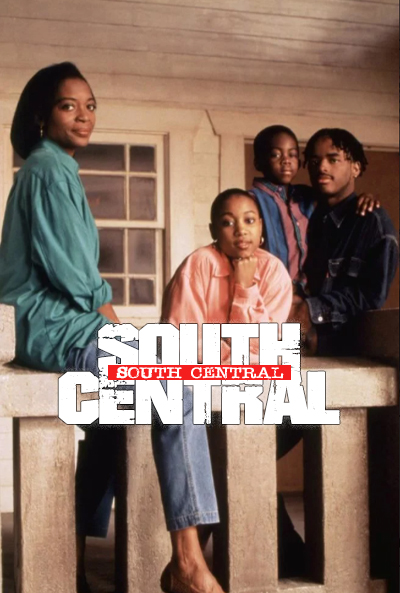
Welcome to Retro Television Reviews, a feature where we review some of our favorite and least favorite shows of the past! On Thursdays, I will be reviewing South Central, which aired, for 10 episodes, on Fox in 1994. The entire show is currently streaming on YouTube!
This week, Andre gets a gun!
Episode 1.7 and 1.8 “Gun”
(Dir by Stan Lathan, originally aired on May 24th, 1994)
I’m not a huge fan of the song Amazing Grace.
Okay, allow me to clarify. I know that it’s an important song. I know that it’s a song that was at least partially written as a protest against the Atlantic slave trade. I know that it’s a song that means a lot to many people. But I have to admit that I cringe whenever someone starts singing it in a movie or on a TV show because it’s always sung in such an overwrought manner and it usually indicates that the program is about to take an extremely heavy-handed term.
I point this out because the first 30 minutes of Gun features Tasha singing Amazing Grace several times around the house, once while a police helicopter hovers over her house. My first instinct was to cringe but actually, upon watching a second time , I realized that the scene with the helicopter is a powerful moment. Tasha sings not only in defiance of the police but the helicopter’s spotlight briefly turns her front porch into a stage. After six episodes of Tasha continually being told to sacrifice, it was nice to see a rare episode in which Tasha actually got a moment of triumph.
The majority of this two-part episode centers on Andre. Just as Tasha has spent six episodes being expected to constantly sacrifice for the family, Andre has spent six episodes trying to come to terms with the death of his brother Marcus while living up to his mother’s expectations and also trying to pursue a relationship with Nicole. In order to see Nicole, Andre has been riding the bus and, as we’ve seen, he’s gotten mugged, beaten up, and continually harassed for his troubles. This episode, Andre takes two things with him on his latest trip to Nicole’s. One is a pack of condoms, which leads to Nicole telling him that she doesn’t want to see him again unless he can figure out how to articulate how he really feels about her. The other is his mother’s gun, which he tucks in the waistband of his pants and which he flashes when a guy starts to give him and Rashad trouble. Rashad is excited about the gun, announcing that he and Andre now have “juice” and treating it almost like a toy. Andre, who has actually lost a family member to gun violence, is more serious about it, telling Rashad that he would like to use it on the people who killed his brother. (Of course, while Andre and Rashad stand in the house and handle the gun, Deion stands silently in the background, taking it all in.)
One interesting thing about this episode is that Andre’s mentor, Ray, is nowhere to be seen nor is he mentioned, even when Joan grounds Andre for forgetting to pick up Deion. Given the fact that Ray was last seen realizing that Joan will probably never love him the way the he loves her, it makes sense that Ray might need a break from the Mosely family but it also means that there’s no one, outside of his family, for Andre to talk to, with the exception of Rashad. At the Ujamaa Co-op, Bobby attempts to reach out to Andre and Rashad, telling him that he heard they had trouble on the bus and warning them about young men carrying guns. As well-intentioned as Bobby is, both Andre and Rashad are too young and immature to really understand his message of building up the community as opposed to destroying it. As opposed to Ray, who sometimes seemed too distant from the realities of life in Andre’s neighborhood, Bobby understands what is happening in the community but his insistence on trying to view everything in idealistic terms makes him ineffectual as an authority figure.
(If anything, Earl Billings’s perpetually annoyed Mayo Bonner, who trusts no one, seems like he might be the wisest of the older men on the show but his bad-tempered comments are mostly just played for laughs.)
Days later, Joan agrees to allow Andre to go to the High Life Party being held at the Co-op. Andre knows that Nicole will also be at the party and he wants to give her a letter that he’s spent the last few days writing and re-writing. While Joan and her next-door neighbor Sweets go through Andre’s bedroom and discover not only his condoms but also a first draft of the letter that he wrote for Nicole, Andre meets up with Nicole at the Co-op and ruins everything by once again flashing his gun at a guy who rudely steps in front of Nicole. Nicole leaves, even though her best friend Candi, who has taken a sudden interest in Rashad, refuses to leave with her. Andre chases after her and, on the bus, he tells her that only carries the gun for protection. Nicole says that her parents were right about Andre and refuses to talk to him for the rest of the ride. After Nicole gets off the bus, Andre tears up the love letter that he was going to give her and realizes that he will probably never see her again.
Yep, just another not-so happy ending on South Central! That said, it was also a realistic ending and the show deserves a lot of credit for having Nicole react realistically to Andre’s aggressive behavior. She freaks out when she sees that he has the gun and all of his excuses (and they are just excuses) cannot fix the damage of that one moment. And Nicole is totally in the right. What if the guy at the party had a gun? What if someone on the bus had a gun? Carrying a gun for protection is one thing and certainly, Andre has had enough bad things happen to him on this show that one can understand why he would feel like he needs some sort of protection. But, at the Co-op, there was no threat. Andre showed off the gun just to intimidate someone else. I would have dumped Andre too.
This was a powerful episode. In the end, Andre swears that he’s never going to carry another gun and watching it, the viewer hopes that he’s telling the truth but also knows that life is never as simple as one might hope.
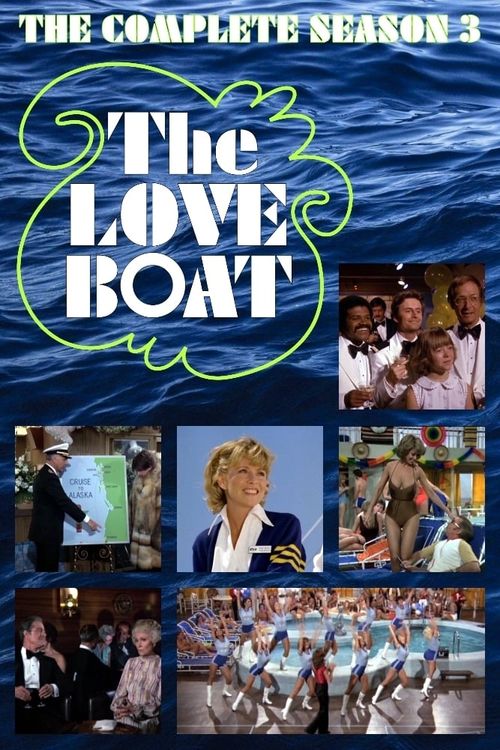
Welcome to Retro Television Reviews, a feature where we review some of our favorite and least favorite shows of the past! On Wednesdays, I will be reviewing the original Love Boat, which aired on ABC from 1977 to 1986! The series can be streamed on Paramount Plus!
This week is all about mistaken identity!
Episode 3.7 “The Reunion/Haven’t I Seen You?/Crew Confessions”
(Dir by George Tyne, originally aired on October 20th, 1979)
After discovering that a guy that he went to high school with in Oakland is now a published author, Isaac decides that maybe he should spend the cruise writing a novel of his own. The other members of the crew encourage him to try his hand at being a literary genius because, seriously, how hard can it be? (Gopher suggests that anyone can be a writer! Okay, Gopher….) Isaac attempts to write a western, just to discover that he can’t get past the first two sentences. He then tries to write a romance and can’t get past the first two sentences. Finally, he attempts to do a science fiction novel and can’t get past …. well, you get the idea.
Finally, Isaac realizes that his mistake is that he’s not writing about what he knows. Instead, he starts writing a book about life on a cruise ship! (There’s a bit of an inside joke here as The Love Boat itself was inspired by a “non-fiction” book written by a former cruise director.) Unfortunately, the rest of the crew soon recognizes themselves in Isaac’s writing. Doc is offended at being portrayed as a sex-crazed womanizer who rarely practices medicine. Gopher is upset to discover that the fiction ship’s purser is a klutz named Muskrat. Julie is upset at the character of the “perky” cruise director. Only Captain Stubing seems to be truly supportive of Isaac. Upset that his friends are upset, Isaac rips his book in half. Guilt-stricken, the rest of the crew decides to support Isaac and they start giving him ideas for his novel. For instance, Doc Bricker tells Isaac that he served in the U.S Navy after medical school, adding yet another piece of the puzzle to the enigma of Adam Bricker.
The novel-writing storyline, I liked. I could relate to it because I’ve noticed that people are always willing to support your literary ambitions until they realize that you’re writing about them. I kind of hope that Isaac will keep writing. Knowing The Love Boat, though, I know this is probably one of those things that will be forgotten by the next episode.
As for the other storylines this week, they were okay if slight. Don Knotts plays a shoe salesman named Herb Groebeck who looks just like a television start named Devon King. At first, Herb keeps correcting everyone about his identity but, when he’s approached by Marla (Julie Newmar), he decides to pretend to be Devon for a while. Marla reveals that she has a baby and she says that Devon is the father, the result of a one-night stand in Las Vegas. Herb, having fallen in love with Marla, asks her to marry him. Marla suddenly reveals that she’s never actually met Devon and that she was lying about him being the father because she wanted a husband who could take care of her baby. Herb says that’s okay because he’s not even Devon King. Marla and Herb share a good laugh and leave the cruise as an engaged couple which …. I mean, is this really a relationship that’s really going to last? It’s pretty much built on lies.
Speaking of lies, Laurette Ferot (Jane Wyatt) has boarded the boat so she can be reunited with her long-missing husband, Gilbert (Jean-Pierre Aumont). Laurette and Gilbert were married in 1939 but the Nazi invasion of France tore them apart. Laurette was taken off to Denmark. Gilbert vanished and was presumed dead. Laurette has spent the last 40 years looking for Gilbert. Unfortunately, the man who shows up on the cruise is not her Gilbert. Instead, he’s a former member of the French Resistance who befriended the real Gilbert in a concentration camp and who fell in love with Laurette as a result of listening to the real Gilbert talk about her. When the real Gilbert died in the camp, the fake Gilbert assumed his identity. Having survived the war, the fake Gilbert came to America and made millions as a lock manufacturer while also looking for Laurette. Laurette is surprisingly forgiving of Fake Gilbert and even goes through with the ceremony to “renew” their vows on the ship. Laurette marries Fake Gilbert and they leave the ship together. Jane Wyatt and Jean-Pierre Aumont both gave heartfelt performances but this storyline, involving concentration camps and Nazi cruelty, felt a bit out-of-place when partnered up with stories about Isaac writing a salacious book and Don Knotts pretending to be an action star. It was a bit too serious for The Love Boat format.
Overall, this episode was uneven but genuinely well-acted. Just as last week’s episode gave Fred Grandy a chance to show off the fact that he actually could act, this episode gives the spotlight to Ted Lange and Lange, again, proves himself to be capable of more than just making drinks and pointing. I hope his book was best seller.
Welcome to Retro Television Reviews, a feature where we review some of our favorite and least favorite shows of the past! On Tuesdays, I will be reviewing the original Fantasy Island, which ran on ABC from 1977 to 1986. Almost entire show is currently streaming is on Youtube!
This week, David Cassidy gets married and Tina Louise meets the Blood Countess!
Episode 3.15 “Unholy Wedlock/Elizabeth”
(Dir by Rod Holcomb, originally aired on January 12th, 1980)
Danny Collier (David Cassidy) has come to the Island with his best friend, Ken Jason (Eddie Mekka). Danny’s fantasy is to finally marry his fiancée over the weekend. As he explains to Tattoo and Mr. Roarke, he’s tried to get married several times in the past and, every time, something happened that kept him from getting to the ceremony. This weekend, though, he’s going to get married on the island and Tattoo is going to throw him a wonderful bachelor party! When Mr. Roarke questions whether Danny really loves his wife-to-be, Danny explains that his fiancée is rich!
The main problem with this fantasy is that, from the start, Danny comes across as being a total jerk. David Cassidy plays the entire role with this bizarre intensity that makes him come across as being an entitled frat boy. I didn’t care about Danny and his wedding and, as a result, I really didn’t care when Danny woke up to discover that he had married Christie (Misty Rowe), the dancer from his bachelor party. Danny was desperate to get the marriage annulled, even though it had already been consummated. Unfortunately, Tattoo was of little help. When Christie suddenly disappeared, Danny was arrested for her murder!
Wow, that took a turn.
Not to worry, though. Danny escapes from jail, goes to a Fantasy Island dive bar, and discovers that Christie faked her own death so Danny could marry the woman that he has been pretending to love. But then Danny realizes that Christie is who he loves so he stays married to her. I felt bad for Christie since Danny came across as if he was destined to be bitter and washed-up by the time he hit 30.
You may have noticed that I said Tattoo was the one who explained to Danny that his marriage could not be annulled. That’s because Mr. Roarke had a mission of his own to deal with in this episode. When Lisa Corday (Tina Louise) came to the Island, her fantasy was one that caused Mr. Roarke much concern. Haunted by nightmares, Lisa wanted to visit the castle that she frequently saw in her dreams. Roarke immediately knew that the castle was the home of the infamous Elizabeth Bathory, the Hungarian noblewoman who was convicted of and executed for bathing in the blood of virgins. Apparently, Mr. Roarke played a role in trapping Elizabeth Bathory’s evil spirit inside of her castle and Elizabeth was using Lisa to get revenge on Roarke! (It should not be overlooked that, as a name, Lisa started out as a shortened version of Elizabeth. Then, everyone realized how pretty the name was on its own that Lisa soon became more popular than Elizabeth.) Roarke accompanied Lisa to the castle and, when Elizabeth’s spirit possessed Lisa, Roarke was there to battle Elizabeth, rescue Lisa, and banish Elizabeth back to Hell.
Wow, that’s pretty intense for Fantasy Island!
The Elizabeth Bathory storyline was so well-done and energetically acted by both Tina Louise and Ricardo Montalban that it more than made up for all the nonsense with David Cassidy. The castle was wonderfully creepy and Tina Louise portrayed demonic possession with the best of them. The whole storyline was wonderfully melodramatic and over the top. It also took advantage of the fact that, after three seasons, we’re still not quite sure who Mr. Roarke is. This episode suggests that Roarke has been around for a very long time and that he’s even more powerful than previously hinted.
Thanks to the evil efforts of Elizabeth Bathory, this was one of better episodes of Fantasy Island’s third season. Not even David Cassidy could bring it down.
Welcome to Retro Television Reviews, a feature where we review some of our favorite and least favorite shows of the past! On Sundays, I will be reviewing the made-for-television movies that used to be a primetime mainstay. Today’s film is 1973’s The Bait! It can be viewed on YouTube!
Tracey Fleming (Donna Mills) is the widow of a cop and an undercover detective herself. Unfortunately, her superior, Captain Maryk (Michael Constantine), is not convinced that Tracey has what it takes to be in a dangerous situation and, as a result, Tracey spends most of her time riding the bus and busting perverts and low-level drug dealers. When four woman are raped and murdered by the same serial killer, Tracey writes up a report on what she thinks is motivating the killer. Captain Maryk is, at first, skeptical about Tracey’s claim that the killer is fueled by a puritanical rage but, when it turns out that the killer has been wiping off his victims’s lipstick (just as Tracey speculated that he was), Maryk starts to think that Tracey might have something to offer the investigation.
Tracey becomes the bait in an operation to lure out the killer. Leaving behind her son and her mother, Tracey moves into an apartment in the neighborhood that is believed to be the center of the killer’s activities. Tracey is given a job as a survey taker and soon, she’s walking around the neighborhood and asking random men for their opinions on current events and women’s liberation. A local waitress (Arlene Golonka) recognizes Tracey as a detective but Tracey lies and say that she’s no longer with the force. When the killer makes the waitress his next victim, Tracey becomes even more determined to capture him but will she able to get Marsyk and the rest of the force to give her the room to investigate the murders?
This may sound like an intriguing whodunit but, for some reason, The Bait reveals early on that the murderer is a bus driver named Earl Stokely (played, in a very early performance, by William Devane). There’s really nothing to be gained by revealing the killer’s identity as early as the film does. Perhaps if the film was split between scenes of Tracey investigating the neighborhood and Earl stalking Tracey, that would have generated some sort of suspense but, with the exception of one bus ride, Tracey and Earl barely even interact before he comes after her at the film’s end. Devane does give a good performance as a homicidal lunatic but, when viewed today, it’s impossible to watch him in this film without spending most of the time thinking, “Hey, that’s the usually Kennedyesque William Devane, playing a killer bus driver!”
I was not surprised to learn that The Bait was intended to be a pilot for a weekly television series that would have followed the future investigations of Tracey Fleming. Donna Mills was likable in the lead role and she had a good chemistry with the other actors playing her colleagues so it’s easy to imagine a series in which Tracey solved a new case every week while Marsyk continually underestimated her. Ultimately, though, that series never happened and The Bait would be the sole televised adventure of Detective Tracey Fleming.
Welcome to Retro Television Reviews, a feature where we review some of our favorite and least favorite shows of the past! On Saturdays, I will be reviewing Welcome Back Kotter, which ran on ABC from 1975 to 1979. The entire show is currently streaming on Tubi!
This week, Julie’s sister shows up and Juan Epstein falls in love.
Episode 2.7 “Sweathog, Nebraska Style”
(Dir by Bob LaHendro, originally aired on November 11th, 1976)
Gabe tells Julie about his Uncle Oscar, who was harassed one day by three bikers and who responded by “driving over three motorcycles in the parking lot.”
Unfortunately, Julie is not really interested in jokes this week. Her teenage sister, Jenny (Susan Pratt), suddenly shows up in Brooklyn and explains that she has left Nebraska because she had a fight with her longtime boyfriend, Roger Abernathy. Julie insists that Jenny attend classes at Buchanan High but is horrified when Jenny promptly starts to date Juan Epstein! Julie even goes up to the school to complain to the principal, Mr. Lazarus, about her sister dating a Sweathog. (Never mind, of course, that Julie herself married a former Sweathog.) This episode also establishes that the never-seen Mr. Lazarus is apparently best friends with Juan Epstein.
Jenny finally agrees to return to Nebraska but just because Epstein is planning on going back with her. Not even Barbarino and Freddie dressing up as farmers and Horshack putting on a cow outfit can convince Epstein to stay in New York. But then Roger Abernathy calls from Nebraska, apologizes for arguing with Jenny, and Jenny dumps Epstein and heads back home alone.
After Jenny leaves, Gabe tells Julie about his uncle SitDownThere Kotter, who got that name because of the time he stood up in a movie theater and everyone yelled, “Hey, sit down there!”
“That is the worst joke I’ve ever heard in my entire life,” Julie replies. Gabe looks sincerely hurt.
Actually, Julie doesn’t come across particularly well in this episode, flat out announcing that Juan Epstein is not good enough for her sister and basically acting like the biggest snob in Brooklyn. It’s hard not to feel bad for Epstein, who seems to have genuine feelings for Jenny but who gets rather abruptly dumped at the last minute. For all the talk about how moving to Nebraska would be a strange thing for Epstein to do, it probably would have also been a good thing for him. He would be free of his reputation for “being most likely to take a life” and he could start his own life all over again. In the end, though, Jenny abandons him and returns to Roger. According to the IMDb, this is Jenny’s only appearance on WelcomeBack Kotter, so I’m going to assume that things went well for her back in Omaha.
Let’s move on.
Episode 2.8 “Sadie Hawkins Day”
(Dir by Bob LaHendro, originally aired on November 18th, 1976)
Gabe tells Julie about his cousin Shermie, who didn’t start talking until he was 9 years old. Shermie’s first words were “cereal bowl.”
It’s time for the Sadie Hawkins Day Dance at Buchanan High! Barbarino is scandalized by the idea of girls asking out boys. “You know when girls should be able to ask us out?” Barbarino tells Horshack, “When they can get us in …. trouble.” Barbarino does, however, give Horshack some advice on how to get a date. His hair should always look like it’s been dried by the wind. Horshack should always use the “Barbarino stance,” which is defined as looking like you don’t care one way or the other. Barbarino sings his Ba-Ba-Barbarino song while showing Horshack how to relax. The audience loves it.
Barbarino is not the only person who has an issue with Sadie Hawkins Day. Mr. Woodman hides out in Gabe’s class and pretends to be a student in order to prevent Ms. Fishbeck from asking him out. Gabe tells Woodman that no one is going to mistake him for a Sweathog.
“Hi there,” Woodman replies, doing his best Freddie “Boom Boom” Washington impersonation.
Eventually, Ms. Fishbeck does manage to track down Mr. Woodman, hiding in the teacher’s lounge and jumping out of a cupboard. Barbarino, however, is less lucky than either Woodman or Fishbeck. With the day of the dance rapidly approaching, Barbarino doesn’t have a date! Barbarino is so self-absorbed that he doesn’t even realize when someone is trying to work up the courage to ask him out. Later, when one girl does find the courage to ask Barbarino to the dance, Barbarino turns her down because he doesn’t want anyone to learn that he didn’t get a date until the day before the dance. Gabe points out that Barbarino’s actions don’t make any sense. “It’s not easy being a living legend,” Barbarino explains.
Despite not having a date, Barbarino does show up at Buchanan High on the night of the dance. However, instead of joining everyone in the courtyard, he decides to sit in Gabe’s classroom. Gabe finds him in the room and starts to tell Barbarino a story about his time as a student at Buchanan High. “No more stories!” Barbarino begs before heading down to the courtyard. Barbarino confesses to the other Sweathogs that he doesn’t have a date. However, Judy Borden (Helaine Lembeck), making her first appearance since the end of the first season, reveals that she doesn’t have a date either. Quickly adopting the Barbarino Stance, Barbarino becomes Judy’s date. Everyone dances and, even though we’re supposed to laugh at Barbarino ending up with the loud and obnoxious Judy, they actually make a really cute couple.
As the dance wraps up, Gabe tells Julie about his Uncle Atlas, who used to play handball with a guy named Morty.
This episode worked largely due to the performance of John Travolta, who does a good job of portraying both Barbarino’s well-meaning stupidity and his (often hidden) sensitivity. On the one hand, Barbarino had no one to blame but himself. On the other hand, the scene where gazed out the classroom window at all of his friends having fun was actually a little heart-breaking. Personally, I hope things work out for Barbarino and Judy. They’re a great couple!




 Through the Shattered Lens