Welcome to Retro Television Reviews, a feature where we review some of our favorite and least favorite shows of the past! On Sundays, I will be reviewing Homicide: Life On The Street, which aired from 1993 to 1999, on NBC! It can be viewed on Peacock.
This week’s episode was written by none other than Yaphet Kotto!
Episode 5.20 “Narcissus”
(Dir by Jean de Segonzac, originally aired on May 2nd, 1997)
A shooting at four in the morning leads to a group of white patrolmen chasing a black suspect across West Baltimore until he ducks into a building that they’ve been told not to enter. The building is the headquarters of the African Revival Moment, a militant group that is led by a former cop who goes by the name of Burundi Robinson (Roger Robinson). Robinson is one of the most powerful men in West Baltimore, a hero to the community and also someone who has connections to Baltimore’s police commissioner, James Harris.
As Robinson explains to Lt. Giardello, he and Harris were once partners. When he and Harris busted a heroin dealer, Harris sold the drugs back to the dealer for $10,000. When it was discovered that the drugs were missing from the evidence lock-up, Harris and Robinson flipped a coin with the understanding that the loser would resign from the force and take the fall. Robinson lost the coin toss. Robinson went on to start ARM and Harris became the police commissioner.
At first, Harris (who doesn’t appear in this episode but instead is simply a background figure of menace) protects Robinson and sends Col. Barnfather to the scene to order Detectives Pembleton and Munch to back off. However, when a member of ARM comes forward to say that Robinson ordered the shooting because the victim was going to expose Robinson’s history of taking sexual improprieties with his followers, Harris suddenly starts ordering the police to get more aggressive with Robinson and ARM. Harris does this with the full knowledge that the police raiding ARM headquarters and attempting to arrest Robinson will lead to a violent confrontation. When the police eventually do bust into the headquarters, they discover that Robinson and all of his followers have committed suicide. Giardello understands that was Harris’s hope all along. He was willing to risk a riot just to silence the one man who could prove his corruption.
This episode was written by Yaphet Kotto and, not surprisingly, Giardello is at the center of the action. The lengthy scene where he meets with Robinson is the highlight of the episode as both Giardello and Robinson have a unique understanding of how things work in Baltimore. Giardello has had first-hand experience with Harris’s corruption and he’s not in the least bit surprised by either Robinson’s story or Harris’s heavy-handed attempts to control the investigation. In a bit of wonderful irony, when Harris initially tries to protect the African Revival Moment, he uses the racist Captain Gaffney to interfere with Munch and Pembleton’s investigation. Gaffney, one of the most loathsome characters on the show, is suddenly the one who is telling a suspect to demand a lawyer and leaking the name of the informant to Robinson.
This episode was a strong one all the way around, with Kotto, Andre Braugher, and Roger Robinson all playing proud men who each had their own unique view on how to best deal with the issue of race in Baltimore. (One thing that sets Homicide apart from so many other shows is not just the diversity of the cast but also the diversity of personalities and opinions.) The ending carries a punch. When Giardello says that there will be Hell to pay, you believe him.
Welcome to Retro Television Reviews, a feature where we review some of our favorite and least favorite shows of the past! On Sundays, I will be reviewing Homicide: Life On The Street, which aired from 1993 to 1999, on NBC! It can be viewed on Peacock.
This week, the Luther Mahoney saga comes to an end.
Episode 5.19 “Deception”
(Dir by Peter Medak, originally aired on April 25th, 1997)
A Nigerian drug courier is found dead in a hotel room and, of course, that means that Kellerman, Lewis, and Stivers are going to get another chance to go after Luther Mahoney. After covering up the death of the actual courier, the police send in an undercover officer who delivers a batch of “bad” drugs to Mahoney’s middleman, Antonio Brookdale (Christopher Mann). When the drugs hit the street, it leads to a revolt amongst Mahoney’s customers. No one is buying from Mahoney and that causes Mahoney to lose his temper. Luther Mahoney can handle almost anything but he can’t handle losing money.
Mahoney demands that Antonio meet him at a public park. What Mahoney doesn’t know is that the police — including Kellerman, Stivers, and Lewis — have got the park staked out. When Mahoney, in a fit of rage, shoots both Brookdale and an innocent mother with her kids, the police rush to the scene. A panicked Mahoney jumps in his vehicle and drives away, leaving his crew behind to get arrested.
Lewis tracks Mahoney down to his apartment, where Mahoney is desperately packing up his money. The sight of Mahoney causes Lewis to lose control. He starts hitting Mahoney, demanding to know why Mahoney had to kill so many people when he could have just been content to sell drugs. Mahoney manages to grab Lewis’s gun. Kellerman and Stivers burst into the apartment with their own guns drawn. Seeing them, Mahoney lowers his gun and says, “What are you going to do? Read me my rights?”
“You have the right to remain silent….” Kellerman says, before shooting and killing Mahoney.
OH MY GOD, KELLERMAN JUST EXECUTED LUTHER MAHONEY!
Technically, you could argue that, as Mahoney was still holding the gun, the shooting was justified. Mahoney lowered the gun but he never dropped it. Nor did Mahoney ever say that he was surrendering. Instead, he laughed and mocked the cops. If Mahoney had raised the gun quickly enough, he probably could have gotten at least one shot in before Stivers and Kellerman had time to take action. Then again, Kellerman also never ordered Mahoney to drop the gun. Instead, he just shot him. After Mahoney falls, Kellerman asks Lewis and Stivers if either has a problem with what happened. “Nope,” Lewis says. Stivers, however, doesn’t look convinced that the shooting was justified.
It’s a shocking moment but it’s also a moment that feels somewhat inevitable. Kellerman has spent this entire season with people accusing him of being crooked. Even though he was never charged, even his fellow detectives assumed that he must have been doing something to get in trouble in the first place. Meanwhile, Mahoney killed numerous people and smirked every time that he got away with it. Kellerman snapped and probably committed a crime.
If that’s not bad enough, Munch is contacted by Punchy DeLeon (Lewis Black), a small-time mobster who has just spent ten years in prison on a murder charge. Punchy tells Munch that he knows that a criminal associate of his, Jimmy Pugliese, was murdered and buried in section C of the parking lot at the Plimco race track. With Munch and Brodie in attendance, the parking lot is dug up and …. nothing is found. Munch does some further investigating and discovers that Pugliese had a girlfriend named Fallon (Deborah Hazlett). When he drives out to see her, he discovers that Pugliese (Brian Hemmingsen) is still alive. Pugliese orders to Much to get off his front porch. Much leaves, not realizing that he’s been followed by Punchy.
Back at the office, Sgt. Howard tells Munch not to worry about it because there hasn’t been an actual homicide. However, then Fallon shows up and says that Pugliese has disappeared. Munch drives out to Plimco, where he finds Punch waiting for him in Lot C. Punchy explains that he took the fall for a murder the Pugliese committed. Because Pugliese didn’t keep his promise to take care of Punchy’s wife while Punchy was in prison, Punchy used Munch to track down Pugliese. And now, Pugliese really is buried under the parking lot. (It helped that the parking lot itself was already ripped up due to Munch searching for the body the first time.) Munch tells Punchy that he’s going back to prison. Punchy replies that he did ten years for a murder he didn’t commit and suggests that should allow him to commit one murder without punishment. It doesn’t work that way, which is kind of sad because Punchy was a likable guy.
Finally, Bayliss and Pembleton decide to be partners again. Good news! But Bayliss is also buying groceries for the uncle who molested him. What the Hell, Bayliss!?
Seriously, this episode got dark!
Well, dark or not, this was one of the better episodes of season 5. This was Homicide at its most cynical. Luther Mahoney is dead but someone else will inevitably take his place and now Kellerman really has committed a crime. (For all the cheering the cops do as they listen to Mahoney incriminate himself on tape, it’s not going to be much comfort to children of the innocent woman that he shot in the park.) For once, Munch actually does his job well and the end result is a man getting murdered and Punchy going back to prison.
One final note: I will miss the magnificently evil performance of Erik Dellums, who played Luther Mahoney with the right mix of arrogance, hubris, and ruthlessness. A good villain is hard to find!
Welcome to Retro Television Reviews, a feature where we review some of our favorite and least favorite shows of the past! On Sundays, I will be reviewing Homicide: Life On The Street, which aired from 1993 to 1999, on NBC! It can be viewed on Peacock.
This week, Bayliss and Pembleton are partners again and again, they find themselves on two different sides of the same case.
Episode 5.18 “Double Blind”
(Dir by Uli Edel, originally aired on April 11th, 1997)
Where do I put my hate? Tim Bayliss asks his Uncle George (Robert Bornarth) at the end of this week’s episode.
Uncle George is the man who abused Bayliss when he was younger. The final few minutes of this episode features Bayliss tracking down George to the decrepit house that George calls home. Stepping aside, Bayliss sees that George is now an old man with a persistent cough. The messy house is full of empty liquor bottles. George is a pathetic, frightened old man and it’s obvious that he doesn’t have much longer to live.
Bayliss has just finished investigating the case of a chef who was found shot to death in his home. It quickly became obvious that the chef was abusive and that he was shot and killed by his teenage daughter (Monica Keena). Pembleton sees it as justifiable homicide but Bayliss says that it doesn’t matter that the victim was a terrible person. The fact that he was shot three times (twice after he was already on the ground) proves that it was a deliberate execution. For once, Bayliss is the one saying that the law is the law while Pembleton is the one worried about the human cost of their investigation. It’s such a reversal in their usual pattern that Pembleton has to laugh. And yet, it works. Having found his previously lost faith, Pembleton now believes that there is more to existence than the letter of the law. Pembleton also realizes that Bayliss wants to call it a murder because, deep down, he wishes he had done the same thing to his uncle. The victim’s daughter did what Bayliss could never bring himself to do.
It’s an interesting storyline, featuring great work from Andre Braugher and especially Kyle Secor. Unfortunately, this episode had a few other plotlines that weren’t quite as interesting. Kellerman and Cox continued their tentative, emotionally-damaged romance, with Kellerman finally confessing that he was suicidal when Cox last visited him on his boat. Meanwhile, Lewis supported former patrolman Chris Thormann (Lee Tergesen) when the man who blinded him came up for parole. The Lewis storyline was a sequel to a first season episode and I appreciated that the show made an effort to maintain continuity. That said, it just wasn’t that interesting of a story.
Still, that final scene with Bayliss and his uncle was undeniably powerful. Seriously, what is Bayliss going to do with all of his hate? There are no easy answers.
Welcome to Retro Television Reviews, a feature where we review some of our favorite and least favorite shows of the past! On Sundays, I will be reviewing Homicide: Life On The Street, which aired from 1993 to 1999, on NBC! It can be viewed on Peacock.
This week, both Munch and Pembleton go on an inner journey.
Episode 5.17 “Kaddish”
(Dir by Jean de Segonzac, originally aired on February 21st, 1997)
When Munch and Kellerman investigate a crime scene in which a woman has been found murdered, Munch is stunned when the woman is revealed to be Helen Rosenthal, his high school crush. In between flashbacks to Munch’s awkward teen years, Munch and Kellerman investigate the crime. At first, it seems like the murderer might be one of two former classmates, one of whom was Helen’s ex-husband. Ultimately, the truth turns to be much simpler. As if so often the case, Helen was the victim of stranger. She was in the wrong place at the wrong time.
During the investigation, Munch bonds with Helen’s daughter, Sarah (Jean Louisa Kelly). Per Jewish law, Helen is buried within 24 hours and Munch and Kellerman later attend her shiva, where Munch begs out of being a part of the minyan. Because Kellerman has apparently never met a Jewish person in his life, Munch has to explain to him the concept of sitting shiva and reciting the Kaddish. On the one hand, I wish this episode didn’t resort to making Kellerman into a total doofus. (At one point, he even asks what a “shiksa” is,) but, on the other hand, I did appreciate that it dealt with a side of Munch that we really haven’t seen before. As a viewer, I’m so used to seeing Munch as just being the squad’s resident cynic that it was interesting to see him dealing with issues of faith.
Speaking of faith, Pembleton is continually to struggle with his. He even goes to Mass in this episode and remember a debate he once had with a nun about whether or not any signs of God can be found while working as a homicide detective. Pembleton does find a sign towards the end of the episode. Called in when a woman dies in home hospice care, Bayliss and Pembleton discover that no murder occurred. Instead, the woman has passed with a look of peace on her face and a crucifix on her nightstand. Having lost his family and nearly his life, Pembleton finally seems to have found his faith. And I’m glad about that because Pembleton the Heretic was getting to be a bit of a slog.
This was a good episode, one that used death as a way to shine a light on life. Richard Belzer gave one of his better performances in the role of John Munch and, as always, Andre Braugher was outstanding as Pembleton. I’m also happy to say that Pembleton and Bayliss are once again partners. That’s the way it should be.
Welcome to Retro Television Reviews, a feature where we review some of our favorite and least favorite shows of the past! On Sundays, I will be reviewing Homicide: Life On The Street, which aired from 1993 to 1999, on NBC! It can be viewed on Peacock.
This week, Brodie gets a storyline, Luther Mahoney continues to destroy lives, and Pembleton’s marriage collapses. It’s a busy few days in Baltimore.
Episode 5.16 “Valentine’s Day”
(Dir by Clark Johnson, originally aired on February 14th, 1997)
When a man is found dead in the apartment of Alan Schack (Neil Patrick Harris), Detective Munch assume that it was a case of suicide. However, Brodie went to school with Schack and is convinced that he’s the murderer. Munch refuses to take Brodie serious but, luckily, Sgt. Howard is more open-minded. After Alan beats up Brodie and leaves him on a snowy street, Brodie leaves Baltimore because he knows he’ll never get over the shame of being beaten up Neil Patrick Harris. Just kidding! Instead, Brodie doctors a tape to make it seem as if the police have evidence of Alan killing the victim. Alan falls for it because …. I guess he’s just really stupid. Like seriously, wouldn’t Alan have — at the very least — noticed that he was dressed totally different on videotape than he was on the day he committed the murder? Or does Alan just wear the same outfit day after day?
When two seemingly unrelated bombs go off, Kellerman and Bayliss find themselves investigating a — all together now! — “red ball!” Their investigation eventually leads them to the son of the grocer who was murdered by Luther Mahoney a few episodes ago. The bombs are being sent to the people who the son blames for Luther getting away with murder. One bomb is sent to the courthouse. “Lewis is at the courthouse!” Bayliss exclaims. “So is Julianna!” Kellerman says. Well, that’s convenient.
Frank and Mary Pembleton attend marriage counseling. It doesn’t go well. Frank finally agrees to allow their newborn daughter to be baptized despite the fact that he’s still struggling with his faith. Mary, however, still leaves Frank afterwards. She takes their daughter with her. Frank is left alone in their home, staring at an empty crib.
And finally, due to budget cutbacks, Giardello has to dust his own office!
On the plus side, I related to Giardello’s need to dust. As a sometimes struggling Catholic, I appreciated that the show took seriously Mary’s concerns about their daughter dying outside of a State of Grace.
Unfortunately, the rest of the episode just felt off. Neil Patrick Harris as a tough guy drug dealer? Nope. Sorry. I loved NPH as Dr. Horrible but I’m still not buying it. As for the bombing storyline, it felt almost like a parody of an episode of Homicide. Oh no! There’s a bomb at the courthouse and Lewis and Dr. Cox just happen to be standing right outside the doorway!
I regret to say it but this episode just didn’t work for me.
“So, we cause a triple murder before breakfast, start a race war before dinner – that’s uh, that’s a pretty good day.” — Shane Vendrell
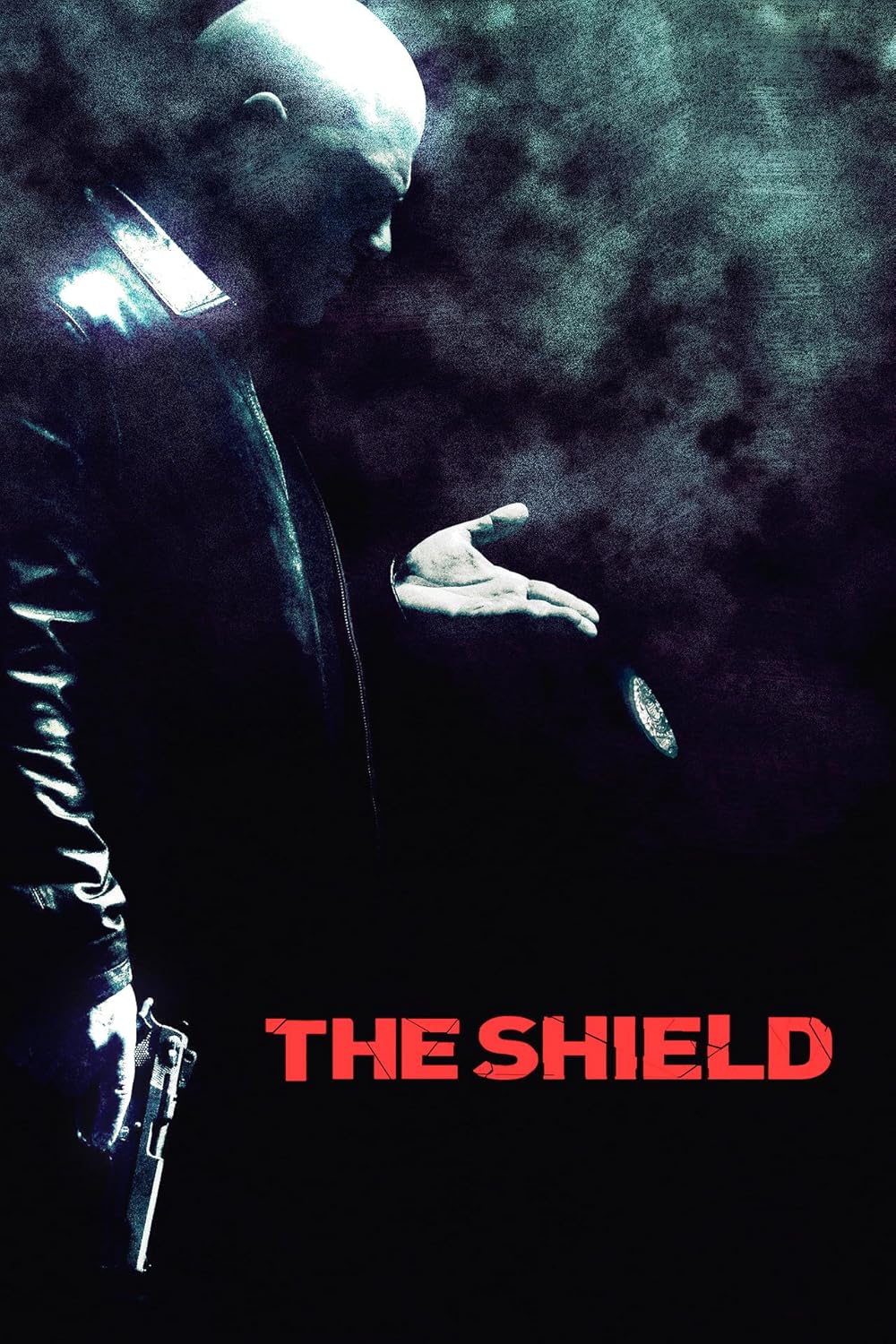
If you want to talk about the history of television, you basically have to divide the timeline into two distinct eras: before The Shield and after The Shield. When creator Shawn Ryan launched this gritty FX crime drama in 2002, the television landscape was a very different place. Sure, The Sopranos had already kicked down the door for premium cable, proving that audiences were hungry for complex, morally ambiguous anti-heroes. But basic cable was still largely seen as a graveyard for sanitized, formulaic network rejects. Then came The Shield, swaggering onto the screen with a chaotic energy that immediately changed the rules of the game. Running for seven intense seasons until 2008, the show didn’t just push the envelope; it set the envelope on fire and danced around the ashes. Looking back at it now, it remains a staggering achievement in storytelling that completely redefined what a cop show could be, sending shockwaves through basic cable, premium cable, and even Hollywood films.
The premise of the show sounds almost simple on paper, but its execution was anything but. The series follows the Strike Team, an elite anti-gang unit operating out of a rundown, overcrowded police station in the fictional Farmington district of Los Angeles. Leading this crew is Detective Vic Mackey, played with terrifying charisma by Michael Chiklis. Vic is not your typical television cop. He is not a flawed but ultimately noble hero who bends the rules to get the bad guys. Vic Mackey is, flat out, a criminal who happens to wear a badge. The show announces this immediately in the legendary opening scene of the pilot, where Vic murders a fellow police officer who is about to expose his corruption. It was a gut punch that served as a warning to the audience: you are not in Kansas anymore. From that moment on, you are complicit in Vic’s crimes because you are rooting for him to get away with them.
What made The Shield so brilliant was how it surrounded this monstrous central character with an incredibly rich ensemble cast that represented every facet of law enforcement. You had Shane Vendrell, Vic’s deeply insecure and ultimately tragic right-hand man, brought to life with jaw-dropping nuance by Walton Goggins. You had Claudette Wyms, the fiercely intelligent detective played by CCH Pounder, who spent the entire series fighting against the systemic rot embodied by Vic. And then there was Dutch Wagenbach, the deeply awkward, brilliantly analytical detective who provided a stark contrast to the Strike Team’s brute force approach. The show used these characters to explore the sheer exhaustion of police work. The Barn, as their station house was known, felt like a pressure cooker. It was a place where idealism went to die, crushed under the weight of endless caseloads, bureaucratic nonsense, and the depressing reality that the justice system is often deeply broken.
Visually and tonally, The Shield felt like a punch to the face. Ryan and his team utilized handheld cameras, harsh lighting, and a documentary-style grit that made the show feel dangerously real. There was no glossy cinematography or sweeping orchestral scores. The soundtrack was often just the ambient noise of the city, punctuated by sudden, shocking bursts of violence. This aesthetic choice was crucial because it stripped away the Hollywood glamour usually associated with police work. When Vic and the Strike Team kicked down a door, it didn’t look like an action movie; it looked like a chaotic, terrifying intrusion that left you feeling uneasy. This raw approach forced the audience to confront the physical and emotional toll of the job without any safety net.
When we talk about how The Shield redefined basic cable, it is hard to overstate its importance. Before this show, basic cable networks like FX were terrified of alienating advertisers. The Shield blew that hesitation out of the water by introducing unprecedented levels of profanity, nudity, and violence to non-premium television. But it wasn’t just about shock value; it was about authenticity. The criminals in Farmington talked like actual criminals, and the cops talked like actual cops who were fed up with the system. By proving that audiences would tune in in massive numbers to watch a show that didn’t hold their hand, FX essentially built its entire brand identity around The Shield. It paved the way for everything from Sons of Anarchy to American Horror Story, proving that basic cable could rival the creative freedom of HBO.
Interestingly, the success of The Shield also had a massive trickle-up effect on premium cable. HBO had been sitting comfortably as the king of prestige television, but suddenly a basic cable show was matching them punch for punch in terms of narrative complexity and character depth. Shows like The Wire and Breaking Bad (which debuted later on basic cable) owe a massive debt to the path Shawn Ryan blazed. The Shield proved that you didn’t need a massive HBO budget to create high art; you just needed a sharp script, fearless actors, and a network willing to take a risk. It forced premium cable to stop resting on its laurels and realize that the competition was no longer just the broadcast networks, but the upstarts on basic cable who were hungry for prestige.
The show’s influence even bled into the film industry, fundamentally altering the cop genre on the big screen. Before The Shield, the standard cop movie usually followed a fairly strict moral compass, or if it did feature a corrupt cop, like in Training Day, it was contained within a neat two-hour narrative arc. The Shield introduced the concept of the serialized corrupt cop. It showed audiences that the psychological unraveling of a dirty officer is much better suited to a long-form television format, where you can spend years peeling back the layers of their justification and paranoia. After The Shield, Hollywood started realizing that the simple “good guy versus bad guy” cop movie felt outdated. Films had to get darker, more ambiguous, and more willing to dwell in the gray areas of morality just to keep up with what was happening on television.
At the core of the series is a really fascinating, easy-to-understand analysis of utilitarianism versus deontology. In simple terms, Vic Mackey operates on the belief that the ends justify the means. He robs drug dealers, beats confessions out of suspects, and ruins innocent lives, but he argues that he is keeping the streets of Farmington safe. The show constantly challenges the audience to wrestle with this uncomfortable philosophy. Is a neighborhood actually safer if the people protecting it are worse than the criminals they are locking up? The Shield refuses to give you a tidy answer, which is what makes it so rewatchable. It presents a system where doing things the “right” way often lets the bad guys walk, while doing things the “wrong” way gets results but destroys the souls of everyone involved.
As the series moved into its later seasons, the narrative tension became almost unbearable. You cannot build a house on a foundation of lies and expect it to stand forever, and Vic’s world inevitably begins to collapse. The introduction of internal affairs, the escalating violence with the Mexican cartels, and the fracturing of the brotherhood between Vic and Shane created a tragic downward spiral that was riveting to watch. Walton Goggins’s portrayal of Shane’s descent into desperate paranoia is some of the best acting in television history. The show stopped being just about police corruption and turned into a Shakespearean tragedy about loyalty, betrayal, and the inescapable consequences of one’s actions.
The series finale of The Shield remains one of the greatest and most satisfying endings in television history. Without spoiling every detail, it manages to perfectly punish Vic for his lifetime of sins in a way that is far more cruel and poetic than simply sending him to prison or killing him. It is a masterclass in writing, wrapping up seven seasons of tangled plotlines and emotional baggage into a devastating final image. Vic Mackey gets exactly what he wanted, but he loses absolutely everything that made his life worth living in the process. It is bleak, brilliant, and completely uncompromising.
Ultimately, The Shield is a show that changed the DNA of television. It took the cop drama, stripped away all the nostalgia and hero-worship, and replaced it with a brutal, unflinching look at the cost of authority. Shawn Ryan and his incredible cast created a universe where the line between good and evil wasn’t just blurred; it was completely erased. It proved that audiences were smart enough to handle deeply flawed protagonists and narrative structures that refused to offer easy absolution. Whether you are looking at the rise of prestige basic cable, the evolution of the anti-hero on premium networks, or the dark turn that cop films took in the 2000s, you can trace the lineage right back to a rundown police station in Los Angeles. The Shield didn’t just redefine a genre; it helped build the modern era of television as we know it today, and for that alone, it demands to be remembered as an all-time great.
Welcome to Retro Television Reviews, a feature where we review some of our favorite and least favorite shows of the past! On Sundays, I will be reviewing Homicide: Life On The Street, which aired from 1993 to 1999, on NBC! It can be viewed on Peacock.
This week, the guest stars take over.
Episode 5.15 “Wu’s On First?”
(Dir by Tim McCann, originally aired on Feberuary 7th, 1997)
When a cop is shot and killed, the new Baltimore Sun crime reporter, Elizabeth Wu (Joan Chen), writes up a story about what a great guy the cop was. She is soon contacted by an informant who reveals that the cop was shot while buying drugs. Eventually, the informant reveals that he was the one who shot the cop but he claims it was self-defense. Wu gives up her informant to the police and when Col. Barnfather (who was embarrassed by the revelation that the victim was a dirty cop and who wants to get Wu off of the crime beat) makes a point of thanking her at the press conference, it leads to Wu being exiled from Baltimore and sent to cover the news in “the sticks.”
Meanwhile, Kellerman’s obnoxious brothers (Eric Stoltz and Tate Donovan) show up and try to convince him to move to Miami with them. Kellerman is tempted but, when it turns out that his brothers have stolen Babe Ruth’s uniform, Kellerman remembers why he left home in the first place. This episode features Kellerman getting arrested, though Lewis and Dr. Cox both show up to bail him out of jail. (And don’t worry about his brothers. They eventually get freed as well.) In the end, Kellerman stays in Baltimore. He does, however, give his brothers $155 to help them set things up in Miami.
This episode suffered from the guest star syndrome. The regulars are all present but, for the most part, they take a back seat to Elizabeth Wu and Kellerman’s brothers. Joan Chen, Eric Stoltz, and Tate Donovan are all talented but they’re not the reason why anyone would want to watch Homicide. In Elizabeth Wu’s case, the story really does feel like fan fiction. A new character shows up out of nowhere, all of the characters talk about how talented she is, and Giardello takes a liking to her. This episode was co-written by David Simon (who, of course, wrote the book that the entire series was based on) and, much like the final season of The Wire, it makes the mistake of thinking that everyone else would be as interested in Simon settling old scores with The Baltimore Sun as Simon obviously was.
As I watched this episode, I wondered if maybe it was meant to be a backdoor pilot. Actually, I guess it would count as two backdoor pilots in one. It’s easy to imagine a show about Elizabeth Wu covering the news in small town Maryland. It’s also easy to imagine a show about Kellerman’s brothers getting into trouble in Florida.
As it is, this episode doesn’t really feel like Homicide. It’s a rare misfire.
Welcome to Retro Television Reviews, a feature where we review some of our favorite and least favorite shows of the past! On Sundays, I will be reviewing Homicide: Life On The Street, which aired from 1993 to 1999, on NBC! It can be viewed on Peacock.
What happened to the diamond ring?
Episode 5.14 “Diener”
(Dir by Kyle Secor, originally aired on January 31st, 1997)
Still on the outs with Bayliss, Pembleton is forced, by order of Giardello, to work with Lewis. The last time that Pembleton and Lewis worked together, the result was chaos. Lewis didn’t have any patience for Pembleton’s arrogance and Pembleton obviously didn’t respect Lewis as a detective. This time, it goes a bit smoother. Pembleton, thanks to Bayliss, has learned how to work with others and Lewis, having lost Crosetti and seen Kellerman pushed to the edge of suicide, is a bit more sensitive than we’ve seen in the past.
The victim is a rich woman who liked to support struggling art students. Lewis suspects that the killer was one of the students. Pembleton suspects that it was the woman’s brother and his suspicions turn out to be correct. When the woman’s belongings are released by the ME’s office, the brother immediately notices that a diamond ring is missing. But how did the brother know that his sister was wearing the ring when she died?
As for the diamond ring, it was stolen by Jeff (Glenn Fitzgerald), who works in the morgue. It turns out that Jeff has been stealing from the dead for a while. Dr. Cox gets a big scene in which she fires him. He definitely deserved to be fired and I assume that he will also be going to jail. That said, the name of this show is Homicide. It’s not named “Medical Examiner.” I like Michelle Forbes’s performance as Dr. Cox but it’s still hard not to feel that, at least as far as the fifth season is concerned, the show is sometimes a bit too quick to try to force her into every story.
While Pembleton solved there case, his wife considered leaving him. Bayliss tried to warn Pembleton but Pembleton shrugged off Bayliss’s comment. In fact, Pembleton told Bayliss that he’s fine no longer working with him. I nearly screamed with frustration. Seriously, you two — work it out!
Welcome to Retro Television Reviews, a feature where we review some of our favorite and least favorite shows of the past! On Sundays, I will be reviewing Homicide: Life On The Street, which aired from 1993 to 1999, on NBC! It can be viewed on Peacock.
Luther Mahoney returns.
Episode 5.13 “Have A Conscience”
(Dir by Uli Edel, originally aired on January 17th, 1997)
Mike Kellerman is back on the job but he’s still angry. He’s angry that the U.S. Attorney didn’t officially announce that he had been cleared. He’s angry because he feels that his fellow detectives failed to support him when he was at his lowest. He’s angry because people like Roger Gaffney continue to assume that he’s guilty.
Given how angry Kellerman is, the last thing he needs to get stuck with another case involving the arrogant and apparently untouchable Luther Mahoney. However, that is exactly what Kellerman gets when an Asian shopkeeper is gunned down after trying to chase one of Mahoney’s crews off the corner. Everyone knows that Mahoney is behind the murder but, as always, there’s not enough evidence to take him down. Witnesses won’t talk. No one can connect Mahoney directly to the murder. While the smug Mahoney heads off to a fund raiser, a bitter Kellerman goes to his boat and considers suicide.
Fortunately, Lewis barges onto the boat and keeps Kellerman from shooting himself. This episode reveals a lot about Homicide’s less heralded pair of detectives. Kellerman is desperate for his father’s approval and he has a huge chip on his shoulder. Just the fact that anyone would even consider the idea that Kellerman would ever take a bribe is enough to set Kellerman off and Kellerman does not easily forgivce. Lewis, meanwhile, is still haunted by the death Crosetti.
The majority of this episode is just Lewis talking to Kellerman and Kellerman talking to Lewis. It’s not the most exciting episode of Homicide but it is wonderfully acted by both Clark Johnson and Reed Diamond. While Pembleton and Bayliss appear to be growing apart (with Bayliss spending most of this episode politely ignoring Pembleton while Pembleton solved one of his cold cases), Lewis and Kellerman are now even closer than they were before.
That’s a good thing. Luther Mahoney is still out there and, for whatever reason, Lewis and Kellerman seem to be the two detectives who always end up investigating Mahoney’s crimes. That’s a little hard to believe. With the number of people that Mahoney kills and the size of the Homicide division, you would think at least one Mahoney-directed murder would be investigated by either Munch or Pembleton. Regardless, Luther Mahoney is a great villain and I look forward to seeing where Kellerman’s obsession with taking him down is heading.
Finally, I hope this Pembleton/Bayliss estrangement won’t go on for too long. We just got Pembleton back and Pembleton was finally starting to accept that he could actually handle working with a partner. I get that Bayliss is upset but breaking up Pembleton and Bayliss just doesn’t feel right. They’re just meant to work together.
Welcome to Retro Television Reviews, a feature where we review some of our favorite and least favorite shows of the past! On Sundays, I will be reviewing Homicide: Life On The Street, which aired from 1993 to 1999, on NBC! It can be viewed on Peacock.
This week, Kellerman finally clears his name and Bayliss takes the job too personally …. again!
Episode 5.12 “Betrayal”
(Dir by Clark Johnson, originally aired on January 1oth, 1997)
It’s finally time for Detective Kellerman to testify in front of the Grand Jury. At first, Kellerman is thinking of taking the Fifth so that he won’t have to testify about what any of the other members of the Aron squad may or may not have done. However, when Kellerman realizes that another member of the squad has named him in order to try to make a deal with the prosecutor, Kellerman changes his mind. He says that he will testify. He will throw his career away. He’ll do it because he’s not going to let anyone think that he’s a dirty cop. The prosecutor (Rebecca Boyd) is so moved that she allows Kellerman to testify that he never took a bribe but then declines to ask any follow-up questions. Kellerman is cleared.
This, of course, is something that would never happen in real life. A prosecutor declining to ask follow-up questions because she respects the witness? Seriously? That said, if it means the bribery storyline is finally wrapped up and Kellerman can return to active duty, I’m happy.
Meanwhile, Pembleton and Bayliss investigate the death of a teenage girl who was found abandoned on the side of the road. When it’s revealed that the victim was horribly abused, Bayliss — of course — takes the case personally. For Pembleton, it’s just another case. It’s what he does for a living and he knows better than to get personally involved. For Bayliss, it’s a crusade. At the end of the episode, Bayliss reveals that he was abused as a child. He also says that he no longer wants to be Pembleton’s partner.
WHAT!?
Dammit, Bayliss, we just got Pembleton back and now you don’t want to work with him!?
Don’t get me wrong. This was a good episode but it did leave me feeling a bit frustrated. Hopefully, Bayliss and Pembleton will make up soon. The Kellerman bribery subplot went on forever. Here’s hoping the same doesn’t happen with Bayliss and Pembleton’s divorce.