14 Days of Paranoia #6: The Player (dir by Robert Altman)


1992’s The Player tells the story of Griffin Mill (Tim Robbins).

It’s not easy being Griffin Mill.  From the outside, of course, it looks like he has the perfect life.  He’s a studio executive with a nice house in Hollywood.  He’s young.  He’s up-and-coming.  Some people, especially Griffin, suspect that he’ll be the president of the studio some day.  By day, he sits in his office and listens to pitches from respected screenwriters like Buck Henry.  (Henry has a great idea for The Graduate II!)  During the afternoon, he might attends dailies and watch endless takes of actors like Scott Glenn and Lily Tomlin arguing with each other.  Or he might go to lunch and take a minute to say hello to Burt Reynolds.  (“Asshole,” Burt says as Griffin walks away.)  At night, he might go to a nice party in a big mansion and mingle with actors who are both young and old.  He might even run into and share some sharp words with Malcolm McDowell.

But Griffin’s life isn’t as easy as it seems.  He’s constantly worried about his position in the studio, knowing that one box office failure could end his career.  He fears that a new executive named Larry Levy (Peter Gallagher) is after his job.  Two new screenwriters (Richard E. Grant and Dean Stockwell) keep bugging him to produce their downbeat, no-stars anti-capitol punishment film.  His girlfriend (Cynthia Stevenson) wants to make good movies that mean something.  Even worse, someone is sending Griffin threatening notes.

It doesn’t take long for Griffin to decide that the notes are coming from a screenwriter named Dave Kahane (Vincent D’Onofrio).  Griffin’s attempt to arrange a meeting with Dave at a bar so that Griffin can offer him a production deal instead leads to Griffin murdering Dave in a parking lot.  While the other writers in Hollywood mourn Dave’s death, Griffin starts a relationship with Dave’s artist girlfriend (Great Scacchi) and tried to hide his guilt from two investigating detectives (Whoopi Goldberg and Lyle Lovett).  Worst of all, the notes keep coming.  The writer, whomever they may be, is now not only threatening Griffin but also seems to know what Griffin did.

After spend more than a decade in the industry wilderness, Robert Altman made a critical and commercial comeback with The Player.  It’s a satire of Hollywood but it’s also a celebration of the film industry, featuring 60 celebrities cameoing as themselves.  Everyone, it seems, wanted to appear in a movie that portrayed studio execs as being sociopathic and screenwriters as being whiny and kind of annoying.  The Player both loves and ridicules Hollywood and the often anonymous men who run the industry.  Largely motivated by greed and self-preservation, Griffin may not love movies but he certainly loves controlling what the public sees.  In the end, only one character in The Player sticks to her values and her ideals and, by the end of the movie, she’s out of a job.  At the same time, Griffin has a social life that those in the audience can’t help but envy.  He can’t step out of his office without running into someone famous.

The Player is one Altman’s most entertaining films, with the camera continually tracking from one location to another and giving as a vision of Hollywood that feels very much alive.  Tim Robbins gives one of his best performances as Griffin Mill and Altman surrounds him with a great supporting cast.  I especially liked Fred Ward as the studio’s head of security.  With The Player, Altman mixes melodrama with a sharp and sometimes bizarre comedy, with dialogue so snappy that the film is as much a joy to listen to as to watch.  That said, the real attraction of the film is spotting all of the celebrity cameos.  (That and cheering when Bruce Willis saves Julia Roberts from certain death.)  Altman was a director who often used his films to explore eccentric communities.  With The Player, he opened up his own home.

Previous entries in 2025’s 14 Days Of Paranoia:
  1. The Fourth Wall (1969)
  2. Extreme Justice (1993)
  3. The Lincoln Conspiracy (1977)
  4. Conspiracy (2007)
  5. Bloodknot (1995)

Film Review: Scared Straight! and Scared Straight! 20 Years Later (dir by Arnold Shapiro)


Remember Beyond Scared Straight?

Beyond Scared Straight used to air on A&E.  It was a reality show, one where teenagers would be taken into a prison and harassed by the guards and eventually the prisoners.  The teenagers were usually guilty of things like skipping school, shoplifting, and either smoking weed or underage drinking.  Oddly, I can remember one episode where all of the teens had to wear signs that announced what their crime was.  One of them was wearing a sign that simply read, “I disrespect my parents.”  I mean, that may be bad manners but is it really a crime for which you can be sent to jail?

Beyond Scared Straight was best known for the segments in which prisoners would yell at the teens and tell them about life in prison and say stuff like, “You don’t belong here!  This is not for you!”  What is often forgotten today is that the prisoners were usually only a small part of each episode of Beyond Scared Straight.  Usually, more time was spent on the guards.  Beyond Scared Straight visited a lot of towns and a lot of jails but the guards always seemed to remain the same.  The male guards were always bulked up and bald and would try to yell like a drill sergeant.  The female guards would always scream at anyone who didn’t stand up straight.  “Kids today,” one of them said during one particular episode, “do not respect authority the way they should.”  Considering what we’ve seen of authority over the past few years, that lack of respect is perhaps understandable.  In fact, there’s a lot of evidence that suggests that the Scared Straight program does more harm than good.  Whenever I watched Beyond Scared Straight, it always seemed like the program was more about humiliating the teens than actually trying to help them or to understand why they were doing the things that they were doing.  It reminded me a bit of something that I read about the psychology behind spanking.  It’s more about the anger of the adults than the behavior of the children and it usually leads to a lot of resentment down the line.  There’s only so many times that anyone can be spanked or yelled at before they strike back.

I have to admit that, whenever I watched Beyond Scared Straight, I always enjoyed it whenever one of the “bad teens” would smirk at some screaming guard.  There were a few episodes where a teen would actually take a swing at a guard and those were my favorite episodes.  (I guess I have issues with authority, too.)  If I had a difficult time taking Beyond Scared Straight seriously, it was because it hard for me to watch it without thinking of Steve Carell’s performance as Prison Mike on The Office.

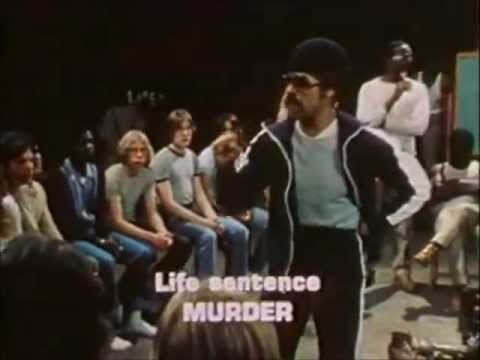
Far more effective than Beyond Scared Straight was the documentary that inspired it, 1978’s Scared Straight!  Scared Straight! followed a group of juvenile delinquents who were taken to a prison in New Jersey.  The film didn’t waste any time with the guards and indeed, the documentary emphasized the fact that the convicts ran the prison and not the guards.  (That’s the sort of thing that Beyond Scared Straight, with all of its “respect my authority” rhetoric, would never have the guts to admit.)  In fact, the documentary really didn’t even reveal much about the teenagers being yelled at, beyond the fact that they all thought that they were tough (or, at least, they did before going into prison) and that all the boys had really thin, barely-there mustaches.

Instead, it’s the prisoners who dominated this documentary.  The majority of them were serving life sentences.  A few of them were murderers.  They were angry, they were loud, and they made it clear that they didn’t like the people listening to them, filming them, or watching them.  They left the audience with no doubt that the prisoners would hate them just as much as they hated the teens in the program.  The prisoners stole everyone’s shoes.  They knocked a stack of cards out of one teen’s hands.  They regularly threatened to break one kid’s neck.  They talked about what it was like to be raped in prison.  They talked about what the teens would have to do in order to survive in prison.  Scared Straight! was narrated by Peter Falk who, early on, informed the audience that they would be hearing some “rough language.”  Falk wasn’t lying.  The prisoners in this film were frightening in a way that their later television counterparts never could be.  One doesn’t have to be a believer in the Scared Straight! program (and you’ve probably noticed by now that I’m not) to find the prisoners to be both compelling and disturbing at the same time.  All of the prisoners were obviously intelligent but, just as obviously, prison had left physical, mental, and emotional scars that would never heal.

Scared Straight! was a huge success, winning both an Oscar and an Emmy.  It led to various follow-up documentary, which explored whether or not the teens had actually been scared straight.  After I watched the original Scared Straight!, I watched Scared Straight: 20 Years Later.  Released in 1999, this documentary was narrated by Danny Glover and featured interviews with the surviving prisoners and program participants.  At the time the documentary was released, almost all of the prisoners had been paroled.  Three of them had died, one from a drug overdose, one from AIDS, and another from a sudden heart attack.  A few of the parolees had been re-arrested and were now back in prison and, just as importantly, a few others had stayed out of trouble.  As for the teens, one had died of AIDS and one was in prison but the rest of the surviving teens claimed that they had all learned from the program.  At least two were involved in the ministry.  The others all had families and steady jobs.  None of them seemed to be particularly well-off financially but, at the same time, the majority of them seemed to be happy.

Of course, Scared Straight: 20 Years Later was filmed over 20 years ago.  Things change.  One of the graduates of the original program, Angelo Speziale, appeared in 20 Years Later, playing with his children and talking about how he had a few minor run-ins with the law immediately after the program.  At the time, Speziale said that was all behind him and he was now just focused on being the best father that he could be.  As I watched Angelo Speziale talk about how perfect his life was, I couldn’t help but think that there was something slightly off about him.  He seemed to be trying too hard to come across as just a regular suburban dad.  In 2011, long after he was interviewed for 20 Years After, Angelo Speziale was arrested and charged with raping and murdering one of his neighbors in 1982, four years after he took part in the Scared Straight program.  Angelo Speziale is now serving a life sentence at the same prison where the original Scared Straight! was filmed.  As for the rest of the participants, who knows?  Hopefully, they’re doing well.

A Blast From The Past: Donald Pleasence Guest Stars On Columbo


A few days ago, we observed the birthday of Donald Pleasence, a great actor who became a horror icon with his performance as Dr. Sam Loomis in Halloween. However, 5 years before a generation of filmgoers first met Dr. Loomis, Donald Pleasence played a wine connoisseur-turned murderer on a classic and much acclaimed episode of the classic detective show, Columbo.

Largely due to the battle of wits between Donald Pleasence and Peter Falk — two of the best character actors of their generation — Any Old Port In A Storm has come to be seen as one of the best episodes ever of this still much-beloved detective show. This episode originally aired on October 7th, 1973, just two days after Pleasence’s birthday. Today, on the 48th anniversary of the episode’s airing, the Shattered Lens is proud to share Donald Pleasence and Peter Falk in Any Old Port In A Storm!

As we frequently say around these parts, enjoy!

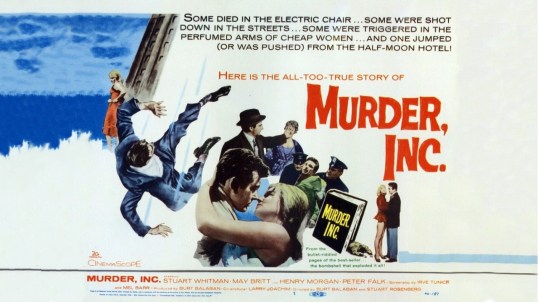
An Offer You Can’t Refuse #17: Murder, Inc. (dir by Stuart Rosenberg and Burt Balaban)


We all know the famous line from The Godfather.  “I’m going to make him an offer he can’t refuse.”  Of course, everyone also knows that “It’s not personal.  It’s strictly business.”  There’s another line that’s almost as famous: “One lawyer with his briefcase can steal more than a hundred men with guns.”  That line comes from Mario Puzo’s novel.  It’s never actually used in the film though it’s certainly present as a theme.

The idea of organized crime essentially being a huge corporation is hardly a new one.  In fact, it’s become a bit of a cliche.  Nearly every gangster film ever made has featured at least one scene where someone specifically compares their illegal activities to the day-to-day business of politicians and CEOs.  However, just because it’s a familiar analogy, that doesn’t make it any less important.  It’s hard not to think of organized crime as being big business when you consider that, in the 30s and the 40s, the mafia’s assassination squad was actually known as Murder, Inc.

Murder, Inc. was formed in Brooklyn, in the 30s.  It was founded and initially led by a man named Lepke Buchalter.  Lepke was a gangster but, because he was Jewish, he couldn’t actually become a made man.  However, he used that to his advantage when he created Murder, Inc.  The organization was largely made up of non-Italians who couldn’t actually become official members of the Mob.  The major mafia families would hire Murder, Inc. to carry out hits because they knew that, since none of the members were made men, they wouldn’t be able to implicate any of the families if they were caught by the police.

It was a good idea and Lepke and his band of killers made a lot of money.  Of course, eventually, the police did catch on.  A member of the organization by the name Abe Reles was eventually arrested and agreed to be a rat.  Lepke went to the electric chair.  Reles ended up falling out of a window.  Did he jump or was he thrown?  It depends on who you ask.

19 years after Reles plunged from that window and 16 years after Lepke was executed, their story was told in the 1960 film, Murder, Inc.  Lepke was played by David J. Stewart while Reles was played by Peter Falk.  The film is told in a documentary style, complete with a narrator who delivers his lines in a rat-a-tat-tat style.  We follow Reles as he goes to work with Lepke and as he harasses a singer (Stuart Whitman) and his wife (May Britt), forcing them help him carry out a murder and then allowing them to live in a luxury apartment on the condition that they also let Lepke hide out there.  (It’s probably not a surprise that a professional killer wouldn’t turn out to be the best houseguest.)  Eventually, a crusading DA (Henry Morgan) and an honest cop (Simon Oakland) take it upon themselves to take down Murder, Inc.

To be honest, there’s not a whole lot that’s surprising about this film but it’s still an entertaining B-movie.  The black-and-white cinematography and the on-location filming give the film an authentically gritty feel.  The action moves quickly and there’s enough tough talk and violent deaths to keep most gangster aficionados happy.  The best thing about the film is, without a doubt, Peter Falk’s portrayal of Abe Reles.  Falk is magnetically evil in the role, playing Reles as a man without a soul.  Even when Reles finally cooperates with the police, the film leaves no doubt that he’s only doing it to try to save himself.  Falk plays Reles like a tough guy who secretly knows that his days are numbered but who has convinced himself that, as long as he keeps sneering and threatening people, the rest of the world will never figure out that he’s been doomed all the time.  The more people he kills, the higher Reles moves up in the corporation and the more he tries to take on the look of a respectable member of society.  But, no mater how hard he tries, Reles always remains just another violent thug.  Falk was deservedly Oscar-nominated for his performance in this film, though he ultimately lost the award to Spartacus‘s Peter Ustinov.

Murder, Inc. may be a low-budget, B-movie but it’s also a classic of gangster cinema.  It’s an offer you can’t refuse.

Previous Offers You Can’t (or Can) Refuse:

  1. The Public Enemy
  2. Scarface
  3. The Purple Gang
  4. The Gang That Could’t Shoot Straight
  5. The Happening
  6. King of the Roaring Twenties: The Story of Arnold Rothstein 
  7. The Roaring Twenties
  8. Force of Evil
  9. Rob the Mob
  10. Gambling House
  11. Race Street
  12. Racket Girls
  13. Hoffa
  14. Contraband
  15. Bugsy Malone
  16. Love Me or Leave Me


Eat To The Beat(nik): Peter Falk in THE BLOODY BROOD (Kay Films 1959)


gary loggins's avatarcracked rear viewer

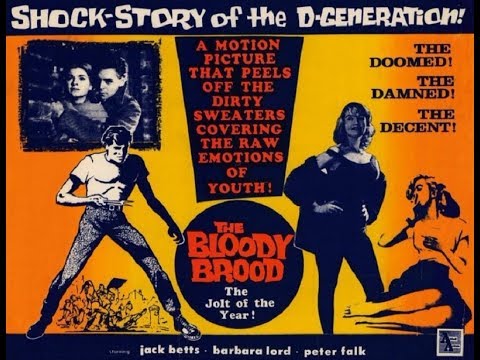
I suppose you could categorize THE BLOODY BROOD as Canadian Beatnik Noir – and it would definitely be a category of one! But this low-budget entry from The Great White North tells its tale at a fairly swift pace (or aboot as swift as those Canucks can get, eh?), features an oddball cast of characters, and offers viewers the unquestionably non-Canadian Peter Falk in his second film as a dope-peddling psychopath who gets his kicks from “death… the last great challenge of the collective mind”.

Falk, warming up for his breakthrough role as Abe ‘Kid Twist’ Reles in MURDER INC. a year later, plays Nico, who  pushes his junk to the Beat Generation rejects that hang around the local cafe (“He’s a salesman, baby… he sells dreams”). When an old man dies of a heart attack before their eyes, psycho Nico thinks it’d be far-out to deliberately off a square…

View original post 322 more words

Psycho-Killer: Peter Falk in MURDER INC. (20th Century-Fox 1960)


gary loggins's avatarcracked rear viewer

American filmgoers have had a long love affair with the gangster movie. The Pre-Code era was riddled with rat-a-tat-tat tommy gun action from Warner Brothers, MGM, and the other studios, helping to make stars out of Edward G. Robinson , James Cagney , Clark Gable , and a host of movie tough guys. Things quieted down once the Code was strictly enforced, but the gangster was still around, sometimes in comedy masks as likeable lugs, deneutered yet always lurking on-screen in some capacity.

By the late 1940’s, film noir introduced us to a darker vision, one seething with murderous rage. Cagney in WHITE HEAT, Robinson in KEY LARGO , and virtually everything Lawrence Tierney was in showed us gangsters were no “swell guys”, but anti-social psychopaths. The 50’s saw the gangster relegated mainly to ‘B’ status, just another genre to pit the good guys against the bad guys. Then in…

View original post 568 more words

Music Video of the Day: Ghostbusters by Ray Parker Jr. (1984, dir. Ivan Reitman)


I wish the literal video for this was still up. Oh, well.

All these years later, I still don’t have any idea why she goes into that house. I guess we are supposed to believe she lives there with these two kids that miss their cue?

These other kids nail it.

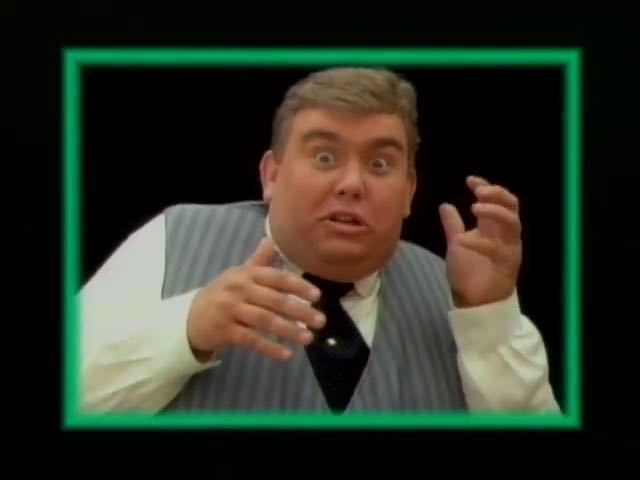
Despite finding lists of all the celebrities in this video, I have no idea who this guy is that Ray Parker Jr. becomes for this bit.

I also wonder why she didn’t see him while turning away from the moving table to go to the window.

In the window is footage of the movie that has aged horribly. Parker Jr. is blue screened in there for this famous shot.

He ain’t afraid of no ghost. A lawsuit on the other the hand, that’s a different matter. I hope this music video doesn’t remind me of a Huey Lewis & The News video as well.

Now Ray Parker Jr. stands creepily outside of her window.

This is looking familiar.

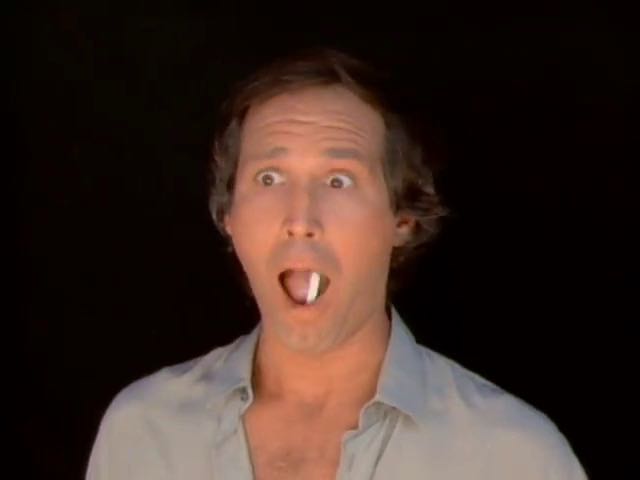
Chevy Chase can call Ghostbusters if he has a ghost problem…

but what about if he gets stuck in Benji again?

Who can he call then?

I knew this looked familiar.

Do You Believe In Love by Huey Lewis & The News (1982)


Do You Believe In Love by Huey Lewis & The News (1982)

I’m sure it’s a coincidence. I just find it humorous to see that considering the lawsuit saying that this song ripped off, to one extent or another, the Huey Lewis & The News song I Want A New Drug. The scene above is from the video that helped kick off their career on MTV and set the tone for their future videos since it was such a success despite being ridiculous. Is the riff in You Crack Me Up…

sound like the same riff from Johnny And Mary by Robert Palmer?

Or is it just me?

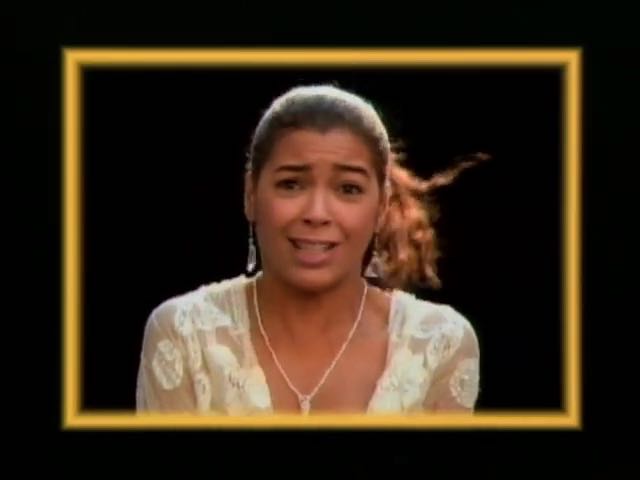
What a feeling. Thanks for making that one easy, Irene Cara.

Something tells me that Cindy Harrell was hired by someone who saw the movie Model Behavior (1982), which she was in.


Model Behavior (1982, dir. Bud Gardner)


Model Behavior (1982, dir. Bud Gardner)

From what I’ve read, they just showed up on the set of a movie Candy was shooting to try and get him to make this cameo appearance.

Ray Parker Jr. rising from the top of the stairs like he’s Michael Myers come to kill her. Why?

Or at least scare her. It’s probably a reference to Gozer.

Melissa Gilbert. I have no idea what she’s doing here. I’ve only seen an episode or two of Little House On The Prairie, so I guess there could have been some episodes with ghosts. Some of these cameos feel like they happened because the celebrities were involved with NBC.

Speaking of cameos I can’t explain, it’s former baseball player Ollie Brown.

Boundaries!

I do like that for the majority of the shot it looks like she should be falling over but isn’t.

More people that Parker can summon for some reason.

Don’t worry about them.

Pose for the featured image of this post.

Thank you.

Jeffrey Tambor.

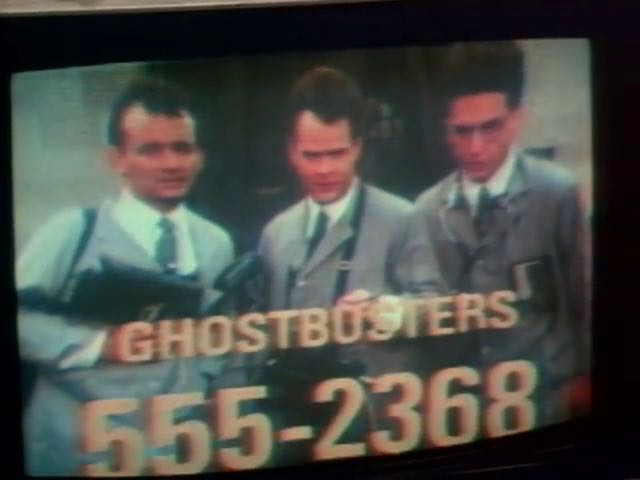
Is it 555-5555…

or 555-2368 as you showed earlier?

George Wendt apparently got in trouble with the Screen Actors Guild for his appearance in this video. I’ll link to the article with that information at the end.

Senator Al Franken.

Now we get a series of confusing cameos.

Danny DeVito. I think this is only the second music video he has ever been in. The other one was for the song Billy Ocean did for The Jewel Of The Nile (1985).

Carly Simon for some reason. She would go on to do the theme song to Working Girl (1988) with Sigourney Weaver. Maybe they were friends. I don’t know.

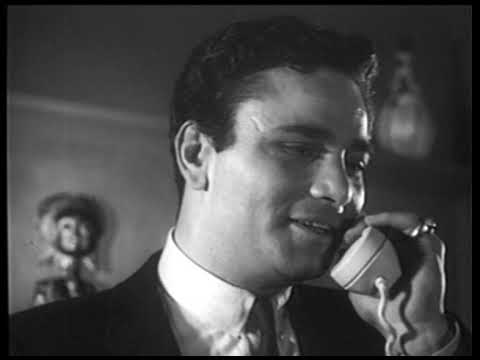
Umm…one more thing. Have you tried calling the Ghostbusters? No clue as to why Peter Falk is here.

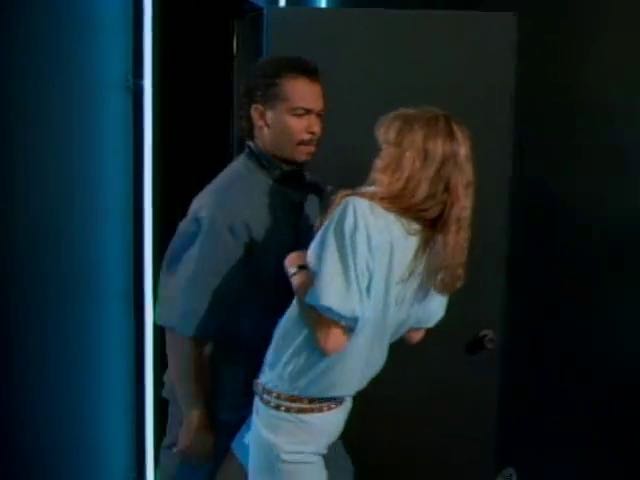
The breakdancing was improvised. So was Parker Jr. pushing Bill Murray around.

I think Teri Garr has one of the best cameos.

Don’t swallow that cigarette, Chevy.

Fun fact: In European and other non-US markets, the “no” sign was flipped.

If you want to read some more information about the video, then follow this link over to ScreenCrush where they have a write-up on the video with information from people who worked on the video.

According to mvdbase, Ivan Reitman directed, Keith Williams wrote the script, Jeff Abelson produced it, Daniel Pearl shot it, and Peter Lippman was the production manager.

If you ever get a chance to watch the literal music video for this, then do so. I doubt it will surface again though seeing as this music video almost didn’t get an official release because of the issues surrounding all the cameos.

Enjoy!

Dead Pigeons Make Easy Targets: THE CHEAP DETECTIVE (Columbia 1978)


gary loggins's avatarcracked rear viewer

THE CHEAP DETECTIVE could easily be subtitled “Neil Simon Meets MAD Magazine”. The playwright and director Robert Moore had scored a hit with 1976’s MURDER BY DEATH, spoofing screen PI’s Charlie Chan, Sam Spade, and Nick & Nora Charles, and now went full throttle in sending up Humphrey Bogart movies. Subtle it ain’t, but film buffs will get a kick out of the all-star cast parodying THE MALTESE FALCON, CASABLANCA , TO HAVE AND HAVE NOT, and THE BIG SLEEP .

Peter Falk  does his best Bogie imitation as Lou Peckinpaugh, as he did in the previous film. When Lou’s partner Floyd Merkle is killed, Lou finds himself in a FALCON-esque plot involving some rare Albanian Eggs worth a fortune. Madeline Kahn , John Houseman, Dom De Luise , and Paul Williams stand in for Mary Astor, Sydney Greenstreet, Peter Lorre, and Elisha Cook Jr, respectively, and they milk it for every…

View original post 334 more words

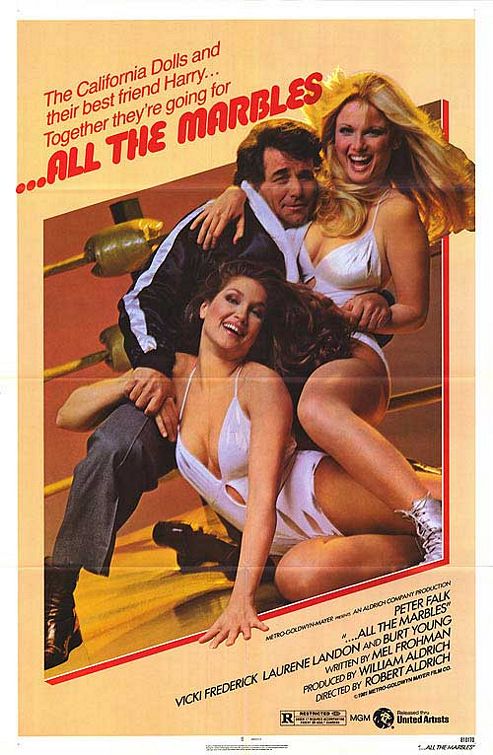
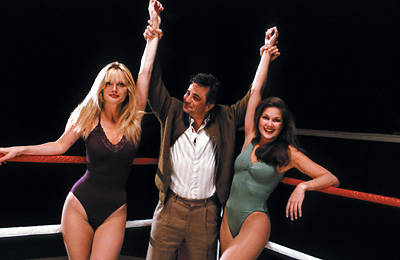
Tag Team Turmoil: …ALL THE MARBLES (MGM 1981)


gary loggins's avatarcracked rear viewer

all_the_marbles

Before Dwayne “The Rock” Johnson, before Hulk Hogan and Roddy Piper , the worlds of professional wrestling and the movies had long been entwined. After all, they’re both show biz! Grapplers like Nat Pendleton , Mike Mazurki, Tor Johnson , Harold Sakata (GOLDFINGER’s Oddjob), and Lenny Montana (Luca Brasi in THE GODFATHER) made the successful transition from the squared circle to Hollywood, not to mention Mexican luchadores like El Santo and Mil Mascaras, who starred in the ring and in their own series of movies south of the border. Even early TV wrestling phenom Gorgeous George had his own feature film, 1949’s ALIAS THE CHAMP.

marbles

1981’s …ALL THE MARBLES was made just before the Hulkamania craze started a boom in pro wrestling’s popularity. It’s a serio-comic character study centering on small time manager Harry Sears and his two young charges Iris and Molly,  better known as tag team The California Dolls. Harry and Iris…

View original post 748 more words

Horror on TV: Twilight Zone 3.6 “The Mirror”


TheTwilightZoneLogo

Tonight’s episode of The Twilight Zone is a political allegory about a communist dictator in Central America who gets a magic mirror that, he believes, will reveal who is plotting against me. It’s undeniably heavy-handed but, at the same time, it’s a lot of fun to watch Peter Falk play Fidel Castro.

This episode was written by Rod Serling and directed by Don Medford. It was originally broadcast on October 20th, 1961.