Dear Readers: (groaning) “There he goes again. Another history lesson!”
CRV: “B-but it’s important to put things in their proper historical context!”
DRs: (sigh) “We guess you’re right. Sorry.”
CRV: (beaming) “No problem! Now, like I was saying…”
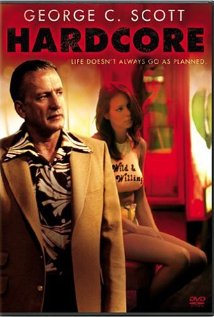
Back in the day, every major urban city, and many smaller sized ones, had what was known as a “Red Light District”, where sex workers plied their trade. These streets were loaded with sex shops, peep shows, massage parlors, strip joints, and Triple-X movie palaces, with hookers and drug dealers hawking their wares. New York City had its Times Square/42nd Street area, Boston had The Combat Zone near Chinatown, and Montreal the infamous St. Catherine Street. For Los Angeles, the action was on Sunset Boulevard, and it’s into this seedy milieu that writer/director Paul Schrader plunges George C. Scott in 1979’s HARDCORE, which isn’t about…
Actually, Stallone plays Johnny Kovak, a laborer who becomes a union organizer in 1939. Working with him is his best friend, Abe Belkin (David Huffman). In the fight for the working man, Abe refuses to compromise to either the bosses or the gangsters who want a piece of union. Johnny is more pragmatic and willing to make deals with ruthless mobsters like Vince Doyle (Kevin Conway) and Babe Milano (Tony Lo Bianco). Over thirty years, both Johnny and Abe marry and start families. Both become powerful in the union. When Johnny discovers that union official Max Graham (Peter Boyle) is embezzling funds, Johnny challenges him for the presidency. When a powerful U.S. senator (Rod Steiger) launches an investigation into F.I.S.T. corruption, both Johnny and Abe end up marked for death.
Obviously based on the life and mysterious disappearance of Jimmy Hoffa, F.I.S.T. was one of two films that Stallone made immediately after the surprise success of Rocky. (The other was Paradise Alley.) F.I.S.T. features Stallone in one of his most serious roles and the results are mixed. In the film’s quieter scenes, especially during the first half, Stallone is surprisingly convincing as the idealistic and morally conflicted Kovak. Stallone is less convincing when Kovak has to give speeches. If F.I.S.T. were made today, Stallone could probably pull off the scenes of the aged, compromised Johnny but in 1978, he was not yet strong enough as an actor. Far better is the rest of the cast, especially Conway, Lo Bianco, and Boyle. If you do see F.I.S.T., keep an eye on the actor playing Johnny’s son. Though he was credited as Cole Dammett, he grew up to be Anthony Keidis of the Red Hot Chili Peppers.
The box office failures of both F.I.S.T. and Paradise Alley led Stallone back to his most famous role with Rocky II. And the rest is history.
Men of Respect comes to us disguised as a gangster movie but it is actually a modern-day version of MacBeth. Mike Battaglia (John Turturro) is one of Charlie D’Amico’s (Rod Steiger) top lieutenants but he is upset because D’Amico has announced that his successor will be Bankie Como (Dennis Farina). When Mike stumbles across a fortune teller, he is told that not only will he soon be in charge of the D’Amico crime family but that he will hold the position until the stars fall from the sky and that he will never be harmed by a “man of woman born.” At the instigation of his ambitious wife, Ruthie Battaglia (played by Turturro’s real-life wife, Katherine Borowitz), Mike murders Charlie, Bankie, and everyone else who is standing in his way. Even as D’Amico’s son (Stanley Tucci) starts to recruit soldiers for an all out war, Mike remains confident. Even when one of this soldiers sees a fireworks show and says, “Jeez, it looks like stars from falling from the sky,” Mike remains cocky. When his wife starts to complain that she can not get the blood stains (“the spot”) out of the linen, Mike is not concerned. Why not? “All these guys were born of a woman,” Mike says, “they can’t do shit to me.”
Turning MacBeth (or any of Shakespeare’s tragedies) into a Mafia film is not a bad idea but Men of Respect‘s attempt to translate Shakespeare’s language to 20th century gangster talk leads to some memorably awkward line readings from an otherwise talented cast. By the time Matt Duffy (Peter Boyle) announced, in his Noo Yawk accent, that he was delivered via caesarean section, I could not stop laughing. Even the scenes of gangland mayhem feel like second-rate Scorsese. The idea behind the film is intriguing and there are a lot of recognizable faces in the cast but Men of Respect gets bogged down as both a Shakespearean adaptation and a gangster film.
Crazy Joe (Peter Boyle) is a gangster with a chip on his shoulder and a self-taught intellectual who can (misquote) Sartre and Camus with the best of them. Sick of being taken for granted, Joe and his brother, Richie (Rip Torn), attempt to challenge the Mafia establishment. The mob sets Joe up and gets him sent to prison. While doing time, Joe befriends a Harlem gangster named Willy (Fred Williamson). Refusing to associate with the other Italian prisoners, Joe allies himself with the black inmates and even helps to start a riot over the prison’s inhumane conditions. When he is released, Joe hits the streets of New York with a vengeance, now backed up by Willy and his criminal organization.
Crazy Joe is based on the life of Joey Gallo, who was briefly a New York celebrity, hobnobbing with actors like Jerry Orbach and writers like Norman Mailer before he was gunned down at Umberto’s Clam Shop in Little Italy. Though the names were changed to protect the guilty, Eli Wallach plays Vito Genovese, Charles Cioffi plays Joe Columbo, and Luther Adler is Joe Profaci. Fred Williamson’s character is based on the infamous Nicky Barnes.
Crazy Joe is a good and violent mix of the gangster, prison, and blaxploitation genres. Despite wearing an unfortunate toupee, Peter Boyle is great at putting the crazy in Crazy Joe and Fred Williamson ups the coolness factor of any movie he appears in. Keep an eye out for Henry Winkler, giving a very un-Fonzie performance as Joe’s right-hand man.
In the future, Marshal O’Neil (Sean Connery) has been hired, by Conglomerates Amalgamated, to enforce the law on a mining outpost that’s located on one of the moons of Jupiter. Why are all the miners going crazy, taking off their spacesuits, and exploding? Are they being hypnotized by that big red spot on Jupiter? Or is the mining supervisor, Sheppard (Peter Boyle), forcing his workers to take amphetamines that cause them to have psychotic episodes? O’Neil suspects the latter so Sheppard summons three intergalactic gunslingers to come and kill the marshal. With no one, except for the outpost’s doctor (Frances Sternhagen), willing to stand behind him, O’Neil must stand up to three gunmen by himself.
The comparison between High Noon and Outland is obvious but the movie also owes much to Alien. With its corrupt corporation, claustrophobic sets, and its blue-collar space workers, Outland seems like it could be taking place in the same movie universe as the Alien movies. Like a lot of the films that Peter Hyams has directed, Outland is ambitious but slow. It is never as much fun as something like Moon Zero Two. The best thing about Outland is Sean Connery, convincingly cast as Gary Cooper in space.
At his Colorado ranch, journalist Hunter S. Thompson (Bill Murray) is up against a deadline. He has to finish his story about his friendship with the radical lawyer and activist, Carlo Lazlo (Peter Boyle). Thompson flashes back to the time that he covered a trial in which Lazlo defended a group of young men charged with possession of marijuana. When the men are sent to prison, Lazlo snaps and physically attacks the prosecutor. Later, Lazlo resurfaces during the Super Bowl and tries to convince Thompson to join him in fighting a revolution in Latin America. And finally, in 1972, Lazlo tracks Thompson down while Thompson is traveling with the Nixon campaign.
Bill Murray as the legendary gonzo journalist, Dr. Hunter S. Thompson?
It sounds like a great idea, it’s just too bad that the movie’s not any good. Where The Buffalo Roam may be based on three of Thompson’s best known articles but it never feels gonzo. It never comes close to capturing Thompson’s anarchistic spirit. The real Thompson did drugs by the handful, was fascinated by guns, and always seemed to be on the verge of plunging into the abyss. Where The Buffalo Roam’s Thompson is a mild prankster and an ironically detached hipster, the type who the real Dr. Thompson probably would have kicked out of a moving car. As for Carlo Lazlo, the character is based on Oscar Zeta Acosta, the infamous “Samoan attorney” that Thompson renamed “Dr. Gonzo” in Fear and Loathing In Las Vegas. The movie never figures out what to do with the character or Peter Boyle.
While preparing for the role, Bill Murray spent months hanging out with Thompson and, according to the book, Saturday Night: A Backstage History of Saturday Night Live by Doug Weingard and Jeff Hill, literally became Hunter Thompson for not only the duration of the filming but for several months afterward:
“In a classic case of the role overtaking the actor, Billy returned that fall to Saturday Night so immersed in playing Hunter Thompson he had virtually become Hunter Thompson, complete with long black cigarette holder, dark glasses, and nasty habits. ‘Billy,’ said one of the writers, echoing several others, ‘was not Bill Murray, he was Hunter Thompson. You couldn’t talk to him without talking to Hunter Thompson.'”
Neither Thompson nor Bill Murray were happy with Where The Buffalo Roam‘s neutered version of gonzo and the film is really for Murray completists only. The closest that Hollywood had gotten to getting Thompson right remains Terry Gilliam’s adaptation of Fear and Loathing in Las Vegas.
For the past week and a half, I have been on a major Warren Oates kick. The latest Oates film that I watched was Kid Blue, a quirky western comedy that features Warren in a small but key supporting role.
Bickford Warner (Dennis Hopper) is a long-haired and spaced-out train robber who, after one failed robbery too many, decides to go straight and live a conventional life. He settles in the town of Dime Box, Texas. He starts out sweeping the floor of a barber shop before getting a better job wringing the necks of chickens. Eventually, he ends up working at the Great American Ceramic Novelty Company, where he helps to make ashtrays for tourists.
He also meets Molly and Reese Ford (Lee Purcell and Warren Oates), a married couple who both end up taking an interest in Bickford. Reese, who ignores his beautiful wife, constantly praised Greek culture and insists that Bickford take a bath with him. Meanwhile, Molly and Bickford end up having an affair.
Bickford also meets the local preacher, Bob (Peter Boyle). Bob is enthusiastic about peyote and has built a primitive flying machine that he keeps in a field. The town’s fascist sheriff, Mean John (Ben Johnson), comes across Bob performing a river baptism and angrily admonishes him for using “white man’s water” to baptize an Indian.
Bickford attempts to live a straight life but is constantly hassled by Mean John, who suspects that Bickford might actually be Kid Blue. When Bickford’s former criminal partner (Janice Rule) shows up in town and Molly announces that she’s pregnant, Bickford has to decide whether or not to return to his old ways.
Kid Blue is one of a handful of counterculture westerns that were released in the early 70s. The film’s biggest problem is that, at the time he was playing “Kid” Blue, Dennis Hopper was 37 and looked several years older. It’s hard to buy him as a naïve naif when he looks older than everyone else in the cast. As for Warren Oates, his role was small but he did great work as usual. Gay characters were rarely presented sympathetically in the early 70s and counter-culture films were often the worst offenders. As written, Reese is a one-note (and one-joke) character but Warren played him with a lot of empathy and gave him a wounded dignity that was probably not present in the film’s script.
Kid Blue plays out at its own stoned pace, an uneven mix of quirky comedy and dippy philosophy. Still, the film is worth seeing for the only-in-the-70s cast and the curiosity factor of seeing Dennis Hopper in full counterculture mode, before he detoxed and became Hollywood’s favorite super villain.
“Turn it off…turn it off…turn it off…TURN IT OFF!” — Jake Van Dorn (George C. Scott) in Hardcore (1979)
Jake Van Dorn (George C. Scott) is a businessman who lives in Grand Rapids, Michigan. He’s a deeply religious man, a sincere believer in predestination and the idea that only an elite few has been prelected to go to Heaven. Jake is divorced (though he occasionally tells people that his wife died) and is the father of a teenage girl named Kristen (Ilah Davis).
One of the first things that we notice about Jake is that there appears to be something off about his smile. There’s no warmth or genuine good feeling behind it. Instead, whenever Jake smile, it’s obvious that it’s something he does because that what he’s supposed to do. Indeed, everything Jake does is what he’s supposed to do and he expects his daughter to do the same.
When Kristen goes to a church camp in California, she soon disappears. Jake and his brother-in-law, Wes (Dick Sargent), fly down to Los Angeles and hire a sleazy private investigator, Andy Mast (Peter Boyle), to look for her. A few weeks later, Andy shows Jake a pornographic film. The star? Kristen.
Jake is convinced that Kristen has been kidnapped and is being held captive. Wes tells Jake that he should just accept that this is God’s will. Andy tells Jake that, even if he does find Kristen, Jake might not want her back. Finally, Jake tells off Wes, fires Andy, and ends up in Los Angeles himself. Pretending to be a film producer and recruiting a prostitute named Nikki (Season Hubley) to serve as a guide, Jake searches for his daughter.
The relationship between Jake and Nikki is really the heart of the film. For Jake, Nikki becomes a temporary replacement for his own daughter. For Nikki, Jake appears to be the only man in the world who doesn’t want to use her sexually. But, as Jake gets closer and closer to finding his daughter, Nikki realizes that she’s getting closer and closer to being abandoned.
Hardcore is a pretty good film, one that was shot in location in some of the sleaziest parts of 70s Los Angeles. Plotwise, the film is fairly predictable but George C. Scott, Season Hubley, and Peter Boyle all give excellent performances. (The scenes were Scott pretends to be a porn producer are especially memorable, with Scott perfectly capturing Jake’s discomfort while also subtly suggesting that Jake is enjoying himself more than he wants to admit.) And, even if you see it coming from miles away, the film’s ending will stick with you.
We’ve never had a President named Charles. We’ve had several Presidents named John and a quite a few named James. We’ve even had three named George. But we’ve never had a Charles. We’ve come close. Charles Evans Hughes nearly beat evil old Woodrow Wilson in 1916. Charles Cotesworth Pinckney was nominated two times in a row by the Federalists but lost to Thomas Jefferson and James Madison respectively. We’ve had three Vice Presidents names Charles — Fairbanks, Dawes, and Curtis — but never a President.
And, if we ever do elect a President named Charles, he’s probably go by either Charlie or Chuck. The United States has always liked to think of itself as being a country that has no official royal family and, as a name, Charles probably sounds far to aristocratic for most voters.
That’s why I’m sure that, once U.S. Sen. Charles Palatine won the Democratic presidential nomination back in 1976, he probably insisted that people start calling him Chuck. Of course, Sen. Palatine probably had no idea how lucky he was to win that nomination. If not for a few secret service agents, Sen. Palatine could very well have fallen victim to a psychotic taxi driver named Travis Bickle.
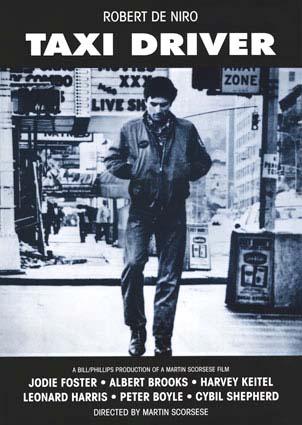
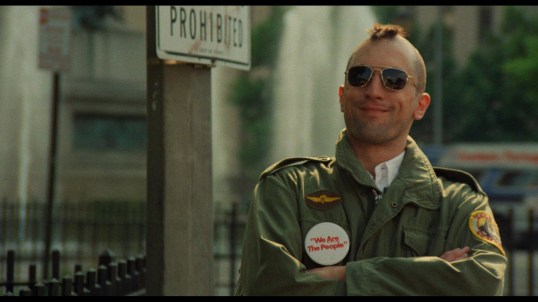
Sen. Palatine’s presidential campaign is a major subplot of Martin Scorsese’s 1976 masterpiece of paranoia, Taxi Driver. As played by an actor named Leonard Harris, Sen. Palatine appears to be the epitome of a politician. He may smile at the right moment but his eyes are always shifty. Even his campaign slogan (“We Are The people!”) is vapid in an all too plausible way. (How different is “We Are the People” from “We Are The People We’ve Been Waiting For?”) For the most part, Palatine remains a remote figure, giving speeches and appearing in television commercials. The only time that we get to know Palatine as a person is when he gets in a taxi being driven by Travis Bickle (Robert De Niro).
Travis recognizes him immediately and tells him that he tells everyone who gets in the cab that “they gotta vote for you.” Palatine smirks a little as he asks Travis what he thinks the most important issue of the election is. Travis goes on a bit about how someone needs to destroy all of the scum and filthy lowlifes who seem to populate Travis’s section of New York. As Travis rambles, Palatine’s smile disappears and it becomes obvious that he’s realized that he is essentially being driven by a psycho. Oh shit, Palatine is probably thinking, this guy is telling people that they gotta vote for me? However, Palatine quickly regains his composure and assures Travis that the wisest people that he’s ever met have been taxi drivers.
Of course, what Palatine doesn’t realize is that Travis only knows about the campaign because he happens to be obsessed with a Palatine campaign worker named Betsy (Cybill Shepherd). And Betsy even goes out with Travis a few times. But then Travis, who spends the majority of the film showing how little skill he has when it comes to understanding and relating to other people, takes Betsy to an adult film.
With Betsy refusing to take his calls, Travis’s attention shifts to Iris (Jodie Foster), a teenage prostitute. Obviously seeing himself as being a knight in shining armor, Travis tells Iris that she has to go back home to her parents. As Travis talks, it becomes apparent that he’s simply repeating talking points that he’s heard on TV. (If Taxi Driver was made today, Travis would be one of those people constantly sharing “inspirational” Facebook posts.) Iris laughs at Travis and goes back to her pimp, Sport (Harvey Keitel).
And, of course, Travis goes even crazier than before.
38 years after it was first released, Taxi Driver remains a disturbing and powerful film. However, what makes it effective is that, in many ways, it’s perhaps the darkest comedy ever made. Throughout the entire film, Travis essentially tells everyone that he meets that he’s disturbed and potentially dangerous and, throughout the entire film, everyone seems to be determined to ignore all of the signs.
Critics always talks about the scene where Travis points a gun at his mirror and asks, “You talkin’ to me?” And that’s a great scene. It deserves to be famous, just as De Niro deserves all of the praise that he’s gotten for his iconic performance in Taxi Driver.
However, for me, there are two other scenes that are just as brilliant. The first is where Travis attempts to get some advice from an older cabbie named Wizard (Peter Boyle). Travis says he’s been having a lot bad thoughts. Wizard shrugs and says that everyone has those. What makes this scene particularly memorable are the lengths that Wizard goes to in order to avoid acknowledging that Travis is obviously disturbed.
And then, there’s the scene where Travis buys a gun from Easy Andy (Steven Prince). Andy is such a salesman and is so nonchalant about all of his weaponry that, for a few brief minutes, Steven Prince actually manages to steal the spotlight from Robert De Niro.
Whenever one thinks about Taxi Driver, one automatically pictures Robert De Niro. That’s why it’s all the more interesting that De Niro was not the first choice for Travis. When Taxi Driver was in pre-production and a pre-Jaws Steven Spielberg (of all people) was thinking about directing it, Jeff Bridges as briefly attached to the role. And while it’s always tempting to think about what a Spielberg/Bridges version of Taxi Driver would look like, I think we’re all right to be happy that the actual film was directed by Scorsese and starred De Niro. They truly made Taxi Driver into one of the most memorable films ever made.
“What do we do now?” — Democratic senate candidate Bill McKay (Robert Redford) in The Candidate (1972)
When I reviewed Advise & Consent, I mentioned that if anyone could prevent billionaire Tom Steyer from winning the Democratic nomination to run in the 2016 California U.S. Senate election, it would be Betty White. Well, earlier today, Tom Steyer announced that he would NOT be a candidate. You can guess what that means. Betty White has obviously already started to set up her campaign organization in California and, realizing that there was no way that he could possibly beat her, Tom Steyer obviously decided to step aside.
So, congratulations to Betty White! (I would probably never vote for her but I don’t live in California so it doesn’t matter.) As future U.S. Senator Betty White prepares for the next phase of her career, it would probably be a good idea for her to watch a few movies about what it takes to win political office in the United States.
For example: 1972’s The Candidate.
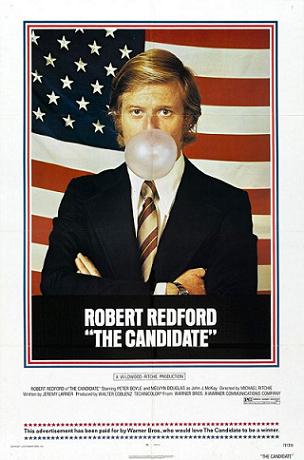
The Candidate would especially be a good pick for the nascent Betty White senate campaign because the film is actually about a senate election in California! California’s U.S. Sen. Crocker Jarmon (Don Porter) is a Republican who everyone assumes cannot be defeated for reelection. Democratic strategist Marvin Lucas (a heavily bearded Peter Boyle) is tasked with finding a sacrificial candidate.
The one that Marvin comes up with is Bill McKay (Robert Redford, before his face got all leathery), a 34 year-old lawyer who also happens to be the estranged son of former Governor John J. McKay (Melvyn Douglas, whose wife Helen ran for one of California’s senate seats in 1950). As opposed to his pragmatic and ruthless father, Bill is idealistic and the only reason that he agrees to run for the Senate is because Marvin promises him that he’ll be able to say whatever he wants. Marvin assures Bill that Jarmon cannot be beaten but if Bill runs a credible campaign, he’ll be able to run for another office in the future.
However, Jarmon turns out to be a weaker candidate than everyone assumed. As the charismatic Bill starts to close the gap between himself and Jarmon, he also starts to lose control of his campaign. He soon finds himself moderating his positions and worrying more about alienating potential voters than stating his true opinions. (In one of the film’s best scenes, Bill scornfully mutters his standard and generic campaign speech to himself, obviously disgusted with the vapid words that he has to utter in order to be elected.) The film ends on a properly downbeat note, one that reminds you that the film was made in the 70s but also remains just as relevant and thought-provoking in 2015.
Written by a former political speech writer and directed, in a semi-documentary style, by Michael Ritchie, The Candidate is an excellent film that answer the question as to why all political campaigns and politicians seem to be the same. The Candidate is full of small details that give the film an air of authenticity even when a familiar face like Robert Redford is on screen.
Whenever I watch The Candidate, I find myself wondering what happened to Bill McKay after the film’s iconic final scene. Did he ever regain his idealism or did he continue on the path to just becoming another politician. As much as we’d all like to think that the former is true, it’s actually probably the latter.
That just seems to be the way that things go.
Hopefully, Betty White will learn from Bill McKay’s example.


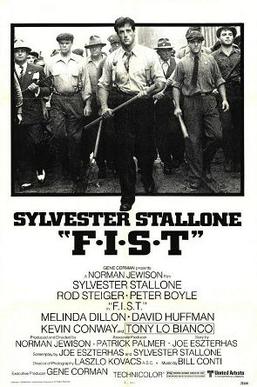 Sylvester Stallone is Jimmy Hoffa!
 That Bill Shakespeare really gets around.
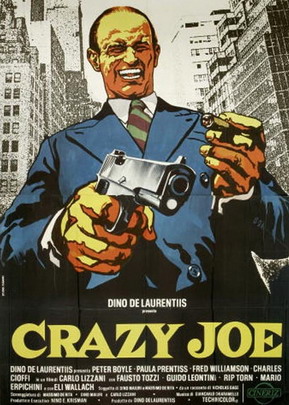 Crazy Joe (Peter Boyle) is a gangster with a chip on his shoulder and a self-taught intellectual who can (misquote) Sartre and Camus with the best of them. Sick of being taken for granted, Joe and his brother, Richie (Rip Torn), attempt to challenge the Mafia establishment. The mob sets Joe up and gets him sent to prison. While doing time, Joe befriends a Harlem gangster named Willy (Fred Williamson). Refusing to associate with the other Italian prisoners, Joe allies himself with the black inmates and even helps to start a riot over the prison’s inhumane conditions. When he is released, Joe hits the streets of New York with a vengeance, now backed up by Willy and his criminal organization.
 It’s High Noon in space!
 At his Colorado ranch, journalist Hunter S. Thompson (Bill Murray) is up against a deadline. He has to finish his story about his friendship with the radical lawyer and activist, Carlo Lazlo (Peter Boyle). Thompson flashes back to the time that he covered a trial in which Lazlo defended a group of young men charged with possession of marijuana. When the men are sent to prison, Lazlo snaps and physically attacks the prosecutor. Later, Lazlo resurfaces during the Super Bowl and tries to convince Thompson to join him in fighting a revolution in Latin America. And finally, in 1972, Lazlo tracks Thompson down while Thompson is traveling with the Nixon campaign.

 Through the Shattered Lens