The TSL Horror Grindhouse: The Fifth Floor (dir by Howard Avedis)


In 1977’s The Fifth Floor, Dianne Hull plays Kelly McIntyre.

Kelly is a college student by day and a disco dancer by night!  Unfortunately, after someone spikes her drink at the discotheque and she suffers an overdose, she becomes a full-time patient at a mental asylum.  Neither the head doctor (Mel Ferrer) nor the head nurse (Julia Adams, who once swam with The Creature From The Black Lagoon)  believes her claim that her drink was spiked.  Judged to be suicidal and delusional, Kelly is sent to the Fifth Floor!

While her boyfriend (John David Carson) tries to convince the authorities that she’s not insane, Kelly adjusts to life on the Fifth Floor.  She befriend Cathy (Patti D’Arbanville).  She encourages her fellow patients to dance and enjoy themselves.  She tries to escape on multiple occasions.  She draws the unwanted attention of a male orderly named Carl (Bo Hopkins, giving a wonderfully sinister performance).  A sadist equipped with down-home country charm, Carl has got all of his co-workers convinced that he’s a great guy.  The patients, though, know that Carl is a petty authoritarian who enjoys showing off his power.  (“I’m just doing my job,” is the excuse whenever he’s challenged.)  Carl takes an obsessive interest in Kelly and soon, Kelly is not only trying to get her life back but also trying to escape from Carl’s cruel intentions.

Most film directories list The Fifth Floor as being a horror film and certainly, there are elements of the horror genre to be found in the film.  The smooth-talking and nonchalantly cruel Carl is certainly a horrific character and Kelly’s attempts to escape from the asylum capture the very primal fear of not having any control over one’s life.  That said, The Fifth Floor owes greater debt to One Flew Over The Cuckoo’s Nest than to the typical slasher film.  Kelly is a rebel who brings the patients in the ward together.  Much as in Cuckoo’s Nest, the nurses and the orderlies use the threat of electro-shock treatment to keep the patients under control.

It’s not a bad film, though it definitely has its slow spots and I do wish the film had embraced its own sordidness with a bit more style.  I’m a history nerd so I appreciated the fact that The Fifth Floor was so obviously a product of its time.  Any film that features the heroine showing off her disco moves before being taken to a mental hospital is going to hold my interest.  That said, the most interesting thing about the film are some of the familiar faces in the cast.  For instance, Earl Boen — who played so many authority figures over the course of his career and appeared as a psychiatrist in the early Terminator films — plays a patient who wears a NASA jacket.  The always intimidating Anthony James plays the most violent patient.  Michael Berryman and Tracey Walter appear as background patients.

And then you’ve got Robert Englund, cast here as Benny.  Benny is the most gentle of the patients, a prankster who befriends Kelly.  It’s always so interesting to see the type of roles that Englund played before he was cast as Freddy Krueger in A Nightmare On Elm Street.  In this film, Englund is so goofy and friendly that you actually find yourself worrying about something happening to him.  Englund’s role is small but his amiable nerdiness definitely makes an impression.

The Fifth Floor opens and ends with a title card telling us that the film is based on a true story.  Sure, it was.
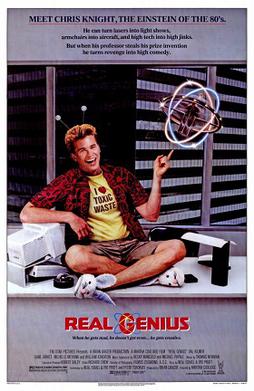
Real Genius (1985, directed by Martha Coolidge)


Mitch Taylor (Gabriel Jarrett) is a teenage genius who is recruited by Prof. Jerry Hathaway (William Atherton) to study at Pacific Tech University.  The real reason why Hathaway has recruited Mitch is because Chris Knight (Val Kilmer), another genius, has been slacking on developing the power source for an experimental laser called “crossbow.”  Hathaway hopes that Mitch can get Chris to take his work seriously and to focus on the project.  Instead, Chris teaches Mitch that he has to learn how to enjoy life or his great intelligence will become a burden and he’ll end up burned out and living in the tunnel underneath the university.  That’s what happened to Laszlo Holyfield (Jon Gries).  That’s what nearly happened to Chris.  Chris is determined not to let it happen to Mitch.

Real Genius combines college hijinks with a serious examination of the pressures of being a “real genius.”  Mitch knows everything about laser physics but he still misses his parents and cries after getting yelled at by Prof. Hathaway.  He’s just a kid, no matter how smart he is.  Chris proves himself to be a good friend, encouraging Mitch to relax and enjoy life.  Just because you’re a genius doesn’t mean that you can’t have fun.  As played by Val Kilmer, Chris Knight is the best friend that everyone wishes they could have, whether they’re a genius or not.  Even when the film gets sophomoric, Kilmer plays his role seriously and never loses sight of Chris’s humanity or why it’s so important to Chris that Mitch not become consumed by the pressure of being smarter than almost everyone else in the room.  This is one of the early Val Kilmer performances that showed just how good an actor he truly was.  With Chris’s encouragement, Mitch pursues a romance with Jordan Cochran (Michelle Meyrink) and gets revenge (more than once) on the arrogant Kent (Robert Prescott).

Eventually, Chris and Mitch realize that their research is being used to construct a weapon for the CIA and this leads to the film’s famous ending.  Ever since this movie came out, there’s been a debate over whether or not a laser could be used to make popcorn and, even more importantly, whether or not a gigantic amount of popcorn could actually destroy someone’s house.  I don’t know the answers to those questions but I’d like to think that Real Genius got it right and I have no interest in any evidence that suggests otherwise.  Sometimes, you owe it yourself to believe in the power of lasers and popcorn.  The next person who takes advantage of your hard work, destroy his house with popcorn and then sing Everybody Wants To Rule The World.  Learn the lessons of Real Genius.

Finally, when I was growing up, Real Genius was one of those films that seemed to be on HBO all the time.  Somehow, I always turned it on right when the popcorn started popping.  That popcorn-filled house, followed by Everybody Want To Rule The World, was a huge part of my childhood.  Real Genius will always bring back good memories for me.

Retro Television Review: Miami Vice 2.11 “Back In The World”


Welcome to Retro Television Reviews, a feature where we review some of our favorite and least favorite shows of the past!  On Mondays, I will be reviewing Miami Vice, which ran on NBC from 1984 to 1989.  The entire show can be purchased on Prime!

This week, an old friend of Sonny’s comes to Miami.

Episode 2.11 “Back In The World”

(Dir by Don Johnson, originally aired on December 6th, 1985)

Directed by Don Johnson himself, Back In The World opens in the closing days of the Vietnam War.  A war correspondent named Ira Stone (played by Bob Balaban) has discovered that the bodies of American soldiers are being packed with heroin before being shipped back to the United States.  He shares the discovery with his best friend, a young Marine named Sonny Crockett.

Ten years later, Sonny is a member of Miami Vice and laughing as he watches the DEA go all out to arrest two rich kids who have a few pounds on weed on them.  Meanwhile, Ira Stone is still a journalist but it’s been a while since he’s had a major byline.  Stone has become known for being erratic and paranoid.  His own wife (played by Patti D’Arbanville, who was Johnson’s girlfriend at the time this episode was filmed) describes Stone as being a crazed junkie who spends his time chasing imaginary enemies.  Sonny discovers just how paranoid Stone has become when Stone approaches him and asks for help in exposing the truth about the heroin trade.

Stone has a lot of theories, the majority of which involve rogue elements of the CIA.  Sonny agrees to help Stone investigate a lead but he’s skeptical of Stone’s theories.  But then someone launches a mortar attack on Sonny and Stone while they’re talking on a motorboat.  “INCOMING!” Stone yells as Sonny steers the boat through a shower of explosions.  As out there as Ira Stone may be, he’s obviously made someone uncomfortable.

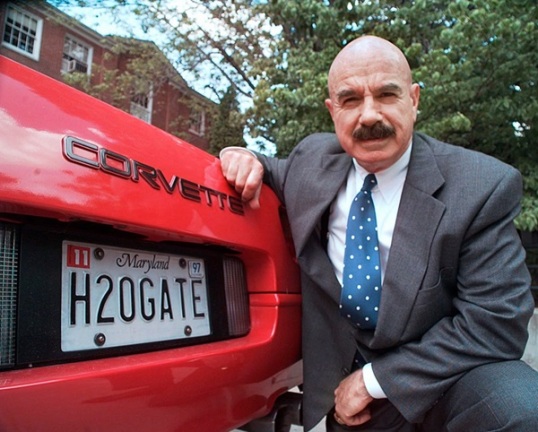
Could that someone be William Maynard (G. Gordon Liddy, who was one of the Watergate burglars)?  Maynard is a former (and maybe current) CIA agent who, in Vietnam, was renowned for his ability to track down and destroy the enemy.  Now, Maynard lives in a Miami mansion with his wife (Susan Hatfield) and a mute servant who has a tendency to show up whenever someone needs to be killed.   While Crockett and Stone investigate Maynard, Tubbs and Switek (who is dressed as a leather-clad biker for some reason) investigate an exotic drug currier named Dakotah (Iman).

It’s an intriguing story but it ends on a rather conventional note, with Crockett and Tubbs launching an assault on one of Maynard’s mansions in the Everglades.  It’s probably not a coincidence that the Everglades are filmed to resemble a Vietnamese jungle.  At one point, Crockett nearly shoots in Tubbs by mistake, a stark reminder of the confusion that comes with combat.  In the end, Maynard escapes, Stone is seriously wounded, and the heroin trade continues.  There aren’t many happy endings to be found in Miami.

This was an uneven but entertaining episode.  The use of The Doors on the soundtrack was occasionally effective and occasionally heavy-handed.  The opening Vietnam montage was done well but it fell apart as soon as middle-aged and gravelly-voiced Don Johnson showed up as a fresh-faced Marine in his 20s.  That said, once the action moved to Miami and the present day, Don Johnson was never less than convincing as a battle-scarred veteran still trying to come to terms with what happened in Vietnam.  G. Gordon Liddy was entertaining as Maynard, even if it was obvious that acting was not his main thing.  Bob Balaban’s manic intensity (“INCOMING!”  “MEDIC!”) made Ira Stone into a fascinating character.  A visit by Crockett and Stone to a VA hospital not only leads to an important lead but it also allows the show to discuss the shameful way that America treated (and treats) veterans of unpopular wars.  Johnson did a good job directing the episode but it still never quite escaped the shadow of the thematically-similar Bushido.

Incidentally, my father used to have a “G. Gordon Liddy For President” bumper sticker.  And I’ve got a beat-up copy of Liddy’s autobiography, one that I purchased from Recycled Books in Denton a few years ago.  After watching this week’s episode, I think I’ll give it a read.

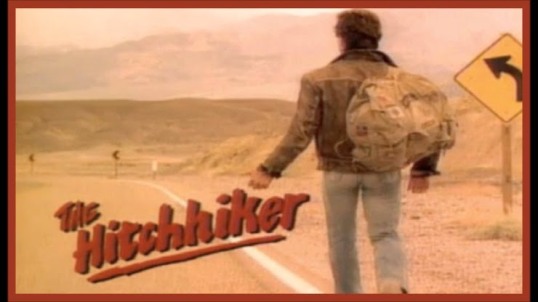
Horror on TV: The Hitchhiker 5.12 “Spinning Wheel” (dir by George Mihalka)


On tonight’s episode of The Hitchhiker, Patti D’Arbanville is perfectly cast Wendy, a performance artist who uses her disturbing nightmares for inspiration and who finds herself losing her grasp on reality.

The episode originally aired on August 5th, 1989.

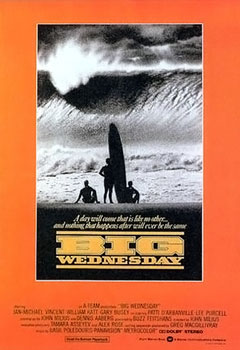
A Movie A Day #165: Big Wednesday (1978, directed by John Milius)


If there is a male bonding hall of fame, Big Wednesday has to be front and center.
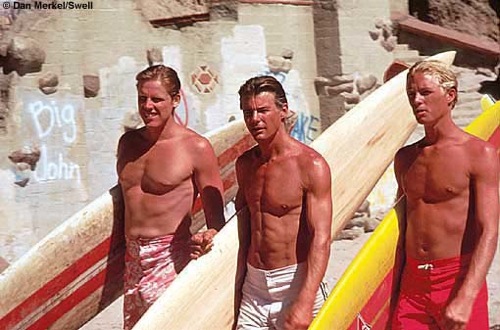
This episodic movie follows three legendary surfers over twelve years of change and turmoil.  Jack Barlowe (William Katt) is the straight arrow who keeps the peace.  Leroy “The Masochist” Smith (Gary Busey) is the wild man.  Matt Johnson (Jan-Michael Vincent) is the best surfer of them all but he resents both his fame and the expectation that he should be some sort of role model for the younger kids on the beach.  From 1962 until 1974, the three of them learn about love and responsibility while dealing with cultural turmoil (including, of course, the Vietnam War) and waiting for that one legendary wave.

After writing the screenplays for Dirty Harry and Apocalypse Now and directing The Wind and The Lion and Dillinger, John Milius finally got to make his dream project.  Big Wednesday was based on Milius’s own youth as a California surfer and he has said that all three of the main characters were based on different aspects of his own personality.  Expectations for Big Wednesday were so high that Milius’s friends, George Lucas and Steven Spielberg, exchanged percentages points for Star Wars and Close Encounters of  The Third Kind for a point of Big Wednesday.  The deal turned out to be worth millions to Milius but nothing to Lucas and Spielberg because Big Wednesday was a notorious box office flop.  Warner Bros. sold the film as a raunchy comedy, leaving audiences surprised to discover that Big Wednesday was actually, in Milius’s words, a “coming-of-age story with Arthurian overtones.”

I can understand why Big Wednesday may not be for everyone but it is one of my favorite movies.  It is one of the ultimate guy films.  Some of the dialogue and the narration may be overwrought but so are most guys, especially when they’re the same age as the surfers in Big Wednesday.  We all like to imagine that we are heroes in some sort of epic adventure.  The surfing footage is amazing but it is not necessary to be a surfer to relate to the film’s coming-of-age story or its celebration of the enduring bonds of friendship.  Katt, Vincent, and Busey all give great performances.  Considering their later careers, it is good that Big Wednesday is around to remind us of what Gary Busey and Jan-Michael Vincent were capable of at their best, before their promising careers were derailed by drugs and mental illness.  Be sure to also keep an eye out for infamous 70s character actor Joe Spinell as an army psychiatrist, a pre-Nightmare on Elm Street Robert Englund, playing a fellow surfer and providing the film’s narration, and Barbara Hale, playing the patient mother of her real-life son, William Katt.

One final note: At a time when the shameful stereotype of the psycho Vietnam vet was becoming popular and unfairly tarnishing the reputation of real-life vets, Big Wednesday was unique for featuring a character who not only joins the Army but who appears to return as a better person as a result.

A Movie A Day #70: Wired (1989, directed by Larry Peerce)


Sometimes, you watch a movie and all you cay say, at the end, is “What the Hell were they thinking?”

Wired is one such movie.  Based on a widely discredited biography by Bob Woodward, Wired tells two stories.  In the first story, John Belushi (Michael Chiklis, making an unfortunate film debut) wakes up in a morgue and is told by his guardian angel that he has died of a drug overdose.  Did I mention that his guardian angel is Puerto Rican cabbie named Angel Vasquez (Ray Sharkey) and Angel drives Belushi through a series of flashbacks?  Belushi meets Dan Aykroyd (Gary Groomes, who looks nothing like Dan Aykroyd).  Belushi gets cast on Saturday Night Live.  Belushi marries Judy (Lucinda Jenney).  Belushi uses drugs, costars in The Blues Brothers, dies of a drug overdose in a sleazy motel, and plays a pinball game to determine whether he’ll go to Heaven or Hell.  While this is going on, Bob Woodward (J.T. Walsh) is interviewing everyone who knew Belushi while he was alive.

There are so many things wrong with Wired that it is hard to know where to even begin.  I haven’t even mentioned the scene where Bob Woodward travels back in time and has a conversation with Belushi while he’s dying on the motel room floor.  Wired tries to be a cautionary tale about getting seduced by fame and drugs but how seriously can anyone take the message of any movie that features Ray Sharkey as a guardian angel?  The scenes with Woodward are strange, mostly because the hero of Watergate is being played by an actor best known for playing sinister villains.  (Seven years after playing Bob Woodward, J.T. Walsh was actually cast as Watergate figure John Ehrlichman in Nixon.)  Considering that this was his first movie, Michael Chiklis is not bad when it comes to playing a drug addict named John but he’s never convincing as John Belushi.  He never captures the mix of charisma and danger that made John Belushi a superstar.  Wired wants to tell the story of Belushi’s downfall but never understands what made him special to begin with.

Wired tries to be edgy but it only succeeds for one split second.  During the filming of The Blues Brothers, a director who is clearly meant to be John Landis walks over to Belushi’s trailer.  Listen carefully, and a helicopter can be heard in the background.

As for the rest of Wired, what the Hell were they thinking?

Back to School Part II #17: The Boys Next Door (dir by Penelope Spheeris)


Boys-next-door

Three years after starring in Grease 2, Maxwell Caulfield starred in another (albeit far different) film about teenage delinquents, 1985’s The Boys Next Door.  Directed by Penelope Spheeris (who also did Suburbia, another film about wayward youth), The Boys Next Door is a frequently harrowing film about a road trip gone very wrong.

The film opens with a series of black-and-white photographs of real-life serial killers, so you know what you’re about to get yourself into before the main action even begins.  Caulfield plays Roy, a not-very-smart teenager who lives in an industrial town in the southwest.  With his generally bad attitude and violent temper, Roy is one of the least popular kids at the local high school.  In fact, his only friend appears to be Bo (Charlie Sheen).  Bo is just as stupid as Roy but he’s not as violent.  Bo’s problem is that he’s a follower, the type who is incapable of making his own decisions.  If Roy says, “Let’s beat the Hell out of someone,” Bo is going to agree because … well, why not?

When Roy and Bo graduate from high school, they don’t have much more to look forward to than a life of working in a factory.  After an angry Roy violently lashes out at a graduation party, he decides that he and Bo should get out of town.  Fortunately, Bo has received $200 as a graduation gift.  Roy and Bo decide to use that money to take a trip to Los Angeles.

On the way to L.A., it quickly becomes obvious that Roy is more than just an angry kid.  When he and Bo rob a gas station, Roy savagely beats the attendant.  When they get to Los Angeles, all Roy can talk about is how much he hates the city and everyone who lives in it.  Roy is especially vocal about how much he hates anyone who he perceives as being gay…

Of course, even as Roy is loudly expressing every homophobic thought that pops into his tiny mind, it’s hard not to notice that he seems to be rather obsessed with Bo.  In fact, he is so obsessed with Bo that he basically kills anyone who shows the least bit of interest in Bo.  Paranoid that Bo is going to abandon him, Roy is willing to do anything to keep that from happening.

The Boys Next Door is one of those films that really took me by surprise.  It may start and look like your typical low-budget thriller but The Boys Next Door ultimately reveals itself to be a disturbingly plausible portrait of a sociopath.  The film suggests that, as individuals, both Roy and Bo are somewhat laughable but, as a team, they’re deadly.  It’s no wonder that Roy is so insistent that Bo always stay with him because, without Bo around, Roy wouldn’t have any motivation to do anything.  Everything that Roy does — from theft to murder — is largely to impress Bo.  Unfortunately, Bo is too stupid to understand what’s going on in his friend’s head.

Especially when compared to some of the other performances that they are known for, both Sheen and Caulfield do surprisingly good work as the two murderers.  Penelope Spheeris wisely directs the film as if it were a documentary and the end result is a harrowing film that deserves to be far better known.

Embracing the Melodrama Part II #62: Time After Time (dir by Nicholas Meyer)


TimeAfterTime79So, I just gave the 1979 film Home Before Midnight a fairly negative review but I simply cannot end the 70s section of Embracing the Melodrama on such a negative note!  So, before we move on to the 80s, allow me to suggest another film from 1979 that you could watch while you’re not watching Home Before Midnight!

Time After Time opens in London.  The year is 1893.  Writer H.G. Wells (Malcolm McDowell) is having a dinner party so that he can show off his latest invention, a time machine.  Among his guests is a surgeon named John Stevenson (David Warner).  What nobody at the party suspects is that Stevenson also goes by the name Jack the Ripper and that he enjoys killing prostitutes.  When a detective from Scotland Yard shows up at Wells’s home, Stevenson jumps into the time machine and escapes into the future.  Since Stevenson does not have the “non-return key,” the machine returns back to 1893 but Stevenson has apparently escaped.

Wells uses the machine to pursue Stevenson and soon finds himself in 1979 San Francisco.  Wells had expected to find that the future would be a utopia but instead, he discovers the world of 1979 is loud, polluted, violent, angry, and dangerous.  (Kinda like the world of 2015…)  As Wells pursues Stevenson, he struggles to adjust to the world of the “future,” and he also meets a bank clerk, Amy Robbins (Mary Steenburgen).

Time After Time is probably the sweetest movie ever made about Jack the Ripper and that’s largely because of the romance between both Wells and Amy and the two actors who played them.  After watching Time After Time, I was not surprised to learn that McDowell and Steenburgen got married shortly after appearing in this film.  They were so incredibly sweet together!

Add to that, considering the he’s best known for playing villains and other menacing types, it’s interesting to see Malcolm McDowell plays such a gentle and nice character.  Wells’ befuddlement is charming to watch.  There’s a great scene where Amy calls Wells on a landline phone and Wells stares down at the receiver in frightened amazement.

Time After Time is a really good and likable movie.  It’s sweet and it proves that even hunting for Jack the Ripper can be a romantic experience if it’s done with the right person.  Watch it and enjoy!