Guilty Pleasure #88: Lifeforce (dir. by Tobe Hooper)


Hey, hey, wait just one second. Lifeforce is a movie everyone treasures. Here’s Arleigh’s take on the film. Check that out first and then double back here if you like.

Lifeforce (1985, dir by Tobe Hooper)

Tobe Hooper’s Lifeforce is one of those films that had a lot of play in my Grandmother’s house, primarily because of my younger Aunt, Puddin. Puddin was the other movie lover on my Dad’s side of the family, the youngest of his generation. While she couldn’t fully make the connections between actors or directors the way my father could, she loved films all the same. With films like Marnie, West Side Story, Conan the Barbarbian, she spent most of her free time immersed in movies. If you wanted to see her swoon, mention Sean Connery, Tyrone Power or Arnold Schwarzenegger in her presence. She had a habit of using movies she watched often as white noise when cleaning around the house. As a result, we saw Lifeforce a lot growing up. She adored the film mainly because the two heroes in it barely made any mistakes, but most importantly for Henry Mancini’s score. Besides, It’s a Cannon film. You know it’s good. 

Lifeforce is the story of one of the greatest buddy pairings in of the 1980s. Yeah, Beck and Gallagher did awesome stuff in The Hidden. Riggs and Murtaugh solved the cases no matter how thin the leads were, and even with all his technology, Alex Murphy still needed Lewis for backup. These all pale in comparison to Lifeforce‘s Colonel Carlsen (Steve Railsback, Helter Skelter) and Colonel Caine (Peter Firth, The Hunt for Red October). The two characters’ laser focus and quick thinking help to keep the film moving, despite how crazy things can and do get. They also manage to have each other’s back in nearly every situation. They aren’t without troubles, however. Poor Carlsen is plagued with nightmares of making out with naked space vampires. 

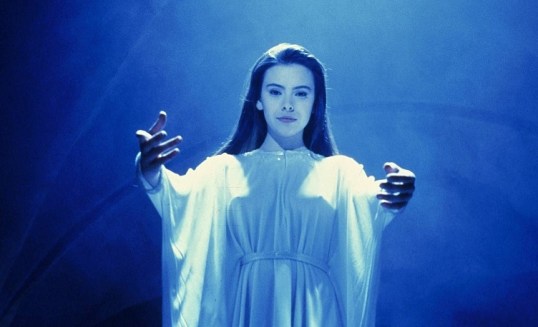
Halley’s Comet returns close to Earth. With it comes an incredibly large umbrella shaped ship that is discovered by the crew of the Churchill. Col. Carlsen, along with the other astronauts, find a series of sleeping humanoid bodies inside and bring 3 (two males and one female) on board. When the Churchill’s signal is lost, the Columbia is sent out to retrieve them. The crew is lost, Carlsen is missing, but the 3 alien bodies are brought back home to Earth for study. This goes about as well as one would hope, with the Space Girl (Mathilda May, Becoming Collette) waking up and causing havoc throughout the local Space Institute before walking away naked, into the night. Anyone she comes into contact with and kisses becomes an energy vampire, requiring a transfusion, else they shrivel and turn into dust. 

Since we’re dealing with space vampires, I should inform you now that there’s quite a bit of nudity and maybe just a wee bit of sexual tension in Lifeforce. The lines between Rabid and Showgirls comes kind of close in all this. When Carlsen forces a possible suspect to divulge the location of the Space Girl, slapping her up a bit, he tells Caine he should leave. Caine’s response is that he’s “a natural voyeur”. Does much of it make sense? No. Was it entertaining? Sure. The third act of Lifeforce is the best part, with all of London just a mess. Despite all this, Carlsen & Caine split up to save the day. 

The cast for the film is nice. In addition to Railsback and Firth, we’ve got a Dune crossover with both Freddie Jones and Patrick Stewart on hand. We also have a small cameo with Dragonslayer’s John Hallam as a nurse. The best role other than the leads go to Frank Finlay and to Mathilda May. Finley’s Doctor Fallada is kind of a Van Helsing like character, piecing together all of the clues so our heroes can take the proper action. May, though she’s not given a lot to say (or to wear, for that matter) makes for an impressive villain that talks with her eyes.

The effects for Lifeforce came by way of John Dykstra, who worked on Firefox and The Empire Strikes Back. He’d later go on to work on Invaders From Mars for Hooper. Musically, Henry Mancini’s score helps to carry the film along. Honestly, I’ve only ever known him from the Pink Panther scores, so I quite enjoyed it. I always let the end credits play through for the music. Overall, Lifeforce is a great watch if vampires are your thing and nudity isn’t too much of a problem. In my mind, The Adventures of Carlsen & Caine would rival some of the best supernatural tales.

In examining this, I also found that there are some connections between this and Hammer Films’ Five Million Years to Earth (a.k.a. Quatermass and the Pit). I’m still on the look out for that one. 

In Tobe Hooper’s Lifeforce, Col. Carlsen & Col. Caine aren’t playing around.

Previous Guilty Pleasures

  1. Half-Baked
  2. Save The Last Dance
  3. Every Rose Has Its Thorns
  4. The Jeremy Kyle Show
  5. Invasion USA
  6. The Golden Child
  7. Final Destination 2
  8. Paparazzi
  9. The Principal
  10. The Substitute
  11. Terror In The Family
  12. Pandorum
  13. Lambada
  14. Fear
  15. Cocktail
  16. Keep Off The Grass
  17. Girls, Girls, Girls
  18. Class
  19. Tart
  20. King Kong vs. Godzilla
  21. Hawk the Slayer
  22. Battle Beyond the Stars
  23. Meridian
  24. Walk of Shame
  25. From Justin To Kelly
  26. Project Greenlight
  27. Sex Decoy: Love Stings
  28. Swimfan
  29. On the Line
  30. Wolfen
  31. Hail Caesar!
  32. It’s So Cold In The D
  33. In the Mix
  34. Healed By Grace
  35. Valley of the Dolls
  36. The Legend of Billie Jean
  37. Death Wish
  38. Shipping Wars
  39. Ghost Whisperer
  40. Parking Wars
  41. The Dead Are After Me
  42. Harper’s Island
  43. The Resurrection of Gavin Stone
  44. Paranormal State
  45. Utopia
  46. Bar Rescue
  47. The Powers of Matthew Star
  48. Spiker
  49. Heavenly Bodies
  50. Maid in Manhattan
  51. Rage and Honor
  52. Saved By The Bell 3. 21 “No Hope With Dope”
  53. Happy Gilmore
  54. Solarbabies
  55. The Dawn of Correction
  56. Once You Understand
  57. The Voyeurs 
  58. Robot Jox
  59. Teen Wolf
  60. The Running Man
  61. Double Dragon
  62. Backtrack
  63. Julie and Jack
  64. Karate Warrior
  65. Invaders From Mars
  66. Cloverfield
  67. Aerobicide 
  68. Blood Harvest
  69. Shocking Dark
  70. Face The Truth
  71. Submerged
  72. The Canyons
  73. Days of Thunder
  74. Van Helsing
  75. The Night Comes for Us
  76. Code of Silence
  77. Captain Ron
  78. Armageddon
  79. Kate’s Secret
  80. Point Break
  81. The Replacements
  82. The Shadow
  83. Meteor
  84. Last Action Hero
  85. Attack of the Killer Tomatoes
  86. The Horror at 37,000 Feet
  87. The ‘Burbs

To Boldly Go Where No Man Has Gone Before: Re-Watching The Star Trek Films


59 years ago today, the first episode of Star Trek aired in America.

There’s been a lot of different Star Trek shows and crews over the decades.  I have to admit that I’ve always preferred the Original Series, with Kirk sleeping with every alien he met, McCoy and Spock bickering about logic, and Scotty warning that the engines can’t take much more.  The Next Generation was strong as well, especially in the later seasons.  The subsequent series have been hit-and-miss for me.

I was born long after the Original Series went off the air so, like a lot of people, my real introduction to Star Trek came through watching the films.  This weekend, I sat down and watched all fourteen of the Star Trek films in order, from The Motion Picture to Section 31.  Here are my thoughts.

Star Trek: The Motion Picture (1979, directed by Robert Wise)

In the first Star Trek film, Voyager returns to Earth, now known as V’ger.  James T. Kirk (William Shatner) returns to the Enterprise with his old crew and takes command from Decker (Stephen Collins).  Spock (Leonard Nimoy) returns from Vulcan is not happy about it.

Directed by Robert Wise, the first Star Trek film feels out-of-place amongst the films that followed it.  It’s long and slowly paced and it doesn’t have the sense of humor that runs through the best of the films featuring the original cast.  The film favors Kirk and Spock, with the rest of the original cast being largely used as bit players.  Even the costumes are different from the uniforms worn in the later films, making Star Trek: The Motion Picture feel like an entry from an alternate universe.

Despite mixed review, Star Trek: The Motion Picture made the most money of any of the pre-reboot films at the box office.  Because the film itself was so expensive, it was still judged to be a box office disappointment.  The Star Trek films would continue but in a new direction.

Star Trek II: The Wrath of Khan (1982, directed by Nicholas Meyer)

Featuring a character-driven script, exciting action, the best villain in the history of the franchise, and an ending that will bring tears to the eyes of the most cynical viewer, The Wrath of Khan is the film that set the standard for the Star Trek films that would follow.

Ricardo Montalban, recreating a character that he originally played in the television series, is a compelling villain as the vengeance-driven Khan.  Montalban and William Shatner make for perfect rivals, two sides of the same coin.  At the same time, the other members of the original cast all get their moments to shine, especially Walter Koenig as Chekhov.  Kirstie Alley is the sexist Vulcan to ever appear in the franchise and even the revelation that Kirk has a son is handled effectively.  Kirstie Alley, Bibi Besch, and Merritt Butrick all fit in with the original crew.

But the thing everyone remembers about The Wrath of Khan is the death of Spock.  Even though the movie features plenty of hints that Spock will return (including his command of “Remember” to McCoy), it’s impossible not to get emotional when Spock sacrifices himself for the crew.  “I have always been your friend.”  To quote George Costanza, that was hell of a thing when Spock died.  In that scene, Leonard Nimoy shows that he was the (logical) heart of the franchise.  Just as Spock brought out the best in the rest of the crew, Nimoy brought out the best in his co-stars.  Shatner was never better than when he was mourning Spock.

Star Trek III: The Search For Spock (1984, directed by Leonard Nimoy)

Spock’s back!  It’s not a surprise.  I think everyone knew, at the end of Wrath of Khan, that the Genesis Project would bring back Spock.  Star Trek III isn’t bad.  Christopher Lloyd reminds us of how brutal the Klingons were before their Next Generation makeover.  The self-destruction of the Enterprise is a powerful moment.  I just wish that a film about Spock being given a new life hadn’t featured so much death.  Both the revelation that David Marcus tampered with the Genesis Project and his subsequent death feel like missteps.  Robin Curtis takes over the role of Saavik and Kirstie Alley is very much missed.  DeForest Kelley playing McCoy possessed by Spock was, for me, the highlight of the film.

Star Trek IV: The Voyage Home (1986, directed by Leonard Nimoy)

Returning home after rescuing Spock from the Genesis Planet, the Enterprise crew is instead sent back into the past so that they can bring two whales into the future.  The Voyage Home might not be the best Star Trek film (that honor belongs to Wrath of Khan) but it is the most likable and the most entertaining.  Every member of the cast gets something to do in 20th Century San Francisco.  The film is full of classic moments, from Chekhov looking for the “nuclear wessels” to Scotty trying to speak to the computer.  The moment with the punk on the bus is a crowd-pleaser.  I always laugh at Spock’s “One damn minute, Admiral.”  After the violence in The Search for Spock, The Voyage Home‘s humor, gentle sincerity, and emphasis on the efforts of the entire ensemble is a welcome development.

Star Trek V: The Final Frontier (1989, directed by William Shatner)

Leonard Nimoy got his chance to shine as the director of the previous two Star Trek films so William Shatner was allowed to direct The Final Frontier.  The Enterprise crew is brainwashed by a religious fanatic (Laurence Luckinbill) who is also, improbably, Spock’s brother.  Only Kirk is able to resist and confront the entity claiming to be God.  “What does God need with a starship!?”  Kirk demands.  It’s such an obvious question that I can’t believe the entity didn’t already have an answer worked out.

The Final Frontier gets no respect and it was probably doomed as soon as Shatner was announced as director.  Shatner also developed the story and it’s probably not surprising that the main theme is that Kirk was the only person on the Enterprise strong enough to not be brainwashed by the film’s fake God.  Laurence Luckinbill gave a good performance as Sybok but this film really does feel like an unfortunate episode of the original television series.

Star Trek VI: The Undiscovered Country (1991, directed by Nicholas Meyer)

Star Trek VI featured the final appearance of the Original Series cast as a group and they get a send-off worthy of their legacy.  Having been previously established as the Federation’s greatest enemies, the Klingons finally pursue peace.  Just as only Nixon could go to China, only Kirk and the original Enterprise crew can go to the Klingons.  This movie is what Star Trek was all about, with enough world-building and continuity for the hardcore fans and a story that was interesting enough to hold the attention of the casual viewers.  By featuring the start of the era of peace between the Federation and the Klingons, this film also filled in some of the Next Generation‘s backstory.  The Final Frontier was meant to be the final Star Trek film featuring any of the original cast and it would have been the perfect entry for Captain Kirk to go out on.  Unfortunately, that didn’t happen.

Star Trek Generations (1994, directed by David Cason)

William Shatner meets Patrick Stewart as one Star Trek crew passes the torch to the new Star Trek crew.  Malcolm McDowell is the latest villain with an ill-defined plan.  Picard and Kirk team up to stop McDowell’s villain.  They succeed but at the cost of Kirk’s life.  As opposed to Spock’s death in Wrath of Khan, Kirk’s death feels pointless and tacked on for no reason other than to signify the arrival of The Next Generation to the films.  Seeing Shatner and Stewart together is interesting.  Stewart may have been the better actor but Shatner still dominates their scenes together.  Not giving Kirk a better send-off was one of the franchise’s biggest sins.

Star Trek: First Contact (1996, directed by Jonathan Frakes)

After the disappointing Generations, Picard and his crew finally got a film worthy of them with First Contact.  Not only do the Borg return but the crew goes back into their past and experience a key date in the history of the Federation.  After being outshone by Shatner in Generations, Patrick Stewart takes control in this film, giving a multi-layered and commanding performance that still gives the rest of the cast room to shine.  Director Jonathan Frakes not only handles the action well but he also shows that he understands what makes the characters click.  This was, without a doubt, the best of the Next Generation films and one the best of the Star Trek films overall.

Star Trek: Insurrection (1998, directed by Jonathan Frakes)

Entertaining but forgettable, Insurrection features Picard pulling a Kirk and defying orders from from a superior officer (played by Anthony Zerbe) and going out of his way to save Data from being decommissioned.  Insurrection feels like an extended episodes of the Next Generation television series and lacks the epic scale of First Contact.  Under the direction of Jonathan Frakes, the ensemble is strong and watching them interact feels like spending time with a group of old friends.  F. Murray Abraham and Anthony Zerbe make for effective villains.

Star Trek: Nemesis (2002, directed by Stuart Baird)

Just as the Original Series crew sought peace with the Klingons in The Undiscovered Country, the final Next Generation film finds Picard, Riker, and the rest seeking peace with the Romulan Empire.  Tom Hardy plays a clone of Picard who is now the leader of the Romulans.  Data sacrifices himself in a move that tries too hard to duplicate the death of Spock.  Picard retires.  Director Stuart Baird emphasizes action over the chemistry of the Next Generation cast and the end result is a disappointing finale that left critics and audiences underwhelmed.

Star Trek (2009, directed by J.J. Abrams)

I think people forget about what a big deal this Star Trek reboot was when it first came out.  Today, people focus on things like Kirk being a Beastie Boys fan and they forget how exciting it was to see Chris Pine, Zachary Quinto, Karl Urban, Simon Pegg, Anton Yelchin, John Cho, and Zoe Saldana all effortlessly stepping into the roles of the younger versions of the original cast.  The storyline is predictable and Eric Bana’s a bland villain but the scenes between Leonard Nimoy and Zachary Quinto were a reminder of how important Spock was and is to Star Trek.

Star Trek wasn’t perfect, of course.  In retrospect, I think creating an alternate timeline was a mistake because it created a situation where, even if someone died, it was just an alternate version dying and not the version that audiences knew and cared about.  The alternate timeline would also lead to one of the biggest missteps in the history of the franchise.

Star Trek Into The Darkness (2013, directed by J.J. Abrams)

After the surprising success, both critically and commercially, of his Star Trek reboot, J.J. Abrams. Robert Orci, Alex Kurtzman, and Damon Lindelof wasted most of that good will by messing around with one of the franchise’s most memorable characters.

There are some good things to be said about Star Trek Into The Darkness.  I like the action sequences and the climatic battle in the film’s futuristic version of San Francisco.  But casting Benedict Cumberbatch, of all people, as Khan is a misstep that can’t be overcome.  That the movie brought back Khan instead of exploring “strange new worlds” exposed the weakness of Abrams entire reboot.  For all the hype, did the Star Trek reboot actually have anything new or original to offer?  The answer here seemed to be no.

Star Trek Beyond (2016, directed by Justin Linn)

The final (for now) Star Trek theatrical film featured a memorable villain in the form of Idris Elba and a plot that felt like it could have just as easily been an episode of the original series.  In retrospect, the film is mostly memorable for featuring the announcement of the death of Ambassador Spock.  (The film was released a year after the death of Leonard Nimoy.)  The death of Spock, this time with no Genesis Project around to bring him back, makes this installment feel like right place to end the films.  For many of us, Nimoy was Star Trek.

Stark Trek: Section 31 (2025, directed by Olatunde Osunsanmi)

Though there have been many subsequent televisions shows, there hasn’t been a Star Trek theatrical release since 2016.  The next installment has been in pre-production limbo for nearly ten years.  (Quentin Tarantino was supposedly attached at one time.)  Instead of coming to theaters, the latest Star Trek movie came to Paramount Plus.

I debated whether or not to include Section 31 in this list, both because it was a “made-for-TV” movie and also because it was so bad that I think most Star Trek fans would rather forget about it.  A mediocre heist film that wastes star Michelle Yeoh and which doesn’t feel like it belongs in the Star Trek universe, Section 31 may still represent the way forward for the franchise.  With theaters having never recovered from the COVID shut-downs and more and more people preferring to stream their entertainment at home, the future of the Star Trek films could very well be a collection of assembly line Paramount Plus movies.

Finally, Case turned me onto this short film:

765874: Unification (2024, directed by Carlos Baena)

A collaboration between Otoy, a VFX company, and The Roddenberry Archive, with support from Paramount, 765874: Unification is a 10-minute short film that imagines Kirk meeting Spock in the afterlife.  Shatner returns as Kirk, de-aged with CGI.  Just as Kirk and Spock were friends in the film, the same was true of Shatner and Nimoy in real life.  (You only have to compare Nimoy’s comments about Shatner with George Takei’s endlessly bitter takes to see what true class actually is.)  This short film gives both characters the finale that they deserved.

It’s possible that we may never see another true Star Trek film.  Most of the original cast is gone now.  Patrick Stewart will always be Picard but even he is now approaching 90.  But whatever the future may hold, I’m happy for the films that Star Trek gave us.

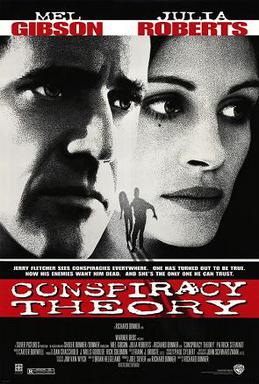
Conspiracy Theory (1997, directed by Richard Donner)


Jerry (Mel Gibson) is the taxi driver that most people would dread getting stuck with.  He’s obsessed with conspiracies, ranting and raving as he drives his passengers around New York City.  The moon landing was fake, he says.  The New World Order is real.  Fluoridation in mind control.  Freemasons control the world.  Black helicopters patrol the skies.  Implausibly, Justice Department lawyer Alice Sutton (Julia Roberts) enjoys listening to Jerry’s paranoid monologues but she finds them to be a lot less amusing when they turn out to be true.  Soon, she and Jerry are being pursued by Dr. Jonas (Patrick Stewart), the head of MK-Ultra and the man who bred Jerry to eventually become an assassin.

Conspiracy Theory has a good premise and a great Mel Gibson performance and Patrick Stewart is entertaining as the main bad guy.  Though it really is just a slightly above average 90s action film, Conspiracy Theory is still a movie that seems prophetic.  Many of Jerry’s theories were obscure and not well-known when the movie was first released, nearly 30 years ago.  Today, a lot of them have been popularized by social media and podcasts.  Conspiracies have gone mainstream.  Jerry would love listening to Joe Rogan today.  In fact, Jerry would probably have a podcast of his own.  Because the movie was released in 1997, a lot of the things that Jerry talks about feel quaint and almost old-fashioned when you compare them to what Jerry would be ranting about today.  Compared to today’s anti-vaxxers and 9-11 truthers, Jerry’s fear of the black helicopters seems harmless.  Or, at least, it does until the black helicopters suddenly show up in the middle of a chase scene, nearly invisible in the night sky.

Conspiracy Theory can’t really hold up to Richard Donner’s best films.  There aren’t as many memorable lines as in Lethal Weapon and it never finds the same balance between kitsch and art that Donner was able to find with both The Omen and Superman.  Donner still gets some good moments, like the opening montage where Jerry scares the Hell out of a yuppie passenger played by Alex McArthur.  I wish Conspiracy Theory had followed its premise through to its natural conclusion instead of having Jerry suddenly turn into what was then a typical Mel Gibson action hero.  (Today, of course, it would probably be much easier for audiences to accept the idea of Gibson playing a mentally ill, paranoid conspiracy theorist.)  Overall, though, both the movie and the theories hold your interest.


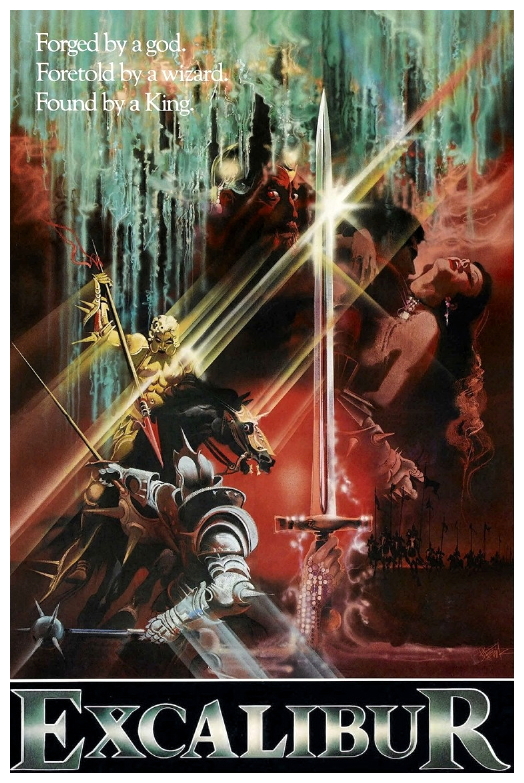
Excalibur (1981, directed by John Boorman)


During the Dark Ages, Britain is at war.  King Uther Pendragon (Gabriel Byrne) leads his men against The Duke of Cornwall (Corin Redgrave).  Uther and his men swear their allegiance to God and St. George but they trust in the magic of the mysterious Merlin (Nicol Williamson).

Merlin negotiates peace between Uther and Cornwall but Uther throws that peace away when he becomes obsessed with Cornwall’s beautiful wife, Igrayne (Katrine Boorman).  Merlin uses his magic to disguise Uther as Cornwall so that Uther can spend one night with Igrayne.  When Cornwall is killed in battle, Uther marries Igrayne and realizes it was never necesarry to use Merlin’s magic and that Merlin, who has the power to see the future, knew that.  Merlin takes Uther and Igrayne’s infant son from them and then disappears.  Later, Uther is killed by by three of Cornwall’s men.  Before dying, Uther drives his magic sword, Excalibur, into a stone.  On the true king of England will be able to remove it.

Uther’s son, Arthur (Nigel Terry), grows up with no knowledge about his parentage.  When he accidentally draws Excalibur out of the rock, Merlin returns to counsel the new king.  And the new king has much to learn, as not all of the nobleman are willing to accept him as their ruler.  Arthur proves himself worthy to be king while his half-sister, Morgan (Helen Mirren), waits for her chance to get revenge.

Excalibur is one of the most ambitious films made about King Arthur.  John Boorman fits the entire legend of Arthur, Lancelot (Nicholas Clay), Percevel (Paul Geoffrey), Guinevere (Cherie Lunghi), and the search for the Holy Grail into one movie and, as a result, there’s not a dull moment.  Boorman presents the reign of King Arthur as a conflict between England’s pagan past and the new era of man.  Merlin and Morgan’s magic is powerful but, in the end, power is determined by bloody battles fought by men encased in clunky armor.  Arthur, Lancelot, and the other knights claim to live by the honorable, chivalric code but only one of them is able to live up to the ideal.  The others become consumed by lust, jealousy, and a thirst for power.

In my opinion, Excalibur is the best movie made about King Arthur, mostly because John Boorman takes the story seriously and makes us feel like we are watching people who truly are living in different world and a different time.  The chivalric code is necessary to keep the peace in a time when there are multiple pretenders-to-throne.  Mordred (Robert Addie) is not just a villain because he seeks to overthrow his father but also because he is the one person to have no respect for the code or the mystic power of the Holy Grail.

Excalibur has a large cast with many familiar faces.  Keep an eye out for Patrick Stewart as one of Arthur’s earliest supporters and also Liam Neeson as a surly Sir Gawain.  Of all the Lancelots who have appeared in the movies, Nicolas Clay is the best and Helen Mirren is the perfect Morgan.  Nicol Williamson steals the movie as the mysterious Merlin.  And while Nigel Terry was too old for the scenes where Arthur is supposed to be a callow teenager, he grows into the role just as Arthur grew into being king of the Britons.

Monty Python and The Holy Grail will always make me laugh but John Boorman’s big, beautiful, and bloody Excalibur is the best film about Camelot.

Charlie’s Angels (2019, dir. by Elizabeth Banks)


In the latest version of Charlie’s Angels, the Angels have become an elite force of international super spies and there are now hundreds of Angels instead of just three.  There’s also more than one Bosley as this movie establishes that Bosley is actually a codename that’s given to Charlie’s lieutenants.  Djimon Hounsou is a Bosley and Patrick Stewart is a Bosely and Elizabeth Banks is a Bosley.

Two Angels, Sabina (Kristen Stewart) and Jane (Ella Balinska), are assigned to protect a corporate whistleblower named Elena (Naomi Scott) because Elena has discovered that Callisto, a renewable energy device, can also be used to trigger fatal seizures in selected targets.  When an assassin attempts to take out Elena, he kills one of the Bosleys and Elena becomes an Angel.  What I don’t get is why the assassin would try to shoot Elena in public when he could have just used the Callisto device to give her a seizure.

I wanted to like Charlie’s Angels because “Girl power!” but I got bored pretty quickly.  All of the action scenes were done better in the last Mission Impossible and most of the jokes fell flat.  Too much of the humor was built around someone saying something awkward and then everyone else standing around with a confused look on their face.  For a movie that’s supposedly about celebrating girl power, I noticed that the Angels made a lot of stupid mistakes.  It also bothered me that we were expected to laugh when an innocent security guard was killed by the Callisto but it was supposed to be a big emotional moment when one of the Bosleys died.  It’s also supposed to be a big emotional moment when Jane thanks Sabina for teaching her that it’s okay to work with other people but since Jane never seemed like she had a problem working with other people, I wasn’t sure what she was talking about or why I should care.

Elena learns how to stick up for herself, Jane learns how to trust other people, and Sabina doesn’t learn anything but at least Kristen Stewart finally gets to smile.  None of them can hold a candle to Drew Barrymore, Cameron Diaz, and Lucy Liu in the first Charlie’s Angels movie, which was both fun and empowering.  This new version just can’t compete.

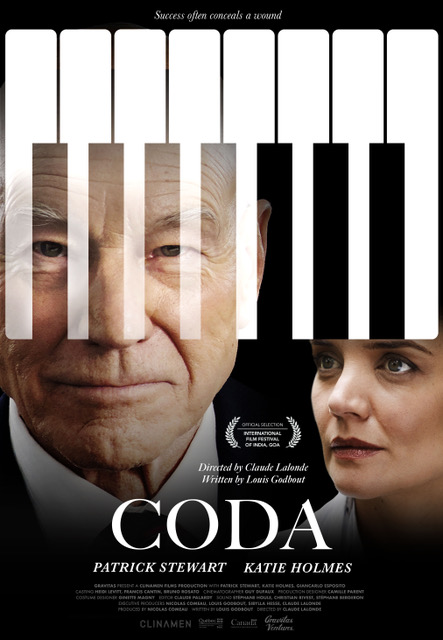
The Films of 2020: Coda (dir by Claude LaLonde)


Coda tells the story of Sir Henry Cole and Helen Morrison.

Sir Henry (Patrick Stewart) is a world-famous pianist who hasn’t played in public since his wife died several years ago.  He’s about to embark on a comeback tour but he finds himself struggling with stage fright.  Some of it is because he still hasn’t recovered from the loss of his wife.  Some of it is because he’s getting older and his memory is no longer as good as it used to be.  And, a lot of it is because he doesn’t know who he can trust.  He fears that the only reason people will come to his recitals is because they want to hear him screw up.

Helen Morrison (Katie Holmes) is a former music student who is now a writer for The New Yorker.  She is a free spirit who desperately wants to interview Sir Henry and write a profile of him.  She is also the film’s narrator, which means that the film opens with her talking about Nietzsche.  That’s never a good sign as Nietzsche is the philosopher who is most likely to be quoted by people who are trying to sounds smart by pretending that they spend their spare time studying philosophy.

I’m tempted to say that Henry and Helen solve crimes but sadly, they don’t.  The film probably would have been a lot more fun if they had.  Instead, Henry struggles to find his confidence and Helen struggles to help Henry find his confidence and there’s a lot of scenes of Henry trying to play the notes while Helen stares off into the distance.  Eventually, it leads to a very mild love story and a few scenes of a bearded Henry walking through the Swiss Alps.  The Alps, as always, are quite impressive.

(I visited Switzerland the summer after I graduated high school.  Beautiful country but don’t even think about trying to leave dinner early.)

This is one of those films that I wanted to like more than I actually did.  I mean, it’s a serious-minded film for adults and there’s no explosions or gunfights and we’re all supposed to be in favor of that, right?  Add to that, it features Patrick Stewart doing what Patrick Stewart does best, revealing the inner humanity of a somewhat imposing character.  And make no mistake about it, Stewart gives a warm and likable performance in the lead role.  It’s impossible not to empathize with Henry when he finds himself staring down at his piano and wondering if he’ll ever again be able to use it to create beautiful music.

But, ultimately, the film doesn’t really work.  It’s a bit too slowly paced and the dialogue is full of lines that are meant to be profound but actually feel rather empty.  Katie Holmes does her best but Helen never feels like a fully-realized character.  For the most part, she’s just there to inspire Henry before vanishing from the movie.  Fortunately, once Helen’s gone, other characters show up to continue to inspire Henry.  It really does seem like a full-time job, keeping Henry inspired.

The film did improve a bit when Henry arrived in the Alps, largely because the Alps are lovely and there’s a scene where Henry has a dream about standing next to Beethoven while staring over the edge of a cliff.  The imagery was breath-taking but it’s not enough to save the movie.  That said, if anyone ever makes a documentary about Patrick Stewart hiking through Switzerland, I’ll be the first to watch it.


A Scene That I Love: “The Sword Has Been Drawn” from John Boorman’s Excalibur (1981)


Today is the 87th birthday of director John Boorman.

A former journalist and documentarian, Boorman got his start as a feature film director in 1965 when he was offered the chance to direct Catch Us If You Can, an enjoyable take on A Hard Day’s Night that starred the Dave Clark Five.  Boorman went on to establish himself as one of the most idiosyncratic and unique directors working in the British film industry.  Among the films that Boorman would direct: Zardoz, Deliverance, Point Blank, The General, Hope and Glory, and The Emerald Forest.  Among the films that Boorman was offered but turned down: The Exorcist, Fatal Attraction, Rocky, and Sharky’s Machine.  Few directors can claim a filmography as varied and unique as John Boorman’s.

During the 70s, Boorman made an unsuccessful attempt to put together a film version of Lord of the Rings.  Boorman intended to tell the entire story in just one film but he couldn’t find financial backing for his epic vision.  So, instead, Boorman directed Excalibur, an film about King Arthur which, thematically, has as much in common with Tolkein as it does with Malory.

Starring Nigel Terry, Nicol Williamson, Helen Mirren, Patrick Stewart, Gabriel Byrne, and Liam Neeson, Excalibur is my personal favorite of the many cinematic adaptations of the Arthurian legend.  (I like it even more than Monty Python and the Holy Grail, though it’s a close race.)  In the scene below, Arthur (Nigel Terry) first removes Excalibur from the stone.  By removing the sword, Arthur confirms that it his destiny to bring “the Land,” (as Britain is referred to as being in Excalibur) together.  Not everyone is convinced but Leondegrance knows a king when he sees on.  (That’s not surprising, considering that he’s played by Patrick Stewart.)

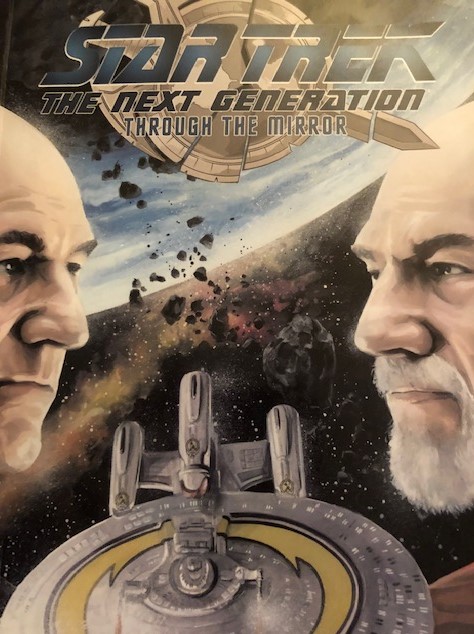
Star Trek: The Next Generation, Through The Mirror, Review by Case Wright


mu11.jpg

Happy Horrorthon!!! We are back in the eeeeeeeeevil Star Trek universe! Why is it evil? Obviously, it’s because they have beards and follow strict capitalist principles with a healthy dose of militarism.

Before I get into the story, I want to write that David and Scott Tipton do a good job of not having the mirror universe characters seeing themselves as villains.  This may seem obvious, but it’s actually very common – especially in comics.  For example, Stan Lee once had Magneto lead a group of mutants with the moniker of Brotherhood of Evil Mutants.  I get that the X-Men thought they were evil, but why would Magneto?

This volume: Through the Mirror brings our Mirror Universe to the Next Generation universe our youth for supplies and plunder.  Bearded Picard is faced with blockades from rival species in his universe and needs materiel and plunder to fuel his war machine in order to bring the Terran Empire back to its former glory before Emperor Spock made them go all drum-circle kumbaya…bleh.

My main complaint with the Volume Two is actually in the first installment.  It opens with Worf investigating the theft of precious minerals from a mining colony in the “good universe”.  He sees the thief and nearly catches him.  This is a recurring issue with volume 2; the story should be only from the perspective of the mirror universe characters.  There is simply too much of the “good universe”.  They also have the “Good Universe” find an Andorian Ship that has been attacked by Evil Picard after the fact.  WHY?  Show us the Evil Planning, Show us the Pirate Picard attack, Show us why they believe they are justified.  We bought the book; therefore, we are invested in these anti-heroes.   The story could be great if we just get to bathe in their villany.  Don’t judge them.  This is their code.  This is their society.  They don’t see themselves as evil and neither should we.  We can only judge them as evil if they violate their own code of morality not ours.  This isn’t our universe.  The good universe should be treated like MSG a little is … ok… too much and you vomit.

Back to the story, Pirate Picard lures the good enterprise into a trap, hoping to seize it.  They fail, but they failed too much.  It should’ve been more of a draw with a push to the evil universe. Scott and David – the evil guys are your heroes.  They need to win at least a bit.  You can have a close game, but don’t have them get their ass kicked because it makes it too much of a Good Next Gen story.  The other knock is that they left Evil Barclay behind, dragging us back unnecessarily into the good universe.  You are thwarting them waaaaay too much.

It’s time for Evil Picard to kick some ass, but it in a good way.  Is it just for wealth for Pirate Picard?  I don’t think so.  In this universe, the Terrans see themselves as Superior like the British or Roman Empire.  Therefore, when the Klingons and Cardassians took back a lot of the Empire they likely took many Human captives as slaves.  This must be disgustingly unacceptable to Pirate Picard or any Terran Empire member.  Have them liberate a planet, rescuing Human captives.  From their perspective, they are not only NOT EVIL, but good because they are reasserting rightful human dominance to their universe.   If you have to, make some propaganda posters with Pirate Picard.  Make it personal for Pirate Picard.  Maybe Picard’s brother joined the fleet and was captured?  Make it personal! Go for it!  Have Pirate Picard risk it all: mutiny, the ship, the Terran Empire to liberate and rescue his brother and nephew Robert.  It would be epic!!!!! You have an unending depth that you can give Pirate Picard.  Give him his version of humanity.

This volume was ok, but they are not fulfilling some great story potential here.   This could be a great way to reboot the series.  Just remember: They Don’t Consider Themselves Evil.


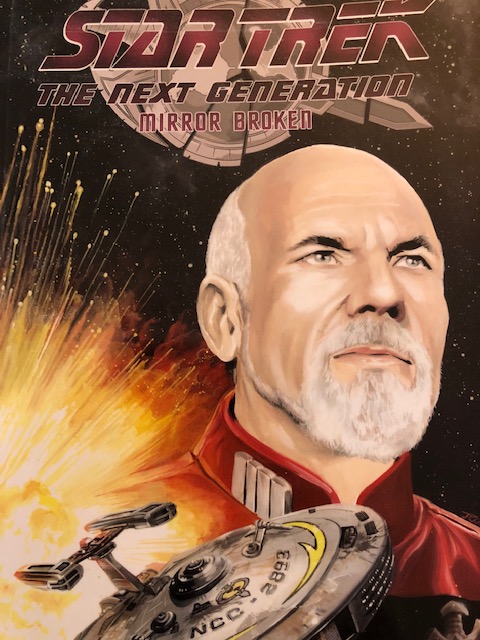
Star Trek: The Next Generation, Mirror Broken- Review By Case Wright


eu1

Happy Horrorthon!!! This review is going to be a deep dive into eeeeeeevil nerdism.  I understand that not everyone reads this site is a techie nerd, BUUUUUUT I think we have a healthy plurality. Nothing is better than to merge an evil universe with my love of Star Trek.

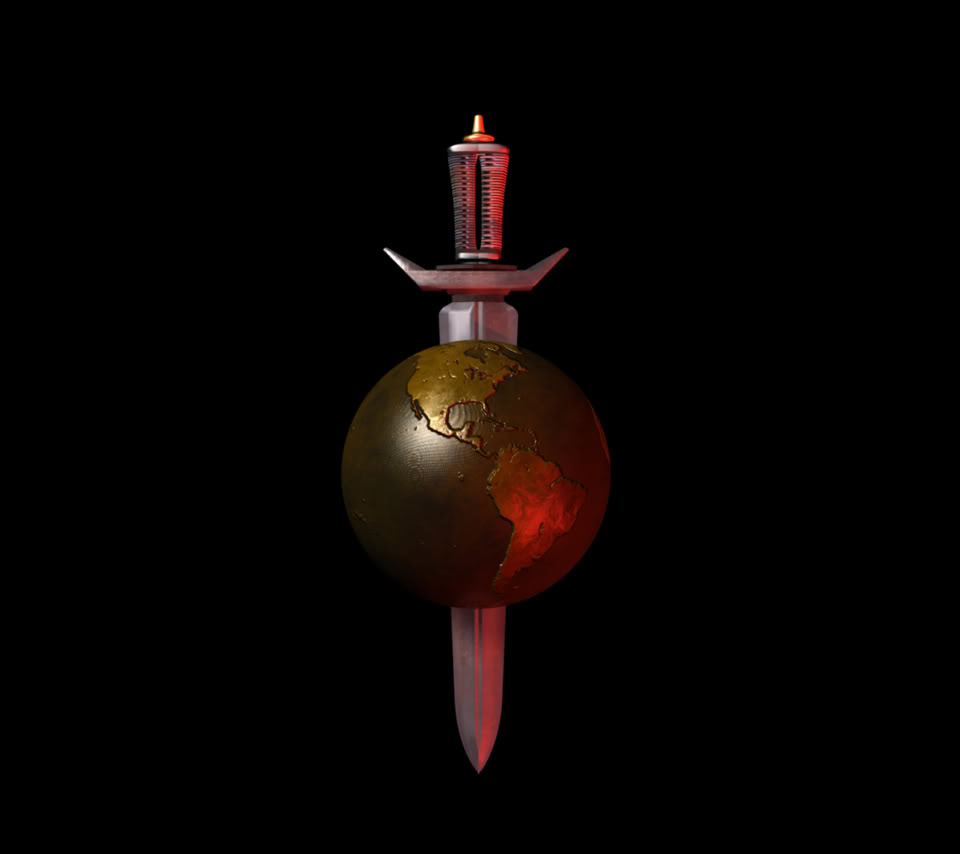
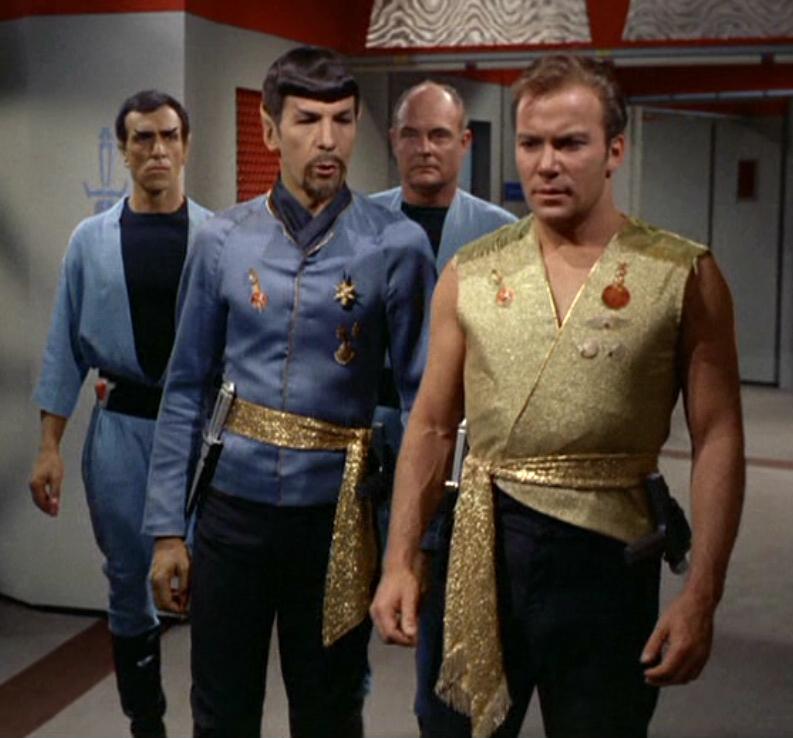
I’m going to give brief recap of the Star Trek Mirror Universe.  There’s a parallel universe in Star Trek that basically capitalist/imperialist.  In that timeline, humans are aggressive and conquered the Vulcans.  You can tell they are evil because they are avaricious and have beards- Think if Seattle/Portland went less drum circle and went more Roman.  It’s common to kill your superior to advance in the chain of command, it’s totally capitalist, and more fun in some ways because it’s a lot less model UN and much more Model Viking.

The evil universe never appeared in the Next Generation, but it did appear in Star Trek: The Original Series and then the second tier properties of Enterprise, Deep Space Nine and Voyager.  In those second tier properties, they set up a timeline that when the “Good Kirk” encouraged Spock to be reformist, it worked.  Too bad for Earth because the Empire got attacked by the other Alien Races we conquered and now Humans are pushed back to their solar system and will likely to be conquered.

Where there’s life, there’s hope.  In this comic, the writers Steven and David Tipton imagine if Jean Luc Picard was an uncompromising badass who is determined to bring the Terran Empire back to its former glory. How does he do this besides being really JACKED? Picard sets out to steal the Galaxy Class Enterprise.  This creates a great heist story, but it’s also super fun because it explores all of the old characters from the Next Generation and I mean ALL! There are character that were all but extras in Next Generation that are featured in the background of the book.  There are so many interesting takes on our old heroes.  Barclay is cunning, Data is experimenting with Borg-technology, and Geordie has his paramour from Next Gen, but she’s an alcoholic.  It’s so fun to go down this rabbit hole.

Back to the story, Picard assembles our familiar crew and seizes the Galaxy Class Enterprise for his own.  He could just take off and be rich, but he doesn’t.  Through some cool maneuvers, Picard decimates the Klingons and Cardassians …..nooooooo not the ones with large posteriors …. the ones with the krinkly heads.  Anyway, they go on war rampage and look like they might actually get to restore the Terran Empire!

TERRANS UNITE!

TEee

EV3

What If Lisa Picked The Oscar Nominees: 2017 Edition


With the Oscar nominations due to be announced tomorrow, now is the time that the Shattered Lens indulges in a little something called, “What if Lisa had all the power.” Listed below are my personal Oscar nominations. Please note that these are not the films that I necessarily think will be nominated. The fact of the matter is that the many of them will not. Instead, these are the films that would be nominated if I was solely responsible for deciding the nominees this year. Winners are starred and listed in bold.

(You’ll also note that I’ve added four categories, all of which I believe the Academy should adopt — Best Voice-Over Performance, Best Casting, Best Stunt Work, and Best Overall Use Of Music In A Film.)

(Click on the links to see my nominations for 201620152014201320122011, and 2010!)

Best Picture

Baby Driver

The Big Sick

The Disaster Artist

*A Ghost Story*

It

Kedi

Lady Bird

The Meyerowitz Stories

Three Billboards Outside Ebbing, Missouri

Wonder Woman

Best Director

Greta Gerwig for Lady Bird

Patty Jenkins for Wonder Woman

*David Lowery for A Ghost Story*

Martin McDonagh for Three Billboard Outside Ebbing, Missouri

Andy Muschietti for It

Edgar Wright for Baby Driver

Best Actor

*Sam Elliott in The Hero*

James Franco in The Disaster Artist

Jake Gyllenhaal in Stronger

Daniel Kaluuya in Get Out

James McAvoy in Split

Robert Pattinson in Good Time

Best Actress

Gal Gadot in Wonder Woman

Sally Hawkins in Maudie

Frances McDormand in Three Billboards Outside Ebbing, Missouri

Cynthia Nixon in A Quiet Passion

Aubrey Plaza in Ingrid Goes West

*Saoirse Ronan in Lady Bird*

Best Supporting Actor

Woody Harrelson in Three Billboards Outside Ebbing, Missouri

Sam Rockwell in Three Billboards Outside Ebbing, Missouri

Adam Sandler in The Meyerowitz Stories

Bill Skarsgard in It

*Patrick Stewart in Logan*

Jason Sudekis in Colossal

Best Supporting Actress

Holly Hunter in The Big Sick

Catherine Keener in Get Out

Sophia Lillis in It

*Laurie Metcalf in Lady Bird*

Carey Mulligan in Mudbound

Ella Rumpf in Raw

Best Voice-Over or Stop Motion Performance

Will Arnett in The LEGO Batman Movie

Gael Garcia Bernal in Coco

Bradley Cooper in Guardians of the Galaxy, Volume 2

Doug Jones in The Shape of Water

*Andy Serkis in War for the Planet of the Apes*

Dan Stevens in Beauty and the Beast

Best Original Screenplay

The Big Sick

Get Out

A Ghost Story

*Lady Bird*

The Meyerowitz Stories

Three Billboards Outside Ebbing, Missouri

Best Adapted Screenplay

Before I Fall

*The Disaster Artist*

It

Logan

Their Finest

Wonder Woman

Best Animated Film

Cars 3

Coco

*The Lego Batman Movie*

Leap!

Best Documentary Feature

Karl Marx City

*Kedi*

Risk

Step

Strong Island

32 Pills: My Sister’s Suicide

Best Foreign Language Film

First They Killed My Father

Frantz

*Kedi*

Raw

Best Casting

The Big Sick

Detroit

Dunkirk

Get Out

Lady Bird

*The Meyerowitz Stories*

Best Cinematography

Blade Runner 2049

Dunkirk

*A Ghost Story*

It

Lost City of Z

Three Billboards Outside Ebbing, Missouri

Best Costume Design

Beauty and the Beast

The Beguiled

Free Fire

Thor: Ragnarok

Victoria & Abdul

*Wonder Woman*

Best Editing

*Baby Driver*

Before I Fall

Dunkirk

A Ghost Story

It

Wonder Woman

Best Makeup and Hairstyling

The Disaster Artist

Guardians of the Galaxy Volume 2

Lady MacBeth

Logan Lucky

My Cousin Rachel

*Thor: Ragnarok*

Best Original Score

Blade Runner 2049

A Ghost Story

*Good Time*

Dunkirk

The Shape of Water

Wind River

Best Original Song

“Buddy’s Business” from Brawl In Cell Block 99

“Evermore” from Beauty and the Beast

“Friends are Family” from The Lego Batman Movie

“How Does A Moment Last Forever” from Beauty and the Beast

“Myron/Byron” from The Meyerowitz Stories

*”The Pure and the Damned” from Good Time*

Best Overall Use Of Music

Atomic Blonde

*Baby Driver*

The Disaster Artist

Guardians of the Galaxy Volume 2

Thor: Ragnarok

T2: Trainspotting

Best Production Design

*Beauty and the Beast*

The Beguiled

Blade Runner 2049

It Comes At Night

Logan

Thor: Ragnarok

Best Sound Editing

Baby Driver

*Dunkirk*

Kong: Skull Island

Spider-Man: Homecoming

War For The Planet of the Apes

Wonder Woman

Best Sound Mixing

Baby Driver

*Dunkirk*

Kong: Skull Island

Spider-Man: Homecoming

War For The Planet of the Apes

Wonder Woman

Best Stuntwork

Baby Driver

Dunkirk

Logan

Spider-Man: Homecoming

Thor: Ragnarok 

*Wonder Woman*

Best Visual Effects

Blade Runner 2049

Guardians of the Galaxy Vol. 2

Spider-Man: Homecoming

Thor: Ragnarok

Valerian and the City of a Thousand Planets

*War For The Planet of the Apes*

Films Listed By Number of Nominations

9 Nominations — Wonder Woman

7 Nominations — Baby Driver, Dunkirk, It, Three Billboards Outside Ebbing Missouri

6 Nominations — A Ghost Story, Lady Bird, Thor: Ragnarok

5 Nominations — Beauty and the Beast, The Disaster Artist, The Meyerowitz Stories

4 Nominations — The Big Sick, Blade Runner 2049, Get Out, Guardians of the Galaxy Vol. 2, Logan, Spider-Man: Homecoming, War For The Planet Of The Apes

3 Nominations — Good Time, Kedi, The LEGO Batman Movie

2 Nominations — Before I Fall, The Beguiled, Coco, Kong: Skull Island, Raw, Shape of Water

1 Nominations — Atomic Blonde, Brawl in Cell Block 99, Cars 3, Colossal, Detroit, First They Killed My Father, Frantz, Free Fire, The Hero, Ingrid Goes West, It Comes At Night, Karl Marx City, Lady MacBeth, Leap!, Logan Lucky, Lost City of Z, Maudie, Mudbound, My Cousin Rachel, A Quiet Passion, Risk, Split, Step, Strong Island, Stronger, T2: Trainspotting, Their Finest, 32 Pills: My Sister’s Suicide, Valerian and the City of a Thousand Planets, Victoria & Abdul, Wind River

Films Listed By Number of Wins

3 Oscars — A Ghost Story, Lady Bird

2 Oscars — Baby Driver, Dunkirk, Good Time, Kedi, War For the Planet of the Apes, Wonder Woman

1 Oscar — Beauty and the Beast, The Disaster Artist, The Hero, The LEGO Batman Movie, Logan, The Meyerowitz Stories, Thor: Ragnarok

Will the Academy be smart enough to agree with me?  Probably not.  We’ll see what happens tomorrow!