4 Shots From 4 Films is just what it says it is, 4 shots from 4 of our favorite films. As opposed to the reviews and recaps that we usually post, 4 Shots From 4 Films lets the visuals do the talking!
Today, the Shattered Lens wishes a happy birthday to Irish director Neil Jordan! It’s time for….
4 Shots From 4 Neil Jordan Films
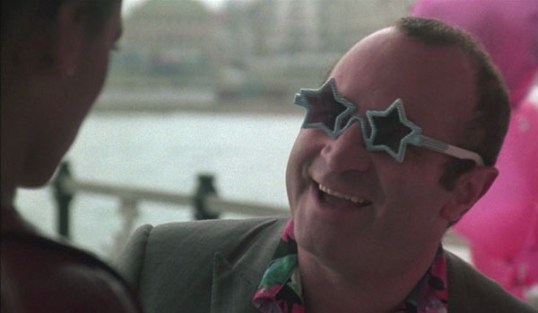
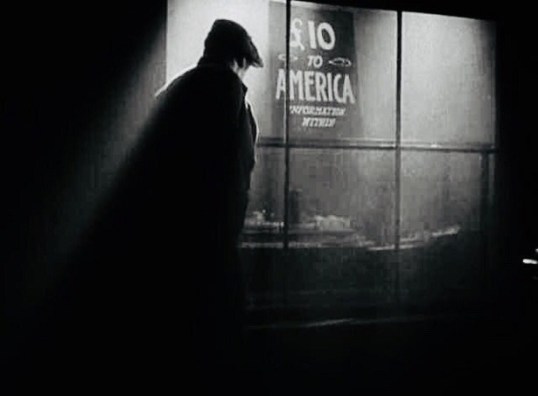
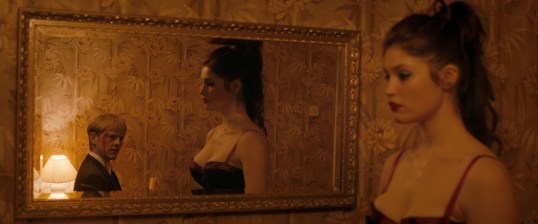
Mona Lisa (1986, dir by Neil Jordan, DP; Roger Pratt)
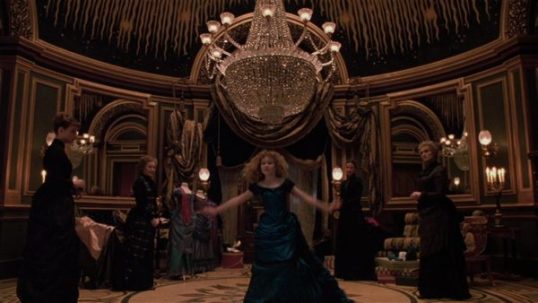
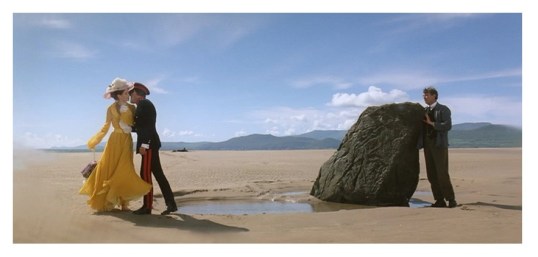
Interview With A Vampire (1994, dir by Neil Jordan, DP: Philippe Rousselot)
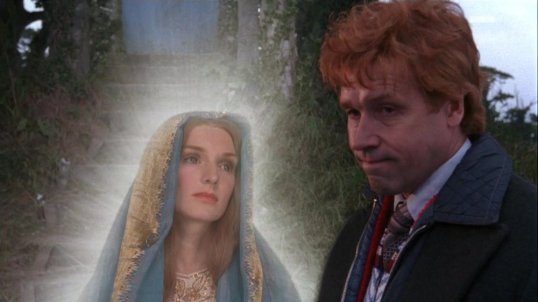
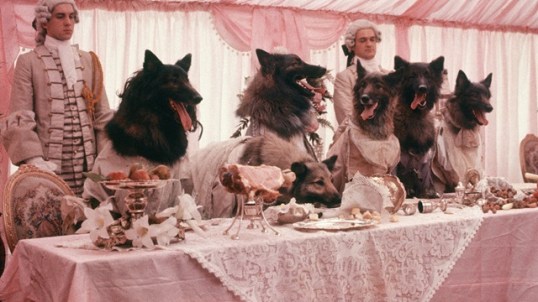
The Butcher Boy (1998, dir by Neil Jordan, DP: Adrian Biddle)
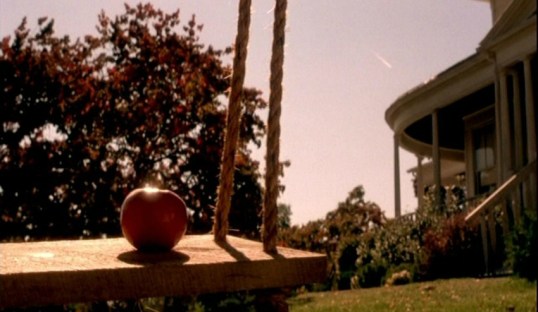
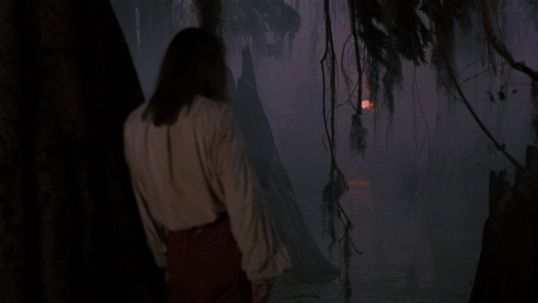
In Dreams (1999, dir by Neil Jordan, DP: Darius Khondji)
Directed by Neil Jordan and first released in 1992, The Crying Game opens at a fair in Northern Ireland. A black British soldier named Jody (Forest Whitaker) meets a flirtatious woman named Jude (Miranda Richardson). Jude leads Jody away from the fairground. Jody thinks that they’re going to have sex but instead, he ends up getting kidnapped by Fergus (Stephen Rea) and Peter Maguire (Adrian Dunbar). As Peter explains it after Jody is taken to an abandoned cottage, the soldier is now a prisoner of the Irish Republican Army.
Jody is left in a dark room, tied to a chair and with a canvas bad over his head. Fergus is often left to guard him. Despite Peter’s explicit orders, Fergus talks to Jody and the two men strike up an uneasy friendship. Fergus removes the bag from Jody’s head. He even reveals his name. Jody and Fergus talk about their lives. Jody says he joined the Army and was immediately sent to the most racist part of the UK. Fergus replies that his only issue with Jody is that “you shouldn’t be over here.” Jody talks about his love of cricket. Fergus talks about his love of hurling. Fergus sees a picture of Jody with his lover, Dil (Jaye Davidson). Fergus comments that Dil is attractive. “She’s not your type,” Jody replies.
Peter warns Fergus not to become friends with Jody because there’s a good chance that they’re going to have to execute him. And when the British refuse to exchange prisoners, the order does come down to carry out the execution. Fergus demands that he be allowed to carry out the shooting. However, as he leads Jody out of the cottage, Jody breaks free. Fergus chases him but, as they reach a nearby road, Fergus realizes that he can’t bring himself to kill Jody. Unfortunately, Jody is still killed when he’s run over by a British army truck.
Fergus flees to London and, after getting a job as a construction worker, he tries to lay low and track down Dil. Dil, however, turns out to be not quite was Fergus was expecting. It turns out that Jody didn’t reveal every aspect of his life while he was trapped in that cottage. Meanwhile, Jude and Peter both show up in London and demand that Fergus help them execute “some judge.”
The Crying Game is a twisty and engaging thriller, one that is best known for the twist involving Dil’s identity but which is also a thought-provoking look at the assumptions we make about each other and the roles that people feel forced to play. Fergus doesn’t really have it in him to be a terrorist or an assassin but it’s the role that he feels he’s been forced into by his desire to see the British leave Northern Ireland. Jody turns out to have a few secrets of his own and, once their revealed, his eagerness to go off with Jude is seen in an entirely new light. Jude and Peter present themselves as being honorable freedom fighters but their actions often seem to suggest the opposite. In the end, the only character who is truly comfortable with their nature is Dil. Both Stephen Rea and Jaye Davidson more than deserved their Oscar nominations. Their chemistry goes a long way towards making this a thriller that sticks with you.
The Crying Game was nominated for several Oscars but lost the majority of them to Unforgiven. (Both Stephen Rea and Clint Eastwood lost Best Actor to Al Pacino for Scent of a Woman.) However, Neil Jordan did win an Oscar for his clever screenplay. Rea has continued to act. Davidson, who reportedly hated the fame that came with appearing in The CryingGame, appeared in one more film before retiring.
4 Shots From 4 Films is just what it says it is, 4 shots from 4 of our favorite films. As opposed to the reviews and recaps that we usually post, 4 Shots From 4 Films lets the visuals do the talking!
It’s St. Patrick’s Day so it’s time for….
4 Shots From 4 Films About Ireland
The Informer (1935, directed by John Ford. Cinematography by Joseph August)
The Quiet Man (1952, dir by John Ford, DP: Winston C. Hoch)
Ryan’s Daughter (1970, dir by David Lean, DP: Freddie Young)
The Butcher Boy (1998, dir by Neil Jordan, DP: Adrian Biddle)
Released in 1996, Michael Collins tells the story of the early 20th century struggle of Ireland to gain independence from Britain.
Liam Neeson stars as Michael “Mick” Collins, the revolutionary leader who perfected the use of guerilla warfare against the British and then, in the greatest of ironies, found himself fighting some of his former allies during the Irish Civil War. Aidan Quinn plays Mick’s friend and fellow revolutionary, Harry Boland. Both Harry and Mick fall in love with Kitty Kiernan (Julia Roberts). Stephen Rea shows up as Ned Broy, a member of the Dublin police department who is inspired by Mick’s words to become a double agent. Charles Dance has a cameo as the fearsome Soames, a British intelligence agent who is sent to Ireland to violently put down the Irish insurgency. Finally, Alan Rickman plays Eamon de Valera, who goes from being one of Mick’s strongest allies to being one of his fiercest rivals. The film follows Collins from the Easter Rising of 1916 to his eventual assassination in 1922, providing a look at the history of Ireland that is as much directed towards those outside of Ireland as those on the inside.
When watching Michael Collins, it helps to have a working knowledge of Irish history. Otherwise, it can occasionally be a bit difficult to keep track of who is angry with who at any particular point in time. Of course, it should be noted that the movie itself is not exactly historically accurate. In the film, the gentle and likable Ned Broy becomes a victim of British bloodlust. In real life, Ned Broy outlived Michael Collins by several decades and died peacefully at the age of 84. For that matter, the film presents Eamon de Valera as being coldly Machiavellian and it suggests that de Valera was jealous of Mick’s popularity. Though both Rickman and director Neil Jordan later said it wasn’t intentional, the film also seems to suggest that de Valera played a role in Collins’s assassination. While Eamon de Valera remains a controversial figure for many reasons (including his neutrality during World War II), Jordan has said that he feels de Valera was not necessarily treated fairly in Michael Collins and indeed, de Valera — who plays as big a role in the founding of the Irish republic as anyone — is portrayed as often being ineffectual and unwilling to truly put himself at risk to fight the British. De Valera’s relationship with Collins was undoubtedly more complex than portrayed in this film but, when one makes a movie for an international audience, nuance is often the first thing that’s abandoned.
Seen today, 29 years after it was released, Michael Collins is an impressively made film that has a few inescapable flaws. It’s gorgeous to look at, full of moody shots of dark Dublin streets. The violence is often shocking and Jordan doesn’t shy away from considering the moral implications of Collins’s guerilla warfare. Michael Collins doesn’t make the mistake of blindly celebrating violence, which would be a valuable lesson for the world’s current crop of self-styled revolutionaries if they were only willing to hear it. Having gotten used to seeing Liam Neeson cast in one generic action film after another, it was interesting to watch Michael Collins and see what a good actor he truly could be. Even in 1996, He was perhaps a few years too old to playing a man who was only 31 when he died but Neeson still plays the role with a ferocious charisma that makes him believable as a leader. His scenes with Aidan Quinn have a joie de vivre that brings out the both in best actors. Alan Rickman is memorably sinister as Eamon de Valera and Stephen Rea’s gentle style makes Ned Broy into a truly tragic figure. That said, the very American Julia Roberts feels miscast as Kitty Kiernan. One gets the feeling that she was cast solely for her box office appeal. Every film, the feeling goes, needs a love story and those love stories need to be between people with familiar faces and Roberts is such a familiar face that her every appearance in the film feels like a distraction from the story being told. That said, the film captures the excitement and danger of being in the middle of history-making events. It’s a historical epic that’s never boring and manages to hold the viewer’s interest.
Michael Collins is ultimately a flawed but entertaining look at the early days of the Irish republic.
4 Shots From 4 Films is just what it says it is, 4 shots from 4 of our favorite films. As opposed to the reviews and recaps that we usually post, 4 Shots From 4 Films lets the visuals do the talking!
Today, the Shattered Lens wishes a happy birthday to Irish director Neil Jordan! It’s time for….
4 Shots From 4 Neil Jordan Films
The Company of Wolves (1984, dir by Neil Jordan, DP: Bryan Loftus)
Interview With A Vampire (1994, dir by Neil Jordan, DP: Philippe Rousselot)
In Dreams (1999, dir by Neil Jordan, DP: Darius Khondji)
Byzantium (2012, dir by Neil Jordan, DP: Sean Bobbitt)
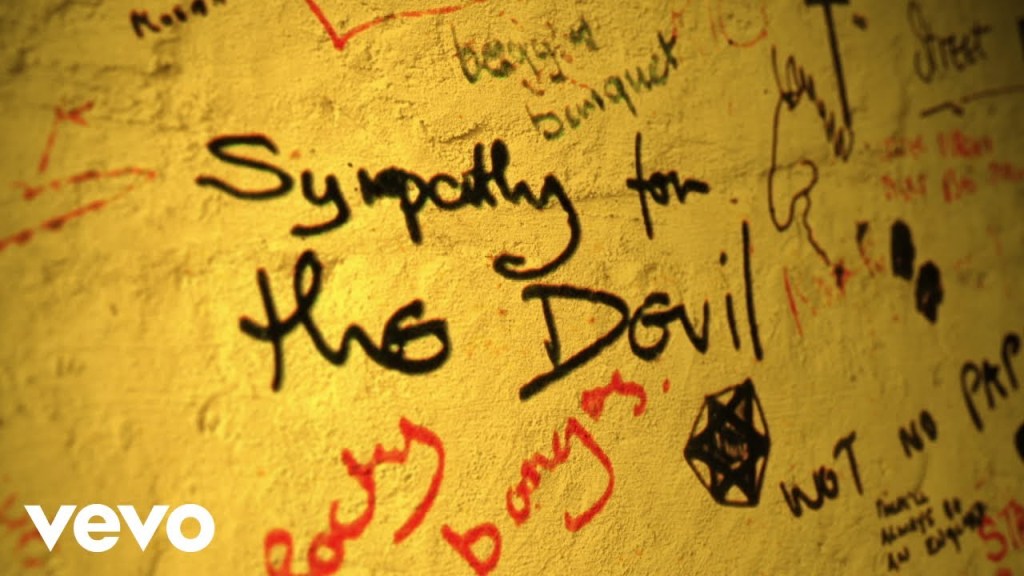
The latest “Song of the Day” is very near and dear to my blues-covered metal heart. I consider it one of the best rock ‘n’ roll songs ever created. It’s been covered by numerous bands in the decades since it’s initial release but I will always consider the original as the best. The latest song of the day is The Rolling Stones’ “Sympathy for the Devil”.
This song was released in the early days of December 1968. It was the opening track for The Rolling Stones’ latest album (Beggars Banquet) at that date. What makes this song so great is how simple the song really comes across. It doesn’t have the typical blues rock tone of previous Stones’ songs until Keith Richard’s guitar solo around the 2:55 mark. The song definitely sounds more like a combination of folk rock (by way of it’s spoken word-like lyrics) and a samba (due to the incorporation of additional percussions like the congas).
“Sympathy for the Devil” has been called a confession song while others see it as the narcissistic bragging of the narrator. Both viewpoints are quite valid and there are more as every listener of this song hears and imagines different themes. I always saw it as a combination of the two. It’s Lucifer’s confession and bragging about his role in the tumultuous and evil events in man’s history. It’s a song that its narrator wants to understand and admit that while he has been there through all those dark moments in history, he wouldn’t have been able to do what he’s done if not for people allowing him in and becoming complicit.
Sympathy for the Devil
Please allow me to introduce myself I’m a man of wealth and taste I’ve been around for a long, long years Stole many a man’s soul and faith
And I was ’round when Jesus Christ Had his moment of doubt and pain Made damn sure that Pilate Washed his hands and sealed his fate
Pleased to meet you Hope you guess my name But what’s puzzling you Is the nature of my game
I stuck around St. Petersburg When I saw it was a time for a change Killed the czar and his ministers Anastasia screamed in vain
I rode a tank Held a general’s rank When the blitzkrieg raged And the bodies stank
Pleased to meet you Hope you guess my name, oh yeah Ah, what’s puzzling you Is the nature of my game, oh yeah (woo woo, woo woo)
I watched with glee While your kings and queens Fought for ten decades For the gods they made (woo woo, woo woo)
I shouted out, “Who killed the Kennedys?” When after all It was you and me (who who, who who)
Let me please introduce myself I’m a man of wealth and taste And I laid traps for troubadours Who get killed before they reached Bombay (woo woo, who who)
Pleased to meet you Hope you guessed my name, oh yeah (who who) But what’s puzzling you Is the nature of my game, oh yeah, get down, baby (who who, who who)
Pleased to meet you Hope you guessed my name, oh yeah But what’s confusing you Is just the nature of my game (woo woo, who who)
Just as every cop is a criminal And all the sinners saints As heads is tails Just call me Lucifer ‘Cause I’m in need of some restraint (who who, who who)
So if you meet me Have some courtesy Have some sympathy, and some taste (woo woo) Use all your well-learned politesse Or I’ll lay your soul to waste, um yeah (woo woo, woo woo)
Pleased to meet you Hope you guessed my name, um yeah (who who) But what’s puzzling you Is the nature of my game, um mean it, get down (woo woo, woo woo)
Woo, who Oh yeah, get on down Oh yeah Oh yeah! (woo woo)
Tell me baby, what’s my name Tell me honey, can ya guess my name Tell me baby, what’s my name I tell you one time, you’re to blame
Oh, who woo, woo Woo, who Woo, woo Woo, who, who Woo, who, who Oh, yeah
What’s my name Tell me, baby, what’s my name Tell me, sweetie, what’s my name
Woo, who, who Woo, who, who Woo, who, who Woo, who, who Woo, who, who Woo, who, who Oh, yeah Woo woo Woo woo
4 Shots From 4 Films is just what it says it is, 4 shots from 4 of our favorite films. As opposed to the reviews and recaps that we usually post, 4 Shots From 4 Films lets the visuals do the talking!
Today, the Shattered Lens wishes a happy birthday to Irish director Neil Jordan! It’s time for….
4 Shots From 4 Neil Jordan Films
The Company of Wolves (1984, dir by Neil Jordan, DP: Bryan Loftus)
Interview With A Vampire (1994, dir by Neil Jordan, DP: Philippe Rousselot)
The Butcher Boy (1998, dir by Neil Jordan, DP: Adrian Biddle)
In Dreams (1999, dir by Neil Jordan, DP: Darius Khondji)
Today it can be easy to forget just how popular and respected U2 was in the late 1980s and throughout the 90s. Even though, from the start, Bono drew a lot of derision for his messianic posturing, there’s no denying that early U2 rocked. Even a song like Red Hill Mining Town, which was probably the weakest song on Joshua Tree, holds up over thirty years later.
The song was inspired by an actual UK miner’s strike and lyrically, it’s a good example of how U2’s good intentions were sometimes obscured by a heavy-handed approach. (Bono later said that, when he heard the song, he realized that he sounded like a rich man singing about someone else’s unemployment.) The video, though, captures the feeling of despair that the song was going for. This video is memorable for being directed by Neil Jordan, who has since gone on to become one of Ireland’s most important filmmakers.
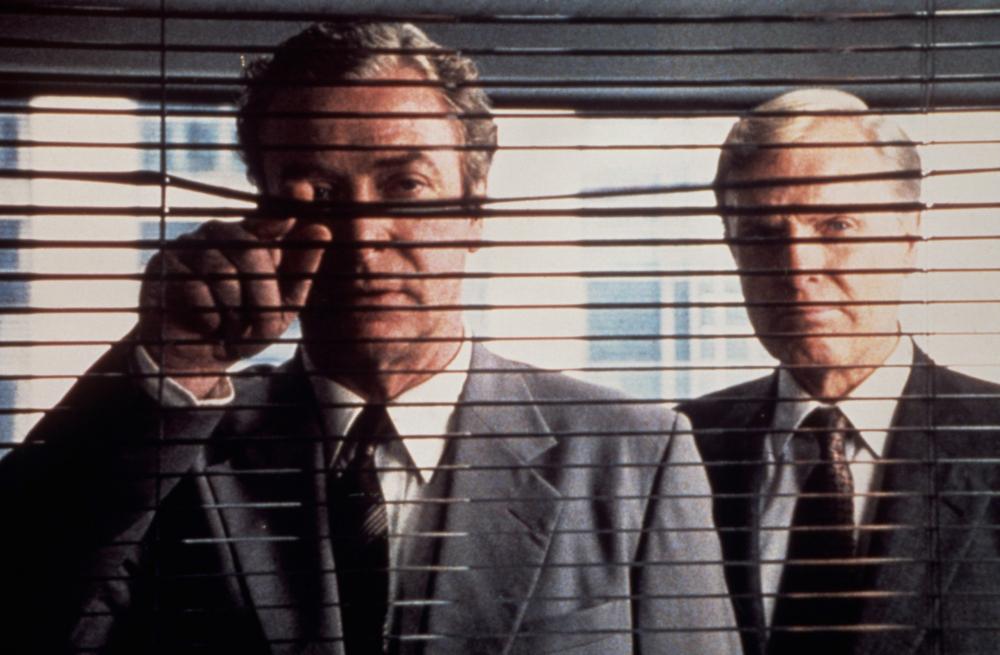
A Shock to the System (1990, directed by Jan Egleson)
Today is the 88th birthday of the great actor and British cultural icon, Sir Michael Caine!
As I did with Chuck Norris earlier this week, I want to commemorate Michael Caine’s birthday by sharing ten of his essential roles. Since 1950, Michael Caine has appeared in over 130 films and countless TV productions. Trying to narrow his long and prolific career down to just ten films is not easy, nor is it really necessary. All of Caine’s films are worth watching, even the ones that he made during the period where he basically accepted every part that he was offered. Because he’s so prolific and because so many of his films are already well-known and regarded as classics, I’ve decided to focus of listing ten of his lesser-known but no less essential roles.
A Hill in Korea (1956, directed by Julian Aymes) — This nearly forgotten war film is significant because it featured Michael Caine in his first credited screen role. (He had appeared in three previous films but wasn’t credited.) A veteran of the Korean war, Caine was hired to serve as a technical advisor and he was given the small role of Private Lockyer. Years later, Caine would say that, “I had 8 lines in that picture and I screwed up 6 of them.” The film is a standard war film and Caine is barely onscreen but everyone had to start somewhere and this film did allow Caine to appear opposite Stanley Baker, Robert Shaw, and Harry Andrews.
Billion Dollar Brain (1968, directed by Ken Russell) — In 1965, Michael Caine shot to stardom by playing the working class secret agent, Harry Palmer, in The Ipcress File. Caine went on to play Palmer in four more films. Billion Dollar Brain finds Harry trying to keep a computer and a mad millionaire from starting World War III. This was Ken Russell’s first major feature film and, through not as flamboyant as some of his later films, Billion Dollar Brain still feels like Harry Palmer on acid. Caine gives a typically good performance, as does Karl Malden in a key supporting role. Caine’s future Eagle Has Landed co-star, Donald Sutherland, has a small, early role.
Zee and Co. (1972, directed by Brian Hutton) — Caine is married to Elizabeth Taylor and having an affair with Susannah York. This is the type of movie that probably could have only been made at a time when studio system veterans like Elizabeth Taylor were trying to prove that they could keep up with the new wave of filmmakers and stars. Providing proof of his acting abilities, Caine somehow keeps a straight face and gives a credible performance while Taylor emotes all over the place. The end result is loud, vulgar, and undeniably entertaining.
Beyond The Poseidon Adventure (1979, directed by Irwin Allen) — I’m including this film as a stand-in for all of the films that Caine made strictly for the money. It’s a ludicrous film but hard not to enjoy. Michael Caine plays a tugboat captain who, with the help of Sally Field, attempts to salvage the cap-sized Poseidon before the luxury liner finally sinks. Also showing up: Telly Savalas, Slim Pickens, Peter Boyle, and Billion Dollar Brain‘s Karl Malden.
Mona Lisa (1986, directed by Neil Jordan) — The same year that Michael Caine appeared in his Oscar-winning role in Hannah and Her Sisters, he also played a gangster named Mortwell in Mona Lisa. Caine is chillingly good in a rare villainous role.
The Fourth Protocol (1987, directed by John MacKenzie) — This underrated spy thriller features Michael Caine as a world-weary British spy who has to stop KGB agent Pierce Brosnan from detonating a nuclear device. This is a well-made spy thriller and it’s interesting to see Caine (who started his career as the anti-James Bond in the Harry Palmer films) acting opposite future Bond, Pierce Brosnan.
Without A Clue (1988, directed by Thom Eberhardt) — This genuinely funny comedy stars Caine as Sherlock Holmes and Ben Kingsley as Dr. Watson. The catch is that Holmes is actually a clueless actor who was hired by Watson to pretend to be a great detective. When Prof. Moriarty targets Watson, Holmes is forced to actually solve a case on his own. Caine and Kingsley make for a surprisingly good comedy team.
A Shock to the System (1990, directed by Jan Egleson) — In this very dark comedy, Caine plays an executive who, sick of being passed over for promotions and criticized by his wife, decided to just kill everyone who annoys him. This is one of Caine’s best performances and this underrated film’s satire feels just as relevant today as when it was released.
Blood and Wine (1997, directed by Bob Rafelson) — This underrated neo-noir gave Michael Caine a chance to act opposite Jack Nicholson. The two iconic actors bring out the best in each other, playing partners in a jewelry heist gone wrong.
Is Anybody There? (2008, directed by John Crowley) — In this low-key but emotionally effective film, Caine plays an elderly magician who is suffering from the early stages of dementia. Having entered a retirement home, he befriends the son of the home’s manager and the two of them search for evidence of life after death. Though the film didn’t get much attention in the States, Caine described it as a favorite in his most recent autobiography, Blowing The Bloody Doors Off. 75 years-old when he appeared in the film, Caine proved that he could still take audiences by surprise and create an unforgettable character.
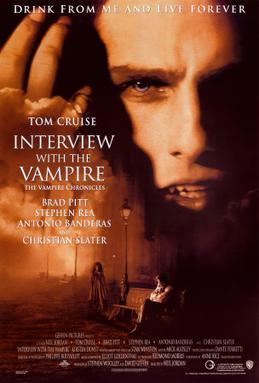
There are a lot of vampires and other cursed beings wandering through the 1994 film adaptation of Interview With A Vampire but Claudia (Kisten Dunst) is the only one for whom I have any sympathy.
Louis (Brad Pitt) may be the main character and the vampire giving the interview but it’s hard to have much sympathy for him. He’s just such a whiny little bitch. The Louisiana aristocrat is transformed into a vampire in 1791 and basically spends the next 200 years complaining about it. You want to have sympathy for him but sometimes, you just have to accept stuff and move on. It doesn’t help that Brad Pitt, who has always given his best performances when cast as men of action, is somewhat miscast as the effete and self-loathing Louis.
Lestat (Tom Cruise) may be the most charismatic of the vampires but he’s never exactly sympathetic. He turns Louis into a vampire and then spends years following him across Louisiana and Europe. Lestat is decadence personified and he never whines and, as a result, he’s far more enjoyable to spend time with than Louis. Cruise is as perfectly cast as Lestat as Pitt was miscat as Louis. Lestat is a star and Tom Cruise has always been one of the few true movie stars around. That said, Lestat is still far too self-indulgent and thoughtlessly self-destructive to really be a sympathetic character. Instead, he’s like Lord Byron, destroying happy families but at least writing a poem about it afterwards.
Armand (Antonio Banderas) runs the Théâtre des Vampires in Paris and he becomes Louis’s companion for a time. Louis is charismatic because he’s played by Antonio Banderas but, ultimately, he proves to be a rather ineffectual leader. Armand puts on a good show but, in the end, that’s all he has to offer. He’s a bit shallow, despite all of the theatrics.
Santiago (Stephen Rea) isn’t sympathetic at all but at least he really seems to get into being evil. Good for him!
And then there’s Daniel Malloy (Christian Slater), the journalist who conducts the interview with Louis. In the film, Malloy starts out as a cynic, the type of writer who theatrically pours himself a glass of whiskey before dramatically turning to his typewriter. All he needs is a fedora with a press pass tucked into the headband. It’s difficult to take him seriously.
But then there’s Claudia. Poor Claudia. In the book, Claudia was only five years old when she was turned into a vampire. In the movie, she’s played by 12 year-old Kirsten Dunst and it’s left ambiguous as to how young Claudia actually was when Lestat turned her into a vampire, though it’s still made clear that was too young to be cursed without her consent. Claudia becomes Lestat and Louis’s companion. Louis treats her like the daughter that he will never have. Lestart treats her like an apprentice, teaching her how to kill. Claudia grows up but is forever trapped in the body of a child. It’s impossible not to feel sorry for Claudia, who never asked to become a vampire, who indeed was just turned so that Lestat could use her as a pawn to keep control of Louis. Claudia spends a good deal of the movie in a rage and who can blame her?
Interview With A Vampire is a messy and uneven film. Brad Pitt is miscast and the whole film is oddly paced, with the New Orleans scenes taking too long and the Paris scenes going by almost too quickly. At the same time, Tom Cruise brings the proper joie de mort to the role of Lestat and Claudia and her fate will simply break your heart. Interview With The Vampire is not the best vampire movie that I’ve ever seen but it definitely has its pleasures.


 Through the Shattered Lens