Sci-Fi Review: Stars Wars Episode 1: The Phantom Menace (1999, directed by George Lucas)


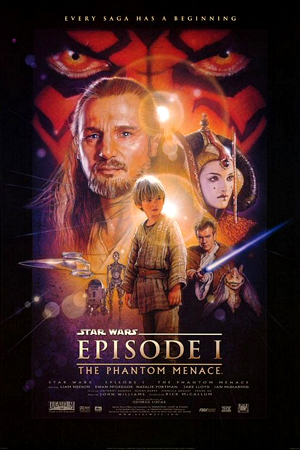
Star_Wars_Phantom_Menace_posterA long time ago in a galaxy far, far away…

The time was May of 1999.  The place was a movie theater in Baltimore, Maryland.  The theater was packed with people waiting to see the most anticipated film of their lifetime.  The film was The Phantom Menace, the first prequel to the original Star Wars trilogy.  For two years, the people in the audience had followed every detail of the film’s production.  Some of them had gone to showings of Meet Joe Black and Wing Commander, just so they could see the first trailers for the film.

Sitting out in that audience was one 16 year-old boy who, a few nights earlier, had been standing outside a Target at midnight so that he could be one of the first to buy Phantom Menace merchandise.  He bought two Jar Jar Binks action figures because, even before Phantom Menace opened, he suspected Jar Jar would be the most controversial character.

When the lights went down, the audience cheered.  At the start of every trailer, someone in the dark theater shouted, “I bent my Wookie!”  The audience laughed the first two times.  By the fifth time, there were only a few pity titters.

Finally, it was time!  The first few notes of John Williams’s Star Wars theme echoed through the theater.  Again, the audience cheered as the familiar title crawl appeared on-screen.

http://www.youtube.com/watch?v=WQBV9pXleF0

The 16 year-old read the opening crawl and he started to get worried.  What was all this talk about taxation?  Trade routes?  Trade Federation?  Blockades?  It seemed more appropriate for Star Trek or even Dune.  Except for the mention of Jedis at the end of the crawl, it did not sound much like Star Wars.

Things started to look up as soon as Liam Neeson and Ewan McGregor made their first appearance as Qui-Gon and Obi-Wan.  Obi-Wan’s first line was, “I have a bad feeling about this.”  A few people in the audience clapped.  “I bent my Wookie!” a familiar voice shouted.  Nobody laughed.

When a hologram of Darth Sidious appeared and told the Trade Federation goons to kill Qui-Gon and Obi-Wan, everyone in the audience knew that Darth Sidious was Palaptine, the future Emperor, and the excitement was palpable.  When Qui-Gon and Obi-Wan fought off the battle droids and escaped to the besieged planet of Naboo, the audience started to relax.  Maybe this wouldn’t be as bad as the critics were saying.

Then Qui-Gon and Obi-Wan met Jar Jar Binks and the whole movie went to shit.

http://www.youtube.com/watch?v=IIQVAShJzLo

In the months leading up to the release of The Phantom Menace, everyone had heard about Jar Jar Binks and how he was a totally computer-generated character.  Jar Jar Binks was the future of movie technology and, from the minute he first appeared, the future was fucking terrifying.  Jar Jar was a Gungun, an amphibious creature who was characterized as being clumsy and cowardly.  He shrieked in a high-pitched voice and spoke in an indescribable dialect.  As much as the audience tried, there was no way to avoid or ignore Jar Jar Binks.  He was not in the entire movie but he was at the center of every scene in which he did appear.

As Jar Jar led Obi-Wan and Qui-Gon to the underwater city of the Gunguns, a voice in the dark theater shouted out, “I bent my Wookie!”

“Shut the fuck up!” the 16 year-old snapped back.

The 16 year-old was not sure if anyone heard him but the voice was silent for the rest of the movie.
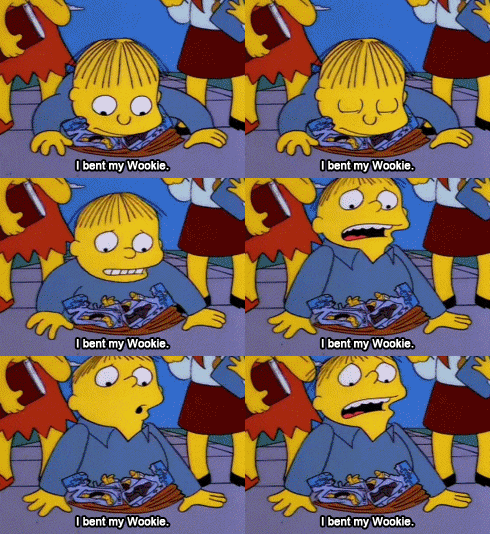
Sorry, Ralph.

Sorry, Ralph.

No sooner had the audience recovered from their introduction to Jar Jar then they met young Anakin Skywalker.  Anakin’s story was the whole reason that The Phantom Menace had been made.  The audience knew that the prequels would show how Anakin Skywalker would grow up to the greatest and most evil badass in the universe, Darth Vader.  But in Phantom Menace, he was just a 9 year-old slave on the planet of Tatooine, conceived by immaculate conception.  Even before Phantom Menace was released, the word was out that Jake Lloyd, the child cast as young Anakin, was not exactly the best actor in the world.  But even though they had been forewarned, the audience was not prepared for just how terrible little Jake Lloyd was in the role.  There was no darkness to Jake Lloyd’s cutesy performance.  There was no sadness or toughness.  Jake Lloyd came across like the type of hyperactive child who would end up in the ensemble of a Christmas play, breaking character and waving to his parents during the Crucifixion.  Not only could the audience not see him growing up to be Darth Vader but they could not imagine him as a slave living on an inhospitable desert planet.

Qui-Gon, Obi-Wan, Jar Jar, Queen Padme (Keira Knightley), and Padme’s handmaid, Amidala (Natalie Portman) were stranded on Tatooine when they first met Anakin.  Qui-Gon felt that Anakin was “the chosen one,” who would bring balance to the force.  It was hard for the audience to believe him when they heard Anakin shout, “Yippe!”

For that 16 year-old who had stayed up past midnight to buy two Jar Jar Binks action figures, that “yippe” was the final straw.  He had watched the original Star Wars trilogy on VHS tapes.  He had gone to the re-releases.  He loved Star Wars and he wanted to love The Phantom Menace.  Instead, he felt so let down by the film that he could barely look at the screen.

The 16 year-old wondered why C3PO and R2D2 were in the film.  Phantom Menace revealed that they were built by the future Darth Vader.  R2D2 would even help Anakin in the film’s final battle.  It made no sense.  The 16 year-old wondered if anyone else in the audience was as confused as he was.  He wondered why, if he could see that this made no sense, George Lucas could not understand the same thing.

Anakin won a pod race and was allowed to leave Tatooine.  The film’s action was moved to the Coruscant, a planet that was covered with one huge city.  Samuel L. Jackson appeared as Mace Windu and, when he stared out at the audience, he seemed to be saying, “I fucking dare you to yell anything about bending your motherfucking Wookie!”  There were scenes set in the galactic senate, presumably to appease everyone who wanted a meticulously detailed portrait of how a galactic Republic would be governed.  Padme turned out to be a fake and Amidala was revealed as the real queen.  There was a final battle between the forces of the Republic and the Trade Federation.  Qui-Gon was killed in a duel with the evil Darth Maul (Ray Park) but Obi-Wan promised to train Anakin in the ways of the Jedi.  Palpatine promised that he would be watching Anakin’s development.

And, of course, there was this:

http://www.youtube.com/watch?v=FoVpSPXGCvc

For many in the audience who truly loved the original trilogy and who had spent the past two years scouring every corner of the Internet in search of news about The Phantom Menace, the midi-chlorians was the point that they give up on the movie.  The Force added a hint of mysticism to the original trilogy.  Because it was so mysterious and its origins so deliberately obscure, fans of Star Wars could imagine that The Force was inside of them as well as Luke and Darth Vader.  “May the force be with you,” was more than just a catch phrase to those fans.  It was a reminder that, even in a galaxy far far away, there was still mystery and faith.  When Qui-Gon talked about midi-chlorians, fans realized that not only did they understand the appeal of Star Wars better than George Lucas but George Lucas did not even care why they loved his film.  For those fans, the midi-chlorians not only ruined The Phantom Menace but cheapened the original trilogy as well.  The Force was no longer special or mystical.  Anakin might as well have just been bitten by a radioactive spider.

For the 16 year-old, it was somehow even worse that, before asking about the Force, Anakin apologized to Qui-Gon for causing so much trouble.  Sitting out in the theater, he knew that the boy who would grow up to be Darth Vader would never yell “yippie!” and he would never apologize for causing any trouble.

At the end of the movie, the audience did not know how to react.  The 16 year-old talked to his friends as they filed out of the theater.  Everyone was in a state of denial.  They knew that they had seen something very disappointing but, after all the excitement leading up to the release of The Phantom Menace, they did not want to admit how disappointed they really were with the actual movie.  They talked about what did work.  They talked about the pod race, which had been fun.  They talked about the exciting light saber duel between Qui-Gon, Obi-Wan, and Darth Maul.  Being teenage boys, they also talked about Natalie Portman and Keira Knightley.
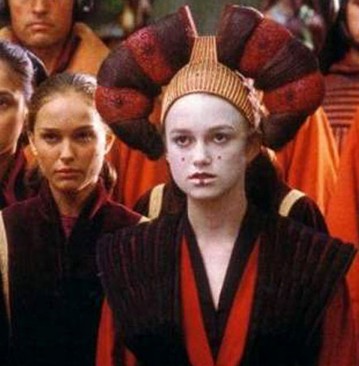
Natalie Portman and Keira Knightley

They tried not to talk about Jar Jar Binks, beyond agreeing that he sucked.  They tried not to talk about Jake Lloyd as Anakin.  It was too painful to know that Star Wars had been reduced to Jar Jar Binks and Jake Lloyd.  They did make fun of the “I bent my Wookie” guy.  In the face of grave disillusionment, it was all that the 16 year-old and his friends could do.

Today, enough time has passed that it is easier to laugh about Jar Jar Binks and The Phantom Menace.  Though the initial trauma may have faded into memory, it all came rushing back to me as soon as Lisa asked me if I would be willing to review The Phantom Menace for this site.  I cautiously agreed and hoped that, since I already knew what I was getting myself into, The Phantom Menace would not be as disappointing the second time around.

It was a strange experience rewatching The Phantom Menace.  While I remembered how bad the movie was, I’d forgotten how equally boring it was.  Jar Jar Binks was even more annoying than I remembered and Jake Lloyd was even worse.  Of the film’s best scenes, the pod race went on too long and the duel with Darth Maul was too short.  For such a badass villain, Darth Maul was underused for much of the film, as if George Lucas did not understand that the kids he claimed to have made the film for would be far more interested in the dynamic Darth Maul than the histrionic Jar Jar Binks.
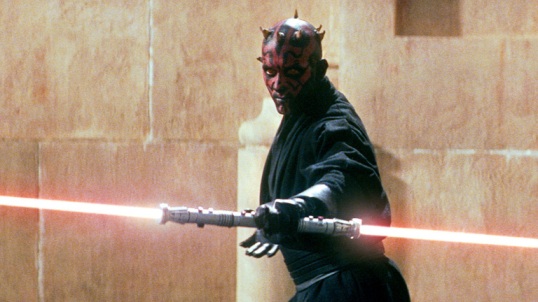
Emphasizing Jar Jar Binks over Darth Maul made as much sense as emphasizing the Ewoks at the expense of Boba Fett.

Emphasizing Jar Jar Binks over Darth Maul made as much sense as emphasizing the Ewoks at the expense of Boba Fett.

Worst of all, the entire movie felt even more pointless the second time around.  When the prequels were first released, George Lucas always said that all three of them should be viewed in the context of the larger story that they were telling.  But what do we really learn from The Phantom Menace or any of the prequels?  Did anyone really want to know about how trade was regulated before the Empire?  Did we really need to know the exact details of how Anakin became a Jedi?  Watching The Phantom Menace, the answer is no.

I was especially surprised by how bad the CGI looked.  When The Phantom Menace was first released, the CGI was often the only thing that was critically praised.  Critics may have hated Jar Jar Binks as a character but they all agreed that it was impressive that a major character had been created by a computer.  It is easy to forget just how big a deal was made about The Phantom Menace‘s special effects.  At the time, we had yet to take it for granted that an entire movie could be made on a computer.

But seen today, the CGI not only seems cartoonish but, like the midi-chlorians, it feels like a betrayal of everything that made the original Star Wars special.  The universe of New Hope and Empire Strikes Back felt lived in.  It was imperfect and real.  It was a universe where even the most fearsome storm trooper could accidentally bump his head on a doorway.

But the CGI-created universe of The Phantom Menace was too slick and too perfect.  There was no chance for spontaneity or anything unexpected.  The universe of the original Star Wars trilogy was one in which you could imagine living but the universe of The Phantom Menace seemed only to exist in the computers at Lucasfilm.  With The Phantom Menace, George Lucas seemed to be reminding those who loved his films that the Star Wars universe belonged to him and him alone.  Our imagination was no longer necessary.

As for that 16 year-old who first saw The Phantom Menace in that Baltimore theater, I still have those Jar Jar Binks action figures.  I keep one of them on my desk at work and I enjoy the strange looks that it gets.  If you push down its arms, Jar Jar sticks out his tongue.

It just seems appropriate.

A Steaming Pile Of Norseshit — “Thor : The Dark World”


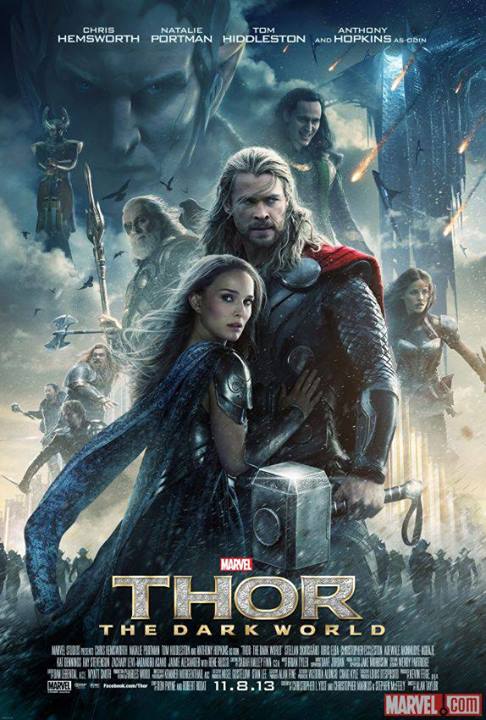
thor-the-dark-world-poster1

The way I work, I generally try to avoid giving up too much by way of “spoilers” when it comes to reviewing movies that are still playing simply because I’m never sure how much anybody out there who might be reading this stuff wants to know about any given flick before they’ve actually seen it. Call it common courtesy, I guess, if you’re feeling generous, or weak-kneed fear of the always-on-the-alert hordes of internet “spoiler police” if you’re not, but nevertheless, it’s something I try to adhere to, however tough the going may get.

And Thor : The Dark World makes it very tough indeed. The simple fact is, you just can’t heap all the criticism on this film that it so richly deserves without giving away numerous  key plot points, so here’s what I’m gonna do instead : for those of you who want a meticulously-detailed, blow-by-blow analysis of how and why this big-budget boondoggle fails every single logic test known to humankind, I humbly suggest you follow this link to a lengthy review  by the ever-reliable Julian Darius over at  the Sequart website : http://sequart.org/magazine/32555/id-need-a-lobotomy-to-enjoy-thor-the-dark-world/ .  Julian’s one of the more articulate and intelligent writers the web has to offer on all things comic-related, and while his grammar and syntax are occasionally a bit uncharacteristically all over the map in this particular piece, I get it : he had a lot to vent about, and sometimes ya just gotta let off steam. In any case, his analysis is absolutely spot-on here and, if anything, he’s being too kind to this putrid mess of a movie.

For those of you who want a short, “spoiler”- free summation of why this film sucks so badly though, , here’s the bare essentials  — Thor : The Dark World is built on so many glaringly obvious logical inconsistencies, ten-trillion-to-one coincidences, rehashed story elements that worked much better in the first film, plot holes that are big enough for an  entire army of Asgardian warriors to charge though,  and problems brought on by the idiotic actions of the title character himself that it well and truly boggles the imagination. This is, in short, a complete and utter celluloid train wreck that requires such a heaping dose of suspension of disbelief that even people who can accept the most outlandish premises imaginable will have a hard time coming to grips with this one. It also doesn’t help that the characterization of most of the leading players seems to have taken a leap back toward the dark ages, the dialogue is hopelessly inane from start to finish, and that director Alan Taylor (a seasoned TV veteran, and it shows) brings exactly none of the Shakespearean-rooted vision of Kenneth Branagh to the proceedings and opts, instead, to film things in the rapidly-evolving (and hopelessly uniform) Marvel “house style” best exemplified by the likes of Jon Favreau and Joss Whedon. Sure, their Iron Man and Avengers films, respectively, have earned tons of fan accolades (not to mention box office dollars),  but let’s be honest — the directorial work on either of those properties is virtually (okay, who are we kidding, completely) indistinguishable from the other. So, hey, welcome to the lowest-common-denominator club, I guess, Alan.

thor-the-dark-world-releases-a-pair-of-new-images-132862-a-1366629848-470-75

On the plus side, the CGI is pretty cool here throughout, though, and since that’s probably what half the audience (at least) for these things is there for, said half (again, at least) of the audience should walk away feeling quite satisfied.

For those of us who like a movie that at least tries to make sense, though (or fails to so earnestly that watching it becomes a kind of sublime pleasure in its own right), there just ain’t much of offer here. Natalie Portman goes from intelligent astrophysicist to love-struck schoolgirl the minute Thor hits the scene (we later learn she’s only continued with her career at all in hopes of running into him again — there goes a few decades’ worth of tepid progress for female characters in genre cinema in about one second flat) and spends the rest of the film making puppy-dog eyes but not doing much else; Chris Hemsworth plays up the dull nobility  of his character with none of the  reckless humanity we saw in the first film (even though he organizes mass treason here — again); Tom Hiddleston wildly accentuates the effeminate qualities of Loki in a way that pretty much screams “you can’t trust this guy, he’s obviously queer“; Anthony Hopkins mails in his performance from behind a shining suit of armor; Rene Russo fulfills her one character requirement by d— whoops, that’s right, “spoliers”! ;  Kat Dennings essentially plays the same character she does on TV’s Two Broke Girls ; and Stellan Skarsgard does his best to make sure we all know nervous breakdowns are nothin’ but harmless fun, his character having gone mad due to the purportedly “traumatic” events he endured in The Avengers (a bit of a reach given that even its most fervent partisans would admit that’s essentially a big-budget “popcorn movie” with little to no actual thematic depth whatsoever — they just think it’s a particularly well done “popcorn movie”). In short, if you’re getting the idea that Thor : The Dark World is risible,  superficial nonsense with some deeply offensive takes on gender roles, (alluded to) homosexuality, and mental illness, then congratulations! You’re exactly correct.

Christopher Eccleston stars as Malekith in Marvel's Thor: The Dark World

Christopher Eccleston does his best, I suppose, considering the mountain of makeup he’s buried beneath, as chief villain Malekith, but given the preposterous nature of the character he’s asked to portray (head of the evil “Dark Elves,” who alone has the power  to track down a mystical force powerful enough to unmake all of creation called the Aether — except for, ya know, that time  he lost sight of it for literally eons when it was purportedly “shielded”  from him  in a wide-open cave — and even if you buy that, you’d have a tough time explaining why he couldn’t trace it while it was being taken right there), I guess there’s only so much the poor guy can do. Still, I give him credit for at least appearing to want to do more than simply go through the motions here. It’s more than I can say for anybody else, apart from Idris Elba, who does inanimate stoicism better than anyone in his role as Heimdall. Not that he’s really got that much to do, mind you, but he stands around with a hell of a lot of conviction.

At the end of the day, though, I dunno — Thor : The Dark World is still a Marvel studios product, which means that it won’t get nearly the critical scrutiny it should and that legions of loyal followers will proclaim their undying love for it even though it is, by any standard of bias-free critical measure, an absolute clusterfuck of a movie. They, like the Asgardians in the film, will still see Thor himself as a heroic figure even though his decision to bring Portman’s Jane Foster character to his mythic home ensures its invasion by enemy hordes, and they’ll no doubtpraise the film for its forced moments of flat, shoehorned-in “humor” (although even I have to admit the cameo-of-sorts by Chris Evans as Captain America is fun) and equally-forced “dark and somber” tone. This will probably be proclaimed as a “mature” and  even “sophisticated” film in many quarters, and needless to say, those of us willing to call bullshit on it will be vilified  by Dinsey’s unpaid internet army.

Thor: The Dark World film still

No matter.  The simple truth is that Thor : The Dark World is a movie that insults it’s audience’s intelligence in ways that even Roger Corman would never dream of, and goes about its dull and tepid business with less interest and heart than Roger and his barely-compensated filmmakers, actors, and crew ever brought to the proceedings. It’s easily and unquestionably one of the absolute worst films of the year — hell, of the last several years —even if only a few of us have the guts to say so in public. Dis/Mar thinks you’e a sucker with no taste or intelligence who will blindly queue up for anything they churn out. They hold their audience in contempt and at this point are openly daring you to keep forking over your cash for their garbage. How long are you willing to prove them right, and keep playing along?

Trailer: Thor: The Dark World (Official)


1001383_551270781575795_85777536_n

The second film of Marvel’s Phase 2 for it’s Cinematic Universe comes in the form of Thor: The Dark World. I’m sure the title should give as to which of the Avengers character is front and center for this Phase 2 film.

Above is the official theatrical poster for the film which has a strong fantasy, Drew Struzan feel to it. That’s more than appropriate since Thor bridges the gap between the more grounded superheroics of Midgard’s (that’s Earth to the layman) heroes (Captain America, Black Widow, Hawkeye and Iron Man) and the more fantasy and scifi denizens of Asgard like Thor and the upcoming film, Guardians of the Galaxy.

While this latest trailer released by Marvel is not the footage that was shown to Hall H attendees during Marvel’s panel at this year’s Comic-Con, it still manages to show some new footage in addition to one’s already shown at the initial teaser earlier. For one, it has more Loki (which is smart of Marvel since Loki has become this Cinematic Universe’s resident bad boy everyone seems to love or hate to love.) and it also shows some hints at the darker, grittier look that Alan Taylor looks to bring from his time as director of episodes of Game of Thrones for HBO.

Natalie Portman’s character, Jane Foster still seems to come off as not belonging to this ensemble, but there’s still chance that the finished product will flesh her out and her relationship with Thor to everyone’s satisfaction.

Thor: The Dark World is set for a November 8, 2013 release date.

Trailer: Thor: The Dark World (Official)


Thor the Dark World

Iron Man 3 is already premiering in Europe and less than two weeks from premiering in North America. To help tie-over North American filmgoers until Iron Man 3 premieres on this side of the Atlantic Marvel Studios has released the first official trailer for the second film in Phase 2 of their Marvel Cinematic Universe.

Thor: The Dark World sees the Marvel action return to Asgard as Thor must now battle the return of an enemy older than the universe itself. Kenneth Branagh is out as director and in steps Alan Taylor of Game of Thrones as the filmmaker for this sequel. Most everyone returns for this second go-around in Asgard and the Nine Worlds with some new faces such as Chris Eccleston as Malekith the leader of the Dark Elves of Svartalfheim.

Thor: The Dark World is set for a November 8, 2013 release date.

Source: Joblo Movie Network

Quick Review: Star Wars – Episode I: The Phantom Menace 3D


This isn’t so much a review of The Phantom Menace, as it’s one about the 3D aspect of it. I can’t imagine there isn’t a single person who doesn’t know what The Phantom Menace was about.

Historically, Unless it happens to be a cartoon, I really don’t do very well when it comes to 3D films. The effect for me tends to wear off really quick. The only real movie exception for me lately was last year’s Drive Angry 3D and Hugo (which to talk about in full requires it’s own review). The tail end of 2011 saw some of cinema’s Old Schoolers jump into the 3D scene, with Steven Spielberg’s The Adventures of Tintin adding to the lot. So really, it was just a matter of time before George Lucas would blow the dust off his legacy and take all six of the Star Wars films into the 3-Dimensional arena.

I grew up on Star Wars, like many kids born early enough to have seen the Originals. I remember the lines, the scenes, all of that. With the release of the Prequels, I took my little brother on Midnight premieres for all three of them. Those are by far the biggest and best memories of the series, the sharing of those “wow” moments either with my family or with friends growing up. Of all of the films, The Empire Strikes Back remains my favorite (as it is for a number of people).

So, here I was, back for The Phantom Menace on 3D. You’d think that Lucasfilm and ILM would go to some great lengths to make sure that the effects were great, and I have to admit that there were really only a few key scenes in the movie where the 3D really shined – The Opening Credits, the Podrace and one of the fight sequences. Still, for me the ability to see the 3D faded within 15 minutes, so I was pretty much left with watching a film I wasn’t particularly fond of, save for the key scenes.

That isn’t to say that The Phantom Menace is a dreadful film, Jar Jar and all. The movie was made with kids in mind, and watching it from that position, the story does make some kind of sense. Ideally, 3D really isn’t a compelling reason to have the Star Wars films return to the cinema, yet at the same time, that they’re there may actually warrant a theatre visit if you like watching them. If any film is going to use the 3D well, it’ll probably be one of the Originals. What the film does excel at is it’s use of sound. Ben Burtt is always great when it comes to sound cues and The Phantom Menace is easily a good example of this. Lightsabers hum, sparks are loud and it flows well.

Back in 1999, George Lucas it was necessary to give us a reason why Darth Vader became the man he was, and decided to create the first installment of Star Wars films that would focus on Anakin Skywalker’s rise and eventual fall. Sitting in the theatre and hearing the Fox fanfare go up, one can’t help but smile as the “A Long Time Ago…” phrase appears. Of course, that quickly fades as the cast actually starts talking. Man, the Phantom Menace was a hot mess, but a beautiful mess at that.

The Podracing scene was just as fun as it always was, and the Darth Maul Double Bladed Lightsaber reveal is just as hair raising, but watching it, I had moments where (just as I did on the first run), I wondered how much better it could be if Lucas didn’t hold on so tightly to his creation. Star Wars overall is an awesome concept, but there are just so many better writers and filmmakers out there. The material feels a little wasted, just a little.

If anything, The Phantom Menace does work as something to bring the kids to see, but if you already have the movie on video, it’s not completely required.


Review: V for Vendetta (dir. by James McTeigue)


“Remember, remember the fifth of November, the gunpowder treason and plot. I know of no reason why the gunpowder treason should ever be forgot.”

Alan Moore’s decision to want his name off the final credits for the film adaptation of V for Vendetta now makes sense. Moore has had a hate/hate relationship with Hollywood and the film industry in general. They’ve taken two of his other works in The League of Extraordinary Gentlemen and From Hell. and bollocks’d them up (to borrow a term used quite a bit in V for Vendetta). Outside of Watchmen, Alan Moore sees V for Vendetta as one of his more personal works and after reading the screenplay adaptation of the graphic novel by The Wachowski Brothers his decision afterwards was to demand his name be removed from the film if it was ever made. Part of this was his hatred of the film industry for their past mistakes and another being his wish for a perfect adaptation or none at all. Well, V for Vendettaby James McTeigue and The Wachowski Brothers is not a perfect film adaptation. What it turns out to be is a film that stays true to the spirit of Moore’s graphic novel and given a modern, up-to-the-current news retelling of the world’s state of affairs.

V for Vendetta starts off with abit of a prologue to explain the relevance of the Guy Fawkes mask worn by V throughout the film and the significance of the date of the 5th of November. I think this change in the story from the source material may be for the benefit of audiences who didn’t grow up in the UK and have no idea of who Guy Fawkes was and what his Gunpowder Plot was all about. The sequence is short but informative. From then on we move on to the start of the main story and here the film adheres close enough to the source material with a few changes to the Evey character (played by Natalie Portman) but not enough to ruin the character. Caught after curfew and accosted by the ruling government’s secret police called Fingermen, Evey soon encounters V who saves her not just from imprisonment but rape from these so-called Fingermen.

Right from the start the one thing McTeigue and The Wachowski Brothers got dead-on was casting Hugo Weaving as the title character. Voice silky, velvety and sonorous, Weaving infuses V with an otherworldly, theatrical personality. Whether V was speaking phrases from Shakespeare, philosophers or pop culture icons, the voice gave a character who doesn’t show his face from behind the enternally-smiling Guy Fawkes mask real life. I’d forgiven the makers of this films for some of the changes they made to the story and some of the characters for keeping V as close to how Moore wrote him. Once V and Evey are thrown in together by the happenstance of that nightly encounter their fates became intertwined. Portman plays the reluctant witness to V’s acts of terrorism, murders and destruction in the beginning, but a poignant and emotionally powerful sequence to start the second half of the film soon brings Evey’s character not much towards V’s way of doing things, but to understanding just why he’s doing them. This sequence became the emotional punch of the whole film and is literally lifted word for word from the graphic novel. This is the sequence in the film which should resonate the loudest for most people whether they buy into the rest of the film or not.

The rest of the cast seemed like a who’s who of the British acting community. From Stephen Rea’s stubborn and dogged Chief Inspector Finch whose quest to find V leads him to finding clues about his government’s past actions that he’d rather not have found. Then there’s Stephen Fry’s flamboyant TV show host who becomes Evey’s only other ally whose secret longings have been forbidden by the government, but who’s awakened by V’s actions to go through with his own form of rebellion. Then there’s John Hurt as High Chancellor Adam Sutler who’s seen chewing up the scenery with his Hitler-like performance through Big Brother video conferences (an ironic bit of casting since John Hurt also played Winston Smith in the film adaptation of the Orwell classic 1984). I really couldn’t find any of the supporting players as having done a bad job in their performances. Even Hurt’s Sutler might have seemed over-the-top to some but his performance just showed how much of a hatemonger Sutler and, in the end, his Norsefire party really were in order to stay in power.

The story itself, as I mentioned earlier, had had some changes made to it. Some of these changes angered Moore and probably continues to anger his more die-hard fans. I count myself as one of these die-hards, but I know how film adaptations of classic literary works must and need to trim some of the fat from the main body and theme of the story to fully translate onto the silver screen. The Wachowski Brother’s screenplay did just that. They trimmed some of the side stories and tertiary characters from the story and concentrated on V, Evey and Inspector Finch’s pursuit of both the truth of V and his own journey in finding that truth. This adaptation wa much closer to how Peter Jackson adapted The Lord of the Rings. As a fan of Moore I understood why he was unhappy with the changes, but then Moore was and still is an avowed perfectionist and only a perfect adaptation would do.

Critics on both sides of the aisle have called V for Vendetta revolutionary, subversive, daring to irresponsible and propagandist. All because the film dares to ask serious questions about the nature and role of violence as a form of dissent. But the granddaddy question the film brings up that has people talking is the question: terrorist or freedom fighter? Is V one or the other or is he both? Make no mistake about it, V for all intents and purposes is a terrorist if one was to use the definition of what a terrorist is. The makers of this film goes to great lenghts to describe throughout the film just how Sutler and his Norsefire (with its iconic Nazi-like imagery and extreme fundamentalist Christian idealogy) party rose to power in the UK. Partly due to what seemed like the failed US foreign policy and its subsequent and destructive decline as a superpower and the worldwide panic and fear it caused as a result. V for Vendetta also ask just who was to blame for allowing such individuals to rule over them. V has his reasons for killing these powers-that-be, but he also points out that people really should just look in the mirror if they need to know who really was to blame. For it was the population — whose desire to remain safe and have a semblance of peace — gave up more and more of their basic liberties and rights for a return to order. If one was to look at the past 100 years they would see that it’s happened before. There was the regime of Pol Pot in Cambodia, Milosevic’s Greater Serbia, and the king of the hill of them all being Adolf Hitler and his Nazi Inner Circle.

Another thing about V for Vendetta that will surely talked about alot will be the images used in the film. Not just images and symbols looking so much like Nazi icons, but images from the events of the past decade which have become symbols of oppression and censorship. The film shows people bound and hooded like prisoners from Abu Ghraib. The reason of the war on terror used time and time again by Sutler to justify why England and its people need him and his group to protect them by any means necessary. V for Vendetta seems like a timely film for our current times. Even with the conclusion of the film finally accomplishing what Guy Fawkes failed to do that night of November 5th some 400 plus years ago, V for Vendetta doesn’t give all the answers to all the questions it raises. I’m sure this would be something that’ll frustrate them some audiences. So much of people who go to watch thought-provoking films want their questions answered as clearly as possible and all of them. V for Vendetta doesn’t answer them but gives the audience enough information to try and work it out themselves.

In final analysis, V for Vendetta accomplishes in bringing the main themes of Alan Moore’s graphic novel to life and even does it well despite some of the changes made. It is a film that is sure to polarize the extreme left and right of the political pundits and commentators. But as a piece of thought-provoking and even as a politically subversive film, V for Vendetta does it job well. It is not a perfect film by any respect, but the story and message it tries to convey in addition to its value as a piece of entertainment mor than makes up for its flaws. Alan Moore and his followers might not love and approve of this film, but it doesn’t mean the film in and of itself wasn’t a good one. Sometimes calls for literal adaptations of beloved works or no adaptation at all also becomes a form of creative oppression and censorship.

A Quickie With Lisa Marie: Hesher (dir. by Spencer Susser)


I’ve been told that guys don’t seem to appreciate being called “adorable” by girls.  They consider it a back-handed compliment and seriously, how insecure can you be?  Okay, I understand that most guys want to us to think that they’re dangerous and I’ll admit right now that all that stuff you’ve heard about girls liking bad boys — well, it’s true.  But adorable is no longer just a back-handed compliment.  Why?  Because Joseph Gordon-Levitt has made adorable sexy.

I first really noticed Joseph Gordon-Levitt when I saw him as the lead in 2007’s overlooked crime thriller The Lookout but he truly won my heart when I first saw him dancing to You Make My Dreams in (500) Days of Summer.  And then came Inception.  Some people will tell you that film was about Leonardo DiCaprio entering other people’s dreams to find himself.  Nope, sorry, not true.  As far as I’m concerned, Inception was a movie about Joseph Gordon-Levitt getting all dressed up and floating through the halls of that dream hotel and beating up every single person who tried to get in his way.    What did all three of these roles have in common?  Nothing except for the utterly adorable hotness of Joseph Gordon-Levitt.

It was this adorable hotness that led me to see Gordon-Levitt’s latest film, Hesher.  Despite the fact that the film is massively (perhaps fatally) flawed, this is also the film that proves that, as an actor, Joseph Gordon-Levitt can be something more than just an adorable fantasy boyfriend.

Directed by Spencer Sussman and co-written by Animal Kingdom director David Michod, Hesher opens with 12 year-old T.J. (Devin Brochu) struggling to come to terms with the tragic death of his mother and his family’s subsequent collapse.  T.J. and his father (a bear-like Rainn Wilson) have moved in with their grandmother (a perfectly poignant performance from Piper Laurie) who is showing the beginning signs of senility.  T.J. spends his days obsessing on the remains of the family car (which was totaled in the accident that killed his mother), trying to avoid local bullies, and dealing with a hopeless crush that he’s developed on a cashier (Natalie Portman) at the local grocery store.

When T.J. first meets Hesher (Joseph Gordon-Levitt), Hesher is squatting in an abandoned construction site.  T.J. accidentally leads a security guard to Hesher’s temporary home.  Hesher responds by lighting a molotov cocktail and blowing the place up while T.J. runs away.  Suddenly, T.J. starts to see Hesher wandering around the hallways of his school.  Walking home from school, T.J. sees Hesher following behind him in what can only be described as a “rape van.”  And then, just as suddenly, Hesher has moved in to T.J.;s house and made himself into a part of the family.  Hesher quickly becomes a mentor of sorts to T.J. though his lessons primarily consist of doing things like blowing up a bully’s car and then running off, leaving T.J. to deal with the consequences.

Hesher is hardly a role that you’d expect to find Joseph Gordon-Levitt playing.  With long, unwashed hair and an extended middle finger tattooed across his back, Hesher isn’t so much an outsider as he’s just a sociopath, the type of guy who you try not to make eye contact out of fear that he’ll respond by shooting you first.  How scary a guy is Hesher?  He’s so scary that just saying his name causes the film’s soundtrack to explode with a burst of heavy metal.  That’s how scary he is.  The Joseph Gordon-Levitt that we all know and love (or at least the one that I know and love) is pretty much impossible to find and yet, Gordon-Levitt still gives a great performance here.  Without ignoring any of Hesher’s rough edges or trying to reveal any sort of inner decency, both the film and Gordon-Levitt make Hesher into a frustratingly attractive character.  This is probably the best performance of Joseph Gordon-Levitt’s career so far.

Unfortunately, the rest of the film doesn’t really live up to Gordon-Levitt’s performance.  It starts out well and, for quite some time, we’re encouraged to believe that Hesher might just be a product of T.J.’s imagination, a projection of his own anger and depression.  That’s an interesting idea and would have made for a far more effective film.  Unfortunately, Hesher then suddenly moves in wit T.J. and suddenly, he’s interacting with Wilson and befriending Piper Laurie and, worst of all, he starts to reveal a little bit about his past.  In other words, he goes from being a symbol of unrestrained ID to just being another white trash rapist.  Once the film makes it clear that Hesher is an actual character then suddenly, you realize that the filmmakers haven’t given you any credible reason why both Wilson and Laurie (not to mention the cops who start to regularly drop by the house as Hesher blows stuff up around the neighborhood) would so easily accept the idea of living with him.  Finally, the movie concludes with a sequence at a funeral that just feels so simultaneously wrong, heavy-handed, and maudlin that, at first, I was convinced that it had to be some sort of satirical comment on the clichéd nature of the scene.  But no, the rest of the film makes clear that we’re supposed to take this sequence seriously.  It’s such a wrong-headed move that it cheapens everything that came before it.  The movie ends with a lot of loud music and the credits are decorated with obscene graffiti but it doesn’t make any difference.  The film has already revealed that, at heart, it’s hardly rebellious enough to be worthy of a character like Joseph Gordon-Levitt’s Hesher.

In the end, Hesher fails as a movie but its partially redeemed for revealing that there’s more to Joseph Gordon-Levitt than just adorable cuteness.

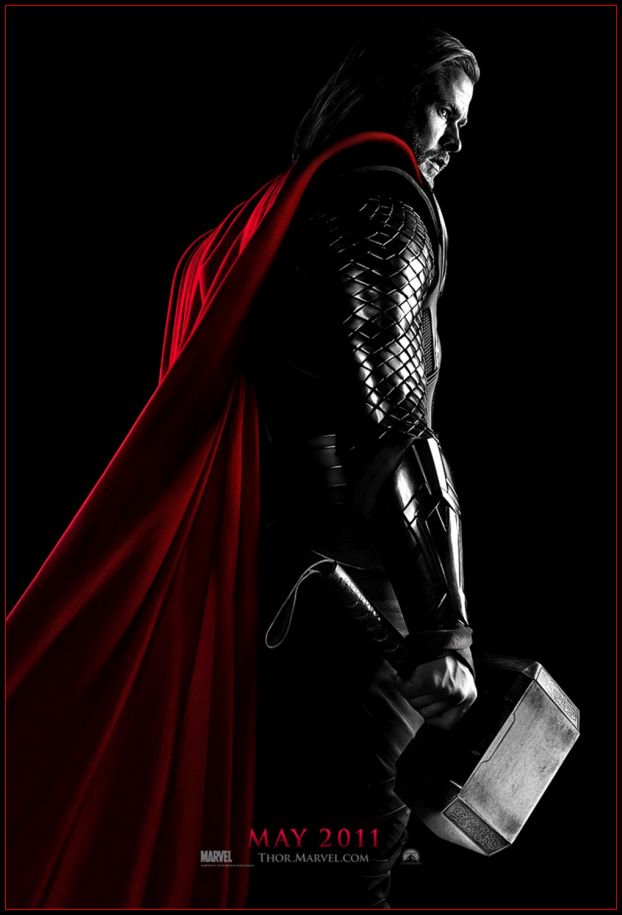
Review: Thor (dir. by Kenneth Branagh)


Marvel Comics has had a much better success in bringing their 2nd-tier characters over onto the big-screen than DC Comics and they’ve made the risky decision to tie-in every film they make into one shared universe. Comic book fans have begun to call this the Marvel Film Universe since it contains the same characters and backgrounds as those of their comic book counterparts but also with enough changes to make them stand-out on their own. They’ve already begun this with the first two Iron Man films and a recent reboot of the Incredible Hulk. With the X-Men, Spider-Man, Daredevil and Fantastic Four film rights still under the control of other film studios it left Marvel (now Disney) to use other characters in their control to fill out the rest of this shared universe. The next one to get their turn on the bigscreen is the live-action adaptation of Marvel’s Asgardian God of Thunder. The studios picked British filmmaker Kenneth Branagh to handle this adaptation and his background in bringing Shakespeare to the big-screen has made Thor a flwed but very entertaining superhero film.

To start off, it has to be said that Thor was always going to be the most difficult of all the characters that will make up The Avengers film to bring to the bigscreen. While all these Marvel films do have their fantastic elements due to each character’s superhero nature it was even more fantastic with the character of Thor. This character is in effect a being who has been worshipped by humans in the past as one of their deities. God-like characters have always been tough to make human and relatable in stories and film. It’s a testament to Branagh’s handle of the Asgard characters such as Thor, Odin and Loki that we don’t end up with just all-powerful beings, but individuals whose impulses and motivations definitely are human. It’s this dynamic between Thor, his father Odin and his brother Loki which drives the Shakespearean angle of the film’s storyline. It’s where Branagh’s history of making Shakespeare accessible to the general film audience that makes their story easy to follow and understand.

The film actually begins with the human characters of Dr. Jane Foster (played by Natalie Portman) and her colleagues (Stellan Skarsgard and Kat Dennings)  driving around in the New Mexico desert at night looking for atmospheric disturbances which should validate Foster’s theories on the Einstein-Rosen Bridge aka wormholes. What they end up running to instead is Thor himself arriving on Earth (Midgard in Asgardian terms) to begin his banishment from his homeworld. Yes, I say homeworld as the film has turned one of the more difficult aspects of Thor’s background into something that makes sense for the audience not steeped and learned from decades of Thor comic books. Thor’s home of Asgard is just one of nine worlds around the galaxy of which Earth is one.

It’s right after this scene that we go back to what started Thor’s banishment. The film does a great job explaining the role the Asgard’s played in Earth’s past history and the consequences of their war against the Frost Giants of the world of Jotunheim (one of the nine worlds). It’s through the narration by Odin himself (Anthony Hopkins) that we learn of the origins of the Gods and myths of Norse culture. This intro scene also shows Odin showing his two young sons in Thor and Loki the relic he had taken to end the wars between Asgard and the Jotunheim. For an origin sequence it was able to set up the rules of this fantastical world of Asgard and it’s Nine Realms. It’s the sequence right after which would lead to Thor’s banishment from Asgard and the stripping of his all-powerful hammer, Mjolnir, and his powers.

For some, and I would have to agree, this sequence which takes Thor, his brother Loki, childhood friends Sif and Warriors Three to the icy world of Jotunheim made up the best action setpiece for the film. The battle which begins between Thor’s forces and those of King Lauhey (Colm Feore under some very elaborate make-up effects) of the Frost Giants. This scene shares some similar qualities with an earlier action setpiece in the first Iron Man film in that it surpasses all other setpieces which would occur later in their respective films. This is not to say that the other action scenes were boring or just simple fare. They were exhilirating and full of energy, but that very first one in the beginning just had even more energy and action that it might’ve been better saved for the climax of the film.

Once the banishment occurs we finally catch up to the film’s first scene and the film begins to go back and forth between Asgard and Earth. With the former we see the machiavellian side of Loki finally assert itself. While Loki’s character is never truly shown to be evil his mischievious streak does show to have a cruel side to it. The bombshell of a news from Odin about his true origins was a nice touch, but it doesn’t lead to the sort of evil character turn we’re used to. In fact, I would say that Loki’s character (played with Iago-like relish by Tom Hiddleston) ends up becoming like the son who does the wrong things for the right reasons. He’s a nice contrast to the more open-faced Thor who does what he says instead of dancing around the subject even to the detriment of his standing with his father.

The scenes on Earth itself is where the comedic aspect of the film comes in. Most of the comedy comes at the expense of Thor’s “fish out of water” reaction to the new world around him. It’s helped much by some great comedic timing by Jane’s assistant Darcy (Kat Dennings who steals the film from Portman whenever they’re on together). It is also the time on Earth where some of the flaws in the film really become apparent. First and foremost would be Portman’s Jane Foster character who seem to be so uneven. She goes from brilliant astrophysicist one moment then giggling schoolgirl the next whenever she’s in close proximity to Thor. While Portman and Hemsworth do make quite the radioactively beautiful couple there’s a sense of untapped chemistry between the two that might have been left on the editing floor. It’s a shame really since so much could’ve been done with the Foster character to really give reasons to why Thor ends up valuing the lives of said mortals to earn his God of Thunder status once again.

Thor really does entertain despite some character and storytelling (really most of it on the Earth side of things) flaws which could’ve sunk the film right from the start. I believe that it’s director Branagh’s handling of the Shakespearean tragedy on the Asgard side of the film that holds the film together. This is one reason and the other being a star-turning turn by Chris Hemsworth as Thor himself. His performance goes from cocky, brash young man on the cusp of leadership to lost, confused and rudderless once banished then back again to a maturing prodigal son who finally learns the lessons his father has been trying to teach him. It would interesting to see Hemsworth’s Thor truly interact with Downey’s Tony Stark and Chris Evans’ Steve Rogers when The Avengers comes out in 2012.

The riskiest part of Marvel’s attempt to create their Marvel Cinematic Universe succeeds where most seem to think it will fail. It’s not as strong an origin film as Favreau’s first Iron Man, but it does add a sense of wonder that film could never grasp through two films. Even the controversial casting choices to put non-white actors to play Asgard roles (Tadanobu Asano as Hogun and Idris Elba as Heimdall) comes off well that the audience shouldn’t even wonder why a black and Asian person were playing characters written originally as white.

From the look of things there’s no official word whether there will be a second Thor film, but I wouldn’t be surprised if there was no matter how the film does boxoffice-wise. There’s just too much great stories to tell about Thor, Asgard and the rest of the Asgard Nine Realms now that the foundation has been laid down with this first film. I do hope that Branagh returns for those sequels if they do happen. One thing which Branagh has proven was his handling of action sequences. They weren’t amazing, but they were handled with enough skill that I believe a second time around we’d get even better action from a director known more for serious dramatic films.

A final thing to mention would be the Easter Egg final scene which occurs once the end credits finish their run at the end of the film. For those who stayed to see this scene it should be a nice treat for Marvel and comic book fans. It shows a certain artifact that should tie Thor to the upcoming Captain America film later this summer. All I can say for those who didn’t stay to see it and knows their Marvel trivia are two words: Cosmic and cube.

PS: An Avenger member makes a cameo appearance halfway in the film that doesn’t look tacked on despite what some of the more “glass half-empty” film bloggers on the net would make you think…Also, it’s safe to forgo seeing Thor in 3D. It’s not a bad post-conversion but it doesn’t really add to the film. See it in 2D to save yourself a few bucks on the ticket price.

Lisa Marie Hates Your Highness (dir. by David Gordon Green)


I saw the new “comedy” Your Highness a few days ago.  I say “comedy” because I’ve been told that the film is supposed to be a “comedy.”  Usually, however, a comedy also inspires a certain amount of laughter and I laughed exactly one time while watching Your Highness.  I can’t remember what joke it was that made me laugh.  Maybe I just couldn’t believe that this film had been made in the first place. 

The film is meant to be a satire on all of the fantasy films that have come out in recent years.  Danny McBride plays a cowardly prince who goes on a quest to rescue his brother’s fiancée from an evil warlock.  (The brother is played by my future lover, James Franco. )  During the quest … oh Hell, who cares?  The film’s idea of a joke is to have various character say “shit” and “fuck” while wandering around in a suit of armor.  Apparently, this joke is so hilarious that it pops up every 3 minutes or so.  This movie is kinda like an annoying 5 year-old who doesn’t understand that we’ve all heard his freaking knock knock joke before.

Definitely, if someone tries to convince you to see this film, run.  Personally, I watched it because James Franco is in the film but Franco’s hotness is obscured by a really bad wig.  Natalie Portman’s in this film as well, giving a surprisingly good comedic performance, and — check it out, boys! — you get to see her in a thong.  That’s right.  The boys get one of the best actresses of modern times in a thong while me?  I get James Franco with his undeniable sexiness buried underneath a lot of hair.  It doesn’t seem quite fair.