A Blast From The Past: What About School Spirit? (dir by Herk Harvey)


Director Herk Harvey

The 1958 short film, What About School Spirit?, introduces us to the greatest high school in all of Kansas.  The entire state is envious of Lawrence High.  Not only are they champions in basketball but they’re champions in academics as well!  What is it that makes Lawrence High so special?

Well, as one student explains, Lawrence High was’t always the wonderful institution that it is today.  It’s not that the school didn’t have school spirit.  In fact, it had too much school spirit!  The students were driving fast and painting the school’s initials “where they had no business to be!”  Everyone was so crazy about the school that they didn’t stop to think about how their rambunctious behavior was making life annoying for everyone else!

Then, luckily, the basketball team captain, Bob Corby, spoke at a student assembly and what Corby said changed the entire direction of the school.  I’m not sure how that happened exactly because, judging from what we see of his speech, it’s nothing that special.  In fact, I think Bob Corby’s kind of overrated.  That’s right, I said it.  Of course, after giving the speech, Bob Corby got sick and died.  The students, of course, continued to display properly controlled school spirit in his memory.

I guess the message here is that teenagers should be proud of their school without being too loud about it.  To be honest, though, Bob Corby and all of his followers kind of come across as being little fascists who are determined to quash any hint of nonconformity or rebellion.  The next time that they say, “It couldn’t happen here,” you tell them that it already happened at Lawrence High.

This film was directed by Herk Harvey, who made a career out of doing educational films like this one.  However, horror fans will always know Harvey best for directing the massively influential Carnival of Souls.  That’s a film that we’ll watch later this month.  For now, enjoy the legend of Bob Corby!

International Horror Film: The Shiver of the Vampires (dir by Jean Rollin)


This is the one with the vampire in the clock.

Now, admittedly, a female vampire emerging from a grandfather clock is an image to which filmmaker Jean Rollin would frequently return.  It was one of his most iconic images and, in many ways, a perfect visual for his uniquely dream-like aesthetic.  Seeing as how Rollin’s films always seemed to be, at least somewhat, concerned with how the past bleeds over into the present, it only makes sense that every grandfather clock — that ultimate symbol of the past — would have a vampire lurking somewhere within it.

As far as I know, though, 1971’s The Shiver of the Vampires was the first time that Rollin ever featured a vampire emerging from a clock.  Rollin often cited The Shiver of the Vampires are being one of his personal favorites from his filmography so it makes sense that he would continually return to that film’s best-known moment.

Though I prefer later films like Living Dead Girl, Two Orphan Vampires, and Night of the Hunted, The Shiver of the Vampires is definitely one of Rollin’s best films.  It’s certainly the first of his films in which Rollin feels like a truly mature filmmaker.  This was his third film and, like both Le Viol du Vampire and The Nude Vampire, it plays out like a cinematic dream.  At the same time, it’s more coherent than either of those earlier films, without the occasional moments of pretension that sometimes threatened to make those two films feel like elaborate student exercises.

The Shiver of the Vampires takes place in all of the usual Rollin locations.  There’s an isolated castle and decrepit castle, a symbol of the past which still features very modern graffiti on some of the walls.  There’s the chapel, which seems to be specifically designed to accommodate human sacrifice.  And, of course, there’s the beach.  As with so many Rollin films, all paths lead to the beach, a location that Rollin presents as being both comforting and menacing.

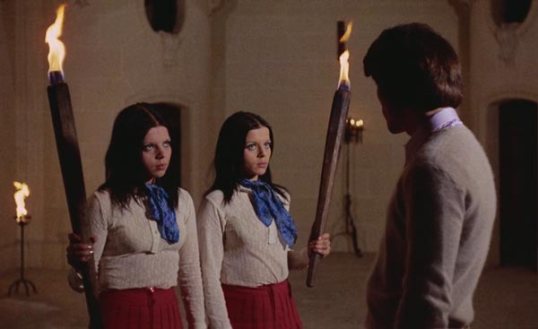
The Shiver of the Vampires tells the story of a honeymooning newlywed couple, Isle (Sandra Julien) and Antoine (Jean-Marie Durand).  Isle is looking forward to visiting her two cousins at their castle but, upon arriving, Isle and Antoine discover that the castle is now the home to two young women and that Isle’s cousins died just the day before.  Upset at both the news and a strange meeting with another woman named Isabelle (Nicole Nancel), Isle decides to spend the night sleeping alone.  However, while Isle is getting ready for bed, Isolde (played by the singularly-named Dominique) emerges from the grandfather clock.

Isolde is the vampire who not only killed the cousin but who, along with her two servants, has taken over the castle.  While Isolde leads Isle to the cemetery, Antoine wanders around the castle and just happens to run into the two dead cousins…

At its heart, The Shiver of the Vampires is an old Universal haunted castle movie with a bit more nudity and the sexuality move to the forefront as opposed to just being subtext.  It’s a horror film with plenty of blood and one rather nasty death via piercing by pointed nipple covers.  At the same time, it’s also a rather sentimental film.  Ultimately, Isle is vulnerable not because she has any secret desire to be a vampire but instead because her cousins, regardless of what they’ve become, are the only family that she has left.  Married or not, Antoine is just an interloper.

As with all of Rollin’s films, The Shiver of the Vampires plays out at its own dream-like pace, with the camera loving examining every inch of the old castle.  On the one hand, the film may be a dream of dark and disturbing things but, at the same time, it’s also a sad-eyed look at family and the impossibility of escaping the past.

And, of course, you’ll never forget that grandfather clock.

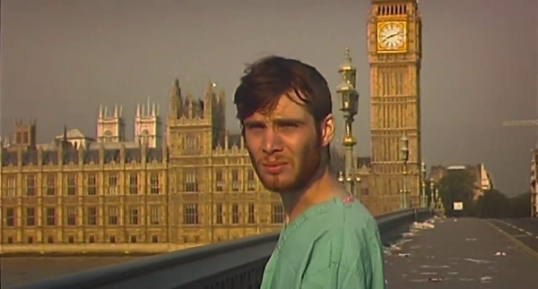
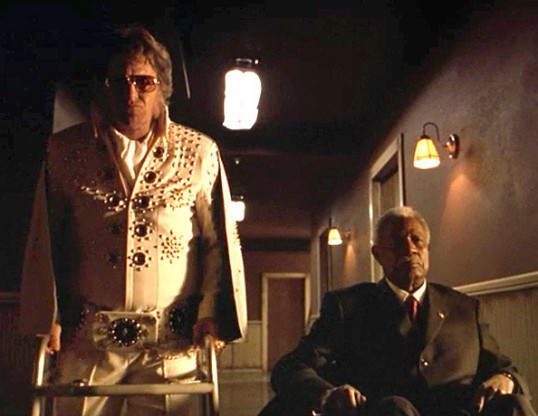
4 Shots From 4 Films: 28 Days Later, Bubba Ho-Tep, Halloween: Resurrection, The Ring


4 Shots From 4 Films is just what it says it is, 4 shots from 4 of our favorite films. As opposed to the reviews and recaps that we usually post, 4 Shots From 4 Films lets the visuals do the talking!

This October, we’re using 4 Shots From 4 Films to look at some of the best years that horror has to offer!

4 Shots From 4 2002 Horror Films

28 Days Later (2002, dir by Danny Boyle)

Bubba Ho-Tep (2002, dir by Don Coscarelli)

Halloween Resurrection (2002, dir by Rick Rosenthal)

The Ring (2002, dir by Gore Verbinski)

Horror on the Lens: Hands of a Stranger (dir by Newt Arnold)


After concert pianist Vernon Paris (James Stapleton) loses his hands in an auto accident, he is the recipient of a double hand transplant.  Unfortunately, Vernon isn’t happy with having a stranger’s hands and he fears that he’ll never be able to play the piano again.  Even worse, he soon becomes convinced that the hands are evil and are trying to force him to commit murders.

But is it the hands or Vernon’s own unstable mind that’s responsible his actions?

This 1962 horror film was the fourth adaptation of the Maurice Renard’s The Hands of Orlac.  As opposed to other film adaptations of Renard’s novel, Hands of Stranger plays up the ambiguity of whether the recipient of the hands is truly possessed or if he’s just using the hands as an excuse to indulge in his dark side.

Enjoy!


Horror Scenes That I Love: Smashing The Mirror in The Boogey Man


Ulli Lommel’s 1980 slasher film The Boogey Man is a pretty silly movie but I do like this scene.  The idea of seeing something in the reflection of a mirror that doesn’t appear to actually be in the room is one of my top nightmare fuels.

Plus, after the storms we had last night and the fact that there’s still debris all over the place and just driving from one location to another is kind of a pain in the ass right now, there’s just something satisfying about watching a mirror get destroyed.

Break, baby, break!


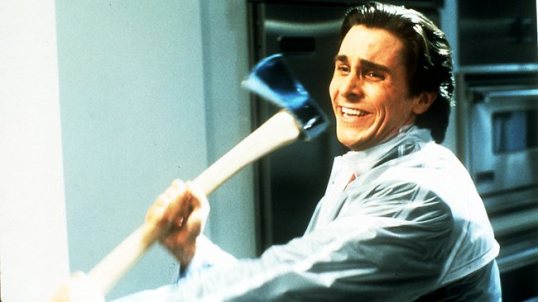
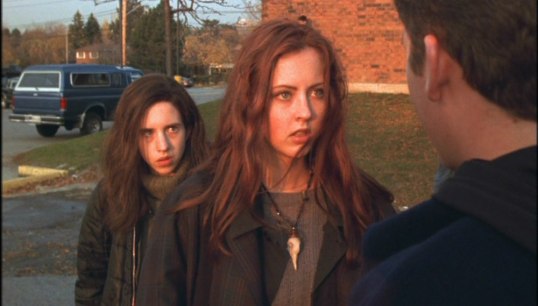
4 Shots From 4 Films: American Psycho, Final Destination, Ginger Snaps, Shadow of the Vampire


4 Shots From 4 Films is just what it says it is, 4 shots from 4 of our favorite films. As opposed to the reviews and recaps that we usually post, 4 Shots From 4 Films lets the visuals do the talking!

This October, we’re using 4 Shots From 4 Films to look at some of the best years that horror has to offer!

4 Shots From 4 2000 Horror Films

American Psycho (2000, dir by Mary Harron)

Final Destination (2000, dir by James Wong)

Ginger Snaps (2000, dir by John Fawcett)

Shadow of the Vampire (2000, dir by E. Elias Merhige)

Horror on the Lens: Curse of the Swamp Creature (dir by Larry Buchanan)


Today’s horror on the lens is 1966’s Curse of the Swamp Creature!

Probably the best thing about Curse of the Swamp Creature is that it was filmed in the town of Uncertain, Texas, which is right near the Texas/Louisiana border.  Uncertain, which sits on the shores of Caddo Lake, was incorporated in 1961.  Reportedly, when filling out the paperwork, the town’s founders wrote “Uncertain” in the blank for the name because they genuinely hadn’t come up with a name.  And …. well, you know what happens when you try to make a joke on an official document.

Anyway, this film was directed by Larry Buchanan and that’s really all you need to know about it.  Buchanan specialized in making low-budget remakes of other films, though he always claimed that Curse of the Swamp Creature was a totally original idea on his part.  The film is about a mad scientist who lives in the swamp and is trying to reverse evolution.  Things don’t always work out the way that they should and occasionally, the mad scientist has to feed his alligators.  John Agar’s in the movie, of course.

Enjoy!

The TSL’s Horror Grindhouse: The Flesh and Blood Show (dir by Pete Walker)


I had a few reasons for watching the 1972 slasher film, The Flesh and Blood Show.

First off, the film was directed by Pete Walker.  Though Pete Walker may not be as well-known as some of his contemporaries and his overall cinematic output is dreadfully uneven, he was still responsible for enough memorable films that I will always give him a chance.

Secondly, it’s a British film and the British were responsible for some of the best horror films of the late 60s and early 70s.

Third, speaking as a horror fan, that title is just irresistible.  The Flesh and Blood Show?  Well, there’s nothing subtle about that!  Looking at that title, you find yourself wondering, “How much flesh and how much blood is actually in this film?”

Well, having watched the film, I can tell you that there’s very little blood and a good deal of flesh.  The Flesh and Blood Show was Walker’s first horror film.  Before moving into the horror genre, Walker specialized in making sexploitation movies and it’s kind of obvious that, when he directed this film, he was still more comfortable asking people to undress than asking them to play dead.  As opposed to other slasher films, the majority of the young cast survives and the almost all of the murders occur off-screen.  Every couple of minutes or so, someone else is getting undressed.  The constant nudity actually starts to get pretty funny after a while.  One could very easily use The Flesh and Blood Show to construct a drinking game.

As for the film’s plot, it deals with a group of actors who receive invitations to an abandoned theater.  An unseen producer apparently wants them all to perform an infamous play, perhaps the same play that is rumored to have led to tragedy back in 1945.  If it seems rather odd that the film’s characters would willingly go to an abandoned theater in the middle of nowhere and perform a possibly cursed play, no one is ever going to accuse anyone in this film of being smart.  Why ask why when there’s so much dancing and undressing to do?

There’s also an elderly major (Patrick Barr) hanging out around the theater.  He was actually one of my favorite characters in the movie because he approached everything with this very British, very stiff upper lip attitude.  Of course, the major himself has a secret.  That said, the secret isn’t that surprising.  I figured it out as soon as he showed up.

Naturally, all the murders at the theater are linked back to a tragedy in the past.  The final 15 minutes of the movie are made up of an extensive flashback to that tragedy and I will say this: it’s the best part of the film.  The flashback was originally filmed in 3-D and Walker uses this as an excuse to indulge in some surreal flourishes.

There are a few positive things to be said about The Flesh and Blood Show.  Pete Walker was a talented director and that talent comes through in even his weaker films.  There are a few scenes where Walker manages to maintain a properly ominous atmosphere and the movie’s score is so melodramatic and over the top that it’s kind of hard not to love it.

But, for the most part, The Flesh and Blood Show is a rather forgettable film.  If you want to see a good Pete Walker film, track down Frightmare.

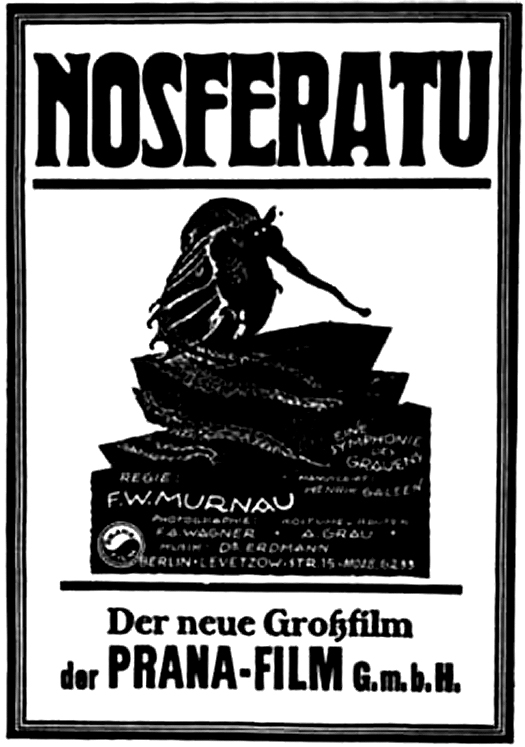
Horror Scenes That I Love: Nosferatu on the Death Ship


Since I seem to be in a bit of a vampiric mood tonight, how about a scene from the 1922 classic, Nosferatu, for today’s scene that I love?

This scene features the titular vampire taking over a boat and it proves that movies didn’t need to be scary.

Enjoy!

(As a reminder, if you like this scene, you can watch the whole movie by clicking here!)

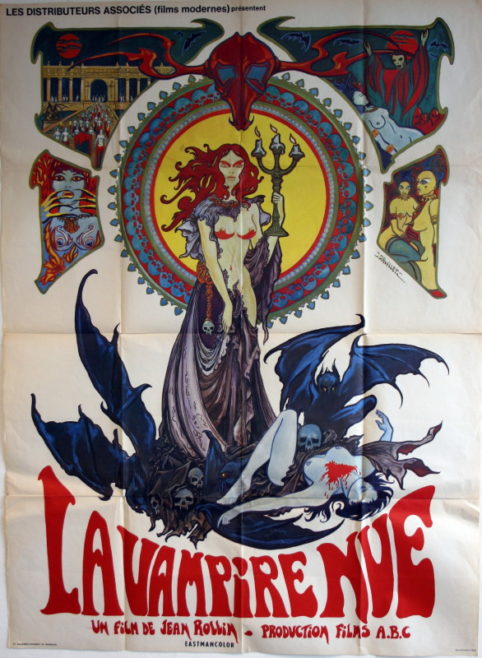
International Horror Film Review: The Nude Vampire (dir by Jean Rollin)


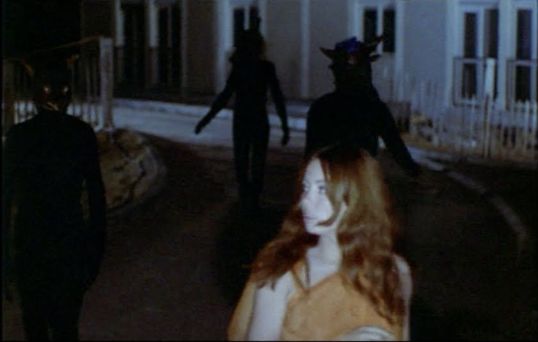
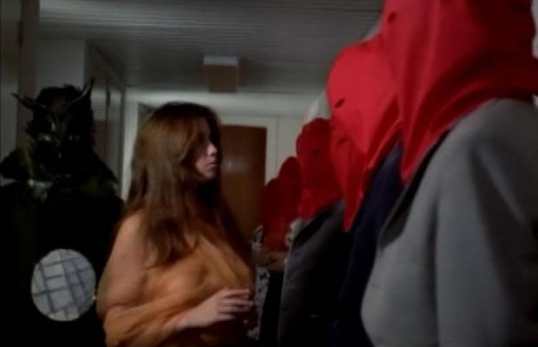
In the middle of the night, a woman (Christine François), wearing an orange nightgown walks down a dark, Paris street.

She is followed by three men, all of whom are wearing strange, bird-like masks.

The woman turns a corner and runs into Pierre (Olivier Rollin).  Pierre and the woman stare at each other, without saying a word.  Though it may be their first time to meet each other, both their attraction and their bond is instantaneous.

Both Pierre and the woman run down the street.  The men in the marks follow them.

Finally, in a deserted alley, the men corner the woman and Pierre.  Though Pierre escapes, the woman is shot by one of the men and promptly collapses.

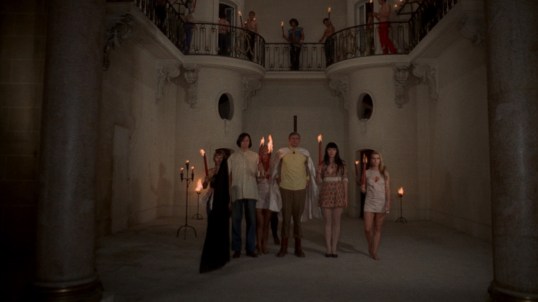
The men pick up the woman’s body and carry her to a nearby, gated building.  A bearded doorman lets them through.  Several other people, all wearing tuxedos and fancy gowns, come to the gate and, after showing the doorman their invitation, are allowed to pass through.  Pierre tries to follow but is told that he cannot enter because he has not been invited.

And so begins Jean Rollin’s 1970 film, The Nude Vampire.  This was Rollin’s second film, following the controversial Le Viol du Vampire.  The Nude Vampire, while once again featuring all of Rollin’s pet obsessions, is still a far more assured piece of filmmaking than Rollin’s first film.  It’s interesting to watch The Nude Vampire directly after Le Viol du Vampire because you can can truly see Rollin developing as a director.  Once again, Rollin is telling an odd story about a frequently disrobed vampire and once again, all of the action leads to the beach.  However, the plot is far easier to follow in The Nude Vampire than in Le Viol du Vampire.  If the first film often seemed to be too indulgent for its own good, The Nude Vampire is just indulgent enough to work.  Of course, as with any Rollin film, your mileage may vary.  What seems rather coherent and almost tame to a Rollin fan may seem like the exact opposite to someone who has never seen a Rollin film before.

As for Pierre, he is determined to figure out what happened to the woman, even though his own father says that it is sometimes best to just leave well enough alone.  After punching out a partygoer and stealing his invitation, Pierre gets into the building and discovers that, despite having been shot in front of him, the woman in the orange nightgown is not dead.  In fact, she doesn’t even appear to be injured.  Instead, she drinks the blood of a party guest who has just committed suicide.  It turns out that the party is actually a cult and they worship the woman.

As if that’s not shocking enough, Pierre discovers that his own father is in charge of the cult!  His father explains that the woman is actually a vampire but that there might be a cure for her condition.  But, in order to cure her, she must be kept safe from the vampires who are trying to capture her….

And that’s not all!  But I won’t share any more of the plot.  I only have limited space here, after all.  The film plays out like a serial, with twists and turns and a lot of scenes involving people being chased from one location to another.  As I mentioned before, it all leads to the beach because this is a Rollin film and Rollin’s vampiric visions always ended with the beach.

As one should always expect from a Jean Rollin film, The Nude Vampire plays out at its own deliberate, dream-like pace.  As a director, Rollin was such a strong visualist that somehow even his film’s lapses in coherence seemed to make a strange sort of sense.  If every movie is a dream then who are we to complain when they employ dream logic?  As with any Rollin film, The Nude Vampire is not for everyone but fans of Rollin’s unique aesthetic will definitely find much to enjoy.