Today’s scene that I love comes from Twister and it features Bill Paxton showing off some wonderful chemistry with Helen Hunt. One of the great things about Bill Paxton is that he was equally at home in both big blockbusters like Twister and Titanic and low-budget indies like Near Dark. He was an artist who also happened to be a star. As a lover of both films and eccentric Texans, I will always miss Bill Paxton.
4 (or more) Shots From 4 (or more) Films is just what it says it is, 4 (or more) shots from 4 (or more) of our favorite films. As opposed to the reviews and recaps that we usually post, 4 (or more) Shots From 4 (or more) Films lets the visuals do the talking.
89 years ago, Dennis Hopper was born in Dodge City, Kansas.
It seems rather appropriate that one of America’s greatest cinematic outlaws was born in a town that will be forever associated with the old west. Dennis Hopper was a rebel, back when there were actual consequences for being one. He started out acting in the 50s, appearing in films like Rebel Without A Cause and Giant and developing a reputation for being a disciple of James Dean. He also developed a reputation for eccentricity and for being difficult on set and he probably would have gotten completely kicked out of Hollywood if not for a somewhat improbable friendship with John Wayne. (Wayne thought Hopper was a communist but he liked him anyways. Interestingly enough, Hopper later became a Republican.) Somehow, Hopper managed to survive both a raging drug addiction and an obsession with guns and, after a mid-80s trip to rehab, he eventually became an almost universally beloved and busy character actor.
Hopper, however, always wanted to direct. He made his directorial debut with 1969’s Easy Rider, a film that became a huge success despite being an infamously chaotic shoot. The success of Easy Rider led to the Hollywood studios briefly trying to produce counter-culture films of their own. Hopper was given several million dollars and sent to Peru to make one of them, the somewhat dangerously titled The Last Movie. Unfortunately, The Last Movie, was such a bomb that it not only temporarily derailed Hopper’s career but it also turned Hollywood off of financing counter culture films. Hopper spent a decade in the Hollywood wilderness, giving acclaimed performances in independent films like Tracks and The American Friend, even while continuing to increase his reputation for drug-fueled instability. Hopper would eventually return to directing with his masterpiece, 1980’s Out of the Blue. (Out of the Blue was so controversial that, when it played at Cannes, Canada refused to acknowledge that it was a Canadian production. It played as a film without a country. Out of the Blue, however, is a film that has stood the test of time.) Unfortunately, even after a newly cleaned-up Hopper was re-embraced by the mainstream, his directorial career never really took off. He directed 7 films, of which only Easy Rider and Colors were financially successful. Contemporary critics often didn’t seem to know what to make of Dennis Hopper as a director. In recent years, however, Hopper’s directorial efforts have been reevaluated. Even The Last Movie has won over some new fans.
Today, on his birthday, we honor Dennis Hopper’s directorial career with….
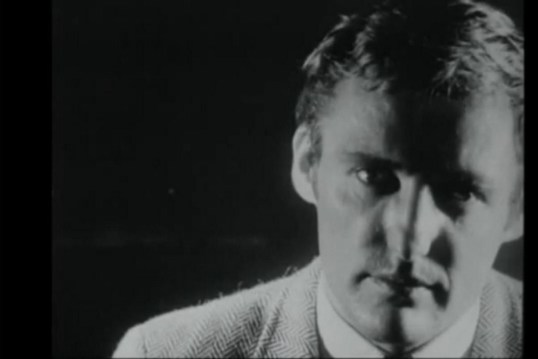
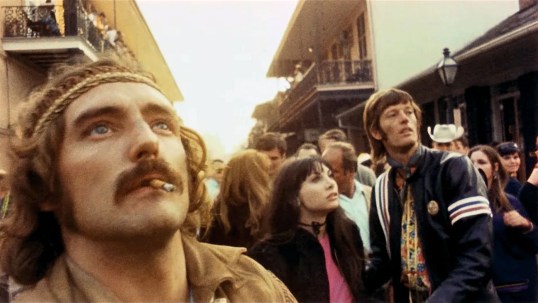
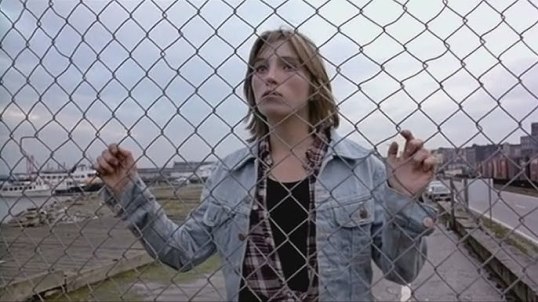
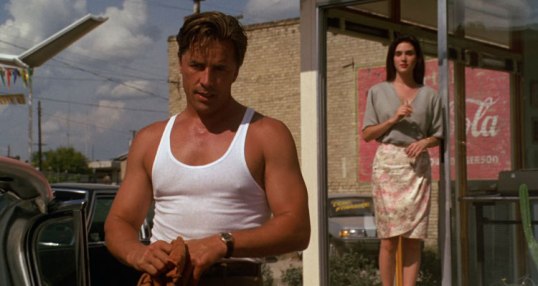
4 Shots From 4 Dennis Hopper Films
Easy Rider (1969, dir by Dennis Hopper, DP: Laszlo Kovacs)The Last Movie (1971, dir by Dennis Hopper, DP: Laszlo Kovacs)Out of the Blue (1980, dir by Dennis Hopper, DP: Marc Champion)The Hot Spot (1990, dir by Dennis Hopper, DP: Ueli Steiger)
Chow Yun-Fat is one of the most charismatic men on earth. I’ve always enjoyed his performance in ANNA AND THE KING (1999) with Jodie Foster. He’s wonderful in this big budget American film, and he doesn’t even have to fire two guns! I know several women here in Arkansas who don’t know the first thing about Hong Kong movies, but they still love Chow based on this one film. On a side note, ANNA AND THE KING made over $113 Million at the worldwide box office, which means quite a few people in this world appreciate a more romantic Chow.
Enjoy this scene where the King of Siam surprises Foster’s English schoolteacher, and breaks all kinds of cultural norms, when he asks her to dance. It’s quite a charmer.
1979’s Meteor is about a big rock that is tumbling through space. Earth is directly in its path and, if it hits the planet, it could be an extinction-level event. Unfortunately, little bits of the rock keep breaking off and crashing into Earth, destroying cities and fleeing extras. Goodbye, Hong Kong. Goodbye, Switzerland, which is destroyed via stock footage lifted from Avalanche. Goodbye, New York, which blows up in such spectacular fashion that the scene was later re-used in The Day After.
It might seem like the planet is doomed. The meteor is unstoppable. Bruce Willis hasn’t become a star yet. But fear not! Some of the brightest faces of the 70s have been recruited to stop the meteor. Natalie Wood, in one of her final films, plays a translator and gets covered in muddy river water. Sean Connery wears a turtleneck and curses in that Scottish way of his. Karl Malden wears a hat and tells people to calm down while he calls the President. Brian Keith plays a Russian with all the grace and skill of a cat trying to rip open a bag of treats. Martin Landau is the military official who doesn’t think that the scientist know what they’re talking about. Henry Fonda is the president. That’s a lot of balding men for one movie and it’s hard not to notice that both Malden and Keith often seem to be wearing a hat whenever they share a scene with Connery. My personal theory is that the production, having spent all of their money on blowing up New York, couldn’t afford more than two toupees so everyone had to take turns wearing them. (The few scenes where Malden is hatless while in Connery’s presence are often oddly filmed, with either Connery on Malden standing with their back to the camera, almost as if the scenes were actually done with a stand-in.)
We’re supposed to breathe a sigh of relief when we see that Henry Fonda is playing the President but I’ve seen FailSafe and I remember him allowing the Russian to nuke New York City. Interestingly enough, New York gets destroyed in this film too. Why didn’t President Fonda care about New York City? Of course, the scientists and the military folks are all located in a control center that’s located under the city. Malden mentions that they’re right next to the Hudson River. It doesn’t seem to occur to anyone that this is a bad idea but, then again, they also elected Henry Fonda president again.
My late friend and colleague Gary Loggins described Meteor as being a “crashing bore.” I have to admit that this is one of the few times that I have ever disagreed with Gary. Meteor is a tremendous amount of fun, as long as you’re watching it with a group of people and nobody takes it seriously. (The first time I saw it was at one in the morning while I was in college. Jeff and I watched it in the lounge of one of the dorms. We may be the only two people to have romantic memories of Meteor.) Meteor features a cast of champion scenery chewers. Karl Malden, Sean Connery, Martin Landau, Brian Keith, none of them were exactly subtle actors and giving them an excuse to argue about how to deal with a meteor allows for a lot of very enjoyable overacting. As well, the special effects are so cheap and obviously fake that it’s hard not to laugh out loud whenever the film cuts to that shot of the meteor rolling through space or the incredibly shiny American and Russian missiles slowly heading towards it.
Meteor’s a lot of fun, even if it is one of those movies where no one points out that our heroes inevitably seem to make every situation worse with their own stupidity. It’s very much at the tail-end of the 70s disaster boom. Watch it for the stars. Watch it for the rock. And watch it for the hairpieces.
James Stewart, Charles Bronson, and Mary Tyler Moore!? All in a film directed by Richard Donner!?
Well, kind of.
James Stewart does not actually appear onscreen in 1961’s X-15. However, he does provide the narration, explaining to us the origins of the NASA’s X-15 project and why it’s important that America be the first to explore and conquer space. He talks about the men who risked their lives to test the rocket and the women who supported them and who started every day with the knowledge that they might never see their husband again after he left for work. There’s something undeniably comforting about hearing Stewart’s voice in this film. It’s the voice of an idealized America. It’s a little weary. There’s definitely a bit of age in the voice. It’s the voice of a man and a country that has had to survive a lot, especially over the past few years. But it’s also an incurably optimistic voice. You hear that voice and you know that everything is going to be okay.
Richard Donner’s directorial debut, X-15 is a docudrama that often plays out like a commercial for the X-15 and America’s young space program. The film mixes actual footage of the X-15 with scenes of the pilots returning (and sometimes not returning) home. The emphasis is on each man doing what needs to be done to make the program a success and each woman doing what she has to do to support her man. Throughout the film, there are scenes where the wives and the girlfriends of the pilots hear sirens and explosions and silently hope that they won’t be the one getting the call.
Making her film debut, Mary Tyler Moore plays Pamela, the girlfriend of pilot Matt Powell (played, in rather dull fashion, by David McLean). When Pamela first arrives at the base, the wives warn her about overreacting to every explosion. Major Rinaldi (Brad Dexter) warns her to not even try to get pregnant because that would take Powell away from the program. (When Rinaldi talks to Pamela, he comes across as more than just being a 50s-style sexist. That would be expected, considering that the film was made in 1961. Instead, Rinaldi actually comers across as being rather threatening. It’s kind of disturbing, to be honest.) Pamela comes to understand the importance of Matt’s work and Matt …. well, Matt’s kind of dull.
Actually, despite being played by wonderful character actors like James Gregory and Kenneth Tobey, just about every man in this film is kind of boring. This is one of those films that celebrates the idea of cold, hard professionalism. No one shows much emotion, even when one of the pilots is killed in an accident. No one is blamed. No one is shouted at. It’s just something that happens and everyone understands the risks. It’s actually an admirable attitude and one reason why I have a thing for pilots. But the deliberate blandness of the pilots in X-15 makes it difficult to keep track of who’s who. The only male actor who makes a real impression is Charles Bronson, playing Lt. Col. Brandon. Bronson’s incredible screen presence makes up for the fact that his character doesn’t have much of a personality.
That said, it’s a bit of a disappointment that Jimmy Stewart is not onscreen and Mary Tyler Moore has to share her scenes not with Bronson but instead with the dull David McLean. When the film was released in 1961, it was providing audiences with something that they hadn’t seen before and I imagine it was truly exciting to see a rocket fly, however briefly, into space. However, modern audiences have seen TopGun and TopGun: Maverick. I’ve seen TheRightStuff, which covers much of the same material as X-15. As a result, when viewed today, X-15 is a bit dull and features little of the flair that would characterize Richard Donner’s later directorial efforts. Today, the main reason to watch the film is for Stewart, Moore, and Bronson. Not having them acting opposite each other feels like a huge missed opportunity.
As some of our regular readers undoubtedly know, I am involved in a few weekly watch parties. On Twitter, I host #FridayNightFlix every Friday and I co-host #ScarySocial on Saturday. On Mastodon, I am one of the five hosts of #MondayActionMovie! Every week, we get together. We watch a movie. We tweet our way through it.
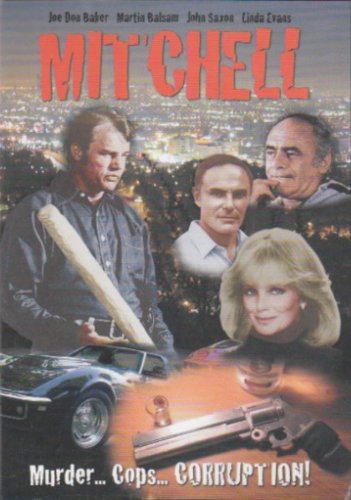
Tonight, at 10 pm et, I will be hosting #FridayNightFlix! The movie? 1975’s Mitchell, starring the great Joe Don Baker!
If you want to join us this Friday, just hop onto twitter, start the movie at 10 pm et, and use the #FridayNightFlix hashtag! I’ll be there tweeting and I imagine some other members of the TSL Crew will be there as well. It’s a friendly group and welcoming of newcomers so don’t be shy.
4 Shots From 4 Films is just what it says it is, 4 shots from 4 of our favorite films. As opposed to the reviews and recaps that we usually post, 4 Shots From 4 Films lets the visuals do the talking!
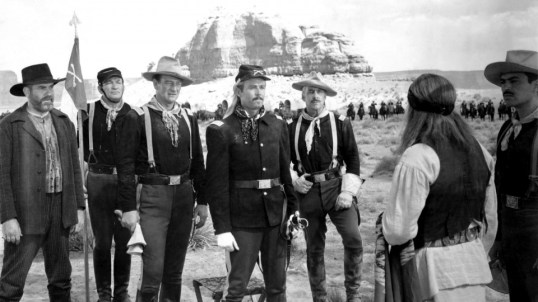
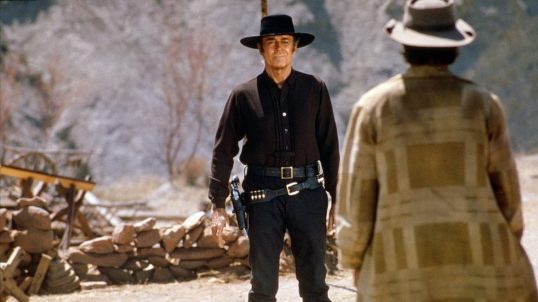
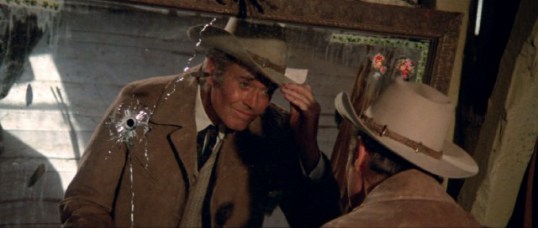
Today, we celebrate the birthday of Henry Fonda! Fonda was born 120 years ago today and, over the course of his long career, he was often cast in role the epitomized everything great about America. It’s rare to find a Henry Fonda film in which he played an out-and-out villain, though he did just that in Sergio Leone’s Once Upon A Time In The West. (Leone, in fact, cast Fonda as the evil Frank because he knew audiences would be shocked to see Fonda coldly gunning down settlers and their families.)
In honor Henry Fonda’s legacy, here are….
4 Shots From 4 Films
My Darling Clementine (1946, dir by John Ford)
Fort Apache (1948, dir by John Ford)
Once Upon A Time In The West (1968, dir by Sergio Leone)
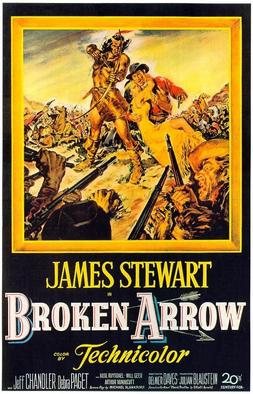
The 1950 film, BrokenArrow, takes place in the years following the Civil War.
Having survived the war, frontier scout Tom Jeffords (James Stewart) just wants to get away from his fellow countrymen for a while. During the Civil War, Jeffords saw the worst that humanity had to offer and the experience has left him cynical about the idea of bringing civilization to the American frontier. Tom just wants to be left alone. Still, when he comes across a 14 year-old Apache who has been shot in the back, Tom stops to help. Though wounded, the Apache still tries to attack him. He’s learned not to trust the white man. BrokenArrow is a film that suggests that he has good reason not to. Indeed, BrokenArrow was one of the first major Hollywood productions to attempt to treat the American Indians with sympathy and fairness.
Tom saves the Apache’s life and reunites him with his tribe. When the Apaches attack and kill a group of nearby gold prospectors, they allow Tom to live but they warn him to stay out of their territory. However, circumstances make it impossible for Tom to do that. When Tom arrives in Tucson, the citizens are incredulous that he allowed the Apache child to live. When Tom learns the Apache language and customs and marries an Apache woman named Sonseeahry (Debra Paget), it causes the other whites to distrust him even more. However, it is Tom’s eventual friendship with the Apache chief Cochise (Jeff Chandler) that eventually lands Tom in the middle of the conflict between the Apaches who want to preserve their way of life and the white men who want their land.
BrokenArrow is a well-intentioned film, in the way that mildly liberal films from the 50s tended to be. The U.S. government and its citizens are criticized for breaking their promises and their treaties to the Apache but the film’s ultimate message is one of compromise and understanding. The bigoted whites may be the villains but then again, so is Geronimo (Jay Silverheels) for refusing to accept Cochise’s desire for peace. Cochise is the film’s hero specifically because he calls for setting aside differences and living in peace with the white man, despite his own distrust of their leaders. The majority of the extras were Apache, though Neither Jeff Chandler nor Debra Paget were of Native descent. Both of them give good performances that largely avoid the stereotypes of the time. Chandler received his only Oscar nomination, for Best Supporting Actor, for his performance in this film.
That said, the unnominated Jimmy Stewart dominates the film and that’s not really surprising. (It should be noted that, while Stewart was not nominated for this film, he was nominated for his performance in Harvey, that same year.) Stewart may have first found fame as the happy and go-lucky face of Middle America but his experiences in World War II left a definite mark on him. He returned from the war a much more serious figure and every character that he played (even the lovable Elwood in Harvey) had more than a hint of melancholy to him. Stewart plays Tom as being a troubled soul, someone who is still struggling to come to terms with the destruction and cruelty that he saw during the Civil War. There’s an authenticity to Stewart’s performance, leaving little doubt that he understood exactly what Tom was going through. BrokenArrow ends on a note of compromise and racial harmony but it’s a sad film because we know what waits in the future for Cochise and his people. Tom Jeffords fights to bring peace to the frontier but it’s a peace that won’t last. And, as played by Stewart, Tom seems to understand that better than anyone.
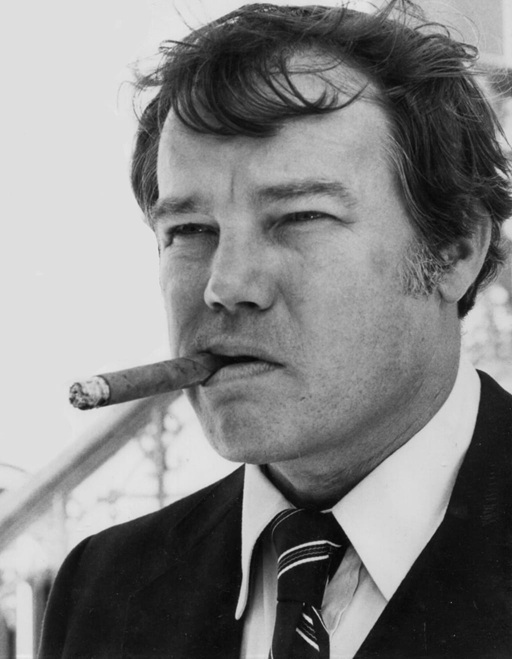
I knew this day was going to come, due to his advanced age and the fact that it had been a while since he had appeared in a film (his final appearance was a wonderful supporting role in Jeff Nichols’s Mud), but it’s still pains me to say goodbye to Joe Don Baker.
As a fan of grindhouse cinema, as a fan of the classic Bond films, as a fan of Texas actors, and as a fellow graduate of UNT who used to enjoy eating at that Denton Whataburger that had his picture painted on the wall, I will have a special place in my heart for Joe Don Baker and the entertaining, if often ridiculous, films that he made.
He was 89 years old when he was passed away on May 7th. They don’t make ’em like Joe Don anymore.
Here he is in 1973’s WalkingTall, enforcing justice with a big stick.
Rest in peace. I’ll be watching Mitchell in your memory.


 Through the Shattered Lens