Claire (Michelle Pfeiffer) is a former cellist who is still struggling to recover from a serious car accident and who has been at loose ends ever since her daughter left for college. Claire’s husband, Norman (Harrison Ford), is a scientist and a college lecturer. After their neighbor, Mary (Miranda Otto), disappears, Claire becomes convinced that Mary’s husband (James Remar) did something to her. Claire also becomes convinced that Mary’s ghost is trying to contact her, by appearing in the lake and filling the bathtub up with water whenever Claire isn’t looking. Norman tells Claire that she’s imagining things and pushes her to see a therapist. As Claire investigates, she discovers that Norman knows more than he’s letting on.
What Lies Beneath is a long and drawn-out ghost story that Robert Zemeckis made because he had time to kill while the filming of Cast Away was on hiatus so Tom Hanks could lose weight and grow a beard. That this movie was not a personal project for Zemeckis is reflected in his direction, which is surprisingly impersonal for a Zemeckis film. The film is a showcase for Michelle Pfeiffer, who gives a good performance as the emotionally fragile Claire and holds the film’s many disparate elements together. Harrison Ford sometimes seems disinterested but his casting still pays off when Norman gets to say and do some things that you normally would never expect Harrison Ford to do.
I remember seeing this in a theater in 2000 and being surprised by the ending. Looking back on it today, I just can’t believe that I sat through the entire movie.
1980’s Alligator begins in 1968. While on vacation in Florida, a teenage girl named Marisa Kendall purchases a baby alligator named Ramon. When she returns home to Chicago, her jerk of a father flushes Ramon down the toilet.
12 years pass. Marisa (Robin Riker) becomes a herpetologist. As for Ramon, he actually survives being flushed down the toilet and thrives in the sewer. He eats the carcasses of animals that had been a part of an experiment involving a growth serum. The serum had the desired effect of making the animals bigger but it also increased their metabolism to the extent that they became aggressive and had to eat constantly. Evil industrialist Slade (Dean Jagger) is convinced that, by tossing the carcasses in the sewer, he’s ensured that no one will ever find out about the experiments. Instead, he’s turned Ramon into a giant alligator who is always hungry. Soon, the super-intelligent alligator is ambushing and eating sewer workers.
Burned-out Detective Dave Madison (Robert Forster) teams up with Marisa to solve the mystery of why so many body parts are turning up in the sewers. It’s not easy. No one wants to admit that there might be a giant alligator living under the city. Everyone wants to believe that’s just an urban legend. But, after a tabloid reporter (Bart Braverman) manages to snap a few photographs of Ramon before being devoured, the police are forced to deal with the fact that they’ve got an alligator on their hands. As Slade continues to try to cover up his involvement, big game hunter Colonel Brock (Henry Silva) comes to town and announces that he will be capturing the alligator.
Directed by Lewis Teague and written by John Sayles, Alligator is a dark comedy disguised as a horror film. While numerous people get eaten and the film ends on a properly ominous note, Alligator is obviously not meant to be taken seriously. The cast is full of good actors who send up their own images. That’s especially true in the case of Henry Silva, who appears to be having a blast as the hyper macho Colonel Brock. Robert Forster, meanwhile, delivers his lines with a self-aware weariness that seems a bit more appropriate for a noir hero than a film about a detective investigating a giant alligator. One reason why the film works is because Forster, Silva, and the rest of the cast understood exactly what type of film they were appearing in and they delivered their overheated lines with just enough wit to let the viewer know that the film was in on the joke. The big and somewhat stiff-looking alligator may not look entirely real and it may move somewhat awkwardly but ultimately, it’s the most likable character in the movie. It just wants to relax in the sewers but, every few minutes, someone else is bugging him.
When first released, Alligator struggled at the box office but it has since gone on to become a cult favorite. Quentin Tarantino is a self-described fan and he had said he was inspired to cast Robert Forster as Max Cherry in Jackie Brown after seeing him as Dave Madison in this film. That’s not bad for a movie about a giant alligator!
Welcome to Retro Television Reviews, a feature where we review some of our favorite and least favorite shows of the past! On Fridays, I will be reviewing St. Elsewhere, a medical show which ran on NBC from 1982 to 1988. The show can be found on Hulu and, for purchase, on Prime!
This week’s episode is a much better Dr. Craig episode than last week’s.
Episode 1.21 “Baron von Munchausen”
(Dir by Victor Hsu, originally aired on April 19th, 1983)
Anthony Rizzo (Louis Giambalvo) seems like a nice guy. He’s admitted to the hospital with complaints of stomach pain and a high fever. Dr. Morrison can’t find anything wrong with him but he does notice that Rizzo has a lot of scars. Rizzo explains that he’s had a lot of surgeries over the course of his life and he’s got a story to go with each one of them. Morrison brings in Ehrlich for a consult. Ehrlich, who loves to perform surgery, suggests opening Rizzo up and doing an exploratory. Morrison thinks it’s too early for that, Rizzo, however, loves the idea. Rizzo then proceeds to die on the operating table.
Ehrlich is shaken. Morrison is angry. However, Westphall and Craig take one look at the case and deduce that Rizzo suffered from Munchausen’s Syndrome. For whatever reason, he was addicted to going to the hospital and having surgery. He knew all the tricks, from using a light blub to make it look like he had a fever to pricking his finger with a needle to convince the doctors that there was blood in his urine. It turns out that he died because of the drugs that he had been taking to help him fake his symptoms. Both Morrison and Ehrlich are relieved to learn that Rizzo’s death was not their fault.
“So, Ehrlich lost his first patient today,” Craig says to Westphall. “It won’t be his last.”
This was a good episode for Dr. Craig, especially after all that nonsense last week. When Westphall finds himself in need of a doctor to speak to a group of inner city medical students, he is horrified to discover that Mark Craig is the only one available. Craig accepts, saying that Westphall should have asked him earlier.
Westphall’s concerns are justified. Dr. Craig is opinionated, wealthy, and more than a little prejudiced against …. well, everyone. “My ancestors came here on the Mayflower!” Craig is quick to say. And yet, the students love him, specifically because he doesn’t pretend to be anything that he isn’t. Unlike Westphall, who tries give an inspiring pep talk, Craig is open about the reality of practicing medicine in what this episode refers to as being “the ghetto.” When asked if his medical student son will be working in a ghetto clinic, Craig replies, “Why would he?” Craig gets a standing ovation from the students, which felt like a bit much but whatever. It was nice, for once, to see the show admitting that Craig’s blunt honesty can sometimes be more effective than Westphall’s noncommittal style of encouragement.
Afterwards, in a wonderfully acted scene, Craig asked Westphall why people don’t seem to like him, Westphall shrugs and then says that Craig can be arrogant, rude, prejudiced, intolerant of other worldviews …. “Thank you, Donald,” Craig cuts him off.
Meanwhile, back at the hospital, a crazy woman (Micole Mercurio) is sent to the psych ward after threatening to kill Nurse Daniels. (No, leave Shirley alone!) Dr. Wendy Armstrong, who is one of the worst characters on this show, promptly discharges the woman and lets her leave the hospital. “She threatened to kill me!” Shirley says while Wendy shrugs, unconcerned. Fiscus also proves to be of no help, as he is once again feeling attracted to Kathy Martin.
Finally, Dr. White goes to a drug addict support group and walks out when things get too emotional. Booo! Dr. White is even worse than Dr, Armstrong!
This was a good episode. Next week, the season finale!
Welcome to Retro Television Reviews, a feature where we review some of our favorite and least favorite shows of the past! On Sundays, I will be reviewing the made-for-television movies that used to be a primetime mainstay. Today’s film is 1988’s Broken Angel! It can be viewed on YouTube.
Chuck Coburn (William Shatner) has a nice house in the suburbs, a nice job, a nice car, and a nice Bruins jacket. He’s hoping that he can once against have a nice marriage with his wife (Susan Blakely), despite the fact that she cheated on him and she still thinks that he spends too much time at work.
Chuck is proud of his teenage daughter, Jaime (Erika Eleniak). Jaime seems like the perfect suburban and angelic teenager. But then Jaime goes to prom and her best friend, Jenny (Amy Lynne), is gunned down in front of her. Jaime runs from the scene and vanishes. As Chuck searches for his daughter, he is stunned discover that Jaime, Jenny, and their boyfriends were all a part of a gang! His perfect daughter was smoking weed, doing cocaine, selling crack, and taking part in rumbles with a rival Asian gang. Even worse, Jaime’s gang was called …. LFN!
LFN? That stands for Live For Now. The Live For Now Gang. Whenever we see the members of the gang preparing to get into a fight with another gang, they all chant, “LFN! LFN!” LFN is a gang of white suburban teenagers and they look just as dorky as they sound. I mean, I think it would be bad enough to discover that your child is in a gang but discovering they were in a dorky gang would probably make it even worse.
The majority of Broken Angel is made up of scenes of Chuck searching the mean streets of Los Angeles. He partners with a social worker (Roxann Dawson) who is herself a former gang member. Chuck discovers that his daughter’s street name was — *snicker* — Shadow. He also befriend a member of the LFN’s rival Asian gang and tries to encourage her to go straight. This leads to scene in which he is attacked by Al Leong. Somehow, middle-aged William Shatner manages to beat up Al Leong. That, in itself, is worth the cost of admission.
Broken Angel deals with a serious issue but it does so in such an overwrought and melodramatic fashion that most viewers will be moved not to tears but to laughter. In Broken Angel, William Shatner gave the type of overly dramatic and self-serious performance that he routinely pokes fun at today. If you’re one of those people who enjoys listening as Shatner emphasize random syllables and takes meaningly pauses, this movie will give you a lot to enjoy. In every scene, Shatner seems to be saying, “Notice me, Emmy voters! Notice me!” Of course, it wouldn’t be until Shatner learned how to laugh at himself that the Emmy voters would finally notice him.
The film ends on an abrupt note but with the promise of better days ahead. Just remember — keep an eye out for the LFN!
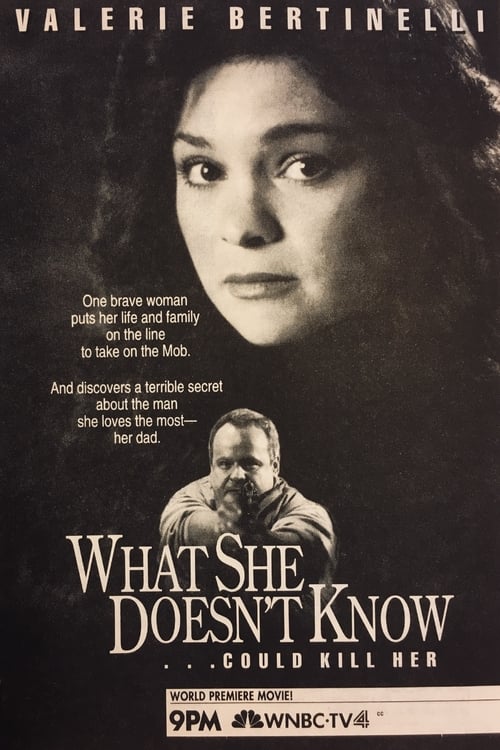
Welcome to Retro Television Reviews, a feature where we review some of our favorite and least favorite shows of the past! On Sundays, I will be reviewing the made-for-television movies that used to be a primetime mainstay. Today’s film is 1992’s What She Doesn’t Know! It can be viewed on YouTube!
Molly Kilcolin (Valerie Bertinelli) has graduated from law school!
In fact, she’s not only graduated from law school but she’s graduated from Harvard Law School, the most prestigious and most expensive law school out there. And she’s graduated at the top of her class. She’s the one who gets to give the speech at graduation, where she says that everything she knows about justice she learned from her father.
It’s really quite an accomplishment when you consider that Molly isn’t even from a rich family. She’s from a family of blue collar, New York City cops. Her father, Jack Kilcoin (George Dzundza), certainly never had a chance to go to Harvard. How did Molly even afford to go to Harvard? Apparently, her tuition was paid out of a trust fund that her aunt set up for her when she was a child. Seriously, that must have been a helluva trust fund because Harvard is not cheap or easy to get into.
Unfortunately, Molly disappoints her father when she tells him that she will not be accepting a job with a high class law firm but instead, she plans to work for the District Attorney’s office. Her fellow prosecutors are skeptical of her as well. Why does she want to go from Harvard to making next to no money in the trenches? Someone asks her if she has political ambitions but no, Molly just wants to do the right thing. She grew up in the neighborhood, don’t you know. She knows the people who are getting caught up in the Mafia’s schemes.
After Molly convinces a young mobster named Joey Mastinelli (Peter Dobson) to testify against his boss, she is shocked to discover that over half of the NYPD is on the Mob’s payroll. She is even more shocked to discover that her father is one of those dirty cops. For years, her father has been taking bribes and hiding the money away in Molly’s trust fund. Molly’s Harvard education was paid for by the Mafia!
As you can probably guess, family dinners are about to get awkward!
I usually enjoy films like What She Doesn’t Know because I’m always interested in the Mafia and there was a time when I briefly thought it might be fun to grow up and go to law school. I don’t know if I would have wanted to become a prosecutor, of course. Unlike Molly, I probably would have taken that ritzy law firm offer. The idea behind What She Doesn’t Know had potential but it was let down by the execution. Valerie Bertinelli tries hard but she’s just not convincing as a tough-as-nails Harvard grad. George Dzundza is a bit more believable as an aging New York cop but he’s still a bit on the dull side. (It would have been nice if this film could have been made a few years later, with Mira and Paul Sorvino in the lead roles.)
The film’s biggest flaw is that it portrays Molly as being so totally clueless about her father’s activities that it makes her seem to be impossibly naïve. I mean, did she never wonder how she could possibly afford to go to Harvard?
Instead of getting any sleep last night, I decided to stay up and watch the 1983 dance film, Flashdance. As a result, I’m not only very tired but everyone I see today, I’m just like, “You’re not really a welder, are you?”
In the film, that question is asked by bitchy Katie Hurley (Belinda Bauer) to 18 year-old Alex (Jennifer Beals) and the answer, by the way, is yes. Alex is a welder. Judging by the way the film handles the topic, it appears that audiences in 1983 were really stunned that a woman could be a welder. (I kept expecting to hear someone say, “She’s one of those lady welders, like you read about in the Reader’s Digest.”) Myself, I’m more amazed that an 18 year-old in Pittsburgh could get a high-paying union job. Then again, we never really see any evidence that Alex is really doing much as a welder. We do see her at a construction site holding one of those torch things but that’s pretty much it. Last night, I started Flashdance with no idea what a welder does and I ended the movie with even less of an idea but then again, the movie really isn’t about welding.
Instead, it’s about dancing! And love! And holding onto your dreams! And living in a big warehouse with a dog and a handsome boyfriend! As one character puts it, when you give up your dreams, you die. Of course, most people have multiple dreams so what happens if you only give up one but hold onto the others? I guess you just lose a toe or something. But anyway….
Actually, before we move on, how much money did welders make back in 1983? Because seriously, Alex lives in a gigantic and very nicely decorated building and her only roommate is a dog. As Alex explains to her boss and boyfriend, Nick (Michael Nouri), the building was an abandoned warehouse before Alex moved in. So, does Alex own the building? Does she just rent it? It’s a great place and I love what Alex does with it but seriously, it’s hard to believe that any 18 year-old — even one who is working two jobs — could afford it.
Yes, Alex has two jobs. Such is the price of independence. When she’s not welding, she’s dancing at a dive bar. Her routines are amazingly filmed and a lot of fun to watch but they’re also so elaborate it’s hard to believe that they could be performed in such a run-down establishment or that the bar’s blue collar clientele would have much patience for them. She’s an exotic dancer, which means she doesn’t take off her clothes. The sleazy owner of local strip club (Lee Ving) keeps trying to encourage Alex and her friend, Jeanie (Sunny Johnson), to come dance at his place but Alex has no interest in that. Jeanie, on the other hand, accepts the offer. Fortunately, Alex is there to run into the club and yank her off stage and then yell at her. Alex spends a lot of time yelling at people. She also throws a rock through one of Nick’s windows when she sees him talking to his ex-wife. One could argue that Alex has rage issues but no one in the film seems to take them personally. How could they? Alex is pursuing her dreams and the good thing about pursuing a dream is that you can do whatever you want while doing so.
(Interestingly, you can tell that the filmmakers were a little bit concerned that audiences in the early 80s might view Alex as being a bit too independent and confrontational. In between the scenes of Alex yelling at people and casually reaching underneath her sweatshirt to remove her bra while Nick watches, there are also scenes of Alex going to confession. It’s as if the film’s saying, “Yes, she welds! Yes, she has a temper! Yes, she’s flirty! But fear not, she’s a good girl! So, it’s okay for you to be on her side….”)
For a film that was shot on the streets of Pittsburgh, there’s not a gritty moment to be found in Flashdance. This is the type of film where Alex rides her bicycle across the city and it never once gets stolen, despite the fact that she never actually locks it up. In the world of Flashdance, all conflicts are easily resolved, all insecurities are ultimately conquered, and all dreams come true. It’s a world where Alex can become a great dancer despite having never had any formal training just because, as she puts it, she’s “watched TV and read books.” (My old dance teachers probably hated this movie.) It’s a fairy tale and, like most fairy tales, it’s deeply silly and yet oddly compelling at the same time. Never once do you buy that Alex is a welder and it’s pretty obvious, from all the quick cuts and the skewed camera angles, that Jennifer Beals did not do her own dancing. But it doesn’t matter because it’s hard not to get pulled into the film’s glitzy fantasy. Flashdance may technically be a bad movie but I dare you not to cry a little when Alex leaves her audition and finds Nick waiting for her. Not only does Alex achieve her dreams, but she also get a rich, older boyfriend, the type who gives her flowers and puts a bow on her dog.
It’s interesting to note that the two films that practically define the early 80s cinematic aesthetic, Flashdance and Scarface, were both released in 1983. (Not only was Flashdance initially offered to Scarface director Brian DePalma but Al Pacino was also offered the role of Nick. Pacino, of course, turned it down and played Tony Montana instead.) To be honest, I think you can argue that Flashdance and Scarface are essentially the same film. They’ve both got neon opening credits. They’ve both got a score from Giorgio Moroder. They’re both elaborate fantasies about someone who won’t surrender their dream. Just replace all the cocaine that Tony Montana snorted with Alex’s love of dancing.
Finally, I have to mention Flashdance‘s music. The score and the song may be totally 80s but it still sounds good in 2019. The theme song won an Oscar and let me tell you, if you can listen to this song without dancing around your house in your underwear, then you obviously have a lot more self-control than I do.
Brian Kelly (Christian Slater) is a California skater with a rebellious attitude and an adopted Vietnamese brother named Vinh (Art Chudabala). When the movie starts, all Brian cares about is not selling out and finding empty pools to skate. He even hires an airplane to fly him and his friends over Orange County so they can get a bird’s-eye view of the layout. Vinh is more worried about his job with the Vietnamese Anti-Community Relief Fund. The fund has been set up to send medical supplies to Vietnam but, when Vinh comes across a discrepancy in the shipping records, he realizes that something else is going on. When Vinh turns up dead in a hotel room, everyone else may believe that it is suicide but Brian knows that his brother was murdered. With the help of his fellow skaters and a sympathetic cop (Steven Bauer), Brian sets out to bring his brother’s killers to justice.
I was surprised when I watched Gleaming the Cube because it turned out to be much better than I was expecting. The movie is justifiably best known for its skating sequences, which were shot by Stacy Peralta and which featured pro-skaters Mike McGill, Rodney Mullen, and Gator Rogowski doubling for Slater in some of the film’s more spectacular stunts. (Tony Hawk plays one of Slater’s friends.) Slater, himself, learned how to skate for the movie and looks far more comfortable and natural on his board than Josh Brolin did in Thrashin’. Beyond the spectacular skating, Gleaming the Cube is energetically directed and surprisingly well-acted. A pre-stardom Christian Slater gives one of his best and most natural performances as Brian, playing the role without any of the tics or affectations that later came to define his career. Of its type, Gleaming the Cube is a classic.
 Claire (Michelle Pfeiffer) is a former cellist who is still struggling to recover from a serious car accident and who has been at loose ends ever since her daughter left for college. Claire’s husband, Norman (Harrison Ford), is a scientist and a college lecturer. After their neighbor, Mary (Miranda Otto), disappears, Claire becomes convinced that Mary’s husband (James Remar) did something to her. Claire also becomes convinced that Mary’s ghost is trying to contact her, by appearing in the lake and filling the bathtub up with water whenever Claire isn’t looking. Norman tells Claire that she’s imagining things and pushes her to see a therapist. As Claire investigates, she discovers that Norman knows more than he’s letting on.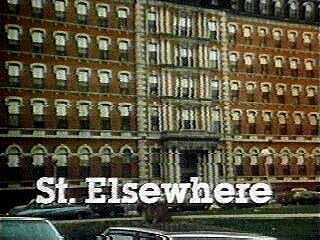



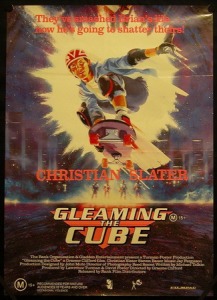 Brian Kelly (Christian Slater) is a California skater with a rebellious attitude and an adopted Vietnamese brother named Vinh (Art Chudabala). When the movie starts, all Brian cares about is not selling out and finding empty pools to skate. He even hires an airplane to fly him and his friends over Orange County so they can get a bird’s-eye view of the layout. Vinh is more worried about his job with the Vietnamese Anti-Community Relief Fund. The fund has been set up to send medical supplies to Vietnam but, when Vinh comes across a discrepancy in the shipping records, he realizes that something else is going on. When Vinh turns up dead in a hotel room, everyone else may believe that it is suicide but Brian knows that his brother was murdered. With the help of his fellow skaters and a sympathetic cop (Steven Bauer), Brian sets out to bring his brother’s killers to justice.
 Through the Shattered Lens