Retro Television Reviews: Miami Vice 1.1 “Brother’s Keeper: Part One”


Welcome to Retro Television Reviews, a feature where we review some of our favorite and least favorite shows of the past!  On Mondays, I will be reviewing Miami Vice, which ran on NBC from 1984 to 1989.  The entire show is currently streaming on Tubi!

Legend has it that Miami Vice was originally pitched as being “MTV Cops.”  That may or may not be true but what is known is that it was a show that, for many people, continues to epitomize the 80s.  Its cynical and frequently surrealistic portrait of life in Miami continues to be influential to this day.  With Florida currently being at the center of so many discussions, it just seemed like a natural pick for Retro Television Reviews.

(Up until a few days ago, the mayor of Miami was running for President and two other Florida residents are currently the front runners for one party’s presidential nomination.  As I sit here writing this, national politics are often described as Florida vs California.  Even more than in the past, America revolves around Florida.)

Though Miami Vice is often describe as being a Michael Mann production, the show itself was actually created by Anthony Yerkovich, who felt that Miami in the 80s had become the American equivalent of Casablanca during World War II.  Mann served as executive producer and he played a big role in creating the show’s trademark visual style.  And, of course, the theme song was provided by Jan Hammer:

Episode 1.1 “Brother’s Keeper, Part One”

(Dir by Thomas Carter, originally aired on September 16th, 1984)

Though the show is considered, to this day, to be the epitome of the Southern Florida aesthetic, Miami Vice actually begins in New York City.

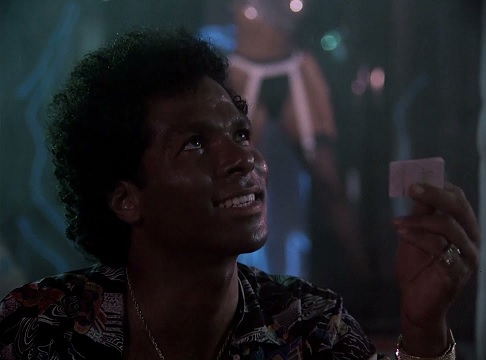
On a dark and wet New York Street, a detective named Tubbs (Philip Michael Thomas) sits in his car.  When a group of young men approach the car and demand that Tubbs give them some money, Tubb responds by coolly pointing a shotgun at them.  The men take the message and leave.

Tubbs is staking out a Colombian drug dealer named Calderone (Miguel Pinero).  Tubbs follows Calderone and his associates to a club, the type of place where even the neon lighting seem to be shadowy.  When Tubbs gets into a fight with some of Calderone’s bodyguards, Calderone flees into the dark night.

The action moves to Miami, which is as bright and sunny as New York was cold and dark.  Undercover vice cop Sonny Crockett (Don Johnson), wearing a white suit and a green t-shirt, gives advice to his partner, Eddie Rivera (a young and charismatic Jimmy Smits, making his television debut).  Eddie talks about how his wife is nervous about him being a cop.  Sonny tells Eddie to call her after they get finished dealing with a local drug dealer named Corky.

Corky knows Crockett as “Sonny Burnett” and he believes Eddie is a buyer from California.  When Corky arrives, they drive out to an underpass.  Corky and Eddie walk over to another car to check out Corky’s product.  Sonny spots the bomb that’s been taped under car’s hood but he’s too late to keep it from blowing up both Corky and Eddie.

When Lt. Rodriguez (Gregory Sierra) arrives on the scene, he’s not amused to discover two of his detectives — Stan Switek (Michael Talbott) and Larry Zito (John Diehl) — joking about how the police dogs are going to get hooked on all of the cocaine residue.  However, he’s even more annoyed with Sonny, who is quickly established as being the type of cop who does not “do it by the book!”  Rodriguez also says that Sonny hasn’t changed since his “football days.”  Sonny says that Eddie was killed by a mysterious dealer known as The Colombian.  Rodriguez replies that Sonny can’t even prove that the Colombian exists.  Rodriguez is particularly angered when Sonny says that there must be a mole working in the department.

While Sonny tells Eddie’s wife the bad news and then heads over to his son’s birthday party (it’s established that Sonny is divorced), Tubbs lands in Miami.  Hanging out at a strip club and doing an elaborate dance to Rockwell’s Somebody’s Watching Me, Tubbs is approached by a man named Scott Wheeler (Bill Smitrovich).  Pretending to be a Jamaican named Teddy Prentiss, Tubbs arranges to meet a drug dealer that Wheeler claims to know.

What Tubbs doesn’t know is that Wheeler is an undercover DEA agent and that he’s also Sonny Crockett’s former partner.  Sonny is the “dealer.”  That night, Sonny and a real-life drug dealer, Leon (Mykelti Williamson) show up at the meeting with Wheeler and “Teddy.”  Unfortunately, Zito and Switek show up earlier than expected and they end up arresting everyone before Leon can lead Sonny to the Colombian.  Tubbs makes a run for it, jumps into the boat that Sonny drove to the meeting, and speeds away.  Sonny jumps into his own car and chases the boat while the Miami Vice theme song plays in the background.  (Trust me, it’s a supercool scene.)

Finally confronting Tubbs on a bridge, Sonny reveals that he’s a detective.  Tubbs produces his own badge and introduces himself as Raphael Tubbs of the NYPD.  He explains that he’s in Miami because he’s after a Colombian drug dealer named Calderone.  Sonny explains that he’s too busy searching for the Colombian to worry about Tubbs’s search.  Finally, Lt. Rodriguez shows up and helps them to understand that they’re both looking for the same guy.  Rodriguez suggests that they work together but Sonny refuses.

The next morning, Tubbs tracks Sonny down on the houseboat on which he lives.  It’s a tense meeting, with Sonny punching Tubbs for suggesting that he wasn’t a good enough cop to save Eddie’s life.  Sonny apologizes afterwards and Tubbs accepts the apology and then punches Sonny so that they’ll be even.  Sonny then introduces Tubbs to his pet alligator, Elvis.  It’s male-bonding, 80s style!

Sonny and Scott head over to the courthouse so that they can be “arraigned,” along with Leon.  I really liked the performance of Howard Bergman, who played the eccentric judge, Clarence Rupp.  At one point, the lights went out in the courtroom and when they came back, everyone from the judge to the bailiffs to the court reporter had drawn a gun.  After mentioning his appreciation of the second amendment, Judge Rupp announces that Leon is free to go without bail because he’s cooperating with the police.  A panicked Leon yells that he’s not cooperating.

Later, a fearful Leon calls Rodriguez and offers to cooperate in return for protective custody.  Leon is hiding out at the beach, where Tubbs is keeping an eye on him.  When Sonny arrives, he’s not amused to see Tubbs there.  Meanwhile, a hitman who has disguised himself as a woman shoots and kills Leon while Girls Just Want To Have Fun plays on the soundtrack.

And so ends part one of Brother’s Keeper.  And you know what?  Even after all this time, it’s still easy to see why Miami Vice took off and why it continue to inspire a slew of imitators.  The pilot was genuinely exciting, with the perfect mix of music, visuals, and charismatic performances.  Jimmy Smits broke my heart in his tiny role.  Mykelti Williamson made Leon into an almost sympathetic character as he realized that the cops were willing to sacrifice him to get at his boss.  From the start, Don Johnson’s gruff performance as Sonny feels like a perfect match for Philip Michael Thomas’s more earnest portrayal of Tubbs.  If Sonny is a cynic, Tubbs seems to feel that he can make a difference by taking down men like Calderone. We’ll have to see how long that lasts.

Next week, we’ll finish up the pilot with part two of Brother’s Keeper!

Here’s the teaser for Michael Mann’s Ferrari!


Everyone’s popping up with movies! First Scorsese, then Fincher, and now Mann. It looks like Michael Mann (Heat, Collateral) is back with Ferrari! Adam Driver stars as Enzo Ferrari, who would turn his love of cars into something legendary. While I’m hoping to see a ’61 GT California somewhere in the mix, this looks interesting. Ferrari also stars Penelope Cruz, Hugh Jackman, Shailene Woodley, Patrick Dempsey and Sarah Gadon. The film is written by Troy Kennedy Martin (Kelly’s Heroes) with the screenplay also by Mann.

Ferrari is due in theatres this Christmas.

4 Shots From 4 Films: Special Michael Mann Edition


4 Shots From 4 Films is just what it says it is, 4 shots from 4 of our favorite films. As opposed to the reviews and recaps that we usually post, 4 Shots From 4 Films lets the visuals do the talking!

Today, we celebrate the 80th birthday of the great Michael Mann!  It’s time for….

4 Shots From 4 Michael Mann Films

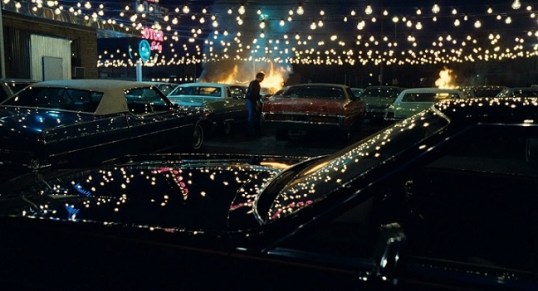
Thief (1981, dir by Michael Mann, DP: Donald Thorin)

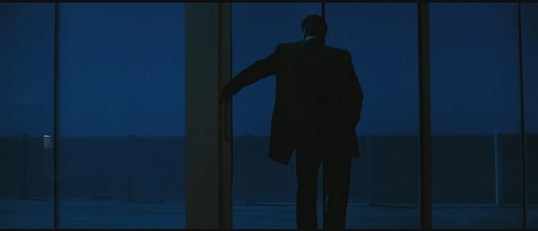
Manhunter (1986, dir by Michael Mann, DP: Dante Spinotii)

Heat (1995, dir by Michael Mann, DP: Dante Spinotti)

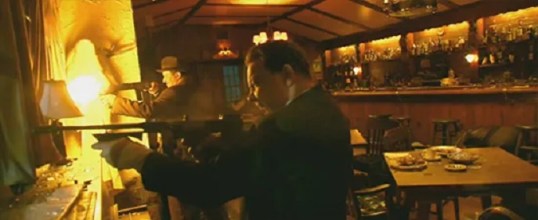
Public Enemies (2009, dir by Michael Mann, DP: Dante Spinotti)

2022 In Review: Lisa Marie’s Favorite Novels


Again, as with my non-fiction list, I just wish I had read more last year.  Fortunately, this year, I plan to do just that!

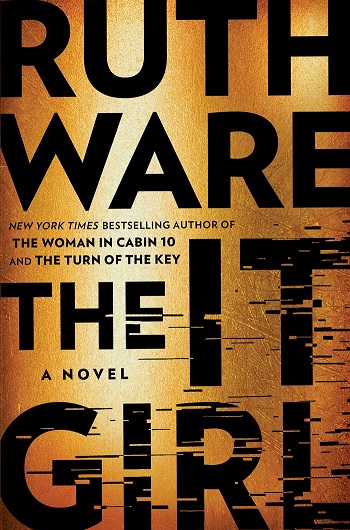
  1. The It Girl by Ruth Ware
  2. The Paris Apartment by Lucy Foley
  3. Tracy Flick Can’t Win by Tom Perotta
  4. The Maid by Nita Prose
  5. The Hacienda by Isabel Canas
  6. Heat 2 by Meg Gardiner and Michael Mann
  7. A Flicker in the Dark by Stacy Willingham
  8. House of Hunger by Alexis Henderson
  9. Electric Idol by Katee Robert
  10. It Starts With Us by Colleen Hoover

Be sure to check out my picks for 2021, 202020192018201720162015201420132012, and 2011!

Lisa Marie’s 2022 In Review:

  1. 16 Worst Movies
  2. 10 Favorite Songs
  3. 10 Top Non-Fiction Books

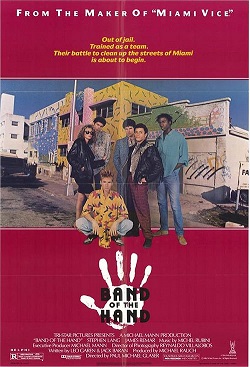
Band of the Hand (1986, directed by Paul Michael Glaser)


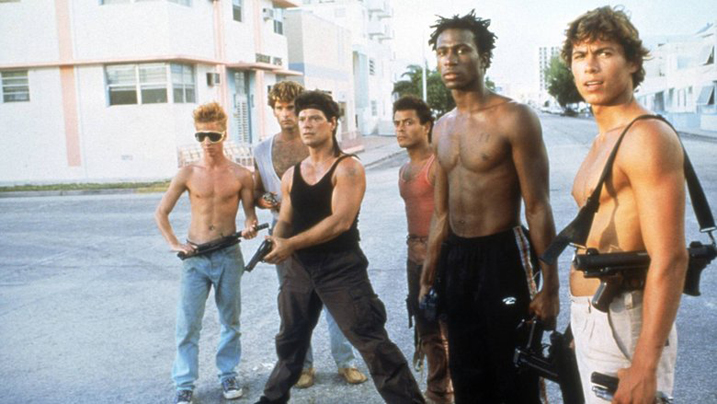
This place is Florida.  The time is the 80s.  Five juvenile delinquents have been given a chance to earn their freedom.  All they have to do is go down to the Everglades and train with Indian Joe (Stephen Lang), a no-nonsense Vietnam veteran who is determined to teach them not only survival sills but also how to work together as a team.  But Joe is interested in more than just reforming a group of youthful troublemakers.  He wants to turn them into a crime-fighting team who can help clean up the most dangerous neighborhood in Miami.  When Joe and delinquents move into and refurbish a previously condemned building, they get the attention of both the local drug kingpin (James Remar) and his main enforcer (Laurence Fishburne).

Band of the Hand is very much a film of its time, not only in its fashion and music choices but also in its full-on embrace of the war on drugs and the idea that the best way to clean up the streets is for vigilantes to do it on their own.  The film was produced by Michael Mann and, as directed by former Starsky and Hutch star Paul Michael Glaser, the film has the look of an episode of Miami Vice.  That might be because the film itself was originally meant to be a pilot for a television show.  When the networks passed on it, it was released to theaters instead and advertised as being “from the maker of Miami Vice.”    The movie never escapes its television origins.  Things start strong in the Everglades, with Lang proving himself to be a master of glowering and the young delinquents struggling to not only survive Lang’s training but also resist the temptation to kill each other.  It’s less interesting once the action moves to Miami and it becomes Death Wish 3 without the blood or Charles Bronson.  The scenes with the young men goofing around are an awkward fit with the scenes of Remar and Fishburne terrorizing the neighborhood.

Band of the Hand is still worth watching if you want to see some familiar faces early in their careers.  John Cameron Mitchell and Leon both score early roles as two of the delinquents-turned-crime fighters and Lauren Holly plays the romantic interest who is inevitably ends up with the bag guys.  James Remar was always a good villain and Laurence Fishburne channels both his previous performance in Death Wish II and his future performance in King of New York.  It’s a good cast, even if no one really breaks free from the production’s television origins.

The idea of creating a show about a special unit of young crime fighters who battle drug pushers was one that Mann didn’t abandon.  The final episode of Miami Vice was essentially an unsold pilot that followed many of the same plot beats as Band Of the Hand.  (It also didn’t lead to a television series, though some might argue that 21 Jump Street took the same idea and ran with it.)  As for director Paul Michael Glaser, he would later do a much better job with The Running Man.

6 Shots From 6 Films: Special Al Pacino Edition


4 (or more) Shots From 4 (or more) Films is just what it says it is, 4 (or more) shots from 4 (or more) of our favorite films. As opposed to the reviews and recaps that we usually post, 4 (or more) Shots From 4 (or more) Films lets the visuals do the talking.

With all the excitement (or not) surrounding the Oscars, it might be easy to overlook the fact that today is also the birthdays of one of the greatest and most iconic American actors of all time!  We cannot let this day end without wishing a happy birthday to the one and only Al Pacino!

In others words, it’s time for….

6 Shots From 6 Al Pacino Films

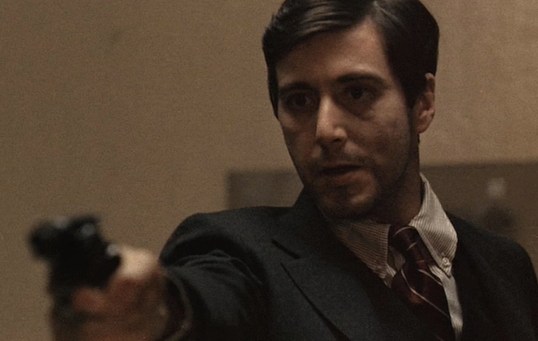
The Godfather (1972, dir by Francis Ford Coppola, DP: Gordon Willis)

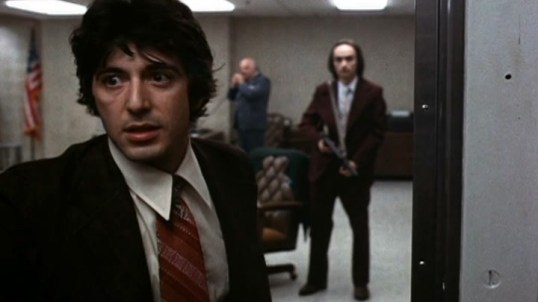
Dog Day Afternoon (1975, dir by Sidney Lumet, DP: Victor J. Kemper)

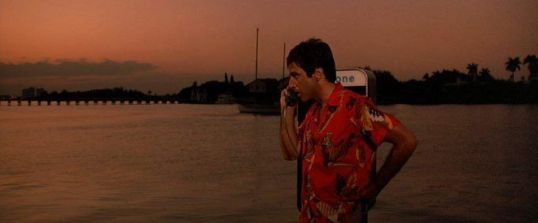
Scarface (1983, dir by Brian DePalma, DP: John A. Alonzo)

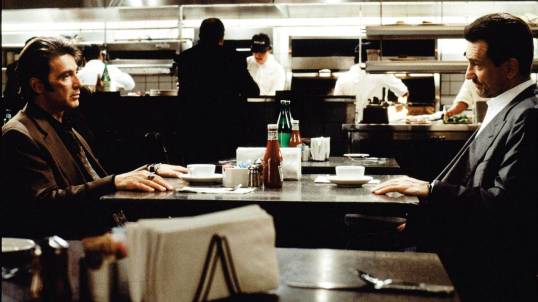
Heat (1995, dir by Michael Mann, DP: Dante Spinotti)

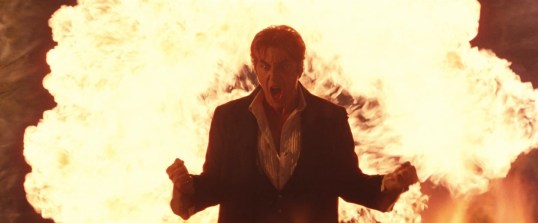
The Devil’s Advocate (1997, dir by Taylor Hackford, DP: Andrzej Bartkowiak)

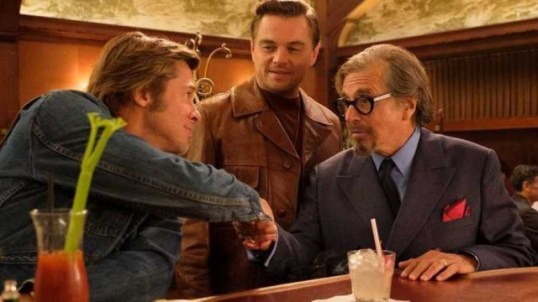
Once Upon A Time In Hollywood (2019, dir by Quentin Tarantino, DP: Robert Richardson)


Scenes I Love: The Shootout from Michael Mann’s “Heat”.


The shootout in Michael Mann’s “Heat” (1995) remains one of the best ever filmed, in my opinion. Mann himself even tried topping it in Miami Vice (which is good in it’s own right), but this scene (which occurs some minutes in) is so loved, Rockstar Games actually developed a mission in Grand Theft Auto 4 to mimic it.

A group of bank robbers, led by Neal McCauley (Robert DeNiro) finally take down their score, only to find that the police squad out to get them has been tipped off. The video starts as the robbery begins. Vincent Hanna (Al Pacino), along with his team arrive just as the crew is coming out of the bank with the money. The rest is mayhem, with the gunfire sounds echoing all around. Elliot Goldenthal’s score for the piece sets the tone for the robbery, a piece called Force Marker (along with Brian Eno).

What I wouldn’t give to catch this in a theatre somewhere. Enjoy.

Review: Miami Vice (dir. by Michael Mann)


Michael Mann has always been in the forefront of experimenting and trying out new film techniques and styles to tell his stories. 2003’s Collateral was a veritable masterpiece of directing of a modern, urban noir. He even made Tom Cruise very believable as a sociopathic character. In 2006, Michael Mann followed up Collateral with another trip down the darkside of the law and crime. Taking a concept he made into a cultural phenomenon during the mid 80’s, Mann reinvents the show Miami Vice from the pastel colors, hedonistic and over-the-top drug-culture Miami of the 1980’s to a more down, dirty and shadowy world of the new millenium where extremes by both the cops and the criminals rule the seedy, forgotten side of the city.

Michael Mann’s films have always dealt with the extremes in its characters. Whether its James Caan’s thief character Frank in Thief, the dueling detective and thief of Al Pacino and Robert DeNiro in Heat, up to Foxx and Cruise’s taxi driver and assassin in the aforementioned Collateral. They all have had one thing in common. They’re individuals dedicated to their chosen craft. Professional in all respect and so focused to doing their job right that they’ve crossed the line to obsession. It is this obsession and how it governs everything they do which almost makes it into their own personal form of drug.

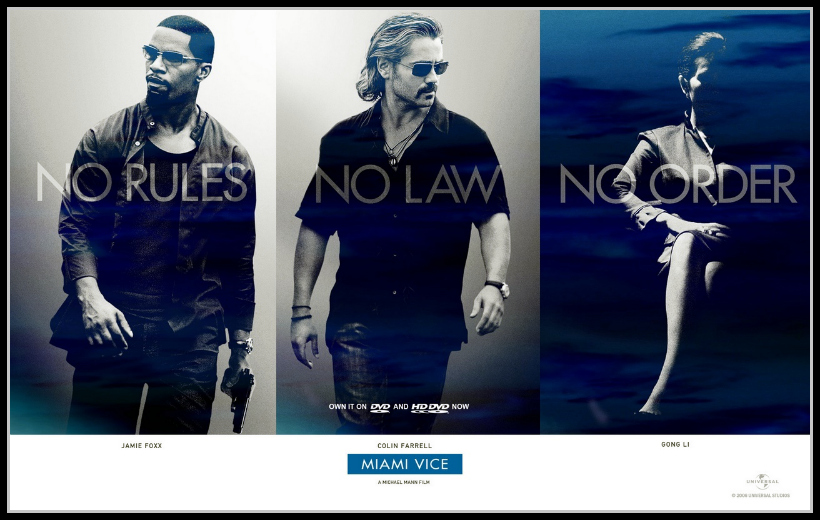
This theme continues in Mann’s film reboot of his TV series Miami Vice. The characters remain the same. There’s still the two main characters of Vice Detectives Sonny Crockett and Ricardo Tubbs. This time around these titular characters were played by Colin Farrell (in a look that echoes Gregg Allman more than Don Johnson) and Jamie Foxx. From the first moment the first scene suddenly appears all the way through to the final fade to black in the end of the film, the audience was thrust immediately into the meat of the action. Mann dispenses with the need for any sort of opening credits. In fact, the title of the film doesn’t appear until the end of the film and the same goes for the names of all involved. I thought this was a nice touch. It gave the film a stronger realism throughout.

The film’s story was a mixture of past classic episodes rolled into one two-hour long film with the episode “Smuggler’s Blues” being the main influence on the story. The glamour and glitz that were so prevalent in the original series does show up in the film, but it’s not used too much that it turned the characters of Crockett, Tubbs and the rest of the cast into caricatures. The glamour seems more of a thin veneer to hide the danger inherent in all the parties involved. These people were all dangerous from the cops to the criminals. There’s a lot of the so-called “gray areas” between what makes a cop and what makes a criminal. Mann’s always been great in blurring those lines and in showing that people on either side of the line have much more in common than they realize.

Miami Vice‘s story doesn’t leave much for back story exposition for the main leads. Michael Mann takes the minimalist approach and just introduces the characters right from the beginning with nothing to explain who they were outside of the roles they played — whether they were law-enforcement or drug dealers. The script allows for little personal backstory and instead lets the actors’ performance show just what moves, motivates and inspires these characters. Again, Jamie Foxx steals the film from his more glamorous co-star in Colin Farrell. Farrell did a fine job in making Crockett the high-risk taking and intense half of the partnership, but Foxx’s no-nonsense, focused intensity as Tubbs was the highlight performance throughout the film.

The rest of the cast do a fine job in the their roles. From Gong Li as Isabella, the drug-lord’s moll who also double’s as his organization’s brains behind the finances to Luis Tosar as the mastermind drug kingping Arcángel de Jesús Montoya. Tosar as Montoya also does a standout performance, but was in the screen for too less a time. Two other players in the film I have to make mention of were John Ortiz as Jose Yero who was Montoya’s machiavellian spymaster and Tom Towles in a small, but scary role as the leader of the Aryan Brotherhood gang hired by Yero to be his Miami enforcers. Both actors were great in their supporting role and more than held their own against their more celebrated cast mates.

This film wouldn’t be much of a police crime drama if it was all talk and no action. The action in Miami Vice comes fast and tight. Each scene was played out with a tightness and intensity which prepped the audience to the point that the violence that suddenly arrives was almost a release. Everyone knew what was coming and when the violence and action do arrive it goes in hard and fast with no use of quick edits, slow-motion sequences or fancy camera angles and tricks like most action films. Instead Michael Mann continues his theme of going for realism even in these pivotal moments in the film.

The shootouts doesn’t have the feel of artificiality. The gunshots inflicted on the people in the film were brutal, violent and quick. The camera doesn’t linger on the dead and wounded. These scenes must’ve taken only a few minutes of the film’s running time, but they were minutes that were executed with Swiss-like precision. The final showdown at an empty lot near the Miami docks was organized chaos with the scene easy to follow yet still keeping a sense of anarchy to give the whole sequence a real sense of “in the now”.

The look of the film was where Mann’s signature could be seen from beginning to end. He started using digital cameras heavily in Collateral. His decision to use digital cameras for that film also was due to a story mostly set at night. The use of digital allowed him to capture the deepest black to off-set the grays and blues of Los Angeles at night. Mann does the same for Miami Vice, but he does Collateral one better by using digital cameras from beginning to end. Digital lent abit of graininess to some scenes, but it really wasn’t as distracting as some reviewers would have you believe. In fact, it made Miami Vice seem like a tale straight out of COPS or one of those reality police shows.

Michael Mann stretches the limits of what his mind and technology could accomplish when working in concert. Mann’s direction and overall work in Miami Vice could only be described as being as focused and obsessive over the smallest detail as the characters in his films. This is a filmmaker who seem to want nothing but perfection in each scene shot.

With Miami Vice, Michael Mann has done the unthinkable and actually made a film adaptation of a TV show look like an art-film posing as a tight police drama. Everyone who have given the film a less than stellar review seem to have done so because Mann didn’t use the 80’s imagery and sensibilities from the original show. There were no pastel designer clothes and homes. There was no pet alligator and little friendly banter and joking around. Mann goes the other way and keeps the mood deadly serious. This was very apropo since the two leads led mortally dangerous lives as undercover agents who could die at the slightest mistake. The fun and jokes of the original series would’ve broken the mood and feel of this film. I, for one, am glad Mann went this route and not paid homage to the original series. This some saw as a major flaw, but I saw it as the main advantage in keeping Miami Vice from becoming a self-referential film bordering on camp.

Miami Vice was a finished product thats smart, stylish, and innovative crime drama. This was a film that people would either love despite some of the flaws, or one people would hate due to not being like the original TV series. Those who decide to skip watching Miami Vice because of the latter would miss a great film from one of this generation’s best directors. Those who do give this version of Miami Vice a chance would be rewarded with a great tale of cops and criminals and the obsession they have in their set roles.