The Wachowskis, Andy and Lana, have a new film set for release in early 2015. Jupiter Ascending was suppose to come out in 2014, but things happened and now it’s been pushed back for a February 2015 release.
Such a drastic delay in release usually means something major on the negative side of the ledger has occurred and the studio in charge of it’s release have little to no faith in the film. Has Warner Bros. Studios lost faith in the latest Wachowski offering? Is Jupiter Ascending the hot mess that it has been rumored about? Is the grandiose space opera the film is being made out to be making studio exec’s nervous?
So, many questions that most people who like to dwell on the in’s and out’s of filmmaking and the business of making them are probably asking themselves.
My only concern is that the Wachowskis have taken the extra time to make the film they set out to make. They’re one of the few filmmakers who seem to always get to do the sort of dream projects that more successful directors rarely get a chance to or even attempt to try. Whether it’s The Matrix,Speed Racer or Cloud Atlas, the Wachowskis have danced to their own tune and for some reason Warner Bros. continue to give them big-budgets after big-budgets to get their next dream project made into reality.
Here’s to hoping Guardians of the Galaxy being such a huge success will help this upcoming space opera turn it’s February release (usually a place where films go to die) into a new addition to the resurgence of the space opera.
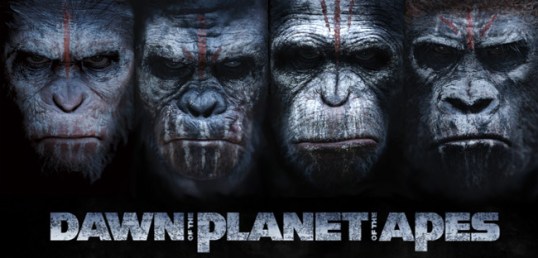
When ‘Rise of the Planet of the Apes’ came out, I wasn’t excited; I didn’t even see it in theaters. I am a fan of the original franchise (one and three mainly), and still had the bad taste of the terrible Burton remake in my mouth. So the idea of a prequel/reboot was one of the last things I wanted at the time. Still, I gave it a chance when it was released on home video, and it blew me away. I, like so many, was surprised by just how good it was. So good in fact, that I desperately wanted a sequel. Luckily the film was a success (both financially and critically) and that inevitable, albeit desired, sequel was made. Having now just seen it, the question now becomes whether it lives up to both that first film and the enormous expectations I had built up between films (especially more recently with the “prequel” shorts). The answer, thank god, is a resounding “Hell yes!”
It was so good in fact that I’d go so far as to say that this franchise has become my favorite since Nolan’s ‘Batman’ films. This is why the easiest way for me to describe how this compares to the first film is to say that ‘Dawn’ is to ‘Rise’ as ‘The Dark Knight’ was to ‘Batman Begins’. ‘Rise’, like ‘Begins’, was an exceptional origins tale; but it was a story that felt rushed or overshadowed in place for the development and establishment of only the central character. ‘Rise’ still had an emotional resonance, and the final twenty minutes are incredibly thrilling, but it ultimately felt incomplete. With ‘Dawn’, like with ‘The Dark Knight’, the film makers were free to use what was already established with their new hero to tell a much more complete, more complex and emotional story on a much grander scale.
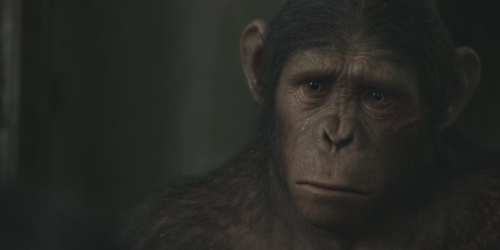
‘Dawn of the Planet of the Apes’ takes place ten years after the events of the first film. The world has been devastated by the Simian Flu. Humans have spent the last decade fighting the virus and themselves. They live in a post-apocalyptic world, struggling to survive, but are making progress. Caesar (Andy Serkis) and his troop on the other hand have built themselves a community, a tranquil home in the Muir Woods that is thriving according to their needs. That peace is interrupted when a group of humans enter their territory. They are led by Malcolm (Jason Clarke), who is trying to find and fix a hydroelectric plant that could help bring power back to San Francisco. The actions of one in that group lead Caesar and his family to have little trust in their intentions, but allows them to proceed because they are clearly desperate. Caesar is one of the few apes that has seen the good in human’s and also knows cooperation could keep the peace.
As the bond between human and ape grows there is still one among Caesar’s troop that does not believe that peace is possible. That ape is Koba (Toby Kebbell), who was beaten, tortured and used for medical testing his entire life. Koba’s distrust only grows when he learns that the humans, led by a man named Dreyfus (Gary Oldman), have access to military stock piles and are willing to take control of the area surrounding the dam by force if it were to become necessary. Thinking Caesar is weak and too loyal to humans, Koba decides to take it upon himself to protect the apes, and his actions set off a chain of events that could only lead to only one thing…war.
When the film ended and I walked out of the theater I felt completely satisfied with what I had just seen. My expectations for the film were already incredibly high, but I would be lying if I said this didn’t actually exceed them. What makes the film such a resounding success for me is the way in which the story puts everyone on equal grounds. There are no true villains here, and even those that assume that role do so for reasons that were easy for me to empathize with. Dreyfus may want to kill the apes, but he does so because he is a man who has lost everyone he ever loved and will do anything to protect the remaining humans that have put their trust in him. Koba, as selfish as some of his actions may be, is someone who was physically and mentally abused his entire life. His revenge might seem cruel, but one could hardly blame him for wanting it. Everyone is fighting for the survival of those that they love and the homes they established. I couldn’t help but want everyone to succeed. Unfortunately, as the story progresses, it becomes clear that the pain and damage under the surface of both man and ape make the idea of peace between the two impossible. Some differences are irreparable. There is definitely an allegory here of war that reflects current and past conflicts.
Luckily those themes of warfare, family and survival are all expressed effortlessly through the actions of its characters. It manages to be intelligent and complex without being thematically overbearing, while maintaing an intanacy. That is mainly because the film is handled with exceptional craftsmanship by Matt Reeves. The direction and cinematography, especially within Caesar’s settlement, is wonderful. It is never flashy, and is often much darker and moodier than one might expect. The editing and pacing is near perfect, which is rarely the case with these sorts of films. It only ever slows when it needs to, but the story is always moving forward. Every scene matters, even the quieter moments, for which there are many; again, something one might not expect, especially given the action heavy trailers. The score is perhaps the best Michael Giacchino has done since ‘Up’, adding to the moody atmosphere, and I LOVED his little nob to ‘2001: A Space Odyssey’ in the opening sequence. Everything here is done with purpose and execution of it all is nearly flawless.
Lastly, I would be remiss to end this review without mentioning the performances, which were the soul of the film. Even with the way everything else was handled, I am not sure ‘Dawn of the Planet of the Apes’ would have worked without these specific performances. The human cast of Clarke, Oldman and Russell were all fantastic. The film’s only real flaw was that there actually wasn’t enough focus on them. I understand that the heart of the story is Caesar and his apes, but the human characters could easily have been developed more. Still, what development and emotional connection we did get was due mainly because of the actors portraying them. They make us care for these people, making the inevitable conflict even harder to bear as the film approached its climax.
The motion capture for the apes was mind blowing. Andy Serkis is in a class of his own. The visuals and animation here are some of the best I think I have seen; but it is the emotion and talent of the actors behind all that CGI that makes those ape characters feel so real. Serkis plays Caesar as someone filled with grief and the weight of the responsibility of caring for his troop bleeds through. Toby Kebbell plays Koba with a ferociousness that is equally terrifying and mesmerizing; and I also really loved Nick Thurston, who played Caesar’s eldest son Blue Eyes, and how he managed to expressed so much in just his gaze. I mentioned early in this review how this film compares on some level to ‘The Dark Knight’ for me. That film was speculated to be in the run for an Oscar nomination for Best Picture but it never happened. The backlash was so strong that some think it was the reason the Academy increased the number of films that could be nominated. I truly hope that Serkis will receive some form of recognition for his work here; and if not, I hope all of us praising him so greatly now will be vocal enough when the time come that maybe the Academy will make another change to who and what it nominates.
I am not sure where I would place this film among others I have seen in 2014 but I know I’d put it somewhere near the top. This isn’t just another intelligent summer blockbuster; it is really an exceptionally crafted epic, a thrilling action-drama with an emotional and thematic resonance that future films should make a note of. And, as I felt when I first watched ‘Rise of the Planet of the Apes’, I eagerly await the next installment – which will thankfully be directed again by Matt Reeves.
One of my most-anticipated films this summer of 2014 has released it’s latest trailer and it shows the central conflict which will drive this sequel to 2011’s Rise of the Planet of the Apes.
It’s been many years since the pandemic from the “simian flu” tore through the planet as shown during the end credits of the first film. Now the surviving humans must now contend with the growing population of hyper-intelligent apes led by Caesar from the first film.
While the first film showed the rise of Caesar as a revolutionary leader it looks like this sequel will now put him in the role of war leader as his apes must now gear up for a war with the surviving humans that can’t seem to be avoided.
Plus, all I can say is this: Apes on horses with assault rifles.
Dawn of the Planet of the Apes is set for a July 11, 2014 release date.
To say that 2011’s Rise of the Planet of the Apes went a long way in washing out the taste out of fans mouth after having seen Tim Burton’s reboot of Planet of the Apes would be an understatement. Rupert Wyatt was able to bring the franchise back to prominence by actually treating the story as a sort of scifi allegory instead of a platform to once again exercise one’s filmmaking quirks.
It was a no-brainer that a sequel will follow up the success of the 2011 film. But with a fast-moving schedule there were several casualties. Rupert Wyatt didn’t think he had enough time to shoot the film the way he wanted to so he was replaced by Matt Reeves. James Franco is also gone from the project. Instead we get several veteran actors like Gary Oldman, Jason Clarke, Keri Russell and Kirk Acevedo joining Andy Serkis.
The film seems to take places a decade or so after the release of the deadly virus at the end of the first film. Humanity has survived both the virus and the wars which followed it, but civilization as we know it now are a thing of the past. With humanity trying to rebuild it must now deal with a rising nation of genetically-enhanced apes led by Andy Serkis’ Caesar. With Gary Oldman on one side seeming to be the leader of humanity’s survivors I don’t see peace as being a goal in this film.
Dawn of the Planet of the Apes is set for a July 11, 2014 release.
Less than two months remain before the sequel to J.J. Abrams surprise reboot hit of Star Trek arrives in the theaters this summer. It’s set to be one of this summer’s tentpole event films and this later trailer looks to set to prove that to be true.
While the first two trailers went light on the main narrative of the sequel this international trailer looks to really focus on Benedict Cumberbatch’s character who is either going to be this Star Trek alternate timeline’s Khan or Gary Mitchell or an amalgam of the two. Either way the trailer is all about action and Sherlock-Smaug looking, talking and acting all superior evil towards Kirk and the rest of the Enterprise crew.
Star Trek Into Darkness is set for a May 17, 2013 release date.
The sequel to J.J. Abrams’ 2009 Star Trek is just months away. It returns not just Abrams into the director’s chair but also the whole cast of the rebooted franchise back to boldly go where no one’s gone before.
Star Trek Into Darkness (still an awkward title but then we don’t to watch a film in the theaters because we like or don’t like how the title sounds) just released it’s latest trailer (this time a TV spot) during Super Bowl XLVII. The spot has new scenes and images that the previous teasers and trailers didn’t already show. We may have gotten a hint into the villain portrayed by Benedict Cumberbatch in the film. While the name Khan has never been mentioned in any ad and marketing spots since the film was announced I’d be very surprised if the villain is not some sort of analogue of that classic Star Trek rogue.
Star Trek Into Darkness is set for a May 17, 2013 release date.
Over ten days ago we saw the release of the teaser trailer for Star Trek Into Darkness. This sequel by J.J. Abrams for the reboot of the storied scifi franchise looks to be one of the most-anticipated films of 2013 (if the world doesn’t end in a couple days of this posting that is). Today we get the release of the official trailer which adds in a couple of new scenes and images not included in the teaser.
Again there’s some debate as to which villain Benedict Cumberbatch is really portraying despite being listed in the cast as the character of John Harrison. The even money bet is that he plays a version of Kirk’s archenemy Khan Noonien Singh which is a strong possibility since the early draft for the Khan character was suppose to be a Nordic superhuman by the name of John Ericssen. Even Abrams himself has never said outright that he would never use the Khan character as the villain in this rebooted franchise. Whether he uses the classic Trek villain in this sequel or the next should get an answer as we get closer to the film’s release date.
Star Trek Into Darkess has a release date of May 17, 2013.
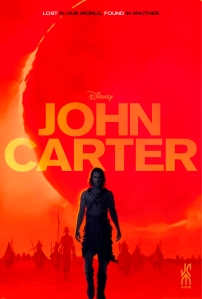
John Carter is a cute Disney film that you may enjoy more than you’d thought you would. It’s lively like The Rocketeer was and really has some great moments and interesting characters. Both the leads carry their roles well, and are eye candy for the audience. It’s worthy of all of the love it should get, but obvious comparisons to movies that came before it (even though the story predates those films), along with a shockingly forgettable score by Michael Giacchino may actually hurt it. If you’re expecting blood and guts, not so much. It’s a Disney film. The kids should love it, though the pace of the film in the beginning may seem a little slow for younger audiences. Skip the 3D version and go for the 2D instead.
The Longer Version:
It’s really sad when you see a movie that deserves all the love in the world, but for some reason just doesn’t quite hit the mark. Part of that is due to the way this was marketed. It really didn’t feel to me that Disney was putting their all behind this. When you look at how heavily marketed Tron: Legacy was, this seemed like a “Hey, we made it, just give us money.” kind of push.
As far as John Carter is concerned, maybe it’s better to look at it like this. We tend to compare things to make sense of them:
This object reminds me of that object.
All of James Cameron’s Avatar reminds me of Ferngully.
Remember, Short Controlled Bursts. What movie comes to mind when I say that?
This is ultimately the problem with Andrew Stanton’s John Carter. In watching it, you’ll end up making comparisons to so many other films that came before it. However, knowing that it was based on the stories of Edgar Rice Burroughs, it’s a lot like seeing Lord of the Rings for the first time when all you know of Elves and Dwarves comes from Dungeons & Dragons, The Elder Scrolls games or World or Warcraft. Burroughs’ material predates just about everything it showcases, from a pop culture standpoint. Hell, for all I know, John Carter was probably the original inspiration for the Kwisatz Haderach in Frank Herbert’s Dune (though that’s just my speculation). The problem is, with comparisons being what they are, audiences may view John Carter as a copycat of all the movies that were probably influenced by it.
I didn’t walk into John Carter with a lot of expectations. Andrew Stanton, for me, has the track record of being Pixar’s Dark Horse. This is the same guy that killed off a mother and a hundred of her babies in the opening moments of Finding Nemo. A man who gave a bleak, dirty and desolate future in Wall-E. Yet, both of those films had a theme of love and of heroes that rose to the occasion, so seeing the previews for John Carter told me enough.
John Carter is the story of a man in search of a cave full of gold. He wants no part of anyone’s battles and when he’s asked to join a faction, he does his best to avoid it. This leads him to a situation where he’s transported to another world. Just as it was with Earth, he encounters a number of different factions (all of which seem to feel he could aid them), but he simply wishes to return home. When he meets a fierce female fighter (who also happens to be a scientist), they work on figuring out how he arrived on Barsoom and how to get back.
The beautiful thing about John Carter is that it really feels like one of those old serials, or to make a more modern comparison, like an adventure film on the Indiana Jones level of things. There are a number of scenes where I found myself genuinely laughing at what was on screen. The visuals could be better in some places, but it’s nothing that’s groundbreaking. I look at John Carter as a pop culture lesson. You can see where other stories have used elements in the Burroughs tale. In that, it worked for me. The action scenes were really enjoyable for me, but some of the scenes between that could have been tighter. When you find out the reasoning behind Carters arrival, you may end up wondering why more wasn’t done with it with that story arc (on a technical level, anyway). As I’m unfamiliar with the original John Carter stories, I watched a few interviews of the cast and Taylor Kitsch noted that in the books themselves, Carter was pretty much the same person through every one. Stanton added a bit of character depth to him, with a little help from Spider-Man 2 scribe Michael Chabon. Chabon’s also responsible for the great Wonder Boys and The Adventures of Kavalier and Clay, which I still haven’t finished as of this writing. Carter is a conflicted individual for Disney purposes, but you shouldn’t expect Oscar performances here. It’s far better then Immortals was, in that sense.
Both Taylor Kitsch and Lynn Collins do well with their roles. Having worked together for about a hiccup in X-Men Origins: Wolverine, they have a good chemistry together. Kitsch is gruff with his mannerisms, and I can almost forgive him for playing Gambit. Collins is beautiful, statuesque even, and her character really does a lot of damage, fight wise. She’s very strong in some areas, though later on in the film, it felt like they may have eased that down a bit. Willem Dafoe has an inspired role in the leader of one of the alien groups that find Carter first when he arrives in Barsoom. Of course, no film would be complete without a villain and John Carter features two in Dominic West (Zack Snyder’s “300”) and Mark Strong (who’s almost always a go to bad guy). West’s character is more of the take action baddie, while Strong’s character is more of a calculating, behind the scenes one. Of note are Samantha Morton (“Minority Report”) as Sola and a little creature called Woola, that really reminded me a lot of Dug from Disney / Pixar’s Up. I wouldn’t mind having a few of those around the house.
The music for this film worked when the scenes were slow. However, when it called for action, I really didn’t feel anything special about it. I stayed to watch the credits only to find that it was Michael Giacchino’s work, who’s normally really good. I don’t know, this one seemed like it was phoned in for the action scenes. It’s okay, but I didn’t have that urge to buy the soundtrack afterward (which I have done for more memorable scores after leaving the theatre).
Overall, John Carter was a fun film in the vein of Disney’s earlier movies, but it’s not anything you absolutely have to run out to the theatre for. I’d love to see it do well and hope that there’s a sequel on the way, but when you’re paying a good $15 dollars for a 3D movie ticket ($20 for an IMAX 3D showing), the visual return on investment isn’t all that great. The story was enjoyable and didn’t slow down too much, but you may find yourself thinking that you’ve seen this film before in the way that so many other movies reference Burrough’s tale.
As a bonus, Disney released 10 minutes of the film. Enjoy:
The 1980’s was a special time in my life. It was another phase in my development in loving film. That decade saw many films starring kids and teens in coming-of-age tales both comedic, thrilling, dramatic and poignant. While there were many filmmakers who delved into this genre it was Steve Spielberg who mined it to great effect culminating in his classic boy-meets-alien film, E.T.: The Extra-Terrestrial. It’s been almost 30 years since the release of that film and now comes a filmmaker who seem to have grown up idolizing and loving Spielberg films of that era. The year is now 2011 and J.J. Abrams is that filmmaker who dared to pay homage to those very same coming-of-age Spielberg films of the 80’s with his very own simply titled Super 8.
From the very moment the film begins there’s a sense of wonderment as we, the audience, meet young kids who become the central characters of Super 8. The film takes place in the early days of 1979 in the town of Lillian, Ohio as Joe Lamb (Joel Courtney) tries to cope with the death of his mother. His friends keep him busy and dwelling on this tragedy through the Super 8 film they’re making in their spare time after school. These early scenes we begin to see the dynamics of the group as Joe acts as the calming influence on the group’s filmmaker, Charles (Riley Griffiths), the neurotic actor in Martin (Gabriel Basso) and the group’s stuntman/special effects tech in Carey (Ryan Lee). They all meet up at an old train depot where they plan to shoot scenes for their Super 8 zombie film. Into this eclectic group of kids comes in Alice (Elle Fanning) to play the wife to Martin’s detective character in their film.
It’s the scenes between the kids which lifts Super 8 from just being a nostalgic film to one that’s charming and magical. These scenes captures the creativity and youthful energy kids have always had no matter the era and place. These kids don’t act like stereotypes of what Hollywood thinks kids in films should act. There’s still little of the cynical teen dialogue that films nowadays give kids to say to make them seem more mature and worldly. There’s a sense of innocence in how these kids interact with each other. Some have called these scenes as being too on-the-nose nostalgic of Spielberg films of the 80’s. What some might call nostalgic I prefer to call as timeless. I still remember myself behaving with my childhood friends the way these kids did in this film
If Super 8 had just been about these group of kids trying to finish their Super 8 zombie film I conjunction with the dysfunction in the two main leads in Joe and Alice’s home life then Abrams film would’ve been the instant classic some have dubbed it. There’s only one problem with this and that’s the last half hour of the film and the scenes leading up to that involving the train derailment and the arrival of the U.S. Air Force to clean things up. The film begins to take on a split personality as these new elements get introduce to what has been a great coming-of-age story.
It’s these new elements and the final half hour which shows Abrams trying to combine a sweet story of kids and their lives growing up in small-town with an otherworldy and conspiracy tale that seem to come out of left field. By the time the final act of Super 8 arrives it becomes a different film altogether and the transition doesn’t work as well as the filmmakers might have hoped it would. Sure, this final reel has the thrills, explosions and danger, but the tonal shift in the story became so jarring that I had wished that Abrams just made two films instead of one. One film being the coming-of-age story and the other a thrilling sci-fi film.
Despite this I still enjoyed the film and I definitely loved the first two-thirds. The performances by Joel Courtney and Elle Fanning as Joe and Alice became the focal point for the story’s emotional foundation. Elle Fanning’s performance as Alice was one of the best things about Super 8. She nails every scene where she has to show extreme ranges of emotions but at the same time not try to oversell them. There’s a scene in the middle of the film where she begins to recount a personal detail as Joe sits behind her listening. Emotions begin to overwhelm her, but as kids moving towards teenhood are wont to do she tries to hold back the tears just waiting to flow freely and the sobs wanting to escapes. I wouldn’t be surprised if this scene alone had more than a couple people in the audience remembering similar events in their lives and just sobbing along with Alice.
Super 8 has been advertised as this mysterious film that may or may not have aliens but does pay homage to Spielberg and kid films of the 80’s. Abrams’ film definitely delivers on the thrills in the end, but it could’ve been so much more if it just stayed on course with just being about the kids and their magical time together making an amateur Super 8 zombie film in 1979. That would’ve been a film that deserved labels of instant classic.
All in all, Super 8 comes across as one of the more entertaining and magical films of the summer of 2011 if not the entire year. Make sure to stick around as the end credits roll to see the fruits of the kids labor titled simply as “The Case”.
In 2008 a little film from Sweden swept through the film festivals and earned a rightful and well-deserved place in many film critics and film circles “best of 2008” and “top ten” lists. This was Swedish filmmaker’s film adaptation of the John Ajvide Lindqvist vampire novel, Let The Right One In. It was a vampire film that appealed not just to horror genre fans hungry for a vampire film that was the polar opposite of the current “Twilight” vampire craze. Horror fans wanted something that wasn’t watered down and emasculated to better appeal to the tween girl set. So, Alfredson’s vampire film was embraced by these horror fans and when news came that the rights to the novel was licensed by British-studio Hammer Film and an American-remake was set for production the reaction was decisively negative.
Fans of the original Swedish film were quite protective of the film and saw any plans to remake it for the North American audience as a cynical cash-grab. Their argument was that the original film was such a great one that there should be no need to remake it. Why fix something that wasn’t broken was another point made. It didn’t help the side of those supporting the remake that Matt Reeves was chosen to direct the remake. Reeves was better known as J. J. Abrams friend (some would say Reeves owes his success to Abrams and that he was coattailing the successful producer-director) and the director of the POV monster film, Cloverfield.
As strident fans of the original continued to vent and complain about the remake already failing (despite not an inch of film being shot) the producers were gradually filling the roles in the remake with some very interesting names. Fresh off her break-out performance in Kick-Ass was Chloe Grace Moretz taking on the role of Abby (the vampire child in the original was named Eli) with Kodi-Smit McPhee (The Road) taking on the role of the young boy Owen who befriends her. One name after the other filled out the cast with some very good veteran actors from Elias Koteas to Richard Jenkins (taking on the role of Abby’s Renfield).
Matt Reeeves’ version of Lindqvist novel from Alfredson comes from using the novel itself as the base for the screenplay Reeves himself wrote for the remake. While Let Me In shares many similarities in characters and situations from the original Swedish film, Reeves film does use more of the themes and details from the novel than Alfredson did for his adaptation. Let Me In definitely has enough about it which will distinguish itself from its Swedish counterpart and stand on its own.
The film switches locales from a suburb of in Sweden to a snowy Los Alamos, New Mexico (yes, it does snow in New Mexico). We learn quickly that Owen has become quite the loner due to the constant bullying by classmates. He spends time alone in the plaza area of the apartment complex he lives in with his mother (played by Carla Buono who we never fully see). He fantasizes of getting back at those who have and still bullying him even to the point that he buys a small pocketknife and practices his retribution on one of the trees in the plaza. It’s during one of his nighttime practices with the pocketknife that he first encounters Abby. There’s a certain wariness during their encounter with Abby proclaiming that Owen will not become a friend. But in time the two do become friends with Abby becoming quite protective of Owen once learning about the bullying he has to endure on a daily basis.
The change in Abby’s relationship with Owen doesn’t sit well with Abby’s Renfield. He asks Abby never to see Owen again as he goes out to procure Abby more fresh blood (a previous attempt goes awry forcing Abby to go out into the night to hunt). It’s in the scenes between Abby and Jenkins character that we see more of the duo’s relationship mirroring the novel’s. The novel explores the theme of pedophilia and while Reeves adaptation wasn’t quite obvious about it there are clues and small character interactions which hint at this pedophilic relationship which the Swedish original never really touched upon.
It’s in these small character interactions that Reeves’ film begins to differentiate itself from Alfredson’s version. The narrative between the two films still remain the same, but Reeves’ version explores the darker themes in the novel source while Alfredson concentrates more on the growing relationship between the two primary characters. These differences could be seen in how Reeves films Abby’s attacks while hunting her prey to be more animalistic (though at times the CGI seems too apparent when Abby attacks) and Abby’s subtle manipulation of Owen. I say manipulation because Abby seems very intent on trying to befriend and put Owen at ease despite the earlier comment that they will never be friends. Not to mention her Renfield admitting to Abby that he has gotten tired of what he has done to keep Abby safe and that maybe he wants to get caught to just end it all.
The film moves along quite leisurely but with a sense of growing dread not just between Owen and his bullies, but between Abby, her Renfield and those suspecting the duo. Owen gets caught in the lives of these two newcomers and soon gets confronted by Abby’s true nature and his own reaction to this. It’s a reaction that at first shows Owen fearing Abby and wanting to escape the growing bond between the two of them, but seeing how Abby’s been nothing but helpful to Owen he chooses to remain at her side. Abby rewards Owen’s protective nature by saving Owen from a near-deadly encounter with the school bullies at the school swimming pool.
This is the one sequence in Reeves’ film which many fans scrutinized to no end. The original film shot the scene with an almost arthouse eye despite the obvious violence involved. It was a scene where Alfredson filmed it as “less is more” and let the audience’s imagination run wild. Reeves’ does the same but adds his own stylistic touches to the sequence. not too much to make it so different from Alfredson’s version, but enough that it’s not a shot-for-shot copy. Again Reeves’ chose to show Abby’s violent predator aspect in this scene, but still keeps the focus of the scene on Owen as he struggles underwater. It’s only once he is out that we see — just as he does — the aftermath of Abby’s promise to protect Owen.
The question remains whether this American-remake stands up to the original. In terms of storytelling it more than holds it own from the original film and at times actually surpasses Alfredson’s version. This Reeves version journeys through the darkside more than the original film. It definitely strips away much of the arthouse sensibilities of Alfredson’s film which made it such a beauty to watch even if at times the narrative became more than too slow to keep one’s attention. Reeves’ adaptation doesn’t ramp up the pacing of the film, but keeps it moving forward even if at a gradual pace. When violence does occur in the remake it happens quickly and with a sense of brutality that the original film fails to deliver. The remake doesn’t linger on the gore and violence, but does show enough of it to remind everyone in the audience that this is a horror film first and foremost.
If there was one quibble to be made about this remake its that Reeves relies too much on CGI to show Abby at her most dangerous. Each attack made by Abby was shot at a wide-angle and we see every move but with each move done using CGI which gives it too much of an artificial look to it. It’s a testament to Moretz’ performance as she switches from a friendly Abby when interacting with Owen during their time together at night to one of a predator older than anyone in the film doing what was necessary to attain the blood needed to survive. Reeves could definitely have used less CGI and went for a more natural approach using sudden edits to show the ferocious nature of Abby’s attacks.
The film’s cast does a great job with the roles given to them. While it was Moretz’s and McPhee’s performances as Abby and Owen that keeps the audience’s attention and keeps it from wavering it’s the supporting cast around them which provides the glue. Koteas as the detective who begins to suspect Abby as having to do more with the attacks than previously mentioned was very good, but in the end it was Richard Jenkins in the Renfield role who would steal every scene he’s in. His character’s fatalistic acceptance of his role when it came to Abby was palpable. We watch him do horrible things to people and to himself, but we also get a sense that he couldn’t stop on his own if he wanted to. He has been doing the role of blood procurer for Abby for so long that he doesn’t know what else to do. I will say that Jenkin’s with the garbage bag mask when out hunting for victims will be the images that will stick to people’s minds long after they’ve left the theater. Some will even unconsciously check the back seat of their cars at night before getting in.
In the end, this remake of Let The Right One In doesn’t feel, look and sound like the cash-grab that cynical fans of the original have proclaimed it to be. Matt Reeves does a great job in adapting more of the novel in his version and using some of the darker themes in that source to allow his film to stand on its own when compared next to Alfredson’s version. The performances by everyone involved was wonderful and keeps the story’s slow pacing from losing the audience. While this remake doesn’t have the arthouse quality of the original film it does have a certain grittiness to its look which lends quite well in pointing out how brutal the narrative really was not just in physical violence but in how one of the two leads manipulates the situation to benefit it’s survival even if there was some genuine affection between Abby and Owen. In the end, Abby gets everything and continues to exist for another boy’s lifetime.
Fans so vocal of their negative attitudes towards this film will not have their minds changed, but those keeping an open-mind will be rewarded with one of the better horror films of the year. If the original Swedish adaptation never existed I’m quite sure that all the accolades heaped on Tomas Alfredson’s film would be given to Matt Reeves instead. A remake should never be discounted because its one of an original that’s already lauded for its quality. There’s been bad remakes but thankfully Let Me In is not one of them.






 Through the Shattered Lens