4 Shots From 4 Films is just what it says it is, 4 shots from 4 of our favorite films. As opposed to the reviews and recaps that we usually post, 4 Shots From 4 Films lets the visuals do the talking!
Today, the Shattered Lens wishes a happy birthday to Al Pacino! It’s time for….
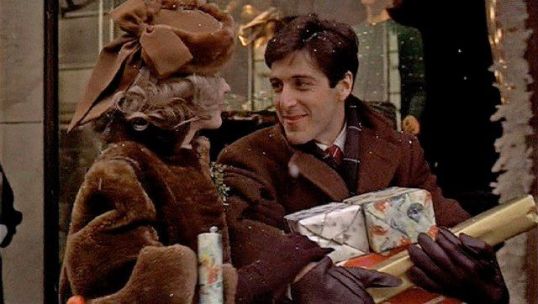
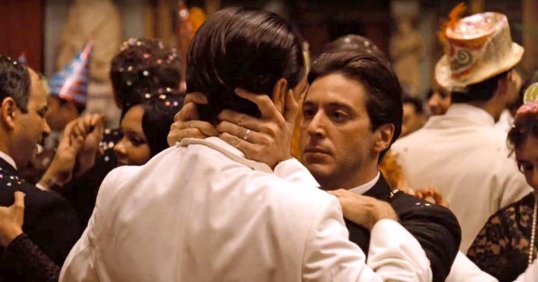
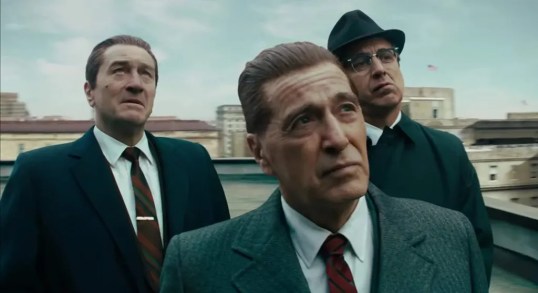
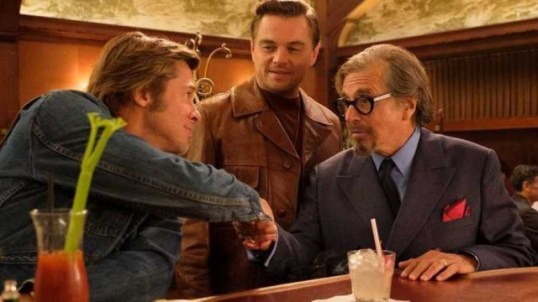
4 Shots From 4 Al Pacino Films
The Godfather (1972, dir by Francis Ford Coppola, DP: Gordon Willis)
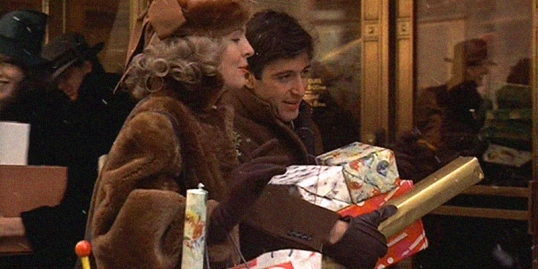
The Godfather Part II (1974, dir by Francis Ford Coppola, DP: Gordon Willis)
The Irishman (2019, dir by Martin Scorsese, DP: Rodrigo Prieto)
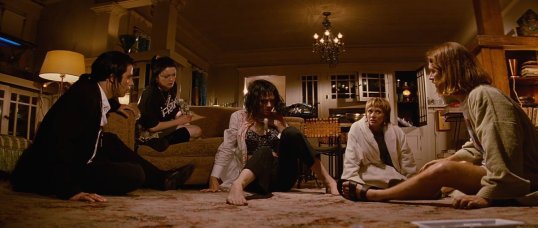
Once Upon A Time In Hollywood (2019, dir by Quentin Tarantino, DP: Robert Richardson)
4 Shots From 4 Films is just what it says it is, 4 shots from 4 of our favorite films. As opposed to the reviews and recaps that we usually post, 4 Shots From 4 Films lets the visuals do the talking!
Today is Jack Nicholson’s 88th birthday!
Though he has pretty much retired from acting, Jack Nicholson remains a screen icon with a filmography that is a cinema lover’s dream. He’s worked with everyone from Roger Corman to Stanley Kubrick to Milos Forman to Martin Scorsese and, along the way, he’s become a symbol of a very American-type of rebel. Though often associated with the counter-culture, his style has always been too aggressive and idiosyncratic for him to be a believable hippie. Instead, he’s one of the last of the beats, an outsider searching for meaning in Americana.
Over the course of his career, Nicholson has won three Oscars and been nominated for a total of 12. He’s the only actor to have been nominated in every decade from the 1960s to the 2000s. He is an actor who epitomizes an era in filmmaking, actually several eras. It’s been 15 years since he last appeared in a movie but Jack Nicholson will never be forgotten.
4 Shots From 4 Jack Nicholson Films
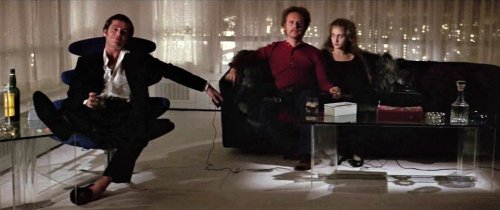
Psych-Out (1968, dir by Richard Rush, DP: Laszlo Kovacs)
Carnal Knowledge (1971, dir by Mike Nichols, DP: Giuseppe Rotunno)
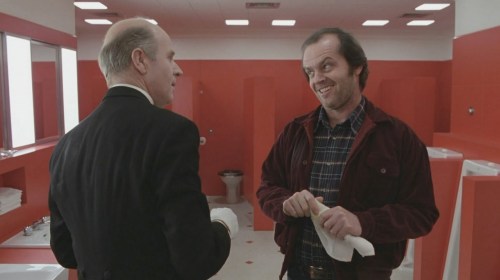
The Shining (1980, dir by Stanley Kubrick, DP: John Alcott)
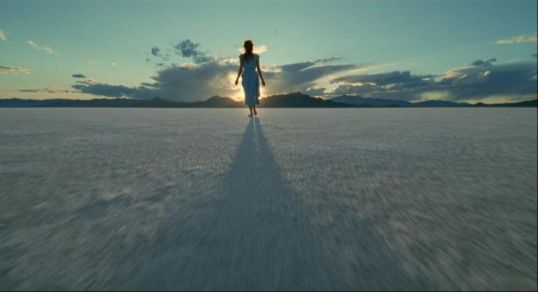
The Departed (2006, dir by Martin Scorsese, DP: Michael Ballhaus)
4 Or More Shots From 4 Or More Films is just what it says it is, 4 shots from 4 of our favorite films. As opposed to the reviews and recaps that we usually post, 4 Shots From 4 Films lets the visuals do the talking!
Today, we pay tribute to the year 1982 with….
4 Shots From 4 1982 Films
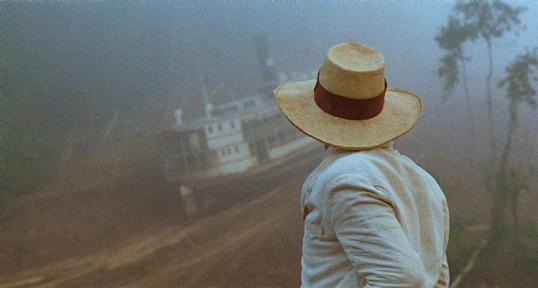
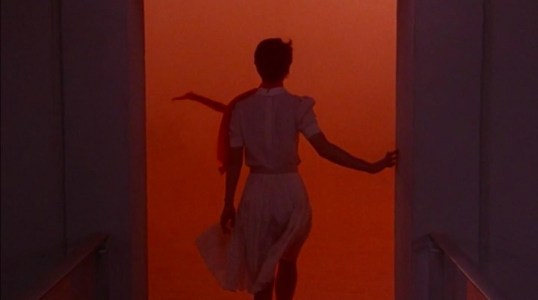
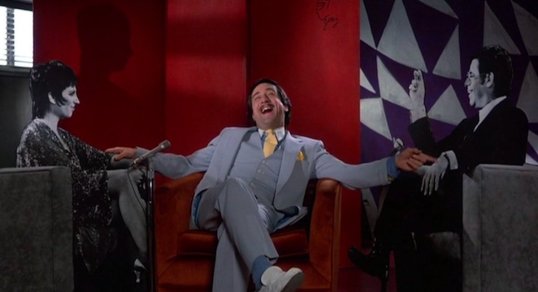
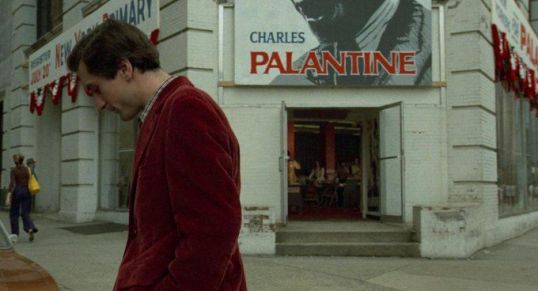
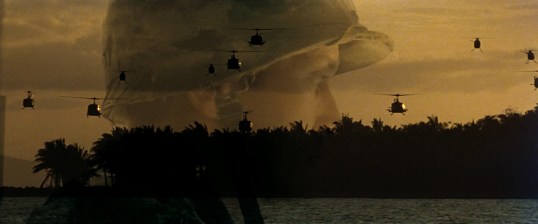
Fitzcarraldo (1982, dir by Werner Herzog, DP: Thomas Mauch)
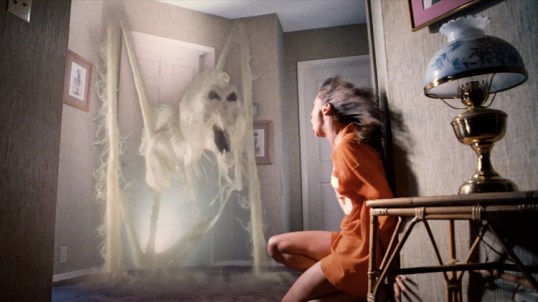
Poltergeist (1982, dir by Tobe Hooper, DP: Matthew Leonetti)
Cat People (1982, dir by Paul Schrader, DP: John Bailey)
King of Comedy (1982, dir by Martin Scorsese, DP: Fred Schuler)
4 (or more) Shots From 4 (or more) Films is just what it says it is, 4 (or more) shots from 4 (or more) of our favorite films. As opposed to the reviews and recaps that we usually post, 4 (or more) Shots From 4 (or more) Films lets the visuals do the talking.
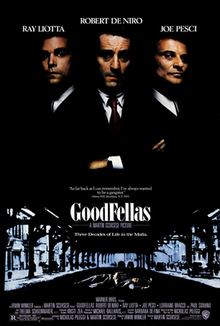
First released in 1990 and continuously acclaimed ever since, Goodfellas did not win the Oscar for Best Picture.
I’m always a bit surprised whenever I remember that. Goodfellas didn’t win Best Picture? That just doesn’t seem right. It’s not the other films nominated that year were bad but Goodfellas was so brilliant that it’s hard to imagine someone actually voting for something else. Seriously, it’s hard to think of a film that has been more influential than Goodfellas. Every gangster film with a soundtrack of kitschy tunes from the 6os and 70s owes huge debt to Goodfellas. Every actor who has ever been cast as a wild and out-of-control psycho gangster owes a debt to Joe Pesci’s performance as Tommy DeVito. When Ray Liotta passed away two years ago, we all immediately heard him saying, “I always wanted to be a gangster.” Robert De Niro’s Jimmy Conway remains the epitome of the ruthless gangster. For many, Paul Sorvino’s neighborhood godfather redefined what it meant to be a crime boss. Lorraine Bracco made such an impression as Karen Hill that it somehow seemed appropriate that she was one of the first people cast in The Sopranos, a show that itself would probably have not existed if not for Goodfellas. Frank Sivero, Samuel L. Jackson, Tobin Bell, Debi Mazer, Vincent Gallo, Ileana Douglas, Frank Vincent, Tony Sirico, Michael Imperioli, Tony Darrow, Mike Starr, Chuck Low, all of them can be seen in Goodfellas. It’s a film that many still consider to be the best of Martin Scorsese’s legendary career. Who can forget Robert De Niro smoking that cigarette while Sunshine of Your Love blared on the soundtrack? Who can forget “Maury’s wigs don’t come off!” or “Rossi, you are nothing but whore!?” Who can forget the cheery Christmas music playing in the background while De Niro’s Jimmy Conway grows more and more paranoid after pulling off the biggest heist of his career?
Plus, it’s a Christmas movie!
And yet, it did not win Best Picture.
Myself, whenever I’m sitting behind a garbage truck in traffic, I immediately start to hear the piano coda from Layla. For that matter, whenever I see a helicopter in the sky, I flash back to a coke-addled Henry Hill getting paranoid as he tries to pick up his brother from the hospital. Whenever I see someone walking across the street in the suburbs, I remember the scene where Henry coolly pistol-whips the country club guy and then tells Karen to hide his gun. I always remember Karen saying that she knows that many of her best friends would have run off as soon as their boyfriend gave them a gun to hide but “it turned me on.” It would have turned me on as well. Henry might be a gangster and his friends might be murderers but he doesn’t make any apologies for who he is, unlike everyone else in the world.
But it did not win Best Picture.
How many people have imitated Joe Pesci saying, “How am I funny?” How many times did Pesci and Frank Vincent have to listen to people telling them to “go home and get your fucking shinebox?” A lot of people remember the brutality of the scene where Pesci and De Niro team up to attack Vincent’s crude gangster but I always remember the sound of Donavon’s Atlantis playing on the soundtrack.
And then there’s Catherine Scorsese, showing up as Tommy’s mom and cooking for everyone while Vincent struggles to escape from the trunk of a car. “He is content to be a jerk,” Tommy says about Henry Hill. Just a few hours earlier, Tommy was apologizing to Henry for getting blood on his floor.
Goodfellas is a fast-paced look at organized crime, spanning from the 50s to the early 80s. Ray Liotta plays Henry Hill, who goes from idolizing gangsters to being a gangster to ultimately fearing his associates after he gets busted for dealing drugs. It’s a dizzying film, full of so many classic scenes and lines that it feels almost pointless to try to list them all here or to pretend like whoever is reading this review doesn’t remember the scene where the camera pans through the club and we meet the members of the crew. (“And then there was Pete The Killer….”) Goodfellas is a film that spend two hours showing us how much fun being a gangster can be and then thirty minutes showing us just how bad it can get when you’re high on coke, the police are after you, and you’ve recently learned that your associates are willing to kill even their oldest friends. No matter how many times I watch Goodfellas, I always get very anxious towards the end of the film. With the music pounding and the camera spinning, with Henry looking for helicopters, and with all of his plans going wrong over the course of one day, it’s almost a relief when Bo Dietl points that gun at Henry’s head and yells at him, revealing that Henry has been captured by the cops and not the Gambinos. Karen desperately running through the house, flushing drugs and hiding a gun in her underwear, always leaves me unsettled. It’s such a nice house but now, everything is crashing down.
There’s a tendency to compare Goodfellas to The Godfather, as their both films that re-imagine American history and culture through the lens of the gangster genre. I think they’re both great but I also think that they are ultimately two very different films. If The Godfather is sweeping and operatic, Goodfellas is the film that reminds us that gangsters also live in the suburbs and go to cookouts and that their wives take care of the kids and watch movies while the FBI searches their home. If The Godfather is about the bosses, Goodfellas is about the blue collar soldiers. The Godfather represents what we wish the Mafia was like while Goodfellas represents the reality.
Goodfellas is one of the greatest films ever made but it lost the Best Picture Oscar to Dances With Wolves, a film that left audiences feeling good as opposed to anxious. To be honest, Martin Scorsese losing Best Director to Kevin Costner feels like an even bigger injustice than Goodfellas losing Best Picture. One can understand the desire to reward Dances With Wolves, a film that attempts to correct a decades worth of negative stereotypes about Native Americans. But Scorsese’s direction was so brilliant that it’s truly a shame that he didn’t win and that Lorraine Bracco didn’t win Best Supporting Actress. It’s also a shame that Ray Liotta wasn’t nominated for playing Henry Hill. At least Joe Pesci won an Oscar for redefining what it meant to be a gangster.
Goodfellas is proof that the best film doesn’t always win at the Oscars. But it’s also proof that a great film doesn’t need an Oscar to be remembered.
4 Or More Shots From 4 Or More Films is just what it says it is, 4 shots from 4 of our favorite films. As opposed to the reviews and recaps that we usually post, 4 Shots From 4 Films lets the visuals do the talking!
Since today is Oscar nomination day, today’s edition of 4 Shots From 4 Films is dedicated to films that were nominated for Best Picture but which did not win.
4 Shots From 4 Best Picture Nominees
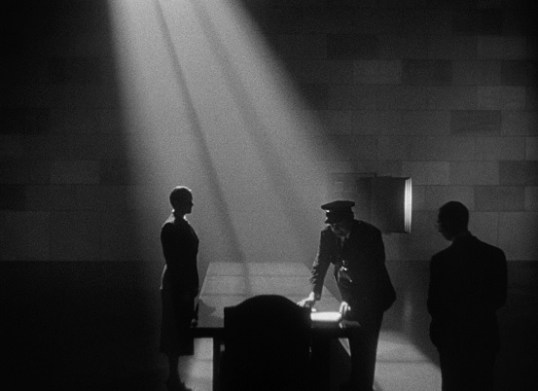
Citizen Kane (1941, dir by Orson Welles, DP: Gregg Toland)
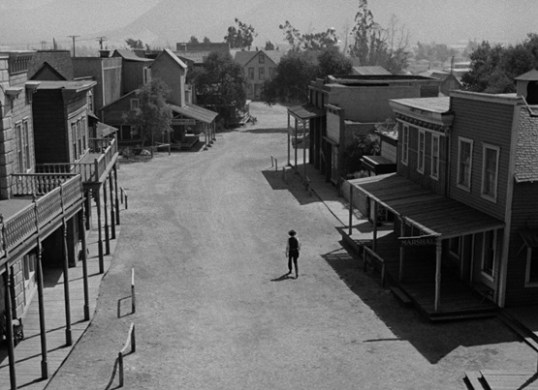
High Noon (1952, dir by Fred Zinnemann, DP: Floyd Crosby)
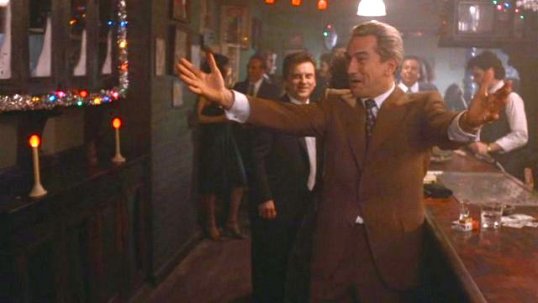
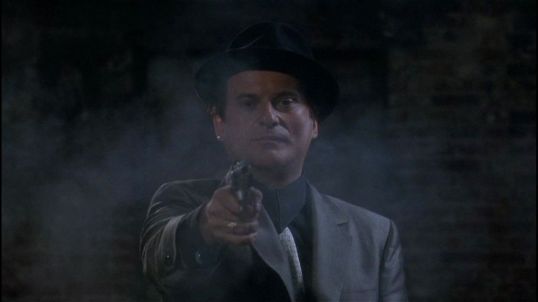
Goodfellas (1990, dir by Martin Scorsese, DP: Michael Ballhaus)
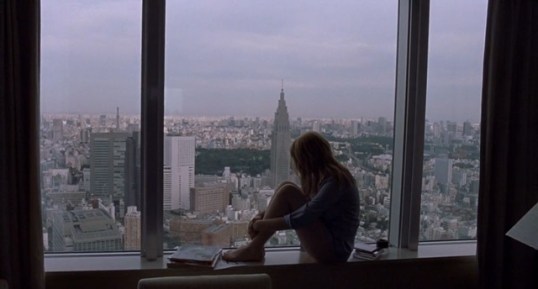
Lost In Translation (2003, dir by Sofia Coppola, DP: Lance Acord)
Directed by Martin Scorsese, 1985’s After Hours opens in an office. This isn’t the type of office that one might expect a Scorsese movie to open with. It’s not a wild, hedonistic playground like the office in The Wolf of Wall Street. Nor is it a place where an aging man with connections keeps his eye on the business for his friends back home, like Ace Rothstein’s office in Casino. Instead, it’s a boring and anonymous office, one that is full of boring and anonymous people. Scorsese’s camera moves around the office almost frantically, as if it’s as trapped as the people who work there.
Paul Hackett (Griffin Dunne) works in the office, at a job that bores him but presumably pays him enough to live in New York. Paul is not a typical Scorsese protagonist. He’s not a fast-talker or a fearsome fighter. He’s not an artist consumed by his own passion or an amoral figure eager to tell his own story. Instead, he’s just a guy who wears a tie to work and who spends his day doing data entry. He’s a New Yorker but he doesn’t seem to really know the city. (He certainly doesn’t know how much it costs to ride the subway.) He stays in his protected world, even though it doesn’t seem satisfy him. Paul Hackett is not Travis Bickle. Instead, Paul is one of the guys who would get into Travis’s cab and, after spending the drive listening to Travis talk about how a storm needs to wash away all of New York’s sin, swear that he will never again take another taxi in New York.
One day, after work, Paul has a chance meeting with a seemingly shy woman named Marcy (Rosanna Arquette). Marcy lives in SoHo, with an artist named Kiki (Linda Fiorentino) who sells plaster-of-Paris paperweights that are made to look like bagels. Marcy gives Paul her number and eventually, Paul ends up traveling to SoHo. He takes a taxi and, while the driver is not Travis Bickle, he’s still not amused when Paul’s last twenty dollar bill blows out the window of the cab.
Paul’s trip to SoHo doesn’t goes as he planned. Kiki is not impressed with him. Marcy tells him disturbing stories that may or may not be true while a search through the apartment (not cool, Paul!) leads Paul to suspect that Marcy might have disfiguring burn scars. Paul decides to end the date but he then discovers that he doesn’t have enough change on him to take the subway home. As Paul attempts to escape SoHo, he meets a collection of strange people and finds himself being hunted by a mob that is convinced that he’s a burglar. Teri Garr plays a sinister waitress with a beehive hairdo and an apartment that is full of mousetraps. Catherine O’Hara chases Paul in an ice cream truck. Cheech and Chong play two burglars who randomly show up through the film. John Heard plays a bartender who appears to be helpful but who also has his own connection to Marcy. Even Martin Scorsese appears, holding a spotlight while a bunch of punks attempt to forcibly give Paul a mohawk. The more that Paul attempts to escape SoHo, the more trapped he becomes.
Martin Scorsese directed After Hours at a time when he was still struggling to get his adaptation of The Last Temptation of Christ into production. If Paul feels trapped by SoHo, Scorsese felt trapped by Hollywood. After Hours is one of the most nightmarish comedies ever made. It’s easy to laugh at Paul desperately hiding in the shadows from Catherine O’Hara driving an ice cream truck but, at the same time, it’s impossible not to relate to Paul’s horror as he continually finds himself returning again and again to the same ominous locations. In many scenes, he resembles a man being hunted by torch-wielding villagers in an old Universal horror film, running through the shadows while villager after villager takes to the streets. Paul’s a stranger in a strange part of the city and he has absolutely no way to get home. I think everyone’s had that dream at least once.
Paul is not written to be a particularly deep character. He’s just a somewhat shallow office drone who wanted to get laid and now just wants to go home. Fortunately, he’s played by Griffin Dunne, who is likable enough that the viewer is willing to stick with Paul even after Paul makes some very questionable decisions and does a few things that make him a bit less than sympathetic. Dunne and John Heard keep the film grounded in reality, which allows Rosanne Arquette, Linda Fiorentino, Catherine O’Hara, and especially Teri Garr to totally play up the bizarre quirks of their character. Teri Garr especially does a good job in this film, revealing a rather frightening side of the type of quirky eccentric that she usually played.
Scorsese’s sense of humor has been evident in almost all of his films but he still doesn’t get enough credit for his ability to direct comedy. (One need only compare After Hours to one of Brian De Palma’s “comedies” to see just how adroitly Scorsese mixes laughs and horror.) After Hours is one of Scorsese’s more underrated films and it’s one that everyone should see. After Hours is a comedy of anxiety. I laughed while I watched it, even while my heart was racing.
Though the Academy of Motion Picture Arts and Sciences claim that the Oscars honor the best of the year, we all know that there are always worthy films and performances that end up getting overlooked. Sometimes, it’s because the competition too fierce. Sometimes, it’s because the film itself was too controversial. Often, it’s just a case of a film’s quality not being fully recognized until years after its initial released. This series of reviews takes a look at the films and performances that should have been nominated but were, for whatever reason, overlooked. These are the Unnominated.
“Honorable men go with honorable men.” — Giovanni Cappa
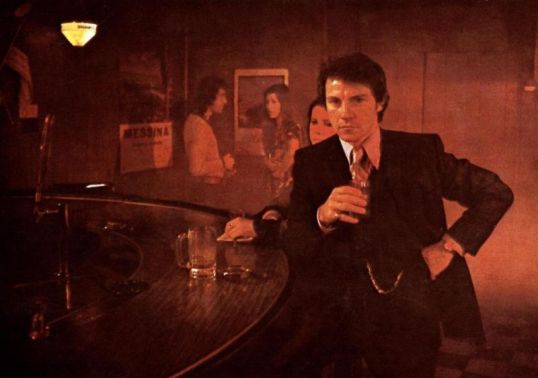
1973’s Mean Streets is a story about Little Italy. The neighborhood may only be a small part of the sprawling metropolis of New York but, as portrayed in this film, it’s a unique society of its very own, with its own laws and traditions. It’s a place where the old ways uneasily mix with the new world. The neighborhood is governed by old-fashioned mafiosos like Giovanni Cappa (Cesare Danova), who provide “protection” in return for payment. The streets are full of men who are all looking to prove themselves, often in the most pointlessly violent way possible. When a drunk (David Carradine) is shot in the back by a teenage assassin (Robert Carradine), no one bothers to call the police or even questions why the shooting happened. Instead, they discuss how impressed they were with the drunk’s refusal to quickly go down. When a soldier (Harry Northup) is given a party to welcome him home from Vietnam, no one is particularly shocked when the solider turns violent. Violence is a part of everyday life.
Charlie Cappa (Harvey Keitel) is Giovanni’s nephew, a 27 year-old man who still lives at home with his mother and who still feels guilty for having “impure” thoughts. Charlie prays in church and then goes to work as a collector for Giovanni. Giovanni is grooming Charlie to take over a restaurant, not because Charlie is particularly talented at business but just because Charlie is family. Giovanni warns Charlie not to get involved with Teresa (Amy Robinson) because Teresa has epilepsy and is viewed as being cursed. And Giovanni particularly warns Charlie not to hang out with Teresa’s cousin, Johnny Boy (Robert De Niro). Johnny Boy may be charismatic but everyone in the neighborhood knows that he’s out-of-control. His idea of a good time is to blow up mailboxes and shoot out street lamps. Charlie, who is so obsessed with sin and absolution that he regularly holds his hand over an open flame to experience the Hellfire that awaits the unrepentant sinner, finds himself falling in love with Teresa (though it’s debatable whether Charlie truly understands what love is) and trying to save Johnny Boy.
Charlie has other friends as well. Tony (David Proval) runs the bar where everyone likes to hang out and he seems to be the most stable of the characters in Mean Streets. He’s at peace with both the neighborhood and his place in it. Meanwhile, Michael (Robert Romanus) is a loan shark who no one seems to have much respect for, though they’re still willing to spend the afternoon watching a Kung Fu movie with him. Michael knows that his career is dependent on intimidation. He can’t let anyone get away with not paying back their money, even if they are a friend. Johnny Boy owes Michael a lot of money and he hasn’t paid back a single dollar. Johnny Boy always has an excuse for why he can’t pay back Michael but it’s obvious that he just doesn’t want to. Charlie realizes that it’s not safe for Johnny Boy in Little Italy but where else can he go? Brooklyn?
Mean Streets follows Charlie and his friends as they go about their daily lives, laughing, arguing, and often fighting. All of the characters in Mean Streets enjoy a good brawl, despite the fact that none of them are as tough as their heroes. A chaotic fight in a pool hall starts after someone takes offense to the word “mook,” despite the fact that no one can precisely define what a mook is. The fights goes on for several minutes before the police show up to end it and accept a bribe. After the cops leave, the fight starts up again. What’s interesting is that the people fighting don’t really seem to be that angry with each other. Fighting is simply a part of everyday life. Everyone is aggressive. To not fight is to be seen as being weak and no one is willing to risk that.
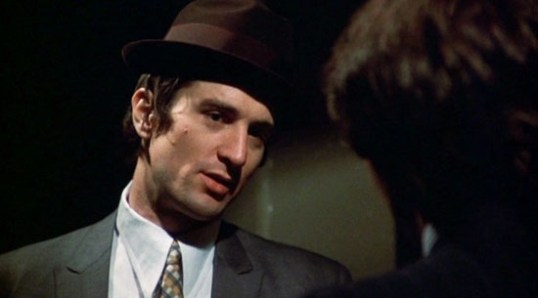
Mean Streets was Martin Scorsese’s third film (fourth, if you count the scenes he shot before being fired from The Honeymoon Killers) but it’s the first of his movies to feel like a real Scorsese film. Scorsese’s first film, Who’s That Knocking On My Door?, has its moments and feels like a dry run for Mean Streets but it’s still obviously an expanded student film. Boxcar Bertha was a film that Scorsese made for Roger Corman and it’s a film that could have just as easily been directed by Jonathan Demme or any of the other young directors who got their start with Corman. But Mean Streets is clearly a Scorsese film, both thematically and cinematically. Scorsese’s camera moves from scene to scene with an urgent confidence and the scene where Charlie first enters Tony’s bar immediately brings to mind the classic tracking shots from Goodfellas, Taxi Driver, and Casino. One gets the feeling that Pete The Killer is lurking somewhere in the background. The scenes between Keitel and De Niro are riveting. Charlie attempts to keep his friend from further antagonizing Michael while Johnny Boy tells stories that are so long and complicated that he himself can’t keep up with all the details. Charlie hold everything back while Johnny Boy always seems to be on the verge of exploding. De Niro’s performance as Johnny Boy is one that has been duplicated but never quite matched by countless actors since then. He’s the original self-destructive fool, funny, charismatic, and ultimately terrifying with his self-destructive energy.
Mean Streets was Scorsese’s first box office success and it was also the film that first brought him widespread critical acclaim. However, in a year when the totally forgotten A Touch of Class was nominated for Best Picture, Mean Streets did not receive a single Oscar nomination, not even for De Niro’s performance. Fortunately, by the time Mean Streets was released, De Niro had already started work on another film about the Mafia and Little Italy, The Godfather Part II.
4 Shots From 4 Films is just what it says it is, 4 shots from 4 of our favorite films. As opposed to the reviews and recaps that we usually post, 4 Shots From 4 Films lets the visuals do the talking.
It’s Christmas! Here are 4 Shots from 4 Christmas classics!
4 Shots From 4 Films
The Godfather (1972, dir by Francis Ford Coppola, DP: Gordon Willis)
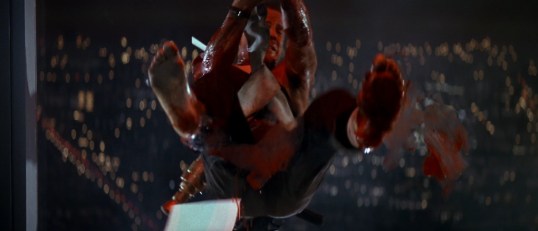
Die Hard (1988, directed by John McTiernan, DP: Jan de Bont)
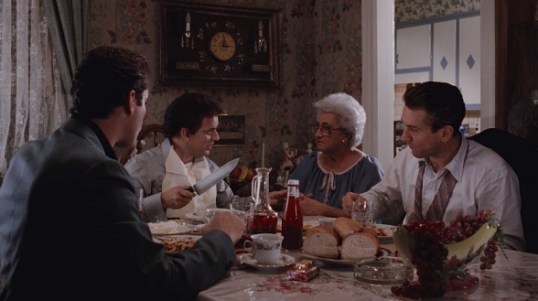
Goodfellas (1990, dir by Martin Scorsese, DP: Michael Ballhaus)
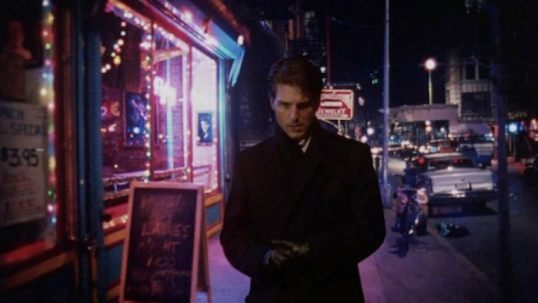
Eyes Wide Shut (1999, dir by Stanley Kubrick, DP: Larry Smith)
Continuing today’s Atlantis theme, here’s a song about the lost continent from Donovan.
It’s kind of a silly song. I mean, just listen to Donovan’s opening monologue. But that chorus is next to impossible to get out of your head and, even more importantly, the song is iconic due to its use in Martin Scorsese’s Goodfellas. Try to listen to this without thinking about Billy Batts and that night at the club.


 Through the Shattered Lens